
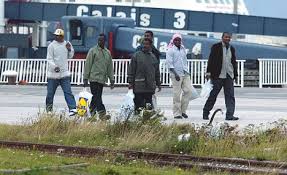
 Support for sweeping curbs on immigration to the UK has reached record levels, a major study of public opinion shows, and the BBC now believes it was wrong to downplay the fear of being swamped.
Almost eight out of 10 Britons now believe that the number of new arrivals should be limited and nearly six in 10 want to see major reductions in the number allowed in.
The numbers advocating a large cut have swelled by more than 40 per cent since before the expansion of the European Union, according to the latest findings from the British Social Attitudes survey, which has been charting public opinion for more than 30 years.
Strikingly, it shows that even among those who believe that immigration has boosted Britain’s economy and enriched its culture, clear majorities now want to see it cut.
There is also a sharp divide along class lines, with an elite of highly paid and highly qualified people twice as likely as workers from middle and lower income families to view immigration in positive terms.
Significantly, attitudes have also hardened even among those from immigrant families themselves with less than half now convinced that it is good for the economy and a quarter doubting the cultural benefits.
The findings came as Vince Cable, the Business Secretary, underlined divisions with the Coalition over immigration insisting that the Government “certainly won’t achieve” its target of getting numbers below 100,000 before the General Election next year.
The Blair government had not spelt out the full impact because of a “fear of racism”.
Nick Robinson, the BBC’s political editor, who presents the programme, said at the weekend that the corporation had made a “terrible mistake” in downplaying public concerns over immigration.
The study of more than 3,000 people found that 77 per cent want immigration reduced, with only four per cent favouring an increase.
David Cameron has pledged to reduce net migration to the “tens of thousands” rather than hundreds of thousands . But figures published in November show it rose markedly ni the last year and now stands at 182,000.
The Treasury was convinced that the economic benefits would outweigh the disadvantages earlier.
“We didn’t spell out in words of one syllable what was happening, partly because of a fear of racism” a member said.
Source: The Telegraph