Things fall apart

When it comes to teaching the art of music, any good teacher would tell a student that focusing too much on the notes would result in a rigid and wooden performance, but focusing too much on the music’s feeling would cause a loss of rhythm. Both the notes as well as the feelings should be balanced to gain harmony and make the piece come alive.

Strange how we could easily identify with the abovementioned example when it comes to music, but when it comes to governing policies and political ideals, we fail dismally to see the same dynamic. It is either the strict law of the letter or a cacophony of disharmonious chords. The difference being that nowadays both have been elevated to levels of supreme aesthetics. Ugliness has become the new beauty and harmony is caricatured.

This has become the condition of politics and idealism in Europe today. No doubt, other parts of the world could also attest to this. However, Europe – being the cradle of Western mankind – this tendency reveals how the West has become old, sick and ready to implode. The Western satellite countries such as North-America, Australasia, and what’s left of South Africa, still try to radiate the once bright beam of enlightenment. For how long still is anyone’s guess.

Just as the Roman Empire of old, Europe has run out of steam. Where tolerance and apathy were the vices of old, they are the virtues of today. This cultural vacuum that it has left in its wake is now being filled with everything considered dysfunctional and pathological, yet dangerously filled with unbridled youthful vigour.

Wise words were once written by William Butler Yeats:

The ceremony of innocence is drowned;

The best lack all conviction, while the worst

Are full of passionate intensity.

In this bastardised Fourth German Reich, aka the European Union, paedophilia is soon to be legalised. What first started off with gay rights has now opened the gates of hell to other deviant practices with paedophilia and polygamy being the next in line. Peculiarly enough, the EU has motioned to ban bestiality. Animals thus have achieved more legal protection against sexual predators than children.

In general, Yeats has reminded us that it is not the first time in history that we are dealing with such abominations. In fact, hardly a generation goes by without these tendencies occasionally crawling up through the crags. The difference being that European civilisation seems to have lost the will to fight this off. The European has lost his fighting spirit. Whereas crimes against children would become legal in Germany, crimes against children in the UK such as grooming gangs who kidnap and prostitute hundreds of underage white girls get away with impunity. Gone are the days when mob justice took care of these problems.

More emancipation for women appears to give rise to more emasculation for men. Whereas feminists, paedophiles and gays are fighting their way to the top, Western man has been forced to introspect on his historical wrongdoings and has lost his ability to fend for his family, his sense of honour and duty both confined to history.

The plot sickens though.

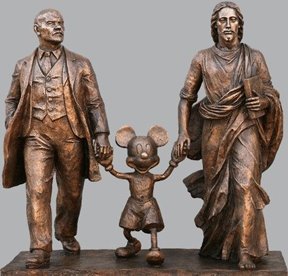
Sociologist Doug McAdam mentions in this clip how he once attended a revolutionary gathering where the killing of newborn white babies was discussed, and how a fellow attendee was ‘booed down’ after he apologetically dared to utter that killing white babies seemed to be pushing matters a bit too far. The one-dimensional revolutionary mindset is reaching star status in the West, and one wonders if the Russian artist Marat Guelman’s depiction of Christ and Lenin holding hands with Mickey Mouse is not blasphemy after all, but an omen of what’s to come. In revolution, confusion reigns supreme, with everything being right and wrong at the same time. In Guelman’s sculpture we see Christ (love and humility), Lenin (hate and arrogance) and Mickey Mouse, the figurehead of Disneyland, the world’s most successful paedophile child grooming facility.

The spirit of destroying the Western world has clearly reached a turning point and the auto-destruct timer has been set. Our cultural elites have turned the West into a virtual suicide cult, not unlike Jim Jones’ People’s Temple Movement, where the handful of deviants who refused to be poisoned were dragged into the fray and killed nonetheless. Only by identifying these ills could we be made aware of the tactics that are used and how to counteract them.

However, for a more closer study of these tactics, it would be a good idea to start with the spiritual father of the US democratic presidential candidate Hillary Rodham Clinton, who wrote her Master’s thesis on the works of Saul Alinsky (1909 – 1972). His twelve rules for radicals are undoubtedly part of the whole package designed to destroy the West. These rules are:

* RULE 1: “Power is not only what you have, but what the enemy thinks you have.” Power is derived from 2 main sources – money and people. “Have-Nots” must build power from flesh and blood. (These are two things of which there is a plentiful supply. Government and corporations always have a difficult time appealing to people, and usually do so almost exclusively with economic arguments.)
* RULE 2: “Never go outside the expertise of your people.” It results in confusion, fear and retreat. Feeling secure adds to the backbone of anyone. (Organizations under attack wonder why radicals don’t address the “real” issues. This is why. They avoid things with which they have no knowledge.)
* RULE 3: “Whenever possible, go outside the expertise of the enemy.” Look for ways to increase insecurity, anxiety and uncertainty. (This happens all the time. Watch how many organizations under attack are blind-sided by seemingly irrelevant arguments that they are then forced to address.)
* RULE 4: “Make the enemy live up to its own book of rules.” If the rule is that every letter gets a reply, send 30,000 letters. You can kill them with this because no one can possibly obey all of their own rules. (This is a serious rule. The besieged entity’s very credibility and reputation is at stake, because if activists catch it lying or not living up to its commitments, they can continue to chip away at the damage.)
* RULE 5: “Ridicule is man’s most potent weapon.” There is no defense. It’s irrational. It’s infuriating. It also works as a key pressure point to force the enemy into concessions. (Pretty crude, rude and mean, huh? They want to create anger and fear.)
* RULE 6: “A good tactic is one your people enjoy.” They’ll keep doing it without urging and come back to do more. They’re doing their thing, and will even suggest better ones. (Radical activists, in this sense, are no different than any other human being. We all avoid “un-fun” activities, and but we revel at and enjoy the ones that work and bring results.)
* RULE 7: “A tactic that drags on too long becomes a drag.” Don’t become old news. (Even radical activists get bored. So to keep them excited and involved, organizers are constantly coming up with new tactics.)
* RULE 8: “Keep the pressure on. Never let up.” Keep trying new things to keep the opposition off balance. As the opposition masters one approach, hit them from the flank with something new. (Attack, attack, attack from all sides, never giving the reeling organization a chance to rest, regroup, recover and re-strategize.)
* RULE 9: “The threat is usually more terrifying than the thing itself.” Imagination and ego can dream up many more consequences than any activist. (Perception is reality. Large organizations always prepare a worst-case scenario, something that may be furthest from the activists’ minds. The upshot is that the organization will expend enormous time and energy, creating in its own collective mind the direst of conclusions. The possibilities can easily poison the mind and result in demoralization.)
* RULE 10: “If you push a negative hard enough, it will push through and become a positive.” Violence from the other side can win the public to your side because the public sympathizes with the underdog. (Unions used this tactic. Peaceful [albeit loud] demonstrations during the heyday of unions in the early to mid-20th Century incurred management’s wrath, often in the form of violence that eventually brought public sympathy to their side.)
* RULE 11: “The price of a successful attack is a constructive alternative.” Never let the enemy score points because you’re caught without a solution to the problem. (Old saw: If you’re not part of the solution, you’re part of the problem. Activist organizations have an agenda, and their strategy is to hold a place at the table, to be given a forum to wield their power. So, they have to have a compromise solution.)
* RULE 12: Pick the target, freeze it, personalize it, and polarize it.” Cut off the support network and isolate the target from sympathy. Go after people and not institutions; people hurt faster than institutions. (This is cruel, but very effective. Direct, personalized criticism and ridicule works.)

It would take quite a sick but committed individual to come up with this, yet this indicates how the enemies of the West are at pains to destroy it. Dare we not mention the worrisome fact that the contender for the White House has this as an ideological backbone, perhaps more so than the US Constitution.

It’s fairly obvious that these tactics are working in full swing. Add a dash of Marcusian repressive tolerance – that tolerates only opinions from the left – and we can conclude that there are elites at work in destroying the Western way of life very thoroughly. Not to mention how the once hallowed corridors of academia have been filled with tenured radicals who are writing and lecturing on topics that are quintessentially unsavoury for Western posterity, dumbing the youth down and hardening them under the guise of enlightenment.

The West today is culturally rich but spiritually weak, and cannot see the trees from the forest anymore, their stunted spiritual development possibly preparing them for the next generation of fascism, brought on by computer games, narrow-minded conformity and an inability to see beyond the facade of feigned public opinion.

Let’s hope it’s not too late then, so we can once again rejuvenate in the sounds of great composers and poets who have an understanding how harmony and spirituality could be reunited again, advancing our sense of humanity to the next level.

To quote Yeats once more:

And what rough beast, it hour come round at last,

Slouches towards Bethlehem to be born?

The “R” in evolution.

The world has had its fair share of revolutions in the past few centuries, most notably the French, the Russian and perhaps slightly less so the South African “transformation”.

The narrative abounds that life has become either too complicated or daunting to continue on its path and therefore is in need of change. The desire for wanton destruction then becomes the norm. No stone is left unturned and people are killed in droves, their demise often being met with mirth and mockery.

While the images of the French and Bolshevik Revolutions are well documented and the savagery well-known, it appears that the dynamism behind them has itself undergone an evolution. No longer do we see a uniform ideology to abide by, but a caricature of one’s own culture is used. The motor behind revolution has gone global and uses different means depending on the local circumstances.

Actually, a global revolution is taking place at present, and has been doing so for decades. We feel the tremors but the epicentre is hidden. We have seen South Africa fall, and are watching how the United States is following suit, yet nations that are rising from the ashes, like Russia for instance, has become the new thorn in the side of the world’s shadow elite. No doubt, a firm nationalist and religious identity works wonders to abate any such dangerous revolutionary takeovers. In that sense Russia has a lot to teach us because they have been there.

In the news today, we see the following “random” events taking place:
Back in 2010 the journalist and Bilderberg Group investigator Daniel Estulin mentioned that thirteen US military bases were being built in Afghanistan with the intention of threatening Russia. Need we not forget that the eastern block has done away with the Warsaw Pact decades ago, but NATO – its military contender in the West – is still rattling its sabre. Otherwise, various fringe groups such as pop stars and gay rights activists have been implemented to stem the tide of Russian nationalism. Not to mention the State Department’s Victoria Nuland’s leaked phone call wherein the political dislodging of Ukraine from its powerful neighbour was discussed. And yet they still want us to believe that Putin is the bogeyman.

Elsewhere, the United States is still reeling from the various racially related riots that have taken place at home. Arguably, it started off when George Soros’ puppet president Barack Obama commented on the Trayvon Martin/George Zimmerman case in 2012. In contrast to the ruling of the court, the president defended the African American teenager, effectively criminalising the defendant further and undermining the rule of law; a dictator in the making. Setting such precedents are not productive when it comes to quelling race relations, not to mention how the defendant, who had previously referred to himself as Hispanic all of a sudden became “white” in the eyes of the public. This hand-picked incident of violence (one out of 8,855 hand gun related homicides that year) had to have a white man killing a black youngster in order to pass muster, otherwise it would have disappeared down the memory hole and would have been seen as no more than an everyday act of violence. The ensuing race related incidents in Ferguson, New York and Baltimore demonstrated how violence with indirect approval from the Commander in Chief begets further violence. The Washington Post has mentioned how, once again, George Soros bankrolled $33 mln to Ferguson to fan the flames of racial tensions. Apparently – and to no surprise one might add – even the race-baiting reverend Jeremiah Wright is on Soros’ dime.

In other parts of the world, especially the Middle-East, we are witnessing the rise of Islamic State, a new type of extremist militia group with lofty ambitions of establishing a global caliphate. Interestingly, where the US had helped to topple local dictators and warlords, IS is taking over with unseen ferocity. First there was Saddam who had to be ousted, and a few years later Khaddafi followed him into the grave. In both instances and beyond, IS rose out of the chaos, beheading people and destroying ancient statues wherever they went. The destructive allure of IS has transcended national borders not only in the Middle-East but even Muslims in Europe are enticed by their boldness and are risking life and limb to fight and die for them. And then we have to hear how none other than puppet master Henry Kissinger mentioned that IS is fighting with weapons manufactured in the United States, while Republican senator John McCain was seen holding a meeting with the IS ringleaders.

Do we see a pattern emerge?

In Russia, the Western elite wants to destroy their sense of nationhood using religion as an important target. In the US they are using trumped up charges of racism to destroy the White Anglo Saxon Protestant character, and in the Middle-East uncompromising savagery is used to kill and intimidate minorities in the name of Islam, all happening at the same time.

In all these cases, religion is used either as a lance or as a target, depending on the local circumstances.

One of the ideals of Communism, as explained in Marx and Engels’ manifesto is to destroy religion. In the case of IS, religion is used as a means to traumatise the various populations in order to ultimately convert the masses to atheism, as religion is perceived as a source of violence. Apparently a new force of atheism is emerging within the spindle of the Islamic world, namely Saudi Arabia. Even though statistics are hard to come by in this reclusive state, the general opinion seems to be that the veils and religious garb are rather concealing unbelief than immorality nowadays.

As Lenin once wrote, the best revolutionary is a youth devoid of morals. From this point of view, it appears as if IS has taken a leaf from the book of global revolution and are using the most severe forms of barbarism to put Lenin’s credo to the test. Any successful megalomaniac could attest to the joys of a traumatised and docile populace, as they often make the best slaves.

Whereas in the United States and South Africa, the destruction of the middle class is taking place, with white Americans and South Africans slowly becoming the nouveau pauvre, the Russian Bear is on the rise, and Putin has achieved everything the globalists had hoped would not happen. The entire revolutionary character and spirit of Russia has been disbanded and the rumors are circulating that the czar is to be restored as a final triumph of nationalism over internationalism.

To create a world of poverty and unbelief appears to be one of the means the elite is using to encapsulate the world by locking its people up in an unbreakable caste.

In our modern times people are once again searching for a sense of being authentic. Realising that the general narrative that has been told to us does not reflect people’s true feelings, the search for a more authentic identity then comes to the fore.

This would explain the primary reason why revolutions, which cost billions in modern day cash, cannot hold up against nationalist sentiments. Just as historian Oswald Spengler wrote about a hundred years ago a sense of one’s own culture and way of life cannot be crushed, simply because self-reflection is free and more captivating than the primitive one-dimensional ideologies proposed by revolutionary ideologues. Conversely, the revolutionary thinkers have to pressure themselves into preventing this return to nationalist based thoughts, ultimately fighting a losing battle.

Regardless of the fact that revolutions have evolved, once the tricks that are being used are exposed, people will naturally return to their own sense of authenticity, causing revolutionary thoughts to dissolve and go gently into that good night.

Let’s hope it’s not too late for that.

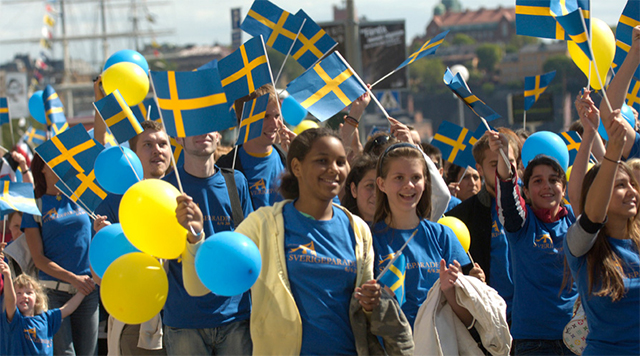
The decline of Sweden

In a recent article it was predicted that Sweden, one of the world’s most progressive nations, will end up impoverished and third world by the year 2030. That is only fifteen years from now. The United Nations Human Development Index has corroborated this decline, stating that the land of Volvo, Knäckebröd and Selma Lagerlöf will end up lower on the list than Bulgaria and Cuba in due time. On the contrary, its Nordic neighbours, Norway and Finland are still going strong.

Because of Sweden’s unique position in the world, with its praised lavish welfare system, envied by many European nations (until recently though), this decline merits concern as to where the rest of the world will be, perhaps not in say fifteen years from now, but a bit further down the line. By being too progressive, it appears that retrogression becomes the necessary consequence.

Many conservative opinion makers have been quick to point out the devastating effect of multiculturalism that has racked this part of the world, and without a doubt, that is the most succinct contributor to the stalemate this nation has now reached. However, a greater danger lies in a more hidden corner of Swedish society.

Regardless of the fact that this nation boasts a luxury automobile industry, builds exclusive cameras and has ownership of mega-stores selling cupboards and beds, the Swedish people in a real sense lack individualism, freedom of speech and a true democratic spirit. The average Swede is rude and narrow-minded, their development stunted by their impossible yearning for equality. This makes them the perfect candidates for the various social experiments that the country is known for. Individualism has never truly set in and the Swedes therefore lack a well-developed sense of right and wrong. Such could be seen how the Nobel Committee unabashedly showered South African terrorists with Nobel Peace Prizes while the same organisation funded eugenics at home. The Karolinska Institute sterilised as many as 63 000 of its own citizens for fear of contaminating the purity of the Swedish race, while in the same period they aimed to destroy the white South African. Thus, in a strict sense, Sweden is amoral.

This hypocrisy has to do with the fact that the Swedes have — historically speaking — always been subjected to elitism and did not have the necessary checks in place to stave off acts of despotism. Whereas other European nations looked westward and had a history of feudalism and clashing aristocracies that protected them from staunch totalitarianism, the western European nations gradually started granting rights to the peasantry, the Magna Charta being a case in point. On the other hand, Sweden looked eastward towards Russia, lacked feudalism, shunned rights for the common people and could easily be coaxed into a centralised state. Few, if any rights were granted to the lower classes and the entire religious and political life in Sweden today have arisen from one leitmotif, ie. total centralised power. Even the Lutheran church — that one last beacon of spiritual freedom — was used as an instrument of political control by the authorities in much the same way the Roman church had done before the Reformation.

Modern Sweden may have all the external trappings of a democracy, but this is only at face value. This modernisation drive happened only fairly recently compared to other European nations, and the Social Democrats had the expediency of calling these modern developments “ours”. Because of this, they have held onto their position all throughout, having only been defeated once or twice by an “opposition” party for a short while. The modernisation drive was not a result of looking inward, but rather a reaction to outward circumstances, an astute way of keeping up with the Germans.

Given the Swedish penchant for equality, the strict Lutheran teaching and the secularisation that took place in the latter half of the twentieth century, Marxist and socialist teachings were facilitated with tremendous ease. Ideals of universal freedom in equality became the norm and was held in high esteem by the intellectual and political classes. Especially after the sexual revolution swept across the West in the 1960s and 1970s, the broad concept of “freedom” became redefined in terms of sexual emancipation. In fact even Swedish journalists stationed in foreign nations were quick to call on Sweden’s “enlightened and free” society by referring to the lack of sexual liberation elsewhere, apparently oblivious to the fact that their home country had only managed to exchange one form of political control for another. Where sexual abstinence was used as a means of controlling society before, the secularisation drive took to the other extreme of sexualising society for the sake of social control. By doing so, the elite attempted to lull the populace into a state of docility by drawing attention to their lower freedoms and away from cultivating good morals, spirituality, and wisdom, their higher freedoms.

Needless to say, such diversions only served to create a nation of infants and helped further to advance the state’s authority over them. In this sense, Sweden has become a quintessential Huxleyan Brave New World, a warning first uttered by author Roland Huntford in his work The New Totalitarians, a critique of the Swedish welfare state.

However, even the Swedish elite has now much to answer for. The current situation has reached a turning point and the ideals that were indoctrinated over the years have either come to naught or turned against them. Such could be seen how their ideological love child – black South Africans – over there are stirring the national pot. Quite recently, a South African born Muslim rapper, currently residing in Sweden produced a rap video blatantly uttering how “We wogs will exterminate you all” and “Come here Swedish girls, I will stick a knife in your pussy; All Swedes you will DIE, DIE, DIE, DIE, DIE”. This was uploaded on youtube under the name Ikasaify2. As far as I know, the Swedish authorities haven’t dealt with this person yet.

In another incident an immigrant from South Africa and Somalia who raped a Swedish woman to death successfully fought against deportation. Even though he is a notorious rapist, he would still be able to live off the Swedish state. The prosecutor in this regard justified his decision that he would endanger the lives of Somali women should he be deported back. Creating a menace in his own back yard thus seems preferable to stemming this tide elsewhere. The inability of changing the ways of a tribe of hunter-gatherers into a sedentary and productive people are realities that equality and universalism could not answer for, and the Swedes are now experiencing this head on.

However, the same collectivist thought-pattern that swayed them into multiculturalism could also now be their salvation. The Swedish government by all means has lost its credibility and in order to regain this, should make concessions to its people. Ranking at number two of nations with the highest incidence of rape in the world, a fact well expounded by local and international media, government would be hard-pressed to ignore this demoralising form of crime which is nothing short of pandemic.

It would be in everyone’s best interest if the Swedish people regain their inner strength to fend off this tide. Norway has recently deported a large number of foreign born convicted criminals and the crime rate has dropped dramatically.

Perhaps its time that Sweden follows suit.

The white musician’s burden

It has become part and parcel in South Africa today for various opinion makers, entertainers and activists to take to political hectoring and vilifying of their fellow entertainers.

Since last week, various commentators and activists have come out strongly against Afrikaans singer and activist Steve Hofmeyr, who has been a thorn in their side for a while now for a variety of reasons.

Firstly he took a clear stance in favour of his people, stating how they are being killed off in droves while the major news sources, such as Naspers and its sister network Netwerk24 prefer to turn a blind eye.

After that he threatened to include the incendiary “K-“ word in one of his songs, followed by him singing “Die Stem”, the original South African anthem, which by the way nowhere refers to white supremacy or black inferiority at all, but pays homage to the natural splendour of South Africa.

Last but not least, he tweeted that black people themselves were behind the shaping of apartheid, and that was the last straw.

Hofmeyr has transgressed every petty taboo that the communist-based ANC has laid down, and now it’s payback time. From the house of Naspers – South Africa’s Pravda – came a vitriolic attack from a certain liberal retard named Virginia Keppler whose emotional outburst was only overshadowed by her complete ignorance of South Africa’s past, and one wonders if she actually had lived over there back then. To add insult to injury, the turncoat Afrikaner editor Adriaan Basson did not even correct her on these obvious fallacies as is wont of a respectable editor. Instead he chose to disable the comment section, perhaps realising all too well that Keppler’s pathetic outburst would be an object of ridicule, elevating Beeld’s status as a purveyor of mendacity even further.

It is doubtful whether the medieval Inquisition would have stooped to this level of idiocy. At least the Inquisition – in spite of their primitive techniques – consisted of trained scholars who abided by the principle of Res Ipsa Loquitur, or let the facts speak for themselves. (Not many people nowadays realise that the burning of witches and hanging of heretics were in the vast majority of cases legal sentences passed in secular courts and not sovereign acts committed by the Inquisitors.)

In the “progressive” Rainbow Nation called South Africa the opposite tendency holds true. People are criminalised for speaking the truth. In the case of Hofmeyr’s tweet regarding blacks being behind apartheid, the various Bantu tribes strove for a patch of land for themselves, especially after a major tribal onslaught – the Difaqane – orchestrated by King Shaka and Mzilikazi killed up to three million blacks. This occurrence is historically documented, yet a heresy at the same time. The aftershock of this assault could be taken as a first step in the direction of Verwoerd’s grand apartheid plan. Need we also not forget that after the Union of South Africa in 1910, the Sotho, Swazi and Tswana tribes intentionally distanced themselves from the Union and demanded their own independent states.

On 23 January 1962, after Verwoerd had declared the homeland Transkei independent, he stated (translated from Afrikaans): “There are Bantu leaders with whom we have spoken who clearly stated that they are just as much in favour of keeping their own identity as we are. Maintaining their national ideals, their culture, their heritage are dear to them and they realise that this could only be achieved if they are granted independent suffrage and rights separately from the other groups.”

In other words, Hofmeyr wasn’t far off the mark, if at all.

During the dark years of white rule, Africans freely roamed through the streets of Johannesburg. Virginia Keppler’s unfaithful reporting that blacks weren’t allowed on the sidewalks has backfired on her. Shall we not forget the fierce propaganda war that the Western presses waged against South Africa, including the staged filming of “dead black people” scattered on the lawns of Joubert Park in downtown Johannesburg with “whites in the background nonchalantly walking by”? If one were to pass Joubert Park or any stretch of greenery in Johannesburg today, those “bodies” could still be seen basking in the African sun, only to get up and leave when something else has crossed their minds.

Not to mention how the Western presstitutes published damning pictures of black mine workers “chained to the rock face”, while in reality a safety harness on a treacherous slope is not such a bad idea.

Whereas South Africa’s feigned Mandela miracle was exported to the rest of the world, the culture of deceitful journalism was imported. It has become firmly ensconced in South African life, but instead of being the opium of the masses as the ruling elite had hoped for, it has become its laughing stock. It is unimaginable that someone would pay R99 (approximately US$9) per month to absorb slanted views written by their army of opinion makers whose intellectual courtesy emanates from their hatred of the language they were raised in. In fact, these opinion makers have only succeeded at one thing, and that is to fill the comments section with laughter and mockery from the disillusioned masses.

That is why Hofmeyr is their latest scapegoat. He is pointing the needle at their over-inflated balloon. Instead of trying to approach Hofmeyr with an honest debate regarding his views, mendacious columnists and comedians such as ventriloquist Conrad Koch are roped in to do the job, relying on their status as satirists to crucify him without further ado. After all, who needs cold intellectual talk if you could have a carnival of cant instead?

Remaining on the fringes is thus Hofmeyr’s fate, along with many followers who cannot stand the brokenness any longer. Whoever is tired of being swayed will themselves return to the path of principles and character, their integrity growing stronger.

To quote Rudyard Kipling:

Take up the White Man’s burden, No tawdry rule of kings,
But toil of serf and sweeper, The tale of common things.
The ports ye shall not enter, The roads ye shall not tread,
Go mark them with your living, And mark them with your dead.

In the shadow of the red buffoon

South Africa has just set a new record for itself in terms of public lunacy, which is not really surprising. Ever since the ANC took over they’ve outdone themselves many times in terms of foolishness.

This time it concerns the corpulent firebrand Julius Malema who made his first speech in the House of Parliament on the 18th of June. This brand new MP shuns the idea of wearing neckties or pressed suits, and prefers to be seen in red coveralls, effectively heightening his status as laughing stock of South Africa’s new ruling elite.

Julius Malema has already been much caricatured and lampooned by cartoonists and other public figures, even in his years as leader of the ANC Youth League. Regardless of his flair for red berets and coveralls, he certainly is not a man of great talent. In fact, if this one trick pony has any talent at all, it would be to rile up the masses of unskilled, ignorant and bloodthirsty peasants, something he appears to be quite good at. While on the one hand demanding that whites should speak an African language, he prefers to give his own speeches in English, probably due to his white English speechwriter’s inability write in Sotho – Malema’s mother tongue – or any other African language.

I recall an incident in primary school during those bad old days of white rule when our entire class had to roll up at the headmaster’s office for failing a Sotho test, which was a mandatory five year subject back then. Our welted derrières put a quick end to that apathy and our Sotho language skills took a turn for the better after that. No doubt, the erstwhile government did more for nation building than Malema would like to admit. In any event, had the African people produced more literature of a Goethe, Shakespeare or Proust, I’m sure the African languages would have enjoyed a higher standing with the world’s foremost literati, effectively making Malema redundant.

It would be important to mention that one would be deluded into believing that we are dealing with some brain-dead offshoot renegade. If that had been the case, Malema never would have made it past the ANC’s Hitlerjugend in the first place. There are a few clues indicating that his band of thugs are a front for a more grandiose Communist takeover, a second revolution in the making. If the study of history has any meaning at all, we should apply it here and now. Lest we forget that the other proud paragon of Communist scheming – the exalted Nelson Mandela – was secretly contrived as long ago as 1953, known amongst the initiates as “Plan M”.

As Franklin D Roosevelt once said, nothing in the world happens by coincidence…especially not when the far left is involved, one might add.

Firstly the level of organisation that his Economic Freedom Fighters (EFF) party has built up in only a short year or two indicates that there’s more than meets the eye. A formal political party cannot be drawn if there is no clear goal or mission statement. Therefore, regardless of whether his parliamentary circus acts have any merit, his party has a clear mission known perhaps to only a small group of insiders. The other party members only follow orders and convey hot air to the public. The way in which he adorns himself with various luxury goods, the mass-produced red berets, his wide-ranging publicity and other party political paraphernalia implies that he has some financially capable sponsors. It would therefore be a mistake to assume that Malema simply is a nobody who became a somebody by chance. He is a leader of a radical political party because someone wants him to be there.

Secondly, it appears as if he has changed his tune since his entry into main stream politics. His anti-white vitriol is now replaced with mainly anti-capitalist outbursts, only occasionally showing his true colours by inconsequentially depicting whites as racists and thus deserving of contempt. He also did some window dressing by including some white useful idiots into his ranks to hide his true intentions. Anybody with a basic understanding of Marxist theory can see how his party has secretly been shaped by intellectuals leaning towards the left. Once again these schemers from the shadows employed their favourite Commie party trick, the Hegelian dialectical principle. In short, Hegelian dialectics imply that when there are two opposing forces, a thesis and an antithesis, they need to be fused together in a mutually beneficial synthesis.

In Malema’s case, he wants to eliminate the whites (thesis). This would obviously meet up with resistance by whites, not to mention possible legal sanctions (antithesis). The synthesis would then be to include some whites by insisting that they themselves would benefit from this agreement. Uncooperative whites would be branded as capitalists, land owners, colonials or similar terms implying that they have a choice in handing over their hard-earned belongings. This obfuscates the fact that their white skin is his real eyesore. In practice, the net outcome for honky is the same: they are to be rendered powerless and open to victimisation. By slightly covering up his true intentions makes it hard to legally pin them down and thus highly treacherous.

Thirdly, his experience with black youths at his former job has left him with the understanding that they are the ideal candidates to help foment any war or revolution that one sees fit. As Lenin once said, the best revolutionary is a youth devoid of morals. All party members should work together to make the young, both male and female, anti-social and immoral. The black youths from the Eastern Cape in the 1950’s to the Sharpeville massacre, the Soweto riots and the “Comrades” in the mid 1980’s have all demonstrated the validity of Lenin’s observation. It would not surprise if their next step would be to train dim-witted young whites alongside blacks in paramilitary training camps, a peculiarity perfectly in step with Communist principles.

Not to mention the obvious red colour of his attire, which has a clear allusion to Communism. Red being the colour of blood, anger, youth, war, revolution and comradeship.

Another one of Communism’s dirty tricks is to participate in illegal activities, but also have a front organisation that is legal. One should therefore operate on two bases, one legal and one illegal. The emotionally charged speeches in parliament demonstrating his passionate involvement with his cause while the number of whites murdered on farmsteads has increased dramatically since the World Cup Soccer event of 2010. In some instances it is known that young African marauders chanted “Viva Malema” when attacking a white farmer in his home.

Strictly speaking it may not be possible to infer a direct involvement between Malema’s EFF and the killing of whites, yet there doesn’t really need to be one. The firing up of basic emotions and filling the minds of young Africans with odious ideals would suffice to give this killing spree a life of its own. Recall how during the French Revolution the level of barbarism peaked with peasants mocking and dancing in the streets with beheaded corpses…and all the while longing for the Noble Savage ideals as laid down by Jean Jacques Rousseau, who was in fact the real source of this revolution.

Understanding the Hegelian dialectic is of utmost importance to grasp the workings of the shadow government, which is toiling day and night to encroach on our freedoms and dignity. Having learned from Communist Eastern Europe and Asia, the world’s elite has found ways to refine their strategy for global control. Malema is only the umpteenth pawn in their game. Where he is today, the West would follow suit.

By that same operation, it would only be prudent to use internet and various social media to counteract these forces, and we have no time to waste.

Our survival depends on it.

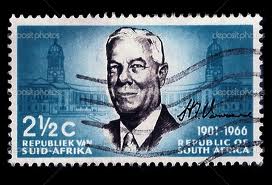
Verwoerd’s echo from a dead man talking

Hendrik Verwoerd
Hendrik Verwoerd

by Joseph Secrève

What do Hendrik Verwoerd and Ray Jasper have in common?

At first glance this question may seem a bit peculiar, with Verwoerd being the well-known and much maligned ‘father of apartheid’ and Ray Jasper being the black rap musician who was executed by lethal injection in the state of Texas a week ago.

One could start by saying that both were born in the Netherlands and both were killed in their adopted countries. Verwoerd was assassinated because of his firm belief in ethnically homogeneous nations, and Jasper was put to death because of, well, what appears to be the same belief. Jasper was convicted for slashing the throat of a record producer in 1998, but due to a technicality in Texas law, he maintained throughout his stay that he was not deserving of death but of life imprisonment. Instead, he blamed an all-white judge and jury for being racist at his trial, which according to him helped overturn the possibility of a life sentence into a death sentence.

In Texas, a murder alone carries a life sentence. However, a murder along with another related felony, such as theft of the victim’s property leads to a death sentence. This catch in the legal system is why Jasper had pleaded for life instead of death.

But there’s more: In an exchange of letters to blogger Hamilton Nolan, Jasper revealed a more profound side of himself, one that would not typically be associated with the stereotype of a homicidal rap musician. The content of the letter, albeit slightly incoherent at places, does reveal some poignant insights, and perhaps unwittingly touches on an important topic regarding race relations.

These following excerpts are quoted from Jasper’s letter:

“When I walked into prison at 19 years old, I said to myself ‘Damn, I have never seen so many black dudes in my life’. I mean, it looked like I went to Africa. I couldn’t believe it. The lyrics of 2Pac echoed in my head, ‘The penitentiary is packed/ and its filled with blacks’.

It’s really an epidemic, the number of blacks locked up in this country. That’s why I look, not only at my own situation, but why all of us young blacks are in prison. I’ve come to see, it’s largely due to an identity crisis. We don’t know our history. We don’t know how to really indentify with white people. We are really of a different culture, but by being slaves, we lost ourselves.

You take the identity crisis, mix it with capitalism, where money comes before empathy, and you’ll have a lot of young blacks trying to get money by any means because they’re trying to get out of poverty or stay out of poverty. Now, money is what they try to find an identity in. They feel like if they get rich, legal or illegal, they’ve become somebody. Which in America is partly true because superficially we hail the rich and despise the poor.

A French woman who moved to America asked me one day, ‘Why don’t black kids want to learn?’ Her husband was a high school teacher. She said the white and Asian kids excel in school, but the black and Hispanic kids don’t. I said that all kids want to learn, it’s just a matter of what you’re trying to teach them. Cutting a frog open is not helping a black kid in the ghetto who has to listen to police sirens all night and worry about getting shot. Those kids need life lessons. They need direction. When you have black kids learning more about the Boston Tea Party than the Black Panther Party, I guarantee you won’t keep their attention. But it was the Black Panther Party that got them free lunch.”

Interestingly enough, this dilemma was one of the most important motives behind the Verwoerdian system of racial segregation. Because of the stark differences in culture, Verwoerd foresaw the dangers of having people from a different kith and kin enter an urbanised world that was not a reflection of their lifestyle. With this alienation comes frustration, as age-old customs have to compete with modern laws. The social breakdown and violence in South-Africa’s east coast cities in the early fifties could attest to this. The old customs are not valid anymore and the modern urban laws are too distant and incongruent to properly solidify into their character. The cost of reconciling these contradictory systems could easily lead to personal distress, apathy and hatred.

This might help explain the pathos mentioned by Jasper, and he raises an important issue in this piece. Slavery has been abolished in the West for over 150 years, yet it appears as if certain population groups still haven’t been able to unshackle the leg irons of history. Something is depriving them of their sense of freedom. Racial discrimination is often cited as the culprit, but in reality this discrimination is only a palpable manifestation of a deeper rift. This conflict is best described by historian Oswald Spengler, a phenomenon he named historical pseudomorphosis.

“By the term ‘historical pseudomorphosis’ I propose to designate those cases in which an older alien Culture lies so massively over the land that a young Culture cannot get its breath and fails not only to achieve pure and specific expression-forms, but even to develop fully its own self-consciousness. All that wells up from the depths of the young soul is cast in the old moulds, young feelings stiffen in senile practices, and instead of expanding its own creative power, it can only hate the distant power with a hate that grows to be monstrous.”

Hence the importance to develop a stable identity that ties in with a people’s history. As Verwoerd once stated, no nation can achieve greater heights for itself by treading on the corpse of a fellow nation. He recognised a fundamental truism that all major cultural achievements arise from within.

Should African Americans be taught the finer details of their history though, similar thoughts as expressed by Jasper would undoubtedly come to the fore. Not many people today realise that the most important black consciousness and civil rights leaders were not in favour of integrating with whites either. Frantz Fanon, Malcolm X, Marcus Garvey and others resented the idea of mixing races. Malcolm X’s mentor Elijah Muhammad even stated that he “would take his hat off for any white man who wants to stay white”, emphasising his sense for maintaining one’s own culture, black and white. The fact that Garvey and Muhammad were also fervent admirers of Hitler and the Nazi’s has been kept out of modern-day historical teaching, as well as Malcolm X’s attempt to garner support from the Ku Klux Klan to help resist racial integration.

The status of ethnic integration being hailed as a noble and universal virtue has thus far had a very short shelf life, and doesn’t appear to strike a chord with most people dealing with its full complexities. In fact, it has rather led to situations where one group wants to rule over another, and as the self-esteem of an upwardly mobile minority group improves, so does its will to inflict harm upon the shrinking majority group. The news coverage of Trayvon Martin versus Antonio West serves as a case in point. Not to mention many leading Ivy League scholars who would stop at nothing short of an all-out witch hunt against the white population. Harvard professors Noel Ignatiev, Randall Kennedy and president Obama’s friends Charles Ogletree and Derrick Bell can’t spew enough anti-white hatred, regardless of the fact that they hold positions that would not have been possible without the founders of Puritain America.

Interestingly enough, Jasper also offers a tentative way out of this:

“How many black kids would change their outlook if they knew that they were only considered 3/5’s of a human being according to the U.S Constitution? That black people were considered part animal in this country. They don’t know that. When you learn that, you carry yourself with a different level of dignity for all we’ve overcome.”

Quite ironic that a rap musician on death row calls upon the dignity of people, whereas the nouveau academic elite embrace malevolent principles that would have made Stalin blush.

Just as Verwoerd mentioned, once Mandela became president, the entire West would fall victim to the pernicious ideology of Communism.

Either way, this does not portend well for the future.

Nihilism: South Africa’s new religion

nihilistBy Joseph Secrève.

What does nihilism mean? That the highest values devaluate themselves. The aim is lacking; “why” finds no answer. – Nietzsche.

I’ve recently perused an old interview dating back to 1983 between Dutch author Willem Frederik Hermans and a well known journalist of the same country. Hermans was residing in Paris at that time, having turned his back on his home country due to various irreconcilable differences between himself and his former colleagues in his native land. The author had just returned from a visit to South Africa during the forbidden years of National Party rule and the reactions he received from his kinsmen varied between curiosity to outright contempt. The level of scorn he endured was nothing short of a national outrage, and even a brief visit to Amsterdam three years later was met with bomb threats from the radical left.

In this interview Hermans correctly foresaw important turning points that were about to come, mentioning the role that journalists played to destroy South Africa by any means possible, and especially the communists “who would benefit enormously to turn South Africa into chaos the way they did in Angola, Mozambique, Sudan and Rhodesia.”

Since the demise of National Party rule, the veracity of this statement has been proven time and time again. Everything that was once taken for granted, our core values, our identity, our sense of morality, and our deference to our culture have been uprooted, and what was once thought of as demeaning, cruel and evil have been watered down to banality. Conversely, holding on to our customs and morals is the new anathema. Of all the severe crimes and savagery in South Africa today, the gang rapes of infants, cannibalism, farm murders and the torture of the elderly, the most heinous crime by far is an Afrikaner who wants to mind his own business.

This was clearly displayed the past week when a group of mainly Afrikaners held the Red October protest, demanding an end to savage violence, rampant government corruption and laws depriving minorities of a decent existence. As many commentators and historians have confirmed, the discriminatory practices from blacks against whites today are much more intense and profound than ever during National Party rule.

For some former left-wing activists, the savagery came as a complete surprise and made them recant much of their former rhetoric. For others however, their hatred towards any semblance of Afrikanerdom is still in full swing. In fact, many key players in South Africa today including academics and politicians do not hesitate to throw everything including the kitchen sink at Afrikanerdom. Ten years ago, no one would have believed that the ANC would start openly disowning land from white farmers the way it was done in Zimbabwe. Intellectuals who dared point this out were lampooned and considered mentally unsound. However, nowadays even the most formidable “opposition” party, the Democratic Alliance, is supporting this destruction of South Africa’s agricultural industry, apparently impervious to the tremendous suffering taking place which has already been upscaled to genocide.

And all the while we are misled into believing that this is only a transitional phase. Once the goals have been met, things will start to stabilise again. The same thought pattern prevailed in Eastern Europe and was expounded by Arthur Koestler in Richard Crossman’s The God that Failed. The level of terror and poverty were seen as temporary, and the victims “were class enemies anyway”. Thus the terror perpetrated by communist agitators was looked upon by their eager followers with their eyes wide shut.

The question is why. Other than some foolish joy they might feel by behaving like intellectual juveniles, it would be important to ponder on the more important reasons behind this antisocial ideation that seem to trickle down from the top.

One would be inclined to side with the above quoted philosopher Nietzsche on this matter. The notion that “God is dead” and consequent abolition of religion has indeed left us with no moral certitude. The only forces remaining are will and power, the law of tooth and claw. This statement, in combination with the communist ideal of the dictatorship of the proletariat forms a perfect hammer and anvil for society’s two important classes, the extremely powerful and extremely poor. These two classes have something in common, i.e. both want more power and both have nothing to lose. The moral majority caught up in-between would then necessarily become the new villains.

In the wake of the Red October protest certain radical News.24 columnists did not hesitate to consider this display an embarrassment, harping on their favourite platitude of ‘racism’ and commenting that all population groups are equally affected by the high levels of violence, regardless of the fact that Africans also participated in the protest.

Their message is clear: Afrikaners should stop whining. The conscientious care these leftist opinion makers claim to have for all people of South Africa does not appear to stretch very far though, since none of them ever undertook a single event to protest on behalf of the victimised masses, regardless of skin colour. The only people voicing their concern seem to be the Afrikaners. It is apparently no problem that murderers and rapists are banking on their apathy, but as soon as you speak out against this tide, you are vilified. The age-old reflex of the Brits hating the Boers constantly turns up in their rhetoric, once again demonstrating their inconsiderate attitude towards the magnitude of the daily violence. A deep undercurrent of chauvinism appears to be the motive.

The sanctimonious love the radical left have for the poor could be explained by means of this paradigm: By shunning everyone who represents orderliness, kinship and personal development (in this case Afrikaners) they hope to procure their meal ticket to fame, fortune and glory. They want to prove to their masters at the top that they are capable of rather reigning in hell than serving in heaven. Destroying a people’s religion is a tactic designed to send people into a moral tailspin and the need for a strong state would become justified, which is not possible if people had a well-internalised sense of right and wrong. A cold, sickly and cynical world would be the result, not much different to some of Lady Gaga’s music videos where morbidity, violence, and mind-controlled sex slavery is idolised.

The ‘why’ in this piece still needs to be fully answered. At the end of the day, what do these power hungry prigs really want? One could also obtain power by being an anti-conformist rebel in the spirit of Che Guevara. One would imagine that protest writers at least not be in favour of policies enforced by an oppressive government, yet these columnists can’t seem to get enough to venerate top government officials while writing crushing columns about their desperate fellow countrymen, in fact laughing at their ill-fate.

With nihilism being their new religion and spreading apathy their mission, one would guess that after all the historical progress that mankind has made, the Freudian death instinct ultimately is never far off.

Perhaps we don’t have to seek any theoretical answer on dusty bookshelves or made up by brilliant theoreticians to explain their bizarre behaviour. At the end of the day it boils down to nothing but “good sports”. As Michael Cane’s character explained in Christopher Nolan’s The Dark Night, the answer is in fact right in front of us.

“Some men just want to watch the world burn.”

Apartheid and Black Consciousness: An unexplored angle

verwoerdseël

by Joseph Secrève

The late 50’s and 60’s were interesting times worldwide. Dramatic shifts took place and people of various nations and convictions were busy experimenting with new identities and freedoms. An important milestone was the progressive decolonisation of Africa, and Africans themselves, some gleefully and others dauntingly, waited to see what would happen next.

Many sub-Saharan nations unfortunately fell into disarray shortly afterwards, marked by tribal war, mistrust, and virtual anarchy that followed after the abandonment of colonial rule. African tribesmen scrambled to lay their hands on industries left behind by their former colonial masters, and in no small measure were rival tribes killed off by the new black rulers, while often being hailed in the West as great liberators. Robert Mugabe’s killing spree of tens of thousands of Ndebeles serves as a case in point, albeit in the 1980’s.

Due to the unique history of the Afrikaners, South Africa did not follow the same route. Especially under National Party rule when Verwoerd became Prime Minister in 1958, the country took a turn for the better, becoming the second fastest growing economy in the world. This obviously did not go unnoticed and British journalist Lord William Deedes enviously remarked how Africa became poorer while South Africa – against all expectations – worked its way up the ladder to rank amongst formidable world powers.

Yet, regardless of all these developments, South Africa was not free from underlying skirmishes. Black liberation elsewhere inspired many black youths in South Africa to challenge white authority, and a foremost activist and founder of the black Consciousness Movement Stephen Bantu Biko was to become its martyr thanks to Helen Zille’s efforts.

A closer look at the works of Biko and especially his spiritual father, the Antillean psychiatrist Frantz Fanon, reveals a surprising peculiarity though. Fanon’s prime objective was to help blacks rediscover their true identity, which was alienated from them when they were caught up under colonial rule. To Fanon it was important that contact with whites should be avoided, as white influence had psychologically “emptied blacks out” and filled the void with white stereotypes of them; either the “good negro”, always obedient and smiling, or the “bad negro” being unpredictable and dangerous. Regardless of whether whites acted racist or altruistically towards blacks, both actions stem from a sense of white superiority, filling Africans with feelings of inferiority and apathy, reinforcing the notion that they are in a constant state of servitude with no authentic identity. This analysis by Fanon later led to Biko’s well-known slogan that the most potent weapon of the oppressor is the mind of the oppressed. This explains why Biko openly scoffed white liberals in his collected essays I Write What I Like, claiming their insincere love of Africans originates from enmity of their own fellow whites and not from a true understanding of the African. Liberals, Biko claimed, cared for Africans only if their own (white) interests weren’t at stake.

In his essay Black Skin White Masks, Fanon more fully expounded his weariness of interracial contact between blacks and whites, claiming that a woman of colour seen with a white man shows contempt for her own race, while a man of colour seen with a white woman longs to be white and seen as their equal. Either way, a healthy development of the African identity is compromised.

As one probably has surmised, there is not much difference between the thoughts expressed by the founders of Black Consciousness and those expressed by the New World Order’s public enemy number one, Hendrik Verwoerd.

Verwoerd’s speech which arguably had the most damning effect on him was his claim that there was no place for the Bantu in the European Community above the level of certain forms of labour. A quote that has been taken completely out of context. In his next sentence, he continued that within their own communities however, all doors were open. Verwoerd argued that a European education for the African would show him the green pastures of Europe but prohibit him from grazing there.

The “green pastures” part is often misunderstood, but could be explained by means of an analogue: Imagine, after years of dismal failure in a certain fictitious country’s educational system, a conscientious educator returns from a foreign nation with impeccable standards in education. Let’s say this latter country is Japan. Enthused by what he saw, he now eagerly wants to copy the Japanese model and educate his nation in the same way. This entails that pupils are to be taught in Japanese, their writing, language, literature and mathematical system. As one would expect, this would lead to a high dropout rate due to the completely alien education that has no bearing on the daily lives and surroundings of the pupils involved. Not to mention the fact that the parents are incapable of lending their necessary guidance. On the other hand, let’s further assume that there are a scant few learners who did manage to do exceptionally well. In fact, they performed so well that the Japanese government offers them a stipend to study and work in Japan. Once they set foot over there, they will notice that the Japanese on the streets, the business culture, street culture, youth culture, university culture etc. are, regardless of their learned knowledge of local customs, foreign to them. They are confronted with a whole barrage of unspoken rules and codes which have traditions dating from long ago. Where they prefer to kick a football around in their spare time, the Japanese would rather play handball and computer games. Where they would laugh at certain acts of foolishness, the Japanese would be grossly offended. Where they would be offended by being pushed into crowded trains by station masters, the Japanese would consider it polite to allow more passengers on board. Throughout their stay, they’ll notice how the slight differences in customs could be a source of major frustration in their daily routine. Because of this, their performance, albeit well-meant, would simply not measure up to Japanese standards. Their whole understanding of Japanese language and customs would amount to no more than acting, since their real life cultivation lies elsewhere. Their authentic self-expression is not appreciated as they are accustomed to, causing them to become jaded, apathetic and at a loss, lowering their involvement with society even further. At the end of the day this whole ambitious plan to educate in Japanese has not borne much fruit, both for the dropouts as well as the excellent. It has taught them the ways of the Japanese, but by the very nature of cultures themselves, prohibited them from becoming full participants. From here onward, complaints of discrimination would become the norm, including various psychological illnesses. In a real life example, the suicide rate amongst black South Africans has trebled since the demise of apartheid. For those unfortunate souls, the struggle to fully imbibe Western norms and customs came at too costly a price.

Says Fanon: “Overnight the Negro has been given two frames of reference within which he has had to place himself. His metaphysics, or, less pretentiously his customs and the sources on which they were based, were wiped out because they were in conflict with a civilisation that he did not know and that imposed itself on him.”

Instead of permanent servitude, Verwoerd gave them the opportunity they were eagerly waiting for, i.e. a place of their own that they could fill in and develop according to their own cultural guidelines while slowly modernising them in ways that they could absorb. By limiting the African in white areas, he intended to heighten the attractiveness of the homelands where Africans were freer to hone their skills in accordance with their culture.

Afrikaner anthropologist Werner Eiselen, who served as educational advisor to Verwoerd, compiled a report as to the best route to take to educate the African within his own culture, and one recommendation was to educate Africans in their mother tongue, at least throughout their primary school years. These findings were strikingly similar to Fanon’s opinion wherein he stated that he “…should like nothing more nor less than the establishment of children’s magazines especially for Negroes, the creation of songs for Negro children, and, ultimately, the publication of history texts especially for them, at least through the grammar-school grades. For, until there is evidence to the contrary, I believe that if there is a traumatism it occurs during those years.”

This helps explain why only in exceptional cases were Africans allowed to study at white institutions. The intention was to take their education back to their own people to help them further along. In 1955, during National Party rule, the first black doctor graduated at the University of the Witwatersrand. The general argument that apartheid outright deprived Africans of privileges, especially under Verwoerd, does not hold water. A fuller understanding of the ideal that they wanted to achieve would undoubtedly have helped to ease racial tensions.

Another rationale for segregated education was demonstrated in 1986 when a small group of white students enrolled at the Medical University of South Africa, located in the former homeland of Bophuthatswana to study medicine. This did not go down well with the African students. Even though the whites were outnumbered by far, their fellow African students refused point blank to share lectures with white students, openly protesting their presence on campus.

For many years the notion has been held that the ideals behind apartheid were completely at variance with the ideals behind African liberation. These abovementioned quotes and occurrences however demonstrate that the ideals pursued by Verwoerd and many Afrikaner nationalists were much more in step than is generally assumed. After all, Afrikaners, who have no other country to turn to, certainly have no interest in stirring animosity amongst a majority of the country’s people. The formation of the homelands was South Africa’s response to decolonised Africans elsewhere who had started claiming a piece of land for themselves as a protective measure against future invasion. Not to mention the creation of homogeneous groups for Africans where they could live their own culture and develop stable identities.

In short, South Africa had a choice between either the formation of stable and homogeneous units, or to abandon this project wholesale and flood the cities with large numbers of low skilled African labourers, creating a Brazilian style ghetto where crime, disease and xenophobia run rampant. Due to demographic factors, pressure from within and outside, and the gravitational pull of the cities, the grand apartheid plan had finally caved in, along with years of vicious propaganda stating that Afrikaners are the chief cause of this mayhem. In reality, all their efforts were designed to prevent the current level of national decline.

Ultimately, the abolition of apartheid had little to do with the liberation of blacks. Destroying the Afrikaner power base was the primary concern for the Afrikaner’s traditional enemies, i.e. the British elite and international banking cartel. Where Africans had homelands to escape to, Afrikaners today have no choice but to flee abroad or to accept second class citizenship in the country of their birth. As Verwoerd stated fifty years ago, ethnic integration has no added value and only leads to situations where various groups become locked in constant competition for political power. This is where a major difference between Verwoerd and Biko came to the fore: Where Biko argued that a complete ethnic integration was possible and minorities would become non-existent, Verwoerd went the other way, claiming that ethnic tensions would never be abolished entirely, and whites were the ones who really needed protection.

If one considers how affirmative action, black economic empowerment and various attempts to bar whites from the job market are still the norm today almost twenty years into ANC rule, one could only conclude that Verwoerd’s prediction was more accurate. In fact, not only whites are targeted, but other non-white groups are next in line to be overwhelmed, judging by the way Africans are bussed into the Western Cape to swamp the local coloured population, who form one of the last ramparts against total ANC domination.

In the end, post-apartheid South Africa has never lead to non-racialism, but only served to escalate racial tensions further.  With an approximate 80 thousand Afrikaners murdered since political takeover – much more than the 1,5 to two thousand blacks killed by the erstwhile security forces, the situation has indeed become atrocious for them, yet, to no-one’s surprise, hardly a whisper from the leftist press is ever heard about this.

Little doubt exists as to the ANC’s sanctimonious embodiment of black consciousness. They have in fact not only betrayed the whites, but the true believers amongst the blacks as well; the irony being that Verwoerd supported their legacy more than Zuma and his ilk ever did.

To quote Verwoerd’s son Wilhelm, the keeper of his father’s legacy: “There were discriminatory aspects but they were also intended for the benefit of the black people. He [Verwoerd] had a lot of support among the blacks. It’s only these ANC types who are now in power who were trying not only to take a piece of the cake but the whole cake. They of course didn’t support him, but the more traditional people who attached value to their chiefs and customs – they found him to be the best minister that they’d ever had.”

And this constitutes the legacy of a true nation builder.

Joseph Secreve lives in Amsterdam, and is a regular columnist for PRAAG.

Mandela, Obama and the end of democracy


One of the best means of enslaving an entire people is to weave them an illusion that they are free.

Significant cornerstones in achieving this grand illusion have already been set in the West, and regardless whether one believes in conspiracy theory or no, the outcome is undeniable. The only true difference is that under the incumbent US president Obama, the drive towards the extinction of the Free West has accelerated.

Even though this process has been in the making for many decades, South Africa’s fictional portrayal to the rest of the world has played a formidable part in all this.

The world was filled with a peculiar kind of absolution when Nelson Mandela was released from prison back in 1990, and even though he has continually threatened with violent sedition, he is hailed as one of the world’s most renowned peace makers. His “peaceful” motives were further cast in stone when he pocketed The Nobel Peace Prize in Oslo in 1993 alongside the last white president of South Africa FW de Klerk. We are now being misled that South Africa is a nation at peace, occasionally disturbed by some bigoted Boers. At least, this is the cover story we are supposed to believe. Yet almost everybody who experienced South Africa intimately knows that an overwhelming part of this fabrication is just that – a fabrication. The divide between rich and poor has widened, infrastructure is failing, taxes have increased rapidly and millions of people are forced to accept a life of humiliating subsistence. Not to mention the daily dose of extreme violence, rape and murder. Any desperate questions toward government regarding the rising tide of squalor is answered with the insincere negation that “the consequences of apartheid” are to blame, revealing in fact that the ANC is incapable of governing – all under the aegis of their British puppet masters of course, who are still secretly longing for those days when the Union Jack was hoisted over Pretoria in 1877.   

Important public figures such as Oprah Winfrey however, has swallowed the South African myth hook, line and sinker. In a misplaced show of philanthropy she had a smiley-face gulag (aka Leadership Academy) built for young black schoolgirls in the southern outskirts of Johannesburg, where the Frankensteinian pageant of multiculturalism is being indoctrinated with relish. While originally claiming that the blacks-only school was because she didn’t think the “whites needed appeasement”, Winfrey has in the meantime appointed a white Afrikaner woman as principal after a few scandals drove her to tears under the erstwhile black headmistress. Once again an Afrikaner is called to the rescue by none other than Ms. Aparthate herself. I don’t expect to see Kierkegaard’s The Concept of Irony in her Book Club very soon.     

Regardless of all these histrionic attempts at “healing South Africa’s wounds” extreme savagery still prevails and appears to be on the rise. The Afrikaners have been reduced to personae non gratae in the country that they had founded, with an estimate of 80 thousand of their kinsmen brutally murdered since their political demise. Many Afrikaners are in a state of abject poverty and are hurling insults at FW de Klerk for their fate, branding him the worst traitor their nation has ever had. The fact that De Klerk has thus far had ample time and opportunity to voice his concern for the state his people are in – as one would expect from a (former) statesman – he has chosen to turn a blind eye, once more reinforcing the notion that he has truly abandoned his people. Silence after all is consent.

The muffled voices of desperate Afrikaners seems to be a welcome gesture to political opportunists elsewhere, though. Was it not the knock-on effect of the feigned “South African miracle” that helped put Obama in the White House? A kind of yearning for a “Mandela Miracle” once again? On a similar note the coveted Nordic peace prize was awarded to America’s first non-white leader, but under his watch Guantanamo Bay is today markedly worse than ever under Bush. The overwhelming majority of inmates are held without any formal charge and the UN considers many practices to be legally defined as torture. 

Elsewhere, laws awarding citizens legal counsel have been watered down by presidential decree, and this disbarred lawyer-turned president now holds the right to arrest anybody anywhere he sees fit. Citizens are nowadays under scrutiny by drones in their own country and the legal protection of genetically modified food has been approved by Congress, regardless of potential health hazards that this food source could cause. By further exploiting heinous crimes such as shooting incidents at schools, the Administration is slowly denying citizens the right to own weapons and ipso facto grants freer licence to law enforcement officials to operate without warrant. The Second Amendment was after all instated solely for the purpose of preventing an elitist authority from reducing citizens to subjects.  

Yet all the while, similarly to the Mandela Miracle, the traditional founders of Puritan America are awfully quiet about these developments. Perhaps out of fear of being slandered as racists, they choose not to be too vocal. Not only was Mandela’s glory exported to America, but also the apathy of the conservative whites, who seem to be complacent with being airbrushed out of their own country. Both in South Africa and the US, the rant of Nikita Khrushchev that “We will bury you!” is starting to come about. Mandela, who took to the communists for support during his ordeal has indeed founded a younger incarnation in Obama – the latter who considered it prudent to adorn the White House Christmas tree with ornaments of Mao Zedong, the greatest mass murderer the world has ever known. 

Just as philosopher and historian Oswald Spengler had predicted, the once powerful West is on the decline. Similar to many great civilizations throughout history, the social fabric was torn apart by sectarianism and internal strife following mass emigration. Demographic shifts, the excessive demand for energy to sustain population growth and a disappearance of well internalized moral bearings had all assisted the collapse of once great civilizations. Democracy then becomes unworkable and a demand for a strong leader to help create order in the chaos becomes the new norm. In fact people will welcome the demise of democracy when the time is due. 

It appears as if the rise of the West has deliberately been sabotaged. Whereas Europe represents the older Western civilization, the Western emigration states such as the US, Canada, the former South Africa and Australasia formed its younger offspring. Being more flexible, energetic and imbued with youthful vigour, the emigration states have kept the spirit of the West alive while Europe was slowly starting to stiffen with age. Mass emigration of non-Western people to these younger lands has caused them to age faster and to prematurely nip their growth in the bud, sowing confusion, dissent and disillusionment in the once hailed ideal of liberal democracy.

It is an open question how long these nations could sustain themselves amidst growing dissent. The Marxist ideal of the universal human was after all no more a thought experiment than Rousseau’s Noble Savage; ostensibly universal but in reality just an artefact of the occidental soul.  

After a while, these nations are going to be driven back to their own traditional core values and beliefs, disillusioned with this unworkable quagmire they find themselves in. Under the candy-coated guise of freedom, emancipation and equality a grim hedonism is going to fill the void where a firm basis of traditional values ought to be. By robbing people of their higher freedoms and focusing attention on immediate gratification, people will be reduced to confused child-like states, justifying authoritarianism even further.

It would be wise if people of all backgrounds keep an eye on their traditional belief systems, for only in settings peculiar to their own could a nation grow towards democratic and mature systems while keeping demoralisation at a minimum.

And this new struggle has already begun.

Joseph Secreve


The West’s slippery slope to sadism

20 May 1983, Civilians killed in Church St bomb attack, with the help of Britain, The Netherlands and Sweden

by Joseph Secrève

If one were to take a bird’s eye view of the changes that took place in Western nations over the past sixty years, one could only muse at the rapid shifts that have occurred in this short time. The dust of war had hardly settled and an invisible war on the Western soul has taken its place. In small increments, we have been fed slivers of violence, less dialogue and more action through the national media and entertainment industry. A sense of higher purpose has been clouded and narcissism has taken over. Remember the Cold War spy dramas where pistol-wielding protagonists held lengthy dialogues with their enemies at gunpoint? Especially in the case of Ian Fleming’s immortal superspy, a clear shift could be seen if one compares Connery with Craig. More often the use of violence has been promoted as a means of solving disputes and debasement has become acceptable under the guise of an ‘alternative lifestyle’.

In stark contrast to today, Truman Capote’s famous non-fiction novel In Cold Blood caused a national stir when it was first released in 1966. The book recounts the killing spree of two rogues who killed a Kansas farmer and his family after it was rumoured that they had a substantial amount of cash in their home. The killers got away with only a modicum of dollars, but the carnage they left behind traumatised a large section of rural America. To quote Capote: “Of what were they frightened? It could happen again.”

The intensity of Capote’s research in today’s terms would seem slightly out of place. Such levels of violence and cruelty have become an almost everyday occurrence, and in rural South Africa there are even multiple cases of torture, often leading to murder, with on average one murder per week. This carnage has spread like an inkblot over South Africa, fuelled by the “Kill a Boer, Kill a Farmer” slogan, and there appears to be no end in sight. Every subsequent president under the ANC is less reserved in either chanting or defending this bloodcurdling invective. In Capote’s interview with the accused Perry Edward Smith, the latter revealed that he had felt a deep sense of shame as he slit the throat of Mr. Clutter. Nowadays the mutilation of people and deliberate desecration of corpses unveils a motive of a different kind: sheer hatred! The intentional destruction of human life has become a goal in itself, especially when one considers that these savages…uhm…I mean “robbers” seldom steal anything valuable. Usually no more than a cell phone gets stolen to prevent the victims from calling someone or their car gets taken as a getaway vehicle, only to be abandoned a few kilometres down the road.

Our Marxist-inspired intellectuals and ideologues are eager to help defend these offensive acts, often rationalising the chaos away with their usual outmoded Freudian frustration-aggression or deprivation theories. This is their version of ‘supporting the oppressed’. Strangely enough, many people still buy it. The more savagery the murderers cause, the more warranted their grievances are held to be, especially from people who have no knowledge or experience of these communities. Filling their knowledge gaps with presuppositions then becomes a reality.

Fortunately our understanding of human psychology could help us show the way. In many respects the Arendtian concept of the ‘banality of evil’ clears matters up a bit. The everyday nature of these acts of cruelty makes them appear normal. Hannah Arendt however faltered in believing that people were entirely nonchalant when it comes to the killing of others. Research has shown that there is always an element of ideology present in these levels of appalling behaviour. Psychologist Philip Zimbardo demonstrated this in his Stanford Prison Experiment, which was later to be elevated to the ranks of classic psychology experiments. In this experiment a makeshift prison was erected on the university premises and student participants were randomly assigned to the role of prisoner or warden. It was the intention to run this experiment for a fortnight, but after six days the severe levels of abuse from the warden participants on the prisoner participants compelled Zimbardo to pull the plug prematurely. In fact, Zimbardo himself was moderately blinded by this experiment, and only started seeing the trees from the forest when a new participant entered the experiment and pointed out how badly abusive the wardens had become.

This convinced Zimbardo how easily a fabricated reality could alter the perception and behaviour of people, regardless of their deeper understanding that this ‘reality’ is only play-acting and not for real. What was more astonishing was the level of docility of the prisoner participants. Having to go to the bathroom with a bag over their heads and their ankles in chains; or having to do push-ups with one hand behind their backs were humiliations they fairly readily accepted.

In this sense, South Africa – like many communist-run countries – is a collection of all the evil psychology experiments raked together from times past. Farmers and other whites are considered to be fundamentally to blame for all social ills that have visited South Africa. The stoic acceptance of the fate of whites is further exacerbated by calls from intellectuals, with the likes of leftist author André P. Brink who mentioned that his people deserved to disappear. The reason why is not really important. The daily reality is clouded with the notion that they are unwanted to the extent of being outlaws. One doesn’t need to control human behaviour directly, as this would likely meet up with resistance. The better option would be to control the mental climate, ie. cast a stage where the actors are told to live this reality, and then slowly turn up the heat. By letting this severe debauchery creep in slowly has the additional benefit to cause confusion and paralyse the victim even more. Had the approximately 4 000 South African farmers lost their lives in, say a week or a month instead of twenty years, this would have been a sure-fire cause for war.

Unfortunately our powerful leaders, our presses and public intellectuals have the habit of denying certain aspects of daily life such as the abominable state of cruelty we have fallen into. Harvard psychologist Stephen Pinker claims that we are living in a higher state of peace in the West than ever before. The impending genocide on white South Africans is primarily expounded by a small group of bloggers who are constantly facing a wall of denial or ridicule. Especially regarding South Africa, they are having a tough time in dealing with this frustrating Cassandra Complex.

As for communism, there were always the frontrunners who were obsessed with their brave new world ideology and who were capable of turning a blind eye to all the evils they personally witnessed. The Romanian communist leader Ana Pauker is a prime example, as she saw to the deportation of her own husband who later died in the gulags under Stalin’s orders, but did not shed a tear. Not to mention how cannibalism was justified and even rewarded with top jobs under chairman Mao’s command in certain Chinese provinces. Yet, all the while, the promised utopia did not materialise. The only real change that took place was to turn the situation awfully grim and harden people’s attitudes further, effectively closing themselves off from truly seeing each other.

If we want to understand this process in full, we would be misguided in believing that this sadism is due to some form of repression and is now undergoing a cathartic release. The reinforcement to do evil comes from outside and acts on the devil inside.

To return to the example of Capote: How many murderers in South Africa and elsewhere feel a sense of shame for their barbaric deeds? Probably not many, especially within the climate dictated by the media that such murders are not crimes but belated reactions to “suffering” from decades ago.

If Capote been alive and in South Africa, I’m sure he would have quoted instead: ”Of what were they frightened? It will happen again”.

Joseph Secrève was born in South Africa but lives in the Netherlands. He is a psychologist by training.

Anders Breivik the white Mandela

by Joseph Secrève

It’s been a week since the most notorious modern day mass murderer on Norwegian soil has been sentenced to 21 years, the maximum sentence the Norwegian state could offer. Given the severe nature of Breivik’s crimes – the killing of 77 innocent citizens – there would be little doubt that had the Nordic state recognised the death penalty, he would have been incarcerated in a cell next to the gallows, awaiting his final ordeal. Legal experts and various news makers from all over the world would have concurred that a sentence of death would have been apposite.

Throughout the entire hearing he did not cease from flaunting his extreme ideals in the courtroom, hoisting his fist to his chest and raising it in the air, saluting an ideal not entirely clear to us. He considered himself to be at one with his ideals that were thoroughly elaborated in his 1500 page manifesto, and refused to appeal the sentence after it was passed.

The overwhelming reaction to Breivik is shock, disgust and contempt. Yet underneath, he managed to attract a scant number of admirers, if one were to take a look at certain news excerpts. French author Richard Millet appears to be the first in line to be seduced by his skill to “write marvellously well” and his “questionable ideas [that] do not reduce his literary qualities”. The Italian Euro politician Mario Borghezio landed himself in hot water when he stated forthright that Breivik had some “excellent ideas”.

One could argue that it is human nature to seek what is hidden, to peek behind the mask of public opinion. Noblemen are scrutinised for their frailties and ignominy, while thieves and murderers are subject to sympathy once they open up and reveal a dram of victimhood. In Breivik’s case however, he exudes a certain strength and an unfailing belief in what he did. One could argue that his admirers are in a way attracted to the strength of his conviction, as if some primitive mechanism drives people to seek the strong. Strength after all is protection, and protection is security. Instead of being a hothead or displaying incoherent ramblings, his comportment reveals a calm and collected man, well in control of his thoughts, actions and words. Here we see a perfect alignment between high ideals, actions and the most basic emotions mankind possesses: a condition we call charisma.

We saw this same thing happening earlier.

Fortunately for many South Africans at that time, Nelson Mandela was thwarted from committing a similar yet much larger onslaught in South Africa. After having been found guilty of manufacturing enough explosive material for 210 000 hand grenades, 48 000 anti-personnel mines, 1500 timers, 144 tonnes of ammonium nitrate, 21.6 tonnes of aluminium powder and one tonne of black powder, he was sentenced to life long imprisonment, just barely escaping death row. In a ghastly similarity, legal experts from all over attended the Rivonia trials, stating the death penalty would have been justified. The onslaught he helped facilitate had already started, and the government could not stop all his acts of terrorism, downplayed to sabotage. Various factories government facilities, newspapers and people were targeted and assailed with pipe bombs.

Once he was arrested and placed in the docks, he refused to be sworn in and could therefore not be cross-examined, but his writings were unequivocal in their meaning. In his essay “How to be a good Communist” whom he claimed was written by someone else even though he couldn’t identify that particular person, he supported a campaign of ruthless elimination of all traitors and informers. Neither did he shy away from cutting off the noses of those impimpis who dare cross the line. (Interestingly, in recent google searches of How to be a good Communist, the “eliminate” sentence itself seems to have been eliminated.)

What has remained of all this is clear to see. All through the eighties, Mandela refused to call his people to order, countenancing the savage necklace killings and people’s war in the townships, while “signing off” the Church Street bomb in 1983 that killed 19 and injured 200 people, black and white. Mandela was awarded The Nobel Peace Prize by the selfsame people who locked up Breivik, even though Mandela never swore himself to peace, right up to this day. However, Mandela’s sympathisers and fellow activists also recalled his calm and sober demeanour during his protracted trial, masterfully deluding people into buying his good intentions, not much different to Breivik apparently.

With the help of his connections within the ANC and communist agents across the world, he managed to turn the tidal wave in his favour. He is nowadays considered as one of the world’s most revered men and his actions justified. His country has unfortunately little to show for it except for debasement, extreme poverty, farm murders and self-serving tenderpreneurs. Babyrapes, muti murders and other superstitious practices are all part of daily life. Savagery is considered civil and civil is the new savagery. All the while, politicians and their juiced-in friends are leeching off the state coffers and taxpayers are considered as no more than charity workers for the rich.

Yet, regardless of this, Mandela’s integrity is beyond question, proving how the amazing power of conviction could outlast any factual proof. The Age of Reason has passed and the Age of Sentiment has taken its place, beaming its brave new world into the living room of every spoiled child and misguided adult.

People have a remarkably short-term memory when it comes to politics, as Mandela’s life has taught us. It is plausible to assume that Mandela was not up to an urban lifestyle when he first came to Johannesburg, feeling the pressure of being a nobody while descending from Xhosa aristocracy back home. Did this cognitive dissonance propel him into politics?

Conversely, Breivik hails from a homogeneous nation, and as many foreigners in Norway can attest, the Norwegians are far from worldly in their approach, shamelessly discriminating against those who are not of their own. The well-laid rules and codes that commanded Norwegian life for so long are now challenged by the foreign born and many Norwegians are feeling the same pressure.

Only time will tell where Breivik will end up over 21 years, should he still be alive by then. His firm conviction and the changing demographics of Norway may possibly serve him.

However, between Breivik and Mandela there is a much larger yet hidden battle going on of which they are nothing more but its ramifications. It is the nationalists versus the internationalists. The handlers of the nation state versus the handlers of the world’s richest enterprises. The internationalists seem to be winning, with Mandela acting as their pied piper and the sheeple following in blind obedience. Breivik on the other hand is their bogeyman. Similarly, Hitler’s killing spree of 6 million Jews is seen as a stark warning against any form of nationalist upsurges, while the 100 million victims of communism is all but forgotten and didn’t even make it to the courtroom.

We live in a world where justice itself has become an object of questioning. No longer is it a matter of right and wrong, but which is the lesser of the two evils, since justice also has a nasty habit of following the money.

Perhaps in the end we could only rest ourselves in the words of historian Carroll Quigley when he wrote: “I have objected to a few of [the international Anglophile network’s] policies but in general my chief difference of opinion is that it wishes to remain unknown, and I believe its role in history is significant enough to be known.”

Should their role be known, however, the centuries of injustice they masterminded would spill out for all to see, and Mandela’s true empire builders will scatter like vampires in the sun, seeking that last bit of shadow to cower behind along with their dirty little tricks.

And that may just be the opportunity that Breivik is secretly waiting for.