47 gay men let off the hook in Nigeria, for now

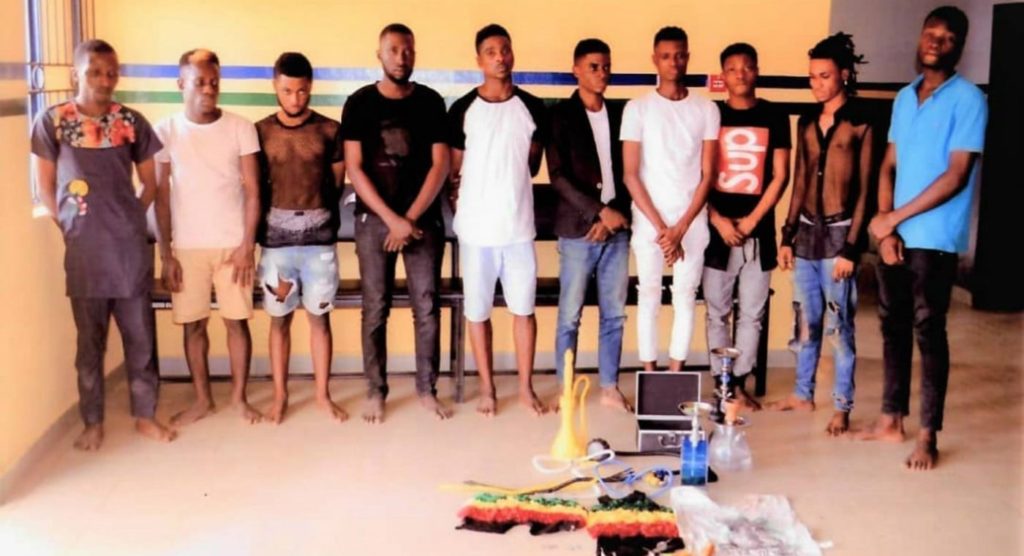
A judge in a Nigerian court has thrown out a case against 47 men charged with public displays of affection with members of the same sex, ending what had widely been seen as a test of the country’s laws banning homosexual relationships, according to Reuters.

The Nigerian law banning gay marriage, punishable by up to 14 years in prison, and same-sex “amorous relationships”, prompted an international outcry when it came into force under former President Goodluck Jonathan in 2014.

The men were arrested in a police raid on a Lagos hotel in the city’s Egbeda district in 2018. Police said the men were being initiated into a gay club, but the defendants said they were attending a birthday party.

Prosecution and defence lawyers in the case had told Reuters News Agency that nobody had yet been convicted under the law, which led to the case of the men being widely seen as a test case that could help to establish the burden of proof.

Prosecutors failed to attend Tuesday’s hearing at the federal high court in Lagos, having previously failed to present some of their witnesses in a case that had been adjourned on several occasions.

Justice Rilwan Aikawa struck out the case and said he had done so due to the “lack of diligent prosecution”.

The specific charge the men faced, relating to public displays of affection, carries a 10-year prison sentence.

Outside the court, many of the men smiled and cheered, including dancer James Brown who, smiling, said: “I am free. It means a lot of good things.”

Under Nigerian law, defendants in a case that is struck out can be re-arrested and arraigned again on the same charge, whereas that is not possible in cases that have been dismissed.

Taxi driver Onyeka Oguaghamba, a father-of-four who said he merely drove people to the party, said he was happy the case had been struck out but disappointed that it was not dismissed entirely.

“I am not happy, because I’m looking for the matter to end in a way that people will see me and believe what I have been saying from the beginning,” he said, adding that the decision meant he could be charged again.

Homosexuality is outlawed in many socially conservative African societies where some religious groups brand it a corrupting Western import.

Gay sex is a crime in countries across the continent, with punishments ranging from imprisonment to death.

Shoprite quits Nigeria

Shoprite, one of the first SA companies to expand into Nigeria is pulling out after 15 years, a huge change in the long-term strategy pushed by former CEO Whitey Basson.

The decision is a U-turn for CEO Pieter Engelbrecht, who inherited the once lucrative but risky Nigeria business from Basson, and who told Business Times two years ago that the West African country was central to the group’s cross-border expansion strategy.

Shoprite said in August it had been approached by various investors and has decided to initiate a formal process to consider the potential sale “of all, or a majority stake” in its Nigerian supermarket business.

Source: Business Day

Solutions for a Canadian recovery in this crisis

While the world has seen quite a few economic crises, both global and local, the current situation is different to all of them, triggered as it has been by a pandemic. COVID-19 has meant that a number of small businesses all over the world have been hit the worst, and these were the ones who were struggling before the pandemic hit as well. With wafer-thin margins and small client bases, the fact that people cannot safely step out of their homes has led to a huge drop in revenues across the board, causing millions of people to lose their jobs and small businesses to shut down. A recovery will require the use of tools and tricks which are new, since the old ways of coping with a financial crisis may not be effective in this instance.

It has already been seen that small businesses have seen twice as many job losses as larger businesses during the crisis, and so any recovery plan needs to focus on them first. In Canada, 98% of employers are small businesses, which shows just how necessary it is to help these enterprises out, especially as a recent survey by the Canadian Federation of Independent Business recently found that one in seven small businesses could go bankrupt due to the impact of the crisis. This will have a snowball effect, as jobs will be lost, not to mention the loss in tax revenue and the drop in GDP that will follow. It is therefore essential that small businesses form the focus of any recovery plan in Canada.

The Canadian economy is expected to contract by 6% in 2020, but the expectation is that there will be an almost immediate rebound, with 6% growth projected for 2021. The likelihood of this rebound will depend on the success of any recovery plan. Research has shown that there are a few key areas which can help the economy to rebound faster than expected.

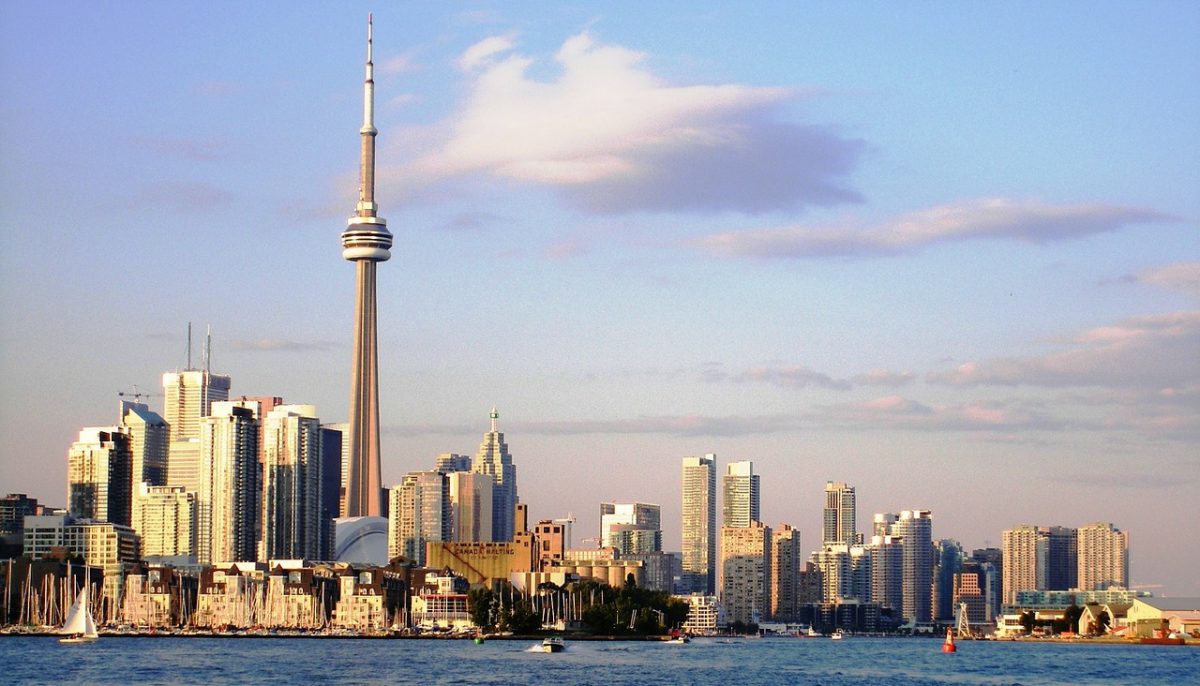
For starters, businesses in Toronto and its surroundings should not be hit too badly, as the region continues to show growth despite a slow reopening. Elsewhere, it will be important for the government to focus on the digital economy and technological solutions, as these have been resilient in the face of the pandemic. Online businesses and service providers have seen an increase in demand, as people who cannot step outside their homes turn to the internet for their needs. We have even seen traditional physical businesses turn to the internet to continue to provide their services to customers. For example, casinos have been shut in the country since March, but many operators have created new Canadian casino online websites to try and continue operations and provide a similar experience to customers as far as possible. Land-based casinos in Canada will therefore be well-advised to focus on their online presence as well, as the popularity of this medium will not go away anytime soon. This is a part of the wider technological trend in the Canadian economy. The IT and communications sectors contributed 4.8% to Canadian GDP in 2019, and increased to over 5% in 2020. These tech solutions have been utilised across sectors, from agriculture to financial services, showing just how widespread their impact on the economy can be if given the right support.

Manufacturing will be another significant sector to focus recovery efforts on. Many businesses have responded quickly to the changing environment by moving to new products, and altering their supply chains to be able to meet the demand for those new products. Healthcare products such as personal protective equipment is the best example of this, as many businesses have pivoted to manufacture PPE where possible. This shows the need to be agile and efficient, and the government will need to ensure that the right environment is provided to companies to allow them to thrive in this new scenario.

We have ‘higher cultural standard’: Japanese FM on coronavirus outcome

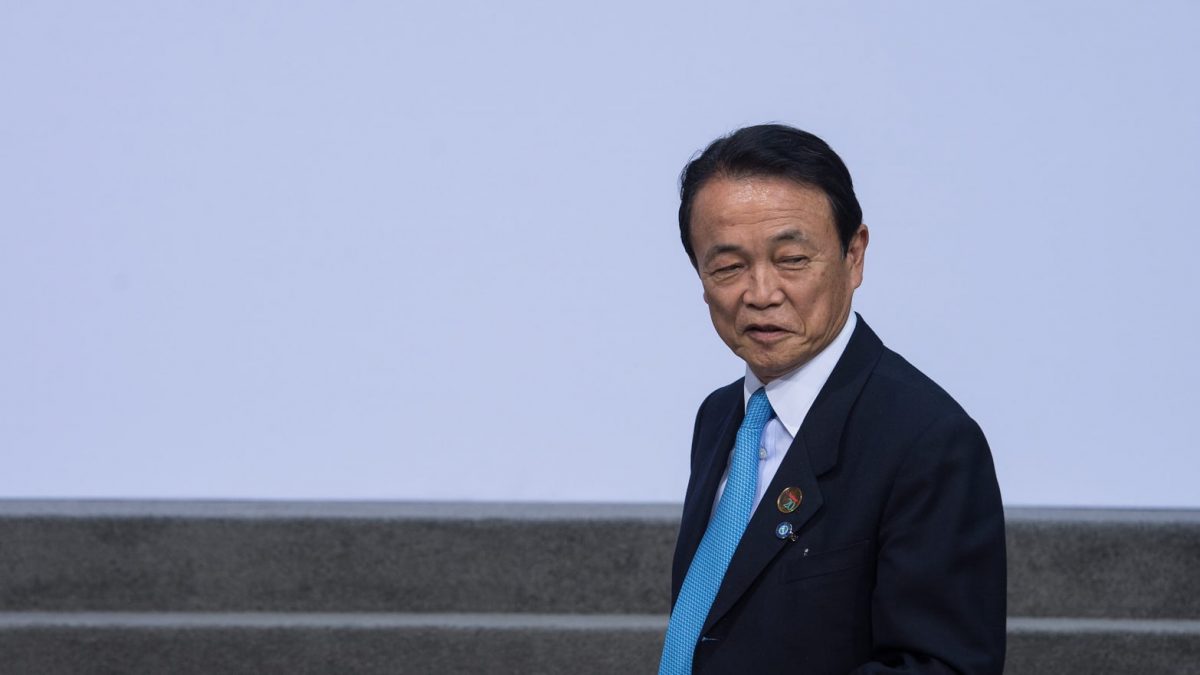
Japan’s success against the coronavirus without enforcing a strict lockdown is due to the citizens’ “cultural standard” that is different from other nations, Finance Minister Taro Aso said, drawing criticism from the public that the comments were inappropriate.

“Other countries have called me up and asked me if we’re the only ones with some drug against the virus or something,” Aso said on Thursday in response to a question from a lawmaker on Japan’s reputation of successfully containing the pandemic. “When I tell them ‘our country’s cultural standard levels are different to yours,’ they’re left speechless. That’s the simplest way to put an end to the questions.”

Despite the lack of harsh measures, Japan suffered far fewer coronavirus infections than any of its Group of Seven peers, with about 7 deaths per million, a track record that Aso noted in his comments. Japan isn’t an exception though in Asia, with Taiwan and South Korea reporting lower mortality rates. —Bloomberg

Read the full article here.

African Union condemns ‘murder of George Floyd in USA’

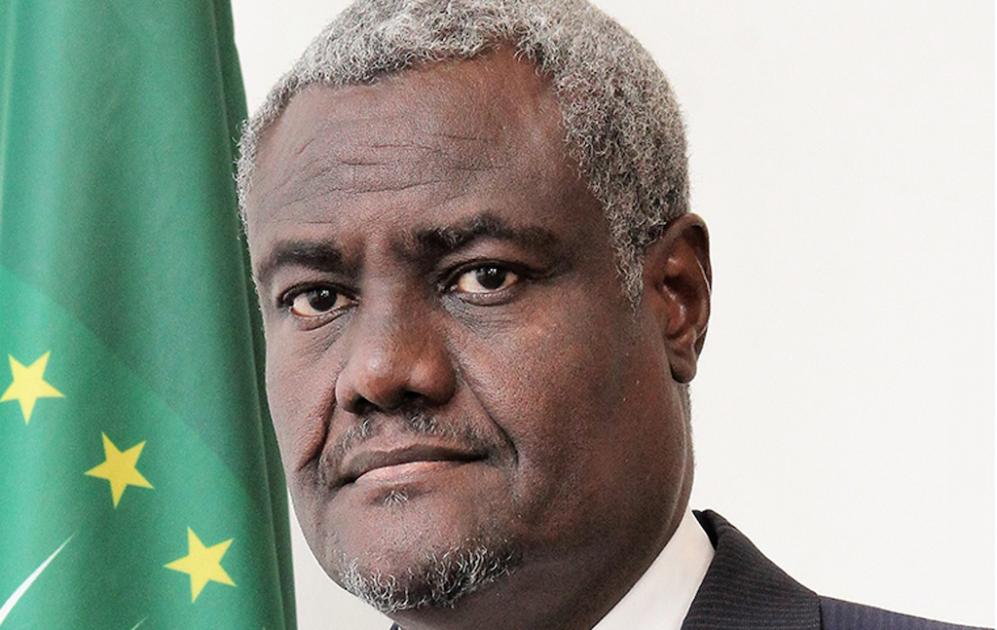
29 May 2020, Addis Ababa: The Chairperson of the African Union Commission Moussa Faki Mahamat strongly condemns the murder of George Floyd that occurred in the United States of America at the hands of law enforcement officers, and wishes to extend his deepest condolences to his family and loved ones.

Recalling the historic Organisation of Africa Unity (OAU) Resolution on Racial Discrimination in the United States of America made by African Heads of State and Government, at the OAU’s First Assembly Meeting held in Cairo, Egypt from 17 to 24 July 1964, the Chairperson of the African Union Commission firmly reaffirms and reiterates the African Union’s rejection of the continuing discriminatory practices against Black citizens of the United States of America.

He further urges the authorities in the United States of America to intensify their efforts to ensure the total elimination of all forms of discrimination based on race or ethnic origin.

Issued by:
The Spokesperson of the Chairperson of the Commission
Ebba Kalondo
KalondoE@africa-union.org
+251911510512

Famine: Zimbabwe’s chickens are coming home to roost

Zimbabwe, which has been ruled by the radical Afro-Marxist party ZANU PF for the last 39 years and long a darling of the global left, is finally hitting an economic brick wall with a possible famine in the offing, at least according to the United Nations World Food Programme.

The economic mismanagement of the country has been complemented by what is being called “the worst drought in almost four decades, cyclone-induced floods and an economic collapse have left Zimbabwe on the verge of its worst-ever famine”.

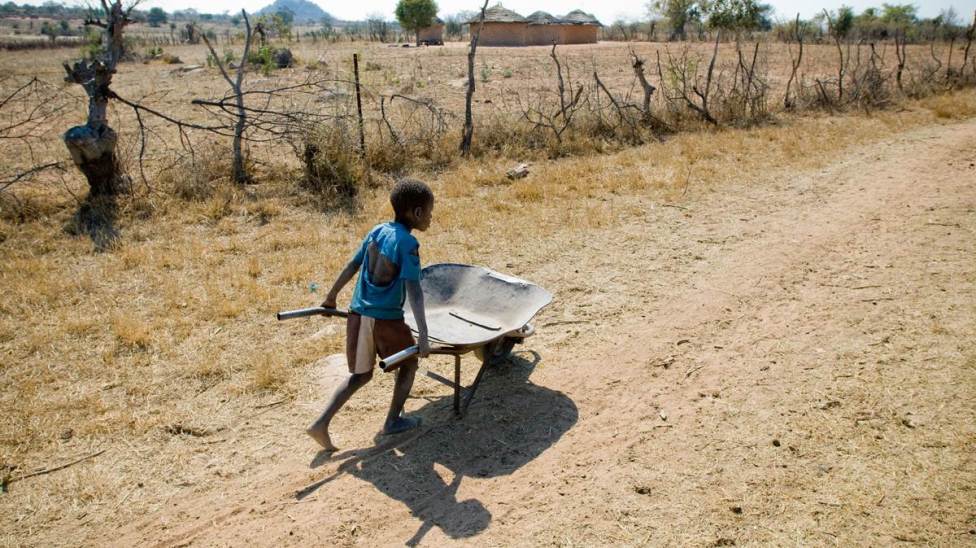
The southern African nation will probably run out of maize — its staple food — by January and about three out of five Zimbabweans won’t have enough to eat, according to the United Nations World Food Programme.

The government has already declared a state of disaster because of the drought, which has decimated harvests. One of the strongest-ever cyclones in the southern hemisphere also destroyed crops in March and a deepening economic crisis has limited the government’s ability to address the looming shortfalls.

Since a parity peg to the U.S. dollar was dropped in February, the local currency has slumped to 13.85 to the dollar, making it the world’s worst performer. That’s slashed spending power in a country where most goods are imported. Zimbabwe is already struggling to find sufficient foreign exchange to fund imports of fuel and wheat.

While Zimbabwe has experienced intermittent food shortages for the last two decades, the problem has mostly been limited to rural areas. This time, 3 million of the 8.5 million people at risk of food insecurity are in cities, said Eddie Rowe, the WFP’s country director in Zimbabwe.

“You will have a lot more people hungry in Zimbabwe than ever before,” he said. In the past, “in urban areas the alarm bells were not ringing.”

“The drought has just exacerbated the situation,” said Jee-A van der Linde, an economist at NKC African Economics in Paarl, South Africa. It will “deteriorate to a point where they need foreign aid.”

The country’s maize crop is expected to plummet 54% this year and Agriculture Secretary Ringson Chitsiko warned in March it only had seven months of grain stockpiles, including corn. Parts of north-western Zimbabwe had their lowest rainfall since 1981, according to the Southern African Development Community.

Zimbabwe has made attempts to replenish its maize stocks, but an international tender for at least 750,000 tons of corn failed because the government and bidders couldn’t agree on financial terms, two people familiar with the situation said.

The country has now agreed to buy 150,000 tons of maize from South Africa, the people said. However, analysts estimate Zimbabwe could need as much as 1 million tons of maize imports.

Sibusiso Moyo, the country’s foreign minister and head of its grain importation committee, didn’t respond to messages sent to his office seeking comment.

Zimbabwe’s crisis has been compounded by smaller harvests in neighboring countries, such as Zambia, which often have surpluses

The white maize preferred by Zimbabweans also limits the pool of potential suppliers, as the yellow variety is more common in other parts of the world. In southern Africa, white maize is mainly reserved for human consumption and yellow is fed to animals.

Faith in Humanity Restored, 2018 Edition

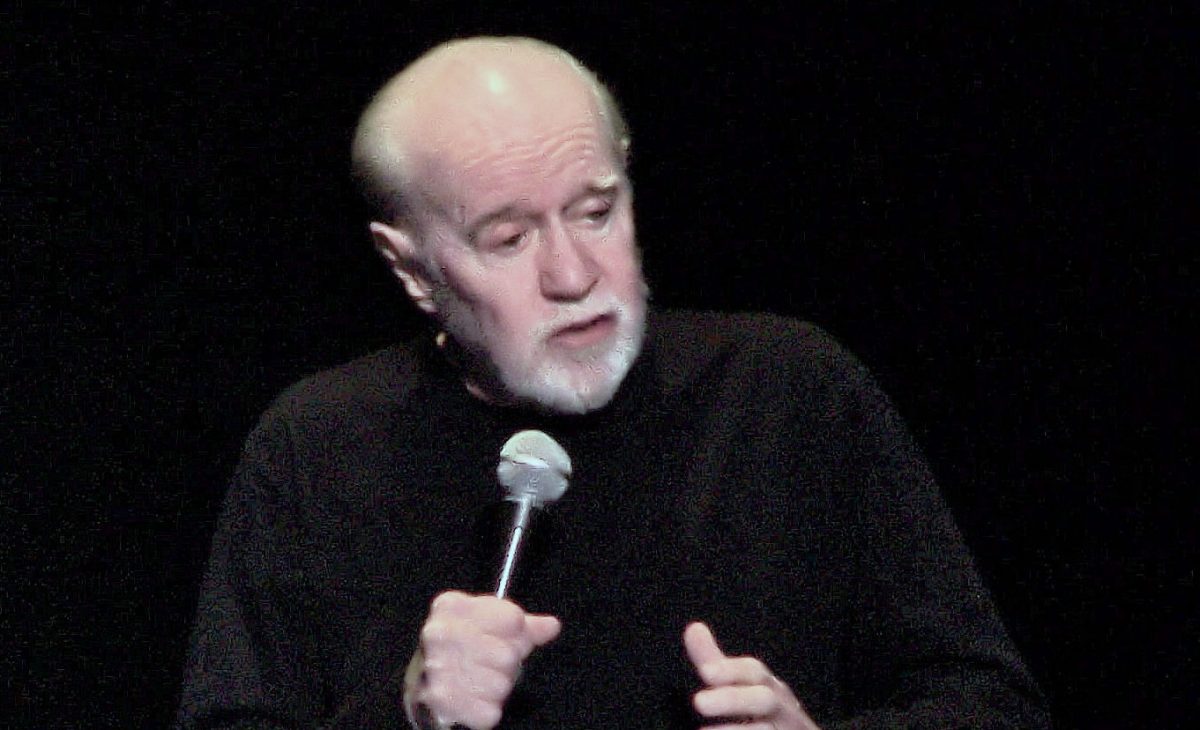
In his 2005 HBO stand-up comedy special, world-famous philosopher and social critic (posing as a stand-up comedian) George Carlin has enumerated quite a few things humanity should be ashamed of, like war, genocide, consumerism, and several others. If you look at the mainstream media, all you see is bad news: an earthquake here, famine there, a caravan of desperate people heading for the US border, armed conflicts all over the world, and countless examples of corporate greed exploiting not only humans but animals, nature, the planet as a whole. In times like these, it’s hard to remember that there are still things that make us as a species worthy of survival. If you find it hard to think of any, here are a few things that will – at least for a while – restore your faith in humanity.

England’s soccer team donates all World Cup winnings to charities

Sports stars are just a bunch of overpaid entertainers – this is something that probably crosses the minds of many when seeing the fabulous amounts they make year after year. This might be true – but, it seems, not all of them are greedy. After failing to take home the World Cup this year (France proved it’s better at football),
England’s national football team donated all its World Cup winnings to charity. And it’s not two pennies either – the team took home at least $22 million by reaching the semi-final in the competition.

Prepare to be even more surprised: England’s footballers have been playing internationally for free for more than a decade. Since 2007, all their wages from international games to charity through the England Footballers Foundation (EFF), supporting charities like UNICEF, Cancer Research UK, The Honeypot Children’s Charity, and many others.

March for Our Lives, Washington DC, USA

Everyone in the United States of America has the right to bear arms, according to their Constitution’s Second Amendment. Sometimes, this leads to tragic incidents – like the Stoneman Douglas High School shooting in Parkland, Florida, on Valentine’s Day 2018. This tragic event triggered a massive outrage not only from the media but from the students, too – on March 24, they organized a massive demonstration in Washington DC (and inspired over 800 similar events all across the US and the world) demanding tighter gun control.

While the protests were criticized by many, claiming that their goal was to “destroy the Second Amendment”, media outlets have described them as a potential tipping point for gun control legislation in the country.

The Two Koreas

North Korea and South Korea have had an antagonistic relationship for decades – and they both took a step in the right direction this year. This spring, the presidents of the two countries – North Korean leader Kim Jong Un, and South Korean president Moon Jae-In met for the first time, each of them stepping on the soil of the neighbouring country as a symbolic gesture. Their first summit was mostly ceremonial, with symbolic gestures made by both, including the planting of a tree, the signing of the Panmunjom Declaration for Peace, Prosperity and Unification on the Korean Peninsula, and had a formal dinner.

Since then, the two leaders met twice – in May and September – and are planning to organize another in December, when North Korean president Kim Jong Un will visit Seoul.

Unable to pay for wheat, Zimbabwe running out of bread

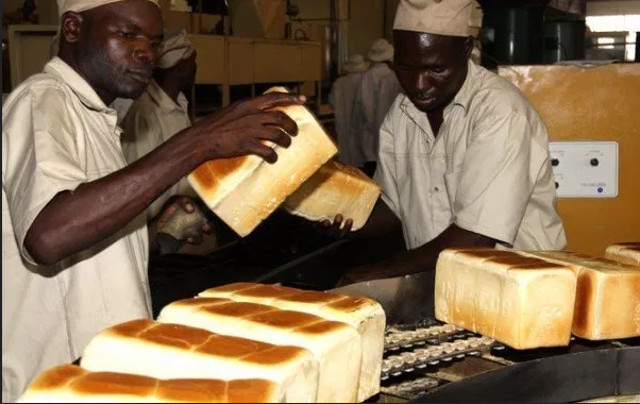
Zimbabwe could run out of bread in a week after flour stocks dwindled due to the country’s failure to pay for imported wheat, according to a confidential letter written to bakers by the country’s grain millers’ group on Monday.

The southern African nation is in the grip of a severe shortage of U.S. dollars that has sapped supplies of fuel and drugs, as President Emmerson Mnangagwa struggles to live up to pre-election promises to quickly revive the troubled economy.

Zimbabwe imports wheat, which it blends with its local crop to make flour for bread, the country’s second major staple after maize meal.

The Grain Millers Association (GMAZ) general manager Lynette Veremu wrote to the National Bakers Association of Zimbabwe (NBAZ) to tell them the country cannot pay for 55 000 tonnes of wheat in bonded warehouses in Mozambique and Harare.

“We regret to advise that the current stocks for foreign wheat for bread flour have depleted to 5 800 tonnes and … we are left with less than eight days of national bread flour supplies,” the letter said.

GMAZ spokesman Garikai Chaunza confirmed the letter, saying “this is the situation we are faced with”.

Corrupt Angola has $80 billion of debt, some ‘hidden’

LUANDA, Angola. As Mozambique cracks the whip on officials and cronies allegedly involved in the multibillion-dollar debt scandal, string indications of deals between Angola and global companies involved in the scandal is increasingly bringing to question the credibility of President Joao Lourenco’s already-debatable drive against corruption and presents Angola as risky for foreign investors.

The direct involvement of the Lourenco, who was the Minister of Defense when the transactions at the centre of the emerging controversy were carried out, makes the revelations even more damning to his government and his quest to rid the oil-rich nation of rampant graft and address economic decline.

It has emerged some engagements were during his tenure as president. He has been in power since September 2017.

EXX Africa, the business risk intelligence firm, has unearthed indications that the Ministry around the same time as the US$2 billion debt scandal emerged in fellow ex-Portugal colony Mozambique.

Between 2013 and 2014, Mozambique state-owned security companies borrowed from some international financiers but the government only disclosed most of the debt in 2016.

According to findings by EXX Africa, Angolan Ministry Defense reached a €495 million contract to buy ships and maritime construction capacity from Privinvest, in a contract strikingly similar with ProIndicus and MAM, the companies at the center of the ‘hidden debt’ scandal in Mozambique.

Among other prominent transactions, it has emerged that in 2015, Simportex – a company of the Angolan Defense Ministry, which entered into a partnership with Privinvest, signed contracts, totaling €122 with Finmeccanica, now called Leonardo SpA, for acquisitions that Privinvest is said could have made itself.

In December that year Simportex apparently signed contracts equivalent to for the purchase and sale of equipment, substitutes, and to provide installation and training to equip a national center and three regional maritime coordination centers, as well as to install several control stations, replicators of signal and means of communication in the Angolan coast, according to EX Africa.

It also included the reported purchase and sale of two ultra-fast patrol vehicles, spare parts, tools and training services between the Ministry of National Defense and the company Whitehead Sistemi Subacquei SPA, with local currency equivalent to €7,3 million.

In the same year, Angola entered another agreement with the French subsidiary of Privinvest, CMN, to provide a hydroelectric project but the scheme never materialized to date.

In addition to the agreements, there are indications of a relationship between Lourenço and ProIndicus. Sources reported that during his tenure as minister from 2014-17, he visited the Mozambique project to secure a similar package for his country.

Investigations ascertained a broader network of individuals and entities were likely to have been involved in the relationship. The name of former Vice-President Manuel Vicente has again cropped up.

In June 2017, a Portuguese court ruled that Vincente should face trial over bribery allegations he bribed a magistrate with $810 000 in order to shelve investigations into his deals at the named Sonangol Group, the oil firm he headed between 2009 and 2012.

Local analysts concurred with EXX Africa that indications of deals secured by Angola raised serious doubts about the credibility of Lourenco’s anti-corruption drive, embarrasses the president and risk and undermines the country’s prospects as an investment destination.

Lourenco’s campaign has largely culminated in a purge of family members of his predecessor, Jose Eduardo dos Santos, and government officials linked to the former president.

“The revelations of links with companies synonymous with Mozambique’s debt crisis indicate Angola might have a similar problem brewing, equivalent if not deeper than Mozambique’s,” said analyst Miguel Sanz.

A2 Global Risk, the think-tank, stated that questions had been asked why the government has excluded certain figures from the clampdown, which seemed at odds with Lourenco’s public rhetoric.

“With politically exposed persons who have moved to the new administration still likely to dominate Angolan businesses until Lourenço’s efforts bring returns, where does this leave foreign companies seeking investment opportunities in Angola?” the firm asked rhetorically.

EXX Africa stated that besides possibly embarrassing Lourenço and undermining government’s anticorruption platform, mounting evidence risked straining relations with relations with the International Monetary Fund (IMF).

Last December, IMF approved a three-year $3,7 billion loan seen as a boost to revive an economy facing a decline owing to the global upheavals in the oil sector. Angola’s economy is overly-reliant on oil.

Angola’s is struggling to control its foreign and domestic debt, which is estimated at nearly $80 billion.

IMF and foreign donors cut off support to Mozambique. It sparked a currency collapse and the Southern African country defaulting on sovereign debt.

In recent days, a son former President Armando Guebuza, the ex-head of Mozambique’s intelligence services and the chairmen of three firms linked to the debt scandal were among several individuals arrested for their alleged roles. These beleaguered chairmen were ex-members of the State Security and Information Service (SISE)

President Felipe Nyusi last week dismissed Deputy Minister of Economy and Finance, Maria Isaltina Lucas, for her alleged involvement.

Former Finance Minister, Manuel Chang, has been held in South Africa since he was arrested in December.

Mozambique and the United States have both want him extradited to the respective countries.

– Pedro Agosto, CAJ News

USA finally wakes up to Chinese near-control of Africa

The United States lashed out Thursday at “predatory” Chinese and Russian policy in Africa and unveiled a new strategy for using economic muscle to counter its rivals’ grips on the continent.

An increasingly assertive Beijing and Moscow “pose a significant threat to US national security interests” in resource-rich Africa, White House national security advisor John Bolton said in a speech he was to deliver later.

Their “predatory practices” stunt economic growth and independence, while hampering US trade and military goals, he said in the text of the speech previewed by AFP.

China, in particular, has made dramatic inroads in Africa with direct investment, aid and infrastructure projects that leave partners burdened by heavy debt — and under long-term Chinese influence.

At a time when the Pentagon wants to reduce its Africa footprint, the United States says its best weapon in the power struggle will be to build partnerships through trade.

African governments will from now on find a tighter-fisted approach to traditional aid, Bolton said, with an end to “indiscriminate assistance across the entire continent.”

A senior Trump administration official said there is longtime US “frustration” with corrupt African aid recipients.

He said Bolton would call out South Sudan in particular as having fallen from favour.

Washington “does not intend to go forward with spending hard-earned United States taxpayer dollars to subsidize some of the kleptocratic regimes and violators of human rights,” the US official said, on condition of anonymity, ahead of the speech.

But where the Trump administration does want to see money flowing is through the private sector.

That would not only suit Trump’s business instincts but accentuate US strengths over its great power rivals, the official said.

“We’re going to try to connect harder than we’ve ever done before — in a very focused effort — US businesses and African markets and vice versa,” the official said.

“We’re going to encourage African leaders to choose high-quality, transparent, inclusive investment from the US (contrasting) to that of China and Russia.”

“The USA brand is still very strong,” the administration official said.

Military ‘scale back’

Bolton will use his speech to tell African leaders that “in our economic dealings, we ask only for reciprocity, never for subservience.”

China, by contrast, deliberately leads client states into debt, “promoting corruption,” the US official said, while “Russia is using corrupt practices to gain influence and leverage with a number of African countries.”

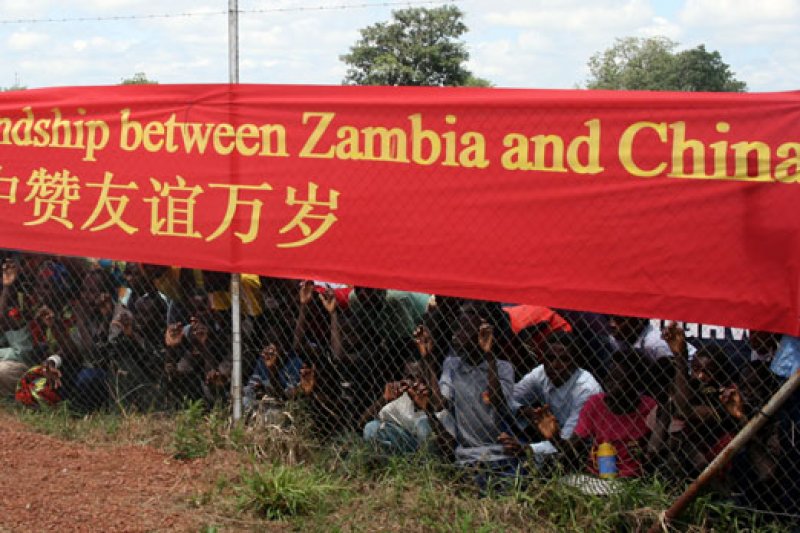
The official said that Chinese control of Djibouti’s Doraleh port and growing influence over Zambia, as well as Russia’s deepening presence in the Central African Republic, were among the top concerns.

There’s also worry about the role of Russia in war-torn Libya, where Washington is likewise reviewing its strategy, the senior official said.

The competition with China and Russia comes as Washington prepares to dial down its already modest military response to the spread of Islamist militant groups in Africa.

Instead, Washington wants regional players to take more responsibility for their own security, with a view to boosting Washington’s use of softer power.

The Pentagon “probably will scale back over time. It won’t be abrupt, but they will be able to scale down,” the Trump administration official said.

“It may be that as the (defense department) scales back, we figure out where State Department can scale up and how we can again enhance the capacity.”

Row between Australia and ANC regime over farm killings

The Department of International Relations and Cooperation (Dirco) says it will engage the Australian government on recent statements made by its Home Affairs Minister Peter Dutton that he was considering fast-tracking visa applications for white South Africans.

Dirco said in a statement on Thursday that it was surprised that the Australian government chose not to make use of diplomatic channels to raise its concern.

“The department is however engaging with the Australian Government on this matter. It must be stated again that the President Cyril Ramaphosa, Minister of Rural Development and Land Reform Maite Nkoana-Mashabane, Minister of International Relations and Cooperation Lindiwe Sisulu have said on a number of public platforms and also when engaging with different stakeholders that the process of land redistribution would be orderly, within South African laws and taking into consideration both the social and economic impact,” said the department.

The Australian minister’s comments sparked outrage from a number of South Africans following the comments.

Dutton claimed the decision to fast-track visas for white South African was sparked by the “unfair” treatment of white farmers who were being murdered and faced the threat of their land being taken away.

Dirco said whites had nothing to fear in South Africa, even though many were being killed and tortured.

“The government has been very clear and transparent on a land reform process. All stakeholders will be consulted and they are also encouraged to engage with Parliament. There is no reason for any government anywhere in the world to suspect that any South African is in danger from their own democratically elected government. That threat simply does not exist,” said Dirco.

Canadian court: If South African blacks attack you, you must be a ‘white supremacist’

Canada’s Federal Court has rejected a white Afrikaner family’s bid for asylum in the country, claiming that racially skewed crime statistics from South Africa constituted “white-supremacist hate literature”. Judge René LeBlanc of the court said their refugee claim “offered no evidence the state of South Africa is incapable of offering protection for their children from rape or murder”.

Canada also rejected the notion that the South African president and other political figures singing “Kill a Boer, kill a farmer” constituted discrimination or hate speech.

Eric Williams Endre and Sonja Endre, a married couple, along with two of their children and Sonja’s parents, visited Canada in 2016 and after hearing that the country championed human rights, decided to apply for refugee status as they had already been attacked five times by blacks in South Africa. Once in 1995 their car was hijacked at gunpoint, then in 2004 they suffered a home invasion with four blacks assaulting and robbing them. In 2013 their home was burglarized. A year later, in 2014, their car was stolen outside their house and later in the same year three black men tried to steal Sonja’s cell phone while she was working.

While Canadian Prime Minister Justin Trudeau has often said in the media that “all refugees are welcome in Canada”, his statement apparently does not apply to white South Africans, specifically Afrikaners. Canada’s Immigration and Refugee Board denied the Endres refugee protection, saying “there was no reliable evidence that they were attacked due to their race, and it was more probable they were attacked for economic reasons — to steal their possessions”.

During their appeal to the Federal Court of Canada, the family argued that the IRB failed to adequately consider the children’s circumstances. They said that “their children cannot safely play in parks in South Africa; one was bullied and had been taken out of school; and their mother could not walk with her children without fearing they could be assaulted, raped or killed”.

South Africa has the highest incidence of rape in the world. However, defending the IRB’s decision, government lawyers stated that concerns for the children were based on “patently unreliable racist propaganda”.

A government lawyer said the fear of white children being raped by blacks “was highly offensive as the information the family relied on was white-supremacist hate literature that should be ignored”.

The government also said the Endres’ claim was based on a risk of generalized crime in South Africa, meaning that it could impact almost anyone, not only those who are white or Afrikaners.

According to Canada’s Immigration and Refugee Board, refugee status is “not meant to protect people who face problems the general population of a country faces, but only fears of persecution specific to race, religion, nationality, membership in a particular social group or political opinion”.

The international refugee system is not meant to offer a safe haven for all suffering people, the IRB’s published guidelines say.

In his judgment dismissing their appeal, René LeBlanc said: “It is also settled law that absent a complete breakdown of state apparatus, it is presumed that a state is capable of protecting its citizens and that this presumption can only be rebutted by the refugee claimant with clear and convincing evidence.”

Until now, very few South African citizens have been accorded refugee status in Canada. So far in 2017, none has been accepted. In 2016 there were 12, in 2015 there were 18, in 2014 there were two and none in 2013.

Is China colonising Namibia and other African countries?

Every weekday before dawn, a morning migration takes place near the desert on Africa’s southwestern coast. At 5:30 in the Namibian enclave Swakopmund, whose century-old buildings still bear the imprint of German colonization, solitary men in khaki uniforms emerge from houses and apartment complexes, the white reflective strips on their pants flashing as they walk briskly through the darkness. They are not African but Chinese. No one else is stirring in the Atlantic Coast town as the men converge on a tidy house on Libertina Amathila Avenue, the only one in the neighborhood with its lights ablaze.

Dylan Teng, a boyish 29-year-old engineer with a brush cut and wire-rimmed glasses, is among the last to arrive. Just as he has done nearly every day since landing in Namibia three and a half years ago, Teng joins the others in wolfing down a breakfast of steamed buns and rice porridge. He picks up a packed lunch prepared by a company chef and at precisely 6 o’clock, with stars still glimmering overhead, he boards a bus emblazoned with the letters C.G.N. — China General Nuclear, a state-owned behemoth that owns the biggest Chinese project in all of Africa.

An hour later, as the sun clears the horizon, the bus winds through a craggy moonscape and descends to the Husab Uranium Mine, a $4.6 billion investment that is the second-largest uranium mine in the world. Teng has made this trip nearly a thousand times, but Husab always seems like a mirage: a virtual city stretching seven miles across the desert floor, from two vast open pits being gouged out of the rocky substratum to a processing plant that, on the last working day of 2016, produced its first drums of U₃O₈, the yellowcake that can be used to generate nuclear power (and also to make weapons). “We had a big ceremony that day,” Teng says.

One of the few university graduates from his village in China’s southwestern Sichuan Province, Teng is keenly aware of Husab’s significance. It is not simply a lifeline for Namibia’s struggling economy, one that the country estimates will increase its gross domestic product by 5 percent when the mine reaches full production next year. The uranium itself, almost all of which will go to China, will also help turn Teng’s homeland into a world leader in nuclear energy and reduce its dependence on coal. In Beijing, where he worked before coming here, Teng lived under the gray blanket of coal-generated pollution that hangs over much of eastern China. Now he is working for the future — his own and his country’s — under an endless African sky of cobalt blue. “I never imagined,” he says, “I would end up halfway around the world.”
China’s gravitational pull can be felt today in every nook of the globe. Few countries feel the tug more strongly than Namibia, a wind-swept nation with a population of 2.4 million — barely a tenth the size of Beijing’s — some 8,000 miles away from the Chinese capital. The desert where the Husab mine has materialized in recent years used to be known only for the presence of Welwitschia mirabilis, the short, droopy national plant that grows just two leaves — and can live for more than 1,000 years. Now, in little more than 1,000 days, China’s reach has spread far beyond the uranium mine.

Just north of Swakopmund, a Chinese telemetry station sprouts from the desert floor, its radar dishes pointing skyward to track satellites and space missions. Twenty-five miles south, in Walvis Bay, a state-owned Chinese company is building an artificial peninsula the size of 40 baseball fields as part of a vast port expansion. Other Chinese projects nearby include new highways, a shopping mall, a granite factory and a $400 million fuel depot. Chinese trade flows through the port: shipping containers filled with cement, clothing and machinery coming in; tiles, minerals and — in some cases — illegal timber and endangered wildlife heading out to China. The activity is so frenzied that rumors of a proposed naval base in Walvis Bay, though vehemently denied by Chinese officials, do not strike locals as implausible.

This small outpost offers a glimpse of what may be the largest global trade-and-investment spree in history. Driven by economics (a hunger for resources and new markets) and politics (a longing for strategic allies), Chinese companies and workers have rushed into all parts of the world. In 2000, only five countries counted China as their largest trading partner; today, more than 100 countries do, from Australia to the United States. The drumbeat of proposed projects never stops: a military operating base, China’s first overseas, in Djibouti; an $8 billion high-speed railway through Nigeria; an almost-fantastical canal across Nicaragua expected to cost $50 billion. Even as China’s boom slows down, its most ambitious scheme is still ramping up: With the “One Belt, One Road” initiative — its name a reference to trade routes — President Xi Jinping has spoken of putting $1.6 trillion over the next decade into infrastructure and development throughout Asia, Africa and the Middle East. The scheme would dwarf the United States’ post-World War II Marshall Plan for Europe.

China’s relationship with Africa goes back to the 1960s, when Chairman Mao Zedong promoted solidarity with the developing world — “Ya Fei La,” as he called it, using the first syllables for Asia, Africa and Latin America. Though it was poor and mired in the chaos of the Cultural Revolution, China won new allies in Africa by finishing, in 1976, a 1,156-mile railroad through the bush from Tanzania to Zambia. Aid continued to trickle in, but there were no other big projects for nearly 30 years, as China focused on building up its domestic economy, following its leader Deng Xiaoping’s prescription to “hide your strength and bide your time.” That ended in the 2000s, when Beijing, recognizing the need for foreign resources and allies to fuel its economic growth, exhorted the nation’s companies to “go out” into the world.

Today, if you take the red-eye flight from Shanghai to Addis Ababa, the Ethiopian capital, chances are you’ll be seated among Chinese workers heading to a construction site in oil-rich Equatorial Guinea, a cotton-processing plant in Mozambique, a telecom project in Nigeria. China’s trade with African nations has increased fortyfold in the past 20 years. The workers and migrants carrying out China’s global vision are now so ubiquitous in Africa — as many as a million of them, according to one estimate — that when my wife and I wandered into a Hunanese restaurant in Addis, the red-faced workers devouring twice-cooked pork blurted out: “Ah, laowai laile!” “Foreigners have come!” It seemed rude to point out that they were foreigners, too.

China’s advances have come as the West seems to be retreating. United States engagement in Asia, Africa and Latin America declined after the Cold War, when the regions served as proxies for superpower rivalries. China’s rise and the wars in the Middle East also pulled away resources and attention. And now, with Washington raising doubts about global agreements on issues like free trade and climate change, Beijing has more leverage to push its own initiatives and show its capacity for global leadership. President Trump’s disdain for the Trans-Pacific Partnership has already made Beijing’s trade proposals, which exclude the United States, more appealing. “In certain parts of the world, the relative inattention of the Trump administration is definitely creating an opening for China to fill,” says David Shambaugh, director of the China Policy Program at George Washington University and author of the 2013 book “China Goes Global.” But “China remains very much a partial power — and only offers other countries an economic relationship.”

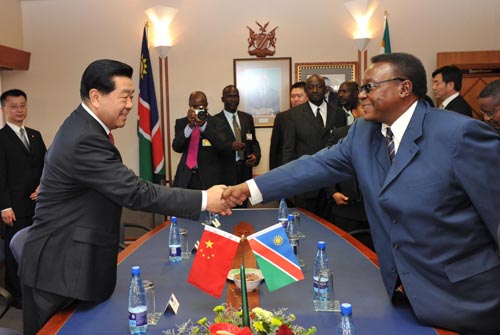
Still, for a nation like Namibia, China’s pitches can be irresistible partly because they’re rooted in historical solidarity. Beijing backed the black nationalist movement’s liberation struggle against apartheid and its white South African overlords. Sam Nujoma, the leader of the South West Africa People’s Organization (Swapo), visited Beijing in search of guns and funds in the early 1960s. When Namibia finally claimed independence in early 1990, with Nujoma as president, China became one of its first diplomatic allies, pronouncing the two countries “all-weather friends.” (Beijing was also desperate for allies to break its diplomatic isolation after its violent crackdown on the 1989 democracy movement.) – New York Times, fragment

Grace Mugabe flies the coop, back to Zimbabwe

PRAAG has reliably learnt that Zimbabwean first lady Grace Mugabe has left the country.

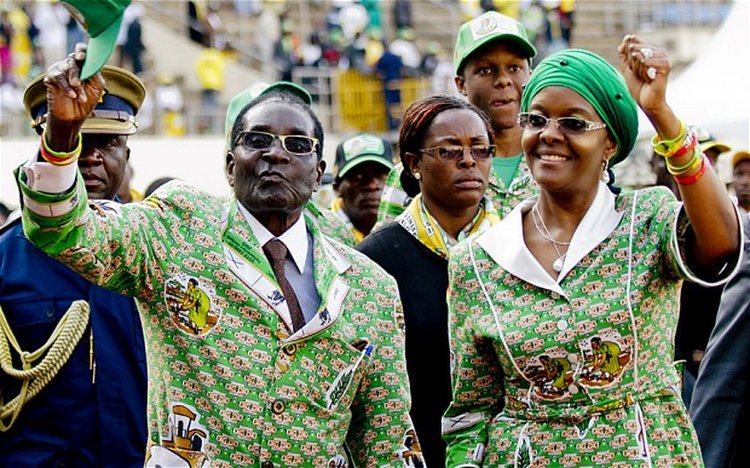
Sources say the wife of the Zimbabwean dictator left South Africa in the early hours of Sunday morning along with her husband President Robert Mugabe.

South African authorities had placed a red alert on Grace after she was charged with assaulting 20-year old model Gabriella Engels last Sunday.

She has applied for diplomatic immunity from the South African government. It is still unclear whether she was granted diplomatic immunity in an unprecedented move, as no wife of a president enjoys such immunity, or whether she was simply allowed to leave by the South African authorities despite assault charges pending against her.