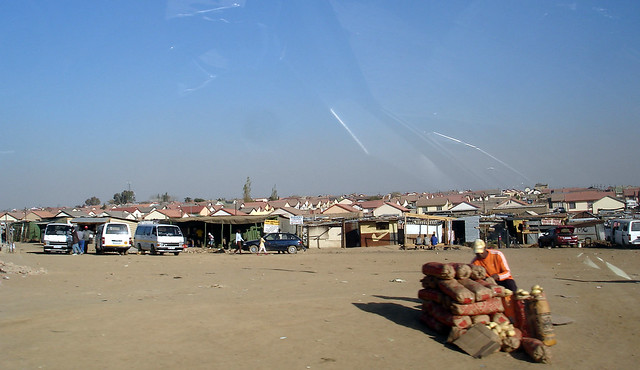
Over the next 16 years, all of the world’s 10 fastest growing cities are going to be in Africa. If this growth is a process of people voting with their feet, as last year’s winner of the Nobel Prize in Economics Paul Romer once put it, these cities are winning.
Yet urbanisation in many developing countries, particularly in sub-Saharan Africa, is not delivering the benefits of people and firms clustering together. Historically, cities have been the drivers of productivity and engines of economic growth. One key factor preventing this potential from being unlocked is how cities are governed. It matters who makes the decisions and how they do it. It also matters how the decisions are subsequently implemented.
Cross-city experiences, which we detail in our newest policy paper, have shown that tangible policy options which target underlying institutions can lead to better governance outcomes.
We highlight three elements of the institutions of urban governance: allocation of responsibility, capacity, and legitimacy.
Deciding who decides
First, the most effectively run cities have institutions with clearly defined mandates. Take Cairo. The city has 18 government entities and four parastatal agencies, leading to overlapping and missed mandates. This fragmentation has affected the overall efficiency and operation of Cairo’s transportation system, which relies heavily on private cars and taxis. The result has been widespread congestion. Many trips take more than double the time they would if the traffic flowed freely.
Clearly defined responsibilities and mandates can be achieved through several approaches. The most powerful way of dealing with fragmentation is by creating a single agency responsible for a service or policy decision. To overcome fragmentation, the government of Lagos in Nigeria created an agency to coordinate the work of all transport-related entities. The Lagos Metropolitan Area Transport Authority also awards concessions and levies transport user fees. And it manages major arterial roads throughout the metropolitan region.
This institutional change has improved the clarity of functions in Lagos, paving the way for tangible improvements the city’s transportation. For example, the transport authority has worked with the World Bank to improve the city’s bus service. This included the implementation of a pilot bus franchise scheme along the Iyana-Ipaja-Ikotun corridor, which carries more than 100 000 people every day.
However, the creation of a single entity may not always be feasible or desirable. Softer governance arrangements, such as coordination committees, may sometimes be required. These committees can be temporary, formed and run only when required and subsequently disbanded. Or they can be more permanent. Medellin in Colombia has a committee responsible for integrated housing planning. It brings together the heads of the city’s planning, housing, environmental and public works departments to streamline policy on housing.
Building capacity
Second, municipal governments need the capacity to implement decisions. Again, larger institutional reforms can support this. Revenue reform in Kampala, the Ugandan capital, is a good example.
The Kampala Capital City Authority established a directorate to collect revenue. It was set up separately from the Directorate of Finance. Through this, the city authority was able to dedicate sufficient human and financial resources to revenue collection. As a result, it increased its own-source revenue by nearly 200% in four years.
Other options that may be easier to implement than full institutional reform include establishing strong internal coordination mechanisms to manage programmes and projects. For example, in 2013 Baghdad’s Deputy Mayor created a steering committee to improve the city’s sewerage system. The committee brought together various senior city staff and helped improve the timeliness and overall streamlining of decision making. This contributed towards significant improvements to the city’s sewerage network, including a new competitive bidding system and higher citizen satisfaction.
Adequate legitimacy
Thirdly, effectively making and implementing decisions requires sufficient legitimacy. Legitimacy can be derived from predetermined procedures, like elections. But elections can be difficult to organise and can be very costly.
There are other ways of building legitimacy. These include participatory budgeting. This has been used extensively by municipalities in Brazil. After a series of consultation processes with citizens, the final municipal budget is determined based on priority rankings of projects, considering their technical and financial feasibility. The city isn’t legally bound to invest in the projects selected. Nevertheless the mechanism creates an established channel for identifying priority projects for people. And evidence shows that participatory budgeting does affect municipal spending patterns.
Simply improving public communication can also be a useful and potentially more cost-effective option for building local legitimacy. It can generate public buy-in as well as acting as a mechanism for the municipal government to receive feedback. It can also be a powerful way to increase compliance. For example, Lagos increased tax compliance on business-related taxes by working on its direct relationships and improved communication with the city’s key private sector associations. This led to an increase in business-related taxes. These rose from an estimated 30-40% in 2005 to over 80% by 2015 among large companies.
Urbanisation provides a important opportunity for unlocking economic growth. The challenge for urban leaders is how to effectively govern rapidly growing cities. This requires that critical decisions are made and implemented in a timely manner, and are supported by the majority of citizens.
Shahrukh Wani (@ShahrukhWani) contributed to this article. He is an economist in IGC’s Cities that Work team, based at the Blavatnik School of Government.
Astrid R.N. Haas, Senior Country Economist (Cities) and Manager of Cities that Work, International Growth Centre, with assistance from Shahrukh Wani, who is an economist in IGC’s Cities that Work team, based at the Blavatnik School of Government.
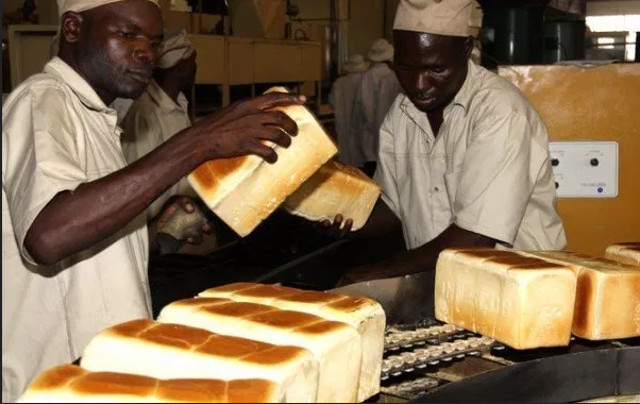
Zimbabwe could run out of bread in a week after flour stocks dwindled due to the country’s failure to pay for imported wheat, according to a confidential letter written to bakers by the country’s grain millers’ group on Monday.
The southern African nation is in the grip of a severe shortage of U.S. dollars that has sapped supplies of fuel and drugs, as President Emmerson Mnangagwa struggles to live up to pre-election promises to quickly revive the troubled economy.
Zimbabwe imports wheat, which it blends with its local crop to make flour for bread, the country’s second major staple after maize meal.
The Grain Millers Association (GMAZ) general manager Lynette Veremu wrote to the National Bakers Association of Zimbabwe (NBAZ) to tell them the country cannot pay for 55 000 tonnes of wheat in bonded warehouses in Mozambique and Harare.
“We regret to advise that the current stocks for foreign wheat for bread flour have depleted to 5 800 tonnes and … we are left with less than eight days of national bread flour supplies,” the letter said.
GMAZ spokesman Garikai Chaunza confirmed the letter, saying “this is the situation we are faced with”.
The United States lashed out Thursday at “predatory” Chinese and Russian policy in Africa and unveiled a new strategy for using economic muscle to counter its rivals’ grips on the continent.
An increasingly assertive Beijing and Moscow “pose a significant threat to US national security interests” in resource-rich Africa, White House national security advisor John Bolton said in a speech he was to deliver later.
Their “predatory practices” stunt economic growth and independence, while hampering US trade and military goals, he said in the text of the speech previewed by AFP.
China, in particular, has made dramatic inroads in Africa with direct investment, aid and infrastructure projects that leave partners burdened by heavy debt — and under long-term Chinese influence.
At a time when the Pentagon wants to reduce its Africa footprint, the United States says its best weapon in the power struggle will be to build partnerships through trade.
African governments will from now on find a tighter-fisted approach to traditional aid, Bolton said, with an end to “indiscriminate assistance across the entire continent.”
A senior Trump administration official said there is longtime US “frustration” with corrupt African aid recipients.
He said Bolton would call out South Sudan in particular as having fallen from favour.
Washington “does not intend to go forward with spending hard-earned United States taxpayer dollars to subsidize some of the kleptocratic regimes and violators of human rights,” the US official said, on condition of anonymity, ahead of the speech.
But where the Trump administration does want to see money flowing is through the private sector.
That would not only suit Trump’s business instincts but accentuate US strengths over its great power rivals, the official said.
“We’re going to try to connect harder than we’ve ever done before — in a very focused effort — US businesses and African markets and vice versa,” the official said.
“We’re going to encourage African leaders to choose high-quality, transparent, inclusive investment from the US (contrasting) to that of China and Russia.”
“The USA brand is still very strong,” the administration official said.
Military ‘scale back’
Bolton will use his speech to tell African leaders that “in our economic dealings, we ask only for reciprocity, never for subservience.”
China, by contrast, deliberately leads client states into debt, “promoting corruption,” the US official said, while “Russia is using corrupt practices to gain influence and leverage with a number of African countries.”
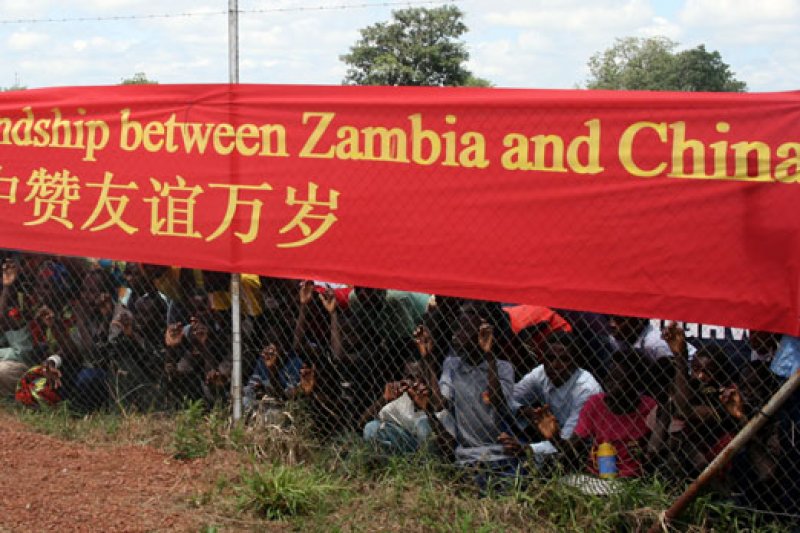
The official said that Chinese control of Djibouti’s Doraleh port and growing influence over Zambia, as well as Russia’s deepening presence in the Central African Republic, were among the top concerns.
There’s also worry about the role of Russia in war-torn Libya, where Washington is likewise reviewing its strategy, the senior official said.
The competition with China and Russia comes as Washington prepares to dial down its already modest military response to the spread of Islamist militant groups in Africa.
Instead, Washington wants regional players to take more responsibility for their own security, with a view to boosting Washington’s use of softer power.
The Pentagon “probably will scale back over time. It won’t be abrupt, but they will be able to scale down,” the Trump administration official said.
“It may be that as the (defense department) scales back, we figure out where State Department can scale up and how we can again enhance the capacity.”
It is interesting that Jan Smuts has not been vilified to the same extent as other Afrikaner leaders of the twentieth century, even though his ideas on “native policy” did not differ substantially from theirs. That was probably because he was pro-British and therefore his views on South Africa’s racial problems were “excused” by subsequent historians and politicians alike. Except for the Johannesburg airport, his name was not removed from streets or buildings. At the extremist left-wing campus of the University of the Witwatersrand, there is still a “Jan Smuts House”. However, Smuts was under no illusions about the the capacity of Africans for government, as subsequently demonstrated by post-colonial African states, as well as the formerly white-ruled countries of Rhodesia and South Africa.
In Smuts’s speech delivered on 22 May 1917, he bluntly states that “Natives have the simplest minds, understand only the simplest ideas or ideals, and are almost animal-like in the simplicity of their minds and ways”. He also says that it is “probably true that earlier civilisations have largely failed [in Africa] because that principle was never recognised, civilising races being rapidly submerged in the quicksands of the African blood. It has now become an accepted axiom in our dealings with the natives that it is dishonourable to mix white and black blood.”
In today’s politically correct climate, even just one of those statements would be enough to terminate his public career as a politician, yet in 1917 they hardly raised an eyelid.
Here is the full speech:
The White man’s task by Jan Smuts, 22 May 1917
Before the country had time to settle down under Union, South Africa was fighting in the Great War. After the conquest of both German South West and East Africa, General Smuts proceeded to London to join the Empire War Cabinet and to render brilliant services to the Allies. One of his most notable and prophetic speeches on African problems was delivered at a dinner given in his honour under the chairmanship of Lord Selborne at the Savoy Hotel on May 22, 1917. In it he gives some of the guiding principles of our native policy.
GENERAL SMUTS said:
I am deeply grateful to you for the reception you have given me here tonight. I am thankful to you, Lord Selborne, for what you have said. Your words tonight carry me back to that period in our history when I was serving under you and was a fellow-labourer with you in what will probably remain the greatest creative epoch in the history of South Africa.
Jan Smuts House on the campus of the University of the Witwatersrand
The various South African societies, together with the Imperial Institute, have combined in order to do me this honour, and I am very glad to have you all together on this occasion. I know that there are many here tonight who have, at one time or another, differed from me. Sometimes the differences have been very acute, but tonight all these differences have been swallowed up and forgotten in the great constructive tasks in which we are all engaged. It is a matter of great gratification to me to think that after all, notwithstanding all those differences in the past, you can say tonight to me: “You have not done so badly after all,”
This function, of all the various functions I have so far attended, appeals most to me, because it is really not in honour of me, but in honour of that far-away, dear land, which most of us have served and with which most of us have been associated in the past. Tonight we are really met together here as members of the South African family; some born into it, some married into it, some old servants who have grown grey in her hard service and who have given the best years of their lives to that service here we can all sit together, forgetting Europe, forgetting the storms raging outside, and our minds can travel back to the sun-filled spaces of Southern Africa, to its amazing history, and its immense tasks. A great historian has said:
“On those whom the gods love they lavish infinite joys and infinite sorrows.” On that principle surely South Africa must be a special favourite of the gods. She has known joys and sorrows; she has known the deepest abasement and she has known the highest exaltation. The history of South Africa is in many respects one of the true and great romances in modern history.
When I look around tonight and I see all who are sitting here at this table, I feel, and you all feel, that we are lifted out of the world of commonplace into a strange world. We feel that whatever the past has been, whatever mistakes we have made and we have all made mistakes whatever services we have been able to render to our South Africa, a kind Providence has intervened and has woven all those mistakes and all those services into a strange and wonderful texture which we call the history of South Africa and of which we are very proud. When we look at that wonderful history we are all cheered and encouraged to move forward in the hope that as our task has not been too difficult for us in the past it may not prove entirely beyond us in the future.
There are very grave questions before South Africa, and these questions will probably increase in magnitude after this war. Now the Ten Plagues are being poured over Europe in this war, and they will be followed by the Exodus in due course. You will see very large numbers of people, after this war, sick of the Old World and looking to the young countries for a new home where they may find peace. I am sure that many of you will find in our large country, our wide spaces, just that repose for body and soul that you desire. We look forward to great times, to great developments in South Africa, and it will be the task of our Governments in South Africa to make the best use of the unique opportunities for a forward move that will be presented by the times that will follow the war.
But in South Africa we always feel that there is something more. With us it is never a question of merely material progress and of prosperity, although we are always very eager to have those good things too; we always feel that under our peculiar historical and racial conditions there are very large political problems in the background which always press for solution. And that is what gives profound interest to life in South Africa. We have made very great progress in recent years. If you remember that it was within seven years of the Boer War that we had all the British Colonies of South Africa united in one great Union you will see how great and rapid that progress has been. But although we have achieved political union, our aim has always been far greater; we have aimed not only at political union, but also at national unity; and when you have to deal with very hard-headed races, such as our people in South Africa, both English and Dutch, you can well understand that it takes more than seven years to bring about that consummation. We have grave difficulties in this respect. We have different racial strains, different political tendencies.
We have people in South Africa who prefer isolation, who prefer to stand aside from the great currents that are carrying South Africa to her new and greater destiny. These are not merely Dutch, many of them are English. We have English fellow-citizens who will always remain English; to whom even the sunshine and the wide spaces of South Africa are not sufficient to bring about the great transformation of soul. We look forward patiently in such cases to the next generation. We have also a large section of my own people, the Dutch people in South Africa, who think that the best policy is for them to stand aside and to remain, in isolation. They think that in that way they will be better able to preserve their language, their traditions, and their national type, and that they will in that way not be swallowed up and be submerged by the new currents. They point to the precedent of Canada, where French-Canadians are also standing aside from the general current of Canadian life and national development for the same reasons. Now, you know, that is the issue which is being fought out now in South Africa, and has been fought out in recent years more acutely than ever before.
The policy General Botha and his associates have stood for is that we must have national unity in South Africa as the one true basis of future stability and strength – and that national unity is entirely consistent with the preservation of our language, our traditions, our cultural interests, and all that is dear to us in our past. The view we have taken is this that the different elements in our white populations ought really to be used to build up a stronger and more powerful nation than would have been possible if we had consisted of purely one particular strain. All great Imperial peoples really are a mixture of various stocks. Your own history is one of the completes proofs of that doctrine, and it is only in recent years that this remarkable doctrine of the pure race has come into vogue, and largely in Germany. The man who has preached the doctrine most eloquently is a Germanised English man, Houston Chamberlain. The doctrine is to the ef f ect that the governing races of the world are pure races, and that they simply debase themselves and become degenerate if mixed with alien blood. They must remain pure, and in so far as they do so they will play a great part in the world. It is more than hinted at that the German race must guide the world because it is one of these pure races. What arrant nonsense!
We do not pretend in South Africa to listen to these siren voices. We want to create a blend out of the various nationalities and to create a new South African nation out of our allied racial stock, and if we succeed in doing that we shall achieve a new nationality embracing and harmonising our various traits and blending them all into a richer national type than could otherwise have been achieved. The ideal of national unity means a continuous effort towards better relations, towards mutual respect and forbearance, towards co-operation, and that breadth of view and character, which will be the most potent instrument for dealing with our other problems. Although in South Africa our national progress is marked by the ox-waggon and not by the train or aeroplane, I am sure in the end we shall achieve success and a new nationhood.
And this is more important because in South Africa we are not merely a white man’s country. Our problem of white racial unity is being solved in the midst of the black environment in South Africa. Whether we shall succeed in solving that other larger question of the black man’s future depends on many factors on which no one could feel very much assurance at present. We know that on the African Continent at various times there have been attempts at civilisation. We read of a great Saracen civilisation in Central Africa, and of the University of Timbuctoo, to which students came from other parts of the world. Rhodesia also shows signs of former civilisation.
Where are those civilisations now? They have all disappeared, and barbarism once more rules over the land and makes the thoughtful man nervous about the white man’s future in Southern Africa. There are many people in South Africa – and not very foolish people either – who do not feel certain that our white experiment will be a permanent success, or that we shall ever succeed in making a white man’s land of Southern Africa; but, at any rate, we mean to press on with the experiment. It has now been in progress for some two hundred and fifty years, as you know, and perhaps the way we have set about it may be the right way. Former civilisations in Africa have existed mostly for the purpose of exploiting the native populations, and in that way, and probably also through inter-mixture of blood, carried in them the seeds of decay.
We have started by creating a new white base in South Africa and today we are in a position to move forward towards the North and the civilisation of the African Continent. Our problem is a very difficult one, however; quite unique in its way. In the United States there is a similar problem of black and white with the negro population. But there you have had an overwhelming white population with a smaller negro element in the midst of it. In South Africa the situation is reversed. There you have an overwhelming black population with a small white population which has got a footing there and which has been trying to make that footing secure for more than two centuries.
You will therefore understand that a problem like that is not only uncertain in its ultimate prospects, but is most difficult in the manner that it should be dealt with. Much experience has been gained, and there are indications that we have come to some certain results. You remember how some Christian missionaries, who went to South Africa in the first half of the Nineteenth Century in their full belief in human brotherhood, proceeded to marry native wives to prove the faith that was in them. We have gained sufficient experience since then to smile at that point of view. With us there are certain axioms now in regard to the relations of white and black; and the principal one is ” no intermixture of blood between the two colours.” It is probably true that earlier civilisations have largely failed because that principle was never recognised, civilising races being rapidly submerged in the quicksands of the African blood. It has now become an accepted axiom in our dealings with the natives that it is dishonourable to mix white and black blood.
We have settled another axiom, and that is that in all our dealings with the natives we must build our practice on what I believe Lord Cromer has called the granite bedrock of the Christian moral code. Honesty, fair-play, justice, and the ordinary Christian virtues must be the basis of all our relations with the natives. We don’t always practice them. We don’t always practice that exalted doctrine, but the vast bulk of the white population in South Africa believe sincerely in that doctrine as correct and true; they are convinced that they must stick to the fundamental Christian morality if they want to do their duty to the natives and make a success of their great country. Of course, this doctrine applies to other countries besides South Africa.
If you ask me what is wrong with Europe – although no wise man would express an opinion on such a great matter – I should say the moral basis in Europe, the bedrock of the Christian moral code, has become undermined and can no longer support all that super-structure of economic and industrial prosperity which the last century has built up on it, and the vast whole is now sagging. The same argument applies much more to the natives of Africa. Natives have the simplest minds, understand only the simplest ideas or ideals, and are almost animal-like in the simplicity of their minds and ways. If we want to make a success of our native policy in South Africa we shall have to proceed on the simplest moral lines and on that basis of the Christian moral code. I think we are all agreed on those two points on what I have called the racial and moral axioms.
I wish we had made more progress and also discovered some political axiom and knowledge how to deal politically with our immense native problem. But although in this regard nothing can be taken as axiomatic, we have gained a great deal of experience in our history, and there is now shaping in South Africa a policy which is becoming expressed in our institutions which may have very far-reaching effects in the future civilisation of the African Continent. We have realised that political ideas, which apply to our white civilisation largely, do not apply to the administration of native affairs. To apply the same institutions on an equal basis to white and black alike does not lead to the best results, and so a practice has grown up in South Africa of creating parallel institutions – giving the natives their own separate institutions on parallel lines with institutions for whites. It may be that on those parallel lines we may yet be able to solve a problem, which may otherwise be insoluble.
More than twenty years ago, as many of you remember, an experiment in native self-government was begun by Cecil Rhodes in the old Cape Colony which gave local institutions to the natives in Glen Grey reserve. That principle has been extended over a large part of the old Transkeian territories, and so successful has it been that when we came to framing the Act of Union an Appendix was added about the future administration of the Protectorates when they should become incorporated into the Union. This Appendix was largely the work of our chairman. Lord Selborne. He fought with extraordinary tenacity for that Appendix, and I am not sure, although I did not see the importance of the matter in those days, whether in the distant future the South Africa Act will not be remembered as much for its Appendix as for its principal contents. This Appendix laid down that the native territories in South Africa should be governed apart from the Parliamentary institutions of the Union and on different lines which would achieve the principle of native self-government. Subsequently Commissions have been appointed in South Africa to inquire into native questions, and more and more the trend of opinion has hardened in the same direction. We have felt more and more that if we are to solve our native question it is useless to try to govern black and white in the same system, to subject them to the same institutions of government and legislation. They are different not only in colour but in minds and in political capacity, and their political institutions should be different, while always proceeding on the basis of self-government. One very important Commission had, I believe . Sir Godfrey Lagden as chairman, and as a result of that and other Commissions we have now legislation before the Parliament of the Union in which an attempt is made to put into shape these ideas I am talking of, and to create all over South Africa, wherever there are any considerable native communities, independent self-governing institutions for them.
Instead of mixing up black and white in the old haphazard way, which instead of lifting up the black degraded the white, we are now trying to lay down a policy of keeping them apart as much as possible in our institutions. In land ownership, settlement and forms of government we are trying to keep them apart, and in that way laying down in outline a general policy which it may take a hundred years to work out, but which in the end may be the solution of our native problem. Thus in South Africa you will have in the long run large areas cultivated by blacks and governed by blacks, where they will look after themselves in all their forms of living and development, while in the rest of the country you will have your white communities, which will govern themselves separately according to the accepted European principles. The natives will, of course, be free to go and to work in the white areas, but as far as possible the administration of white and black areas will be separated, and such that each will be satisfied and developed according to its own proper lines. This is the attempt which we are making now in South Africa to solve the juxtaposition of white and black in the same country, and although the principles underlying our legislation could not be considered in any way axiomatic, I am sure that we are groping towards the right lines, which may in the end tend to be the solution of the most difficult problem confronting us.
As I have already said, we have started in previous times to civilise Africa from the North. All these attempts at civilisation from the North have failed. We now try to proceed from the other end from South Africa. We have built up a stable white community in the south of the Continent and given them a training for two hundred years, and they have learned the ways of Africa, which are not the ways of other parts of the world. And now we are ready to go forÂward, and, as you know, in the last few decades enormous progress has already been made in this expansion towards the North. All our people in South Africa, English as well as Dutch, have taken part in this great movement towards the North, which is proceeding ever farther, and the time is coming when it will be almost a misnomer to speak of ” South ” Africa, because the northern limits of our civilisation will have gone so far that it will be almost impossible to use the word ” South ” any more except in reminder of our original starting-point.
Great developments have taken place not only in Southern Africa, but in Central Africa in our day. You will remember that only fifty or sixty years ago Central Africa was a place for the explorer and discoverer, a land of mystery, of pigmies and other wonders of which we read in the books of Stanley and others. In a couple of decades Central Africa has marched right into the centre of world politics, and tonight in this great assembly we are not only interested in Southern Africa, but also those other enormous territories farther north, which our troops from South Africa and other parts of the Empire have conquered and occupied. What the future of that country will be no one knows.
I must say that my experience in East Africa has opened my eyes to many very serious dangers that threaten the future, not only of Southern Africa, but also of Europe. We have seen, what we have never known before, what enormously valuable military material lay in the Black Continent. You are aware of the great German scheme which existed before the war, and which no doubt is still in the background of many minds in Germany, of creating a great Central African Empire which would embrace not only Cameroon and East Africa, but also the Portuguese Colonies and the Congo – an extensive area which would have a very large population and would not only be one of the most valuable tropical parts of the world, but in which it would be possible to train one of the most powerful black armies of the world.
We were not aware of the great military value of the natives until this war. This war has been an eye-opener in many new directions. It will be a serious question for the statesmen of the Empire and Europe whether they are going to allow a state of affairs like that to be possible, and to become a menace not only to Africa, but perhaps to Europe itself. I hope that one of the results of this war will be some arrangement or convention among the nations interested in Central Africa by which the military training of natives in that area will be prevented, as we have prevented it in South Africa. It can well be foreseen that armies may yet be trained there, which under proper leading might prove a danger to civilisation itself. I hope that will be borne in mind when the day for the settlement in Africa comes up for consideration.
You will have further questions in regard to the territorial settlement of Central Africa, which will follow the war. We are now, after the conquest of the German Colonies, in the happy position of having a through land route from Egypt to the Cape. We are in the secure position of having no danger on the Atlantic seaboard or on the Indian seaboard to our very essential sea communications as an Empire. What will happen to these communications after the settlement will depend on that settlement itself, but I hope it will be borne in mind that East Africa gives us not only this through land communication from one end of the Continent to the other, but that East Africa also ensures to us the safety of the sea route round the Cape and the sea route through the Red Sea to the East. It is a matter of gratification to us South Africans here tonight that South African troops have taken such a large and leading share in securing these extremely valuable results. I sincerely hope that, whatever settlement is come to, these larger considerations which I have referred to will be borne in mind.
We shall always have a difficult question not only in Central but in Southern Africa. Unlike other British Dominions, our future as a white civilisation is not assured for the reasons, which I have given. Many thoughtful people are in doubt about our future, and in any case no cheap and easy victory will be scored in South Africa.
We know we have tremendous problems to contend with. We know we have tremendous tasks before us, and in dealing with these problems and in trying to fulfil these tasks one generation of South Africans after another will brace its nerves and strengthen its intellect and broaden its mind and character. Although these difficulties may seem to us, and indeed are, grave perils to our future, I trust that in the long run these difficulties may prove a blessing in disguise and may prove to have afforded the training school for a large-minded, broad-minded, magnanimous race, capable not only of welding together different racial elements into a new and richer national type, but capable of dealing as no other white race in history has ever dealt with the question of the relations between black and white. . . .
References:
• Smuts, J.C. (1942). Plans For A Better World: Speeches of Field-Marshal the Right Honourable J.C. Smuts, P.C., C.H., K.C., D.T.D. , London: Hodder & Stoughton.
Every weekday before dawn, a morning migration takes place near the desert on Africa’s southwestern coast. At 5:30 in the Namibian enclave Swakopmund, whose century-old buildings still bear the imprint of German colonization, solitary men in khaki uniforms emerge from houses and apartment complexes, the white reflective strips on their pants flashing as they walk briskly through the darkness. They are not African but Chinese. No one else is stirring in the Atlantic Coast town as the men converge on a tidy house on Libertina Amathila Avenue, the only one in the neighborhood with its lights ablaze.
Dylan Teng, a boyish 29-year-old engineer with a brush cut and wire-rimmed glasses, is among the last to arrive. Just as he has done nearly every day since landing in Namibia three and a half years ago, Teng joins the others in wolfing down a breakfast of steamed buns and rice porridge. He picks up a packed lunch prepared by a company chef and at precisely 6 o’clock, with stars still glimmering overhead, he boards a bus emblazoned with the letters C.G.N. — China General Nuclear, a state-owned behemoth that owns the biggest Chinese project in all of Africa.
An hour later, as the sun clears the horizon, the bus winds through a craggy moonscape and descends to the Husab Uranium Mine, a $4.6 billion investment that is the second-largest uranium mine in the world. Teng has made this trip nearly a thousand times, but Husab always seems like a mirage: a virtual city stretching seven miles across the desert floor, from two vast open pits being gouged out of the rocky substratum to a processing plant that, on the last working day of 2016, produced its first drums of U₃O₈, the yellowcake that can be used to generate nuclear power (and also to make weapons). “We had a big ceremony that day,” Teng says.
One of the few university graduates from his village in China’s southwestern Sichuan Province, Teng is keenly aware of Husab’s significance. It is not simply a lifeline for Namibia’s struggling economy, one that the country estimates will increase its gross domestic product by 5 percent when the mine reaches full production next year. The uranium itself, almost all of which will go to China, will also help turn Teng’s homeland into a world leader in nuclear energy and reduce its dependence on coal. In Beijing, where he worked before coming here, Teng lived under the gray blanket of coal-generated pollution that hangs over much of eastern China. Now he is working for the future — his own and his country’s — under an endless African sky of cobalt blue. “I never imagined,” he says, “I would end up halfway around the world.”
China’s gravitational pull can be felt today in every nook of the globe. Few countries feel the tug more strongly than Namibia, a wind-swept nation with a population of 2.4 million — barely a tenth the size of Beijing’s — some 8,000 miles away from the Chinese capital. The desert where the Husab mine has materialized in recent years used to be known only for the presence of Welwitschia mirabilis, the short, droopy national plant that grows just two leaves — and can live for more than 1,000 years. Now, in little more than 1,000 days, China’s reach has spread far beyond the uranium mine.
Just north of Swakopmund, a Chinese telemetry station sprouts from the desert floor, its radar dishes pointing skyward to track satellites and space missions. Twenty-five miles south, in Walvis Bay, a state-owned Chinese company is building an artificial peninsula the size of 40 baseball fields as part of a vast port expansion. Other Chinese projects nearby include new highways, a shopping mall, a granite factory and a $400 million fuel depot. Chinese trade flows through the port: shipping containers filled with cement, clothing and machinery coming in; tiles, minerals and — in some cases — illegal timber and endangered wildlife heading out to China. The activity is so frenzied that rumors of a proposed naval base in Walvis Bay, though vehemently denied by Chinese officials, do not strike locals as implausible.
This small outpost offers a glimpse of what may be the largest global trade-and-investment spree in history. Driven by economics (a hunger for resources and new markets) and politics (a longing for strategic allies), Chinese companies and workers have rushed into all parts of the world. In 2000, only five countries counted China as their largest trading partner; today, more than 100 countries do, from Australia to the United States. The drumbeat of proposed projects never stops: a military operating base, China’s first overseas, in Djibouti; an $8 billion high-speed railway through Nigeria; an almost-fantastical canal across Nicaragua expected to cost $50 billion. Even as China’s boom slows down, its most ambitious scheme is still ramping up: With the “One Belt, One Road” initiative — its name a reference to trade routes — President Xi Jinping has spoken of putting $1.6 trillion over the next decade into infrastructure and development throughout Asia, Africa and the Middle East. The scheme would dwarf the United States’ post-World War II Marshall Plan for Europe.
China’s relationship with Africa goes back to the 1960s, when Chairman Mao Zedong promoted solidarity with the developing world — “Ya Fei La,” as he called it, using the first syllables for Asia, Africa and Latin America. Though it was poor and mired in the chaos of the Cultural Revolution, China won new allies in Africa by finishing, in 1976, a 1,156-mile railroad through the bush from Tanzania to Zambia. Aid continued to trickle in, but there were no other big projects for nearly 30 years, as China focused on building up its domestic economy, following its leader Deng Xiaoping’s prescription to “hide your strength and bide your time.” That ended in the 2000s, when Beijing, recognizing the need for foreign resources and allies to fuel its economic growth, exhorted the nation’s companies to “go out” into the world.
Today, if you take the red-eye flight from Shanghai to Addis Ababa, the Ethiopian capital, chances are you’ll be seated among Chinese workers heading to a construction site in oil-rich Equatorial Guinea, a cotton-processing plant in Mozambique, a telecom project in Nigeria. China’s trade with African nations has increased fortyfold in the past 20 years. The workers and migrants carrying out China’s global vision are now so ubiquitous in Africa — as many as a million of them, according to one estimate — that when my wife and I wandered into a Hunanese restaurant in Addis, the red-faced workers devouring twice-cooked pork blurted out: “Ah, laowai laile!” “Foreigners have come!” It seemed rude to point out that they were foreigners, too.
China’s advances have come as the West seems to be retreating. United States engagement in Asia, Africa and Latin America declined after the Cold War, when the regions served as proxies for superpower rivalries. China’s rise and the wars in the Middle East also pulled away resources and attention. And now, with Washington raising doubts about global agreements on issues like free trade and climate change, Beijing has more leverage to push its own initiatives and show its capacity for global leadership. President Trump’s disdain for the Trans-Pacific Partnership has already made Beijing’s trade proposals, which exclude the United States, more appealing. “In certain parts of the world, the relative inattention of the Trump administration is definitely creating an opening for China to fill,” says David Shambaugh, director of the China Policy Program at George Washington University and author of the 2013 book “China Goes Global.” But “China remains very much a partial power — and only offers other countries an economic relationship.”
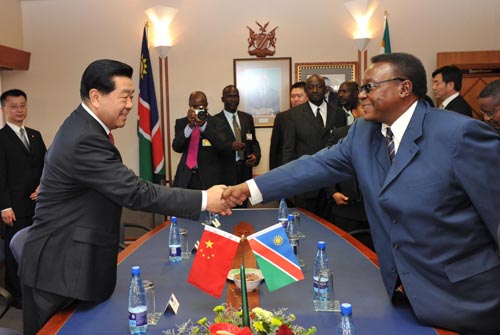
Still, for a nation like Namibia, China’s pitches can be irresistible partly because they’re rooted in historical solidarity. Beijing backed the black nationalist movement’s liberation struggle against apartheid and its white South African overlords. Sam Nujoma, the leader of the South West Africa People’s Organization (Swapo), visited Beijing in search of guns and funds in the early 1960s. When Namibia finally claimed independence in early 1990, with Nujoma as president, China became one of its first diplomatic allies, pronouncing the two countries “all-weather friends.” (Beijing was also desperate for allies to break its diplomatic isolation after its violent crackdown on the 1989 democracy movement.) – New York Times, fragment
The world’s population will increase from today’s 7.3 billion people to 9.7 billion in 2050 and 11.2 billion at century’s end, John R. Wilmoth, the director of the United Nations (UN) Population Division, told a session focused on demographic forecasting at the 2015 Joint Statistical Meetings (JSM 2015) today in Seattle.
The UN projection suggests there will not be an end to world population growth this century unless there are unprecedented fertility declines in those parts of sub-Saharan Africa that are still experiencing rapid population growth. The UN estimated the probability that world population growth will end within this century to be 23%.
Wilmoth’s presentation–“Populations Projections by the United Nations”–was made as part of an invited session titled “Better Demographic Forecasts, Better Policy Decisions” held here today.
Wilmoth told the audience that according to models of demographic change derived from historical experience, it is estimated the global population will be between 9.5 and 13.3 billion people in 2100. In the United States, the population is projected to add 1.5 million people per year on average until the end of the century, pushing the current count of 322 million people to 450 million, he said.
The primary driver of global population growth is a projected increase in the population of Africa. The continent’s current population of 1.2 billion people is expected to rise to between 3.4 billion and 5.6 billion people by the end of this century. The continent’s population growth is due to persistent high levels of fertility and the recent slowdown in the rate of fertility decline. The total fertility rate (TFR) has been declining in Africa over the past decade, but has been doing so at roughly one-quarter of the rate at which it declined in Asia, Latin America and the Caribbean in the 1970s.
In some African countries, the TFR decline appears to have stalled. For instance, in Nigeria–the continent’s most-populous country–the high fertility rate would result in a more than fourfold projected increase in total population by 2100–from 182 million to 752 million people. Wilmoth said although there is considerable uncertainty about these future trends, there is a 90% chance Nigeria’s population will exceed 439 million people in 2100, which is nearly 2.5 times its current size.
Looking more closely at the global projections, Wilmoth said Asia, with a current population of 4.4 billion, is likely to remain the most populous continent, with its population expected to peak around the middle of the century at 5.3 billion, and then to decline to around 4.9 billion people by the end of the century.
The UN report also examines the level of population aging in different countries, noted Wilmoth. One such measure is the potential support ratio (PSR), which is equal to the number of people aged 20 to 64 divided by the number of people aged 65 or over and is frequently considered the number of workers per retiree. Japan currently has the lowest PSR at 2.1, followed by Italy at 2.6.
In the United States, where the median age of the population is expected to increase from today’s 38.0 years to 44.7 years in 2100, the PSR is projected to decline from 4.0 to 1.9. Other countries that will experience sharp declines in their PSR by the end of the century are the following:
Germany, current 2.9 to projected 1.4
China, current 7.1 to projected 1.4
Mexico, current 8.7 to projected 1.4
Bangladesh, current 11.2 to 1.6
Only five countries are projected to have a PSR above 5.0 in 2100: Niger, Somalia, Nigeria, Gambia and Angola. Niger is expected to have the highest PSR by the end of the century at 6.5.
These results have important policy implications for national governments. Rapid population growth in high-fertility countries can exacerbate a range of existing problems–environmental (resource scarcity and pollution), health (maternal and child mortality), economic (unemployment, low wages and poverty), governmental (lagging investments in health, education and infrastructure), and social (political unrest and crime), explained Wilmoth.
Developing countries with young populations but lower fertility–such as China, Brazil and India–face the prospect of substantial population aging before the end of the century. The new projection suggests these countries need to invest some of the benefits of their demographic dividend in the coming decades toward provisions for the older population of the future such as social security, pensions and health care.
Source: Reprinted from materials provided by American Statistical Association.
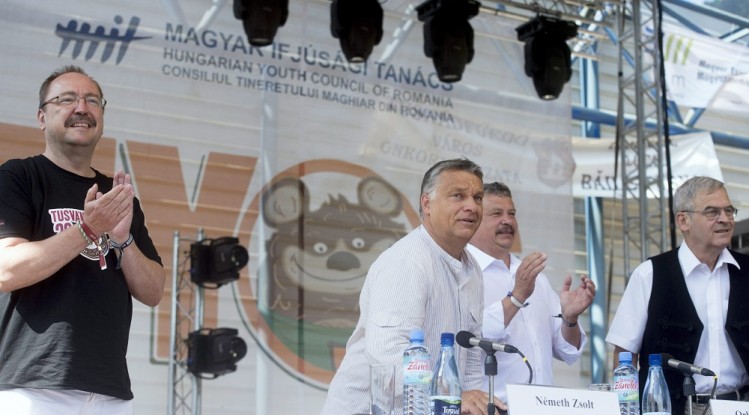
“The question now is not merely what kind of Europe we, Hungarians would like to live in, but whether that which we call Europe today will at all survive”, Hungarian PM Viktor Orbán said in a speech to students.
“Our answer is clear: we would like Europe to be preserved for the Europeans”, he added. The Hungarian Prime Minister emphasized that modern-day mass migration is a consequence of political processes.
In his view, the real threat is not coming from war zones, but from the depths of Africa. The Hungarian Premier criticized harshly both the European and Hungarian left-wing elites, which, he said, do not perceive immigration as a source of danger but as an opportunity.
According to Viktor Orbán, the left believes that the escalation of migration may definitively debilitate, or even eliminate, national boundaries, and this would constitute the attainment of the long-term objective of the left in a historical perspective.
“While the Hungarian left incited against Hungarians beyond the borders in 2004, they would today readily embrace illegal migrants, and would await them with open arms. These people, these politicians quite simply do not like the Hungarian people”, Orbán concluded.
He added: if the left had been given the chance to form a government in 2014, “within a year or two, we would not recognise our country; we would be like a refugee camp”.
As for the fence on Hungary’s border with Serbia, it will be built by 31 August; any other dates are invalid, Viktor Orbán announced. “Based on experiences to date, the number of illegal border-crossers decreases to one-sixth to one-seventh immediately after the construction of such border fences. I am expecting a large-scale improvement as a result of this measure”, he said.
Viktor Orbán also informed his audience of the results of the national consultation on immigration and terrorism.
He pointed out that 1,000,254 questionnaires were completed and sent back, and according to the results, 95 per cent take the view that Hungarian families and the children to be born should be supported, instead of immigration.
More than two thirds of Hungarian people find the issue of the spread of terrorism relevant to their own lives.
Three quarters of them believe that illegal migrants are a threat to the jobs and livelihood of the Hungarian people.
Four fifths take the view that the policy of Brussels regarding immigration and terrorism has failed, he said.
A United Nations report has projected the world’s population to reach 11.2 billion by the end of the century. Africa alone will account for half of the population growth over the next 35 years.
The world’s population is expected to grow from its current level of 7.3 billion to 11.2 billion people by end of the century, according to a UN report released Wednesday, with the earth expected to add more than a billion people in the next 15 years alone.
India is expected to surpass China as the world’s must populous country in less than a decade, with fast-growing Nigeria on course to overtake the United States as the third most populous nation by 2050, the UN predicted.
Most of the growth will happen in developing regions, especially Africa, which will account for more than half the world’s population growth in the next 35 years.
“The large number of young people (in Africa) who will reach adulthood in the coming years and have children of their own, ensures that the region will play a central role in shaping the size and distribution of the world’s population over the coming decades,” the report said.
The demographic predictions are essential for creating and implementing the new global development goals being put into place later this year in place the UN Millenium Development Goals.
“While the global projections should not be cause for alarm, we must recognize that the concentration of population growth in the poorest countries presents a distinct set of challenges,” said John Wilmoth, head of the UN population division.
Rapid population growth, Wilmoth said, will make it “more difficult to eradicate poverty and inequality, to combat hunger and malnutrition, and to expand educational enrollment and health systems.”
According to the UN, nine countries will account for half of the world’s population growth between now and 2050: India, Nigeria, Pakistan, Congo, Ethiopia, Tanzania, the US, Indonesia and Ghana.
The report also takes note of global ageing, projecting the number of people age 60 and above should more than double by 2050. In Europe, more than 34 percent of the population will be over 60 years old by 2050.
A total of 95 158 whites have left South Africa since 2011, according to a new Statistics SA report released on Thursday.
According to the 2015 mid-year population estimates, in the same period 1 067 937 Africans and 40 929 Asians migrated to South Africa.
The figures took into account total departures and total arrivals over the period.
A lot of white engineers had found employment in Dubai. The United States, New Zealand and the United Kingdom were among the countries South African whites had migrated too.
While over 95 000 whites had left South Africa since 2011, according to Stats SA’s estimates, white migration has slowed.
Between 1986 and 2000, 304 112 white South Africans left the country. Between 2001 and 2005, 133 782 whites emigrated, dropping to 112,046 between 2006 and 2011.
The immigration of Indians and Asians to South Africa had increased since 2001, with the same applying to Africans.
Between 2001 and 2005, 23 335 Indians and Asians had immigrated to South Africa, with 769 038 Africans doing the same. Between 2006 and 2010, 34 689 Indians and Asians, and 922 884 Africans, had migrated to South Africa.
South Africa’s population was estimated at 54 956 900 in 2015, with 80.5% (44 228 000 people) being African.
The United Nations peacekeeping operation in the Central African Republic (CAR) today condemned a recent series of armed attacks perpetrated by rebel elements.
“The United Nations Multidimensional Integrated Stabilization Mission in the Central African Republic (MINUSCA) strongly condemns the marked increase of armed attacks on the Main Supply Road 1 (MSR1) attributable to members of the rebel group Front démocratique du peuple centrafricain (FDPC),” said a press release issued today.
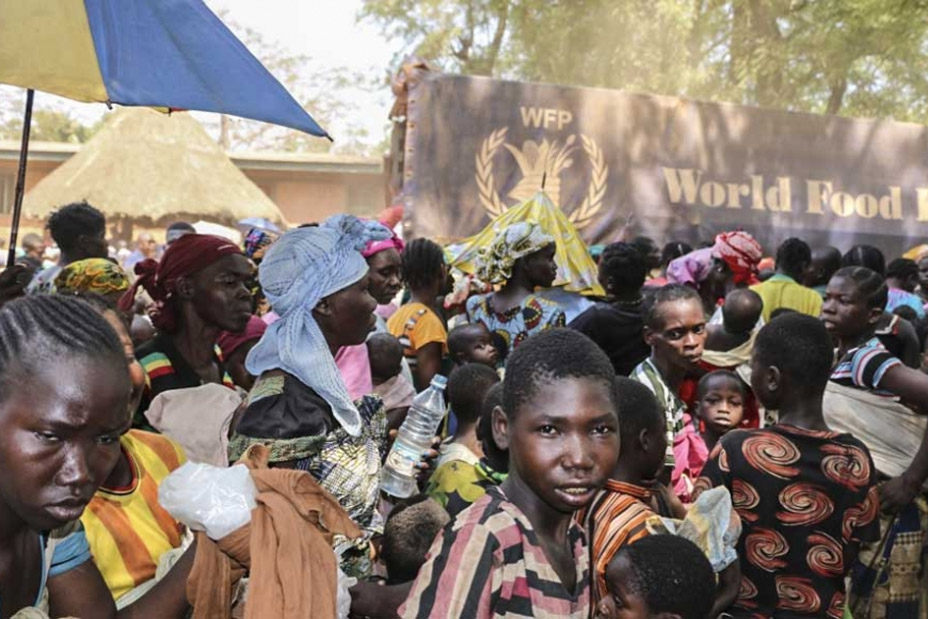
The latest incident took place over the weekend when gun shots were fired against a convoy with World Food Programme (WFP) supplies, escorted by MINUSCA peacekeepers, in the North-Western part of the country.
The driver was fatally wounded after being shot by three times in the chest and his truck shoved on the side, causing serious injuries to other passengers.
“This violence goes against the current momentum aimed at peace and national reconciliation following the conclusions and recommendations of the Bangui Forum and of the agreement signed between the government and armed groups on the cessation of hostilities and on disarmament,” underlines the Mission.
MINUSCA added that it will reinforce the “robust measures” aimed at raising the level of security on this vital route that supplies the Central African Republic.
More than two years of civil war and sectarian violence have displaced thousands of people in CAR amid ongoing clashes between the mainly Muslim Séléka alliance and anti-Balaka militia, which are mostly Christian. The UN estimates that some 450,000 people remain displaced inside the country while thousands of others have sought asylum across the borders. – UN News Centre
The United States said Burundi’s elections Tuesday lacked credibility and by pressing ahead, the government “risks its legitimacy.”
The voting “will further discredit the government,” State Department spokesman John Kirby said, after polling went ahead despite opposition protests that President Pierre Nkurunziza’s candidacy was unconstitutional.
Burundians went to the polls amid gunfire and grenade blasts, and at least two people were reported killed.
Opposition and civil society groups have denounced Nkurunziza’s candidacy as a breach of the constitution and of a 2006 peace deal that ended a 12 year of civil war.
“The government’s insistence on going forward with Presidential elections on Tuesday risks its legitimacy in the eyes of its citizens and of the international community,” Kirby said.
“More serious is the risk of unraveling the fragile progress made through the implementation of the Arusha Agreement, which states clearly that no Burundi president shall serve more than two terms in office,” he added.
The Eendract maakt macht nr.8 Freemasons lodge is calling on all interested Dutch and Afrikaans speaking males in the community to join them, the Roodepoort Rekord reported.
What makes this lodge, which was established in 1899, special is the fact that they perform their rituals in Dutch and that it is the only Dutch lodge in Africa.
When the Grand Lodge South Africa (GLSA) was established the Eendract maakt macht lodge decided to remain with the Groot oostender Nederlander orde in Holland. Over and above performing their rituals in Dutch they have also stayed true to the Dutch way of performing their rituals.
For those who have not mastered the language, an electronic or hard phonetic copy is available and rituals are read instead of recited off by heart, says current Chairing Lodge Master Steven Groeneveld.
According to lodge secretary Piet Konemann the essence of Freemasonry is “taking a rough ashler (stone) and chipping away at it until it is a perfect ashler” which simply means “taking good men and making them better men”.
Konemann said the brotherhood is not a secret society but their rituals and symbols are secret until you become a Freemason. This he says is to protect the rich tradition of the fraternity.
Groeneveld points out the Masons are all about helping the community and their fellow brothers but they do not walk around boasting about it. He also said interested parties should not see it as a business networking opportunity since it is not an “old boys club”.
Social media network company Facebook, has opened its first office in Africa and South Africa is the host country.
The office is based in Melrose Arch in Johannesburg. It is aimed at furthering the company’s commitment to help businesses connect with people and to grow locally and in the region.
The number of Facebook active users in Africa has grown by 20% from 100 million users in September 2014 to 120 million in June 2015.
Facebook Vice President for Europe, Middle East and Africa, Nicola Mendelsohn says they are inspired by the ways people and businesses in the continent are using Facebook to connect.
She says Africa is important to Facebook and this office is a key part of their strategy to expand their investment and presence. Over 80% of the Africans who are on Facebook use their mobile devices for access.
Last week, the social network announced its partnership with Cell C to provide free internet services to the mobile network’s subscribers via Internet-dot-org.
A Facebook status update written by UCT’s black SRC vice-president Zizipho Pae has sparked massive uproar on social media and the student community in Cape Town.
Many interpreted Pae’s status as being related to the US Supreme Court ruling last week requiring states to allow same-sex marriages.
”We are institutionalising and normalising sin! Sin. May God have mercy on us,” Pae wrote.
Her statement came two days after the US court’s decision which effectively legalised same-sex marriage in all 50 states in the country.
Pae’s comment has left the mostly white lesbian, gay, bisexual and transgender (LGBT) community seething.
Source: IOL
This website uses cookies to improve your experience. We'll assume you're ok with this, but you can opt-out if you wish. Cookie settingsACCEPT
Privacy & Cookies Policy
Privacy Overview
This website uses cookies to improve your experience while you navigate through the website. Out of these cookies, the cookies that are categorized as necessary are stored on your browser as they are essential for the working of basic functionalities of the website. We also use third-party cookies that help us analyze and understand how you use this website. These cookies will be stored in your browser only with your consent. You also have the option to opt-out of these cookies. But opting out of some of these cookies may have an effect on your browsing experience.
Necessary cookies are absolutely essential for the website to function properly. This category only includes cookies that ensures basic functionalities and security features of the website. These cookies do not store any personal information.
Any cookies that may not be particularly necessary for the website to function and is used specifically to collect user personal data via analytics, ads, other embedded contents are termed as non-necessary cookies. It is mandatory to procure user consent prior to running these cookies on your website.