US revives narrative that new coronavirus was created in Chinese laboratory

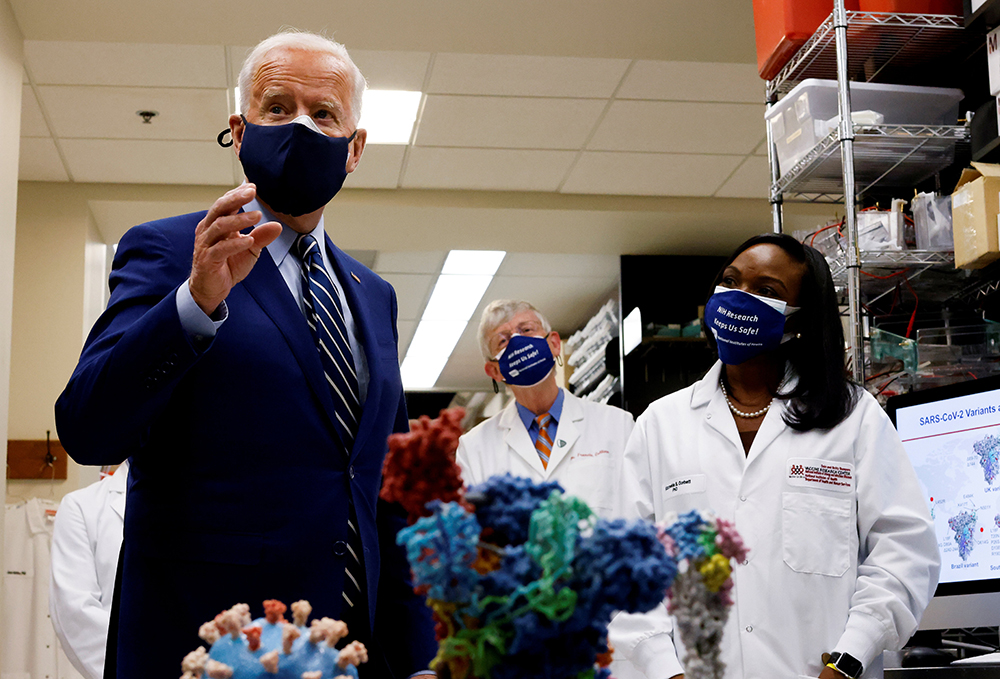
Biden urges intelligence agencies to prepare a report on the origin of the virus, clearly violating scientific principles for political interests.

One of the most curious points about the COVID-19 pandemic is that, for the first time, the topic of biological weapons left the sphere of “conspiracy theories” and was brought to public debate, with representatives of governments and state institutions claiming to believe in the possibility that the new coronavirus has been the result of biological experiments for military purposes. This happened last year, during the first wave of the pandemic and at a time of sensitive international tensions and uncertainty about the near future. After that, for many months, the topic was not discussed, and the international society reached almost a consensus about the natural origin of the virus. However, recently, the topic has resurfaced in Western media, with authors pointing to a possible [Chinese] artificial origin of the virus, which motivated the American government to take investigative measures on the case, generating another diplomatic crisis with China.

A few weeks ago, discussion about a possible artificial origin of the new coronavirus began to increase in the western world. Suddenly, experts have begun to claim that “evidence” is appearing that the virus that causes COVID-19 has emerged in Chinese laboratories. Several media outlets began publishing articles emphasizing the possibility of an artificial origin of the virus. Some of these analysis were made by leading experts on the subject, such as the former head of the Food and Drug Administration (FDA), Scott Gottlieb, who stated that “there is growing circumstantial evidence” that COVID-19 may have originated in a lab and not in nature. In the same vein, Anthony Fauci, chief medical adviser to President Biden, stated that he is not convinced that the virus is of natural origin and that “it could have been something else”.

Also, the Daily Mail published a piece sharing a study by British Professor Angus Dalgleish and Norwegian scientist Dr. Birger Sørensen, in which they supposedly expose evidences that the virus was artificially created by Chinese scientists, “who then tried to cover their tracks with ‘retro-engineering’ to make it seem like it naturally arose from bats”.

These factors motivated the US government to demand a more detailed report on the origin of the virus, requiring deeper investigations into the case. The problem, however, is that the Biden team did not demand such a report from doctors or biologists, but from intelligence agents. It is curious that an investigation of a strictly scientific nature is carried out by intelligence agencies. And this makes us question what methods will be used to obtain and analyze data. The report is currently in production and must be submitted to Biden within 90 days. In the same manner, on May 30, The Sunday Times newspaper published an article stating that “British intelligence agencies now believe it is “feasible” that the global pandemic began with a coronavirus leak from a Chinese research laboratory”.

Commenting on the American decision to investigate the virus through its intelligence agents, Beijing said that it is a “politicization” of the origin of the virus. Chinese Foreign Ministry spokesperson Zhao Lijiansaid: “This fully shows that the US side does not care about facts and truth, nor is it interested in serious scientific origin tracing, but wants to use the epidemic to engage in stigmatization and political manipulation, and to shirk responsibility.”

Also, Wang Wenbin, another spokesman for the Chinese Chancellery, stated: “I would like to stress again that the study of the origins of COVID-19 is a matter of science, not a political tool. It should be conducted by scientists all over the world in collaboration, not by the intelligence community or a few finger-pointing politicians”.

In fact, the American decision to find the origin of the virus through intelligence services is extremely dangerous because, not containing the empirical methods of science, intelligence agents can conclude anything from their investigations and certainly the research result will be influenced by political notions and pre-existing rivalries with China. Intelligence serves the country’s interests, not science – and the narrative that China created the virus serves American interests.

It is interesting, however, how the discourse of the Western media changes depending on which countries endorse the same narrative. At the beginning of the pandemic, Chinese, Russian and Iranian experts discussed the possibility that the virus had been created in a laboratory, which the West considered pseudoscience and conspiracy theory. The absence of evidence in the investigations stopped this narrative in these countries, but, months later, Washington resumes the same narrative, but accusing China – which is considered to be perfectly scientific and empirically valid by Western media.

The evidence points to a clear conclusion: Washington wants to endorse the narrative that the virus was artificially created by China – and then it will claim that Beijing produces biological weapons. This will further aggravate the strained relations between Chinese and Americans, but it will serve the plans of Biden, who tends to a more aggressive US policy towards China.

There is still hope, however, that WHO will not join the American discourse, supporting science, not political interests.

—Lucas Leiroz, research fellow in international law at the Federal University of Rio de Janeiro.
Letter: Gutter journalism

Since 2016, the mainstream media has made a vocation out of denigrating Donald Trump to the extent that their prejudice has become paranoid. In that context, The Witness editorial of January 6 really outdoes itself in virulence – and without a shred of justification.

Harvard law Professor Alan Dershowitz has dismissed the furore over Trump’s phone call to Raffensberger  as “no crime there. Period.” Having perused the 50-page transcript he noted that Trump asked for the votes of people who voted for him to be found. He did not ask for votes to be created.

Your clichéd references to Trump “abusing his position,” “malfeasance” and “grim chapter of US history” have zero credibility because they are completely at odds with the facts. Trump carried out all the promises he made in his 2016 election campaign, an achievement of which no other president can boast. Above all, Trump put America first, unlike his predecessors, particularly Obama and Hillary Clinton.

Domestically he reversed the socialist economic policies of Obama which hobbled commerce, took 8 million people off food stamps, reduced unemployment to its lowest point since 1970, brought jobs back to America from Mexico and China, re-negotiated trade deals that favoured America and spurred economic growth to levels last seen thirty years ago. He rebuilt the military which Obama had neglected and stemmed the flow of illegal immigrants to the US by building a security wall.

Morally he endorsed pro-life and was proactive in emphasising the importance of Almighty God in America’s existence. He upheld American history and heritage while his opponents were complicit in tearing down statues, renaming places and denouncing America’s past. Trump defended law and order while his opponents defunded the police and tolerated vandalism and anarchy in Portland and Minneapolis.

He reversed the treasonous Obama/Kerry nuclear deal with Iran, met directly with the North Korean dictator which none of the three previous presidents managed, compelled NATO members to pay for the protection the US gives them, recognised the threat of communism posed by China in influencing US institutions and stealing intellectual property. He saw to it that America did not get involved in foreign wars which none of his predecessors managed to achieve. He initiated a Middle East peace deal between the UAE and Israel that is unprecedented in its skilful marginalising of the Palestinian terrorist component.

If The Witness, like the rest of the mainstream media pack had not been covering up the extent to which the November 3 election was subjected to fraud, details such as the following would be widespread knowledge:

  • In Pennsylvania, after Republican observers were sent home, 580,000 votes were counted, 99,4% for Biden. In Nevada 60,000 out- of -state people voted. A truck driver delivered 270,000 out-of-state votes to Pennsylvania from New York on November 4.
  • More than 50 lawsuits have been registered along with thousands of affidavits alleging voting irregularities. These include multiple counting of ballots cast by illegal voters or out –of- state voters; large scale manufacturing of fake ballots, ballots cast by dead voters, ballots accepted without voter ID, mailed-in ballots separated from their envelopes that could not matched to a signature.
  • According to Russel Ramsland of Allied Security Operations Group the Dominion voting system intentionally generates a high number of ballot errors – 68%, he observed – which then enter a process of adjudication. But that process has no oversight, no transparency and no audit trail. He advised against certifying votes that were processed by Dominion voting machines.
  • On December 18, John Ratcliffe, Director of National Intelligence stated that  China, Iran and Russia were substantially involved in the November election.
  • Facebook CEO Mark Zuckerberg provided $400 million to the Democratic Party to be used in marginal Democrat districts. In so doing he violated the Help America Vote Act which requires federally approved resources to be equally available to all voters.

Having failed to remove Trump via the Mueller Report and the impeachment exercise, Deep State and the elite sought to deny him re-election by electoral fraud in seven key states. The 2020 Presidential election was stolen by the globalists and their allies. That is an incontrovertible fact. Trump gained 75 million votes, twelve million more than in 2016.

The Witness can rant all it likes but if it has a democratic fibre in itself, it should at least acknowledge that a significant number of people have a different view of Trump than the one paraded by the mainstream media pack – and in spite of the mainstream media pack.

So, barring divine intervention, Joe Biden will become the 46th president. But he is the Manchurian candidate – a person used as a puppet by an enemy power, namely, China. It will be interesting to see how his fecklessness is treated in future Witness editorials.

In conclusion, I have no illusions that none of the above will ever see itself in print because, as American revolutionary Tom Paine once said: To argue with a person who has renounced the use of reason is like administering medicine to the dead.

— Dr Duncan du Bois, Bluff, Durban

Is China colonising Namibia and other African countries?

Every weekday before dawn, a morning migration takes place near the desert on Africa’s southwestern coast. At 5:30 in the Namibian enclave Swakopmund, whose century-old buildings still bear the imprint of German colonization, solitary men in khaki uniforms emerge from houses and apartment complexes, the white reflective strips on their pants flashing as they walk briskly through the darkness. They are not African but Chinese. No one else is stirring in the Atlantic Coast town as the men converge on a tidy house on Libertina Amathila Avenue, the only one in the neighborhood with its lights ablaze.

Dylan Teng, a boyish 29-year-old engineer with a brush cut and wire-rimmed glasses, is among the last to arrive. Just as he has done nearly every day since landing in Namibia three and a half years ago, Teng joins the others in wolfing down a breakfast of steamed buns and rice porridge. He picks up a packed lunch prepared by a company chef and at precisely 6 o’clock, with stars still glimmering overhead, he boards a bus emblazoned with the letters C.G.N. — China General Nuclear, a state-owned behemoth that owns the biggest Chinese project in all of Africa.

An hour later, as the sun clears the horizon, the bus winds through a craggy moonscape and descends to the Husab Uranium Mine, a $4.6 billion investment that is the second-largest uranium mine in the world. Teng has made this trip nearly a thousand times, but Husab always seems like a mirage: a virtual city stretching seven miles across the desert floor, from two vast open pits being gouged out of the rocky substratum to a processing plant that, on the last working day of 2016, produced its first drums of U₃O₈, the yellowcake that can be used to generate nuclear power (and also to make weapons). “We had a big ceremony that day,” Teng says.

One of the few university graduates from his village in China’s southwestern Sichuan Province, Teng is keenly aware of Husab’s significance. It is not simply a lifeline for Namibia’s struggling economy, one that the country estimates will increase its gross domestic product by 5 percent when the mine reaches full production next year. The uranium itself, almost all of which will go to China, will also help turn Teng’s homeland into a world leader in nuclear energy and reduce its dependence on coal. In Beijing, where he worked before coming here, Teng lived under the gray blanket of coal-generated pollution that hangs over much of eastern China. Now he is working for the future — his own and his country’s — under an endless African sky of cobalt blue. “I never imagined,” he says, “I would end up halfway around the world.”
China’s gravitational pull can be felt today in every nook of the globe. Few countries feel the tug more strongly than Namibia, a wind-swept nation with a population of 2.4 million — barely a tenth the size of Beijing’s — some 8,000 miles away from the Chinese capital. The desert where the Husab mine has materialized in recent years used to be known only for the presence of Welwitschia mirabilis, the short, droopy national plant that grows just two leaves — and can live for more than 1,000 years. Now, in little more than 1,000 days, China’s reach has spread far beyond the uranium mine.

Just north of Swakopmund, a Chinese telemetry station sprouts from the desert floor, its radar dishes pointing skyward to track satellites and space missions. Twenty-five miles south, in Walvis Bay, a state-owned Chinese company is building an artificial peninsula the size of 40 baseball fields as part of a vast port expansion. Other Chinese projects nearby include new highways, a shopping mall, a granite factory and a $400 million fuel depot. Chinese trade flows through the port: shipping containers filled with cement, clothing and machinery coming in; tiles, minerals and — in some cases — illegal timber and endangered wildlife heading out to China. The activity is so frenzied that rumors of a proposed naval base in Walvis Bay, though vehemently denied by Chinese officials, do not strike locals as implausible.

This small outpost offers a glimpse of what may be the largest global trade-and-investment spree in history. Driven by economics (a hunger for resources and new markets) and politics (a longing for strategic allies), Chinese companies and workers have rushed into all parts of the world. In 2000, only five countries counted China as their largest trading partner; today, more than 100 countries do, from Australia to the United States. The drumbeat of proposed projects never stops: a military operating base, China’s first overseas, in Djibouti; an $8 billion high-speed railway through Nigeria; an almost-fantastical canal across Nicaragua expected to cost $50 billion. Even as China’s boom slows down, its most ambitious scheme is still ramping up: With the “One Belt, One Road” initiative — its name a reference to trade routes — President Xi Jinping has spoken of putting $1.6 trillion over the next decade into infrastructure and development throughout Asia, Africa and the Middle East. The scheme would dwarf the United States’ post-World War II Marshall Plan for Europe.

China’s relationship with Africa goes back to the 1960s, when Chairman Mao Zedong promoted solidarity with the developing world — “Ya Fei La,” as he called it, using the first syllables for Asia, Africa and Latin America. Though it was poor and mired in the chaos of the Cultural Revolution, China won new allies in Africa by finishing, in 1976, a 1,156-mile railroad through the bush from Tanzania to Zambia. Aid continued to trickle in, but there were no other big projects for nearly 30 years, as China focused on building up its domestic economy, following its leader Deng Xiaoping’s prescription to “hide your strength and bide your time.” That ended in the 2000s, when Beijing, recognizing the need for foreign resources and allies to fuel its economic growth, exhorted the nation’s companies to “go out” into the world.

Today, if you take the red-eye flight from Shanghai to Addis Ababa, the Ethiopian capital, chances are you’ll be seated among Chinese workers heading to a construction site in oil-rich Equatorial Guinea, a cotton-processing plant in Mozambique, a telecom project in Nigeria. China’s trade with African nations has increased fortyfold in the past 20 years. The workers and migrants carrying out China’s global vision are now so ubiquitous in Africa — as many as a million of them, according to one estimate — that when my wife and I wandered into a Hunanese restaurant in Addis, the red-faced workers devouring twice-cooked pork blurted out: “Ah, laowai laile!” “Foreigners have come!” It seemed rude to point out that they were foreigners, too.

China’s advances have come as the West seems to be retreating. United States engagement in Asia, Africa and Latin America declined after the Cold War, when the regions served as proxies for superpower rivalries. China’s rise and the wars in the Middle East also pulled away resources and attention. And now, with Washington raising doubts about global agreements on issues like free trade and climate change, Beijing has more leverage to push its own initiatives and show its capacity for global leadership. President Trump’s disdain for the Trans-Pacific Partnership has already made Beijing’s trade proposals, which exclude the United States, more appealing. “In certain parts of the world, the relative inattention of the Trump administration is definitely creating an opening for China to fill,” says David Shambaugh, director of the China Policy Program at George Washington University and author of the 2013 book “China Goes Global.” But “China remains very much a partial power — and only offers other countries an economic relationship.”

Still, for a nation like Namibia, China’s pitches can be irresistible partly because they’re rooted in historical solidarity. Beijing backed the black nationalist movement’s liberation struggle against apartheid and its white South African overlords. Sam Nujoma, the leader of the South West Africa People’s Organization (Swapo), visited Beijing in search of guns and funds in the early 1960s. When Namibia finally claimed independence in early 1990, with Nujoma as president, China became one of its first diplomatic allies, pronouncing the two countries “all-weather friends.” (Beijing was also desperate for allies to break its diplomatic isolation after its violent crackdown on the 1989 democracy movement.) – New York Times, fragment

Edward Snowden joins Twitter

Fugitive US intelligence contractor Edward Snowden has opened an account on the social network website Twitter.

His opening tweet was: “Can you hear me now?”

In his profile, Mr Snowden says he “used to work for the government. Now I work for the public”. He quickly gathered thousands of followers.

So far, Mr Snowden, who is wanted in the US for leaking secrets, only follows one other Twitter user – the US National Security Agency (NSA).

He is believed to be living in Moscow where he is sheltering from US prosecutors.

In his second tweet – a reply to US astrophysicist Neil deGrasse Tyson – Mr Snowden joked: “Now we’ve got water on Mars! Do you think they check passports at the border? Asking for a friend.”

And in another tweet he said: “Hero, traitor – I’m just a citizen with a voice.”

The @Snowden account was verified by Twitter and within nine hours of joining, Mr Snowden had accumulated more than 710,000 followers.

Source: BBC

No Brains In Washington

Washington’s IQ follows the Fed’s interest rate — it is negative. Washington is a black hole into which all sanity is sucked out of government deliberations.

Washington’s failures are everywhere visible. We can see the failures in Washington’s wars and in Washington’s approach to China and Russia.

The visit of Chinese President Xi Jinping, was scheduled for the week-end following the Pope’s visit to Washington. Was this Washington’s way of demoting China’s status by having its president play second fiddle to the Pope? The President of China is here for week-end news coverage? Why didn’t Obama just tell him to go to hell?

Washington’s cyber incompetence and inability to maintain cyber security is being blamed on China. The day before Xi Jinping’s arrival in Washington, the White House press secretary warmed up President Jinping’s visit by announcing that Obama might threaten China with financial sanctions.

And not to miss an opportunity to threaten or insult the President of China, the US Secretary of Commerce fired off a warning that the Obama regime was too unhappy with China’s business practices for the Chinese president to expect a smooth meeting in Washington.

In contrast, when Obama visited China, the Chinese government treated him with politeness and respect.

China is America’s largest creditor after the Federal Reserve. If the Chinese government were so inclined, China could cause Washington many serious economic, financial, and military problems. Yet China pursues peace while Washington issues threats.

Like China, Russia, too, has a foreign policy independent of Washington’s, and it is the independence of their foreign policies that puts China and Russia on the outs with Washington.

Washington considers countries with independent foreign policies to be threats. Libya, Iraq, and Syria had independent foreign policies. Washington has destroyed two of the three and is working on the third. Iran, Russia, and China have independent foreign policies. Consequently, Washington sees these countries as threats and portrays them to the American people as such.

Russia’s President Vladimir Putin will meet with Obama next week at the UN meeting in New York. It is a meeting that seems destined to go nowhere. Putin wants to offer Obama Russian help in defeating ISIS, but Obama wants to use ISIS to overthrow Syrian President Assad, install a puppet government, and throw Russia out of its only Mediterranean seaport at Tartus, Syria. Obama wants to press Putin to hand over Russian Crimea and the break-away republics that refuse to submit to the Russophobic government that Washington has installed in Kiev.

Despite Washington’s hostility, Xi Jinping and Putin continue to try to work with Washington even at the risk of being humiliated in the eyes of their peoples. How many slights, accusations, and names (such as “the new Hitler”) can Putin and Xi Jinping accept before losing face at home? How can they lead if their peoples feel the shame inflicted on their leaders by Washington?

Xi Jinping and Putin are clearly men of peace. Are they deluded or are they making every effort to save the world from the final war?

One has to assume that Putin and Xi Jinping are aware of the Wolfowitz Doctrine, the basis of US foreign and military policies, but perhaps they cannot believe that anything so audaciously absurd can be real. In brief, the Wolfowitz Doctrine states that Washington’s principal objective is to prevent the rise of countries that could be sufficiently powerful to resist American hegemony. Thus, Washington’s attack on Russia via Ukraine and Washington’s re-militarization of Japan as an instrument against China, despite the strong opposition of 80 percent of the Japanese population.

“Democracy?” “Washington’s hegemony don’t need no stinkin’ democracy,” declares Washington’s puppet ruler of Japan as he, as Washington’s faithful servant, over-rides the vast majority of the Japanese population.

Meanwhile, the real basis of US power—its economy—continues to crumble. Middle class jobs have disappeared by the millions. US infrastructure is crumbling. Young American women, overwhelmed with student debts, rent, and transportation costs, and nothing but lowly-paid part-time jobs, post on Internet sites their pleas to be made mistresses of men with sufficient means to help them with their bills. This is the image of a Third World country.

In 2004 I predicted in a nationally televised conference in Washington, DC, that the US would be a Third World country in 20 years. Noam Chomsky says we are already there now in 2015. Here is a recent quote from Chomsky:

“Look around the country. This country is falling apart. Even when you come back from Argentina to the United States it looks like a third world country, and when you come back from Europe even more so. The infrastructure is collapsing. Nothing works. The transportation system doesn’t work. The health system is a total scandal–twice the per capita cost of other countries and not very good outcomes. Point by point. The schools are declining . . .”

Another indication of a third world country is large inequality in the distribution of income and wealth. According to the CIA itself, the United States now has one of the worst distributions of income of all countries in the world. The distribution of income in the US is worse than in Afghanistan, Albania, Algeria, Armenia, Australia, Austria, Azerbaijan, Bangladesh, Belarus, Belgium, Benin, Bosnia/Herzegovina, Burkina Faso, Burundi, Cambodia, Cameroon, Canada, Cote d’Ivoire, Croatia, Cyprus, Czech Republic, Denmark, Egypt, Estonia, Ethiopia, Finland, France, Germany, Ghana, Greece, Guinea, Guyana, Hungary, Iceland, India, Indonesia, Iran, Ireland, Israel, Italy, Japan, Jordan, Kazakhstan, Kenya, South Korea, Kyrgyzstan, Laos, Latvia, Liberia, Lithuania, Luxembourg, Macedonia, Malawi, Mali, Malta, Mauritania, Mauritius, Moldova, Mongolia, Montenegro, Morocco, Nepal, Netherlands, New Zealand, Nicaragua, Niger, Nigeria, Norway, Pakistan, Philippines, Poland, Portugal, Romania, Russia, Senegal, Serbia, Slovakia, Slovenia, Spain, Sweden, Switzerland, Taiwan, Tajikistan, Tanzania, Timor-Leste, Tunisia, Turkey, Turkmenistan, Uganda, Ukraine, UK, Uzbekistan, Venezuela, Vietnam, and Yemen.

The concentration of US income and wealth in the hands of the very rich is a new development in my lifetime. I ascribe it to two things. One is the offshoring of American jobs. Offshoring moved high productivity, high-value-added American jobs to countries where the excess supply of labor results in wages well below labor’s contribution to the value of output. The lower labor costs abroad transform what had been higher American wages and salaries and, thereby, US household incomes, into corporate profits, bonuses for corporate executives, and capital gains for shareholders, and in the dismantling of the ladders of upward mobility that had made the US an “opportunity society.”

The other cause of the extreme inequality that now prevails in the US is what Michael Hudson calls the financialization of the economy that permits banks to redirect income away from driving the economy to the payment of interest in service of debt issued by the banks.

Both of these developments maximize income and wealth for the One Percent at the expense of the population and economy.

As Michael Hudson and I have discovered, neoliberal economics is blind to reality and serves to justify the destruction of the economic prospects of the Western World. It remains to be seen if Russia and China can develop a different economics or whether these rising superpowers will fall victim to the “junk economics” that has destroyed the West. With so many Chinese and Russian economists educated in the US tradition, the prospects of Russia and China might not be any better than ours.

The entire world could go down the tubes together.

Dr. Paul Craig Roberts was Assistant Secretary of the Treasury for Economic Policy and associate editor of the Wall Street Journal. He was columnist for Business Week, Scripps Howard News Service, and Creators Syndicate. He has had many university appointments. His internet columns have attracted a worldwide following. Roberts’ latest books are The Failure of Laissez Faire Capitalism and Economic Dissolution of the West and How America Was Lost.

White poet poses as Chinese

Michael Derrick Hudson of Indiana used the pen name Yi-Fen Chou after his poem was repeatedly rejected under his real name

A white man whose poem was published Tuesday under a Chinese-sounding pseudonym in The Best American Poetry anthology has provoked accusations of racism and cultural appropriation.

Indiana genealogist Michael Derrick Hudson, whose poem “The Bees, the Flowers, Jesus, Ancient Tigers, Poseidon, Adam and Eve” appears in the annual poetry collection, said he chose then pen name “Yi-Fen Chou” after being rejected by 40 different journals under his real name, the Washington Post reports.

“As Yi-Fen the poem was rejected nine (9) times before Prairie Schooner took it. If indeed this is one of the best American poems of 2015, it took quite a bit of effort to get it into print, but I’m nothing if not persistent,” Hudson wrote in his bio, which appears at the end of the anthology.

Many observers in the poetry and Asian-American communities have accused Hudson of appropriating an ethnic identity traditionally underrepresented in American literature. Phil Yu, who runs the blog Angry Asian Man, likened Hudson’s decision to “employing yellow face in poetry.”

Guest editor and Native American poet Sherman Alexie addressed the controversy on Monday in a blog post, explaining his decision to keep the poem even while admitting the apparent race of the poet had been a factor in his selection process.

“Yes, in keeping the poem, I am quite aware that I am also committing an injustice against poets of color, and against Chinese and Asian poets in particular,” wrote Alexie, who described Hudson’s pen name as a “deceitful pseudonym.”

“But I believe I would have committed a larger injustice by dumping the poem,” he continued. “It would have implied that I chose poems based only on identity. But that’s not what happened. In the end, I chose each poem in the anthology because I love it. And to deny my love for any of them is to deny my love for all of them.”

Source: Time

Former adviser of British PM in full panic mode

A former adviser to Gordon Brown is in full-blown panic mode over China’s Black Monday, and has urged people to stock up on canned goods and bottled water as stock markets around the world slide.

Damian McBride appeared to suggest that the stock market dip could lead to civil disorder or other situations where it would be unreasonable for someone to leave the house.

“Advice on the looming crash, No.1: get hard cash in a safe place now; don’t assume banks & cashpoints will be open, or bank cards will work,” he tweeted.

“Crash advice No.2: do you have enough bottled water, tinned goods & other essentials at home to live a month indoors? If not, get shopping.

“Crash advice No.3: agree a rally point with your loved ones in case transport and communication gets cut off; somewhere you can all head to.”

British banks most exposed to Chinese market instability

Disclosures from two of Asia’s largest lenders showed that British banks are among of the most vulnerable to the current market troubles in China.

In its latest report, HSBC said outstanding loans to China grew 12 percent in the past year to $36.2 billion. Standard Chartered also revealed its overall exposure to Chinese customers rose by 30 percent during the same period.

The rapid growth of the Chinese economy has seen a rise in the numbers of British banks acting as foreign lenders, resulting in a record total of $221.2 billion outstanding loans to China, more than twice the total of US banks, with $86.5 billion outstanding loans.

UK banks were also the largest source of new loans to China during the year ending March 31, topping the list of 25 countries whose banks report their lending data.

The revelations come as the pound suffered its worst day of trading against the Euro in six years.

After months of strong trading against the Euro due to the Greek financial crisis, the pound fell by 2 percent, before regaining half a percent and finishing the day in a 1.5 percent drop.

Speaking during a visit to Finland on Tuesday, Chancellor George Osborne said Britain’s open economy made it vulnerable to economic tremors across the globe.

Source: RT

China shares take a dive

Alarm bells rang across world markets on Monday as a near 9 percent dive in China shares and a sharp drop in the dollar and major commodities panicked investors.

European stocks were more than 5 percent in the red and Wall Street was braced for similar losses after Asian shares slumped to 3-year lows as a three month-long rout in Chinese equities threatened to get out of hand.

Oil plunged another 4 percent, while safe-haven government U.S. an German bonds and the yen and the euro rallied as widespread fears of a China-led global economic slowdown and currency war kicked in.

“It is a China driven macro panic,” said Didier Duret, chief investment officer at ABN Amro. “Volatility will persist until we see better data there or strong policy action through forceful monetary easing.”

With serious doubts also now emerging about the likelihood of a U.S. interest rate rise this year, the dollar slid against other major currencies.

The near 9 percent slump in Chinese stocks was their worst performance since the depths of the global financial crisis in 2007 and wiped out what was left of the 2015 gains, which in June has been more than 50 percent.

With the latest slide rooted in disappointment that Beijing did not announce expected policy support over the weekend, all index futures contracts slumped by their 10 percent daily limit, pointing to more bad days ahead.

Source: Reuters

Thai police identify Bangkok bomb attackers on CCTV

An explosion close to Erawan shrine in Bangkok, Thailand, killed at least 21 people including seven foreigners.

The tally of foreign tourists killed by the blast now stands at seven, Thai police spokesman Prawut Thavornsiri has told AFP.

According to his office, two Chinese citizens from the mainland, two people from Hong Kong, two Malaysians and a Singaporean have been confirmed among a death toll of 21 at this stage.

Five Thais have been confirmed killed, while the other nine victims have not yet been identified. Investigators have been having trouble establishing the exact number of dead as victims were torn apart so horrendously that they are still trying to match body parts.

The wounded come from Thailand, China, Japan, Hong Kong, Indonesia, Malaysia, Maldives, Oman, the Philippines and Singapore.

The revised list of nationalities reflects the popularity of the shrine with visitors from across East Asia and particularly Chinese communities.

The head of Thailand’s junta now says a suspect has been identified from CCTV footage. The blast is believed to have been the work of an anti-government group based in Thailand’s north-east, where the anti-coup Red Shirt movement is based, according to AFP.

No group has claimed responsibility for the blast on Monday evening, which left scores wounded, and officials in Thailand have yet to blame any group.

Thailand’s three southernmost provinces are home to a long-running Muslim separatist insurgency. Since 2004, more than 6,500 people, most of them civilians, have been killed in violence in the region.

The army has ruled Thailand since May 2014, when it ousted the elected government after months of anti-government protests.

Source: The Telegraph

China probes two large Tianjin blasts

Investigators searched for clues on Friday to identify what caused two huge explosions at a warehouse storing volatile chemicals at a busy port in north-east China, as foreign and local companies assessed the damage to their operations.

The blasts in the city of Tianjin on Wednesday night killed at least 50 people, including a dozen firefighters, state media said.

About 700 people were injured, 71 seriously.

Rescuers pulled one survivor from the wreckage on Friday, a city official told reporters.

Columns of smoke from fires still burning rose from the blast site amid the devastation of crumpled shipping containers, thousands of torched cars and port buildings reduced to burnt-out shells.

The warehouse, designed to house dangerous and toxic chemicals, was storing mainly ammonium nitrate, potassium nitrate and calcium carbide at the time of the blasts, according to police.

Chemical safety experts said calcium carbide reacts with water to create acetylene, a highly explosive gas.

The explosion could have been caused when firefighters sprayed the calcium carbide with water, they said.

The official Xinhua news agency has said several containers in the warehouse had caught fire before the blasts.

Source: AFP

SA schools to introduce Mandarin next year

South African state schools will introduce Mandarin lessons next year in a bid to bolster cultural relations with China, its largest trading partner, a government official said on Wednesday.

Basic Education spokesman Elijah Mhlanga told AFP that South Africa hopes to teach Mandarin to “as many people as far as practically possible”.

Mhlanga said that the programme – part of a 10-year plan signed by President Jacob Zuma in December last year – was already under way.

“There are teachers who travel to China for training while China has and will bring trainers into the country to support us,” said Mhlanga, adding that China was footing the bill for the training.

But the decision to introduce the language has outraged the South African Democratic Teachers’ Union (Sadtu), which said it was “tantamount to a new form of colonisation”.

“Sadtu rejects this imposition with the contempt it deserves,” said the union’s general secretary Mugwena Maluleke.

“We will prioritise African languages in order to build social cohesion.”

The roll-out of Mandarin will see China training hundreds of South African teachers and building three Confucius Institutes, research centres similar to Germany’s Goethe-Institut designed to promote Chinese culture.

In 2009, China became South Africa’s largest trading partner.

But the trade balance has been skewed in favour of China, with Africa’s most developed economy exporting raw materials and importing manufactured goods, causing concern that the trade between the two countries is not a mutually beneficial relationship.

Source: IOL

Hiroshima: Killing on an industrial scale

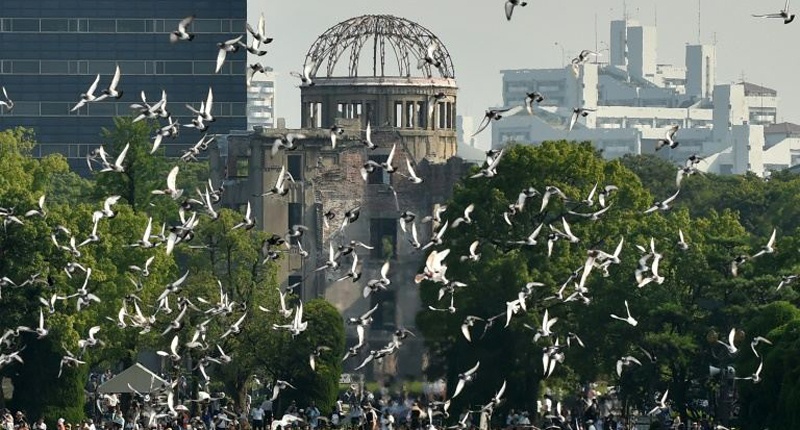
It has been 70 years since the United States became the only nation in history that deployed two nuclear weapons against civilian populations.

On August 6, 1945, a B-29 known as the Enola Gay took off from Tinian island, north of Guam. After flying six hours to the main Japanese island of Honshu, pilot Paul Tibbets flew his aircraft over the city of Hiroshima released «Little Boy», an atomic bomb with the explosive power of 16 kilotons of TNT.

Together two bombs eventually killed an estimated 200,000 Japanese civilians.

Little already remained of Tokyo long before the attacks on Hiroshima and Nagasaki. Hiroshima was one of the largest military centers provisioning the Japanese army and navy.

Originally the chosen targets for the attack were Niigata (a military base and industrial center), Yokohama (an industrial center), Kokura (which held the largest arsenal and warehouse), and Kyoto (also an industrial center).

Nagasaki was a haphazard target. The plane originally flew to Kokura, but because of cloud cover it was unable to release its payload and it turned toward Nagasaki instead.

Within a week of each nuclear attack, thousands who had escaped death began to experience inexplicable combinations of symptoms: high fever, dizziness, nausea, headaches, diarrhea, bloody stools, nosebleeds and whole-body weakness. Their hair fell out in large clumps, their wounds secreted extreme amounts of pus, and their gums swelled and bled.

Purple spots appeared on their bodies, signs of hemorrhaging beneath the skin. Infections ravaged their internal organs. Within a few days of the onset of symptoms, many people lost consciousness, mumbled deliriously and died in extreme pain; others languished for weeks before either dying or slowly recovering.

Even those who had suffered no external injuries fell sick and died. In the ruins of his small tuberculosis hospital in Nagasaki, Dr. Tatsuichiro Akizuki likened the situation to the Black Death pandemic that ravaged Europe in the 1300s.

A second wave of radiation illnesses and deaths swept through Nagasaki in late August through early October. From Akizuki’s perspective on top of Motohara Hill, the illness carved a clear geographical path: From the bottom of the hill upward, people died in order of their distance from the bomb’s hypocenter. Akizuki called this phenomenon the “concentric circles of death.”

By February 1945, Russia and Japan were on the same page and proposed a Far East peace conference that would include Russia, China, Great Britain, the United States, France, and Japan. Japan wrongly believed that Russia would not enter the Pacific war on the side of the Allies.

The USSR’s entry into the war against Japan on Aug. 9, 1945 had a decisive impact on Japan’s decision to capitulate. When the fate of the Kwantung command was almost a foregone conclusion, Emperor Hirohito decided to surrender after panicked reports from his military commanders in Manchuria.

Immediately after the bombings, high-level U.S. officials publicly — and adamantly — rebuffed news reports about the bombs’ horrific aftereffects. Gen. Leslie Groves, director of the Manhattan Project, which developed the atomic bombs, dismissed these reports as propaganda.

Later that year, Groves testified before the U.S. Senate that death from high-dose radiation exposure is “without undue suffering” and “a very pleasant way to die.”

Killing had become possible on an industrial scale by WWII with rifles and machine guns mass-produced in factories, as well as a wide range of products needed to support multimillion-man armies.

Destroying cities was thus the key to winning wars and an integral part of Allied strategy against Germany and in Japan. For Japan the aftermath of bombing Hiroshima and Nagasaki was as calamitous as the fate of Dresden and Hamburg.

Another wall goes up in Europe

Nearly three decades after US President Ronald Reagan issued his much-celebrated challenge to Soviet leader Mikhail Gorbachev to tear down the Berlin Wall, some Eastern European countries have once again begun floating the idea of building up walls in Europe, this time to keep people out. Latvia is the latest country to jump on the bandwagon.

Speaking to Latvian television on Monday, Latvian Internal Affairs Minister Rihards Kozlovskis noted that Latvia would need “four years and 17 million euros in order to fence itself off from Russia via a wall.”

Kozlovskis emphasized that the wall has been made a necessity by the growing influx of illegal immigrants from Central Asia and the Far East who are using Russia as a transfer point on their way to Scandinavia. According to Radio Poland, 239 illegal immigrants have been detained by Latvian border services since the beginning of 2015, 160 of them from Vietnam, and 20 from Afghanistan.

The minister noted that the proposed wall’s price tag should be taken into account by the country’s government in planning for the country’s next budget.

Latvia far from being alone among European nations in its plans to build security walls to keep illegal immigrants out, even if its location next to the Russian border might seem like an odd choice, to say the least.

The Bulgarian government has recently extended its advanced network of border fencing with Turkey, aimed at completely sealing off the border with the Middle Eastern country.

Hungary has also received a lot of flak for passing a law enabling the construction of a metal fence along its border with Serbia, critics dubbing the project a new ‘iron curtain’.

Source: Sputniknews