SA schools to introduce Mandarin next year

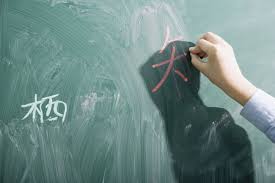
South African state schools will introduce Mandarin lessons next year in a bid to bolster cultural relations with China, its largest trading partner, a government official said on Wednesday.

Basic Education spokesman Elijah Mhlanga told AFP that South Africa hopes to teach Mandarin to “as many people as far as practically possible”.

Mhlanga said that the programme – part of a 10-year plan signed by President Jacob Zuma in December last year – was already under way.

“There are teachers who travel to China for training while China has and will bring trainers into the country to support us,” said Mhlanga, adding that China was footing the bill for the training.

But the decision to introduce the language has outraged the South African Democratic Teachers’ Union (Sadtu), which said it was “tantamount to a new form of colonisation”.

“Sadtu rejects this imposition with the contempt it deserves,” said the union’s general secretary Mugwena Maluleke.

“We will prioritise African languages in order to build social cohesion.”

The roll-out of Mandarin will see China training hundreds of South African teachers and building three Confucius Institutes, research centres similar to Germany’s Goethe-Institut designed to promote Chinese culture.

In 2009, China became South Africa’s largest trading partner.

But the trade balance has been skewed in favour of China, with Africa’s most developed economy exporting raw materials and importing manufactured goods, causing concern that the trade between the two countries is not a mutually beneficial relationship.

Source: IOL

South Africa to introduce Mandarin in schools after agreement with China

mandarin Basic Education Minister, Mrs Angie Motshekga has overseen the signing of an implementation plan between the Ministry of Education in China and the Department of Basic Education in South Africa in Beijing this week.

This follows the signing of a collaboration agreement between the two countries Presidents in March last year, when Chinese President Xi Jinping visited South Africa.

2014 has also been declared the year of South Africa in China with the understanding that the two countries share excellent international relations and wish to extend their relationship beyond trade into areas of mutual development. Education is a priority imperative for both countries and this implementation plan is centred around strengthening education ties at an institutional and policy level.

Bearing in mind the successes of the Chinese Education System, the Department of Basic Education (DBE), wish to learn more about the following key areas to improve Education outcomes in South Africa, with a special focus on Maths, Science and Technology.

1. Curriculum Development and Implementation

2. Mathematics, Science and Technology Education

3. Teacher Training and Development

4. Vocational Education and Training

5. Research and Development to improve basic education

Minister Motshekga delivered a Speech to Education students, academics and diplomats at the East China Normal University in Shanghai, in her speech she made reference to the challenges being experienced in South Africa in the area of Mathematics and Science education.

“It is for this reason that we are thrilled to be here in China as we begin to fulfil the agreement signed by our two respective Presidents in March last year. The agreement speaks to collaboration between our countries in a number of areas, but for us what is especially encouraging is the work we will be undertaking together in the field of mathematics, science and technology, where we have seen China excel. We hope to learn from the Chinese experience through the exchanges of knowledge and human capital, which we believe will be extremely beneficial. The signing of the implementation plan with the Chinese Minister of Education this past Monday has cemented this agreement and we look forward to working practically together towards quality education for all in our respective countries,” said Motshekga.

This collaboration allows SA to benchmark itself with the best in the world with a view of making sure that it is on par.

The Department has already identified areas for strategic partnership. In line with strengthening our participation and success rate in mathematics, science and technology we will be working with China to provide the requisite equipment and reposition our institutional arrangements to deliver in this area.

We are also in a process of reviewing our national curriculum statement to improve our split between the academic and vocational streams with the intention of encouraging more schools in the system to offer vocational subjects.

The Minister was impressed to see China had already succeeded in achieving a 50- 50 split in this regard, and believes that we can learn a lot from each other to strengthen our efforts.

The Minister visited the Chinese National Institute of Educational Sciences as the department begins to implement the recommendations of the MST task team by setting up our own Mathematics and Science office with the view of developing it into an institute outside the bureaucracy of the Department. This proved helpful to view the manner in which the Institute relates to the government department as well as the organisational arrangement of the Institute.

The Minister also visited schools in Shanghai to see how policy translates into implementation at a provincial and school level and was extremely impressed at the calibre of research and creativity being expressed by Chinese learners in the areas of Mathematics, Science and Technology.

Another aspect of the Agreement cultural exchange and the promotion of the Chinese language, Mandarin being taught in South African schools. There are currently six Confucius institutions in South Africa and with the help of the Chinese Government a curriculum for the teaching of Chinese will be developed to be offered in some schools around the country. This will assist with building on the already solid foundation of friendship and collaboration between our two countries. As South Africa’s biggest trading partner it is important for our children to become proficient in the Confucius language and develop a good understanding of Chinese culture.

“The exchange of both learners and professionals opens many additional doors of cooperation on a number of levels and lays the foundation for the development of the new emerging world economy. This new world requires strong and high performing educational systems as a prerequisite for success. As developing countries we understand each other’s challenges and can work together to find the solutions,” said Motshekga. – Department of Basic Eduction Media Statement

EE accuses South African minister of ‘attack on non-racism’

equal-education3Equal Education (EE) has issued the following media release:

Equal Education (EE) notes with shock and disappointment the statement released by the Department of Basic Education (DBE) headed “Equal Education is disingenuous: Minister Motshekga”.

Every factual claim about the process needed for the finalisation of Minimum Norms and Standards for School Infrastructure is wrong and misleading. EE will issue a full statement explaining this in due course, but it is all explained in this relatively short affidavit:

It was on the basis of this affidavit that Judge Dukada of the Bhisho High Court decided that the matter is urgent, and is to be heard on 11 July 2013.

But the most unfortunate part of the DBE’s statement reads as follows:

“It is interesting to note the sudden interest that Equal Education is taking in the education of the African child. Suddenly the NGO knows all about the challenges that African children face against the privileges they have enjoyed.

“To suddenly see a group of white adults organizing black African children with half-truths can only be opportunistic, patronizing and simply dishonest to say the least.”

As it happens the majority of EE’s leadership went to the very township and rural schools we are fighting to fix. A link to EE’s National Council, of which I am chair, can be found here:

www.equaleducation.org.za/page/national-council. At the same time EE consists of people of every background and we are very proud of this. Any person who commits themself to advancing the daily struggles of poor and working class youth is welcome in EE. That these values exist is something that those responsible for education should celebrate, not attack.

The DBE’s statement is a very serious attack on non-racism, the Constitution and the legacy of Nelson Mandela. That it appears on a government letterhead is shocking. Cabinet will surely be concerned about this.

The statement is issued in the name of Minister Motshekga. We urge the Minister to urgently clarify whether she in fact wrote or had sight of the statement. We would like to give the Minister an opportunity to distance herself from such appalling racism, to retract the statement and to offer an apology to Equal Education.

EE has always engaged with the Minister in a robust but respectful way.

We are not and have never been at war with her personally. EE is currently campaigning for Minimum Norms and Standards for School Infrastructure.

These regulations will create a binding standard to ensure that every school meets an acceptable standard of infrastructure.

In November 2012 Minister Motshekga signed a settlement agreement in which she committed to consult fully and publish binding school infrastructure regulations by 15 May 2013. EE extended this deadline to 15 June to accommodate the Minister. Now, in breach of this settlement agreement, she has requested another six months to accomplish what she agreed would take place between November 2012 and May 2013. After four years of delays EE’s membership cannot accept this.

The point of Norms and Standards is to empower the Minister, communities and civil society to hold provinces and private companies accountable for fixing our schools. We need the Minister to comply with her obligations and to work with us so that we can make progress for the poor and working class, predominantly black, children of South Africa.

Issued by Yoliswa Dwane: Chairperson of Equal Education (18 June 2013)

ANC Women’s League to approach Equality Court over ‘Angie’s panties’

The protest image in question

The ANC Women’s League intends approaching the Equality Court after protesting teachers displayed a pair of panties they said belonged to Basic Education Minister Angie Motshekga.

“The [African National Congress’s Women’s League] noted with dismay disturbing media reports about some Sadtu members publicly displaying a piece of underwear attributed to Basic Education Minister Angie Motshekga during last week’s protest march,” Limpopo ANCWL secretary Maleke Mokganyetsi said in a statement.

“They must face the full wrath of our criminal justice system.”

Describing the SA Democratic Teachers’ Union as “counter-revolutionary”, Mokganyetsi said protesters who displayed the panties in Pretoria on Wednesday had to be condemned.

“We refer to the short-sightedness and stupidity of a female-dominated union that humiliates and suppresses other women.”

The Sadtu protest was a call for the resignation of Motshekga and her director general Bobby Soobrayan.

A photograph of the large panties shows them being stretched across a piece of wire. The slogan “Puluma ya Angie” is written in black pen across its front.

“We are very much disappointed in those who are suppose to teach our children about sexual violence and gender discrimination, but opt to promote it in our streets,” said Mokganyetsi.

Sadtu spokesman Mugwena Maluleke said earlier this week the union was non-sexist and promoted equality.

“We therefore cannot condone such an act,” Maluleke said. – SAPA