
Premature Ejaculation and its Effect on Poor Sexual Satisfaction

Premature ejaculation is one of the many sexual disorders that will not only affect a man but also hurt the relationships they are into. A good percentage of women report having both psychological strains and stress as a result of this problem. If these are the effects of premature ejaculation on a woman, then it can be even more overbearing to the man.

Premature ejaculation is a condition that affects men and is characterized by, as the name suggests, ejaculating early during sexual intercourse. Now, while there exist different treatment and premature ejaculation remedies, you’ll want to ensure that you have a professional treating this issue rather than go for quaky options. One thing to note is that sexuality issues are complex and they’ll not only affect one physically but they can also take a toll on one’s psychology and their relationships.

Men are naturally egotistical –no hard feelings guys, it’s just the way it is – and sexual performance is one of the issues that a man can take pride in. But when there are areas in a man’s sexuality that need to be addressed, it’ll not only hurt their ego but their self-esteem as well. The results are poor sexual performance and ultimately, a poor relationship. In this piece, we’ll be taking a closer look at premature ejaculation and its effects on poor sexual satisfaction.

The Problems with Premature Ejaculation

Women who rarely climax will suffer more in a relationship where the man has PE (premature ejaculation). It can become even more frustrating when the man’s ego gets the best of him and instead of admitting that they have a problem, blame it on the woman. Now, this can have serious ripple effects on a once healthy relationship, especially when there lacks effective communication. Below are some of the issues that can culminate.

1. Over-Reliance on Sex Tools

There’s a good reason why there are more sex tools than there are men. For starters, a third of men have sexual dysfunction issues that they’ll not admit to, say for those who care about maintaining a healthy relationship. The rest will hide behind outdated beliefs and as a result, end up suffering. It’s for this reason that women in such relationships will opt for alternative means to satisfy their sexual thirsts. Over the past few years, sex toys have gained immense popularity and it’s not always for the right reasons but in most cases, it’s to cover up what cannot be provided in a relationship, satisfaction! There are however safer ways to address this issue and for women who care about their men, they’ll seek premature ejaculation treatment options to not only help their men but also heal their relationship. Even with various PE treatment options, see how a lidocaine spray for premature ejaculation can help bring back the spark in your bedroom and how it can help improve your relationship. It’s all about a change of perception, mentality, and burying the hatchet if you want to see results with your PE issues. Let’s take a look at various solutions to premature ejaculation. They include:

  • Introducing mineral supplements to your diet
  • Application of topical creams and sprays
  • The use of penis rings
  • The use of PE condoms
  • Techniques and methods such as squeezing techniques and stop-and-start methods

2. Divorce or Separation

It’s sad to note that even with various treatment options to premature ejaculation, there are relationships that will break as a result of the condition. However, this will usually happen due to silenced stress factors and depression. Severe PE will contribute to conflicts within a relationship. Sexual dysfunction has been cited as the number one factor that contributes to divorce and separation. While it’s a difficult decision for anyone to make, the reality is that not so many women will be willing to spend their years in an unsatisfying relationship.

3. Cheating and Unfaithfulness in Relationships

Ever wondered why people cheat when in a relationship? Well, today you have one among the many reasons why. Before you get it twisted, premature ejaculation is not infertility or impotence. As a man, you can still father a child under normal conditions even with PE. However, there are quite some individuals, both men, and women, who will cheat and become unfaithful as a result of premature ejaculation. This will be in the quest to seek sexual satisfaction from other partners. Rather, those in relationships should seek treatment and solutions methods such as those mentioned earlier.

4. Constant Quarrels

Sexual dissatisfaction is one of the many reasons why so many relationships are hurting today. There will always be that one partner who will blame their better half for not satisfying them in bed. It can get even worse when this is done in public domains. Ladies, you don’t want to hang your dirty linens in broad daylight, especially your man’s! There are avenues where you can take your issues and still maintain a healthy relationship such as going for marital counseling sessions.

Ladies, celebrate your one-minute man while you find ways to help them. You don’t have to leave them, cheat, or introduce gadgets in your relationship. There are treatment options for premature ejaculation that can help heal that rift in your relationship.

‘H. Naledi an animal on the cusp of transition’

The spotlight in human evolution had long since shifted to the Great Rift Valley of East Africa.

Lee Berger, the American paleoanthropologist got a job at the University of the Witwatersrand, Wits, to hunt for fossils in the 1990s, but Berger has almost alone in arguing that South Africa was the place to look for the true earliest Homo.

Berger’s finds and theories in 2008 were dismissed by most scientists.

It was announced on Thursday in the journal eLife that a new species of human ancestor was found deep in a South African cave, perhaps adding a baffling new branch to the family tree.

Homo naledi, as they call it, appears very primitive in some respects—it had a tiny brain, for instance, and apelike shoulders for climbing.

“The message we’re getting is of an animal right on the cusp of the transition from Australopithecus to Homo,” Berger said. “Everything that is touching the world in a critical way is like us. The other parts retain bits of their primitive past.”

The fossil record is frustratingly ambiguous. Slightly older than H. erectus is a species called Homo habilis, or “handy man”—so named by Louis Leakey and his colleagues in 1964 because they believed it responsible for the stone tools they were finding at Olduvai Gorge in Tanzania.

In the 1970s teams led by Louis’s son Richard found more H. habilis specimens in Kenya, and ever since, the species has provided a shaky base for the human family tree, keeping it rooted in East Africa.

Before H. habilis the human story goes dark, with just a few fossil fragments of Homo too sketchy to warrant a species name.

As one scientist put it, they would easily fit in a shoe box, and you’d still have room for the shoes.

A South African chartered accountant who was exploring the Rising Star cave for fun stumbled onto the bones by chance.

They took photographs, and then decided to head to Professor Berger’s house to show him the pictures.

Because funding came from National Geographic (Berger is also a National Geographic explorer-in-residence), they now claim the find.

Berger gathered some 60 scientists and set up an aboveground command center, a science tent, and a small village of sleeping and support tents.

Marina Elliott, then a graduate student at Simon Fraser University in British Columbia, was the first scientist down the chute.

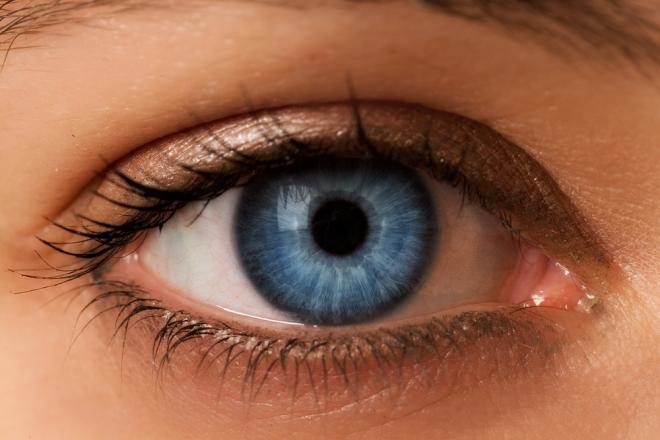
Blue-eyed people more prone to alcoholism, genetic researcher finds

People with blue eyes might have a greater chance of becoming alcoholics, according to a unique new study by genetic researchers at the University of Vermont.

The work, led by Arvis Sulovari, a doctoral student in cellular, molecular and biological sciences, and Assistant Professor of Microbiology and Molecular Genetics Dawei Li, Ph.D., is the first to make a direct connection between a person’s eye color and alcohol dependence. The results of the research, published in the July issue of the American Journal of Medical Genetics: Neuropsychiatric Genetics (Part B), suggest the hope of finding the roots of not only alcoholism, but also many other psychiatric illnesses.

“This suggests an intriguing possibility – that eye color can be useful in the clinic for alcohol dependence diagnosis,” Sulovari says.

The authors found that primarily European Americans with light-colored eyes – including green, grey and brown in the center – had a higher incidence of alcohol dependency than those with dark brown eyes, with the strongest tendency among blue-eyed individuals. The study outlines the genetic components that determine eye color and shows that they line up along the same chromosome as the genes related to excessive alcohol use.

But, Li says, “we still don’t know the reason” and more research is needed.

Li came to the University of Vermont in 2012 and has studied psychiatric genetics for a decade. During that time, he has worked with physicians and scientists throughout the Northeast who have collaborated to build a clinical and genetic database of more than 10,000 individuals, mostly African Americans and European Americans, diagnosed with at least one psychiatric illness. Many have multiple diagnoses of diseases, including depression, schizophrenia and bipolar disorder, as well as addiction and alcohol or drug dependence.

“These are complex disorders,” he says. “There are many genes, and there are many environmental triggers.”

From that extensive database, Li’s and Sulovari’s study filtered out the alcohol-dependent patients with European ancestry, a total of 1,263 samples. After Sulovari noticed the eye-color connection, they retested their analysis three times, arranging and rearranging the groups to compare age, gender and different ethnic or geographic backgrounds, such as southern and northern parts of the continent.

Next, Li wants to delve deeper into the relationship between cultural background and genetic makeup, continuing his quest to find the mechanisms of mental illness. His greatest challenge: All the genes identified in the past 20 years “can only explain a small percentage of the genetics part that has been suggested,” he says. “A large number is still missing, is still unknown.”

Li just submitted a grant application to pursue those missing genes and is working on another proposal for funding to continue that pursuit using the large database of patient samples. His work with Sulovari has provided a strong stepping-stone, he says.

“What has fascinated me the most about this work has been investigating the interface between statistics, informatics and biology,” says Sulovari. “It’s an incredible opportunity to study genomics in the context of complex human diseases.” – newswise.com

Boy, 13, gets highest score in rocket science

A couple of hours each evening mastering the laws of physics has paid off for Connall Cairns, 13, who has just achieved one of the highest scores in an astrophysics course run by one of the world’s top universities.

The British teenager enrolled online with Massachusetts Institute of Technology (MIT) in the undergraduate-level aerospace engineering course – despite not having taken his GCSEs yet.

Connall, a day pupil at Gosfield School in Essex, wants to be a nuclear physicist when he grows up. He said: “Rocket science has fascinated me since I was about seven…The course was very mathematical so I had to teach myself how to understand the equations.”

He signed up for the seven-week Introduction to Aerospace Engineering: Astronautics and Human Spaceflight after teachers at school told his artist mother Christy, 44, that he was at risk of becoming bored if he was not given an extra challenge.

Topics he had to master included Kepler’s laws of planetary motion, the Tsiolkovsky rocket equation, which calculates various factors for a launch into space, and Newton’s law of universal gravitation.

Connall is taking another online course at the Australian National University, on black holes and quantum physics.

Source: Daily Mail

Chimps can cook

They’re not likely to start barbecuing in the rainforest, but chimpanzees can understand the concept of cooking and are willing to postpone eating raw food, even carrying food some distance to cook it rather than eat immediately, scientists reported on Tuesday.

The findings, based on nine experiments conducted at the Tchimpounga Sanctuary in Republic of Congo and published in Proceedings of the Royal Society B, suggest that chimps have all the brainpower needed to cook, including planning, causal understanding, and ability to postpone gratification.

They do lack the ability to produce fire. But if they were given a source of heat, chimps “might be quite able to manipulate (it) to cook,” said developmental psychologist Felix Warneken of Harvard University, who conducted the study with Alexandra Rosati.

Cooked food is easier to digest, spurring the growth of large brains in our australopithecine ancestors, Harvard’s Richard Wrangham proposed about a decade ago.

If chimps have the cognitive skills to cook, australopithecines likely did, too, said Wrangham, who was not involved in the study: “It suggests that with a little extra brainpower, australopithecines could indeed have found a way to use fire to cook food.”

Archaeological evidence suggests humans began using fire 1 million years ago.

Some of the experiments confirmed studies by other scientists, such as that chimps prefer seared sweet potatoes to raw. But those tests did not test whether chimps have the mental chops to cook.

Other tests did. For instance, the scientists presented chimps with two containers. One yielded cooked food through a false bottom, not actually cooking, and one did not.

The chimps learned that one transforms potatoes from raw to cooked. Given a choice of which device to put food in, they almost always opted for the “cooker,” showing they understood and willingly waited for the raw-to-cooked transformation.

Chimps did not put pieces of wood that scientists gave them into the cooker, suggesting they grasped that only food can be cooked.

Surprisingly, since chimps usually eat food immediately, they were often willing to walk across a room to cook. When the first one did this, the scientists wondered if they had a single “chimpanzee genius,” Warneken said. But others showed the same ability, understanding the idea of cooking and postponing gratification to do it.

Source: Reuters

Terrorists celebrate 20 years of terror

Former Palestinian terrorist Leila Khaled’s visit to Soweto on Sunday turned into a celebration of violence, armed terror and crime “for a noble cause”.

Posters of Nelson Mandela adorned the walls of the Donaldson Orlando Community Centre in Soweto with the words: “The belligerent attitude adopted by the Israeli government is to us unacceptable.” Mandela however had welcomed armed terror in South Africa.

One of the main reasons why Mandela had lingered in prison for 27 years, was because he had refused to call off the ANC’s armed struggle campaign against innocent civilians.

The Deputy Minister of Rural Development and Land Reform Mcebisi Skwatsha reminded the audience that weapons were an essential part of the struggle: “You are told it’s a matter of life or death, but the cause is a noble one. It was a matter of being inducted into the use of an AK47.”

“Two people stood out for us young ones. It was that picture of comrade Leila carrying an AK47. And it was also a pic of comrade Che Guevara carrying an AK47.

Without irony Skwatsha said Khaled, like Nelson Mandela, had been labelled a terrorist.

“The chief terrorist became the president of a liberated South Africa. Look at the difference the terrorists have made in our country in the last 20 years.”

Since Mandela’s release South Africa has become a criminal paradise, making it one of the most dangerous countries in the world and a child rapist’s dream.

Max Ozinsky, a national executive committee member of the MK Veterans Association, said Israel and apartheid South Africa had worked together to fight the ANC and its “armed struggle against apartheid and its supporters”.

Skwatsha said he had been involved in terror against civilians in South Africa. He joined the ANC’s military wing Umkhonto we Sizwe “at an early age in the 1980s”.

Deputy Minister of Defence and Military Veterans and Umkhonto we Sizwe Military Veterans’ Association chairman Kebby Maphatsoe meanwhile declared war on the EFF, saying it was “in parliament because of our sweat and blood”.

He told a raucous crowd at the Centre: “They’ve declared war on us and we’ve been left with no choice but to defend ourselves.”

The mostly ANC crowd chanted struggle threats against EFF members, promising violence.

Khaled, who has reportedly had no less than nine facial plastic surgery interventions, leaves for Jordan today.

Her visit was to raise funds for Boycott, Divestment and Sanctions Against Israel in South Africa.

“Now you’re enjoying the streets of Soweto. I feel I’m with my family. You’re sisters and brothers. We [Palestinians] were celebrating in 1994 when you got your elections. Freedom is important because it is dignity. Why don’t they [Israelis] admit that occupation is terrorism?”

Even a small asteroid could destroy human race in near future – scientists

An international group of astronauts, scientists and others have called for a rapid expansion of efforts to detect asteroids capable of causing widespread destruction on earth, warning that this is one of the biggest threats to humanity in the coming centuries.

Led by Lord Rees, Britain’s royal astronomer, and Brian May, a PhD in astrophysics as well as guitarist with the rock band Queen, the group said a hundredfold increase in the number of objects detected each year was necessary over the next decade.

Academic projects to detect and track asteroids that might one day collide with earth have been under way for more than 50 years. The work was boosted in 1998 when Nasa was given a decade to identify near-earth objects with a diameter of more than 1km — a size that would turn a collision into a potentially extinction-level event.

However, astrophysicists warn that asteroids and meteors as small as 50m across could still cause devastation on earth, with a direct hit capable of wiping out a city and killing millions. An undetected meteor estimated to be 20m in diameter entered the atmosphere over Russia last year and exploded at a height of several miles, causing a shockwave that injured 1,500 people (pictured). Even the devastating 1908 impact at Tunguska in Siberia, the largest in human recorded history, was caused by an object of only around 50m, said Lord Rees.

Only around 1 per cent of the 1m asteroids, meteors and comets that could cause massive damage on earth have been detected so far, according to a declaration by the group issued on Wednesday.

“Nasa has done a very good job of finding the very largest objects, the ones that would destroy the human race,” said Ed Lu, an astronaut who flew three trips to the International Space Station. “It’s the ones that would destroy a city or hit the economy for a couple of hundred years that are the problem.”

“The more we learn about asteroid impacts, the clearer it becomes that the human race has been living on borrowed time” – Brian May, astrophysicist and Queen guitarist

“The more we learn about asteroid impacts, the clearer it becomes that the human race has been living on borrowed time,” said Mr May, who broke off his academic studies to become a musician but returned to complete his PhD at the University of London’s Imperial College in 2007. The campaign launched this week is intended to raise awareness and put pressure on governments to act, he added.

The group called for work in the near term to focus on detection rather than rushing to find ways to destroy or deflect dangerous objects. Dealing with an asteroid that is on a collision course with earth “is the easy part”, said Mr Lu. Since there would probably be decades to prepare for a future asteroid strike once it has been identified, “all you need to do when you have that much notice is run a spacecraft into them,” he said.

To complement Nasa’s ground-based telescopes, detecting the mass of small objects that could cause destruction on earth would require an infrared telescope mounted on a spacecraft orbiting between Earth and Venus, Lord Rees said.

The more than 100 signatories have joined the call for governments and private bodies to accelerate asteroid tracking greatly, including 34 US and Russian astronauts, and scientists such as the evolutionary biologist Richard Dawkins. The call also has the support of technologists such as Google’s Alan Eustace, who in October made a record parachute jump from the edge of space, and Nathan Myhrvold, a former chief technologist at Microsoft. – FT.COM

‘Racist’ scientist forced to sell Nobel Prize medal

‘I am an unperson’

The geneticist James Watson, who has been ostracized since public comments about black African IQ in 2007, is to auction off his 1962 prize for discovering the structure of DNA. It is expected to fetch in excess of $3 million.

“Because I was an ‘unperson’ I was fired from the boards of companies, so I have no income, apart from my academic income,” said the scientist of the aftermath of the incident seven years ago, which forced him to retire from the Cold Spring Harbor Laboratory, where he had worked for four decades.

“No one really wants to admit I exist,” he told the Financial Times.

Despite his reduced circumstances – Watson has not been invited to give public lectures since 2007 – the American scientist is not living his life out in poverty. He said he plans to donate some of the proceeds of the sale of the medal to the “institutions that have looked after me,” including his alma mater, the University of Chicago, and Cambridge, where he met laboratory partner Francis Crick, with whom he shared the Nobel Prize.

The 86-year-old Watson also plans to purchase art.

“I really would love to own a [painting by English painter David] Hockney.”

The reserve price for the medal, which will be auctioned off at Christie’s in New York on Thursday, is $2.5 million, and there has been speculation that the final value could easily surpass $3 million. Crick’s medal – auctioned off last year to Jack Wang, a relatively obscure Shanghai biotech entrepreneur – fetched about $2.3 million.

“The far-reaching aspects of their discovery affect everybody and are only being appreciated now,” said Christie’s auctioneer Francis Wahlgren.

“I think the guy is the greatest living scientist. There are a lot of personalities in history we’d find fault with – but their discoveries transcend human foibles,” Wahlgren added.

The sale of Nobel Prizes is a recent phenomenon, with Watson’s being only the fourth to go on sale – and the first while the recipient is still alive. The medal awarded to Aage Bohr, the son of Niels, in 1975, attracted a winning bid of about $50,000 in 2012. Notably, American writer William Faulkner’s 1950 medal failed to pass the reserve price at an auction last year.

But for Watson, this is not just a chance to acquire money, but also to “re-enter public life.”

“I’ve had a unique life that’s allowed me to do things. I was set back. It was stupid on my part. All you can do is nothing, except hope that people actually know what you are.”

The iconic image of Watson and Crick giving a presentation on DNA in 1953 at Cambridge University.The iconic image of Watson and Crick giving a presentation on DNA in 1953 at Cambridge University.

Despite a long-standing reputation as an outspoken scientist who sometimes professed eccentric views – such as those linking sunlight and libido – Watson’s downfall was swift.

In October 2007, Watson said to the Sunday Times that he was “gloomy about the prospect of Africa” because “all our social policies are based on the fact that their intelligence is the same as ours, whereas all the testing says not really.”

He later waded into even more dangerous territory, suggesting that anecdotal reports said that black employees were less intelligent, and that there were no talented black scientists who could be recruited to work in his laboratory.

While Watson’s racial theories of IQ have some academic support, such as in Richard J. Herrnstein’s and Charles Murray’s controversial book ‘The Bell Curve,’ this remains one of the most contentious areas of scientific research. Following Watson’s crude remarks, most of the scientific community turned on him, accusing him of prejudice.

It is a charge he rejects to this day.

“I am not a racist in a conventional way,” he told the Financial Times.

“I apologize…the [Sunday Times] journalist somehow wrote that I worried about the people in Africa because of their low IQ – and you’re not supposed to say that.”

First woman to head CERN

Italian physicist Fabiola Gianotti was chosen on Tuesday to head the CERN particle physics research centre that houses the giant LHC “Big Bang” machine, making her the first woman nominated to lead a top global scientific institution in the field.

Gianotti, who won world attention in 2012 for her leadership role in CERN’s discovery of the long-sought “Higgs boson”, will take up the post in January 2016 as scientists there look to new findings on the origin and make-up of the universe.

Her appointment was decided at a meeting of the centre’s ruling council, made up of representatives of its 20 member states, a CERN announcement said. It remains to be formalised at a further meeting in December.

Gianotti, 52 and a researcher at CERN near Geneva since she joined it with a doctorate from the University of Milan in 1987, will replace Rolf Heuer, who steered the centre through the initially-troubled launch of the Large Hadron Collider.

The machine was primarily built to find the Higgs – a theoretical particle and related energy field which was thought to have made formation of the physical universe possible by converting matter into mass.

In the LHC, now awaiting relaunch with twice the power in spring next year, elementary particles are smashed together at close to the speed of light, creating billions of tiny “Big Bangs” and their aftermath.

Gianotti in 2009 became project leader of the Atlas collaboration, one of the two major teams working separately to spot the Higgs in the LHC data.

With her counterpart from the CMS team, she detailed the finding of the Higgs – named for the British physicist who predicted its existence in 1964 – before a global television audience in July 2012.

The discovery brought a Nobel Prize in 2013 for Peter Higgs, the British theorist, and Francois Englert, a Belgian physicist working on the same idea with two other colleagues in the early 1960s and who also posited the existence of the boson.

Gianotti, an accomplished pianist who once considered devoting her life to music, said she was honoured to be named to head the sprawling institute – which links some 10 000 scientists on site and around the globe – along the Franco-Swiss border outside Geneva.

“CERN is a centre of scientific excellence and a source of pride and inspiration for physicists from all over the world, a cradle for technology and innovation, and a shining concrete example of scientific cooperation and peace,” she said.

When collisions in the LHC are resumed, scientists will be looking for evidence helping to resolve other major questions including the dark matter thought to make up about a quarter of the universe and dark energy accounting for some 70 percent.

Source: Reuters

‘This ebola is a very different bug’

Peter Jahrling of the National Institute of Allergy and Infectious Disease is on the front lines fighting this disease in Liberia. He is one of the top authorities in the world on Ebola.

Jahrling believes the current Ebola outbreak may be caused by an infection that spreads more easily than it did before.

Dr Jahrling explained that his team, who are working in the epicentre of the crisis in the Liberian capital of Monrovia, are seeing that the viral loads in Ebola patients are much higher than they are used to seeing.

He told Vox.com: ‘We are using tests now that weren’t using in the past, but there seems to be a belief that the virus load is higher in these patients [today] than what we have seen before. If true, that’s a very different bug.

‘I have a field team in Monrovia. They are running [tests]. They are telling me that viral loads are coming up very quickly and really high, higher than they are used to seeing.

‘It may be that the virus burns hotter and quicker.’

The head of the Center for Infectious Disease Research and Policy at the University of Minnesota – Dr. Michael Osterholm – is a prominent public health scientist and a nationally recognized biosecurity expert.

Dr. Osterholm just gave a talk shown on C-Span explaining that a top Ebola virologist – the Head of Special Pathogens at Canada’s health agency, Gary Kobinger – has found that the current strain of Ebola appears to be much worse than any strain seen before … and that the current virus may be more likely to spread through aerosols than strains which scientists have previously encountered.

The Los Angeles Times reports that dr. C.J. Peters, who battled a 1989 outbreak of the virus among research monkeys housed in Virginia and who later led the CDC’s most far-reaching study of Ebola’s transmissibility in humans, said he would not rule out the possibility that it spreads through the air in tight quarters.

“We just don’t have the data to exclude it,” said Peters, who continues to research viral diseases at the University of Texas in Galveston.

Dr. Philip K. Russell, a virologist who oversaw Ebola research while heading the U.S. Army’s Medical Research and Development Command, and who later led the government’s massive stockpiling of smallpox vaccine after the Sept. 11 terrorist attacks, also said much was still to be learned. “Being dogmatic is, I think, ill-advised, because there are too many unknowns here.“

A study was conducted back in 2012 that demonstrated that the Ebola virus can be transferred from one animal to another animal without any physical contact whatsoever:

When news broke that the Ebola virus had resurfaced in Uganda, investigators in Canada were making headlines of their own with research indicating the deadly virus may spread between species, through the air.

The team, comprised of researchers from the National Centre for Foreign Animal Disease, the University of Manitoba, and the Public Health Agency of Canada, observed transmission of Ebola from pigs to monkeys. They first inoculated a number of piglets with the Zaire strain of the Ebola virus. Ebola-Zaire is the deadliest strain, with mortality rates up to 90 percent. The piglets were then placed in a room with four cynomolgus macaques, a species of monkey commonly used in laboratories. The animals were separated by wire cages to prevent direct contact between the species.

Within a few days, the inoculated piglets showed clinical signs of infection indicative of Ebola infection. In pigs, Ebola generally causes respiratory illness and increased temperature. Nine days after infection, all piglets appeared to have recovered from the disease.

Within eight days of exposure, two of the four monkeys showed signs of Ebola infection. Four days later, the remaining two monkeys were sick too. It is possible that the first two monkeys infected the other two, but transmission between non-human primates has never before been observed in a lab setting.

Mars expedition: Astronauts simulate life on planet for 8 months

For eight months, six astronauts will be essentially locked into a small dome in Hawaii as NASA attempts to study the consequences of living the quiet, lonely lifestyle that humans would experience on Mars.

Titled the Hawaii Space Exploration Analog and Simulation (HI-SEAS), the experiment will be NASA’s longest Mars-related simulation ever. It also happens to be the first time that a woman, 34-year-old Martha Lenio, is leading a Mars simulation project.

The project is intended to explore various elements that astronauts would have to cope with on a future mission to the Red Planet – including isolation, delayed communication times, lack of sunlight, teamwork, efficiency, and more.

In fact, NASA’s priority is to conduct a “psychology study on team cohesiveness, our attitudes, and how we stick together,” Lenio told National Geographic.

Lenio added that the living space for the six astronauts is about 1,000 square feet. Inside are two washrooms, a dining area, a work area, a kitchen, and a bedroom for each individual that is essentially a “glorified closet.” There is one window in the entire dome, but looking outside won’t offer much comfort for astronauts: the dome is situated near the Mauna Loa volcano, and the barren landscape looks much like Mars’ own surface.

“The HI-SEAS site presents a remarkably high-fidelity environment for this type of long-duration space study,” University of Hawaii at Manoa’s Kim Binsted, who is also working on the study, said to local KHON2 News. “Looking out the single porthole window, all you can see are lava fields and Mauna Kea in the distance. Once the door is closed, and the faux airlock sealed, the silence and physical separation contribute to the ‘long way from home’ experience of our crew members.”

Astronauts will also be observed by researchers via body movement trackers, cameras, and electronic surveys, KHON2 reported.

Maintaining their health (and sanity) will be a top priority for the astronauts, who will have to make do with food that can stay for two or three years. In terms of water, the astronauts will receive rations of eight liters per day, which they will use for everything from cooking and drinking to showering and cleaning their clothes. An exercise bike and a treadmill are also available in the tiny living quarters.

Although there are clearly limitations that astronauts will have to cope with, Lenio is confident they will be successful. When asked if humans were able travel to Mars right now, she answered simply that they could.

A recent MIT study found the ambitious, privately-funded Mars One mission would encounter serious problems were it to try and establish a permanent human presence on the Red Planet by 2025. Researchers said that humans would begin dying in just a couple of months, since current technology is not where it needs to be for a sustainable presence.

mars-2
Image from: http://hi-seas.org

However, Lenio noted that NASA is not looking to establish a permanent base on Mars, at least not with its first mission.

“NASA and other space agencies around the world are looking at a three-year trip to Mars. So the trip does not have to be completely sustainable yet,” she told National Geographic. “Also, resupplies, or sending supplies ahead separately, are both possible.”

“The study’s findings don’t faze me. One of my interests is sustainability, and the more sustainable we can make these missions, the better they will be. The better we get at recycling, or turning our waste into soil to grow more food, those are all lessons we can bring back to Earth.”

HI-SEAS is one of several experiments conducted to test humanity’s ability to travel to Mars. Last year, a Russian team of astronauts ventured into the US to simulate life on the Red Planet via the international Mars Desert Research Station. Before that, the Mars-500 experiment packed astronauts away for 17 months to simulate a manned flight to the planet.

Elsewhere in the present day, NASA is also moving forward with experiments on deep sleep technology. If successful, the agency could potentially induce hibernation in astronauts for large portions of a six-month trip to Mars. As a result, less food, water, and other supplies would be needed, potentially reducing the mass of a flight by up to 400 tons.

Still, aerospace engineer Mark Schaffer at Spaceworks, which is working with NASA, cautioned that the technology is far from developed.

“We haven’t had the need to keep someone in [hibernation] for longer than seven days,” he said earlier this month. “For human Mars missions, we need to push that to 90 days, 180 days. Those are the types of mission flight times we’re talking about.” – RT.COM

IBM, Ford not liable for ‘apartheid claims’ – US court

A Manhattan federal judge has dismissed a 12-year-old lawsuit accusing Ford Motor and IBM of encouraging human rights abuses in apartheid-era SA, reluctantly concluding the case does not belong in US courts.

US district judge Shira Scheindlin said last week the black South Africans who brought the case did not show “relevant conduct” by Ford and IBM within the US to justify holding the companies liable.

The plaintiffs had accused Ford, IBM and other companies of having between the 1970s and early 1990s aided SA’s former apartheid government in abuses such as killings and torture, by having made military vehicles and computers for government security forces.

“That these plaintiffs are left without relief in an American court is regrettable,” Scheindlin wrote. “But I am bound to follow [legal precedent], no matter what my personal view of the law may be.”

The case had been brought under the Alien Tort Statute, a 1789 law that lets non-US citizens pursue some cases in US courts over alleged violations of international law.

In April 2013, the US Supreme Court said that law was presumed to cover only violations in the United States, or violations elsewhere that “touch and concern” US territory “with sufficient force”.

Four months later, the federal appeals court in Manhattan applied that holding, and said the Ford and IBM cases should be dismissed altogether.

In April, Scheindlin nonetheless gave the plaintiffs one more chance, to meet the new standards imposed by those higher courts.

But in Thursday’s decision, she said the bar proved too high, and that any alleged international law violations were by Ford’s and IBM’s South African units, and occurred abroad.

“It has been 12 years. We’re really disappointed, devastated by the decision,” said Diane Sammons, a partner at Nagel Rice in Roseland, New Jersey, who represents some plaintiffs.

“The end result of the ruling is that corporations can act abroad with impunity, even if they’re totally controlling the activities of their foreign subsidiaries,” she added. “I don’t think the Supreme Court’s decision was that narrowly defined.”

She said the plaintiffs had not decided whether to appeal.

Jonathan Hacker, an O’Melveny & Myers partner who represents Ford, did not immediately respond to requests for comment. Keith Hummel, a Cravath, Swaine & Moore partner who represents IBM, did not immediately respond to similar requests.

Germany’s Daimler and Rheinmetall were dismissed as defendants in December. – Reuters

Spanish priest dies of Ebola

Spanish priest Miguel Pajares, 75, the first European infected by a strain of Ebola that has killed more than 1,000 people in West Africa, has died in hospital in Madrid, a spokeswoman for the city’s health authorities said on Tuesday.

The spokeswoman declined to say when Pajares, who was airlifted from Liberia on August 7 after contracting the disease while working for a non-governmental organization in the African country, had died.

The priest was being treated in the Carlos III hospital, where he had been in quarantine since his return from Africa.

The Health Ministry said he was being treated with the experimental drug ZMapp, manufactured by U.S. company Mapp Biopharmaceutical. Two U.S. aid workers infected by the disease have shown some signs of improvements since being given the drug.

Pajares was repatriated with co-worker Juliana Bohi, a nun who has tested negative for Ebola.

The Ebola drug given to two Americans and the Spanish priest has been sent to treat infected doctors in two West African countries, and the supply of the medicine is now gone, its manufacturer said.

Countries including Nigeria and Liberia had requested the drug, called ZMapp. Mapp Biopharmaceutical Inc., based in San Diego, said it has complied with every request for the drug that was authorized by legal and regulatory authorities. The drug was provided at no cost, according to Mapp.

“It is our understanding that all patients offered treatment, treated, or expected to be treated were or are highly capable of providing informed consent for the use of an experimental drug not yet evaluated for safety in animals or people,” the company said yesterday in a statement.

Source: Reuters.Bloomberg

Fracking associated with human hormone disruption

Many chemicals used in hydraulic fracturing, or fracking, can disrupt not only the human body’s reproductive hormones but also the glucocorticoid and thyroid hormone receptors, which are necessary to maintain good health, a new study finds. The results were presented Monday at the joint meeting of the International Society of Endocrinology and the Endocrine Society: ICE/ENDO 2014 in Chicago.

“Among the chemicals that the fracking industry has reported using most often, all 24 that we have tested block the activity of one or more important hormone receptors,” said the study’s presenting author, Christopher Kassotis, a PhD student at the University of Missouri, Columbia. “The high levels of hormone disruption by endocrine-disrupting chemicals (EDCs) that we measured, have been associated with many poor health outcomes, such as infertility, cancer and birth defects.”

Hydraulic fracturing is the process of injecting numerous chemicals and millions of gallons of water deep underground under high pressure to fracture hard rock and release trapped natural gas and oil. Kassotis said spills of wastewater could contaminate surface and ground water.

In earlier research, this group found that water samples collected from sites with documented fracking spills in Garfield County, Colorado, had moderate to high levels of EDC activity that mimicked or blocked the effects of the female hormones (estrogens) and the male hormones (androgens) in human cells. However, water in areas away from these gas-drilling sites showed little EDC activity on these two reproductive hormones.

The new study extended the analysis to learn whether high-use fracking chemicals changed other key hormone receptors besides the estrogen and androgen receptors. (Receptors are proteins in cells that the hormone binds to in order to perform its function.) Specifically, the researchers also looked at the receptor for a female reproductive hormone, progesterone, as well as those for glucocorticoid—a hormone important to the immune system, which also plays a role in reproduction and fertility—and for thyroid hormone. The latter hormone helps control metabolism, normal brain development and other functions needed for good health.

Among 24 common fracking chemicals that Kassotis and his colleagues repeatedly tested for EDC activity in human cells, 20 blocked the estrogen receptor, preventing estrogen from binding to the receptor and being able to have its natural biological response, he reported. In addition, 17 chemicals inhibited the androgen receptor, 10 hindered the progesterone receptor, 10 blocked the glucocorticoid receptor and 7 inhibited the thyroid hormone receptor.

Kassotis cautioned that they have not measured these chemicals in local water samples, and it is likely that the high chemical concentrations tested would not show up in drinking water near drilling. However, he said mixtures of these chemicals act together to make their hormone-disrupting effects worse than any one chemical alone, and tested drinking water normally contains mixtures of EDCs.

“We don’t know what the adverse health consequences might be in humans and animals exposed to these chemicals,” Kassotis said, “but infants and children would be most vulnerable because they are smaller, and infants lack the ability to break down these chemicals.”

This study received funding from the Passport Foundation Science Innovation Fund, the University of Missouri, and from the Environmental Protection Agency, through a STAR predoctoral fellowship awarded to Kassotis.

Founded in 1916, the Endocrine Society is the world’s oldest, largest and most active organization devoted to research on hormones and the clinical practice of endocrinology. Today, the Endocrine Society’s membership consists of over 17,000 scientists, physicians, educators, nurses and students in more than 100 countries. Society members represent all basic, applied and clinical interests in endocrinology. The Endocrine Society is based in Washington, DC.