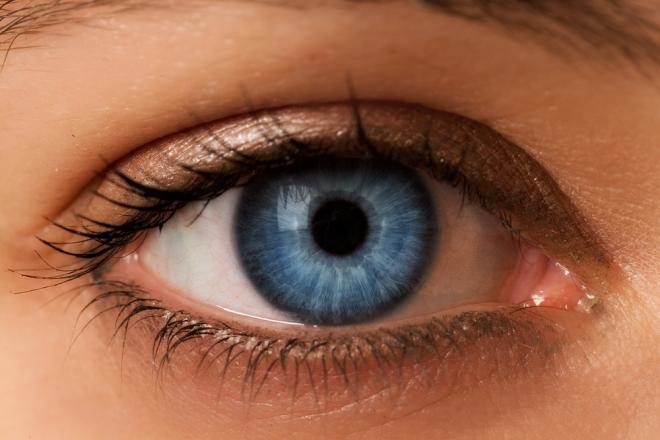
Blue-eyed people more prone to alcoholism, genetic researcher finds

People with blue eyes might have a greater chance of becoming alcoholics, according to a unique new study by genetic researchers at the University of Vermont.

The work, led by Arvis Sulovari, a doctoral student in cellular, molecular and biological sciences, and Assistant Professor of Microbiology and Molecular Genetics Dawei Li, Ph.D., is the first to make a direct connection between a person’s eye color and alcohol dependence. The results of the research, published in the July issue of the American Journal of Medical Genetics: Neuropsychiatric Genetics (Part B), suggest the hope of finding the roots of not only alcoholism, but also many other psychiatric illnesses.

“This suggests an intriguing possibility – that eye color can be useful in the clinic for alcohol dependence diagnosis,” Sulovari says.

The authors found that primarily European Americans with light-colored eyes – including green, grey and brown in the center – had a higher incidence of alcohol dependency than those with dark brown eyes, with the strongest tendency among blue-eyed individuals. The study outlines the genetic components that determine eye color and shows that they line up along the same chromosome as the genes related to excessive alcohol use.

But, Li says, “we still don’t know the reason” and more research is needed.

Li came to the University of Vermont in 2012 and has studied psychiatric genetics for a decade. During that time, he has worked with physicians and scientists throughout the Northeast who have collaborated to build a clinical and genetic database of more than 10,000 individuals, mostly African Americans and European Americans, diagnosed with at least one psychiatric illness. Many have multiple diagnoses of diseases, including depression, schizophrenia and bipolar disorder, as well as addiction and alcohol or drug dependence.

“These are complex disorders,” he says. “There are many genes, and there are many environmental triggers.”

From that extensive database, Li’s and Sulovari’s study filtered out the alcohol-dependent patients with European ancestry, a total of 1,263 samples. After Sulovari noticed the eye-color connection, they retested their analysis three times, arranging and rearranging the groups to compare age, gender and different ethnic or geographic backgrounds, such as southern and northern parts of the continent.

Next, Li wants to delve deeper into the relationship between cultural background and genetic makeup, continuing his quest to find the mechanisms of mental illness. His greatest challenge: All the genes identified in the past 20 years “can only explain a small percentage of the genetics part that has been suggested,” he says. “A large number is still missing, is still unknown.”

Li just submitted a grant application to pursue those missing genes and is working on another proposal for funding to continue that pursuit using the large database of patient samples. His work with Sulovari has provided a strong stepping-stone, he says.

“What has fascinated me the most about this work has been investigating the interface between statistics, informatics and biology,” says Sulovari. “It’s an incredible opportunity to study genomics in the context of complex human diseases.” – newswise.com

Native Africans ‘interbred with another species 35 000 years ago’: scientists

Pigmy villagers in Uganda near Lake Bunyonyi

According to a news report of the scientific journal Nature, “our ancestors bred with other species in the Homo genus, according to a study published… in the Proceedings of the National Academy of Sciences1. The authors say that up to 2% of the genomes of some modern African populations may originally come from a closely related species.”

Palaeontologists have long wondered whether modern humans came from a single, genetically isolated population of hominids or whether we are a genetic mix of various hominid species.

Last year, an analysis comparing the Neanderthal genome sequence to that of modern H. sapiens showed that some interbreeding did take place between the two species in Europe some time between 80 and 30,000 years ago and that, to a certain extent, Neanderthals ‘live on’ in the genes of modern humans2.

It has been a mystery whether similar genetic mixing took place among Homo species even earlier, before the populations that became modern humans left Africa.

To find out, evolutionary biologist Michael Hammer at the University of Arizona in Tucson and his colleagues studied DNA from two African hunter-gatherer groups, the Biaka Pygmies and the San, as well as from a West African agricultural population known as the Mandenka.

Each of these groups is descended from populations that are thought to have remained in Africa, meaning they would have avoided the genetic bottleneck effect that usually occurs with migration. This means the groups show particularly high genetic diversity, which makes their genomes more likely to have retained evidence of ancient genetic mixing.

“We need to modify the standard model

of human origins.”

 To find signs of infiltration from other Homospecies, the researchers looked at 61 non-coding DNA regions in all three groups. Because direct comparison to archaic specimens wasn’t possible, the authors used computer models to simulate how infiltration from different populations might have affected patterns of variation within modern genomes.

Then they looked for such patterns of variation in the DNA of the three African populations. On chromosomes 4, 13 and 18, the researchers found genetic regions that were more divergent on average than known modern sequences at the same locations, hinting at a different origin.

Mixing things up

Hammer and his colleagues argue that roughly 2% of the genetic material found in these modern African populations was inserted into the human genome some 35,000 years ago. They say these sequences must have come from a now-extinct member of the Homogenus that broke away from the modern human lineage around 700,000 years ago.

Hammer says this disproves the conventional view that we are descended from a single population that arose in Africa and replaced all other Homo species without interbreeding. “We need to modify the standard model of human origins,” he says.

Geneticist Sarah Tishkoff, who studies population genetics and human evolution at the University of Pennsylvania in Philadelphia, is more cautious. “This raises the possibility that there may have been ancient admixture with archaic populations,” she says.

But some researchers will require yet more convincing. “The authors model differences in very small parameters, such as the difference between no admixture and 1-2% admixture with an archaic population,” says anthropologist Brenna Henn, a graduate student at Stanford University in Palo Alto, California. “The ability to discern complex models of demographic history with such a small data set, when many of the basic features of African genomes and history remain unknown, concerns me.”

Tishkoff would also like to see further work. “Analyses of whole genome sequences of these populations will be necessary to more definitively test this hypothesis,” she says.

References

  1. Hammer, M. F. et al. Proc. Natl Acad. Sci. USAhttp://dx.doi.org/10.1073/pnas.1109300108 (2011).
  2. Green, R. E. et al. Science 328, 710-722 (2010). | Article | PubMed | ISI | ChemPort |

Why women talk more than men

There’s a biological explanation for the reason why women talk more than men. Scientists have discovered a protein that’s found in higher concentrations in the brains of women.

You know all the times that men complain about women talking too much? Apparently there’s a biological explanation for the reason why women are chattier than men. Scientists have discovered that women possess higher levels of a “language protein” in their brains, which could explain why females are so talkative.

Previous research has shown that women talk almost three times as much as men. In fact, an average woman notches up 20,000 words in a day, which is about 13,000 more than the average man. In addition, women generally speak more quickly and devote more brainpower to speaking. Yet before now, researchers haven’t been able to biologically explain why this is the case.

Now, they can. New findings conducted by researchers at the University of Maryland School of Medicine and published in The Journal of Neuroscience show that a certain protein may be the culprit.

In 2001, a gene called FOXP2 appeared to be essential for the production of speech. In order to test this protein, the team, led by J. Michael Bowers and Margaret McCarthy, looked at young rat pups. These animals emit cries in the ultrasonic range when separated from their mothers. The team recorded the cries over five minutes in groups of 4-day-old male and female rats that had been separated from their mothers. They found that male pups had up to twice as much of the protein FOXP2  in regions of the brain known to be involved in vocalization–perhaps an unsurprising finding since researchers noted that males made twice as many cries as females.

Next, the researchers wanted to test their findings in humans. They conducted a small study on human children aged four to five years who had died in accidents less than 24 hours previously. They then analyzed the amount of FOXP2 protein in the brains of these children. In the end, the researchers found 30 percent more FOXP2 protein in the brains of the girls.

The research shows that the protein, FOXP2, is a key molecule for communication in mammals. In fact, it could allow researchers to better understand other species that may or may not possess the protein, such as Neanderthals. With this new biological link, scientists could potentially trace back the evolutionary origin of speech.

That said, the research also gives a reason for why women tend to be better at small talk. – Science World Report

Human intelligence is slowly declining

Would you be surprised to hear that the human race is slowly becoming dumber, and dumber? Despite our advancements over the last tens or even hundreds of years, some ‘experts’ believe that humans are losing cognitive capabilities and becoming more emotionally unstable. One Stanford University researcher and geneticist, Dr. Gerald Crabtree, believes that our intellectual decline as a race has much to do with adverse genetic mutations. But there is more to it than that.

According to Crabtree, our cognitive and emotional capabilities are fueled and determined by the combined effort of thousands of genes. If a mutation occurred in any of of these genes, which is quite likely, then intelligence or emotional stability can be negatively impacted.

“I would wager that if an average citizen from Athens of 1000 BC were to appear suddenly among us, he or she would be among the brightest and most intellectually alive of our colleagues and companions, with a good memory, a broad range of ideas, and a clear-sighted view of important issues. Furthermore, I would guess that he or she would be among the most emotionally stable of our friends and colleagues,” the geneticist began his article in the scientific journal Trends in Genetics.

Further, the geneticist explains that people with specific adverse genetic mutations are more likely than ever to survive and live amongst the ‘strong.’ Darwin’s theory of ‘survival of the fittest’ is less applicable in today’s society, therefore those with better genes will not necessarily dominate in society as they would have in the past.While this hypothesis does have some merit: are genes really the primary reason for the overall cognitive decline of the human race? If humans really are lacking in intelligence more than before, it’s important to recognize other possible causes. Let’s take a look at how our food system plays a role in all of this.

It’s sad, but true; our food system today is contributing to lower intelligence across the board.

Researchers from Harvard have found that a substance rampant in the nation’s water supply, fluoride,  is lowering IQ and dumbing down the population. The researchers, who had their findings published in the prominent journal Environmental Health Perspectives, a federal government medical journal stemming from the U.S National Institute of Environmental Health Sciences, concluded that ”our results support the possibility of adverse effects of fluoride exposures on children’s neurodevelopment”.

“In this study we found a significant dose-response relation between fluoride level in serum and children’s IQ…This is the 24th study that has found this association”.

One attorney, Paul Beeber, NYSCOF President, weighs in on the research by saying:

“It’s senseless to keep subjecting our children to this ongoing fluoridation experiment to satisfy the political agenda of special-interest groups. Even if fluoridation reduced cavities, is tooth health more important than brain health? It’s time to put politics aside and stop artificial fluoridation

One study published in the Proceedings of the National Academy of Sciences found that pesticides, which are rampant among the food supply, are creating lasting changes in overall brain structure — changes that have been linked to lower intelligence levels and decreased cognitive function. Specifically, the researchers found that a pesticide known as chlorpyrifos (CPF) has been linked to ”significant abnormalities”. Further, the negative impact was found to occur even at low levels of exposure.

Lead researcher Virginia Rauh, a professor at the Mailman School of Public Health, summarized the findings:

“Toxic exposure during this critical period can have far-reaching effects on brain development and behavioral functioning.”

Following 14,000 children, British researchers uncovered the connection between processed foods and reduced IQ. After recording the children’s’ diets and analyzing questionnaires submitting by the parents, the researchers found that if children were consuming a processed diet at age 3, IQ decline could begin over the next five years. The study found that by age 8, the children had suffered the IQ decline. On the contrary, children who ate a nutrient-rich diet including fruit and vegetables were found to increase their IQ over the 3 year period. The foods considered nutrient-rich by the researchers were most likely conventional fruits and vegetables.

Interestingly, one particular ingredient ubiquitous in processed foods and sugary beverages across the globe -high fructose corn syrup – has been tied to reduced IQ. The UCLA researchers coming to these findings found that HFCS may be damaging the brain functions of consumers worldwide, sabotaging learning and memory. In fact, the official release goes as far to say that high-fructose corn syrup can make you ‘stupid’.

Gene mutations may have something to do with our ongoing decline in intelligence, but let’s stop to think for a moment what we’re doing to ourselves to make this decline even more prominent.- http://naturalsociety.com

Cheating on genetic traits

Before and after cheating genetic traits

Many people are used to returning merchandise if they find that it doesn’t match their needs. But one Chinese man went a step further, and returned his wife – getting $120,000 in a court settlement.

­Jian Feng, living in Northern China, has filed for divorce from his wife after he found their newborn child to be “incredibly ugly,” arguing that his wife tricked him into the union by appearing to be a beautiful woman when she was instead ugly.

“I married my wife out of love, but as soon as we had our first daughter, we began having marital issues. Our daughter was incredibly ugly, to the point where it horrified me,” reports gossipwelove.com

Feng, after first accusing his wife of cheating, since the child girl did not look like him, was later confronted by his wife with the bitter truth – cosmetic surgery.

It was an apparent case of false advertising, as it turned out that that his once-beloved had spent over $100,000 in plastic surgery to modify her appearance.

Appalled by the fruit of their loins and by the fact that his wife had never revealed that surgery had enhanced her looks, Feng took the matter to court and won $120,000 in a settlement.

The reaction in social media to the story has largely been in support of Feng.

“When you are in a true relationship, you tell your spouse everything. Past present and future – if not, then you don’t respect them” one male commented on Facebook.

The female audience has also largely sided with Feng. “Of course I would – if you start a relationship with a lie, where does it end?” one woman asked. – RT

Genome study of Khoe-San reveals genetic diversity of modern humans

Two Khoe-San in their natural environment

Genetically, culturally and ethically the Khoe-San have something special to add to this world. The importance of this study is to put the Khoe and San heritage in the right place in history and this research will provide a genetic backdrop for future studies – Mattias Jakobsson

The largest genomic study ever conducted among Khoe and San groups reveals that these groups from southern Africa are descendants of the earliest diversification event in the history of all humans – some 100 000 years ago, well before the ‘out-of-Africa’ migration of modern humans.

Some 220 individuals from different regions in southern Africa participated in the research that led to the analysis of around 2.3 million DNA variants per individual – the biggest ever.

The research was conducted by a group of international scientists, including Professor Himla Soodyall from the Human Genomic Diversity and Disease Research Unit in the Faculty of Health at the University of the Witwatersrand in Johannesburg.

Entitled Genomic variation in seven Khoe-San groups reveals adaptation and complex African history, the study has been selected for early online publishing in the renowned scientific journal, Science, on Thursday, 20 September 2012 at 20:00 SATS (14:00 U.S. EST).

“The deepest divergence of all living people occurred some 100 000 years ago, well before modern humans migrated out of Africa and about twice as old as the divergences of central African Pygmies and East African hunter-gatherers and from other African groups,” says lead author Dr Carina Schlebusch, a Wits University PhD-graduate now conducting post-doctoral research at Uppsala University in Sweden.

Soodyall, from the National Health Laboratory Services in South Africa, has a long standing relationship with Khoe and San communities and said that the findings are a “phenomenal tribute to the indigenous Khoe and San people of southern Africa, and through this magnificent collaboration, we have given the peoples of Africa an opportunity to reclaim their place in the history of the world”.

Besides the publication of the study, the authors will also be visiting the San groups of the Kalahari in the Askam area in South Africa on the 24th of September 2012 for the country’s Heritage Day celebrations. “We are excited that together with some of our colleagues from Uppsala University, we will be able to join in the celebrations with the San groups in the Kalahari who participated in our research and to acknowledge their contribution in making our research possible”.

The researchers are now making the genome-wide data freely available: “Genetic information is getting more and more important for medical purposes. In addition to illuminating their history, we hope that this study is a step towards Khoe and San groups also being a part of that revolution,” says Schlebusch.

Another author, Professor Mike de Jongh from the University of South Africa adds, “It is important for us to communicate with the participants prior to the genetic studies, to inform individuals about the nature of our research, and to not only to share the results with them, but also to explain to them the significance of the data for recapturing their heritage.”

[ad 1]

About the research

According to Assistant-Professor Mattias Jakobsson from Uppsala University, these deep divergences among African populations have important implications and consequences when the history of all humankind is deciphered.

The deep structure and patterns of genetic variation suggest a complex population history of the peoples of Africa. “The human population has been structured for a long time,” says Jakobsson, “and it is possible that modern humans emerged from a non-homogeneous group.”

The study also found surprising stratification among Khoe-San groups. For example, the researchers estimate that the San populations from northern Namibia and Angola separated from the Khoe and San populations living in South Africa as early as 25,000 – 40,000 years ago.

“There is astonishing ethnic diversity among the Khoe-San group, and we were able to see many aspects of the colorful history that gave rise to this diversity in their DNA”, said Schlebusch.

The study further indicates how pastoralism first spread to southern Africa in combination with the Khoe culture. From archaeological and ethnographic studies it has been suggested that pastoralism was introduced to the Khoe in southern Africa before the arrival of Bantu-speaking farmers, but it has been unclear if this event had any genetic impact.

The Nama, a pastoralist Khoe group from Namibia showed great similarity to ‘southern’ San groups. “However, we found a small but very distinct genetic component that is shared with East Africans in this group, which may be the result of shared ancestry associated with pastoral communities from East Africa,” says Schlebusch.

With the genetic data the researchers could see that the Khoe pastoralists originate from a Southern San group that adopted pastoralism with genetic contributions from an East African group – a group that would have been the first to bring pastoralist practices to southern Africa.

The study also revealed evidence of local adaptation in different Khoe and San groups. For example, the researchers found that there was evidence for selection in genes involved in muscle function, immune response, and UV-light protection in local Khoe and San groups. These could be traits linked with adaptations to the challenging environments in which the ancestors of present-day San and Khoe were exposed to that have been retained in the gene pool of local groups.

The researchers also looked for signals across the genome of ancient adaptations that happened before the historical separation of the Khoe-San lineage from other humans. “Although all humans today carry similar variants in these genes, the early divergence between Khoe-San and other human groups allowed us to zoom-in on genes that have been fast-evolving in the ancestors of all of us living on the planet today,” said Pontus Skoglund from Uppsala University.

Among the strongest candidates were genes involved in skeletal development that may have been crucial in determining the characteristics of anatomically modern humans.