How to accelerate your business during the crisis

The SARS-CoV-19 virus has changed the world. Millions are unemployed, a global recession is fast approaching, and our parks and playgrounds once teeming with life and laughter have been abandoned and forgotten. One wonders whether the world can return to how it formerly was this scourge is rooted out. And, as the virus is indiscriminate in who it affects, it will be no surprise then that we tell you that the world of business has also been affected, in fact, some may say the world of business has been affected worst of all.

This page will tell you how you can accelerate your business during this global health crisis and how you can remedy the damage caused by the SARS-CoV-19 virus. By following the strategies set forward on this page, you will be able to salvage what’s left of your business and take it to new heights.

Here is how to accelerate your business during a crisis.

Strategic Planning and Forecasting

Forecasting and planning are crucial elements of any post-COVID recovery plan. Globally, businesses are being closed left, right, and center, which for some businesses who can withstand the brunt of the social distancing restrictions and lack of income, can be very good. If you are the only business in your market still functioning – when things begin to recover you will be in the best position imaginable. Planning and forecasting for this are crucial. You can do this by hiring a professional strategist or forecaster, or by cutting costs and making use of a business simulation, which is an application that will develop projections and strategies for you. These projections and strategies can be of great benefit and can aid you in helping your business to recover from the virus’s financial implications.

Marketing

There are a few ways that you can market your business now with great success. As has been mentioned, we are on the verge of economic collapse; because of this, many are unemployed, and many more are furloughed. Those unemployed and furloughed, a large percentage of them at least, are sitting around at home searching for jobs and idly browsing social media. You can use this to your advantage. Social media is a very powerful tool for business marketing, and now, with billions using it at one time, you can market your brand directly to your key demographic. They may not be able to make purchases immediately [financial collapse considered], but they will still be able to follow you and keep you in mind. You can also use social media influencers to your advantage.

Staff Training

Sales are, without a shadow of a doubt, the lifeblood of your company. If you are not making sales you will unfortunately not last very long. Making sales at the moment may be difficult, but with the right tactics, is not impossible. You may only be able to make enough to keep you afloat – but at the moment that’s all that matters. The training offered now will ensure that when things do return to normal that your staff will be better equipped to go out and make sales, thereby improving your company and improving your body of staff. There are multiple ways for you to train your staff at the moment, but it is important to consider that because of social distancing guidelines imposed upon us by our governments, we are unable to meet up physically, which means training exercises must be managed online, rather than in person. You can try roleplaying; one-to-ones; pitch exercises; peer coaching, and sales exercises.

Undercutting Competition

Ordinarily, in a business environment undercutting is frowned upon. However, at this time when businesses are all trying to stay afloat, undercutting your competition could serve as the best way to accelerate your business and drive your competition out of business. It is not a moral practice, admittedly, but it is one that will keep food on your table, and the tables of your employees, and when the virus does fade into obscurity and all of this is just a nightmare long gone, you will still rule your market and your business will be in a great position.

Expand

Expansion into areas that may be developing – or areas of business that may be hot right now [such as the sale of PPE], can be a great way to accelerate your business. If the financial complications of the virus have not touched you, then this may well be an option for you to consider. Expansion and growth mean acceleration.

With the help of this page, you should now know a few ways for you to accelerate your business during these troubling times. The crisis will not [hopefully] last forever, so it is important that you just get through the coming months. Good luck and stay strong – this will all be over before we know it.
$2 billion embezzled in Mozambique… What’s new?

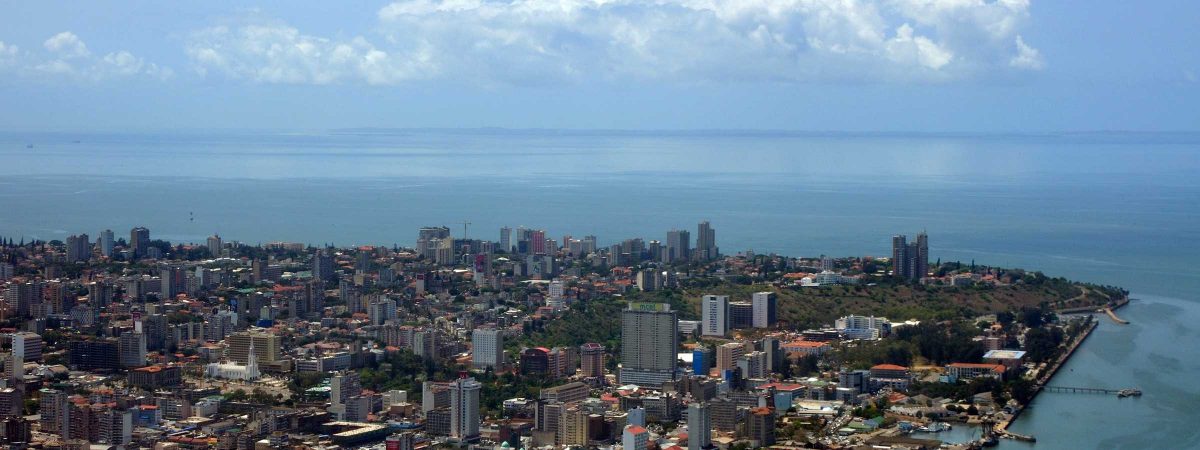
Switzerland has opened a probe related to $2 billion of loans to Mozambique that were organized by banks including Credit Suisse Group AG and VTB Bank PJSC, in a scandal that has already attracted the attention of prosecutors in the U.S.

The criminal probe was opened in February against “persons unknown” on suspicion of money laundering in connection with the loans, the Office of the Attorney General said on Friday. The target of the proceedings is not any specific person or entity, the office said.

The investigation follows requests for legal assistance from Mozambique, as well as reports of suspicious activity from the Swiss Money Laundering Reporting Office, according to the statement. Swiss newspaper NZZ reported the probe earlier on Friday.

Credit Suisse “is cooperating with all authorities investigating these matters,” a spokesman for the Swiss bank said.

The loans, which were granted to three state-owned Mozambican companies, are at the center of a scandal that has led to a sovereign default and an economic crisis. The debt was meant to fund a new coastal patrol force and develop a tuna fishing fleet for one of the world’s poorest countries. But the fundraising would ultimately come to the attention of U.S. prosecutors who alleged that the contracts were a front for government officials and bankers to enrich themselves. – Bloomberg

Read the full story here.

These financial moves can help you prepare for a recession

A recession is inevitable for any economy that faces an immense decline. This fact can be scary for people who have experienced it before, and those who haven’t.

What is a recession?

Put simply, a recession occurs when the economy shrinks in the gross domestic product (GDP) for two consecutive quarters. It brings with it fear, uncertainty and extreme conditions of poverty for the country’s citizens. And, although we know that recession is bound to happen – anywhere in the world – we never really know when it will take place, how severe the conditions will become or how long it will last.

This opens the door for a myriad of speculations to being formed and perpetuated, causing chaos in their wake. As governments continue to fight the current pandemic caused by the coronavirus, also known as COVID-19, fears of the global recession are intensifying.

Many experts are expressing uneasiness about the severity of the impact of the coronavirus on the global economy. Unfortunately, the recession in South Africa is already in full swing. This happened after the gross domestic product (GDP) declined by 1.4 percent in the last quarter of 2019, according to Statistics South Africa (StatsSA). The question about whether the coronavirus will deepen the recession hole for South Africa remains an answered one. Experts warn that it is a futile exercise to try to do the guesswork.

But it doesn’t mean that you should sit back and wait for a deeper plunge. While it might seem all too late, it isn’t; you can still prepare yourself the best way you can. Below we’ve compiled a list of tips on how you can prepare your business for a recession.

Reassess and rework your business goals

This new reality calls for a big reflection and assessment of all of your short-term and long term business goals. Consider what the change means for your business’s finances, and rearrange your goals to fit the new circumstances. For example, if you were planning to buy new equipment, it would be wiser to relook at this goal. If you were looking to buy any of the equipment because you simply wanted to upgrade, then postponing it for later – when things have become better – might not be a bad idea. In essence, look into your business wants and needs, and rearrange them according to what your business needs right now.

Create a business essentials budget

Budgeting is important even under normal circumstances, but it is even more important now during these difficult circumstances. Your company’s accountant needs to reassess and rearrange the business’s budget to fit in only essentials, as we’re only allowed to purchase essentials. That refers to food, toiletry, medical and health-related items, but also items that help run a business efficiently such as laptops. There are also several online business budgeting tools available in South Africa to help with managing your business budget better.

These tools can be a healthy addition to the balance sheet you normally use. It can help you with your business’s financial planning and give you an overview of your business account(s), investments and history of transactions.

Build up business savings

If your business is in a position to continue building up savings, do that. If you have not started a savings account, perhaps it’s time you start to fix that and open one. Asking any business to save their money during these tough times can sound ridiculous, but every little bit helps. You will need the money for unplanned expenses or business emergencies. You will also need savings for future projects that might become a valuable addition to your business, or kick-start old ones that you might have put on hold due to financial implications.

Pay your debts

Again, if you’re in a position to continue paying off your business’s debts, do not pause any of these payments. The more you hold off on paying, the more the interest rates will soar. It’s possible that by the time you start paying again, you’ll be overwhelmed. Paying off your debts will also give you peace of mind; should things get worse or should company take a knock, you’ll feel at ease knowing that you’re not too behind with your debt payments. Even If you’re secure about the future of your company, you still need to continue to pay your debts as it impacts on your company’s credit health.

Apply for financial relief

We just told you to pay your debts, but now we’re talking about taking on new debts, why? Well, business is in a complicated situation, and the state of affairs is not exactly the same for everyone. If your business is managing financially, it makes sense to steer clear of a new financial obligation, but for some businesses, financial relief is the only option they have.

For example, small businesses have either permanently or temporarily shut down, and some are working remotely. Some of these active businesses have had to cut down money spending to focus on priority areas. And, while the government has offered some relief to these groups of small businesses, there’s still a huge demand for financial relief. This is where corporate finance comes to the rescue. Corporate finance deals with providing money to businesses. What’s important here is to assess your risk appetite and tolerance. You can have a conversation with an expert who can guide you through this process and help you find out if you qualify for corporate finance, as well as where to apply for corporate finance.

Take control

Some things in life are within your control, and a recession is not. A country can work collectively to boost up the economy to try and avoid recession. However, it’s inevitable and can take place at any moment, should a country’s economy take a slump in two quarters consecutively. The best thing to do is to shift focus on things that are within your control. The above financial tips can help you take control and weather the storm as the fight continues.

British banks most exposed to Chinese market instability

Disclosures from two of Asia’s largest lenders showed that British banks are among of the most vulnerable to the current market troubles in China.

In its latest report, HSBC said outstanding loans to China grew 12 percent in the past year to $36.2 billion. Standard Chartered also revealed its overall exposure to Chinese customers rose by 30 percent during the same period.

The rapid growth of the Chinese economy has seen a rise in the numbers of British banks acting as foreign lenders, resulting in a record total of $221.2 billion outstanding loans to China, more than twice the total of US banks, with $86.5 billion outstanding loans.

UK banks were also the largest source of new loans to China during the year ending March 31, topping the list of 25 countries whose banks report their lending data.

The revelations come as the pound suffered its worst day of trading against the Euro in six years.

After months of strong trading against the Euro due to the Greek financial crisis, the pound fell by 2 percent, before regaining half a percent and finishing the day in a 1.5 percent drop.

Speaking during a visit to Finland on Tuesday, Chancellor George Osborne said Britain’s open economy made it vulnerable to economic tremors across the globe.

Source: RT

SA steelmaker Evraz Highveld halts operations

South Africa’s second-largest steelmaker Evraz Highveld Steel and Vanadium confirmed on Monday that it had temporarily ceased steel production at its steelworks, citing working capital constraints and reduced domestic demand mainly owing to a “significant” increase in steel imports from China.

The group said in a statement that it was currently communicating with its employees, adding that it intended to resume production once adequate funding had been secured and steel trading conditions had improved to ensure the company’s sustained future financial viability.

The decision to halt production at the company’s ironmaking division was brought about by delayed debtors payments; inadequate cash to procure the required raw materials to continue with manufacturing operations; difficulties experienced with access to funding; and a continued inability to pay major creditors timeously, it outlined.

The company added that the feeding of raw materials into the ironmaking kilns had been halted to enable the furnaces to be safely drained and switched out, ready for a future start-up. “The steel plant will be stopped and made safe once all the hot metal has been processed. The two mills will continue operating until all the available stocks have been rolled into saleable products, whereafter these operations will also be safely stopped.

“All plant and equipment will, for the moment, be placed on care and maintenance and prepared for future start up,” it held.

South Africa’s largest steel producer ArcelorMittal South Africa (AMSA) had also recently spoken out about the difficult conditions facing local steel producers, with AMSA CEO Paul O’Flaherty last week confirming that the industry was seeking greater protection from steel imports through the implementation of a 10% ad valorem duty on such imports.

Source: engineeringnews.co.za

Apple future questioned

Apple Inc shares slumped nearly 7 percent in after-hours trading as its fourth-quarter revenue forecast fell short of estimates and it missed some targets for iPhone sales.

The shares dropped to $121 after the company released its results on Tuesday, from $130.75 at the close.

The forecast overshadowed Apple’s strong sales in China, which more than doubled to $13.23 billion from a year earlier.

Apple Chief Financial Officer Luca Maestri said in an interview the results in China were “spectacular” during the quarter and noted plans to open 40 stores there over the next 12 months.

Without disclosing specific figures, Maestri said sales of the Apple Watch beat the company’s expectations. He noted that in the nine weeks since its launch in late April, the device has sold better than either iPhones or iPads over a similar period after their launch.

Colin Gillis, an analyst for BGC Partners, said the results highlighted the vulnerability of Apple’s dependence on the iPhone and the Chinese market’s growing importance to the company.

“Where are you going to find growth in the world?” he said. “You’ve done an amazing job sucking all the smartphone profits into your balance sheet, but smartphone sales are slowing. What’s going to happen when the industry matures, just like PCs did?”

Source: Reuters

Rupert: The rich will want to conceal their wealth

Johann Rupert, the South African who has made billions peddling Cartier jewelry and Chloe fashion, said tension between the rich and poor is set to escalate as robots and artificial intelligence fuel mass unemployment.

“We cannot have 0.1 percent of 0.1 percent taking all the spoils,” said Rupert, who has a fortune worth $7.5 billion, according to data compiled by Bloomberg. “It’s unfair and it is not sustainable.”

The founder and chairman of Richemont, whose 20 brands also include Vacheron Constantin and Montblanc, said he expects advances in technology to lead to job losses after having read books on the subject recently. Conflicts between social classes will make selling luxury goods more tricky as the rich will want to conceal their wealth, Rupert said in a speech Monday at the Financial Times Business of Luxury Summit in Monaco.

“How is society going to cope with structural unemployment and the envy, hatred and the social warfare?” he said. “We are destroying the middle classes at this stage and it will affect us. It’s unfair. So that’s what keeps me awake at night.”

Rupert, a university dropout whose father made a fortune setting up Rembrandt Tobacco Corp. and selling it off, has in the past made other social critiques. Nicknamed ‘Rupert the Bear’ for his pessimistic views on the economy, the 65-year-old refers to himself as a “reformed prostitute,” having spent a decade as an investment banker. He said in 2008 that the collateral damage from the financial crisis was yet to come.

“We’re in for a huge change in society,” he said Monday. “Get used to it. And be prepared.”

Source: Bloomberg

Yuan inclusion in SDR basket inevitable

An integrated Eurasian block will dominate the world. The Chinese are acting upon that insight.

The IMF is due to re-examine the composition of its currency basket for Special Drawing Rights, a foreign-exchange reserve asset for fund members, later this year says Zhao Yongsheng.

“Our assessment now is that the substantial real effective appreciation [of the yuan] over the past year has brought the exchange rate to a level that is no longer undervalued,” the IMF said last week after it concluded its 2015 Article IV Consultation Mission to China.

Does this mean that the yuan is about to be included in the SDR currency basket? We can consider a “signal” sent by IMF Managing Director Christine Lagarde during a speech at Fudan University in Shanghai in March: “It’s not a question of if, it’s a question of when.”

Her speech, and the IMF’s announcement, indicate that the yuan is quite likely to be included in the SDR basket when it is reviewed this year.

But merely joining the SDR basket is not the only important step for the yuan, even if it is already a significant development in the currency’s internationalization.

Actually, the inclusion of the yuan in the SDR basket is not just a question of “if” or “when,” but a question of “how much.”

Let’s look first at the composition of the SDR basket, which now includes the four strongest currencies in the world: the dollar, euro, yen and British pound.

When the SDR was launched in 1981, the shares for the five currencies in the basket were 42 percent, 19 percent, 13 percent, 13 percent and 13 percent for the dollar, Deutsche mark, French franc, yen and pound, respectively. The basket is adjusted every five years.

Looking at this original composition, we can divide the basket’s basic structure into two blocks: the “Deutsche mark-French franc block” (or the “euro block” after the adoption of the European single currency in 2001) and the “dollar-pound-yen block.”

This division is based on differences in culture, historical links and even military relationships.

It is true that Germany and France are not the same, as one is a Germanic culture and the other is a French or half-Latin culture.

Nevertheless, these countries had no choice but to work together to establish and expand the European Union. Especially since the birth of the euro, monetary and financial relations between Germany and France have become closer. They are both countries of Europe’s continental culture.

For their part, the UK and US share an “Anglo-Saxon” culture, and their relationship is that of siblings. With regard to Japan, it has close links to the US due to its post-WWII occupation and rebuilding by the US. That’s why we put these three countries and their currencies together.

Originally, the combined share of the mark and franc was 32 percent.

Even if we assume this European continental culture block increased to 37.4 percent for 2011-15, it would still lag far behind the dollar-pound-yen block, which stands at 62.6 percent for the same period.

How can we maintain balance in the SDR basket?

Balance is essential for any game with multiple players, and that is also true of currency baskets.

In the case of the above division, obviously the gap of 25.2 percentage points between two blocks is too huge to be good for stability.

If we assume a share of 10 percent for the yuan in the SDR basket, the euro plus the yuan will make up 47.4 percent of the basket, against a new share for the dollar-pound-yen block of 52.6 percent. Now, the gap is not so large.

Why do we put the euro and yuan together? This implies the necessity for Europe to find another force to implicitly provide balance against the “American hegemony.”

The increasing closeness of Europe and China will be gradually reinforced with the adoption of China’s “One Belt, One Road” initiative and the operation of the China-initiated Asian Infrastructure Investment Bank.

This solution can also be a moderate and acceptable reform for the current players in the SDR basket, whatever their position, because even with the new composition, the dollar-pound-yen block will retain a dominant position with 5.2 percentage points more than the euro-yuan block.

Finally, in China’s pursuit of inclusion, France will play a major role – and not only because the IMF’s president is usually a French national.

It is also because France needs China, probably much more than do other countries, to recover from the lingering effects of the financial crisis and keep its economy growing.

Source:Global Times

The author is a Paris-based economist and vice-president of the Paris-based China-France Association of Lawyers and Economists. bizopinion@globaltimes.com.cn

South Africans face tough times

Economic growth in the first quarter is expected to have slowed mainly due to the electricity supply constraints.

Most economists have projected that gross domestic product (GDP) will decline sharply from 4.1% to 1.4% quarter-on-quarter.

On Tuesday, Statistics South Africa (Stats SA) will release the growth numbers and the country’s unemployment rate.

Economist at Sasfin Asset Managers, Liston Mentjies says the poor are already bearing the brunt of a weak economy.

“If you look on the road cars are running well, shopping malls are full, at restaurants you have to wait for a table. But for the majority of South Africans times are tough.”

Repo left unchanged but rand sinks

The rand was a touch softer against the dollar on Thursday, coming off the session’s highs after the central bank left rates unchanged despite a hawkish policy statement that had fuelled last minute expectations for a hike.

Governor Lesetja Kganyago said the bank’s monetary policy committee voted 4:2 in favour of keeping the benchmark repo at 5.75% but warned the deteriorating inflation outlook meant the stance could not be “maintained indefinitely”.

The rand touched a session high of 11.7350/dollar after Kganyago warned that inflation expectations remained uncomfortably close to the upper end of the 3-6% target range over the longer term.

It had retreated to 11.8400 by 1531 GMT, little changed from Wednesday’s closing level of 11.8355.

“The sell-off in the rand post the MPC meeting … tells us that the market wants the Reserve Bank to start hiking interest rates,” said Jana van Deventer, a market analyst at ETM.

“There’s no doubt that the statement was hawkish, and that could provide support for the rand at the margins in coming months if they actually start hiking interest rates but it might be too little too late.”

Government bonds were weaker after the rate call, with the yield on the benchmark government bond maturing in 2026 ending the session at 7.985%, up 2.5 basis points from the previous day.

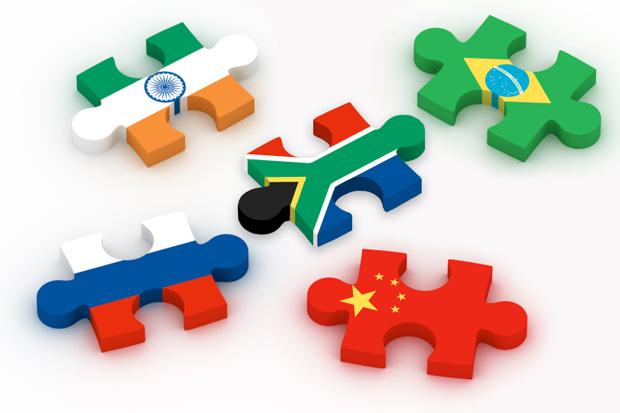
Russia asks Greece to join BRICS bank

Russian Deputy Finance Minister Sergei Storchak spoke with Greek PM Alexis Tsipras today, proposed that Greece become 6th member of New Development Bank set up by Brazil, Russia, India, China, South Africa, a Greek govt official says in e-mail to reporters.

Meanwhile the $100 billion BRICS development bank will be based in Shanghai, according to its founding agreement, and will be headed by an Indian for the first five years, followed by a Brazilian and then a Russian.

Kundapur Vaman Kamath, a 67-year-old, is the non-executive chairman of India’s second largest bank by asset size, ICICI Bank, and India’s third largest IT firm, Infosys.

Now, Kamath will have another position to tend to: The first head of the BRICS bank.

The bank’s $100 billion capital—with an initial subscribed capital of $50 billion that will be equally shared by all BRICS members—will be used for infrastructure financing and sustainable development project funding within the BRICS nations. Other low- and middle-income countries will be able to access loans.

In February this year, India’s cabinet, headed by prime minister Narendra Modi, approved the establishment of the bank, after founding members sorted out several contentious issues. “The New Development Bank will mobilise resources for infrastructure and sustainable development projects in BRICS and other emerging economies and developing countries, to supplement existing efforts of multilateral and regional financial institutions for global growth and development,” the Indian government said in a statement.

The bank, according to the Russian finance ministry, is expected to be fully functional by the end of 2015.

EU paymaster Germany suggested on Monday that Greece might need a referendum to approve painful economic reforms on which its creditors are insisting, but Athens said it had no such plan for now and others warned a vote could delay vital aid.

Greece calmed immediate fears of a default by making a crucial 750 million euro payment to the International Monetary Fund a day early. But Finance Minister Yanis Varoufakis said the liquidity situation was “terribly urgent” and a deal to release further funds was needed in the next couple of weeks.

Euro zone finance ministers welcomed some progress in slow-moving talks on a cash-for-reform deal between Athens and the IMF, the European Commission and the European Central Bank but said more work was needed to each a deal.

“We acknowledged that more time and effort are needed to bridge the gaps on the remaining open issues,” they said in a short statement after spending barely an hour on a progress review on the negotiations behind held among senior officials.

Source: Bloomberg/Reuters

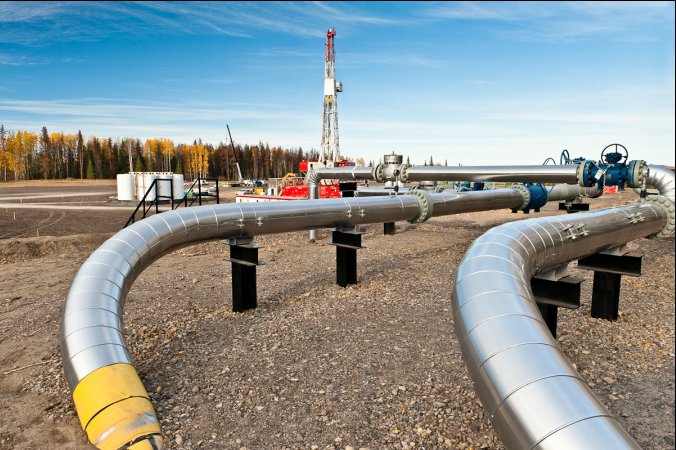
Shale Gas Might Rescue South Africa’s Dying Economy

At this point of time, a barrel of oil costs $60, showing some signs of improvement from its previous value of below $50 back in March. Yet, full recovery of oil seems very unlikely, and people wonder whether fossil fuels will last that much longer as our primary source of power. Research indicates that oil demand will peak at 2030, while others believe another oil crisis could happen again in the future, with permanent damages as a consequence

Slowing rates of consumption have led to the closure of oil and gas rotaries in the United States. But many still see the fossil fuel industry as a lucrative investment as they pour capital into Iraq’s oil-rich fields in Rumaila and spend their funds on exploration programs throughout Africa, particularly in Namibia where around 60 petroleum exploration licenses have already been issued to local and foreign investors. Others have joined the race for renewable energy as the prices of solar and wind power continues to decrease. South Africa have taken a different route to address the slump in commodities, as they believe that shale gas exploration in the Karoo region could help survive the economy.

In the last 12 months, 36 mining rights have been granted with the hope to create around 6,000 jobs, as explained by Mineral Resources Minister Ngoako Ramatlhodi. The nation’s budding shale industry may soon have a new program starting up within the next several weeks, should the government approve new regulations on shale exploration in Karoo.

It’s been said that the semi-desert area holds up to 400 trillion cubic feet of shale gas, and passing these new rules will mitigate the current energy shortages. Environmentalists fear that extraction would damage the water supply of surrounding communities, which is why it’s of the utmost importance that extractors conduct all the appropriate assessments and work with local communities to minimize disturbances.

Prior to Western-led sanctions against Iran, South Africa had been the leading importer for Iran’s crude oil and the ninth in the world, which was reported by the Tasnim News Agency earlier this month. If the sanctions are ever lifted, South Africa are prepared to cooperate with Iran once again to boost each other’s economies, given the amount of potential in shale gas.

South African business ‘schocked’ by new black ownership rules

Unless South African businesses hand over large chunks of equity to black shareholders, they will no longer be awarded so-called “BEE points” by government, which means that they could be forced out of business. According to the Johannesburg financial newspaper, Business Day, “the Department of Trade and Industry sprung a surprise on business, issuing an unexpected ‘clarification notice’ on Tuesday that broad-based empowerment and employee share ownership schemes will no longer count as much as individual share ownership on the black economic empowerment (BEE) scorecard.”

The notice astounded lawyers and verification agencies and will substantially alter the ratings of companies that have placed a portion of their ownership in the hands of employees or community organisations.

The notice also set out to clarify a range of issues relating to the new codes of good practice, which were due to come into effect on May 1, and explain their staggered implementation.

Of the 25 points on the new scorecard that can be earned for black ownership, broad-based and employee share ownership schemes can contribute only a maximum of three points. They cannot count towards the voting rights of black people or the economic interest they hold in the company, which are the other elements on the scorecard.

Under the previous score-card, broad-based and employee ownership schemes were used in the general calculation of black ownership, provided they were manifested in voting rights and reflected genuine economic interests, such as dividend payments and the ability to trade shares. The change was not canvassed with stakeholders or verification agencies.

Keith Levenstein, CEO of empowerment verification agency Econoserve said it would affect hundreds if not thousands of broad-based schemes.

“It is going to instantly drop these companies on the scorecard by as much as 20 points and imply they do not meet the element of ownership,” he said.

Empowerdex described the news as a “big shocker” and Mazar’s managing partner Tony Balshaw called it “devastating”.

“A significant number of nonlisted multinationals and large-and medium-sized enterprises have done empowerment deals based on employee or broad ownership schemes. The effect on them could be to drop at least three ratings levels of the eight,” said Mr Balshaw.

Chief director of the Department of Trade and Industry Takalani Tambani said the idea behind the change was to ensure that ownership by black individuals was given greater priority by the business community.

“The message is government views the ownership as important to transform the economy. For us to effectively do that, we want to see black people participating meaningfully in the core of the economy.

“Passive shareholding will not be able to transform this economy. Passive shareholders are not the real drivers of the business,” he said.

ANC politicians have previously used their positions to acquire stakes in businesses, sometimes for free. The use of the phrase “private shareholding” might imply that businesses are going to be pressurised to offer risk-free equity deals to the ruling nomenklatura, their family members and friends.


Fossil fuels just lost the race against renewables

This is the beginning of the end

The race for renewable energy has passed a turning point. The world is now adding more capacity for renewable power each year than coal, natural gas, and oil combined. And there’s no going back.

The shift occurred in 2013, when the world added 143 gigawatts of renewable electricity capacity, compared with 141 gigawatts in new plants that burn fossil fuels, according to an analysis presented Tuesday at the Bloomberg New Energy Finance annual summit in New York. The shift will continue to accelerate, and by 2030 more than four times as much renewable capacity will be added.

“The electricity system is shifting to clean,” Michael Liebreich, founder of BNEF, said in his keynote address.

“Despite the change in oil and gas prices there is going to be a substantial buildout of renewable energy that is likely to be an order of magnitude larger than the buildout of coal and gas.”

The price of wind and solar power continues to plummet, and is now on par or cheaper than grid electricity in many areas of the world.

Solar, the newest major source of energy in the mix, makes up less than 1 percent of the electricity market today but could be the world’s biggest single source by 2050, according to the International Energy Agency.

The question is no longer if the world will transition to cleaner energy, but how long it will take. The BNEF forecasts the billions of dollars that need to be invested each year in order to avoid the most severe consequences of climate change, represented by a benchmark increase of more than 2 degrees Celsius.

Since the financial crisis, funding has fallen well short of the target, according to BNEF.

Source: Bloomberg