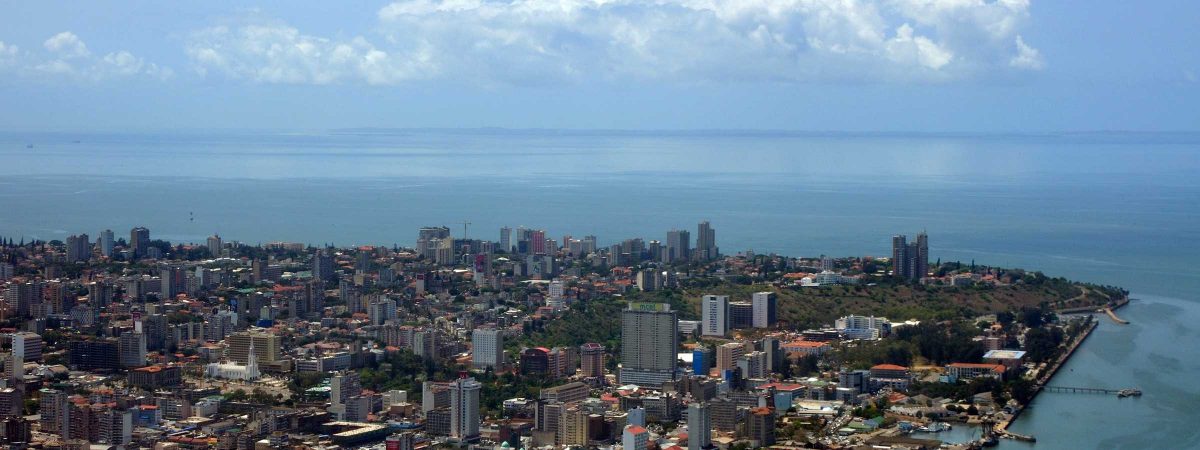
Switzerland has opened a probe related to $2 billion of loans to Mozambique that were organized by banks including Credit Suisse Group AG and VTB Bank PJSC, in a scandal that has already attracted the attention of prosecutors in the U.S.
The criminal probe was opened in February against “persons unknown” on suspicion of money laundering in connection with the loans, the Office of the Attorney General said on Friday. The target of the proceedings is not any specific person or entity, the office said.
The investigation follows requests for legal assistance from Mozambique, as well as reports of suspicious activity from the Swiss Money Laundering Reporting Office, according to the statement. Swiss newspaper NZZ reported the probe earlier on Friday.
Credit Suisse “is cooperating with all authorities investigating these matters,” a spokesman for the Swiss bank said.
The loans, which were granted to three state-owned Mozambican companies, are at the center of a scandal that has led to a sovereign default and an economic crisis. The debt was meant to fund a new coastal patrol force and develop a tuna fishing fleet for one of the world’s poorest countries. But the fundraising would ultimately come to the attention of U.S. prosecutors who alleged that the contracts were a front for government officials and bankers to enrich themselves. – Bloomberg
No arrests have been made after three South African National Defence Force (SANDF) soldiers allegedly opened fire on a marked police vehicle and that of a tracking company.
According to provincial spokesperson Colonel Leonard Hlati, detectives from Mbuzini are investigating three SANDF soldiers who allegedly “ambushed” a marked police vehicle and that of a tracking company following the hijacking near the Mozambican border at around 22:30 last Wednesday, Lowvelder reported.
The incident came after a vehicle was reported stolen in Tonga, Mpumalanga that night. The vehicle was fitted with a tracking device and the managing company, Cartrack, located the abandoned vehicle a few hundred metres from the border.
Tonga police were then notified of the recovery and invited to the scene where the abandoned vehicle had been left. An SANDF commander was then notified that the abandoned vehicle would be returned.
“Soldiers are patrolling the border and we wanted to warn them that we would be returning to the scene, so that they would not open fire on us,” a source who was at the scene, said.
With the Cartrack vehicle travelling in the front, followed by the marked police vehicle, the party approached the hijacked vehicle. “We had our emergency lights and sirens on,” the source added. However, the recovery party was still fired upon.
The occupants of both vehicles saw it was SANDF soldiers patrolling the fence who were shooting at them.
They shouted and called on the radio for the soldiers to cease fire, but to no avail. The soldiers kept on firing at the convoy. The police vehicle’s engine was hit and it eventually seized.
One witness described the incident as an “ambush” and added that the shots fired were not warning shots, but aimed to kill.
The SANDF soldiers accused of firing the shots claimed to have thought the approaching convoy to be hijackers, despite the notification from police.
SANDF spokesperson Colonel Piet Paxton, confirmed the incident and said a panel of inquiry had been requested.
“As far as we know, five shots were fired, believed to be from one firearm.
“One soldier could not account for five bullets and it seemed as though five shots were fired at the convoy. The panel of inquiry will investigate the circumstances around the shooting, as well as which disciplinary steps would have to be followed,” He said.
Paxton added that it was almost impossible for the major on duty to notify troops in the field of the police’s arrival, thus the troops had been unaware.
The signing in Vienna – at the margins of the 58th session of the International Atomic Energy Agency General Conference – of a strategic nuclear partnership between Russia and South Africa, has met with criticism from the mining sector.
The agreement lays the foundation for a large-scale nuclear power plant procurement and development programme of South Africa based on the construction of new nuclear power plants with Russian VVER reactors with a total installed capacity of up to 9,6 GW or 8 units.
These will be the first based on the Russian technology to be built on the African continent.
The signed agreement provides for comprehensive collaboration in other areas of nuclear power, including the construction of a Russian-technology based multipurpose research reactor, assistance in the development of South African nuclear infrastructure, and education of South African nuclear specialists.
The creation of new highly-skilled workplaces will also allow South African companies to further participate in Rosatom’s projects in third countries.
South Africa’s industry will become dependent on sources other than shale and coal, critics say. While industry and certain role players obsess about shale and gas, Mozambique’s gas resources will also need expensive infrastructure.
The questionable benefits that shale gas might offer, will be short-lived, unlike nuclear.
This agreement would naturally limit South Africa’s importation of energy from Namibia or Mozambique.
Also, this will probably mean an end to preferential electricity contracts that offer power at a rate far below the level other industrial users pay, to companies like BHP Billiton.
The R9,5bn lost in embedded derivatives, as reported by Eskom, is the cost of the remaining time on these preferential electricity contracts, some of which still have years to run.
Other energy sources will be hydroelectric power from the future Inga III dam in the Democratic Republic of Congo.
South Africa’s nuclear power ambitions had attracted several proposals.
French group Areva, which built South Africa’s only nuclear plant at Koeberg, had proposed to provide the country with its new generation of EPR reactors.
Government had also solicited an offer from the US-Japanese group Westinghouse.
Authorities in Mozambique say about 100 people have died in a diarrhea outbreak in a central province.
Aurelio Mausse, the medical chief at the Gurue district hospital in Zambezia province, said Tuesday that the outbreak started two weeks ago and is now under control.
Mausse says the outbreak was caused by a lack of hygiene among people who don’t wash their hands before cooking and eating in markets and other places.
He also says illegal mining in the area has polluted rivers used by residents for drinking water.
No one suffering from diarrhea has been admitted to the district hospital since Sunday. – Sapa
Mozambique’s main opposition party Renamo Tuesday claimed its fighters killed 36 soldiers and police in a fresh outbreak of violence at the weekend between the government and its former civil war foes.
Renamo said the killings occurred in two separate clashes in the central province of Sofala, a region where violence erupted earlier this year more than two decades after the end of a brutal civil war in the southern African country.
National police spokesman Pedro Cossa confirmed the presence of armed men in the region, but did not comment on the reported casualties.
Local media reported two deaths.
In a statement emailed to AFP, rebel group-turned-opposition party Renamo said it had first clashed with Frelimo government forces on Saturday.
“Renamo security forces responded promptly to fire from FADM (Armed Forces of Mozambique) and FIR (Police Rapid Intervention Force) causing 29 deaths,” it said.
“The next day… there was a new onslaught by the forces of the Frelimo government and it was again answered promptly and killed seven,” Renamo said, claiming the deadly exchange of fire was in self defence.
It was not clear what had prompted the clashes.
Tension had been simmering between the former warring parties which signed a peace deal in 1992 after 16 years of civil war which broke out shortly after independence from Portugal.
Support for Renamo has waned in recent elections, and its leader Afonso Dhlakama in October last year began retraining ageing veterans demanding “a new political order”.
The party is demanding more representation in the armed forces, an overhaul of the electoral system and a cut of revenues from Mozambiques fast-growing coal and gas mines.
Armed clashes broke out in April with a Renamo attack on a police station in Muxungue, near the latest outbreak of violence.
In July police burnt down 50 huts belonging to suspected armed members of Renamo in an a bid to flush out those it suspected were behind a spate of ambushing civilian vehicles in the area.
A latest round of peace talks ended without a deal on Monday, despite a partial agreement reached last month to change the electoral laws.
Without changes to existing electoral legislation the opposition has vowed to boycott the local government elections due in November. – Sapa/AFP
Mozambique’s army broke up the base of about 50 huts close to the country’s main north-south highway early on Saturday, according to state-run Radio Mozambique on Sunday.
“We evicted some bandits camped in the area,” provincial police commander Joaquim Nido told the radio station.
Official opposition and ex-rebel movement Renamo earlier claimed it repelled government attacks on its camp near the town Muxungue late on Friday and early on Saturday.
Authorities claimed there were no casualties, but Renamo said it had killed government soldiers and independent newspaper A Verdade also reported an unknown number of deaths citing unnamed sources.
Provincial commander Nido said gunmen from the camp killed two civilians in attacks on vehicles travelling along the highway on June 21.
At the time of those attacks Renamo denied responsibility, though it warned two days earlier it would block the road.
Clashes
Simmering tensions between Renamo and the Frelimo-led government erupted in violent clashes again in April – over two decades after a bloody civil war ended.
Even though Renamo is in no position to initiate a widespread guerrilla campaign, it is estimated to have 1,000 men under arms and analysts say it could cause enough trouble to upset a foreign mining investment boom.
Mozambican police step in
Renamo demands more representation in the armed forces and changes to the electoral law. Several rounds of talks between the two parties have failed.
Renamo leader Afonso Dhlakama said this week he was willing to meet with President Armando Guebuza if government forces withdrew from the former rebels’ base.
Soldiers had surrounded the camp in Sofala province’s remote Gorongosa mountains after the June 21 attacks.
Renamo has periodically threatened a return to violence after the end of the civil war, but only began acting on its threats since Dhlakama reopened his base in October 2012.
Commentators doubt the movement, previously supported by the apartheid government of neighbouring South Africa, has the resources to relaunch full-scale hostilities. – AFP
Mozambican and Swazi citizens who illegally receive social grants in South Africa are causing congestion at pay points in Mpumalanga.
Provincial Health and Social Development MEC Clifford Mkasi raised the problem at the launch of Social Development Month in Mbombela.
“People who are coming from neighbouring countries to collect social grants are becoming a nightmare in our department. These people are also sleeping over at the pay points because they don’t have a place to sleep, making the queues very long,” said Mkasi.
He said the problem was serious because more than 1.3 million people in Mpumalanga rely on social grants.
An interdepartmental campaign involving Home Affairs, Agriculture, Rural Development and Land Administration and the South African Police Service is to crack down on the offenders and ensure that only deserving people receive social grants.
“We have identified programmes aimed at ensuring that families stand on a solid ground of sustainable growth. In all activities, we will ensure that we bring a basket of programmes and services from the Department of Social Development, South African Security Social Agency and the National Development Agency,” said Mkasi.
Mkasi said the programmes include early childhood development, foster care, youth development, victim empowerment, HIV and Aids and older persons and people with disabilities.
“We are encouraging everyone in the rural villages to stay alert and engage with the department. This month creates an opportunity for the department to intensify dialogue with communities,” he said.
The MEC also promised to reinstate legitimate social grant beneficiaries who were temporarily cut off when their grants were reviewed.
“We need to review more than 100 000 beneficiaries annually so that we can be sure that there are no ‘ghost’ beneficiaries and it sometimes takes months,” he explained.
Social Development Month starts at the beginning of October and aims to take social development services to rural areas.
Some of the events lined up this month include the celebration of International Day for Older Persons in Mashishing and the International Day for Eradication of Poverty in Barberton. – Buanews
Nine police officers were manning the entrance of the Pretoria hospital where critically-ill former president was being treated on Thursday.
The officers were screening all vehicles entering the hospital through the Park Street entrance at 6am.
Another police contingent was manning the other entrance on Celliers Street.
Despite the biting cold, local and international media started regrouping outside the hospital after 5am.
A dozen candles burnt through the night next to the Celliers Street entrance.
The candles were placed next to a miniature art gallery established by well-wishers on the security wall of the Medi-Clinic Heart hospital in Arcadia, east of Pretoria.
Numerous passers-by momentarily stopped on Thursday morning, observing the various presents brought for Madiba.
Multicoloured balloons, flowers, pictures and paintings of Madiba, hundreds of get-well-soon cards, flags and banners totally eclipsed the Medi-Clinic signboard at the Celliers Street entrance.
Some of the messages read: “No one knows the time, including Jesus and the angels, only God knows. No one will take you from us except our heavenly father. From Lynel Dlamini”
A message printed in a large frame read: “From the bottom of our hearts, we as Northern Sudanese love you and pray for you. We pray for our hero, our man Madiba to be out of this sickness with all power render[ed] from Allah the Almighty.”
Another well-wisher wrote: “Tata Madiba. You are in my prayers. A father to our country. One we will always look up to. Sending you all my love and well wishes from Cape Town. Love you always. From Charne Snyders”.
Others wrote: “Madiba you are my hero. Will pray forever for you. From Judia Tivane Holm [from] Mozambique”.
“Madiba be well. Long live freedom. Long live Justice. Long live hope. From Shabana Azmi [and] Sandeep Chachna [from] India
“I will always love you Tata. From Johanisa Ruiters. From Noupoort, Northern Cape.”
Before 3am, most journalists had left and only a handful were milling around near the hospital.
Numerous tents, generators, broadcasting cameras on tripods and broadcast vans had become a permanent feature on the street’s sidewalk since Madiba was admitted for a recurring lung infection on June 8.
Tshwane metro police officers were parked near the large fleet of media cars, which occupied all the parking spots near the entrance.
The metro police barricaded Celliers Street, allowing media vehicles and cars of residents of the street.
On Wednesday, President Jacob Zuma left the hospital at 10.15pm in a black BMW. He was escorted by a number of official cars with blue flashing police lights, which waited for him a street away from the hospital’s Park street entrance.
Zuma was followed by Defence Minister Nosiviwe Mapisa-Nqakula in a black Lexus.
Shortly after Zuma’s visit, the presidency said that Zuma had cancelled his visit to Mozambique on Thursday.
“President Zuma has decided to cancel his visit to Maputo, Mozambique tomorrow June 27, where he was due to attend an SA Development Community Summit regional infrastructure investment conference,” spokesman Mac Maharaj said in a statement. – Sapa
BP will invest nearly R5 billion in South Africa as a sign of its faith in the direction in which the country is heading, the energy company said on Tuesday.
“With the improving investment climate, especially policy stability… being presented in Southern Africa, BP has decided to invest significantly for the benefit of all of our stakeholders,” British Petroleum (BP) refining and marketing chief executive Iain Conn told reporters in Johannesburg.
“It gives me great pleasure to announce that BP will be investing in excess of R5bn in Mozambique and South Africa over the next five years, commencing in 2013, which will be new plant and infrastructure upgrades.”
It would be funded from BP cash reserves. Conn said R800 million would be invested in Mozambique and R4.7bn in South Africa.
“This investment is designed to improve safety, customer experience, operational efficiency, help with government to improve energy security, and enable the transition towards cleaner fuels.”
Conn said R2.5bn would be invested in upgrading refinery infrastructure at the SAPREF refinery, its joint venture with Shell in KwaZulu-Natal.
“Most of these funds in the refinery are to be utilised to promote South Africa’s clean fuels requirement,” he said.
In February, Finance Minister Pravin Gordhan announced a support mechanism for biofuels and an upgrade of refineries to encourage South Africa to produce cleaner fuels.
“We anticipate that the remuneration mechanism will be finalised shortly, as we have already started to invest in the project and our intent is to be ready to produce clean fuels in 2017,” Conn said.
Over R1bn would be invested in terminals in South Africa and Mozambique.
The balance of the investment would be in the “retail network”. Conn said BP had partnered with Pick ‘n Pay and 120 Pick ‘n Pay express stores would be opened in the next five years.
He said the investment was approaching five percent of all the capital which went into the marketing, refining, and chemical business of BP.
“We are in about 70 countries, and South Africa is going to end up with nearly five percent of the money. I think that tells you something.”
BP was encouraged by development in South Africa and Mozambique.
“In South Africa, I am conveying our appreciation to the government for adopting the National Development Plan as the blueprint for tackling the many challenges that continue to face this great nation.”
Conn said BP was committed to transformation and the need to create more jobs and build entrepreneurs in South Africa.
“This is part of our on-going efforts to be a good corporate citizen as we pursue our business objectives in all the markets in which we operate.”
Conn said BP was not considering fracking for shale oil and gas in South Africa.
“We have been fracking since the 1940s. BP is in shale, but not here,” he said.
“We are looking at shale in a number of places in the world, including China. We have not as yet prioritised shale in South Africa.”
He said fracking needed to be done safely and its impact on the environment needed to be considered.
Fracking, or hydraulic fracturing, is the process of extracting natural gas from shale rock layers deep within the earth.
Mineral Resources Minister Susan Shabangu said last year that five companies had applied in 2010 to explore for shale gas in the Karoo.
Energy department director general Nelisiwe Magubane said on Tuesday government “endorsed and welcomed” BP’s investment.
BP’s SAPREF refinery is co-owned with Royal Dutch Shell. South Africa’s oil refineries process 497,000 bpd, with SAPREF contributing 36 per cent of this total, according to the South African Petroleum Association’s website.- Sapa & Praag
This website uses cookies to improve your experience. We'll assume you're ok with this, but you can opt-out if you wish. Cookie settingsACCEPT
Privacy & Cookies Policy
Privacy Overview
This website uses cookies to improve your experience while you navigate through the website. Out of these cookies, the cookies that are categorized as necessary are stored on your browser as they are essential for the working of basic functionalities of the website. We also use third-party cookies that help us analyze and understand how you use this website. These cookies will be stored in your browser only with your consent. You also have the option to opt-out of these cookies. But opting out of some of these cookies may have an effect on your browsing experience.
Necessary cookies are absolutely essential for the website to function properly. This category only includes cookies that ensures basic functionalities and security features of the website. These cookies do not store any personal information.
Any cookies that may not be particularly necessary for the website to function and is used specifically to collect user personal data via analytics, ads, other embedded contents are termed as non-necessary cookies. It is mandatory to procure user consent prior to running these cookies on your website.