Small towns are collapsing across South Africa. How it’s starting to affect farming

Wandile Sihlobo, University of the Witwatersrand

Farming and agribusiness play a crucial role in sustaining the economies of small towns and rural areas. There is a lot of evidence of this in the economic literature and in the popular media. This dependency has its inherent risks.

International literature tends to focus on the devastation of small towns in times of drought or when farming lobby groups argue for particular policies. In South Africa, a different pattern has emerged. This is when municipalities fail to provide basic services to their communities and businesses. These services include water and sanitation, electricity, roads and technological infrastructure.

South Africa has a three-tier system of governance. National government sets national economic development policy and drives the search for investment by both domestic and international investors. Provincial government plays a big role too in searching for investment and executing government’s policies and programmes. The most successful province has been the Western Cape, which has achieved the status of the country’s technology hub. But where the investors are located within a province depends on municipalities, specifically how well run they are.

South African municipalities are in deep trouble. For many years households and residents have felt the impact. They have resorted increasingly to mounting protests across the country. But lately, there is growing evidence that governance and service delivery failures are also directly affecting the functioning and efficiencies of farming and agribusinesses in small towns.

A case in point is the recent decision by the food and beverages group Clover to move its cheese production from Lichtenburg, a town in the North West province of South Africa, to an existing plant outside Durban in KwaZulu-Natal due to “ongoing poor service delivery”.

Lichtenburg is part of the country’s maize producing triangle. Three provinces – Free State, Mpumalanga, North West – account for 84% of the country’s maize production, according to latest estimates of the 2020/21 season.

State of collapse

South Africa’s finance minister, Tito Mboweni, recently painted a gloomy picture of the state of municipalities in the country. There are about 278 municipalities in South Africa. Mboweni said that 163 municipalities were in financial distress, 40 were battling to deliver basic services, and 102 had adopted budgets for 2021/22 that they cannot fund.

A growing number are also failing to collect revenue from residents and businesses for electricity, water and property taxes.

Mboweni added:

And, for the first time in our democracy, the national executive has been ordered by a high court to constitutionally intervene in the affairs of a municipality owing to
a financial and service delivery failure.

Municipalities in rural areas and small towns are worst off. A recent study by the Tshwane University of Technology researchers stated that

the level of service delivery in rural communities is less compared to urban areas, and there is no sign of improvement.

Consequences

The multiplier effects of Clover’s decision to relocate are likely to be large. The closure of the firm in such a small town is likely to have a number of negative spillover effects across the local economy.

The company, according to official statements from the government, provided 380 permanent jobs and 40 temporary jobs. It also employs 20 general workers and 20 truck drivers and cleaners.

In addition, the plant gave farmers market access for their produce, and a range of businesses bought and sold products from the company. The income from these activities would have supported many other businesses in the community.

Clover is not the first major company to decry poor municipal services. There’s the long running case of Astral Foods, a poultry producer that also supplies animal feed, and the Lekwa Municipality. Astral has lost millions of rands in production because of failures by the municipality in the Mpumalanga province to provide its poultry plant with water and electricity.

These two cases illustrate how efficiency and economic sustainability of agribusinesses depend on delivery of basic services. Without them, levels of investment in the businesses will shrink in such towns. Importantly, this may affect the sustainability of agribusinesses as some might incur more costs as they try themselves to provide the services that were supposed to be provided by local governments.

The farmers face a similar challenge, directly and indirectly. The agribusiness provides a range of solutions and market access to local farmers. If agribusinesses’ sustainability is threatened, farmers suffer too. More directly, poor roads, unreliable electricity supply and water supply directly affect the profitability and sustainability of farming operations.

Importantly, these are all entities that provide job opportunities to the least skilled South Africans and indirectly sustain the communities around small towns.

The way forward

President Cyril Ramaphosa set out an economic reform and recovery agenda for the country in October 2020. In it he identified agriculture and agro-processing (food security) as one of the drivers of economic growth and job creation, especially in small towns.

But a vibrant agriculture and agribusiness won’t develop if poor service delivery by municipalities continues.

There are some basic practical interventions the government could make. These include ensuring that a municipality has competent management, financial officers, civil and electrical engineers, as well as competent political leadership.

The Financial and Fiscal Commission, an independent constitutional advisory body on financial fiscal matters in the country, recently argued municipalities should look closely at their wage bills. This would ensure that salaries didn’t crowd out money for critical service delivery functions. These include waste removal, waste management, sewerage systems, roads and water provision.

These improvements need to happen simultaneously and not before or after agriculture revitalisation, which is supported by the government’s Agricultural and Agro-processing Master Plans. These seek to expand and grow South Africa’s agriculture and agro-processing.

But a healthy farming sector rests on towns that are functional and that have the basics in place.

This is a challenge that the South African government should face head-on.The Conversation

Wandile Sihlobo, Visiting Research Fellow, Wits School of Governance, University of the Witwatersrand

This article is republished from The Conversation under a Creative Commons license. Read the original article.
How corruption in South Africa is deeply rooted in the country’s past and why that matters

Steven Friedman, University of Johannesburg

When South Africans express shock at corruption, few seem to know that it is perhaps the country’s oldest tradition.

Citizen anger about corruption, a constant theme in South African political debate, reacts to a very real problem. This was underlined recently by news that well-connected people had enriched themselves at the expense of efforts to contain COVID-19. What is not real is the widespread belief that corruption is both new and easy to fix.

Reactions to corruption portray it as a product of African National Congress (ANC) rule (or majority rule for those who cling to the prejudice that black people cannot govern). In this view, it will disappear when the governing party gets serious about corruption or loses power.

In reality, however, corruption has been a constant feature of South African political life for much of the past 350 years. It is deeply embedded and it will take a concerted effort, over years, not days, to defeat it.

Colonialism, apartheid and corruption

Corruption in South Africa dates back to colonisation in 1652. Jan van Riebeeck, the Dutch East India company employee who was sent to colonise the Cape, got the job because he was given a second chance after he was fired for ignoring the company ban on using his office to pursue personal financial interests.

The period of Dutch rule he began, which lasted until 1795, was marked by tax evasion and corruption by public officials. Under British rule, which followed that of the Dutch, public spending was directed to serve private interests. The most prominent colonialist of the time, Cecil John Rhodes, was forced to resign after he gave a friend an 18-year monopoly catering contract for the government-run railways (JL McCracken; The Cape Parliament 1854-1910. London, Oxford University Press, 1967, p.115).

Paul Kruger’s Transvaal Republic, the Afrikaner-governed state against which the British fought at the turn of the century, was riddled with nepotism and economic favours for the connected. The British administration which replaced it served the interests of mine owners on whom it bestowed special privileges. What today is called “state capture”, the use of the state to serve private interests, was common to Afrikaner and British rule.

Given this history, it is not surprising that corruption was a constant feature of the apartheid period. Black people were its chief victims, since they had no rights and so no way of protecting themselves against abuse. But they were not the only ones, as politicians and officials used government power for personal gain.

The most corrupt period in the country’s history was the last few years of apartheid, when the attempt to combat the successful international sanctions campaign made corruption, protected by government secrecy, the core government strategy. This was often done with the collusion of private businesses.

Blurring the lines

By the time majority rule was achieved in 1994, corruption had become deeply embedded in the way the government operated and in how business related to the government. This directly affected the way South Africa was governed after 1994, despite the efforts of Nelson Mandela and his deputy, Thabo Mbeki.

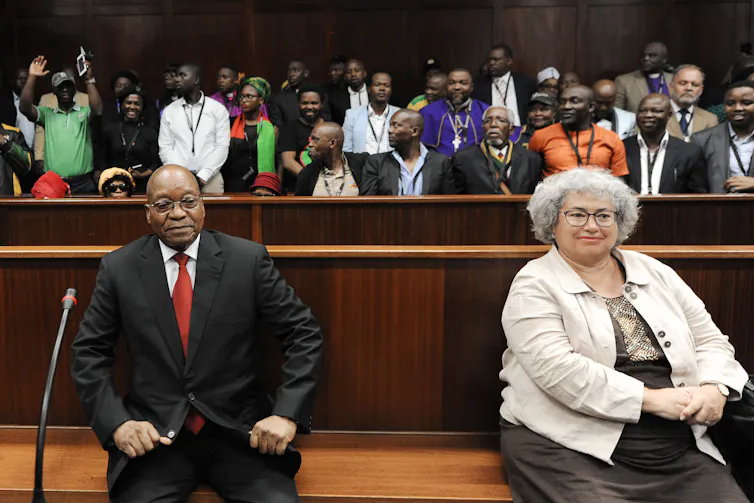
Former South African president Jacob Zuma and French arms company Thales, represented by Christine Guerrier, appear at the High Court in Durban on corruption charges.
Felix Dlangamandla/AFP via Getty Images

A particular feature of the last years of apartheid was a blurring of the public and private which was continued into the new order in at least two ways.

The first was obviously corrupt – the illicit networks which operated during the last years of apartheid recruited people in the new government: former enemies quickly became business partners.

The second was more complicated. It was widely assumed that the ANC would soon govern but its senior officials lacked the means to live the lifestyle expected of people of standing. Businesses, for motives both pure and impure, stepped in to help with cars, homes and private schools.

When businesses realised they would need black business partners, the only candidates they knew were the political activists with whom they negotiated. So, it was to them that they offered the shares and seats on boards which were essential if business was to adapt to new political realities.

The seeds of post-1994 corruption were, therefore, deeply planted in the country’s past. But corruption since then is also a symptom of another way in which the past was carried over into what was meant to be a new society. Before 1994, the groups which controlled the state used it to ensure that they controlled the economy too.

British rule gave English-speaking mine-owners special favours which allowed them to run the economy. After 1948, white Afrikaner rule was used to build the power and wealth of Afrikaans-owned business. But the post-1994 democracy has offered black business at best a role as junior partners of their white counterparts. Corruption has, therefore, become the means which some black people who want to rise to the top use to seek to achieve the dominant role enjoyed by previous business classes whose group controlled the state.

Corruption is also a symptom of the fact that the settlement which brought democracy left intact an economy which is highly concentrated so that new entrants find it hard to make their way in. Some turn to politics to achieve the middle- or upper-middle class life they are denied by an economy they cannot penetrate, no matter how hard-working and enterprising they are. It therefore answers a widespread need, which may explain why the corrupt networks are deep-rooted, particularly at the local and provincial level.

Tackling corruption

So, corruption is far more deeply rooted than current accounts would have us believe. Reformers such as President Cyril Ramaphosa confront a widespread reality which, because it reflects patterns which go back many years and springs from the exclusion of many from the benefits which democracy was meant to bring, is tenacious and can survive shocks.

Removing a few high-profile people will not change much because the networks will survive, as they have done since the departure of former president Jacob Zuma and the Gupta family, who were meant to be the cause of all the problems.

None of this means that sharply reducing corruption in South Africa is impossible. But a successful attempt to do this will need more than the instant cures favoured by the national debate – some high-profile convictions and barring people accused of corruption from public office.

Deep-rooted problems created over centuries demand thorough-going solutions which will take time to work. While this requires more patience and understanding than the national debate seems willing to offer, the alternative is many more years of public railing at corruption while the problem remains because its causes have been ignored.The Conversation

Steven Friedman, Professor of Political Studies, University of Johannesburg

This article is republished from The Conversation under a Creative Commons license. Read the original article.

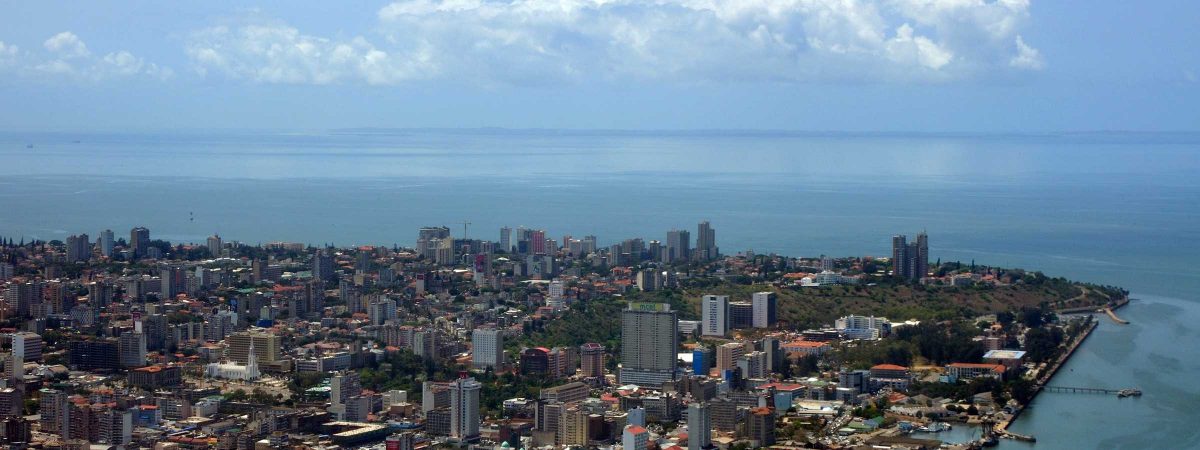
$2 billion embezzled in Mozambique… What’s new?

Switzerland has opened a probe related to $2 billion of loans to Mozambique that were organized by banks including Credit Suisse Group AG and VTB Bank PJSC, in a scandal that has already attracted the attention of prosecutors in the U.S.

The criminal probe was opened in February against “persons unknown” on suspicion of money laundering in connection with the loans, the Office of the Attorney General said on Friday. The target of the proceedings is not any specific person or entity, the office said.

The investigation follows requests for legal assistance from Mozambique, as well as reports of suspicious activity from the Swiss Money Laundering Reporting Office, according to the statement. Swiss newspaper NZZ reported the probe earlier on Friday.

Credit Suisse “is cooperating with all authorities investigating these matters,” a spokesman for the Swiss bank said.

The loans, which were granted to three state-owned Mozambican companies, are at the center of a scandal that has led to a sovereign default and an economic crisis. The debt was meant to fund a new coastal patrol force and develop a tuna fishing fleet for one of the world’s poorest countries. But the fundraising would ultimately come to the attention of U.S. prosecutors who alleged that the contracts were a front for government officials and bankers to enrich themselves. – Bloomberg

Read the full story here.

Another R139bn stolen at Eskom? – probe underway

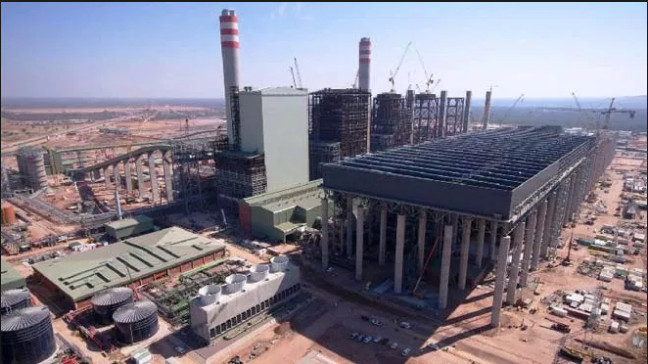
The Special Investigating Unit is probing 11 contractors for stealing a staggering R139bn during the building of Eskom’s Medupi, Kusile and Ingula power plants.

And insiders say the total cost of Eskom looting could reach about R500bn, dating back to 2005.

SIU spokesperson Nazreen Pandor said the unit was probing the theft of R170bn from Eskom — R139bn of which is directly related to  contractors working on the power plants.

She said that after an “intensive scoping exercise” the unit had prioritised, among other things, investigating “the performance of, and payment made to the value of more than R139bn to 11 identified contractors appointed by Eskom in respect of the Medupi, Kusile and/or Ingula station”.

This makes up a massive chunk of the R334bn spent on building the plants — and suggests that public enterprises minister Pravin Gordhan’s estimate last year that about R100bn was lost to state capture was way below the mark.

Read the full story in the Sunday Times.

Hitachi case exposes fronting by ANC

South Africa has been fingered in the alleged “improper payments” originating from contracts that the ANC’s investment arm, Chancellor House, for work at the Medupi and Kusile power stations.

As a signatory of the OECD Convention which is aimed at combatting fraud in international business transactions by foreign officials [OECD Convention on Combating Bribery of Foreign Public Officials in International Business Transactions], South Africa’s failure to do so, has been exposed at the highest levels.

It appears however that the ANC has also transgressed their own Broad Based Black Economic Empowerment Act by making use of “fronting” to take money for awarding lucrative contracts to Hitachi.

These observations have been made by the American investment watchdog, the Securities and Exchange Commission (SEC) which described Chancellor House Holdings as a “front” through which the ANC could make money from the contracts with the Japanese group Hitachi in South Africa.

The OECD meanwhile released a damming report at the end of last year about South Africa’s unwillingness to act against international bribery and corruption and the finger is pointed directly at the ANC government.

The title of the report is: ‘Phase 3 Report on Implementing the OECD Anti-Bribery Convention in South-Africa’. The subheading reads: ‘Lack of enforcement jeopardises South Africa’s fight against foreign bribery; OECD concerned that political an economic considerations may be an influence’.

On page 9 of the report of 87 pages, it is stated, amongst others, (under the caption of Bribery of Foreign Public Officials):

‘Corruption remains a serious problem in South Africa. The country has experienced a number of high profile domestic corruption scandals, and corruption allegations have been linked to the highest levels in government.’

Also: ‘Corruption in public procurement tenders has been a particularly serious problem…’. It mentions that the Head of the Special Investigative Unit (SIU) had already reported to Parliament in 2011 about the fact that between R25 and R30 billion – approximately 20% of the country’s total annual procurement budget had been lost due to ‘corruption, incompetence and negligence’.

Extent of black matric cheating exposed

Basic Education Minister Angie Motshekga has revealed the extent to which teachers helped matric pupils cheat in last year’s exams.

Motshekga yesterday disclosed some of the evidence given during hearings into group cheating at some KwaZulu-Natal and Eastern Cape matric exam centres, where only black schools are implicated.

She said teachers and principals who encouraged group copying, would be criminally charged.

The continuing investigation will now focus on teachers, principals and invigilators.

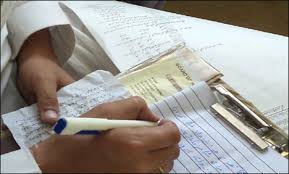
A KwaZulu-Natal pupil wrote on an exam answer sheet: “We can now continue.”

This, according to Motshekga, “clearly indicated . that someone was dictating answers to them”.

She said that in other instances teachers had simply walked into exam rooms and told invigilators to leave so that they could help their pupils.

“The papers are opened at the school, so teachers would not have had sight of the paper before. So, I think, as the teacher looked at the paper, she found there was a section she had not taught the class and quickly rushed to the exam room to dictate it to them.”

A KwaZulu-Natal pupil admitted during the hearings to cribbing.

Motshekga said the exam results of pupils found guilty of group copying would be nullified.

The department launched the investigation into cheating allegations involving 153 exam centres in Eastern Cape, KwaZulu-Natal and Gauteng earlier this year.

More than 3000 pupils implicated in group copying will sit for this year’ s exams in October and November.

Only one KwaZulu-Natal pupil, among a group of 2307, was cleared of cheating charges; 56 confessed.

Of the 720 implicated in Eastern Cape, 26 were cleared and 17 confessed.

Former acting director-general of the Department of Basic Education Paddy Padayachee said security would be improved.

Source: timeslive

Harrismith a ‘nuclear wasteland’

According to disgruntled community members in Harrismith, the town looks like a nuclear waste-land.

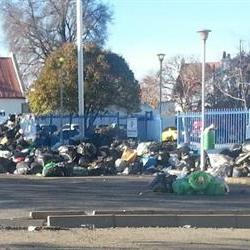
This after the Maluti-a-Phofung Municipality failed to collect refuse for the past several months, resulting in a pile-up of refuse in the town, its suburbs and surrounding townships.

The municipality’s temporary solutions are ineffective say inhabitants.

Qwa Qwa and Kestell are also affected. According to Kleynhans service delivery in Maluti-a-Phofung has completely collapsed.

Mayor Vusi Tshabalala’s has not responded to questions.

Grossly inflated Nkandla exposed

Contractors and Public Works officials responsible for the security upgrades at President Jacob Zuma’s private residence should pay back the money that had been wasted because of grossly inflated prices and also face prosecution, said the parliamentary ad hoc committee on Nkandla on Wednesday.

This was the view the chairman of the committee, Cedric Frolick, expressed during a visit by the committee to Zuma’s Nkandla homestead on Wednesday to assess the work done on the controversial upgrades.

“People responsible for the inflation of prices should be held accountable in line with the findings in the SIU report that disciplinary and other action as well as criminal prosecution must be pursued against individuals, contractors and any public works officials responsible,” he said.

Committee members were taken on a tour of the compound, but they did not go into Zuma’s private quarters. One of the things they had come to see was the security barracks consisting of 21 houses to be used by members of the SANDF and police officers.

Frolick said what they saw was a gross inflation of prices and the president was not “secure in comfort” as there was still a lot of incomplete work around the compound.

“What I saw here today is not worth the R200-plus million claimed. We have seen a gross inflation of prices. In fact, when we entered the president’s office that is the so-called visitors’ centre it was actually a modest place – my constituency office is four times bigger than the place.”

The twenty-one thatch-roofed houses built for police and soldiers tasked with protecting Zuma stood mostly empty, gathering dust, the verandas covered with goat and cattle droppings.

The only sign that people were living there were a few makeshift beds in one of the rondavels.

The police and SA National Defence Force members meant to occupy the houses – apparently built at a cost of at least R6-million each – are staying in nearby park homes until the completion of parliament’s investigation of the expenditure of R246-million on “security upgrades” at Nkandla.

SANDF Brigadier-General Siphiwe Shezi said the unused clinic was meant for locals, government officials, dignitaries visiting the president and army officials deployed in the province.

“Even US President Barrack Obama can be treated here if he gets bitten by a snake while in the province.”

Source: IOL

Washington politicizes soccer

Washington’s attack on world soccer is following the script of Washington’s attack on the Russian-hosted Sochi Olympics. The difference is that Washington couldn’t stop the Olympics from being held in Sochi, and was limited to scaring off westerners with lies and propaganda.

In the current scandal orchestrated by Washington, Washington intends to use its takeover of FIFA to renege on FIFA’s decision that Russia host the next World Cup.

This is part of Washington’s agenda of isolating Russia from the World.

This Washington-orchestrated scandal stinks to high heaven. It seems obvious that the FIFA officials have been arrested for political reasons and that the recently overwhelmingly-reelected FIFA president, Sepp Blatter, was forced to resign by Washington’s threats to indict him as well. This can happen because Washington no longer is subject to the rule of law. In Washington’s hands, law is a weapon that is used against everyone, every organization, and every country that takes a position independent of Washington.

This clears the deck for Washington and its British lapdog to take over FIFA, which henceforth will be used to reward countries that comply with Washington’s foreign policy and to punish those who pursue an independent foreign policy.

The only hope for South America, Asia, and Russia is to form their own World Cup and turn their backs on the corrupt West.

It is astonishing that Russia, Asia, and South America so much desire to be part of the corrupt and immoral Western world. Why do countries wish to be associated with evil? Venezuela, Ecuador, Bolivia, and perhaps Argentina and Brazil have learned that being in the Western orbit means putting their country under Washington’s control.

Putin, Lavrov, and China’s leaders say that being associated with the West is like being associated with the plague. Yet they still want to be associated with the West. Why do Russia and China think that their self-esteem depends on Washington’s approval?

FIFA is a Swiss-based organization. Yet the arrests of FIFA officials is based on a Washington-initiated “investigation” by the FBI. By asserting the universality of US law, Washington is asserting the authority of its police and prosecutors over sovereign countries.

Why did Switzerland, and why do other countries lay down in obedience to Washington’s assertion of the universality of its laws? Are the political leaders paid off or are they threatened with assassination or false indictments?

What explains that of all countries on earth only Washington’s law is universal, acknowledged and bowed down before in other countries? Is if fear of retribution?

Possibly, but one answer is that the entire point of being a leader of a foreign country is to be made rich by kowtowing to Washington. One year out of office and Tony Blair was reported to be worth $50 million. Where did the money come from? No one wanted to listen to Blair’s speeches when he was Prime Minister. Why did Americans pay him six-figure sums to give speeches?

Putin can become rich, too. All he needs to do is to turn Russia over to Washington.

Here we are in an orchestrated soccer scandal hyped to the hilt by the presstitute media while all the real scandals go unremarked.

For example, a number of the mega-banks in the West have pleaded guilty to felony charges and only suffered fines. As Finian Cunningham has pointed out, the money laundering and price-rigging by the “banks too big to jail” dwarfs the alleged criminality at FIFA. The Securities and Exchange Commission actually issues waivers to the banks for their criminal activity. One dissenting SEC commissioner accuses her colleagues of encouraging “recidivism” by the constant issue of waivers.

Washington itself cannot be believed as not a single significant statement out of Washington’s mouth since the Clinton regime has been true; yet, Washington still parades around as the arbiter of truth.

Saddam Hussein did not have weapons of mass destruction. Assad did not use chemical weapons. Iran did not have a nuclear weapons program. Russia did not invade Ukraine. But Washington convinced the world that its lies were true.

It is almost a certainty that politicians up in arms over unsubstantiated charges that FIFA took bribes have themselves taken bribes. Just look at the bribes given to Congress by corporations to vote fast track for TTIP.

Can anyone name even one leader of one EU country (other perhaps than Greece at the moment) who doesn’t take bribes from Washington?

According to Udo Ulfkotte, no one can name even one British or EU newspaper that doesn’t take bribes from the CIA.

How many UN votes are determined by Washington’s threats and bribes?

Whether or not FIFA decisions are tainted by bribery, the purpose of the “investigation” is to cast doubt on the decision to hold the World Cup in Russia. The World Cup is a global spectacle and conveys prestige on the host country. Washington intends to deny this prestige to Russia. That is what the “investigation” is about.

Dr. Paul Craig Roberts was Assistant Secretary of the Treasury for Economic Policy and associate editor of the Wall Street Journal. He was columnist for Business Week, Scripps Howard News Service, and Creators Syndicate. He has had many university appointments. His internet columns have attracted a worldwide following. Roberts’ latest books are The Failure of Laissez Faire Capitalism and Economic Dissolution of the West and How America Was Lost.

Clinton Foundation cashed in as Sweden lobbied Hillary

Bill Clinton’s foundation set up a fundraising arm in Sweden that collected $26 million in donations at the same time that country was lobbying Hillary Rodham Clinton’s State Department to forgo sanctions that threatened its thriving business with Iran, according to interviews and documents obtained by The Washington Times.

As US prosecutors go after 14 people — nine current and former FIFA officials, four sports marketing executives and an accused intermediary — in corruption allegations, seven were taken into custody in Zurich on Wednesday.

But strangely the Clintons and their dealings are not up for scrutiny it seems.

The Swedish entity, called the William J. Clinton Foundation Insamlingsstiftelse, was never disclosed to or cleared by State Department ethics officials, even though one of its largest sources of donations was a Swedish government-sanctioned lottery.

As the money flowed to the foundation from Sweden, Mrs. Clinton’s team in Washington declined to blacklist any Swedish firms despite warnings from career officials at the U.S. Embassy in Stockholm that Sweden was growing its economic ties with Iran and potentially undercutting Western efforts to end Tehran’s rogue nuclear program, diplomatic cables show.

At the time of Mr. Clinton’s foray into Swedish fundraising, the Swedish government was pressing Mrs. Clinton’s State Department not to impose new sanctions on firms doing business with Iran, including hometown companies Ericsson and Volvo.

Mrs. Clinton’s State Department issued two orders identifying lists of companies newly sanctioned in 2011 and 2012 for doing business with Iran, but neither listed any Swedish entities.

Behind the scenes, however, the U.S. Embassy in Stockholm was clearly warning the State Department in Washington that Sweden’s trade was growing with Iran — despite Swedish government claims to the contrary.

The Swedes were resistant to new sanctions, telling State Department officials repeatedly and unequivocally that they were worried new penalties would stifle the business between its country’s firms and Tehran. At the time, Iran was Sweden’s second-largest export market in the Middle East after Saudi Arabia.

“Behind the Swedish government’s reluctance to support further sanctions in Iran, especially unilateral European measures, is a dynamic (though still fairly small) trade involving some of Sweden’s largest and most politically well-connected companies: Volvo, Ericsson and ABB to name three,” the U.S. Embassy wrote in one cable to Washington.

U.S. intelligence officials told The Times that they kept the Obama administration apprised of Ericsson’s activities inside Iran, including the fact that the Swedish firm had provided Iran’s second-largest cellular provider with location-based technology to track customers for billing purposes. The technology transfer occurred in late 2009, shortly after Tehran brutally suppressed a pro-democracy movement in that country, the officials said.

U.S. intelligence further learned that Ericsson in 2010 discussed with Iran’s largest cellular firm providing tracking technology that could be used directly by Iranian security authorities.

FIFA’s Blatter resigns

Sepp Blatter has announced he is stepping down as president of FIFA, football’s governing body, and has called on a special congress to elect a successor. The news comes less than a week after Blatter was reelected as FIFA chief amid a bribery scandal.

Switzerland’s office of attorney general (OAG) said that it is not investigating Blatter in connection with the FIFA corruption probe.

“Joseph S. Blatter is not under investigation by the OAG. His announced resignation will have no influence on the ongoing criminal proceedings,” the attorney general is cited as saying by Reuters.

Jordan’s Prince Ali bin al-Hussein, who gave in to Blatter during the vote last Friday, will run in the new FIFA election for president, AFP reported.

Sepp Blatter has taken this step to save the organization, Russian Sports Minister Vitaly Mutko has told the Tass news agency.

The new congress will take place between December 2015 and March 2016, the chairman of FIFA’s audit and compliance committee, Domenico Scala, has said. He has taken the floor after Blatter.

Former Daily Show host, the very unfunny John Oliver made Sepp Blatter his personal White Whale, repeatedly calling out the FIFA President on his show with lengthy items detailing the FIFA corruption scandals.

On last Sunday’s show, Oliver begged FIFA sponsors – which include McDonalds, Adidas and Budweiser, to pull their support.

The Guardian as well as the Financial Times singled out South Africa. From The Guardian:

Blatter’s announcement comes after Fifa had admitted it paid $10million destined for the South Africa World Cup to an account controlled by the disgraced former vice-president Jack Warner. The payment followed a letter from the South African FA to Fifa secretary general Jérôme Valcke.

From the FT:

His resignation came at the end of another bruising day for Fifa, after one of his most senior lieutenants, Jérôme Valcke, was alleged to have had personal knowledge of a $10m payment at the heart of a US corruption probe.

Mr Valcke was the recipient of a letter from the South African football association on March 4, 2008, asking him to withhold $10m from the funding of the World Cup “operational budget” and for the money to be “advanced” to a fund controlled by the then “President of Concacaf”, Jack Warner.

The letter, which was shown on South African television, was confirmed by its South African signatory, Molefi Oliphant. “The copy is official,” he said. “That is the copy, you have it, so you can draw any opinion you want to. That is the correct letter,” he said.

Blatter understands New World Order

Fifa boss understood very early that there’s a new world order in which westerners don’t matter much, writes Simon Kuper in the FT.

Blatter knows which of the soccer nations have money, and that is why he will be re-elected.

In the 19th century, it was the British, later Americans, then Russians and currently Gulf Arabs.

That’s why on Friday he will be re-elected to his fifth term as president of Fifa, the corrupt global football authority. Western countries rightly decry Blatter. However, we ought to recognise his genius. This 79-year-old understood very early that there’s a new world order in which westerners don’t matter much.

I only realised how deluded most of us westerners were on December 2 2010. That afternoon Fifa’s executive committee (Exco) chose Russia to host the 2018 World Cup and Qatar to stage the 2022 tournament. I had followed the bidding campaigns for years. I had had many off-the-record conversations with western bidders. A few had predicted Russia’s victory. Almost nobody foresaw Qatar’s.

Writing in the Financial Times before the vote, I chastised bookmakers William Hill for making Qatar runaway favourites. Hadn’t Fifa’s own evaluation report called Qatar’s extreme heat “a potential health risk for players, officials, the Fifa family and spectators”? I tipped Russia and the US to win. I was wrong. So were almost all other western observers. Theo van Seggelen, president of the international footballers’ trade union Fifpro, says: “For me — and I was reasonably close to the fire — the vote was a complete surprise.”

It turned out that Fifa cared only about naked power and money. In addition, more than a third of Exco’s 24 members were accused of corruption linked to the vote. Several resigned from football. Jérôme Valcke, Fifa’s secretary-general, wrote in a leaked memo that Qatar “bought” the World Cup. (He later said he’d been misinterpreted.) Last year The Sunday Times alleged that a Qatari, Mohamed bin Hammam, made payments totalling $5m to win support for Qatar’s bid.

Western countries, hopping mad to lose the World Cups, have cried “corruption!” But most non-western participants dismiss them (with some justification) as hypocritical, whining losers. Richard Attias, a French communications consultant who works with Qatar, told me: “Only a microcosm is interested in how World Cups are attributed — a very British microcosm.”

Fifa’s vote presciently recognised the geopolitical rise of Qatar and Russia. Fifteen days after the vote, a Tunisian fruit seller set himself on fire, and north Africans rose in revolt. Qatar, “flush with the success of winning the rights to host the . . . World Cup and with its international recognition soaring as a result,” then helped spark the Arab spring, writes Kristian Coates Ulrichsen, Baker Institute fellow for the Middle East. Qatar funded Islamists across north Africa, and helped unseat Libya’s Colonel Gaddafi. In 2014, Russia annexed Crimea. We live in a new world order.

It suits Blatter. Coming from a small country, he is skilled at accommodating big power brokers.

Moreover, he thinks like them: Blatter, too, likes legal immunity, motorcades on empty highways, and respectful underlings. The central American football officials who recently compared him with Jesus and Nelson Mandela presumably knew the comparisons were absurd. But the absurdity simply emphasised their loyalty.

Western countries are powerless to change Fifa. They could boycott the World Cup but, characteristically, they won’t make sacrifices for their principles.

Now some westerners are complaining about Blatter’s unfair advantages over any opponent in Friday’s vote. Many national football associations fear their supposedly secret ballots won’t stay secret.

SA soccer bid got clean audit from EY

Minister in the Presidency Jeff Radebe said that the claims that a South African official paid a bribe to FIFA to host the 2010 World Cup are untrue.

The awarding of the 2010 FIFA World Cup to South Africa is being investigated by the FBI.

The US Attorney General told a press conference on Wednesday that bribes were allegedly paid to FIFA officials to award the 2010 tournament to South Africa.

“As far as we were concerned, we received a clean audit report from Ernst and Young a reputable audit firm.

“There has never been a suggestion that anything untoward happened,” Radebe said.

Radebe was speaking at a post cabinet briefing in Pretoria on Thursday.

“I was also part of the local organising committee,” Radebe said laughing.

He reminded journalists that at the end of the 2010 FIFA World Cup, FIFA president Sepp Blatter said the event in South Africa was one of the best ever.

“About what came yesterday [Wednesday], the due process will take place,” he said.

Sports Minister Fikile Mbalula is expected to release a statement on the issue later on Thursday.

Source: eNCA

Clinton Foundation ties to corrupt FIFA uncovered

Both Bill Clinton and his family’s charity have been tied to soccer’s governing body, as well as Qatar’s disastrous World Cup bid.

And just like that, another Clinton Foundation donor is in the news.

The Clinton global charity has received between $50,000 and $100,000 from soccer’s governing body and has partnered with the Fédération Internationale de Football Association on several occasions, according to donor listings on the foundation’s website.

Several top FIFA executives were arrested Wednesday in Zurich and face corruption charges stretching back two decades, according to the U.S. Department of Justice.

Involvement with the embattled body extends beyond the foundation to Bill Clinton himself. The former president was an honorary chairman of the bid committee put together to promote the United States as a possible host nation for the 2018 or 2022 World Cup.

When the U.S. lost the 2022 bid to Qatar, Clinton was rumored to be so upset he shattered a mirror.

But apparently Qatar tried to make it up to him.

The Qatar 2022 Supreme Committee, partnering with the State of Qatar, “committed to utilizing its research and development for sustainable infrastructure at the 2022 FIFA World Cup to improve food security in Qatar, the Middle East, and other arid and water-stressed regions throughout the world,” according to the Clinton Foundation website.

The cost of the two-year project is not listed on the Clinton Foundation website, but the Qatar 2022 committee gave the foundation between $250,000 and $500,000 in 2014 and the State of Qatar gave between $1 million and $5 million in previous, unspecified years.

FIFA, which has never been a bastion of ethics, was heavily criticized for awarding the 2018 and 2022 World Cup to Russia and Qatar.

The Guardian reported in 2013 about “appalling labor abuses,” including possible forced labor and worker death on Qatar’s World Cup infrastructure projects. It is also considered to be too hot to play soccer in Qatar in the summer.

No Qatari officials have been arrested, but Swiss authorities announced Wednesday that they had opened criminal proceedings into the allocation of the Qatari and Russian World Cups. They have also seized documents from FIFA’s headquarters and gained access to the Swiss bank accounts of executives they suspect of “unjust enrichment” and money laundering.

Source: The Daily Beast