Anthony Turton: How BEE de-industrialised South Africa

In the closing weeks of 2019, South Africa reached Stage 6 load-shedding. This is uncharted territory, so let’s unpack it a little.

Some years ago I wrote about a startling fact that few were interested in at that time. That simple fact was that Eskom, our national energy utility company, was running on standby generators.

Nobody responded, so I shut up and moved on, but I never stopped thinking about this simple startling fact. Why is our national power utility running on standby generators?

The answer is complex, but one element of that answer is diesel fuel. You see, a lucrative contract was given to a politically connected person to supply diesel. That diesel wasn’t the cheapest, because the supplier wasn’t the manufacturer of the diesel, but bought it from a real diesel supplier that wasn’t allowed to enter the game because of the rules of that game.

That game is called Black Economic Empowerment (BEE) and it has de-industrialised a country that once produced 40% of all the gold ever mined in all of recorded history, from the Incas to modernity. That country once pioneered the production of oil from coal. That country once pioneered the first human heart transplant and gave us the first base-bleed artillery capable of firing a tactical nuclear weapon. That country pioneered water treatment technologies that recovered safe drinking water from sewage and it produced sophisticated steels used in highly specialised engineering processes. The list goes on, but you get the point.

South Africa used to punch above its weight and was a genuine participant in the global economy. We produced things of value. Sophisticated things. Technologically advanced things.

Then came BEE, and it changed the rules of the game by skewing the playing field in favour of those whose only attribute was that they were politically connected. It actively discriminated against anyone who was creative and nimble in the field of science, engineering and technology.

It incentivised the out-migration of those people merely because the rules of the game deliberately discriminated against excellence, and rewarded those whose sole attribute was their ability to extract money without creating value. This is called rent-seeking behaviour.

The sale of diesel to run the standby generators in the national energy utility enables the extraction of money, but it creates no enduring value, so it is inherently parasitic. It is a textbook example of rent-seeking behaviour.

Any organism infested with parasites slowly succumbs to their voracious presence and eventually that organism becomes so sick that it dies a miserable, lingering death.

The collapse of Eskom is imminent for all the reasons noted above. It is deeply infested with parasites extracting money without creating value. It is unsustainable for the same reasons that SAA has collapsed. It too had the game being played about the supply of fuel at inflated cost. But it also had the other games – supplying toothpicks, serviettes, cookies, butter and buns, all at inflated cost. It too has separated the right of remuneration from the responsibility of productivity.

South Africa no longer produces anything of value to the world. The mining industry has collapsed, leaving a toxic landscape of hazardous waste that will poison society for the next century. Denel, which once played at global level in the field of sophisticated weapons systems, is collapsing after the theft of the intellectual property that used to fuel its engine.

We have become a society that creates, rewards and protects thieves, parasitic, ambitious and greedy thieves with an insatiable lust for money, and an aversion to honest work and creativity.

South Africa is that poor animal infested by parasites which is now emaciated and sick, not yet dead, but feeble and suffering. It will die, for that is inevitable, but, before that, a predictable series of things will happen. Those things are inevitable, logical and therefore predictable.

I have seen them before first-hand when other parasite-infested countries died. I saw it in the Romanian revolution that overthrew the tyranny of Nicolae Ceausescu. I saw it in the Leipzig Option that created rolling mass action to depose Erich Honecker in East Germany. I saw it in the Velvet Revolution of Czechoslovakia. In all of these cases, revolution deposed the parasitic class that had been extracting money, earned by the sweat of the people, without creating value for the nation.

I also saw it in the lingering demise of Robert Mugabe, who destroyed a proud nation because of his ruthless control over the extraction of money without the creation of value.

This is what I believe the inevitable implosion of Eskom, SAA, PRASA and other state-owned enterprises is all about. We are witnessing the death of a destructive system – BEE – that has sucked the life blood from a once vibrant economy, and replaced it with a new breed of oppressor, that preys on the poor and vulnerable in society whom they once claimed to have liberated.

The oppressed has become the oppressor, and technological advancement is no longer possible as we enter the New Sanitation Dark Age, where raw sewage flows freely in many towns and cities of South Africa, and where pumps have ground to a halt because electricity production has been compromised by a class of parasite that is encouraged to supply diesel at inflated value, but is protected because of patronage.

This article was originally published on Dr. Turton’s FaceBook page on 10 December 2019
BRICS bank to pour $780m down Eskom’s black hole

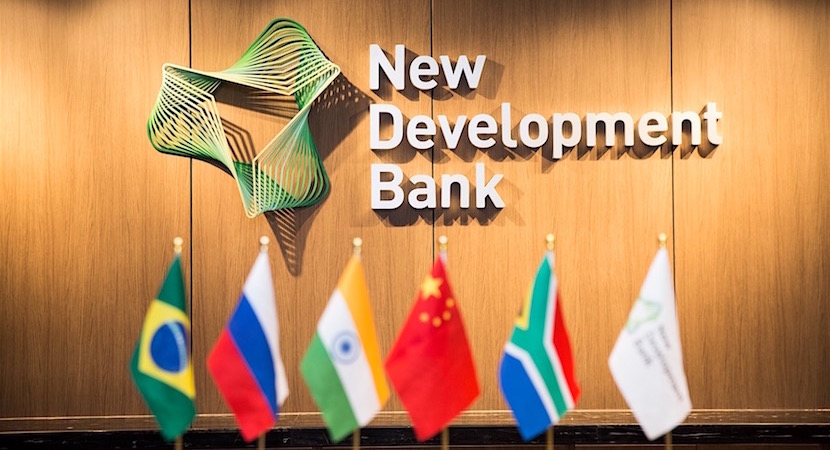
The New Development Bank plans to lend as much as $780 million to Eskom Holdings SOC Ltd. for infrastructure projects this year as the ailing South African power utility battles to keep power supply steady.

Eskom, which on Wednesday entered a seventh day of controlled power cuts, is contending with operational and financial challenges, threatening the productivity of Africa’s most-industrialized economy. The government is considering various interventions to turn the company around, including a $4.8 billion bailout over three years and splitting the organization into three parts to help contain costs.

The NDB, back by the so-called BRICS nations of Brazil, Russia, India, China and South Africa, is in talks with the government about loans that could alleviate some of the pressure on the country’s electricity grid, the lender’s president, K.V. Kamath, said by phone.

The development institution is rolling out a $180 million loan to Eskom to build transmission lines and is considering two further projects in 2019, he said. The first is a $480 million loan that will pay for retrofitting flue-gas desulfurization equipment to make the Medupi power plant compliant with new environmental standards. The second is a further $300 million facility to improve the country’s battery-storage capacity, Kamath said.

—Bloomberg (extract, and BRICS bank press release)

Another R139bn stolen at Eskom? – probe underway

The Special Investigating Unit is probing 11 contractors for stealing a staggering R139bn during the building of Eskom’s Medupi, Kusile and Ingula power plants.

And insiders say the total cost of Eskom looting could reach about R500bn, dating back to 2005.

SIU spokesperson Nazreen Pandor said the unit was probing the theft of R170bn from Eskom — R139bn of which is directly related to  contractors working on the power plants.

She said that after an “intensive scoping exercise” the unit had prioritised, among other things, investigating “the performance of, and payment made to the value of more than R139bn to 11 identified contractors appointed by Eskom in respect of the Medupi, Kusile and/or Ingula station”.

This makes up a massive chunk of the R334bn spent on building the plants — and suggests that public enterprises minister Pravin Gordhan’s estimate last year that about R100bn was lost to state capture was way below the mark.

Read the full story in the Sunday Times.

Why South Africa has blackouts and ‘load shedding’

Rolling blackouts last year had South Africans firing up candles, flashlights and generators after crisis-plagued Eskom Holdings SOC Ltd., which provides most of the country’s electricity, failed to meet demand. The power crunch has since eased thanks to fewer unplanned plant breakdowns and the use of diesel-powered generators to augment supply. But Eskom’s problems run far deeper than temporary shortfalls. The state-owned utility is mired in debt and isn’t selling enough power to cover all its costs, leaving it scrambling for money to replace aging plants. Now South Africa is weighing a plan to split Eskom into three entities in the hope of reviving its fortunes.

1. What caused the power shortages?

Theoretically Eskom should be able to generate about 47,000 megawatts of power, but output slipped to as low as 26,000 megawatts last year when several of its plants were being serviced or broke down. Less than three quarters of installed capacity has been available this year, in part because a lack of money forced the utility to cut back on maintenance and repairs. It also lacks key technical skills needed to carry out the work, despite having a bloated workforce. Plants that produce more than half the utility’s power are at, or nearing, their ideal retirement age.

2. How did this happen?

South Africa was able to produced more electricity than it needed when white-minority rule ended in 1994, but the government didn’t foresee how sharply demand would spike as the economy expanded and previously neglected black areas were connected to the grid. Eskom announced a series of multi-billion dollar investments after the government awoke to the severity of the problem in the mid-2000s, but the projects came too late and took too long to build. The first wide-scale outages occurred in late 2005. The Medupi and Kusile coal-fired plants, which were supposed to add almost 9,600 megawatts to the grid and be fully operational in 2015, are still years away from completion. Their projected costs have more than doubled to 292.5 billion rand ($21.5 billion).

3. Where was management?

The utility went through repeated board and management changes during the almost nine years Jacob Zuma was South Africa’s president. Investigations by lawmakers and the nation’s graft ombudsman alleged that the upheaval was part of an orchestrated attempt by Zuma’s allies to raid Eskom’s coffers with his tacit consent. Accusations that the utility was looted are now being investigated by a judicial commission. Zuma and his allies deny wrongdoing. Eskom’s board and management were replaced in January 2018, the month after Cyril Ramaphosa succeeded Zuma as head of the ruling party, the African National Congress. Since then, there’s been a concerted effort to stamp out graft, and a number of senior executives and staff have left the company. Ramaphosa was named president in February 2018, after the ANC forced Zuma to step down.

4. How precarious is Eskom’s financial position?

Very. By its own admission, it’s in a “death spiral.” It is saddled with 419 billion rand worth of debt that it’s battling to service, and it anticipates showing a loss of about 20 billion rand for the year ending in March. Sales volumes are at a decade low and continue to fall as the economy stagnates. Increasing numbers of businesses and middle-class consumers have moved off the grid as the price of renewable energy drops. Meanwhile, near-bankrupt municipalities are falling behind in in paying their bills as many customers in impoverished townships default on their debts or steal power through illegal connections.

—From: Bloomberg.

Patients killed by load shedding

Another family member of one of three patients who allegedly died during a spell of load shedding at the Letaba Hospital in Limpopo has contradicted claims by the health department that only one death can be linked to the power outage.

Merlyne Mabunda of Nkambako Malubane village outside Tzaneen says she is the mother of a 17-year-old boy who was one of three patients who died in the intensive care unit (ICU) of the Letaba Hospital.

She claims her son was admitted to the hospital on 14 June after a heart attack. He was kept on life saving machines until his death on 20 June during a period of load shedding. Apparently the hospital’s generator ran out of diesel the same day.

She told local councillors her son was in the same ward as the late Faith Malatji, whose family earlier claimed died when ICU equipment malfunctioned during the power outage. Malatji was admitted because of cerebral hemorrhage. The provincial health department insists there was only one death during the power cut: that of a diabetic patient.

Meanwhile an urgent meeting with the Limpopo Health MEC, Dr. Phophi Ramathuba is being set up by an opposition party. “We reiterate our stance that no less than a fully-fledged independent investigation is needed. We need justice for the families who were robbed of their loved ones by this criminal negligence. Clearly a disruption of life saving machines is likely to have a fatal effect on patients who rely on them,” reads the statement.

The party’s Limpopo spokesperson on Economic Development & Environment, Health, Public Administration, Public Works & Roads, Langa Bodlani, says: “Up until now the Health Department has shown a total lack of integrity in handling this matter. They have not only tried to mislead the public, they have also left grieving families to hear of the deaths via the radio.”

White English-speaking South Africans flee the country

Immigration lawyers have noticed a spike in inquiries from South African residents interested in emigrating from one or two a week last year to about 10 a week now.

Even the NGO Homecoming Revolution, which encourages expats to return to South Africa, admits there is a spike of “negative sentiment” in the country.

Homecoming Revolution CEO Angel Jones puts the feelings of despair down to load-shedding, xenophobic attacks, weak leaders, crime, the Omar al-Bashir saga and South Africa’s alleged involvement in the Fifa corruption scandal.

Sadly Jones’organisation saw no benefits from attacking Afrikaans-language schools.

“The main destinations people plan to go to are the US, UK, Canada, Australia and New Zealand in that order,” immigration lawyer Chris Watters said.

Jennifer Vickerman, of Kramer Villion Norris Attorneys, said people who approached her about relocation cited crime, Eskom, investing abroad and better employment opportunities as the reasons behind their immigration plans.

White English-speaking South Africans worry the most about the state of government hospitals and their children’s long-term career prospects in South Africa, but one family admitted that they had had to return to the country about a year ago after living in Israel proved too expensive.

Althea Appolis, a coloured Cape Town resident, is also emigrating to Australia with her family in a few months.

“We have had enough of this place. No amount of beauty, culture or spirit can right the wrongs of the government,” she said.

“Along with at least six other families we have lodged applications for Australia via an immigration attorney, who confirmed the sudden influx of applications citing people who have decided now is the best time to leave.”

Damon Chadwick, who will graduate this year with a business degree, is planning to head to Berlin in December.

Source: Timeslive

South Africans face tough times

Economic growth in the first quarter is expected to have slowed mainly due to the electricity supply constraints.

Most economists have projected that gross domestic product (GDP) will decline sharply from 4.1% to 1.4% quarter-on-quarter.

On Tuesday, Statistics South Africa (Stats SA) will release the growth numbers and the country’s unemployment rate.

Economist at Sasfin Asset Managers, Liston Mentjies says the poor are already bearing the brunt of a weak economy.

“If you look on the road cars are running well, shopping malls are full, at restaurants you have to wait for a table. But for the majority of South Africans times are tough.”

Repo left unchanged but rand sinks

The rand was a touch softer against the dollar on Thursday, coming off the session’s highs after the central bank left rates unchanged despite a hawkish policy statement that had fuelled last minute expectations for a hike.

Governor Lesetja Kganyago said the bank’s monetary policy committee voted 4:2 in favour of keeping the benchmark repo at 5.75% but warned the deteriorating inflation outlook meant the stance could not be “maintained indefinitely”.

The rand touched a session high of 11.7350/dollar after Kganyago warned that inflation expectations remained uncomfortably close to the upper end of the 3-6% target range over the longer term.

It had retreated to 11.8400 by 1531 GMT, little changed from Wednesday’s closing level of 11.8355.

“The sell-off in the rand post the MPC meeting … tells us that the market wants the Reserve Bank to start hiking interest rates,” said Jana van Deventer, a market analyst at ETM.

“There’s no doubt that the statement was hawkish, and that could provide support for the rand at the margins in coming months if they actually start hiking interest rates but it might be too little too late.”

Government bonds were weaker after the rate call, with the yield on the benchmark government bond maturing in 2026 ending the session at 7.985%, up 2.5 basis points from the previous day.

ANC to march on Eskom

The ANC in Johannesburg will lead a march of Soweto residents to Eskom offices in Diepkloof on Thursday. The march follows last Friday’s power cuts in Soweto which lasted for more than ten hours.

Meanwhile, many of Soweto’s resident feel entitled to free electricity as it was one of the things promised to them when the country gained democracy in 1994, a local told News24.

The man, who refused to be named, said the late former president Nelson Mandela’s promise of a better South Africa with free education, free electricity, free water and sanitation had not been realised.

“It’s sad he died without having had implemented those things,” the man told News24 on Wednesday.

He was speaking just days after the area of Orlando in Soweto had erupted in protests, with locals rejecting Eskom’s move to install prepaid electricity meters in the area.

Many of the locals have demanded a flat rate of R400, which would be less than they should be paying for power consumption.

One unemployed woman who owns a house in Orlando, Soweto, admitted to not paying the monthly bills which she received.

She did not want the prepaid meter to be installed in her yard either because it would probably mean paying for electricity.

Sowetans attack Eskom for blackouts

Eskom is under attack – by the City of Joburg and the regional ANC over the almost week-long spate of power outages in Soweto.

The council has slammed the power utility for inefficiency and for failing to deliver on its mandate.

The City of Joburg claimed areas supplied by its own utility, City Power, still had power, but those Eskom supplied did not.

“This is why new housing and business developments such as RDP houses, flats and hotels have power in the township, while the large part of Soweto supplied by Eskom has been cut off,” said Matshidiso Mfikoe, the city’s mayoral committee member for Environment and Infrastructure Services.

She accused Eskom of being “insensitive” and showing “complete and utter disregard” for the people of Soweto.

But Eskom spokesman Khulu Phasiwe said there was “nothing sinister” about the power outages.

He attributed the blackouts to load shedding and then, when the power was due to be switched on again, overloading that caused the transformer to trip.

“When you have in some houses four or five backrooms using stoves at the same time, there is absolutely no way that the power will hold.

“We can’t control unplanned outages resulting from overloading,” Phasiwe said.

Eskom has been involved in a long-running battle with Soweto consumers over unpaid bills. Phasiwe said Soweto owed Eskom about R8 billion, of which R4bn was overdue.

“Some 84 percent of residents have not been paying their debt. Ideally, you should be having 16 percent not paying and 84 percent paying,” Phasiwe pointed out.

A key dispute – related to the outstanding billing problem – is the installation of prepaid electricity meters in Soweto. Both Eskom and City Power are installing meters for their customers. There have been ongoing protests across Soweto against their installation. Last week, Orlando West residents blockaded streets in protest against Eskom’s prepaid meters.

Mfikoe accused Eskom of changing the payment system unilaterally. She suggested it was inconceivable that the prolonged outages could occur without notice “in the township internationally renowned as home to two Nobel peace laureates, Dr Nelson Mandela and Archbishop Emeritus Desmond Tutu”.

Source: IOL

Sowetans riot after power cuts

Residents of Orlando West, Soweto, who included pensioners, burnt tyres and protested against Eskom power cuts on Wednesday.

Johannesburg metro police spokesman Chief Superintendent Wayne Minnaar said the Klipspruit Valley and Khumalo Roads were affected.

”The protesters started at around 7am and are obstructing these roads, we advise motorists to use alternative roads such as Chris Hani Baragwanath and Elias Motsoaledi Roads,” Minnaar said.

The protesters placed rocks and burning tyres on the roads, preventing traffic flow in the area.

On Monday, hundreds of residents in the neighbouring Diepkloof protested over housing, obstructing the area between Chris Hani Baragwanath Hospital and the N12.

Strikes loom with deadlock

Tortuous public sector wage negotiations are underway, as another deadlock has been reached which could mean a damaging strike.

As Mugwena Maluleke, convenor of the Cosatu public sector unions has warned: “If the negotiations reach a breaking point, they will severely affect the public in what will follow”.

After seven months of talks, the dispute over future wage increases and benefits for some 1.3 million civil servants is now in conciliation.

The government, as the employer, has until Monday to table revised proposals. These seem likely to include a pay deal that will take account of increases in the rate of inflation beyond the present estimate of 4.8%.

Meanwhile workers have been on strike at Medupi power station in Limpopo for nearly six weeks, Eskom said on Wednesday.

Those wanting to go back to work have been intimidated from doing so, the power utility said in a statement.

“The striking employees belonging to contractors on the Medupi Power Station Project have not heeded the call to return to work since the unprotected industrial action that took place on March 25, 2015, despite a court interdict as well as ultimatums issued in this regard…

“Violence and intimidation was experienced in the accommodation areas where these employees reside as well as en-route to the project site. This has resulted in employees that want to return to work, being prevented or intimidated from doing so.”

The police was keeping a close eye on the situation but it remained “tense”, News24 reported.

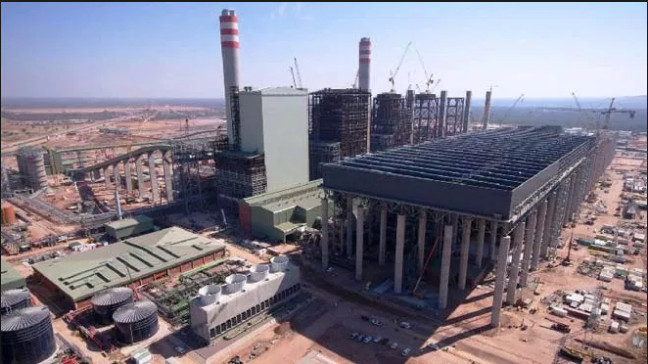
Labour unrest has been plaguing Medupi, a dry-cooled coal-fired power station meant to alleviate South Africa’s under pressure power grid.

Source: News24

Police clash with Medupi strikers

Police have clashed with striking workers at various hostels housing construction workers of Medupi Power Station in Limpopo.

The workers had barricaded the streets and entrances to the hostels preventing buses to pick up workers to the construction site.

They are burning tyres and pelting stones at motorists.

Police nyalas and water tankers have been deployed in the area.

On Tuesday the striking workers refused Eskom’s offer to return to work on Wednesday.

The workers are demanding that those dismissed be reinstated unconditionally.

The utility had on Tuesday confirmed it will reinstate the 1 700 workers who were fired for vandalising property during the strike.

Labour disruption and technical faults have increased costs at Eskom’s Medupi coal-fired plant, expected to start generating 800 megawatts of extra electricity by July.

Meanwhile Eskom implemented stage 2 load shedding from 06:00 on Wednesday morning.

This followed stage 2 and stage 3 load shedding on Tuesday, with Eskom assuring customers that load shedding is implemented as a necessary measure to protect the power system.

Deferred generator maintenance has caused an overload of unplanned repairs, resulting in a week of darkness for South Africa.

Strong dollar a threat to Eskom and South Africa

In the world of economics, one policymaker towers above all others. The head of America’s central bank, Janet Yellen, presides over a $17 trillion economy. The empire of her nearest competitor, Mario Draghi, amounts to a relatively puny $10 trillion. On top of this, the dollar’s global role means Ms Yellen has a huge impact abroad, influencing more than $9 trillion in borrowing in dollars by non-financial companies outside America—more than enough to buy all the firms listed on the stock exchanges of Shanghai and Tokyo. As the dollar strengthens both in response to healthier growth in America and in the expectation that the Federal Reserve is getting ready to raise rates, this burden is becoming harder to bear.

Dollar borrowing is everywhere, but the biggest growth has been in emerging markets. Between 2009 and 2014 the dollar-denominated debts of the developing world, in the form of both bank loans and bonds, more than doubled, from around $2 trillion to some $4.5 trillion, according to the Bank for International Settlements (BIS). Places like Brazil, South Africa and Turkey, whose exports fall far short of imports, finance their current-account gaps by building up debts to foreigners.

Even countries without trade gaps have been borrowing heavily. With interest rates on American assets so meagre—a five-year Treasury bond pays just 1.5%—those with dollars to invest have sought out more rewarding opportunities. Firms based in emerging markets seemed to fit the bill. Some are big names: state-owned energy giants like Russia’s Gazprom and Brazil’s Petrobras have been issuing dollar bonds via subsidiaries based in Luxembourg and the Cayman Islands. Others are smaller. Recent months have seen Lodha group, an Indian property developer, Eskom, a South African power generator, and Yasar, a Turkish firm that makes TV dinners, sell dollar-denominated bonds. By borrowing dollars at several percentage points below the prevailing interest rate in their domestic currency, CEOs have pepped up profits in the short term.

But finance rarely offers a free lunch. The worry is that tumbling energy prices mean firms like Gazprom and Petrobras now have much lower dollar income than expected when they took on debts. Others, such as Lodha, Eskom and Yasar, have few dollar earnings. Taking on debt just before a shift in exchange rates can be painful. In 2010 a Turkish firm borrowing $10m via a ten-year bond with a 5% coupon could expect to pay 22.5m lira ($15m) over the life of the bond. But the lira is down 43% against the dollar since then; the payments are now over 39m lira.

Where foreign debts and earnings line up there is little reason to worry. Asian firms’ foreign-currency debts tripled from $700 billion to $2.1 trillion between 2008 and 2014, going from 7.9% of regional GDP to 12.3%, according to economists at Morgan Stanley, a bank. To see whether the surge was bearable, the economists looked at the accounts of 762 firms across Asia. The findings were reassuring: on average 22% of their debt is dollar-denominated, but so are 21% of earnings. Although Asian firms are a big part of the emerging-markets’ borrowing binge, on the whole they seem well placed to cope with a rising dollar.

Yet there are still two reasons to worry. First, the outlook for China is a puzzle. The country holds $1.2 trillion in Treasury bills, many of which are sitting in its sovereign-wealth fund. When the dollar rises, the fund gets richer. But even in a dollar-rich country, there can be pockets of pain. China’s firms have built up a nasty currency mismatch. Almost 25% of corporate debt is dollar-denominated, but only 8.5% of corporate earnings are. Worse, this debt is concentrated, according to Morgan Stanley, with 5% of firms holding 50% of it.

Chinese property developers are the most obviously vulnerable. Companies like Evergrande, China Vanke and Wanda build and sell offices and houses, so most of their earnings are in yuan. Banned from borrowing directly from banks, they have been active issuers of dollar bonds. They have also borrowed from trust companies, according to Fitch, a rating agency. The trusts are themselves highly leveraged and have borrowed dollars via subsidiaries in Hong Kong. This arrangement will amplify the economic pain if property prices in China continue to decline, as they have been doing for several months.

The second problem is that whole economies, rather than just the corporate sector, look short of dollars. In Brazil and Russia, for instance, bail-outs of firms lacking greenbacks are blurring the lines between the state, banks and big companies. The general scramble for dollars has contributed to the plunge of the real and the rouble. Others could follow this path. Turkey’s dollar borrowing has grown rapidly since 2009: in addition to the debts Turkish firms have taken on, the state’s external debt has grown to almost 50% of GDP, far above the average for middle-income countries (23%). South Africa looks worrying too: its current-account deficit is the widest of any big emerging market, and the government’s external debt is 40% of GDP.

A wave of defaults would be unlikely to cause problems as widespread as the subprime crisis of 2008. Most bonds are owned by deep-pocketed institutional investors such as pension funds and insurers. The banks that have made loans face far tougher regulation than they did eight years ago and are generally far better capitalised. An emerging-market rout would not cause another Lehman moment. But it would mean big job losses at stricken firms. As investors reprice risk it would probably also lead to a sudden tightening of credit. In countries like South Africa or Turkey, where growth is evaporating fast, that could still be very painful. – The Economist