German missiles taken over by hackers

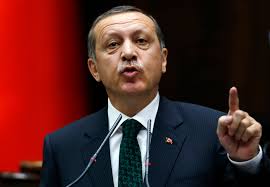
German-owned Patriot missiles stationed in Turkey were briefly taken over by hackers, according to media reports on Tuesday.

The attack took place on anti-aircraft ‘Patriot’ missiles on the Syrian border. The American-made weapons had been stationed there by the Bundeswehr (German army) to protect Nato ally Turkey.

According to the civil service magazine, the missile system carried out “unexplained” orders. It was not immediately clear when these orders were carried out and what they were.

The magazine speculates about two weak spots in the missile system which could be exploited by hackers.

One such weakness is the Sensor-Shooter-Interoperability (SSI) which exchanges real time information between the missile launcher and its control system.

The second exposed point is a computer chip which controls the guidance of the weapon.

Attackers might have gained access in two different ways, one that takes over the operating of the missile system and one that steals data from it.

The patriot missile has been in service in the US army since 1984 and was first used in operation in the first Gulf war in 1991.

In 2012 Turkey asked that its Nato partners support it by stationing Patriot missile systems there, after the civil war in Syria drew closer to its southern border.

In June 2015 Germany announced that it would replace its Patriot missiles with MEADS, an air defence system designed in cooperation with the USA and Italy.

Source: thelocal.de

Failure of the US coup d’État in Macedonia

Macedonia has just neutralised an armed group whose sponsors had been under surveillance for at least eight months writes Thierry Meyssan.

By doing so, it has prevented a new attempt at a coup d’État, planned by Washington for the 17th of May. The aim was to spread the chaos already infecting Ukraine into Macedonia in order to stall the passage of a Russian gas pipeline to the European Union.

On the 9th of May, 2015, the Macedonian police launched a dawn operation to arrest an armed group which had infiltrated the country and which was suspected of preparing a number of attacks.

The police evacuated the civilian population before launching the assault.

The suspects opened fire, which led to a bitter firefight, leaving 14 terrorists and 8 members of the police forces dead. 30 people were taken prisoner. There were a large number of wounded

The Macedonian police were clearly well-informed before they launched their operation. According to the Minister for the Interior, Ivo Kotevski, the group was preparing a very important operation for the 17th May, the date of the demonstration organised by the Albanophone opposition in Skopje.

The identification of the suspects has made it possible to determine that they were almost all ex-members of the Kosovo Liberation Army).

The principal leaders of this operation, including Fadil Fejzullahu killed during the assault, are all close to the United States ambassador in Skopje, Paul Wohlers.

Paul Wohlers is the son of US diplomat Lester Wohlers, who played an important part in Atlantist propaganda, and directed the cinematographic service of the U.S. Information Agency. Paul’s brother, Laurence Wohlers, is presently an ambassador in the Central African Republic.

Paul Wohlers himself is a specialist in counter-espionage. He was the assistant director of the United States Department of State Operations Center, in other words, the service for the surveillance and protection of diplomats.

Although Macedonia is not a member of NATO, Jens Stoltenberg was « following » the police operation in Kumanovo.

To eliminate any doubt about the identity of the operation’s sponsors, the General Secretary of NATO Stoltenberg, intervened even before the assault was over – not to declare his condemnation of terrorism and his support for the constitutional government of Macedonia, but to paint a picture of the terrorist group as a legitimate ethnic opposition.

In January 2015, Macedonia foiled an attempted coup d’état organised for the head of the opposition, the social-democrat Zoran Zaev. Four peole were arrested, and Mr. Zaev had his passport confiscated, while the Atlantist press began its denunciation of an “authoritarian drift by the régime”.

Zoran Zaev is publicly supported by the embassies of the United States, the United Kingdom, Germany and Holland. But the only trace left of this attempted coup d’état indicates the responsibility of the US because this coup was coordinated by Mile Zechevich, an employee of one of George Soros’ foundations.

In order to understand Washington’s urgency to overthrow the Macedonian government, we have to go back and look at the gas pipeline war. Because international politics is a huge chess-board on which every move by any piece causes consequences for all the others.

The gas pipieline Turkish Stream was intended to pass through Turkey, Greece, Macedonia and Serbia in order to supply the European Union with Russian gas. On the initiative of Hungarian President Viktor Orbán, the Ministers for Foreign Affairs of each of the countries concerned met on the 7th April in Budapest to coordinate their position facing the United States and the European Union.

The United States have been attempting to sever communications between Russia and the European Union since 2007.

They managed to sabotage the projet South Stream by obliging Bulgaria to cancel its participation, but on the 1st December 2014, to everyone’s surprise, Russian President Vladimir Putin launched a new project when he succeeded in convincing his Turkish opposite number, Recep Tayyip Erdoğan, to sign an agreement with him, despite the fact that Turkey is a member of NATO.

It was agreed that Moscow would deliver gas to Ankara, and that in return, Ankara would deliver gas to the European Union, thus bypassing the anti-Russian embargo by Brussels. On the 18th of April 2015, the new Greek Prime Minister, Alexis Tsípras, gave his agreement that the pipeline could cross his country.

As for Macedonian Prime Minister Nikola Gruevski, he had already conluded discrete negotiations last March.

Finally, Serbia, which had been a partner in the South Stream project, indicated to the Russian Minister for Energy Aleksandar Novak, during his reception in Belgrade in April, that Serbia was ready to switch to the Turkish Stream project.

To halt the Russian project, Washington has multiplied its initiatives in Turkey, Greece, Macedonia and Serbia.

Last comment, but not the least: Turkish Stream will also supply Hungary and Austria, thus ending the alternative project negotiated by the United States with President Hassan Rohani – against the advice of the Revolutionary Guards – for supplying them with Iranian gas.

Thierry Meyssan French intellectual, founder and chairman of Voltaire Network. His columns specializing in international relations feature in daily newspapers and weekly magazines in Arabic, Spanish and Russian. His last two books published in English : 9/11 the Big Lie and Pentagate.

Turkish president wants focus on Jerusalem

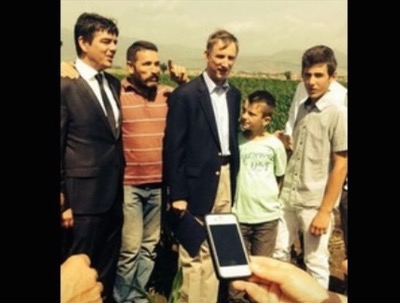
Nothing in the western media covered what the Turkish Anadulu Agency released, when Turkish President Recep Tayyip Erdogan gave a speech this Friday.

Erdogan called on all Turks to refocus on the Ottoman goal to re-conquer Jerusalem for Islam:

“Unfortunately we the Muslims lost our aim to head towards Jerusalem. The water of our eyes froze making us blind, and our hearts that was destined to beat for Jerusalem is now instead conditioned for rivalry being in a state of war with each other.”

Erdogan’s desire to end strife and unite Sunnis and Shiites to aim towards Jerusalem was made in the state of Erzincan, central Turkey.

Turkish president called on citizens to “raise their hands in supplication for this blessed night towards Allah to restore the Al-Aqsa Mosque [Jerusalem] to be re-owned by Muslims, and to remove the mist from their eyes, to see Jerusalem in their hands at every moment and at every opportunity”.

Erdogan added: “When you mention the word ascension; the first thing that comes to mind is Jerusalem and Al-Aqsa Mosque,” while he expressed deep regret for the condition of Muslim heedlessness for Al-Aqsa Mosque and Jerusalem.

Such reflections were also made by Turkish Prime Minister Ahmed Davutoglu recently, that “Jerusalem belongs to the Muslims, not to the Jews,” while criticizing the leader of the co-party Peoples Democratic opposition, Salahuddin Dmirattash, in which he said in opposition to the Islamist rhetoric of Davutoglu.

Erdogan also said that he wanted Spain. Tariq Bin Ziad, the conqueror of Spain, the tyrant Alp Arslan, and Saladin are the Muslim leaders who fought Christendom and Saladin was the one who conquered Jerusalem.

Pope calls Armenian genocide first of 20th century

Pope Francis described the massacre of as many as 1.5 million Armenians as “the first genocide of the 20th century” at a 100th anniversary Mass on Sunday, prompting Turkey to summon the Holy See’s ambassador in Ankara in protest.

Muslim Turkey accepts that many Christian Armenians died in clashes with Ottoman soldiers beginning in 1915, when Armenia was part of the empire ruled from Istanbul, but denies hundreds of thousands were killed and that this amounted to genocide.

It was the first time a Pope has publicly pronounced the word “genocide” for the massacre, repeating a term used by some European and South American countries but avoided by the United States and some others to maintain good relations with an important ally.

In 2001, Pope John Paul II and Armenian Apostolic Church Supreme Patriarch Kerek in II called it “the first genocide of the 20th century” in a joint written statement.

Francis, who has disregarded many aspects of protocol since becoming pope two years ago, uttered the phrase during a private meeting at the Vatican with an Armenian delegation in 2013, prompting a strong protest from Ankara.

As the archbishop of Buenos Aires before becoming the leader of the world’s 1.2 billion Catholics, Jorge Maria Bergoglio had already publicly characterised the mass killings as genocide.

After Francis’s remarks on Sunday, Turkey swiftly summoned the Vatican’s ambassador in Ankara to protest and seek an explanation, a senior official told Reuters.

Strong dollar a threat to Eskom and South Africa

In the world of economics, one policymaker towers above all others. The head of America’s central bank, Janet Yellen, presides over a $17 trillion economy. The empire of her nearest competitor, Mario Draghi, amounts to a relatively puny $10 trillion. On top of this, the dollar’s global role means Ms Yellen has a huge impact abroad, influencing more than $9 trillion in borrowing in dollars by non-financial companies outside America—more than enough to buy all the firms listed on the stock exchanges of Shanghai and Tokyo. As the dollar strengthens both in response to healthier growth in America and in the expectation that the Federal Reserve is getting ready to raise rates, this burden is becoming harder to bear.

Dollar borrowing is everywhere, but the biggest growth has been in emerging markets. Between 2009 and 2014 the dollar-denominated debts of the developing world, in the form of both bank loans and bonds, more than doubled, from around $2 trillion to some $4.5 trillion, according to the Bank for International Settlements (BIS). Places like Brazil, South Africa and Turkey, whose exports fall far short of imports, finance their current-account gaps by building up debts to foreigners.

Even countries without trade gaps have been borrowing heavily. With interest rates on American assets so meagre—a five-year Treasury bond pays just 1.5%—those with dollars to invest have sought out more rewarding opportunities. Firms based in emerging markets seemed to fit the bill. Some are big names: state-owned energy giants like Russia’s Gazprom and Brazil’s Petrobras have been issuing dollar bonds via subsidiaries based in Luxembourg and the Cayman Islands. Others are smaller. Recent months have seen Lodha group, an Indian property developer, Eskom, a South African power generator, and Yasar, a Turkish firm that makes TV dinners, sell dollar-denominated bonds. By borrowing dollars at several percentage points below the prevailing interest rate in their domestic currency, CEOs have pepped up profits in the short term.

But finance rarely offers a free lunch. The worry is that tumbling energy prices mean firms like Gazprom and Petrobras now have much lower dollar income than expected when they took on debts. Others, such as Lodha, Eskom and Yasar, have few dollar earnings. Taking on debt just before a shift in exchange rates can be painful. In 2010 a Turkish firm borrowing $10m via a ten-year bond with a 5% coupon could expect to pay 22.5m lira ($15m) over the life of the bond. But the lira is down 43% against the dollar since then; the payments are now over 39m lira.

Where foreign debts and earnings line up there is little reason to worry. Asian firms’ foreign-currency debts tripled from $700 billion to $2.1 trillion between 2008 and 2014, going from 7.9% of regional GDP to 12.3%, according to economists at Morgan Stanley, a bank. To see whether the surge was bearable, the economists looked at the accounts of 762 firms across Asia. The findings were reassuring: on average 22% of their debt is dollar-denominated, but so are 21% of earnings. Although Asian firms are a big part of the emerging-markets’ borrowing binge, on the whole they seem well placed to cope with a rising dollar.

Yet there are still two reasons to worry. First, the outlook for China is a puzzle. The country holds $1.2 trillion in Treasury bills, many of which are sitting in its sovereign-wealth fund. When the dollar rises, the fund gets richer. But even in a dollar-rich country, there can be pockets of pain. China’s firms have built up a nasty currency mismatch. Almost 25% of corporate debt is dollar-denominated, but only 8.5% of corporate earnings are. Worse, this debt is concentrated, according to Morgan Stanley, with 5% of firms holding 50% of it.

Chinese property developers are the most obviously vulnerable. Companies like Evergrande, China Vanke and Wanda build and sell offices and houses, so most of their earnings are in yuan. Banned from borrowing directly from banks, they have been active issuers of dollar bonds. They have also borrowed from trust companies, according to Fitch, a rating agency. The trusts are themselves highly leveraged and have borrowed dollars via subsidiaries in Hong Kong. This arrangement will amplify the economic pain if property prices in China continue to decline, as they have been doing for several months.

The second problem is that whole economies, rather than just the corporate sector, look short of dollars. In Brazil and Russia, for instance, bail-outs of firms lacking greenbacks are blurring the lines between the state, banks and big companies. The general scramble for dollars has contributed to the plunge of the real and the rouble. Others could follow this path. Turkey’s dollar borrowing has grown rapidly since 2009: in addition to the debts Turkish firms have taken on, the state’s external debt has grown to almost 50% of GDP, far above the average for middle-income countries (23%). South Africa looks worrying too: its current-account deficit is the widest of any big emerging market, and the government’s external debt is 40% of GDP.

A wave of defaults would be unlikely to cause problems as widespread as the subprime crisis of 2008. Most bonds are owned by deep-pocketed institutional investors such as pension funds and insurers. The banks that have made loans face far tougher regulation than they did eight years ago and are generally far better capitalised. An emerging-market rout would not cause another Lehman moment. But it would mean big job losses at stricken firms. As investors reprice risk it would probably also lead to a sudden tightening of credit. In countries like South Africa or Turkey, where growth is evaporating fast, that could still be very painful. – The Economist

Russian, Turkish media hint at Paris false flag

Conspiracy theories are swirling around last week’s terror attacks in Paris, and beyond the customary fringe websites, they are being aired by Turkish politicians and mainstream Russian and Iranian media outlets.

Those making – or hinting at – the claims would have the world believe that U.S. or Israeli intelligence services were behind the attacks on the offices of the Charlie Hebdo newspaper and a kosher supermarket, which together with a street shooting left 17 victims and three terrorists dead over three days.

A mass circulation Russian newspaper, Komsomolskaya Pravda, ran a front-page headline Monday asking whether “the Americans” were behind the Paris terror attacks.

In the related story, a political analyst, Col. Alexander Zhilin, linked his theory to differences between the U.S. and European Union over sanctions against Russia in response to the Ukraine crisis.

Zhilin, who heads a body called the Moscow Center for the Study of Applied Problems, said immediately after French President Francois Hollande on January 5 raised doubts about continuing with the sanctions, he – Zhilin – had predicted that terror attacks could now be expected in France.

The U.S. needed a way to consolidate U.S.-E.U. unity over the sanctions, he said, and planning a terror attack was a “cheap and effective” option.

Separately, Komsomolskaya Pravda interviewed Russian economist Mikhail Khazin, head of a consulting firm called Neoconomics. He wondered who benefited most from the Paris attacks, and concluded that the primary beneficiary was the United States.

“Let me add that in the elite of the United States there are several groups, each of which has its own opportunities to promote and organize such attacks,” he was quoted as saying.

Khazin went on to list others who, in his view, could also benefit from the attacks, including Britain, Saudi Arabia and “Islamic State, al-Qaeda and so on” – although he added that the latter possibility was “the least likely.”

Other reports in the paper highlighted skepticism expressed by some quarters over the attacks, with one headline highlighting a comment by an Arab café waiter in Paris: “Someone needs a war between Muslims and Christians …”

In Iran, the Press TV broadcaster ran on its website an article by Paul Craig Roberts, a columnist, former U.S. Treasury official, and 9/11 conspiracy theorist, who wrote that one way of seeing the attack on Charlie Hebdo “is as an attack designed to shore up France’s vassal status to Washington.”

“The suspects can be both guilty and patsies,” said Roberts. “Just remember all the terrorist plots created by the FBI that served to make the terrorism threat real to Americans.”

On Roberts’ own website, he also highlights reports from other sources suggesting that the Paris attacks were a “false flag operation” – that is, a covert operation designed to point a finger at a purported perpetrator, while the actual mastermind’s identity remains hidden.

“Whether or not it is a false flag operation, the shootings are being used for a wider purpose or purposes,” he said.

Those purposes could include “bringing France back into Washington’s orbit,” stifling “the growing European sympathy for the Palestinians,” and countering “the rising opposition in Europe to more Middle Eastern wars,” Roberts charged.

‘A plot against the Islamic world’

Meanwhile Melih Gokcek, the veteran mayor of the Turkish capital, Ankara, raised the specter of the Mossad’s involvement, while speaking at a youth congress of the Islamist ruling Islamist Justice and Development Party (AKP) on Sunday.

According to a report by the official Anadolu news agency, Gokcek laid the blame on Israel’s security agency, charging that Israel was angry by a recent vote by French lawmakers supportive of Palestinian statehood.

“Israel certainly doesn’t want this [pro-Palestinian independence] sentiment to expand in Europe,” he said. “That’s why it is certain that Mossad is behind these kinds of incidents. Mossad enflames Islamophobia by causing such incidents.”

Turkish lawmaker Ali Sahin, a senior AKP member, was quoted as saying in Twitter messages that the attack on Charlie Hebdo was “staged like a scene from a movie,” by forces determined to discredit Islam.

The most senior figure to insinuate that all was not as it appeared in the Paris attacks – although he did also condemn them – was Turkish President Recep Tayyip Erdogan.

“Take note that the acts of terror are not carried out in a vacuum,” he said during a joint press conference in Ankara with Palestinian Authority chairman Mahmoud Abbas “The acts follow a predetermined script and we should be alive to a plot against the Islamic world.”

Erdogan, an arch-critic of Israel and key supporter of Hamas – a U.S.-designated foreign terrorist organization – also used the opportunity to slam Prime Minister Binyamin Netanyahu’s participation with other leaders in a mass anti-terror rally in Paris on Sunday.

“I also hardly understand how he dared to go there,” Anadolu quoted Erdogan as saying, accusing Netanyahu of carrying out “state terrorism by massacring 2,500 people in Gaza.”

Source: CNS News

Russia demands explanation for Israeli strikes

Russia on Monday demanded an explanation for Israeli airstrikes on two areas near Damascus, while the Syrian and Iranian foreign ministers called it an act of aggression that proves Israel is “in the same trench” with extremist groups fighting the Syrian government.

Israeli warplanes struck near Damascus’ international airport on Sunday, as well as outside a town close to the Lebanese border.

The attacks are unlikely to have a big impact. Israel has already struck inside Syria on several occasions in the course of the country’s chaotic civil war, including a series of airstrikes near Damascus in May 2013.

Those strikes, according to Israeli officials, targeted shipments of Iranian-made Fateh-110 missiles bound for the Lebanese Hezbollah militant group.

Syria’s reaction has been relatively mute; in previous cases, Damascus has vowed to retaliate without actually doing so.

The Syrian government said Sunday’s attacks caused only material damage. Israel has not confirmed the strikes, which Syrian activists said had hit weapons depots.

Appearing on Israel Radio on Monday, Intelligence Minister Yuval Steinitz would neither confirm nor deny the news.

“We have a very potent defense policy that is oriented toward safeguarding the country and wherever possible preventing the upgrading of weaponry that gives terrorist organizations game-changers or unusually sophisticated means of attack,” he said.

Syrian Foreign Minister Walid al-Moallem claimed Israel was trying to compensate for losses incurred by Islamic extremist groups in Syria at the hands of the Syrian army. He did not elaborate.

He spoke Monday at a joint news conference in Tehran with his Iranian counterpart, Mohammad Javad Zarif.

Russian Foreign Ministry spokesman Alexander Lukashevich said Moscow “is deeply concerned about this dangerous development which requires a detailed investigation.”

In a statement, he said that the use of force is “unacceptable in international relations and deserves an outright condemnation.”

Russia, along with Iran, is the Syrian government’s chief international ally, and has been trying to convene a dialogue among the warring parties in Moscow.

Russian deputy foreign minister Mikhail Bogdanov, who visited Lebanon last week, said his country is trying to arrange a meeting between Syria’s warring sides without preconditions. He then flew to Turkey to meet with the head of Syria’s Western-backed opposition group, Hadi Bahra.

Proposed local cease-fires starting with Aleppo as a building block, is seen as a wider solution to end the Syrian war.

Source: AP


ISIS supplies run through NATO country

Germany’s international broadcaster published a video report of immense geopolitical implications.

This is possibly the first national broadcaster in the West to admit that the so-called “Islamic State” (ISIS) is supplied not by “black market oil” or “hostage ransoms” but billions of dollars worth of supplies carried into Syria across NATO member’s borders.

Every day, trucks laden with food, clothing, and other supplies cross the border from Turkey to Syria. Turkey is a NATO member.

It is unclear who is picking up the goods, Deutsche Welle reports.

The haulers believe most of the cargo is going to the “Islamic State” militia.

Oil, weapons, and soldiers are also being smuggled over the border, and Kurdish volunteers are now patrolling the area in a bid to stem the supplies.

NATO has feigned a desire to defeat ISIS but has failed to expose and uproot ISIS’ multinational sponsorship and more importantly, has refused to cut its supply lines – an elementary prerequisite of any military strategy.

ICC: Israel guilty of war crimes but will not be prosecuted

International Criminal Court (ICC) lawyers say Israel is guilty of war crimes for the raid on an aid ship bound for Gaza in 2010, but the court’s decision confirms that Israel has a ‘special status’ in regards to international law.

The raid killed nine Turkish activists. They have also decided that the case does not meet their criteria for prosecution, according to court papers seen by Reuters on Wednesday.

On May 31, 2010, the Israeli military forcefully boarded six civilian ships from the “Gaza Freedom Flotilla” that were traveling from Turkey to deliver humanitarian aid and construction materials to the besieged region. The army boarded the ships in international waters in the Mediterranean Sea.

The activists on board say they did not put up a fight, however the Israeli army insists that they were met with resistance – which led to several activists being killed, including eight Turkish nationals and an American of Turkish origin on the Mavi Marmara boat.

The ICC does not have jurisdiction over crimes committed in either Turkey, where most the boats were registered, or Israel, since neither are members of the ICC. However, the Mavi Marmara was registered to the Comoros Islands, which is a member, making the crimes on board eligible for ICC investigation.

“The information available provides a reasonable basis to believe that war crimes under the Court’s jurisdiction have been committed in the context of interception and takeover of the Mavi Marmara by IDF (Israeli Defense Forces) soldiers on 31 May 2010,” read the papers.

But the papers also added that prosecutors had decided the crimes “were not of sufficient gravity to fall under the court’s jurisdiction,” reported Reuters. Their evidence and criteria for making this decision however, remained vague.

“Not having collected evidence itself, the Office’s analysis in this report must therefore not be considered to be the result of an investigation,” the paper read.

However, according to the ICC website, considering individuals guilty of war crimes does make them eligible to be tried under the ICC.

“The mandate of the Court is to try individuals rather than States, and to hold such persons accountable for the most serious crimes of concern to the international community as a whole, namely the crime of genocide, war crimes, crimes against humanity, and the crime of aggression…”

The Indian Ocean State, another ICC member, referred the raid to court, which obligated the ICC to begin preliminary examinations into the matter, according to their mandate.

“The Prosecutor’s decision marks the first time a State referral by an ICC States Party has ever been rejected by … Prosecutor without even initiating an investigation,” said lawyers Rodney Dixon and Geoffrey Nice in a statement.

“It confirms the view expressed by politicians, civil society organizations, NGOs and commentators from many quarters that Israel has a ‘special status,'” they added.

The report comes the same day that Bulent Yildirim, president of the Turkish NGO Humanitarian Relief Foundation (IHH) – one of the NGOs who organized the flotilla – praised the ICC, expecting that they would announce on Thursday that Israel is guilty of “war crimes.”

The ICC’s final decision is likely to anger other Turkish activists, but also Ankara who accused Israel of mass murder after the IDF attacked the flotilla.

Finland, Turkey get Russian VVER1200 NPP

These latest design VVER1200 NPP’s have 60 year life span, with 20% reduction in build cost and time, and 10% reduction in operating cost. Turkey ordered 4 of these NPPs. Same process as SA: State deal subsequently approved by parliament. Russia to finance, built, own, operate and transfer option after 15 years. Russia buys back … Continue reading “Finland, Turkey get Russian VVER1200 NPP”

These latest design VVER1200 NPP’s have 60 year life span, with 20% reduction in build cost and time, and 10% reduction in operating cost.

Turkey ordered 4 of these NPPs. Same process as SA: State deal subsequently approved by parliament. Russia to finance, built, own, operate and transfer option after 15 years. Russia buys back spent fuel for processing.

In Finland one Russian VVER 1200 NPP will be build near Tornio – Outokumpu has 12% share in the planned NPP.

During 2014 Outokumpu said its investment in Fennovoima VVER1200 NPP, to be paid over the next decade, would be around 210 million euros, compared with its earlier estimate of around 150 to 200 million euros. (Nearly 3 billion Rand for the 12% share.)

The company’s stainless steel plants in Tornio, including 540 000t/y of FeCr-production, are the single largest consumer of electricity in Finland.

“We want to ensure a stable, predictable and low-carbon energy source at production cost to our operations in Finland,” Chief Executive Mika Seitovirta said in a statement on Wednesday. (19 February 2014)

Eight VVER1200 NPP’s are planned for South-Africa, near Jeffreys Bay, Gansbaai and Koeberg in Cape Town. Currently transmission losses from Mpumalanga to coastal cities in the Cape run at around 12%.

The real controversy surrounding the Russian-SA NPP agreement, refers to SA’s intention to again enrich uranium at Pelindaba near Pretoria for local NPP fuel production. South-Africa and Namibia, governed as a former province of South-Africa, have large uranium reserves. Uranium enrichment and nuclear fuel production, although legal under the NPT, can supply a country with a break-out capability to produce bombs.

NECSA was also to produce the TRISO fuel for Eskom’s Pebble Bed Modular Reactor at Pelindaba.

During June 2014, the Indonesian government approached the South-African government for PBMR technology. After conducting a levelized evaluation of various NPP’s, Indonesia’s nuclear authority came to the conclusion that Eskom’s PBMR is the safest and lowest cost option for Indonesia.

The Eskom PBMR direct-cycle helium turbo-generator (from Mitsubishi) runs at 45% efficiency as compared to 34% of conventional NPPs. The Eskom PBMR was of 160MW capacity per module, and could also be build inland , for exmple in Middelburg, as unlike conventional NPPs, it does not require (sea) water cooling

During 2009 Eskom refused to become the anchor client for 60 of its own PBMR plants totaling 9 600MW. Thus during same year the construction of the first direct cycle (no water-steam circuit) PBMR in Cape Town by Murrey & Roberts and SNC Lavalin was halted. The R300m reactor pressure vessel had already been manufactured in Spain near the port of Santander. Currently this PBMR reactor vessel is lying at Saldanha Bay. The other major contracts with Mitsubishi and SGL Carbon were also cancelled.

During 2013 the then Minister of State-Owned-Enterprises and Eskom, Mr Melusi Gigaba was in Middelburg and answered a question about the possibility of the state reviving local technology and industry, in chosing PBMR instead of conventional NPP. The minister answered that only four PBMR engineers were still in state employment, and that their contracts were to expire during 2013. The minister then proceeded to announce that heads would roll if Medupi power station did not start-up end-2013.

Mr O’ Flaharty, then CFO of Eskom, is now CEO of Arcelor Mittal South-Africa. Mr Brian Dames left the employment of Eskom after a two decade career. Mr Gigaba, second on the ANC’s NEC-list and once mooted as South-Africa’s crown prince, is
now minister of Home Affairs.

During February 2014, the veteran financial reporter at Business Day, David Gleason passed away. Gleason predicted that Russia would win the South-African nuclear build contract, and that as a result prized Russian assets in South-Africa would then experience a change in ownership.

Norilsk Nickel has put up for sale its 50% share in the rich and highly profitable Nkomati Nickel mine not far from Middelburg, Mpumalanga. First option to refuse belongs to South-African ARM. It remains to be seen who will soon own this valuable asset.

Inspector Clouseau? French bungle jihadist arrest

The French government struggled to explain its bungling of the arrest of three men suspected of having fought for the Islamic State in Syria and deported by Turkey, after police waited for them at the wrong airport.

France joined the US in airstrikes in Iraq earlier. “This affair didn’t go as it should have,” Prime Minister Manuel Valls said during a parliamentary debate on Wednesday. “The Interior Minister has spoken about it, and will have the chance to do so again.”

Meanwhile a 55-year-old French mountain guide became the first victim of the threatened “revenge” executions following western air attacks on Islamic State forces in Syria and Iraq.

A video placed online by an Algerian jihadist group linked to Isil appeared to show the beheading of Hervé Gourdel, who was kidnapped earlier this week in a mountainous region of Algeria.

French officials said they believed the video to be authentic but could not immediately confirm Mr Gourdel’s death.

In the bungled arrest, the men turned themselves in at a gendarme station in southern France, BFM TV reported.

“We went through customs, we showed our passports, and there was no one to meet us,” one of the three men, who gave his name as Imad, told Europe1 radio. “We were quite surprised,” he said, adding that they planned to turn themselves in.

They rang the bell at the station in the town of Caylar and were told to wait outside because there was no one there. A police car came 20 minutes later to pick them up and take them to a nearby police station, according to BFM.

The missteps, which Defense Minister Jean-Yves Le Drian called a “major foul-up,” led to accusations of incompetence from the opposition and forced Interior Minister Bernard Cazeneuve to promise an investigation.

After being arrested in Turkey last month, the three men were put on a flight to Orly airport in Paris this week. The pilot of that plane refused to fly with them on board, according to a statement from the French Interior Ministry. Turkish police then placed them on a flight to Marseille without informing their French counterparts of the change until after their arrival in France, the ministry said.

A computerized passport system at Marseille airport that should have alerted police about the suspects’ arrival was broken, Le Drian said on France Info radio on Wednesday.

“It’s a complete mess but a large part of it is due to a lack of good cooperation with the Turkish authorities,” he said. Cazeneuve told reporters he’ll be speaking today to his Turkish counterpart to improve cooperation.

About 580 French have fought or are fighting in Syria, and 36 died there, Valls said. He said 189 have returned, of which 114 have been arrested, 78 charged, and 53 sent to jail.

EU members buy oil from ISIS

A senior European Union official has revealed that some EU member states have purchased oil from ISIS Takfiri militants despite their rhetoric against the group.

In a briefing to the European Parliament Foreign Affairs Committee, EU Ambassador to Iraq Jana Hybaskova said some European countries have purchased crude from the ISIS.

She, however, refused to disclose any names despite pressure by some Parliament members to do so.

The EU official also warned against any support by the West for separatist Kurdish groups who, she said, would destabilize the Middle East.

Earlier reports accused Turkey of buying and transporting oil from both the ISIS and Qaeda-linked Nusra Front. According to the reports, Western intelligence agencies could track ISIS oil shipments as they moved across Iraq and Turkey.

ISIS reportedly controls eleven oil fields in northern Iraq as well as Syria’s Raqqa province.

US intelligence officials estimate that the Takfiri militants earn more than USD 3 million a day from oil profit, theft, human trafficking and ransom. They say the militants sell oil and other products via established networks in Turkey, Jordan and Iraq’s Kurdistan region. Turkey has denied reports of involvement in ISIS’s oil smuggling operations.

About 40 countries to take part in US anti-ISIS campaign

The US is keeping quiet about which countries are taking part in the fight against ISIS.

Secretary of State John Kerry told CBS that nearly 40 nations have agreed to contribute to the fight, but “it’s not appropriate to start announcing” what roles each will play.

However, an international conference on the ISIS situation took place in Paris on Monday, with world leaders set to debate the anti-ISIS coalition. The meeting includes representatives of some 30 countries, but excludes Iraq’s neighbors Syria and Iran.

Turkey and Jordan, key US allies in the region, are thought to be reluctant to intervene directly.

Turkey is a NATO member, and borders both Syria and Iraq from the north. Despite this, it won’t let the US use its facilities in the mission against the IS, a government official in Ankara told AFP.

Turkey was also absent during the signing of a joint communiqué on the situation in Iraq on Thursday.

The US State Department meanwhile praised The Netherlands for “leading an effort” to stop the foreign fighters supporting terrorism from arriving in the country.

Britain became the first country to officially join the military operation. UK Prime Minister David Cameron called IS “the embodiment of evil” on Sunday, following the group’s beheading of its third Western hostage, this time British citizen David Haines. Earlier, IS killed two US journalists in the same manner.

Germany, Australia, France and Canada are also part of the campaign.

Budget airline tickets fuel illegal immigration into Europe, warns EU border chief

immigration_europe_illegalIllegal immigration into Europe is being fuelled by airlines that sell budget tickets from North Africa for as little as £120, a senior European border control official has warned.

Migrants buy low-cost, one-way tickets from Morocco and Algeria to Turkey and then slip into Europe via Turkey’s porous land borders with Greece and Bulgaria, according to Gil Arias, the deputy executive director of Frontex.

They are able to take advantage of a recent policy of so-called “visa diplomacy” on the part of Turkey, which has sought to expand its influence in the Middle East by relaxing visa restrictions for citizens from other Muslim nations.

The route is quicker and safer than taking a people-smuggling boat across the Mediterranean. Two such vessels sank earlier this month in the waters between Libya and Lampedusa in Italy, with the loss of more than 500 lives.

“Due to this visa policy by Turkey to the North African nations, people are flying to Istanbul on cheap flights and then on to Greece and more recently, Bulgaria,” said Mr Arias, who previously served as a police inspector and border control official in Spain. “When they get there they discard their travel documents, and will sometimes pretend to be either Palestinians or Syrians in order to try to claim refugee status.”

 There is no suggestion that airlines are complicit in illegal immigration, but Mr Arias said Frontex was powerless to stop them carrying such passengers – mainly Moroccan and Algerian passport holders. He said there was no evidence in advance that the passengers were planning to cross into the European Union.

His comments come at a time of growing tensions between European Union nations over how to tackle illegal immigration and who should share the burden. In Greece, public anxiety over the influx has helped in the rise of the Far-Right Golden Dawn party.

Last week, Bulgaria announced that it was planning to spend £2.2?million on a fence to limit the number of Syrian migrants fleeing the country’s civil war.

The 20-mile long fence will go around the mountainous region of Elhovo, one of the most difficult areas to police, after the arrival of 6,800 migrants – 70 per cent of them Syrian – since the start of the year. Bulgaria, which the EU’s poorest member, has demanded extra Brussels aid to deal with the problem. – telegraph.co.uk

Read Full Article