Hungary uncovers two Islamic State terrorists posing as ‘refugees’

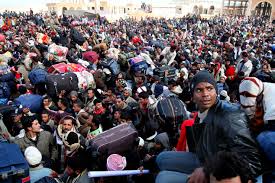
European politicians have expressed concerns that Islamic State (formerly ISIS/ISIL) militants could be infiltrating EU borders under the guise of refugees. Hungarian media reports that at least two ISIS militants were uncovered after entering an unspecified European country as refugees.

The identification of the extremist fighters was made possible after the two revealed their identities by posting photographs on social media, Hungary’s M1 television reported Tuesday.

“Islamist terrorists, disguised as refugees, have showed up in Europe. [The] pictures were uploaded on various social networks to show that terrorists are now present in most European cities. Many, who are now illegal immigrants, fought alongside Islamic State before,” the report said.

The Hungarian channel showed photographs from the alleged terrorists’ Facebook pages. The first set depicted two individuals with weapons in the Middle East and the second set showed them smiling as they arrived in Europe.

It is still not clear which country the two suspects were discovered – some suggested they made it as far as Germany – or if they have been arrested. No names have so far been released.

It is, however, convincing that these two individuals have been associated with terrorist groups in the past, a co-director of humanitarian organization Pressenza, Tony Robinson, told RT.

Some politicians have said that Islamic State might be winning if people are abandoning their homes in Iraq or Syria. French Foreign Minister Laurent Fabius said: “It’s very difficult, but if all these refugees come to Europe or elsewhere, then Islamic State has won.”

A Middle East expert has expressed similar concerns. “This is a major challenge for Europe, but it’s also giving [Islamic State] the possibility to claim victory, because it has claimed its goal is to get rid of every ethnic religious and cultural diversity from the Middle East. ISIS has stated very clearly that all the region should be under Sunni leadership. And therefore those who won’t convert should leave and they have been pushing a lot of people to leave,” Mansouria Mokhefi, of the French Institute for International Relations, told RT.

As Europe is left overwhelmed by the refugee crisis, the Gulf States have continued to ignore the problem by shutting their borders and refusing to take in asylum seekers.

Since the war in Syria started in 2011, Kuwait has accepted only seven refugees, the United Arab Emirates just 16, and Saudi Arabia only four.

In fact, instead of embracing a solution, Saudi Arabia is putting up a 900-kilometer razor wire fence on its border with Iraq. There are also underground movement sensors being installed, which are capable of triggering silent alarms.

Israel has accepted none.

Source: RT

Weaponizing Migrants

Europeans ought to be demanding Uncle Sam’s head on a silver platter, and those of their own leaders on pikes.

Thanks to 25 years of lunatic U.S. foreign policy initiatives and relentless military aggressions, the steady drip of illegal immigration into Europe from Africa and the Middle East has become a crisis of refugees.

Not only has the U.S. killed and maimed at least a million people and displaced millions more, it has destroyed the property – water, sanitation and transport systems – that support the networks of trade and commerce essential to the survival of developed human communities.

The U.S. has salted great swaths of the Middle East with the desiccated and irradiated debris of war. Disease and contagions lurk in shadows while the agents of violence march in the noonday sun.

On Thursday last, Nicolas Bonnal, writing for the French website Boulevard Voltaire, reported on an Austrian magazine’s scoop – courtesy of leaks from military intelligence stationed in Vienna – that the U.S. government is paying guides and middlemen who bring migrants to Europe across the Mediterranean Sea. The original Info-Direkt article reported that the guides are well-equipped with technology, and are old hands at working Facebook, Twitter and Skype, as were the agents who instigated the Arab Spring.

With the targets of “color revolutions” having caught on to the CIA’s game of sedition, has inducing mass migrations meant to re-jigger the world so as to better serve their global purposes become the very latest weapon in the U.S. neo-cons’ arsenal?

It’s hard to credit the idea that Hillary Clinton, then the U.S. Secretary of State, didn’t understand the consequences of the “responsibility to protect” attack on Libya she and her foreign policy gal pals cooked up around the boiling cauldron that is U.S. foreign policy.

Muammar Gaddafi himself loudly warned both Italy and France, who so unwisely joined in the U.S.-instigated Libyan melee, of the flood of refugees that would come from toppling his gatekeeper government.

But why would a flood of refugees into Europe interest U.S. policymakers?

Possibly because the U.S.’s many attempts to bait Russia into attacking Ukrainian armed forces and thereby scare up increased Nato funding from the alliance’s membership have proved a risible failure. Flooding Europe with “swarms” of refugees just might convince Europeans that there is a useful purpose an expanding Nato presence could fulfill immediately.

Those same U.S. policymakers are actively working to inundate the U.S. with millions of migrants from Mexico and Central America, another imperial playground, on the flimsy basis of a Barack Obama Executive Order. Eager for a youthful, docile, dependent and cheap population of worker bees, the U.S. federal government is now engaged in draining the last wealth of the American middle class for use in settling and supporting many millions of immigrants, whose children will become the future taxpayers and voters the grotesquely obese federal government requires for its own future survival.

At last then, the long-sought weapons of mass destruction have been located. We can see them clearly now: They are Africa’s and the Middle East’s desperate and dispossessed migrants, and Central America’s young and unwitting illegals, of “the free world’s” creation, and they are on the move.

Source: Anne Williamson lewrockwell.com

ISIS set up stronghold in Europe

Security services think the Osve area in Bosnia is used for ISIS training camps and could be a base for devastating terror attacks on the West.

Islamic State have established a stronghold in mainland Europe, a Sunday Mirror investigation reveals.

Terrorists are secretly buying land in an isolated village, surrounded by deep woodland.

Security services think the area in Bosnia is used for ISIS training camps and could be a base for devastating terror attacks on the West.

Crucially, the location gives IS a key strategic position due to its proximity to the Mediterranean which is used by extremists from Syria, Iraq and North Africa.

At least 12 ISIS fighters trained in the village of Osve have left for Syria in recent months and five are reported to be dead.

Terror expert Dzevad Galijasevic said: “From this village a large number of people went to Syria and are going constantly.

“The chosen location of some of the properties is on a hill, where there is no possibility to approach without being seen. It is clear that the source of the terrorist threat is right there. It is a major threat.

“There is no one there who isn’t ready to respond to the summons to jihad.”

We visited the hilltop village 60 miles from Sarajevo and six miles from the town of Maglaj afternoon.

It is not mapped by GPS and is only accessible by steep and winding roads barely wide enough for cars to pass.

Bosnia is an ideal position for jihadis travelling illegally from Syria to Greece, via Turkey, and then through Macedonia and Serbia.

Guns and other weapons are easier to obtain in Bosnia than in other parts of Europe due to illegal ownership following the conflicts of the 1990s.

Five months ago, anti-terror cops raided the village of Gornja Maoca in the north of the country following reports of houses flying the ISIS flag.

The area is home to followers of the strict Sunni Islam Wahhabi movement. It has been raided by police several times over the past decade due to suspected links with radical groups.

Source: Daily Mirror

Tunisia faces massive tourist losses after beach attack

Tunisia expects to lose at least $515-million (R6,3-billion) this year, or about a quarter of its estimated annual tourism earnings, following last Friday’s attack on a beach hotel that killed 39 people, mostly British holidaymakers.

The attack by an ISIS gunman on the Imperial Marhaba beach hotel in the popular resort town of Sousse came just months after militants attacked the Bardo museum in Tunis, killing 21 people, and delivering a blow to the country’s vital tourism industry.

“The attack had a great impact on the economy, the losses will be large,” Tourism Minister Salma Loumi told reporters late on Monday, giving a preliminary estimate from the Sousse attack.

The North African country earned $1,95bn in revenues from tourism last year.

The sector makes up seven percent of its GDP and is a major source of foreign currency and employment for Tunisia.

Loumi said the government planned to end a visitors’ tax and also to review debt relief for hotel operators as ways to help sustain the industry.

The government has said 1,000 more armed tourism police will patrol hotels and tourism sites and the army reserves will also be drafted in to beef up protection.

Authorities have arrested suspects tied to the attacker, but have given few details.

More than 3,000 Tunisians have also left to fight for militant Islamist groups in Syria, Iraq and Libya, and some have threatened to return to carry out attacks in their homeland.

Source: Reuters

Islamic State mints its own coins

Islamic State of Iraq and the Levant (ISIS) has begun minting its own “Islamic dinar” coins, Syrian activists claimed on Tuesday night.

Pictures posted on social media showed a series of gold sovereigns bearing ISIS inscriptions, and with a reported value of one gold dinar being with $139 (£89).

An anti-ISIS activist by the name of Abu Ibrahim Raqqawi, who lives in the ISIS controlled city of Raqqa in Syria, posted photographs of the coins on his Twitter account, saying they were due to come into circulation soon. Pictures were also posted on pro-ISIS social media accounts.

Isil announced last November that it would start producing their own currency in areas under its control, in an effort to “emancipate itself from the satanic global economic system”.

The currency, based on the original dinar coins used during the Caliphate of Uthman in 634 CE, was set to include seven minted coins: two gold, three silver and two copper.

Designs due to be embossed on the gold coins included a symbol of seven wheat stalks – a Quranic reference – and a world map.

The prototype design had also shown that the coins would carry an Arabic message on the lines of “The Islamic State – A caliphate based on the doctrine of the Prophet”.

ISIS has not attacked Israel but has concentrated on Islamic countries instead.

Source: The Telegraph

Battle between ISIS and Taliban heat up

Taliban militants detonated explosives and fired rockets in an attempted attack on the Afghan Parliament as lawmakers were preparing to vote on a new defense minister Monday.

A large car bomb exploded near the outer wall of the parliament compound, sending a thick plume of smoke into the sky. Six Taliban fighters then tried to storm inside, said police spokesman Ebadullah Karimi.

Afghan security forces managed to fend off the attackers, who then moved into nearby building, firing rockets and AK-47 machine guns. All six attackers were killed in the ensuing firefight, Karimi said.

Lawmakers told the Afghan broadcaster Tolo TV that they and their colleagues were meeting when a huge explosion blew out windows in the building and gunshots rang out. Government officials ran out of the building, they said.

The members of parliament had assembled for a general meeting at which a confidence vote on Mohammad Masoom Stanikzai, the government’s nominee for defense minister, was to be held.

Taliban spokesman Zabiullah Mujahid said on his Twitter account that the group chose to target the parliament on the day of the defense minister vote.

Afghanistan is bracing for an upsurge in violence as spring begins with militants associating themselves with Islamic State.

Islamic State fighters have reportedly attacked a Taliban convoy in the country’s eastern Nangarhar province, killing at least 10 militants.

Many researchers believe it is the beginning of a long and violent battle for Afghanistan’s control.

Isis claimed responsibility for a suicide bombing in the eastern city of Jalalabad on Saturday, which appears to be the first major attack in Afghanistan by insurgents aligning themselves with the group which has been wreaking havoc across Syria and Iraq.

Siegfried O. Wolf, a South Asia researcher at the University of Heidelberg, believes the ISIS-Taliban battle could be “extremely dangerous for Afghanistan and Pakistan.”

The Afghan Taliban have sent a letter to Islamic State’s leader urging the rival jihadist group to stop recruiting in Afghanistan, saying there is room for only “one flag, one leadership” in their fight to re-establish strict Islamist rule.

The missive comes amid heavy fighting this week in eastern Afghanistan between the Taliban and breakaway factions who now swear allegiance to Islamic State.

Belgium to revoke passports of ISIS fighters

The Belgian government proposed a law on Friday which will invalidate passports and identity cards of people authorities believe plan to go and fight for militant Islamist organisations in the Middle East.

The measure, which has to be approved by parliament, is a response to Belgium’s position as the source of many foreigners fighting in Syria and Iraq.

Some 300 mostly young men are estimated to have left the country of 11 million inhabitants over the past few years to fight for organisations such as Islamic State, one of the largest per capita contributors in western Europe.

“The new law allows us to make leaving Belgian territory with the intention of engaging in terrorist acts a criminal offence,” Justice Minister Koen Geens said.

Authorities could invalidate identity cards or refuse to issue passports to somebody suspected of wanting to leave for Syria or Iraq to fight, he added.

Similar provisions also exist in other European countries such as Britain and Denmark.

Source: Reuters

Expert warns Syria about to fall into ISIS hands

According to Doctor Natasha Underhill, an expert on terrorism in the Middle East from Nottingham Trent University in the UK, the Islamic State could be on the verge of a breakthrough in Syria.

The lecturer at Nottingham Trent University told Express.co.uk that ISIS militants seized huge phosphate mines depriving the Syrian regime of a desperately-needed revenue source. She added that the latest development puts Syria on the verge of disintegration.

It’s really a power play for Islamic State. The mines are one of the last things Syria could make money from. It will push the state closer towards failure which is now almost inevitable. Syria is at crisis point. It’s already seen as a crisis state. We are just one or two more key events away from failure as we know it. With the situation as it is we could wake up tomorrow and the whole state would have changed.

But Syria will only be the beginning. Dr Underhill said if Syria falls into hands of ISIS it will give the terrorists more legitimacy in the eyes of those in the region and encourage similar Islamic extremist groups to pledge their support, much as Boko Haram has in Africa.

Islamic State has a political strand to their organisation and when it moves into an area sets up local government-type institutions. […] Once ISIS takes over a significant piece of land – and we’ve seen this in Afghanistan where the Taliban took over 90 per cent of the country – then that gives them legitimacy – not in the wider world but in the direct area, which is their target audience. […] While ISIS has shown it is willing to focus on a core area rather than seek to expand at a vast rate, neighbouring Jordan should still be aware of the likelihood of an invasion.

Underhill has unwittingly also highlighted the complete failure of the Clean Break strategy.

Commonly known as the “Clean Break” report [A Clean Break: A New Strategy for Securing the Realm], is a policy document that was prepared in 1996 by a study group led by Richard Perle for Benjamin Netanyahu, Israeli premier.

The report explained a new approach to solving Israel’s security problems in the Middle East, advocating an aggressive new policy including the removal of Saddam Hussein from power in Iraq and the containment of Syria by engaging in proxy warfare and highlighting its possession of “weapons of mass destruction”.

Interpol warns that ISIS is gaining ground

A growing number of extremist groups from Africa to southeast Asia are shifting their allegiance to the Islamic State group, leading to greater risks for “cross-pollination” among conflicts beyond Syria and Iraq, the head of Interpol said Friday.

Juergen Stock cited this shift as an emerging trend at a UN Security Council meeting along with changing travel methods being used by foreign fighters seeking to join groups like the Islamic State and al-Qaeda.

Stock was a keynote speaker at a meeting attended by half a dozen ministers including US Secretary of Homeland Security Jeh Johnson to assess progress in implementing a US-sponsored resolution adopted last September requiring all countries to prevent the recruitment and transport of would-be foreign fighters preparing to join extremist groups.

On Friday, the Security Council adopted a presidential statement calling for a significant increase in border controls, improved cooperation at all levels “including preventing terrorists from exploiting technology, communications and resources.”

Johnson said the United States will be developing a new passenger data-screening and analysis system within the next 12 months which will be made available to the international community at no cost for both commercial and government organizations to use.

In a report obtained by The Associated Press on April 1, the panel of experts monitoring UN sanctions against al-Qaeda said the number of fighters leaving home to join al-Qaeda and the Islamic State group in Iraq, Syria and other countries has spiked to more than 25,000 from over 100 nations. The panel said its analysis indicated the number of “foreign terrorist fighters” worldwide increased by 71 percent between mid-2014 and March 2015.

Source: AP

Ilana Mercer: Ask Bush Why The Iraqi Military Won’t Fight

It’s quite a surprise that John McCain did not rise on his hind legs when he got wind of what U.S. Defense Secretary Ashton Carter had said on the Memorial Day week-end. It was just the thing to make the War Party irate–even more so than the Iraqi prime minister was. (Who is he these days? Ah: Haider al-AbadiIt.)

Defense Secretary Carter’s quip was a no-brainer, really. Observations such as his were routine when Bush 43 began swinging the wrecking ball in Iraq. The War Party line, however, is to continue duping its ditto-heads into believing that the sorry state of Iraq began with Bush’s successor, President Barack Obama.

Said Carter: “The rout of Iraqi forces at the city of Ramadi showed they lacked the will to fight against the Islamic State. … They chose to withdraw. … What apparently happened is the Iraqi forces just showed no will to fight. … They were not outnumbered. In fact, they vastly outnumbered the opposing force. We can give them training, we can give them equipment – we obviously can’t give them the will to fight.”

ISIS captured Ramadi, the capital of the Anbar province, in early May.

The ineptness of the reconstituted Iraqi Army is nothing new. In 2006, then-Sen. Hillary Clinton demanded to know when the “Iraqi government and the Iraqi Army would step up to the task.” “I have heard over and over again, that the government must do this, the Iraqi Army must do that,” griped Clinton to Gen. John P. Abizaid, then top American military commander in the Middle East. “Can you offer us more than the hope that the Iraqi government and the Iraqi Army will step up to the task?”

Indeed, the War Party is in the habit of thrashing about in an ahistorical void—or creating its own reality, as warbot Karl Rove, George Bush’s muse, is notorious for saying. The neoconservative creed as disgorged by Rove deserves repeating:

“We’re an empire now, and when we act, we create our own reality. And while you’re studying that reality—judiciously, as you will—we’ll act again, creating other new realities, which you can study too, and that’s how things will sort out. We’re history’s actors … and you, all of you, will be left to just study what we do.”

The lowly “you” Rove reserved for “the reality-based community” (guilty).

Curiously, a military that has done nothing but flee before the opposition ever since the Americans commandeered Iraq, had fought and won a protracted war against Iran, under Saddam Hussein. The thing we currently call the Iraqi military has been unable and unwilling to fight the wars America commands it to fight.

Why?

For one, Bush’s envoy to Iraq, Paul Bremer, made the decision to dissolve the Iraqi Army and civil service, early in 2003, with the blessing of Bush at whose pleasure Bremer served. Bush’s minions viewed the dissolution of the Iraqi Army as part of the “De-Ba’thification” process.

Not the least of the difficulties, as DEBKAfile has observed, is that many in the Arab world see the battle with the Islamic State “not as an Arab but as a U.S.-European war. This line resonates widely in the other Arab countries aligned with the coalition.” It goes a long way in explaining the lackluster participation of the Emiratis, Saudi Arabia and Bahrain in the coalition against ISIS. In fact, the involvement by Amman turned out to be more symbolic than substantive, too.

Having grown up in Israel, I confess to harboring a bias about the mettle of the Arab fighting force, raised as I was on images of army boots piled up high in the Sinai desert, where in 1967, Egyptians (who had actually fought bravely) shed those shoes and fled before the IDF (Israel Defense Forces). Al-Qaida and ISIS reversed these biases; they’re fierce, disciplined fighters. Ditto the Iranian Revolutionary Guard, now leading the Shiite militias in the battle against ISIS.

Yes, let the locals take out their trash. Let regional players take care of ISIS. Army Gen. Martin Dempsey, chairman of the Joint Chiefs of Staff, seemed to second the sentiment. He thinks Iran’s involvement “could turn out to be ‘a positive thing.’”

But not if Chucky Krauthammer can help it. The influential neoconservative commentator was decidedly unhappy about Jordan’s initial and fleeting enthusiasm for the battle. The consensus in the U.S., as reflected by Chucky, is that only Muslims approved by the world superpower (the U.S.) and the region’s superpower (Israel) are fit to fight ISIS.

Another dynamic is at play in the region besides the Sunni-Shia divide. It is that between the forces of centralization and the forces of decentralization. As a rule, the U.S. sides with the former; the Arab people with whom we meddle generally side with the latter. Given the tribal, familial focus of their societies; Arabs are unlikely to abandon their particularism in favor of American statism.

Take the Houthi rebels of Yemen. Like the Kurds of Iraq, they are demanding greater regional autonomy. Alas, the U.S. is looking to empower another puppet central power like former Yemeni president Abed Rabbo Mansour Hadi, the better to lord it over its Yemeni client state. And never mind that the Houthis are fighting against al Qaeda in the Arabian Peninsula, whom we revile as well.

In the words of Sir Walter Scott, “Oh what a tangled web we weave when first we practice to deceive.”

**
Ilana Mercer is a paleolibertarian writer, based in the U.S. She is a fellow at the Jerusalem Institute for Market Studies. Her latest book is “Into the Cannibal’s Pot: Lessons For America From Post-Apartheid South Africa.” Her website is www.IlanaMercer.com. Follow her on Twitter. “Friend” her on Facebook.

Jordanians support ISIS

In a recent survey conducted by AlJazeera.net, the website for the Al Jazeera Arabic television channel, respondents overwhelmingly support the Islamic State, with 81% voting “YES” on whether they approved of ISIS’s conquests in the region.

The poll, which asked in Arabic, “Do you support the organizing victories of the Islamic State in Iraq and Syria (ISIS)?” has generated over 38,000 responses thus far, with only 19% of respondents voting “NO” to supporting ISIS.

ISIS pose a direct threat to the “entire civilised world”, the Queen of Jordan has declared, as she urged Muslims around the world to rise up against the group.

She urged people to ignore the “clash of civilizations”. Queen Rania said the war against ISIS must happen with the support of Britain and other allies in the Western world.

She spoke to leftist journalists earlier and said that ISIS threatened the One World ideology because it was “medieval”. She said all “modern” people should unite against the scourge.

Even as Jordan launched intense airstrikes against the Islamic State to avenge the extremist group for burning to death a captured Jordanian fighter pilot, the militants enjoy large support in the kingdom.

ISIS takes over UNESCO landmark

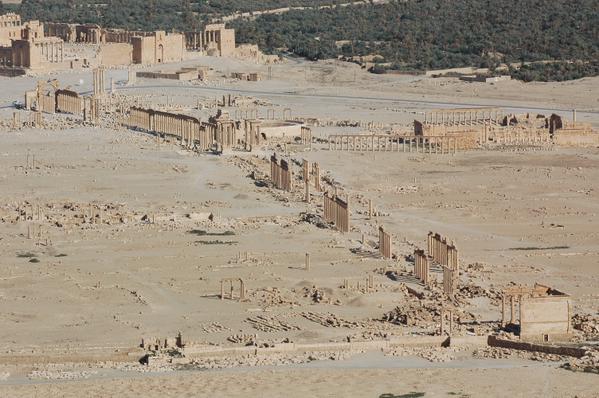
Islamic State militants have entered Syria’s historic city of Palmyra, a UNESCO landmark, after gaining full control over the city, a monitoring group said Thursday. The extremists now control more than 50 percent of Syrian territory, it adds.

The Syrian Observatory for Human Rights told AFP that overnight IS seized most of the city, including an army intelligence outpost, a military airport and a prison.

“IS fighters are in all parts of Tadmur [Arabic name for Palmyra], including near the archaeological site,” Observatory head Rami Abdel Rahman said.

The militants confirmed on Twitter that they gained full control over the ancient city, Reuters reported.

The remains of Palmyra, once one of the world’s key cultural hubs, stand in the middle of the desolate Tadmorean Desert in Syria.

The monitoring group says that this is the first time the jihadists have taken a large population center directly from Syrian pro-government forces. The group is already controlling wide areas in Syria’s north and east.

Many fear that after falling into jihadists’ hands, Palmyra would suffer a fate of the ancient Assyrian city of Nimrud, Iraq, which they devastated earlier this year.

Syrian state TV said pro-government fighters had withdrawn from the city.

On Wednesday hundreds of statues were moved from the city to locations safe from IS militants, Syria’s Director of Antiquities Maamoun Abdulkarim told Reuters.

“Hundreds and hundreds of statues we were worried would be smashed and sold are all now in safe places,” Abdulkarim said. “The fear is for the museum and the large monuments that cannot be moved,” Abdulkarim added. “This is the entire world’s battle.”

ISIS takes provincial capital of Iraq

Iraqi forces have retreated from a compound they used as a command center in Ramadi, losing control of Aden’s provincial capital to Islamic State militants, despite substantial US airstrike support helping Iraqi troops and loyal militia hold the city.

“Ramadi has fallen,”said Muhannad Haimour, a spokesman for the governor of Anbar province. “The city was completely taken. … The military is fleeing.”The spokesman added that at least 500 people were killed in the jihadist offensive.

The militants claimed their full control of the city after squashing last major pocket of resistance from tribal and government forces.

“God has enabled the soldiers of the caliphate to cleanse all of Ramadi… after storming the 8th brigade. They (now) control it along with a battalion of tanks and missile launchers and in addition to the Anbar operations command,” the Islamic State (IS, formerly ISIS) statement said. The group also said it had seized tanks and killed dozens Iraqi security forces.

The final ISIS offensive that drove out government forces and tribal militias began early Sunday. Militants focused their attack on police officers defending the Malaab district in southern Ramadi by simultaneous bombings. Another three suicide bombers stormed the gate of the military headquarters to take control of the Anbar Operation Command.

Jihadis “pushed into the Ramadi military command headquarters after a fierce fight. The whole city is under their control,” Ahmed al-Dulaimi, a tribal leader told Bloomberg via phone.

Local security officials told AP that the militants already carried out mass killings of Iraqi security forces and civilians. Sunni tribal leader, Naeem al-Gauoud, said that bodies litter the streets in Ramadi, while others are thrown in the river.

The Pentagon refused to immediately admit Ramadi had fallen, with Defense Department spokeswoman Maureen Schumann saying it was “too early to make definitive statements about the situation on the ground.” She said the United States was “continuing to monitor reports of tough fighting in Ramadi and the situation remains fluid and contested.”

The Islamic State indeed has military advantage in Ramadi, the Pentagon confirmed, warning that the city falling into the hands of jihadists would be a great propaganda boost for them. But in the worst case, official said according to Reuters, the US-led coalition would support Iraqi army in taking the city back “later.”

Israel tells Africans to leave or face prison

Israel is telling black Africans they must leave now or face an indefinite stay in prison.

Israeli authorities are sending letters to the first of 45,000 Eritrean and Sudanese refugees, informing them they have 30 days to accept Israel’s offer of $3,500 in cash and a one-way ticket home or to an unnamed third country in Africa, or face incarceration at Saharonim prison.

Israeli leaders have proclaimed that their tough approach — building a fence along its border, denying work permits for illegal migrants, forcing them into a detention center in the desert — may ultimately save lives by dissuading migrants from attempting a perilous journey. Critics of the Israeli policy counter that a country built by refugees should be more accepting of those fleeing war, poverty and oppression.

But these days, even liberal Europe is considering a more muscular approach. The European Union began a push Monday for U.N. authorization to deploy military force in the Mediterranean to stop migrant smuggling ships.

The new measures to press the Africans to leave Israel comes at a time of heightened fears among the refugees, who were stunned last month by a widely circulated video allegedly showing three Eritreans who left Israel killed by Islamic State militants in Libya. Friends and relatives said they had traveled there in a bid to reach Europe.

“We saw the video, but we thought maybe it wasn’t true, maybe it was just a hoax,” said Aman Beyene, an Eritrean asylum seeker who has spent 14 months at an Israeli detention center.

“Then we spoke to an Eritrean boy who had witnessed the killings, and we knew it was true,” Beyene said.

The 38-year-old Eritrean accountant sat at a picnic table in the dirt parking lot of the Holot detention facility, a compound of single-story cement-block dormitories housing 2,000 Africans, surrounded by a fence spooled with razor wire in the Negev desert.

Beyene spoke slowly as he recalled watching the video showing a man thought to be his friend Tesfay Kidane, 29, dressed in an orange jumpsuit beheaded on a beach in Libya by Muslim extremists. He said Kidane felt despondent being cooped at the Holot facility, so he accepted the Israelis’ offer to be flown to a third country — likely Uganda or Rwanda — and from there made his way to Libya, where he was kidnapped by the Islamic State.

Though the detainees at Holot are free to leave the compound during the day, the nearest city is an hour’s bus ride away and the men are forbidden to work. If they fail to return by nightfall, they are sent to a prison across the street.

Interviews with Eritreans and Sudanese at Holot suggest that many are still dreaming of reaching Europe through the chaos of Libya — despite knowing that more than 1,800 Africans have drowned in the Mediterranean Sea this year and others have been taken captive by the Islamic State.

“Being beheaded by ISIS or sinking on a boat is scary,” said Mutasim Ali, 28, who arrived in Israel in 2009 from the Darfur region in Sudan and has spent the past year detained in the detention center. “But you can’t really stay here, wasting your life, doing nothing.”

He pointed to the men like him who spend their days milling about in circles, staring at their mobile phones, waiting for the next meal.

Before Israel began cracking down on African migrants a few years ago, the Africans were highly visible in bustling cities, working in kitchens and doing menial labor. There are still neighborhoods in south Tel Aviv filled with Africans. Many Israelis complained they were being “invaded.”

Source: Washington Post