Who is twitter-luring refugees to Germany?

Content-analysis of a great number of tweets that triggered the ongoing wave of migration from Turkey to Germany since August this year suggests that these human streams were inspired and channeled from outside of the continental Europe.

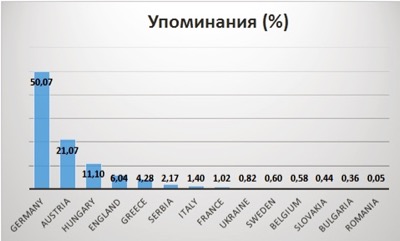
According to Vladimir Shalak from the Russian Academy of Science who developed the Internet Content-Analysis System for Twitter (Scai4Twi), his study of over 19000 refugees-related original tweets (retweets discounted) demonstrates that the vast majority of them mention Germany and Austria as the most refugee-welcoming countries in Europe:

Importantly, 93% of all tweets dedicated to Germany contained positive references to German hospitality and its refugee policy:

• Germany Yes! Leftists spray a graffiti on a train sayin “Welcome, refugees” in Arabic
• Lovely people – video of Germans welcoming Syrian refugees to their community
• Respect! Football fans saying “Welcome Refugees” across stadiums in Germany. _ • This Arabic Graffiti train is running in Dresden welcoming refugees: (ahlan wa sahlan – a warm welcome).
• ‘We love Germany!,’ cry relieved refugees at Munich railway station
• Thousands welcome refugees to Germany – Sky News Australia
• Wherever this German town is that welcomed a coach of Syrian refugees with welcome signs and flowers.

Analysis of 5704 original tweets containing #RefugeesWelcome” hashtag and a country name lead to even larger gap between Germany and the rest of Europe.

Only 6,4% of all tweets with “#RefugeesWelcome”+Germany came from Germany itself. Almost half of them were originated from UK, USA and Australia! Remote planetmates are thus inviting guests to visit your home without inquiring your opinion beforehand!

On Aug 27 forty automatic netbots @changing_news, @changing_news1,…, @changing_news39 from the United States simultaneously issued the following tweet at 8:00:33AM:

«A new welcome: Activists launch home placement service for refugees in Germany and Austria #News #Change #Help»

On Sept 1 the same group of netbots releases same tweets with caps on at 22:30:37:

«A New Welcome: Activists Launch Home Placement Service For Refugees In Germany And Austria #News #Change #Help»

On August 29 at 11.02PMa group of 80 netbots posts the following:

«Thousands Welcome Refugees to Germany at Dresden Rally: Thousands of people took to the streets of the German city of Dresden on Satu…»

Another group of fifty netbots from Australia (all created on Feb 14, 2014 between 06:02:00 до 06:24:00AM) publish a post on Aug 31 at 17:26:08:

«#hot Football Fans in Germany Unite with ‘Refugees Welcome’ Message #prebreak #best»

On Sept 1 at 07:29AM 95 netbots owned by Media for Social and Cultural Impact, Dallas, Texas, USA publish the following tweets:

«German Soccer Fans Welcome Refugees Amid Ongoing Crisis: As Europe faces the challenge of a wave of migration…»

Needless to say that every original tweet was multiplied in dozens of copies and spreaded Twitter-wide.

Andrey Fomin

Source: Oriental Review (Russia)
EU approves migrant quota plan despite massive opposition

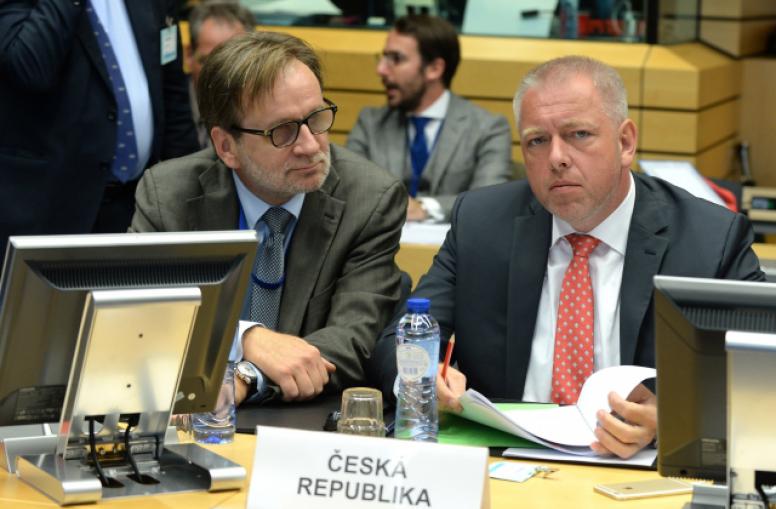
EU interior ministers have approved a relocation plan on distributing 120,000 refugees among member states. The Czech Republic, Romania, Slovakia, and Hungary, voted against it, while Finland abstained.

Under the plan, refugees will be relocated from Italy, Greece, and Hungary to other countries in the EU.

Prague’s decision did not come as a surprise, as Prime Minister Bohuslav Sobotka said hours before the meeting began that the country would reject any quota system.

He added that any attempt to impose such a scheme could end in “big ridicule for the European Commision” and the governments supporting the plan.

Czech Interior Minister Milan Chovanec expressed his distaste for the plan after the vote, tweeting:”We will soon realise that the emperor has no clothes. Common sense lost today.”

Slovakian Prime Minister Robert Fico said those who decided to push through quotas nonsensically caused a deep rift over a very sensitive issue.

However, under European law, three of the countries that voted against the proposal — the Czech Republic, Romania and Slovakia — would be required to accept migrants against their will, an EU diplomat told The New York Times on condition of anonymity after the vote.

Finland was the only country of the EU’s 28 members to abstain from the vote. Poland, which had previously opposed the proposal, voted in favor of it.

The plan has been criticized by the UN refugee agency (UNHCR), which says it is insufficient.

“A relocation programme alone, at this stage in the crisis, will not be enough to stabilise the situation,” UNHCR spokeswoman Melissa Fleming said, urging the EU to set up reception facilities able to handle tens of thousands of refugees at a time.

The UN estimates that around 480,000 migrants have arrived in Europe this year alone, and are now reaching European shores at a rate of nearly 6,000 a day.

Earlier in the day, German rail operator Deutsche Bahn suspended services to Austria and Hungary until October 4th, citing border controls introduced to manage the record surge of refugees.

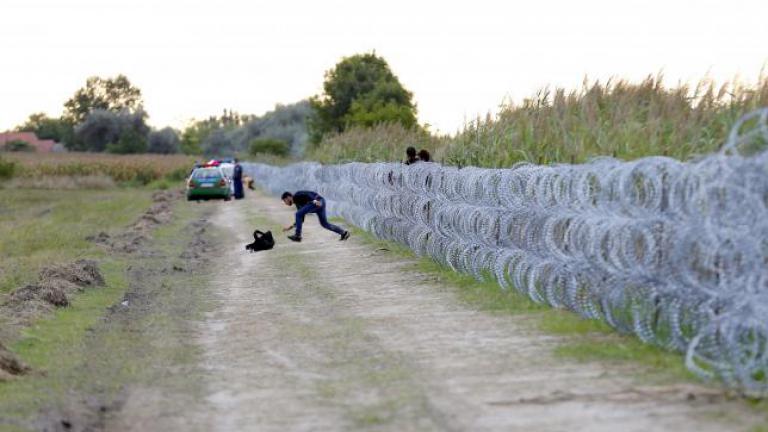
Hungary has come under fire for its construction of a 110 mile fence along its border with Serbia. Budapest is expected to extend that barricade by also building fences along the Croatian and Romanian borders.

Slovakia introduced temporary controls on its borders with Hungary and Austria last week, sending an additional 220 police officers to the area.

Germany and France have been rallying for a quota system for weeks, with German Chancellor Angela Merkel saying earlier this month that such a plan would be a “first step.” She has stressed that all member states should share responsibility.

The Organisation for Economic Co-operation and Development says Europe can expect a record one million people to request asylum this year, almost half of which will likely qualify to be taken in.

Source: RT

EU official denies reponsibility in migrant crisis

The crisis of mass migration of refugees from Africa was not caused by European countries, but by autocratic leaders, a European official said on Tuesday.

Roeland van de Geer, European Union ambassador to South Africa, said the cause of the crisis in North Africa “lies squarely with its own leaders”.

Speaking after a meeting between President Jacob Zuma and the diplomatic corps, he told reporters he believed that this lack of democratic values was driving the multitudes to risk life an limb and life to reach Europe.

“So we lay the responsibility for what is happening in the countries of the Maghreb clearly in the hands of the leaders who were dictators and did not respect democracy,” said Van der Geer.

Earlier on Tuesday, President Jacob Zuma blamed European countries for the Libyan refugee crisis.

Addressing numerous ambassadors and high commissioners in Pretoria, Zuma said European countries had ignored the African Union’s proposal for peaceful intervention in Libya, destabilising the country, and should therefore welcome refugees from the north African country.

“What has happened? The consistent, systematic bombing by NATO forces undermined the security and caused conflicts that are continuing in Libya and neighbouring countries. That is why we have this problem (of refugees). It has not just popped up from nowhere,” Zuma said at the Sefako Makgatho Presidential Guesthouse in Pretoria.

Zuma said African countries were ignored when they repeatedly proposed an alternative road map to the “destabilisation” of Libya.

“Today, those who were part of destabilising that part of the world don’t want to accept the refugees. It is their responsibility. They caused it and they must now address it. That is of absolute importance. It is the painful truth,” said Zuma.

He said South Africa was ready to assist Libya in post-conflict reconstruction and development projects. The southern African economic powerhouse also offered to help Libya with reconciliation efforts, and to formulate a Constitution for Libya.

Libya’s long time leader Muammar Gaddafi died in October 2011 during the Battle of Sirte. He was captured by National Transitional Council forces after he had been hiding in a culvert. He was killed shortly after his capture.

On Tuesday, Zuma claimed that before the 2011 Arab Spring, and the killing of Gaddafi, there were no refugees in the northern part of Africa.

“It was all quiet. Things were normal in the north of Africa. It was the action taken, the bombarding of Libya, and the killing of its leader, that opened the floodgates, firstly for serious tensions within Libya.

“The beginning of the refugee (crisis), at least from the African side, was triggered by that undermining of the security situation. As people grapple with the problem of refugees, we forget easily, we might think Africa suddenly has a problem where refugees are flooding Europe,” said Zuma.

Commenting on the Syrian crisis, Zuma said European countries should not shut down their doors to the multitudes of refugees.

“It took the painful drowning of a four-year-old Syrian child to shake the world into action. Attempts to shut the borders by some European countries will not assist the situation,” said Zuma.

He said the international community must not support external military interference “or any action in Syria” that is not in line with United Nations’ charters.

“As immediate relief for the refugees, we call on our European Union partners as well as Syria’s regional neighbours to assist the Syrian refugees, in full accordance and compliance with all Human Rights and Humanitarian laws,” said Zuma.

“We pledge our support to the EU as it grapples with this challenging situation.”

Source: ANA

Facebook pledges to combat German racism

Facebook pledged Monday to combat racist hate speech on its German-language network amid an upsurge in xenophobic comments online as Germany faces an unprecedented influx of refugees.

The US social media network said it would encourage “counter speech” and step up monitoring of anti-foreigner commentary, as company representatives were due to meet German Justice Minister Heiko Maas later Monday.

Facebook said it would work with other organisations in Germany “to develop appropriate solutions to counter xenophobia and racism and to represent this online”.

It also urged users to report offensive postings and announced a partnership with the group Voluntary Self-Monitoring of Multimedia Service Providers (FSM).

As Germany faces a record influx of refugees and a backlash from the far right, social media such as Facebook have seen an upsurge of xenophobic commentary.

Opposition Greens party co-chief Katrin Goering-Eckardt several days ago read out in a YouTube clip a litany of verbal attacks that had been posted on her Facebook page, and urged the company to “finally ensure that such hatred and filth” is deleted.

She said freedom of expression is important but “has its limits when it comes to agitation to commit violence, or sickening hate speech”.

Many users say that when they complain to Facebook about offensive posts, the network often responds that after a review the post does not violate its community standards.

Users also accuse the company of double standards for cracking down swifter and harder on nudity and sexual content than on hate-mongering.

Maas said Facebook was required to delete posts in violation of German laws against incitement of racial hatred.

In his invitation to company executives he said he wanted to talk about “improving the effectiveness and transparency of your community standards”.

Facebook said it was “convinced that social media can be used effectively to discuss and question views such as xenophobia”.

Weeks ago Germany’s most popular film star, Til Schweiger, blasted fans who left dozens of anti-immigrant comments on his Facebook page after he appealed for donations for a “refugee charity”.

And a German TV journalist’s impassioned appeal last month for an “uprising of decent people against racism and attacks on asylum-seekers” was viewed more than five million times via Facebook alone within 48 hours, drawing an outpouring of both support and scorn.

Facebook said in April it would not allow the social network to be used to promote hate speech or terrorism as it unveiled a wide-ranging update of its global community standards.

Source: AFP

Finland to tax rich to pay for refugees

Finland’s government on Thursday proposed increasing capital gains tax and income tax on high earners to help pay for a 10-fold increase in refugees expected to arrive this year, its finance minister said.

The EU migrant crisis proposes a political as well as a financial challenge for the coalition, whose foreign minister, Timo Soini, heads the Eurosceptic party, The Finns, which campaigned for tighter controls on immigration.

Finance Minister Alexander Stubb said the highest bracket of capital gains tax would be raised by 1 percentage point while people earning more than 72,300 euros ($81,000) would be required to pay a so-called solidarity tax for two years, lowering the threshold from 90,000 euros.

“These will help to cover higher immigration costs which we estimate to be about 114 million euros this year,” Stubb told a news conference.

The centre-right coalition, which took office in May, is struggling to cut government spending quickly in a shrinking economy where unemployment is on the rise.

Finland last week doubled its estimate for the number of asylum seekers expected this year to up to 30,000, compared with just 3,600 last year.

The government agreed before the summer that any EU plan to apportion asylum seekers among EU states should be voluntary. Nevertheless, its interior minister, from the pro-EU National Coalition party, agreed in July to take about 800 refugees from among those who had arrived in Greece and Italy.

The government is due to decide on Friday on how to respond to a new EU quota proposal.

The tax proposals may also be aimed to counter accusations that the poor and middle class have been hit worst by government policies. The government also announced that members of parliament would be required to take a week’s unpaid holiday and all ministers would forgo a week’s pay.

Finland’s economy is shrinking for a fourth year in a row due to weak demand from European and Russian markets and problems affecting its main export industries, including technology.

Source: Reuters

Hungarian army prepares for border defence

The Hungarian army has started military drills to prepare its soldiers for service at the southern border amid the unfolding refugee crisis, Chief of Staff General Tibor Benko said, according to MTI news agency.

Hungary’s Prime Minister Viktor Orban said legislation to deploy the army could not be passed before the end of September, although actions to increase the speed of a border fence should be expected.

“Everyone has to get ready to do intensive work in the coming weeks,” Orban told a Hungarian newspaper, reported AFP news agency.

Soldiers joined by police will be charged with to bringing the border, which is currently crossed daily by thousands of refugees and migrants from Serbia, under control.

The exercise comes amid record numbers of migrants and refugees crossing into the central European country in a bid to enter the EU and declare asylum. Many of them are fleeing war-torn countries in the Middle East, Africa and Asia, and heading for Germany via Austria.

Hundreds of migrants broke through police lines in Hungary near the Serbian border Wednesday for a third day running, as the army began mobilising.

The break-out involving at least 400 migrants took place near the flashpoint town of Roszke, where migrants have to wait at a collection point before being taken to a nearby centre for registration.

Shouting “No camp!” they scattered in all directions, some heading for a nearby motorway leading to Budapest, which police then temporarily closed down.

Meanwhile, Hungary’s response to the refugee crisis has been criticized by human rights watchdogs, including Human Rights Watch and Amnesty International.

‘Syrian refugees’ have discarded Pakistani, Bangladeshi ID’s

Muslim “refugees” in Budapest chanted “Allahu Akbar” and “f**k you” while others in Italy attacked an old lady and threw feces at bystanders as Germany announced that it would be prepared to take 500,000 asylum seekers every year.

Although mainstream media coverage of the migrant crisis has focused on happy families and children, footage not broadcast by TV networks shows a different side to some of those crossing into Europe.

A video shot just outside Budapest’s Keleti railway station shows Muslim migrants chanting “Allahu Akbar” and “f**k you” as they engage in running battles with police.

Meanwhile, an eyewitness at the Italy-Austrian border relates how she saw an elderly Italian woman grabbed by her hair and pulled from her car by a group of “aggressive young men” who wanted to steal the car to get to Germany, while others threw excrement at bystanders.

“Half an hour ago on the border between Italy and Austria i saw a huge crowd of immigrants. With all solidarity to people in difficult circumstances I have to say that what I saw arouses horror. This huge mass of people – sorry – but it’s an absolute wilderness … Vulgar, throwing bottles, shouting “We want Germany”. So what, Germany is now a paradise?”

“I saw an elderly Italian woman in a car that was surrounded by the immigrants. They pulled her by the hair out of the car and wanted to use it to go to Germany. They tried to topple the bus I was in. They threw feces at us, banging on the door for the driver to open it, spat on the glass. My question is- for what purpose? How do they want to assimilate in Germany? For a moment, i felt like in a warzone. I really feel sorry for these people, but if they would reach Poland – I do not think they would receive any understanding from us.”

Footage taken at a migrant camp near Milan shows refugees rioting over “poor living conditions”.

The wave of migrants crossing into Europe shows little sign of abating, with Germany announcing that it would be willing to take 500,000 “asylum seekers” every single year in addition to the 800,000 expected to arrive before the end of this year.

Many of the so-called “refugees” are actually economic migrants who are fleeing to a higher standard of living, and not from war or ISIS persecution.

“If Europe does not seal its borders, what is to stop the Islamic world and Third World from coming and repopulating the continent with their own kind, as the shrinking native populations of Europe die out?” writes Pat Buchanan in his new column.

Source: Infowars

Hungary uncovers two Islamic State terrorists posing as ‘refugees’

European politicians have expressed concerns that Islamic State (formerly ISIS/ISIL) militants could be infiltrating EU borders under the guise of refugees. Hungarian media reports that at least two ISIS militants were uncovered after entering an unspecified European country as refugees.

The identification of the extremist fighters was made possible after the two revealed their identities by posting photographs on social media, Hungary’s M1 television reported Tuesday.

“Islamist terrorists, disguised as refugees, have showed up in Europe. [The] pictures were uploaded on various social networks to show that terrorists are now present in most European cities. Many, who are now illegal immigrants, fought alongside Islamic State before,” the report said.

The Hungarian channel showed photographs from the alleged terrorists’ Facebook pages. The first set depicted two individuals with weapons in the Middle East and the second set showed them smiling as they arrived in Europe.

It is still not clear which country the two suspects were discovered – some suggested they made it as far as Germany – or if they have been arrested. No names have so far been released.

It is, however, convincing that these two individuals have been associated with terrorist groups in the past, a co-director of humanitarian organization Pressenza, Tony Robinson, told RT.

Some politicians have said that Islamic State might be winning if people are abandoning their homes in Iraq or Syria. French Foreign Minister Laurent Fabius said: “It’s very difficult, but if all these refugees come to Europe or elsewhere, then Islamic State has won.”

A Middle East expert has expressed similar concerns. “This is a major challenge for Europe, but it’s also giving [Islamic State] the possibility to claim victory, because it has claimed its goal is to get rid of every ethnic religious and cultural diversity from the Middle East. ISIS has stated very clearly that all the region should be under Sunni leadership. And therefore those who won’t convert should leave and they have been pushing a lot of people to leave,” Mansouria Mokhefi, of the French Institute for International Relations, told RT.

As Europe is left overwhelmed by the refugee crisis, the Gulf States have continued to ignore the problem by shutting their borders and refusing to take in asylum seekers.

Since the war in Syria started in 2011, Kuwait has accepted only seven refugees, the United Arab Emirates just 16, and Saudi Arabia only four.

In fact, instead of embracing a solution, Saudi Arabia is putting up a 900-kilometer razor wire fence on its border with Iraq. There are also underground movement sensors being installed, which are capable of triggering silent alarms.

Israel has accepted none.

Source: RT

‘We face an Armageddon scenario with migrants’

The General Secretary for Danish Refugee Help, Andreas Kamm, used to be a politically correct pro-multiculturalist. But he has had a change of mind, and is not even sure if we can save our societies.

From Jyllands Posten:

The number of refugees and migrants heading towards Europe is historically high. The political institutions that are in charge of handling refugee flows are collapsing. The solidarity within the EU and international conventions are under increasing pressure.

We are therefore heading towards a greater collapse, concludes Danish Refugee Council’s longstanding Secretary General Andreas Kamm. …

“We are risking that conflicts between refugees and migrants on the one side and local populations on the other goes awry and will escalate, and in my eyes, we face an Armageddon scenario.”

He estimates that the current pressure from streams of refugees constitutes a “permanent” challenge that will not go away, and recommends the development of new tools that can address and solve the problems.

But the answer is not that “Europe should import the world’s surplus populations,” Kamm said.

“We are not obliged to destroy our own society. We must stop before that if we possibly can,” he says.

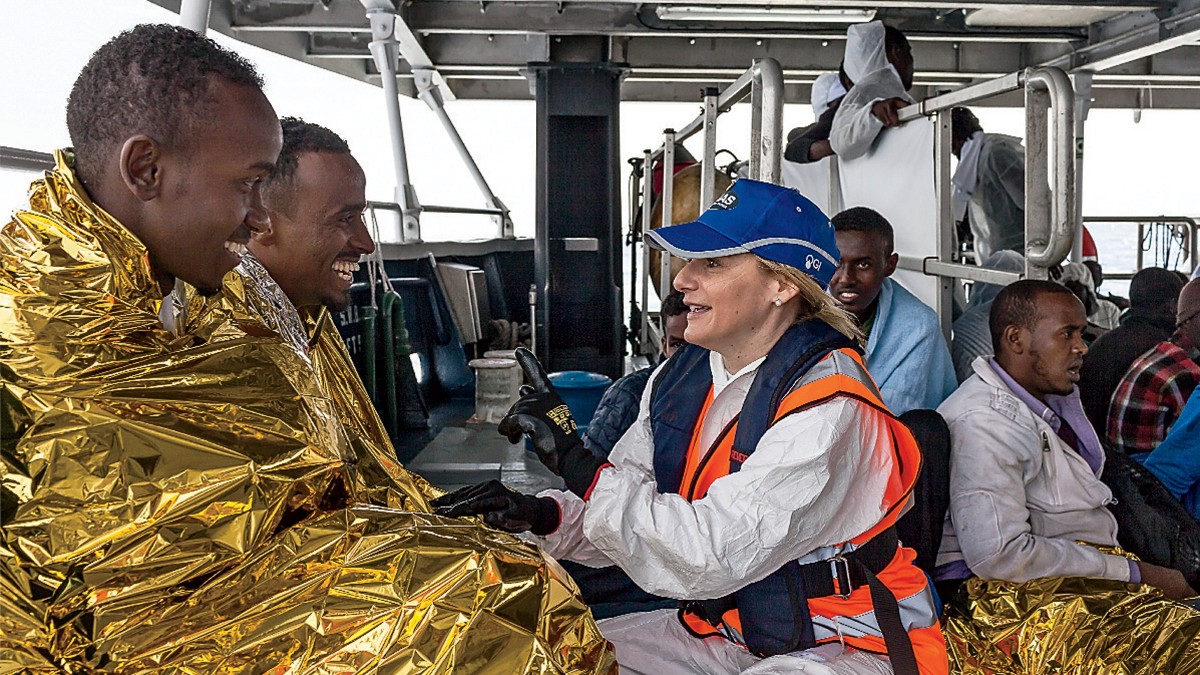
Meanwhile American volunteers aid the migrants. MOAS (the Migrant Offshore Aid Station) is a foundation helping Africans to come to Europe, based in Malta.

It is dedicated to “preventing loss of life at sea by providing assistance to migrants”. MOAS is funded by the son of an American oil engineer from Lake Charles, Louisiana, one Christopher Catrambone.

Ground Zero for migrants errupts in chaos

Keleti train station in Budapest, which has emerged as ground zero in Europe’s spiraling migration crisis, temporarily shut down its services on Tuesday under the strain of an influx of migrants trying to travel to Germany from Hungary.

Emphasizing the sense of confusion across Europe, Austria’s interior minister, Johanna Mikl-Leitner, called on Germany, the preferred destination for many of the migrants, to clarify its stance on asylum rules.

Rows of riot police officers wearing red caps tried to contain the migrants in Budapest, and the migrants erupted in protest after the station stopped allowing them to board trains. Instead, they were allowed into the courtyard of the station, which has been transformed into a makeshift camp.

The migrants, who had been gathered since 5 a.m. in the hopes of boarding a train, chanted: “Go free! Go free! Go free!” Later, they shouted, “Merkel, Merkel,” referring to Angela Merkel, the German chancellor, whose country is expected to receive 800,000 asylum seekers this year.

Train services at Keleti were restored shortly after 10 a.m., and no migrants were being allowed back into the station.

The scenes of confusion and despair at Keleti underlined the challenges facing Europe as tens of thousands of migrants, buffeted by civil war and conflict in the Middle East and Syria, are trying to make the perilous journey to Europe, only to be confronted with a patchwork of policies across a 28-member bloc that is ill equipped to deal with the surge.

In the last five days, the number of migrants trying to leave from the Budapest station has grown to 2,000 a day from about 800.

The chaotic scenes at the station came as Austria asked Germany to provide guidance about how to handle asylum seekers.

The cold reception migrants received in Budapest was a marked contrast to the one in Munich, where the police said on Tuesday that about 2,500 people had arrived on trains from Budapest, via Vienna, in the span of 24 hours. Hundreds more continued to arrive early Tuesday.

Streets around the city’s central train station were blocked off to allow the authorities to organize the migrants and bring them to the city’s refugee processing centers, where they were to be registered and begin the process of applying for asylum.

Matching the flood of people was a flow of donations of drinks, food and baby necessities from Munich residents. “There is no end to the willingness of people to help — Great!” the police said on Twitter.

In Hungary, the center-right government, under pressure from a far-right anti-immigrant party with a sizable voice in Parliament, has itself aired some of the most strident anti-immigrant speech on the Continent.

Source: NYT

Merkel booed at refugee centre

Angela Merkel has vowed “no tolerance” for violent anti-migrant protests that have gripped Germany in recent weeks.

The German chancellor called on her countrymen to make a stand against the “shameful and disgusting” protests on Wednesday, as she visited a migrant shelter that has been the scene of some of the worst violence.

“There is no tolerance for those people who question the dignity of others, there is no tolerance for those who are not willing to help where legal and human help is required,” Mrs Merkel said.

“The more people who make this clear, the stronger we shall be.”

But Mrs Merkel was booed and denounced as a “traitor” by rightwing protesters as she visited the government migrant shelter in the small town of Heidenau, outside Dresden.

More than 30 police officers were injured in three nights of running battles with protesters trying to stop asylum-seekers from entering the shelter over the weekend.

“Germany will help where help is needed. This will require still more strength,” Mrs Merkel said.

“We cannot operate as if we were in a normal situation. We shall succeed only if we break new ground together.”

Germany takes in by far the most asylum-seekers of any EU state, and expects to host 800,000 this year.

The country recently stopped deporting Syrian refugees under EU rules that require them to claim asylum in the first country they reach, and started accepting their claims itself.

But the record numbers have seen an outbreak of violent protests from the far-Right, and Mrs Merkel has been under increasing pressure to take a stand on the issue.

Meanwhile British premier David Cameron has called migrants “swarms of people” linked to organised crime in an interview with ITV.

Source: The Telegraph/ITV

Migrant flood breaks new record in June

A record 107,500 migrants crossed the European Union’s borders last month, according to new figures, showing they are arriving in dramatically increasing numbers and creating a humanitarian crisis for the 28-nation bloc.

EU border agency Frontex reported that its latest figures far outstripped the previous monthly record in June of 70,000.

During the first seven months of the year, there were nearly 340,000 migrants, up from 123,500 during the same period last year, Frontex said.

“This is an emergency situation for Europe that requires all EU member states to step in to support the national authorities who are taking on a massive number of migrants at its borders,” Frontex director Fabrice Leggeri said in a statement.

Germany alone expects as many as 750,000 refugees to seek asylum there this year, according to media reports.

The UN refugee agency said in the last week alone, 20,843 migrants — virtually all of them fleeing war and persecution in Syria, Afghanistan and Iraq — arrived in Greece, which has seen around 160,000 migrants land on its shores since January, according to the UN refugee agency.

Germany, as Europe’s economic powerhouse, has become the refugees’ top destination, with one in three who arrived in the EU last year seeking asylum there.

According to a report in the Handelsblatt newspaper, Berlin expects up to three-quarters of a million to apply for asylum in 2015.

UN refugee chief Antonio Guterres called Tuesday for more solidarity among European countries in taking in asylum seekers, insisting it was “unsustainable” for Germany, along with Sweden, to take in the majority of refugees.

France and Britain meanwhile were preparing to sign a deal this week to try to alleviate the migrant crisis in the northern French port of Calais, where thousands of people desperate to get to Britain through the Channel tunnel have gathered.

There is no sign the flood of migrants into Europe will subside.

Some 250,000 migrants have already crossed the Mediterranean this year to Italy and Greece, and the International Organization for Migration said Tuesday it expected that number to pass 300,000 by the end of the year.

The ones who make it to shore are the lucky ones, with 2,440 people having died trying so far this year, according to the UNHCR.

The vast majority of migrants will travel on towards northern Europe.

German journalist wades into mass immigration debate

A German journalist suggested that prosecuting “Facebook rabble-rousers” – that is people who do not agree with mass immigration – while a step in the right direction, was not enough.

Reschke delivered her message just hours after Hans-Georg Maassen, head of the intelligence service, branded a right wing group “dangerous rabble-rousers”.

“These haters have to understand that society will not tolerate this,” she said. “So, if you are not of the opinion that all refugees are freeloaders who should be hunted down, burned or gassed, then you should make it very clearly known. Speak up against it.”

Anja Reschke ended by calling for a public demonstration in favor of “decency,” and told viewers that she was looking forward to “your comments on this commentary.”

She was not disappointed, as more than five million people watched a video of her remarks posted on Facebook in the first 48 hours after the broadcast, generating thousands of comments, both for and against, and more than 130,000 likes.

On Twitter, as The Guardian’s Berlin correspondent, Kate Connolly, reported, the replies to Ms. Reschke included outrage from a German-speaker who claimed to be living in England and wrote that it was “Better to be a Nazi in the street than a foreign social parasite.”

The same blogger later complained that Germany granted freedom of speech only to those who agreed with the mainstream consensus, branding dissidents as Nazis.

Most German journalists however backed Reschke.

Source: NYT/The Independent

Africans are not refugees

We’re supposed to believe that everybody scrambling to get into Europe is a refugee from some kind of war. But the Wall Street Journal sends reporter Drew Hinshaw to look at the flow of migrants out of Senegal, a country that is currently peaceful and (relatively) prosperous:

Allure of Wealth Drives Deadly Trek
Young Men in Senegal Join Migrant Wave Despite Growing Prosperity at Home
BY DREW HINSHAW

… Mr. Ba represents a puzzling segment of the migrant population: Unlike those fleeing war, famine or economic desperation, this group is risking rising living standards to brave banditry, starvation and stormy seas to make a better life in Europe.

Officials here say five men from this village of several thousand—which in recent years has welcomed smartphones, laptops and satellite television—are known to have perished this year. More are missing, their fate unknown. Another man leaves every week, officials say.

Senegal is a stable West African democracy, and Kothiary has profited from the currents of globalization transforming rural Africa’s more prosperous areas. Flat screen TVs and, increasingly, cars—mostly purchased with money wired home by villagers working in Europe—have reshaped what was once a settlement of mud huts. The wealth has plugged this isolated landscape of peanut farms and baobab trees into the global economy and won respect for the men who sent it.

But it has also put European living standards on real-time display, and handed young farm hands the cash to buy a ticket out.

They leave behind a proud democracy whose steady economic growth has brought American-style fast food chains, cineplexes and shopping malls to this nation of 15 million, but hasn’t kept pace with the skyrocketing aspirations of the youthful population. Dusty and remote villages like Kothiary have become an unlikely ground zero for this exodus.

The number of Senegalese jumped 123% from the first four months of last year, which also saw record emigration. West Africa houses several of the world’s faster-growing economies but is also sending some of the most migrants out.

Students there, Mr. Sidibé included, have cashed out their scholarships to pay traffickers for a ride to Tripoli. Even their professors have traded in paychecks to journey north, joining policemen, civil servants and teachers, said Souleymane Jules Diop, the country’s minister for emigrants.

“People don’t go because they have nothing, they go because they want better and more,” said Mr. Diop. “It’s aspiration.”

An aide walked into his office to list the countries that had seen spiking numbers of Senegalese showing up without papers—places the minister would have to visit in the next two weeks: Cuba, Brazil, Venezuela, Turkey, Morocco, France and the U.S.

“What is happening now is not that different from the time of slavery,” Mr. Diop said. “We are losing the arms we need to build this country.”

For policy makers on the world’s poorest continent, the experience of Kothiary highlights a predicament. Senegal has followed almost every Western prescription on how to push Africa out of poverty: holding free and fair elections for four decades, liberalizing trade, building some of Africa’s better infrastructure.

And yet many of its best and brightest young people are leaving. Almost 75% of people here surveyed in a 2013 Oxford University study said they wanted to emigrate in the next five years. Last year, the ministry of emigration nearly tripled the number of passports it printed from the previous year.

Legal entry to most nations for a Senegalese citizen would require a visa—and, to obtain that, steady salaried work of a sort rare in Senegal.

The exodus is spurred by Senegal’s youthfulness. Half the population of Senegal, and of Africa, is under 19.

These African youth are coming of age in a bleak job market. Just 11% of Senegalese adults were employed full time during a 2012 Gallup poll, a rate the poll showed was typical for the continent. For many young men who acquire extra cash, the best place they see to invest it is on a ticket out.

The result is a cycle that is making Senegal’s expanding economy hooked on remittances. … More than half the houses in Senegal have at least one family member abroad. In Kothiary, they are the homes with satellite TV. …

More than half the houses in Senegal have at least one family member abroad. In Kothiary, they are the homes with satellite TV.

Four cellphone towers climb over the settlement. Constant electricity and treated tap water, their bills paid for with remittances, flow into its homes. Outside, some children still chase tires together down the dusty roads. More and more, however, hang by themselves, thumbing soccer games on their new smartphones.

In the home of 72-year-old Amadou Kanté, four satellite TV dishes poke out from the walls of a two-story compound. There are TVs in several of his living rooms. Four Lenovo laptops are scattered on the furniture. Asked how many members of this family have a smartphone, his daughter Oumou Kanté replied, “everyone.”

Mr. Kanté lavishes praise on the son—a nurse in France—who sends him home the €225, or about $250, each month that buys these gadgets.

And yet this year, a younger son sneaked out, calling his father to say he was a few days from the Libyan border and needed $600 to get to Tripoli. The old man wired the cash.

It’s not mentioned, but I’m guessing that this 72 year old patriarch who owns a compound with several living rooms is a polygamist:

A ‘polygamy belt’ stretches across Africa, from Senegal through to Tanzania, in which it is not uncommon for a third of married women to share their husbands (Jacoby 1995). In the present day, this prevalence is almost unique to Africa. All Demographic and Health Survey (DHS) data sets report that at least 92% of married women are monogamous – except for those from Haiti and sub-Saharan Africa.