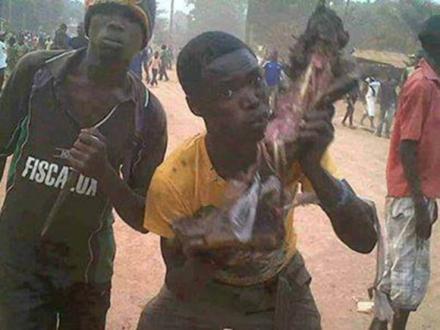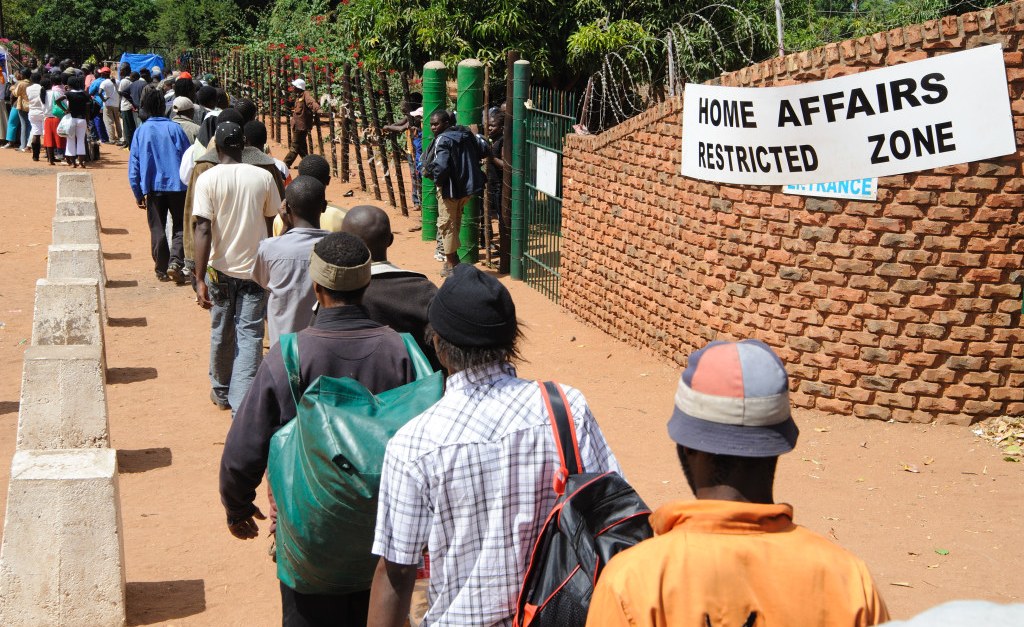
Letter: Zimbabweans are not freeloaders

Zimbabweans don’t want to be here. South Africans don’t get that. We have voted and voted against the ruling party (and Mugabe) and each time we had the opportunity to be rid of those murderers guess who came to their rescue? Mbeki, ANC, Zuma, SADC.

While I am not wholesale blaming SA for Zim’s problems the country is complicit in keeping us in the shackles of the ANC’s “liberation friends”.
We are treated like cow dung here and live transitory lives where we cannot establish any meaningful sense of a long term view which makes being in SA the very last option.

I, myself, am a Zimbabwean… been here since 2004 working my black bottom off as a software engineer contributing to the tax that pays 11 million South African free loaders monthly in grants… or free cash.

This idea that Zimbabweans are freeloaders is perpetuated by those who wish for xenophobia to reign. The bulk of Zimbabweans are here are the very same ones you see in restaurants working double shifts and making South Africa look good to tourists with their friendly, easy-going, nature. The jobs they “steal” are there for the taking but South africans don’t want them because they are beneath them. This is not fiction.

Right now, looking at how much I pay in taxes and doing a quick calculation, I am looking after at least 15 South African grant recipients each month…. but if I want a house,

a). I can’t get an RDP house,
b). if i qualify for a bond I must pay 50% upfront… what’s 50% of R1.5million again?
c). if I buy a car… for which I must pay a hefty deposit I must get comprehensive cover for it for which… while a South African may pay R400/month… I invariably get to pay R1000-R2000!
d). Because I don’t have an ID I pay more, and in full for getting my kids educated.
e). I pay for all my medical care… nothing’s free.

I’m not unique in the above… most of us foreigners live this life. SA is a hostile, violent, place that, had we a choice, we’d only read about back home… but here we are.

If white South Africans accuse us of being parasites, I totally understand; you probably think since the local blacks are bunch of lazy entitled whiners the rest of us are the same. If you are black, you are grossly misguided and need to travel to at least 2 SADC countries to see how your black brothers’ work ethic lends them well towards being constructive members of society.

—James Watadza
Mood against Merkel changing as migrants turn to rape

Germany is in a state of siege.

On the busy shopping street in Giessen, a German university town twinned with Winchester, migrant Atif Zahoor tucks into a chicken dish with his brother and cousin at the curry restaurant Chillie To Go.

They have left good jobs back in Karachi, Pakistan, and now want to be Europeans.

In late July the three slipped into Germany with their wives and children, using illegal documents. They live together in a five-bedroom house, rented for them by Chancellor Angela Merkel’s government, a 40-minute drive away from Giessen, which is home to the biggest migrants’ camp in the country.

‘We paid a trafficking agent for false visas to fly here to Germany,’ says 34-year-old Atif. ‘We claimed asylum and came to Giessen camp with other migrants. Three weeks ago, because we had families, they gave us a proper home.’

Atif is well-dressed and speaks perfect English. He used to be a transport manager at Karachi airport and is from a well-to-do family. Between mouthfuls of curry, he adds: ‘But there is violence between political gangs in Karachi.

Lots of people are leaving for Europe. The trafficker decided that Germany was the place for us because it is welcoming refugees.’

Yet the raw truth is that Atif is not fleeing war or persecution. He is one of thousands of economic migrants getting into Germany as the EU’s immigration crisis grows bigger each day.

Jens Spahn, a deputy finance minister in Chancellor Merkel’s government, said this week: ‘Not everyone can stay in Germany, or in Europe. If people are coming for poverty reasons… we have to send them back.’

Mrs Merkel’s offer last month to accept all refugees from war-ravaged Syria opened the floodgates. More than a million migrants are expected this year alone, the bulk of them far from genuine asylum seekers. There is now deepening disquiet in this Christian country, dotted with churches, that it is being overwhelmed by people of a different religion and culture.

The Mail reported how social workers and women’s groups in Giessen wrote a letter to the local state parliament claiming that rape and child abuse were rife in the refugee camp. The allegations were corroborated by Atif over his curry. ‘The camp is dangerous,’ he agreed. ‘Men of different nationalities fight and women are attacked.’

The letter says the camp, far from being a peaceful haven for those fleeing war, is a dangerous melting-pot, where there have been ‘numerous rapes and sexual assaults, and forced prostitution’.

There are even reports of children being raped and subjected to sexual assault, it adds.

‘Many women have felt the need to sleep in their clothes… they won’t go to the toilet at night because rapes and assaults have taken place on their way to, or from, there. Even in daylight, a walk through the camp is fraught with fear.’

At the Lidl supermarket a few hundred yards from the camp, a well-dressed German woman packing her shopping into a Mercedes saloon rolls her eyes at me as a group of Middle Eastern youths walk by. ‘What do we do?’ she asks. ‘It has happened now and it will never be the same again.’

Source: Daily Mail

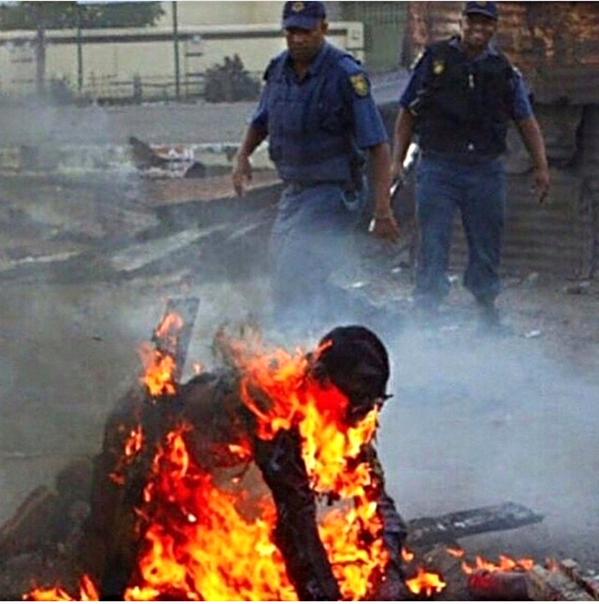
Xenophobia rules Soweto

The Mozambican man cowered, trying to protect his head, as the blows pounded his body on Tuesday.

The suspected thief, known only as Johannes, begged the growing crowd of angry residents of Snake Park, Soweto, to stop assaulting him.

But he and his alleged accomplice found no mercy from this impoverished community.

Its residents are “sick and tired of being victims” of crime.

“Today, we’re going to kill these Mozambican thieves,” said Sipho Ngwekazi licking his lips.

Almost to make his point, the unemployed 23-year-old pointed to a towering mine dump that looms over Block 1 in Snake Park.

“That’s where we’ll dump their bodies,” he vowed. “You’ll see what mob justice is all about.”

He and the rest of the mob were following as the two, the other called Petrus, were dragged to a house in Block 9, where they were believed to be hiding stolen TVs.

Their hands were tied with wire, their faces bloodied, as they were dragged for several kilometres in the searing heat.

“If you don’t give us the TVs, we’re going to burn you. That’s how we’ll kill you,” warned some residents.

“We have to take the law into our own hands. The police don’t care. They will just release them,” said Lindiwe Jonas, a resident of Block 2.

“Yes, we have to teach them a lesson… we will burn rope in the hands they used to steal from us,” said her friend, Esther Letswalo. “This is why we don’t want foreigners here in our community.”

A patrolling Dobsonville police van tried to follow the crowd through Snake Park’s dusty alleys.
Police back-up was called.

As the crowd bayed for his blood, Johannes, his shirt bloodied, and his one eye swollen and sealed shut, seemed to plead with the police to intervene as the crowd tried to get to him. The police then encircled him, probably because there were journalists present.

“We are taking them with us,” an armed policewoman informed the crowd. “We can’t allow mob justice.”
The police put the two men in their van and drove off.

The community roared, incensed.

“The law is useless,” spat one resident, who didn’t want to be named. “The police will just release them. They get away with it.”

Later a small group of residents threatened to burn the shacks of the men they suspected of being thieves.

Instead, they darted inside one of the men’s homes, where they were seen stealing jewellery.

Source: The Star

German journalist wades into mass immigration debate

A German journalist suggested that prosecuting “Facebook rabble-rousers” – that is people who do not agree with mass immigration – while a step in the right direction, was not enough.

Reschke delivered her message just hours after Hans-Georg Maassen, head of the intelligence service, branded a right wing group “dangerous rabble-rousers”.

“These haters have to understand that society will not tolerate this,” she said. “So, if you are not of the opinion that all refugees are freeloaders who should be hunted down, burned or gassed, then you should make it very clearly known. Speak up against it.”

Anja Reschke ended by calling for a public demonstration in favor of “decency,” and told viewers that she was looking forward to “your comments on this commentary.”

She was not disappointed, as more than five million people watched a video of her remarks posted on Facebook in the first 48 hours after the broadcast, generating thousands of comments, both for and against, and more than 130,000 likes.

On Twitter, as The Guardian’s Berlin correspondent, Kate Connolly, reported, the replies to Ms. Reschke included outrage from a German-speaker who claimed to be living in England and wrote that it was “Better to be a Nazi in the street than a foreign social parasite.”

The same blogger later complained that Germany granted freedom of speech only to those who agreed with the mainstream consensus, branding dissidents as Nazis.

Most German journalists however backed Reschke.

Source: NYT/The Independent

Japan allows eleven asylum seekers

Last year Japan granted nearly twice as many people asylum as in 2013. The increase was not by any means spectacular.

In 2013 the country approved six applications for asylum, and in 2014 the number rose to eleven.

Japan, the third largest economy in the world, has long been known for its strict asylum policy.

But the country is becoming more popular. Early last year, a record number of 5,000 people applied for asylum. Only eleven applications, about 0.2 percent, were approved.

Worldwide, an average of 32 percent is accepted as asylum seekers.

Lawyers and activists complain about the low numbers in Japan. The country does not do enough to protect them as refugees. There are hardly any facilities for housing and the system for applying for a residence permit is no good, they say.

A spokesman for the Japanese authorities that many asylum seekers are not political, but economic refugees. “In countries such as Nepal and Sri Lanka, many people think they can find a job in Japan.”

Another wall goes up in Europe

Nearly three decades after US President Ronald Reagan issued his much-celebrated challenge to Soviet leader Mikhail Gorbachev to tear down the Berlin Wall, some Eastern European countries have once again begun floating the idea of building up walls in Europe, this time to keep people out. Latvia is the latest country to jump on the bandwagon.

Speaking to Latvian television on Monday, Latvian Internal Affairs Minister Rihards Kozlovskis noted that Latvia would need “four years and 17 million euros in order to fence itself off from Russia via a wall.”

Kozlovskis emphasized that the wall has been made a necessity by the growing influx of illegal immigrants from Central Asia and the Far East who are using Russia as a transfer point on their way to Scandinavia. According to Radio Poland, 239 illegal immigrants have been detained by Latvian border services since the beginning of 2015, 160 of them from Vietnam, and 20 from Afghanistan.

The minister noted that the proposed wall’s price tag should be taken into account by the country’s government in planning for the country’s next budget.

Latvia far from being alone among European nations in its plans to build security walls to keep illegal immigrants out, even if its location next to the Russian border might seem like an odd choice, to say the least.

The Bulgarian government has recently extended its advanced network of border fencing with Turkey, aimed at completely sealing off the border with the Middle Eastern country.

Hungary has also received a lot of flak for passing a law enabling the construction of a metal fence along its border with Serbia, critics dubbing the project a new ‘iron curtain’.

Source: Sputniknews

Cannes: Immigrants 1, Lesbians 0

The debate around the world about what to do with growing waves of desperate migrants will be spurred by a Cannes Film Festival triumph for a movie that looks at the plight of a refugee hero.

“Dheepan”, a French movie about a Sri Lankan former soldier’s struggles in a Paris ghetto in the grip of narco-gangs, didn’t set out to tackle that wider thorny issue.

But the fact that the film’s win comes as refugee boats set off across Asian waters and the Mediterranean — the same sea lapping at glittering Cannes and its super-yachts — inevitably means it will figure in that context.

“It’s important to reflect on the situation,” the movie’s director, Jacques Audiard, admitted to reporters insistently raising the question.

But he stressed, “I started writing the screenplay four or five years ago and the situation wasn’t as critical as it is now”.

Nevertheless, “if it helps the situation, then so much the better”.

The movie won’t begin its release in cinemas for another three months. Its Cannes win will no doubt take it to countries that might otherwise have not seen it.

Some of those countries are ones grappling with the problem of immigrants.

A Hungarian movie taking viewers inside Auschwitz, “Son of Saul”, picked up the runner-up Grand Prize for its narrow but powerful look at the Holocaust.

The best actress award was something of an upset, confounding critics who had thought Australian star Cate Blanchett was untouchable for her turn in an American period lesbian drama, “Carol”.

Instead Blanchett’s co-star, Rooney Mara, and an actress in a French relationship drama called “Mon Roi”, Emmanuelle Bercot, ended up sharing the trophy.

German cop probed for ‘immigrant abuse’

German prosecutors are investigating a police officer who allegedly abused two immigrants, strangling an Afghan man and forcing a Moroccan to eat pork off the floor.

The police officer has been accused of bragging about the brutal assaults in text messages and photos he sent via instant messaging service WhatsApp to his colleagues in the western city of Hanover.

Human rights group Pro Asyl condemned the alleged incidents, first reported by public broadcaster NDR, for their “appalling level of racism and inhumanity” and demanded a probe into how many “accomplices in police uniform” knew of the violence.

Prosecutors are investigating the officer, who has been suspended, on charges of physical assault and illegal weapons possession and have searched his home and work place.

In the first alleged case, in March last year, the officer had bragged in a text message about beating, strangling and sticking his fingers up the nose of a 29-year-old Afghan man whose feet were cuffed after he was detained for not carrying ID papers.

“It was funny … squealed like a pig,” the officer allegedly wrote on WhatsApp. “It was a present from Allah.”

In the second case, months later, the officer allegedly targeted a 19-year-old Moroccan man, who had been detained for travelling on a train without a ticket, carrying a small amount of marijuana.

NDR reported that the policeman bragged about how he assaulted and then humiliated the young man by forcing him to eat minced pork off the floor.

A photo allegedly sent by the officer shows a handcuffed man lying on the floor, wincing in pain, and apparently restrained by at least two officers.

Germany has become Europe’s top destination for people fleeing war and poverty. Last year, asylum requests rose 60 percent to more than 200,000, and the government expects that number to more than double this year.

Source: AFP

ANC defends action against foreigners

Operation Fiela by the SA Police Service was meant to eliminate criminal activities and was not a form of harassment or xenophobia, African National Congress secretary Gwede Mantashe said on Sunday.

“Operation Fiela strives to apprehend and disarm those with illegal firearms in society, it is meant to discover and disarm everybody, foreign and national in the country,” Mantashe told journalists in Johannesburg following a three-day ANC national executive committee meeting.

“The operation is not harassment at all. This is an effort to regulate everyone in the country.”

The operation was started after xenophobic attacks on foreign nationals that started in Isipingo, Durban in March, before spreading to Gauteng.

The massive operation, which saw police, backed by the army, raid hostels and informal settlements, especially in townships, has come under fire from human rights activists who accused government of targeting the poor.

Hundreds of undocumented foreign nationals were also arrested and illegal weapons seized during the raids.

Mantashe said human rights organisations should realise that illegal firearms in communities was an attack on other people’s rights.

“I don’t know how human rights organisations can be opposed to that, one you have illegal firearms in communities, other people’s rights in those communities are infringed upon. Every persons’ human right includes the safety of others.”

Society would suffer from extremism if people were untouchable as far as the rule of law was concerned, he added.

Source: ANA

Bob urges migrants not to go to SA

Other African nations should stop their citizens from migrating to South Africa to prevent violence against foreigners, Zimbabwean President Robert Mugabe on Wednesday

A wave of anti-immigrant violence in South Africa has claimed seven lives in Durban and Johannesburg over the past four weeks. The South African government has deployed troops to stop the fighting.

After a summit of the Southern African Development Community (SADC) called to discuss industrialisation in southern Africa, Mugabe told reporters that South African President Jacob Zuma had briefed regional leaders on the violence.

Zuma told the meeting that his government would educate its citizens to be tolerant of foreigners and would keep its security forces on alert to prevent future attacks.

“I was suggesting that we, the neighbours, must do what we can to prevent more people going into South Africa. If we can do it, we can then try to get those in South Africa home,” said Mugabe, the current SADC chairman.

“So people should get back to their own countries. It’s not just one for South Africa to resolve but for us, we the neighbouring countries, to resolve. Our people should not have the instinct of rushing into South Africa.”

An estimated one million Zimbabweans live in South Africa, after fleeing economic crisis and political violence at home over the last 15 years.

Mugabe said his government had brought 800 of its citizens back from Durban, but most of them had indicated they planned to return to South Africa, Zimbabwe’s biggest trading partner.

“The people who are described as influx into South Africa are not pushed by governments,” said Mugabe, who has ruled the former British colony since independence in 1980.

“They are people who voluntarily go to South Africa. They think South Africa is the heaven, our heaven in southern Africa.”

Periodic outbreaks of anti-immigrant violence have been blamed on high unemployment in South Africa. The official jobless rate is around 25 percent although economists say is much higher.

Mugabe concurred, saying the living standards of black South Africans were low and that the migrants “who think there is heaven in South Africa and decide to go to South Africa, they make the situation of the Africans there worse.”

Source: Reuters

The rise of nationalism in Britain

As the eurozone crisis continues, anti-establishment insurgencies like the Scottish National Party, SNP’s, are surfacing all over Europe: nationalist, populist, separatist, left or right.

As the British empire was gradually dissolved after the second world war and its industrial base attacked by younger, nimbler economies, the cohesion of the British state weakened.

There was an impulse towards supra-nationalism in the shape of membership in the European Union, but Britain joined late, in 1973.

English people – steeped in Britain’s maritime, imperial traditions – felt hostile towards the EU.

At the same time, long-smothered regional nationalism was reviving on Britain’s Celtic fringes. In divided Ireland, it was violent; in Scotland, political, emboldened by newly discovered North Sea oil; in Wales, initially, cultural, based around the preservation of the Welsh language.

That was in the 70s. Forty years on, these rival strands are much stronger, and testing the concept of “Britishness” to destruction.

The Scottish national party has barely paused for breath since losing last September’s referendum on independence for Scotland – immediately declaring itself the moral victor and demanding greater powers for Edinburgh.

Since the referendum result – 55% no, 45% yes – disaffected working-class Labour voters have flocked to the SNP. Polls suggest the Scottish nationalists, now led by Scotland’s new first minister, the formidable Nicola Sturgeon, will slaughter Labour north of the border, winning dozens of Scotland’s 59 seats and perhaps holding the balance of power in London. If she finds herself in that position, Sturgeon promises to block Cameron and prop up a minority Miliband administration.

Britain’s Tory newspapers are busy denouncing Sturgeon as “the most dangerous woman” in the country. Cameron – whose Tories have only one seat in Scotland – warns of a Scottish veto from the people who want to break up Britain. Miliband is embarrassed.

Meanwhile, in England, the populist anti-European right, in the form of the UK independence party (Ukip), has evolved under the skilful leadership of Nigel Farage.

Ukip’s proven ability to win protest votes at four-yearly elections to the 28-nation European parliament is now threatening the status quo at Westminster. It has two MPs (both defectors from the Tories) and hopes to win more on 7 May.

If that sounds familiar, it should. Though Ukip portrays itself as free market and libertarian, it is also deeply nostalgic, socially conservative, and suspicious of immigrants and big-government bureaucracy, especially from the EU’s Brussels headquarters.

Racist, homophobic and authoritarian? Certainly not, says Farage. We just want to be a self-governing sovereign state again. But Ukip’s “little guy” rank-and-file is not always quite so on-message. This is disruptive Tea Party Republicanism with added potency.

Ukip’s threat to the status quo is twofold. It may take enough votes away from Cameron’s Tories to deny the prime minister his slim hopes of a Commons majority on May 7, or even to stop him being the largest party, which would make it hard for him to form another coalition.

In a tight race, with both main parties polling at around 34%, Ukip’s rise may also hurt Miliband’s prospects by peeling off Labour’s equivalent of blue-collar Democrats, working-class voters fed up with stagnant wages and gay marriage, underfunded public services and “unpatriotic” liberals.

Source: The Guardian

The tsunami of Latino immigrants to the US

Critics say the ginned-up fears of terrorism is a nearly non-existent threat. Americans are not about to be overwhelmed by Islam in the U.S..

Islam is used to distract whites from an enormous existential threat to their country, they say.

Immigration, legal and illegal, from Latin America must be stopped, or whites will be wiped from America, and many whites fear that it may already be too late. The Economist reports on the trend:

America is a country built by immigration, but nothing in its history compares to the rise in its Hispanic population. Changes to immigration law in the 1960s triggered a decades-long surge in arrivals, taking the Hispanic population from just 7m in 1970 to 57m today, a number that is set to double by mid-century.

At that point one in four Americans will be of Latino descent. In relation to the population of the day, there have been proportionally larger surges in the past, notably involving European migrations in the 19th and early 20th centuries.

Two factors make the rise of Hispanic America different. Never before has such a large group of new arrivals lived so close to their ancestral homelands, linked to grandparents in the same time zone by cheap flights and Skype.

Secondly, America is entering an era of white decline. For almost two centuries, from the time of George Washington’s presidency to the election of Ronald Reagan, whites of European descent made up at least 80% of the population. That share is below two-thirds now, and the white majority is set to become a minority by 2044.

That brings both challenges and opportunities. Today’s Hispanics lag behind whites when it comes to education and wealth. But they are strikingly young, lowering America’s median age and offering workers to fill the labour market when other rich countries face greying decline.

Politicians too often discuss Hispanics as almost a single-issue group, as victims or villains of immigration. But five-sixths are legal residents and recent Latino growth has been mostly from births, not new arrivals.

Hispanics are dispersing across the country and their political clout will only grow: nearly 1m US-born Latinos reach voting age annually.

‘Secret Swedish Asylum group’ plans 400,000 new immigrants

The Swedish government has appointed a “secret asylum-group” planning for 400,000 new immigrants over the next five years – the equivalent of a large Swedish city, the newspaper Dagens Industri revealed yesterday.

The Secret Asylum group is a group of unelected left wing bureaucrats working for the government, that currently outlines the future population of Sweden. The plans have been “secret”, DI states, and without the Swedish people’s knowledge.

Some of those included in the secret group is Lars West Bratt, Eric Nilsson, Max Elger and Annelie Roswall Ljunggren – all well-paid bureaucrats working for the red-green government.

The group has made a decision that Sweden should receive at least 400,000 new immigrants from the third world over the next five years. The plan spans over the next general election, which after the December settlement last month, only will be a symbolic election. Sweden is now run as a mafia cartel of political power.

130,000 of the new inhabitants of Sweden will be “unaccompanied minors”, ie illegal immigrant boys/men whom a large percentage are likely to be jihadists from Syria.

The Swedish Parliament has allocated 34 billion SEK in tax-money to cover the direct costs of the 2015 immigration. How much the five-year plan will cost the Swedish taxpayers is not clear, but it will be several hundreds of billion SEK, even if Sweden is already broke.

Last year Sweden set a new immigration record, which they will surely beat this year. And next year, etc. Until UN is proven right; Sweden will become a third world country.

Source: speisa.com

Backdoor for jihadists?

Top U.S. counterterrorism officials say they worry a potential terrorist could be hiding among refugees who are looking to come to the United States after escaping the brutal war in Syria.

“It’s clearly a population of concern,” the director of the National Counterterrorism Center, Nicholas Rasmussen, told the House Homeland Security Committee on Wednesday.

Committee Chairman Mike McCaul, R-Texas, went further, saying it would be a “huge mistake” to bring refugees from the conflict to the U.S. – even as an estimated 4 million children, women and men have been forced to flee Syria and another 7 million have been displaced from their homes there, unable to leave.

Senior officials leading the State Department’s refugee efforts say the U.S. government has a long history of caring for the innocent victims of war.

“It’s not a matter of should we do it, it’s really a matter of how we do it,” Larry Bartlett, the State Department’s director of Refugee Admission for the Bureau of Population, Refugees and Migration, told ABC News. “One of the fundamental principles of our country is that we care about others. We will help others.”

With tens of thousands of Syrians joining groups in the region like the Islamic State, the U.S. government “cannot allow the refugee process to become a backdoor for jihadists,” Republicans added.

Source: Yahoo News