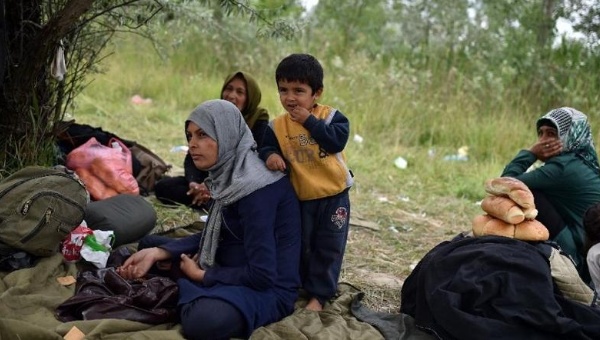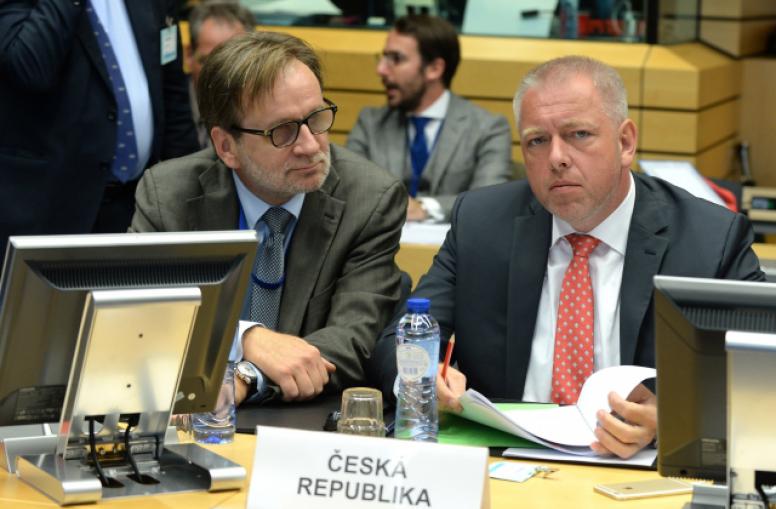
EU approves migrant quota plan despite massive opposition

EU interior ministers have approved a relocation plan on distributing 120,000 refugees among member states. The Czech Republic, Romania, Slovakia, and Hungary, voted against it, while Finland abstained.

Under the plan, refugees will be relocated from Italy, Greece, and Hungary to other countries in the EU.

Prague’s decision did not come as a surprise, as Prime Minister Bohuslav Sobotka said hours before the meeting began that the country would reject any quota system.

He added that any attempt to impose such a scheme could end in “big ridicule for the European Commision” and the governments supporting the plan.

Czech Interior Minister Milan Chovanec expressed his distaste for the plan after the vote, tweeting:”We will soon realise that the emperor has no clothes. Common sense lost today.”

Slovakian Prime Minister Robert Fico said those who decided to push through quotas nonsensically caused a deep rift over a very sensitive issue.

However, under European law, three of the countries that voted against the proposal — the Czech Republic, Romania and Slovakia — would be required to accept migrants against their will, an EU diplomat told The New York Times on condition of anonymity after the vote.

Finland was the only country of the EU’s 28 members to abstain from the vote. Poland, which had previously opposed the proposal, voted in favor of it.

The plan has been criticized by the UN refugee agency (UNHCR), which says it is insufficient.

“A relocation programme alone, at this stage in the crisis, will not be enough to stabilise the situation,” UNHCR spokeswoman Melissa Fleming said, urging the EU to set up reception facilities able to handle tens of thousands of refugees at a time.

The UN estimates that around 480,000 migrants have arrived in Europe this year alone, and are now reaching European shores at a rate of nearly 6,000 a day.

Earlier in the day, German rail operator Deutsche Bahn suspended services to Austria and Hungary until October 4th, citing border controls introduced to manage the record surge of refugees.

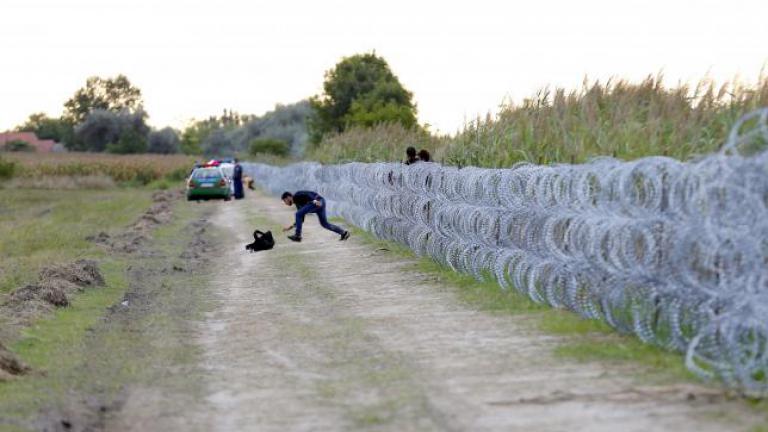
Hungary has come under fire for its construction of a 110 mile fence along its border with Serbia. Budapest is expected to extend that barricade by also building fences along the Croatian and Romanian borders.

Slovakia introduced temporary controls on its borders with Hungary and Austria last week, sending an additional 220 police officers to the area.

Germany and France have been rallying for a quota system for weeks, with German Chancellor Angela Merkel saying earlier this month that such a plan would be a “first step.” She has stressed that all member states should share responsibility.

The Organisation for Economic Co-operation and Development says Europe can expect a record one million people to request asylum this year, almost half of which will likely qualify to be taken in.

Source: RT
Hungary takes out ads to warn migrants

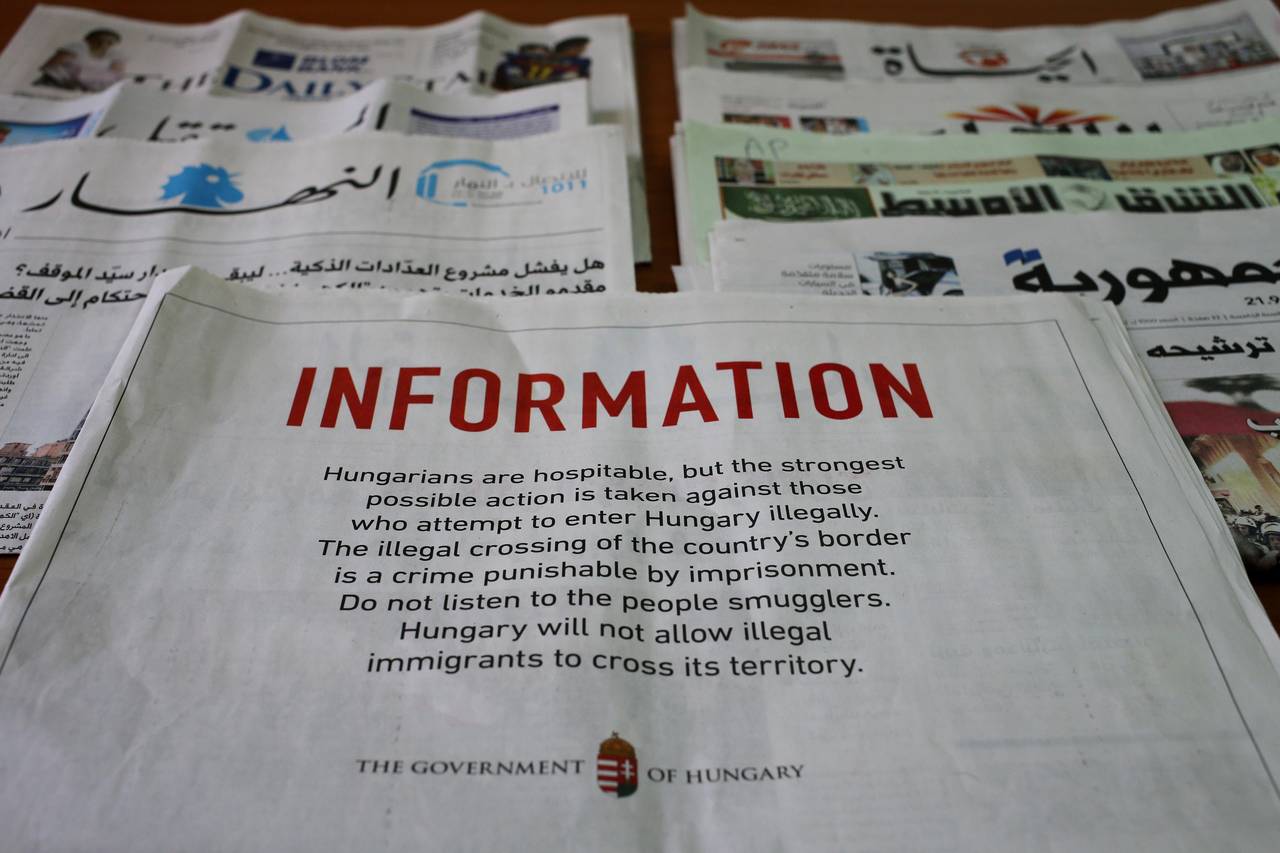
Hungary posted full-page advertisements in local Lebanese newspapers Monday warning refugees and migrants from illegally crossing into the country, two weeks after Denmark took out similar ads as Europe grapples with its biggest migration crisis since World War II.

“Hungarians are hospitable,“ read the full-page English and Arabic ad, ”but the strongest possible action is taken against those who attempt to enter Hungary illegally.”

The full cost of the campaign was unknown.

The privately-owned Annahar newspaper said it had charged the Hungarian government $17,100 for a page.

The ad likely targeted the nearly 1.2 million Syrian refugees living in Lebanon, many of whom have expressed frustration with the lack of support and infrastructure available to refugees there.

On Monday, Hungary passed legislation allowing for army deployment along its own borders as refugees and migrants camped there.

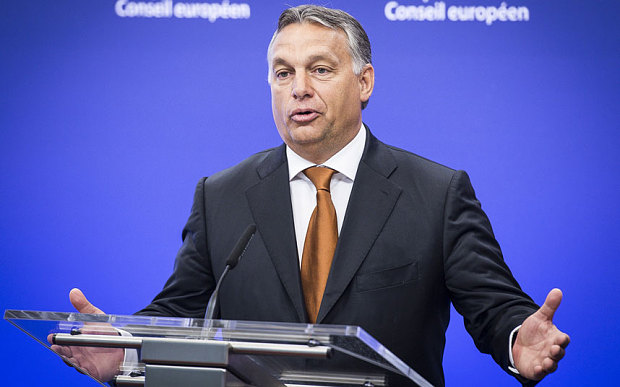
“What’s taking place now is an invasion,” Hungarian Prime Minister Viktor Orban said in a speech opening a session of parliament.

Hungary, whose conservative policies toward refugees and its police force’s use of tear gas against those massed at its borders have been criticized by some of its neighbors, including Germany, which has issued an open-door policy to refugees and promotes a unified border policy between countries in the European Union.

Last week Hungary completed the construction of a 110-mile-long fence along its border with Serbia, forcing thousands to alter their route to Germany via Croatia.

Earlier this month, Denmark took out similar cautionary ads in Lebanese newspapers. In notices that ran in four outlets, it listed tightened procedures in its immigration law, including a 50% cut to social benefits for newly-arrived refugees.

“Foreign nationals granted temporary protection in Denmark will not have the right to bring family members to Denmark during the first year,” said the ad, posted by Denmark’s Ministry of Immigration, Integration & Housing.

Denmark’s ad was posted to correct information circulating among “human traffickers and others profiting from smuggling immigrant and refugees across borders,” the ministry said.

Over 500,000 people applied to asylum for the first time in the EU since January 2015.

Source: WSJ

An estimated 35 million migrants heading for Europe

Shock estimates predict up to 35 million refugees could head for Europe due to hugely unstable situations across the world.

The huge figure was revealed today by Hungary’s minister for foreign affairs and trade Peter Szijjártó.

Speaking as the country begins work on its second fence to stop migrants heading across its border he predicted the current crisis will continue for years.

Mr Szijjártó told the Hungarian Times: “The name of the fence is ‘Temporary Security Border Fence’ but I think there is no question that in this case temporary means years.

“It’s a self delusion to call this situation a migration crisis; it is a massive migration of nations, with inexhaustible reserves.

“I don’t think that the analysis results, stating that 30-35 million people out there could possibly become migrants, would be an exaggeration.

“Libya, Yemen, Syria, Iraq and Afghanistan are all countries with a huge population and an extremely unstable situation.”

The Hungarian government also defended itself from criticism over its fences.

The first barrier was put up at its border with Serbia but, after migrants changed their route, they have now begun erecting a 41 kilometre fence at Croatia.

Migrants look to break through to Hungary as that sees them enter the European Union’s Schengen Zone which offers free movement between member countries.

He said: “The recent international political decisions created an unstable situation around Europe that makes sure that the amount of people won’t decrease.

“This is why it’s extremely important to protect our borders.

“This issue wasn’t this important until now, so the European Union neglected it a little bit.

“It became clear that – though its the border of Schengen – Greece couldn’t protect the border of the European Union.

“The Hungarian/Serbian border is another border of Schengen. If we want to follow the orders of Schengen, we have to build a physical obstruction, because this 175 km long area is quite easy to cross.

“The European Union just realised what the Schengen border means.

“If we want to keep the freedom of movement in the European Union, we have to protect the outer borders.”

Source: Express

Riot police clash with migrants on Hungarian border

Hungary detained 29 asylum seekers in clashes at the Hungarian-Serbian border on Wednesday. Among them was “an identified terrorist,” according to a PM security aide.

Gyorgy Bakondi, a security adviser to Hungarian Prime Minister Viktor Orban, said that 20 police officers were injured in the violence after refugees and migrants broke through a razor wire fence on the border between the Hungarian town of Roszke and Horgos in Serbia on Wednesday.

Twenty-nine people were detained, said Bakondi who added that “police also captured an identified terrorist” RT reported.

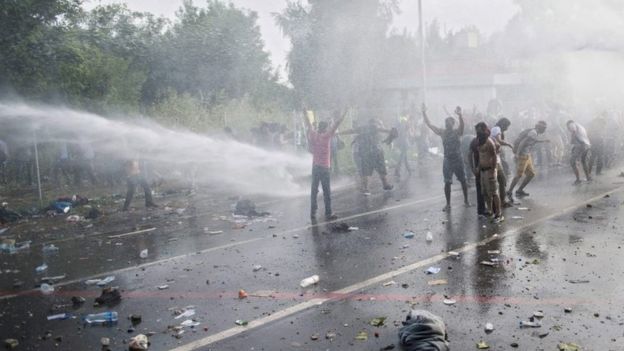
Meanwhile Hungarian riot police have fired tear gas and water cannon to force migrants back from the Serbia-Hungary border.

Hundreds of people have massed at a closed crossing point near the Serbian town of Horgos, and are involved in a tense stand-off with police on the other side of the border.

Some migrants threw missiles, including stones and water bottles.

Many of the migrants want to reach Germany, amid divisions within the EU over how to deal with the crisis.

Hungarian army prepares for border defence

The Hungarian army has started military drills to prepare its soldiers for service at the southern border amid the unfolding refugee crisis, Chief of Staff General Tibor Benko said, according to MTI news agency.

Hungary’s Prime Minister Viktor Orban said legislation to deploy the army could not be passed before the end of September, although actions to increase the speed of a border fence should be expected.

“Everyone has to get ready to do intensive work in the coming weeks,” Orban told a Hungarian newspaper, reported AFP news agency.

Soldiers joined by police will be charged with to bringing the border, which is currently crossed daily by thousands of refugees and migrants from Serbia, under control.

The exercise comes amid record numbers of migrants and refugees crossing into the central European country in a bid to enter the EU and declare asylum. Many of them are fleeing war-torn countries in the Middle East, Africa and Asia, and heading for Germany via Austria.

Hundreds of migrants broke through police lines in Hungary near the Serbian border Wednesday for a third day running, as the army began mobilising.

The break-out involving at least 400 migrants took place near the flashpoint town of Roszke, where migrants have to wait at a collection point before being taken to a nearby centre for registration.

Shouting “No camp!” they scattered in all directions, some heading for a nearby motorway leading to Budapest, which police then temporarily closed down.

Meanwhile, Hungary’s response to the refugee crisis has been criticized by human rights watchdogs, including Human Rights Watch and Amnesty International.

Hungary uncovers two Islamic State terrorists posing as ‘refugees’

European politicians have expressed concerns that Islamic State (formerly ISIS/ISIL) militants could be infiltrating EU borders under the guise of refugees. Hungarian media reports that at least two ISIS militants were uncovered after entering an unspecified European country as refugees.

The identification of the extremist fighters was made possible after the two revealed their identities by posting photographs on social media, Hungary’s M1 television reported Tuesday.

“Islamist terrorists, disguised as refugees, have showed up in Europe. [The] pictures were uploaded on various social networks to show that terrorists are now present in most European cities. Many, who are now illegal immigrants, fought alongside Islamic State before,” the report said.

The Hungarian channel showed photographs from the alleged terrorists’ Facebook pages. The first set depicted two individuals with weapons in the Middle East and the second set showed them smiling as they arrived in Europe.

It is still not clear which country the two suspects were discovered – some suggested they made it as far as Germany – or if they have been arrested. No names have so far been released.

It is, however, convincing that these two individuals have been associated with terrorist groups in the past, a co-director of humanitarian organization Pressenza, Tony Robinson, told RT.

Some politicians have said that Islamic State might be winning if people are abandoning their homes in Iraq or Syria. French Foreign Minister Laurent Fabius said: “It’s very difficult, but if all these refugees come to Europe or elsewhere, then Islamic State has won.”

A Middle East expert has expressed similar concerns. “This is a major challenge for Europe, but it’s also giving [Islamic State] the possibility to claim victory, because it has claimed its goal is to get rid of every ethnic religious and cultural diversity from the Middle East. ISIS has stated very clearly that all the region should be under Sunni leadership. And therefore those who won’t convert should leave and they have been pushing a lot of people to leave,” Mansouria Mokhefi, of the French Institute for International Relations, told RT.

As Europe is left overwhelmed by the refugee crisis, the Gulf States have continued to ignore the problem by shutting their borders and refusing to take in asylum seekers.

Since the war in Syria started in 2011, Kuwait has accepted only seven refugees, the United Arab Emirates just 16, and Saudi Arabia only four.

In fact, instead of embracing a solution, Saudi Arabia is putting up a 900-kilometer razor wire fence on its border with Iraq. There are also underground movement sensors being installed, which are capable of triggering silent alarms.

Israel has accepted none.

Source: RT

‘Refugees threaten Europe’s Christian roots’

The influx of refugees into Europe threatens to undermine the continent’s Christian roots and governments must control their borders before they can decide how many asylum seekers they can take, Hungarian Prime Minister Viktor Orban said.

In an opinion piece for Germany’s Frankfurt Allgemeine Zeitung, Orban said the people of Europe were at odds with the majority of governments on the refugee crisis.

“The people want us to master the situation and protect our borders,” he wrote. “Only when we have protected our borders can questions be asked about the numbers of people we can take in, or whether there should be quotas.”

Hungary is building a 175 km (110-mile) long fence along its border with Serbia to keep out an accelerating flow of migrants entering from the south.

Orban said his country was being “overrun” with refugees, adding most were not Christians, but Muslims.

“That is an important question, because Europe and European culture have Christian roots. Or is it not already and in itself alarming that Europe’s Christian culture is barely in a position to uphold Europe’s own Christian values?” he asked.

Source: Reuters

Ground Zero for migrants errupts in chaos

Keleti train station in Budapest, which has emerged as ground zero in Europe’s spiraling migration crisis, temporarily shut down its services on Tuesday under the strain of an influx of migrants trying to travel to Germany from Hungary.

Emphasizing the sense of confusion across Europe, Austria’s interior minister, Johanna Mikl-Leitner, called on Germany, the preferred destination for many of the migrants, to clarify its stance on asylum rules.

Rows of riot police officers wearing red caps tried to contain the migrants in Budapest, and the migrants erupted in protest after the station stopped allowing them to board trains. Instead, they were allowed into the courtyard of the station, which has been transformed into a makeshift camp.

The migrants, who had been gathered since 5 a.m. in the hopes of boarding a train, chanted: “Go free! Go free! Go free!” Later, they shouted, “Merkel, Merkel,” referring to Angela Merkel, the German chancellor, whose country is expected to receive 800,000 asylum seekers this year.

Train services at Keleti were restored shortly after 10 a.m., and no migrants were being allowed back into the station.

The scenes of confusion and despair at Keleti underlined the challenges facing Europe as tens of thousands of migrants, buffeted by civil war and conflict in the Middle East and Syria, are trying to make the perilous journey to Europe, only to be confronted with a patchwork of policies across a 28-member bloc that is ill equipped to deal with the surge.

In the last five days, the number of migrants trying to leave from the Budapest station has grown to 2,000 a day from about 800.

The chaotic scenes at the station came as Austria asked Germany to provide guidance about how to handle asylum seekers.

The cold reception migrants received in Budapest was a marked contrast to the one in Munich, where the police said on Tuesday that about 2,500 people had arrived on trains from Budapest, via Vienna, in the span of 24 hours. Hundreds more continued to arrive early Tuesday.

Streets around the city’s central train station were blocked off to allow the authorities to organize the migrants and bring them to the city’s refugee processing centers, where they were to be registered and begin the process of applying for asylum.

Matching the flood of people was a flow of donations of drinks, food and baby necessities from Munich residents. “There is no end to the willingness of people to help — Great!” the police said on Twitter.

In Hungary, the center-right government, under pressure from a far-right anti-immigrant party with a sizable voice in Parliament, has itself aired some of the most strident anti-immigrant speech on the Continent.

Source: NYT

Another wall goes up in Europe

Nearly three decades after US President Ronald Reagan issued his much-celebrated challenge to Soviet leader Mikhail Gorbachev to tear down the Berlin Wall, some Eastern European countries have once again begun floating the idea of building up walls in Europe, this time to keep people out. Latvia is the latest country to jump on the bandwagon.

Speaking to Latvian television on Monday, Latvian Internal Affairs Minister Rihards Kozlovskis noted that Latvia would need “four years and 17 million euros in order to fence itself off from Russia via a wall.”

Kozlovskis emphasized that the wall has been made a necessity by the growing influx of illegal immigrants from Central Asia and the Far East who are using Russia as a transfer point on their way to Scandinavia. According to Radio Poland, 239 illegal immigrants have been detained by Latvian border services since the beginning of 2015, 160 of them from Vietnam, and 20 from Afghanistan.

The minister noted that the proposed wall’s price tag should be taken into account by the country’s government in planning for the country’s next budget.

Latvia far from being alone among European nations in its plans to build security walls to keep illegal immigrants out, even if its location next to the Russian border might seem like an odd choice, to say the least.

The Bulgarian government has recently extended its advanced network of border fencing with Turkey, aimed at completely sealing off the border with the Middle Eastern country.

Hungary has also received a lot of flak for passing a law enabling the construction of a metal fence along its border with Serbia, critics dubbing the project a new ‘iron curtain’.

Source: Sputniknews

Europe threatened by ‘depth of Africa’

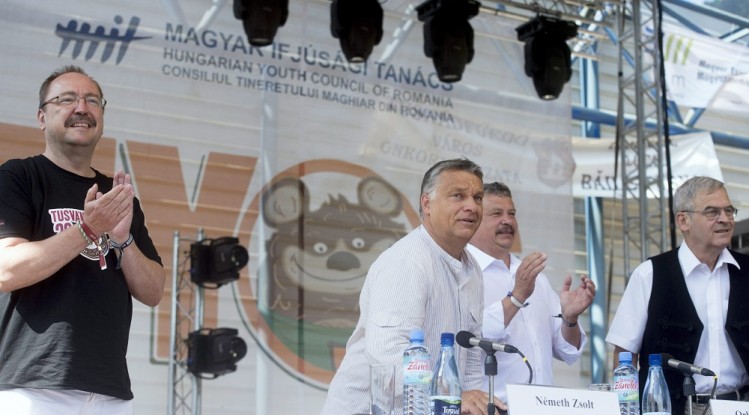
“The question now is not merely what kind of Europe we, Hungarians would like to live in, but whether that which we call Europe today will at all survive”, Hungarian PM Viktor Orbán said in a speech to students.

“Our answer is clear: we would like Europe to be preserved for the Europeans”, he added. The Hungarian Prime Minister emphasized that modern-day mass migration is a consequence of political processes.

In his view, the real threat is not coming from war zones, but from the depths of Africa. The Hungarian Premier criticized harshly both the European and Hungarian left-wing elites, which, he said, do not perceive immigration as a source of danger but as an opportunity.

According to Viktor Orbán, the left believes that the escalation of migration may definitively debilitate, or even eliminate, national boundaries, and this would constitute the attainment of the long-term objective of the left in a historical perspective.

“While the Hungarian left incited against Hungarians beyond the borders in 2004, they would today readily embrace illegal migrants, and would await them with open arms. These people, these politicians quite simply do not like the Hungarian people”, Orbán concluded.

He added: if the left had been given the chance to form a government in 2014, “within a year or two, we would not recognise our country; we would be like a refugee camp”.

As for the fence on Hungary’s border with Serbia, it will be built by 31 August; any other dates are invalid, Viktor Orbán announced. “Based on experiences to date, the number of illegal border-crossers decreases to one-sixth to one-seventh immediately after the construction of such border fences. I am expecting a large-scale improvement as a result of this measure”, he said.

Viktor Orbán also informed his audience of the results of the national consultation on immigration and terrorism.

He pointed out that 1,000,254 questionnaires were completed and sent back, and according to the results, 95 per cent take the view that Hungarian families and the children to be born should be supported, instead of immigration.

More than two thirds of Hungarian people find the issue of the spread of terrorism relevant to their own lives.

Three quarters of them believe that illegal migrants are a threat to the jobs and livelihood of the Hungarian people.

Four fifths take the view that the policy of Brussels regarding immigration and terrorism has failed, he said.

Hungary joins Silk Road

Hungary has become the first European country to sign a memorandum of understanding with China on promoting the Silk Road Economic Belt and Maritime Silk Road, China media report. The MoU was signed on Sunday, during Chinese Foreign Minister Wang Yi’s visit to Budapest, where he met with Prime Minister Viktor Orban. In a statement on the occasion, Wang said he hopes more European countries will join in.

Hungary may be the first country in Europe to officially sign an MoU relating to China’s “One Belt, One Road” strategy, but the subject has cropped up repeatedly during Chinese interactions with Europe. When Xi Jinping toured Europe in April 2014, with stops in The Netherlands, France, Germany, and Belgium, he urged the EU and China to work together to combine EU policies with China’s Belt and Road. When Li Keqiang attended the China-Central and Eastern European (CEE) Leaders’ Meeting in Serbia in December 2014, he also highlighted the role Europe has to play in the Belt and Road – and the role China can play in completing infrastructure and energy projects in Central and Eastern Europe under the aegis of that initiative.

More recently, during Xi’s visits to Russia and Belarus this May, both countries agreed to work with China on the Silk Road Economic Belt. Belarus agreed to the project hoping to win Chinese infrastructure investments, while Russia promised to link its new Eurasia Economic Union with China’s Belt and Road.

While the Belt and Road are often discussed primarily in the context of China’s near neighbors – particularly Southeast and Central Asia – Beijing has long been clear about the importance of Europe, particularly Central and Eastern Europe, to the project. A few months after Xi Jinping first unveiled the twin Belt and Road concepts in speeches in Kazakhstan (September 2013) and Indonesia (October 2013), Li extended the Belt and Road all the way to Europe during a November 2013 visit to Romania.

Likewise, the official action plan for the Belt and Road, issues by Chinese government agencies in March 2015, described the Silk Road as “a new Eurasian Land Bridge” that “focuses on bringing together China, Central Asia, Russia, and Europe.” That means the Belt and Road, by China’s own definition, will be incomplete without buy-in from European countries. And Central and Eastern European countries in particular have a special role to play. As Xinhua put it on Monday, “CEE nations will be essential links in the Belt and Road Initiative.”

European countries, like many of the Asian supporters of the Belt and Road, are primarily focused on the economics. “Chinese firms have invested more than 5 billion U.S. dollars in CEE countries in sectors such as energy, infrastructure and machinery,” Xinhua reports. In coming years, China will build a high-speed railway connecting Hungary and Serbia and construct two nuclear reactors at a Romanian nuclear power plant. According to U.S. law firm Baker and McKenzie, Chinese investment in Europe doubled from 2013 to 2014, reaching $18 billion.

In other words, the Silk Road in Europe was alive and well before Hungary signed the MoU – and it will only continue to grow as more government agreements officially tie existing investments and initiatives to China’s Belt and Road strategy.

Source: The Diplomat

Hungary refuses more immigrants

Hungary’s plans to build a wall that will prevent immigrants from entering the country.

The wall will run the entire length of the 109-mile border between the two countries, but Aleksandar Vucic, the Serbian prime minister, has said the four-metre (13ft) fence is “not the solution” to migrants entering Hungary from Serbia.

“Building walls is not the solution,” Vucic said today. “Serbia can’t be responsible for the situation created by the migrants, we are just a transit country. Is Serbia responsible for the crisis in Syria?”

Hungary, a landlocked country in central Europe, is also in the EU’s visa-free Schengen zone. It is therefore an attractive destination for migrants entering Europe through the Balkans from the Middle East and Africa, but Hungary has taken an increasingly hard-line approach to the issue of immigration in recent months.

The Hungarian Office of Immigration and Nationality says 57,000 irregular migrants have crossed into the country so far this year, a huge increase from the 43,000 that entered in the whole 2014.

Hungarian Prime Minister Viktor Orban’s government is under pressure from the far-right Jobbik party, which has been described by its critics as a neo-nazi movement and describes itself as a “principled, conservative and radically patriotic Christian party”. The party won its first ever individual constituency seat in parliament earlier this year.

“We should not look at economic immigration as if it had any use, because it only brings trouble and threats to European people,” he told state television in January, shortly after the Charlie Hebdo terror attacks in Paris. “Therefore, immigration must be stopped. That’s the Hungarian stance.”

The Hungarian government’s anti-immigration poster campaign earlier this month prompted fierce national debate. The posters displayed captions such as: “If you come to Hungary you mustn’t take away the work of Hungarians”, and were part of a national consultation on “immigration and terrorism” which included a survey sent to eight million Hungarian voters which appeared to link the two and drew widespread condemnation.

Several activists were arrested earlier this month for defacing the billboards, and others have begun a crowdfunding counter-campaign, designing their own posters to make fun of the government’s anti-immigration stance.

Earlier this year, there were reports that Bulgaria was building a wall along its Turkish border with the similar aim of keeping migrants out, as fears emerge that Bulgaria, Europe’s poorest country, will become the next frontier in Europe’s migrant crisis.

Source: Newsweek

EU reportedly moves to block Russia-Hungary nuclear deal

The European Union is opposing a multibillion deal under which Hungary is to buy nuclear fuel rods from Russia for its old Paks nuclear power plant. Some media claim the deal has been blocked, though Budapest denies the reports.

Russian nuclear engineers are to build two new reactors with combined capacity of 1,200 megawatts at Hungary’s only nuclear power plant, which currently has four reactors. The deal signed last year involves a €10-billion loan that Moscow offered to Budapest on condition that the money would pay for the equipment, RT reported.

The new reactors would have to be loaded with Russian-made fuel rods, which is a matter of safety for the new reactors. However EU’s nuclear fuel purchasing agency Euratom is opposing the exclusive deal. The Financial Times reported Thursday that the European Commission last week backed Euroatom’s decision to block the deal.

The blockage was not immediately confirmed by European or Russian officials. Hungarian government spokesman Zoltan Kovacs rejected the FT report and said Budapest would demand that the newspaper publish a retraction.

Hungary is among EU members opposing Brussels’ drive to break ties with Russia over the ongoing Ukrainian crisis. Hungarian Prime Minister Viktor Orbán is a vocal opponent of EU sanctions against Moscow, which have led to a trade war between Russia and Europe.

Orbán maintains his maverick position towards EU anti-Russian policies, which he views as harmful for Europe and imposed under pressure from Washington. Critics accuse him of authoritarian trends, with hawkish US Senator John McCain going as far as calling him a “neo-fascist dictator.”

Amid the criticism both at home and abroad, the PM’s Fidesz party won last year’s general election with a landslide victory, receiving almost 45 percent of votes.

However, Andras Giro-Szasz, Hungary’s state secretary responsible for government communications, has firmly denied the report of the EU veto or other prohibitive fines on its nuclear projects with Russia, in a statement to Hungarian state news agency MTI.

“It is not true that the EU has blocked the Paks II construction,” Giro-Szasz told the news agency AFP.

On Thursday, the Financial Times reported that EU has blocked the Hungary-Russia nuclear deal and its EU nuclear body, Euratom, has refused Hungary’s plans to import nuclear fuel from Russia.

Putin heads for Hungary

Vladimir Putin has chosen Hungary for his first state visit to an EU state since the beginning of the Ukrainian crisis a year ago. Energy issues are expected to top the agenda, yet the Russian leader usually has an ace up his sleeve.

The Russian president’s visit to Hungary is keeping EU officials in Brussels guessing about what sort of deals exactly are going to be signed in Budapest.

Putin is visiting Prime Minister Viktor Orban at a time of unprecedented confrontation between the western world and Russia over the bloody conflict in Ukraine.

The EU has broadened its anti-Russian sanctions on Monday, expanding the blacklist with 19 more people and nine new companies. The EU blacklist now includes 151 citizens of Russia and Ukraine’s self-proclaimed eastern republics, as well as 37 Russian companies.

The Kremlin press service said that talks of the Russian and Hungarian leaders will focus on bilateral economic and trade relations, and in particular the nuclear energy deal signed in December.

Under a deal worth up to €10 billion, Russia’s Rosatom will build a 2,000 megawatt addition to Hungary’s state-owned nuclear power plant MVM Paksi Atomeromu.

Orban is famous for his skeptical attitude towards many European Union’s policies, particularly Brussels’ siding with the US in the sanctions against Russia, a campaign that damages ailing European economies.

Despite all the accusations, Orban’s Fidesz party won last year’s general election with a landslide victory, receiving practically 45 percent of votes and securing Orban’s third term as the Hungarian prime minister.

Prime Minister’s supporters view his action as defending Hungary’s national interests against agendas of international corporations and foreign governments. Among the biggest successes of the Orban government was the law that forced conversion of mortgages denominated in Swiss francs, which saved Hungarian borrowers from suffering a debt cost hike after Switzerland unpegged their currency from the euro, which resulted in sharp 20 percent gain in value.