Research poll: 70% of Germans want migrants to be sent back

A new study has revealed that the vast majority of Germans do not see the migrants coming across the Mediterranean as legitimate refugees and want to see them deported back to North Africa.

The study, conducted by research institute Civey shows that 69.8 per cent of Germans do not regard the migrants rescued and transported by NGOs in the Mediterranean as legitimate refugees despite claims from the NGOs themselves.

Many of the NGOs have called for Germany to stop cooperating with the Libyan coastguard which has been turning back migrant boats, but according to the survey, most Germans disagree with them, Die Welt reports.

When the survey data is broken down by age, it shows that the largest section of those who want to return the migrants to North Africa are aged 65 and older at 74.6 per cent. The data also differs depending on the region of Germany the participant comes from with East Germans being the most favourable to deportations.

Along political lines, a majority of members of all parties support the deportation of Mediterranean migrants except for the left-wing Green party with only 34.7 per cent approving of the idea and 48.8 per cent rejecting the idea.

The Green party have long been in favour of the NGOs and their rescue missions in the Mediterranean, including Hamburg Green politician Anna Gallina who joined the crew of the Sea Eye NGO earlier this year. Ms. Gallina justified her actions saying: “I am going to Libya in the next few weeks because I want to contribute to the salvation of the people.”

The survey deeply divided the far-left Die Linke, or Left Party, with the number of those agreeing and disagreeing being close to equal. Some members of the far-left party, which finds its origins in the Communist party of former East Germany, have been against mass migration while others like Left Party politician Diether Dehm are so pro-migrant that Dehm was accused of smuggling migrants himself.

Perhaps least surprisingly, anti-mass migration Alternative for Germany (AfD) members voted 98.8 percent in favour of deporting Mediterranean migrants. The AfD has consistently been against mass migration and for the strengthening of Germany’s borders since the start of the migrant crisis.

A new poll, from Insa, shows the AfD regaining some of the momentum they had in regional and local elections last year. The poll shows the party once again in third place nationally behind German Chancellor Angela Merkel’s Christian Democrat/Christian Social Union (CDU/CSU) coalition and the Social Democrats (SPD) led by former European Union parliament president Martin Schulz.

Thousands of Spaniards march against immigration

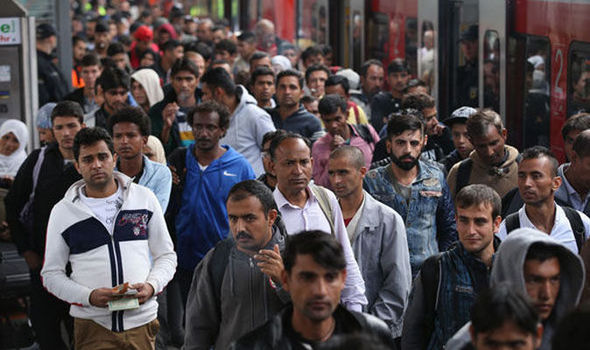
Thousands of far-right protesters marched through Madrid on Saturday, demanding “social aid” for Spaniards and holding banners and placards reading “Spaniards Welcome,” a play on the “Refugees Welcome” movement currently organising across Europe.

About 10% of Spain’s 46 million people are foreigners, according to the National Statistics Institute.

Many were drawn by opportunities during a real-estate boom that preceded the crash of 2008. The population has declined each of the past three years due to an outflow of immigrants to their home countries.

With the unemployment rate at 22.4%, many immigrants who remain have had to resort to working in the underground economy.

They are commonly seen on the streets of Spanish cities selling pirated handbags and videos.

Facebook to help Merkel censor anti-migrant posts

Facebook CEO Mark Zuckerberg was caught discussing the censorship of anti-migrant posts at the United Nations development summit Saturday while speaking with German Chancellor Angela Merkel.

According to CNBC, the pair were picked up by a hot mic after Merkel confronted Zuckerberg on social media posts critical of “the wave of Syrian refugees entering Germany.”

After being asked about Facebook’s efforts to curtail speech, Zuckerberg stated, “We need to do some work,” confirming he’d already started looking at ways to hinder comments in opposition to Merkel’s immigration stance.

“Are you working on this?” Merkel asked. “Yeah,” Zuckerberg responded before their microphone was cut.

In response to the shocking revelation, media outlets such as Bloomberg immediately leapt to the defense of the tech giant, insinuating that any critique of the German government’s response to the migrant crisis would be “racist” and “xenophobic.”

Only just last week, an article by Infowars’ Kit Daniels examining the pope’s controversial comments on mass immigration was pulled and barred from Facebook without explanation.

Since the migrant crisis began, news outlets across the globe have both covered up crucial facts, specifically NATO’s responsibility in destabilizing Syria, and gone out of their way to outright ignore any stories that highlight the criminal acts of migrants.

Zuckerberg’s penchant for censoring speech deemed politically incorrect is unsurprising given his meeting late last year with Lu Wei, the czar of China’s authoritarian Internet censorship system.

Source: Infowars

Mood against Merkel changing as migrants turn to rape

Germany is in a state of siege.

On the busy shopping street in Giessen, a German university town twinned with Winchester, migrant Atif Zahoor tucks into a chicken dish with his brother and cousin at the curry restaurant Chillie To Go.

They have left good jobs back in Karachi, Pakistan, and now want to be Europeans.

In late July the three slipped into Germany with their wives and children, using illegal documents. They live together in a five-bedroom house, rented for them by Chancellor Angela Merkel’s government, a 40-minute drive away from Giessen, which is home to the biggest migrants’ camp in the country.

‘We paid a trafficking agent for false visas to fly here to Germany,’ says 34-year-old Atif. ‘We claimed asylum and came to Giessen camp with other migrants. Three weeks ago, because we had families, they gave us a proper home.’

Atif is well-dressed and speaks perfect English. He used to be a transport manager at Karachi airport and is from a well-to-do family. Between mouthfuls of curry, he adds: ‘But there is violence between political gangs in Karachi.

Lots of people are leaving for Europe. The trafficker decided that Germany was the place for us because it is welcoming refugees.’

Yet the raw truth is that Atif is not fleeing war or persecution. He is one of thousands of economic migrants getting into Germany as the EU’s immigration crisis grows bigger each day.

Jens Spahn, a deputy finance minister in Chancellor Merkel’s government, said this week: ‘Not everyone can stay in Germany, or in Europe. If people are coming for poverty reasons… we have to send them back.’

Mrs Merkel’s offer last month to accept all refugees from war-ravaged Syria opened the floodgates. More than a million migrants are expected this year alone, the bulk of them far from genuine asylum seekers. There is now deepening disquiet in this Christian country, dotted with churches, that it is being overwhelmed by people of a different religion and culture.

The Mail reported how social workers and women’s groups in Giessen wrote a letter to the local state parliament claiming that rape and child abuse were rife in the refugee camp. The allegations were corroborated by Atif over his curry. ‘The camp is dangerous,’ he agreed. ‘Men of different nationalities fight and women are attacked.’

The letter says the camp, far from being a peaceful haven for those fleeing war, is a dangerous melting-pot, where there have been ‘numerous rapes and sexual assaults, and forced prostitution’.

There are even reports of children being raped and subjected to sexual assault, it adds.

‘Many women have felt the need to sleep in their clothes… they won’t go to the toilet at night because rapes and assaults have taken place on their way to, or from, there. Even in daylight, a walk through the camp is fraught with fear.’

At the Lidl supermarket a few hundred yards from the camp, a well-dressed German woman packing her shopping into a Mercedes saloon rolls her eyes at me as a group of Middle Eastern youths walk by. ‘What do we do?’ she asks. ‘It has happened now and it will never be the same again.’

Source: Daily Mail

Austrian right doubles votes in regional election

The far-right Freedom Party (FPOe) doubled its votes Sunday in a regional election in Upper Austria province dominated by the issue of migration, according to final results issued by the provincial government.

With a result of 30 per cent, FPOe became Upper Austria‘s second-strongest party, relegating the Social Democratic Party (SPOe) to third place.

The FPOe had “taken the worries and concerns of the population seriously and understood them,” partly leader Heinz-Christian Strache said.

Voter surveys showed that nearly two thirds of voters felt that the refugee issue was important.

Austria is the main transit country for migrants travelling from the Balkans to Germany. Nearly 19,800 people arrived in Austria on the weekend, police estimated.

The populist right-wingers had called for stricter border controls and a fence similar to Hungary‘s to control the flow of thousands of migrants that have been arriving daily in recent weeks. They also accused the government in Vienna of inaction amid what they called “asylum chaos.”

The central government and regional politicians had bickered for months over creating sufficient accommodation for new refugees.

As arrivals soared over the past weeks, the government introduced border controls, deployed the army at the border and started discussing more restrictive asylum rules shortly before the regional election.

Social Democratic Chancellor Werner Faymann said the migratory flow from Syria was not the government‘s fault. “I say yes to controls and order, but it must absolutely done in a humane manner,” he said.

Faymann‘s party got 18 per cent of the votes, nearly 7 percentage points less than in the previous election in 2009.

The conservative People‘s Party (OeVP), which forms a coalition with the Social Democrats in Faymann‘s cabinet, remained the strongest force in Upper Austria but plummeted 10 percentage points to 36 per cent.

Upper Austria‘s conservative governor Josef Puehringer said the EU‘s migration policy decisions in the past days had come too late to alter the election result.

The FPOe hopes to carry Sunday‘s momentum forward to the Vienna city council polls on October 11. Three years before the next regular parliamentary election, the rightists have been leading surveys for months, ahead of the two national coalition parties.

Source: dpa

President urges Germans to work harder for migrants

Germany’s domestic intelligence chief warned Sunday of a radicalisation of right-wing groups amid a record influx of migrants, as xenophobic rallies and clashes shook several towns at the weekend.

President Joachim Gauck meanwhile warned of Germany’s “finite capacity” to absorb refugees, cautioning against more “tensions between newcomers and established residents”.

Domestic spy chief Hans-Georg Maassen said that “what we’re seeing in connection with the refugee crisis is a mobilisation on the street of right-wing extremists, but also of some left-wing extremists” who oppose them.

He added, speaking on Deutschlandfunk public radio, that for the past few years his service had witnessed a “radicalisation” and “a greater willingness to use violence” by all extremist groups, including the far right, the anti-fascist far-left and Islamists.

Maassen spoke as Germany expects up to one million migrants this year, and after protests against refugee homes and clashes with police again rocked several towns, mostly in the former communist East Germany.

Police and soldiers guarded two buses carrying about 100 migrants Saturday night to a shelter in the town of Niederau, in the eastern Saxony state, after right-wing protesters had rallied at the site, a former supermarket, since Friday.

More than 1,000 people also demonstrated against refugees in several towns in the eastern state of Mecklenburg-Western Pomerania Friday, including in coastal Stralsund where three people were wounded in clashes with counter-protesters.

In the eastern city of Leipzig, the right-wing rally “Offensive for Germany”, organised by local anti-Islam activists with about 400 marchers, sparked a larger counter-protest that police said drew more than 1,000 activists.

In the ensuing street clashes, the rival groups hurled rocks and fireworks at each other.

In the western city of Bremen unidentified people attempted to set fire to a tent that was to house refugees from October.

Gauck, in an evening speech, urged “a broad social debate” on managing the influx, to ensure a “humane reception policy into the future”.

“Our hearts are wide open, but our capabilities are finite,” Gauck said, according to the pre-released text of a speech he was to give in the western city of Mainz.

“Given the rapid influx,” he said, the government must now “promote the construction of apartments and build schools, hire teachers and kindergarten staff, adjust the labour market and vocational training, teach the German language and German law — and do all of that at the same time”.

Gauck called Germany’s massive volunteer efforts to welcome the migrants a “grassroots movement of humanity”, but also warned of more impending “tensions between newcomers and established residents”.

Source: AFP

Who is twitter-luring refugees to Germany?

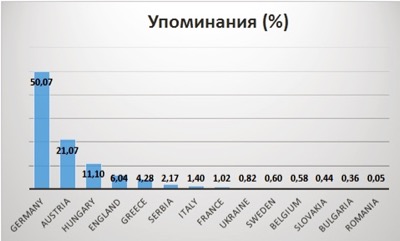
Content-analysis of a great number of tweets that triggered the ongoing wave of migration from Turkey to Germany since August this year suggests that these human streams were inspired and channeled from outside of the continental Europe.

According to Vladimir Shalak from the Russian Academy of Science who developed the Internet Content-Analysis System for Twitter (Scai4Twi), his study of over 19000 refugees-related original tweets (retweets discounted) demonstrates that the vast majority of them mention Germany and Austria as the most refugee-welcoming countries in Europe:

Importantly, 93% of all tweets dedicated to Germany contained positive references to German hospitality and its refugee policy:

• Germany Yes! Leftists spray a graffiti on a train sayin “Welcome, refugees” in Arabic
• Lovely people – video of Germans welcoming Syrian refugees to their community
• Respect! Football fans saying “Welcome Refugees” across stadiums in Germany. _ • This Arabic Graffiti train is running in Dresden welcoming refugees: (ahlan wa sahlan – a warm welcome).
• ‘We love Germany!,’ cry relieved refugees at Munich railway station
• Thousands welcome refugees to Germany – Sky News Australia
• Wherever this German town is that welcomed a coach of Syrian refugees with welcome signs and flowers.

Analysis of 5704 original tweets containing #RefugeesWelcome” hashtag and a country name lead to even larger gap between Germany and the rest of Europe.

Only 6,4% of all tweets with “#RefugeesWelcome”+Germany came from Germany itself. Almost half of them were originated from UK, USA and Australia! Remote planetmates are thus inviting guests to visit your home without inquiring your opinion beforehand!

On Aug 27 forty automatic netbots @changing_news, @changing_news1,…, @changing_news39 from the United States simultaneously issued the following tweet at 8:00:33AM:

«A new welcome: Activists launch home placement service for refugees in Germany and Austria #News #Change #Help»

On Sept 1 the same group of netbots releases same tweets with caps on at 22:30:37:

«A New Welcome: Activists Launch Home Placement Service For Refugees In Germany And Austria #News #Change #Help»

On August 29 at 11.02PMa group of 80 netbots posts the following:

«Thousands Welcome Refugees to Germany at Dresden Rally: Thousands of people took to the streets of the German city of Dresden on Satu…»

Another group of fifty netbots from Australia (all created on Feb 14, 2014 between 06:02:00 до 06:24:00AM) publish a post on Aug 31 at 17:26:08:

«#hot Football Fans in Germany Unite with ‘Refugees Welcome’ Message #prebreak #best»

On Sept 1 at 07:29AM 95 netbots owned by Media for Social and Cultural Impact, Dallas, Texas, USA publish the following tweets:

«German Soccer Fans Welcome Refugees Amid Ongoing Crisis: As Europe faces the challenge of a wave of migration…»

Needless to say that every original tweet was multiplied in dozens of copies and spreaded Twitter-wide.

Andrey Fomin

Source: Oriental Review (Russia)

German intel concerned about Islamists recruiting migrants

German intelligence warned Tuesday that the number of Islamic extremists in the country had increased sharply in recent months and expressed serious concern that they were recruiting among refugees.

The Office for the Protection of the Constitution (BfV), Germany’s domestic security watchdog, said the number of radical Salafists had surged to 7,900 in September from 7,500 in June, and that many were trying to lure asylum-seekers into their ranks.

“We are very concerned that Islamists in Germany are trying, under the cover of humanitarian assistance, to exploit the situation of the refugees for their own ends and to proselytise and recruit among asylum-seekers,” BfV president Hans-Georg Maassen said in a statement.

Germany expects to receive up to one million asylum-seekers this year, five times more than last year. Syrians, who are fleeing their war-ravaged country, form the largest group.

Maassen said that a total of 740 radical Muslims had left Germany to join jihadists in Syria and Iraq, 20 percent of them female. Around one-third of those who went to the region have returned to Germany, while about 120 of them have been killed.

He said the BfV was keeping close watch on such activities given their “significant radicalisation potential” in the migrant community.

“We are keeping a particularly close eye on unaccompanied minors among the refugees, who could be easy targets for Islamists,” he said.

German police carried out dawn raids in Berlin Tuesday targeting individuals suspected of inciting people to go and fight for the Islamic State group in Syria.

The raids began at 6:30 am (0430 GMT) and targeted, among others, a 51-year-old Moroccan suspected of recruiting for the jihadists, police said in a statement.

A 19-year-old Macedonian thought to be currently in Syria is also suspected of involvement in the recruitment drive, it said.

“We are looking for evidence to see whether these allegations are true,” a police spokesman said. No arrests were made.

One raid was conducted at an association linked to a mosque in Berlin’s central Tempelhof district, the spokesman said. Seven homes were also searched.

Source: AFP

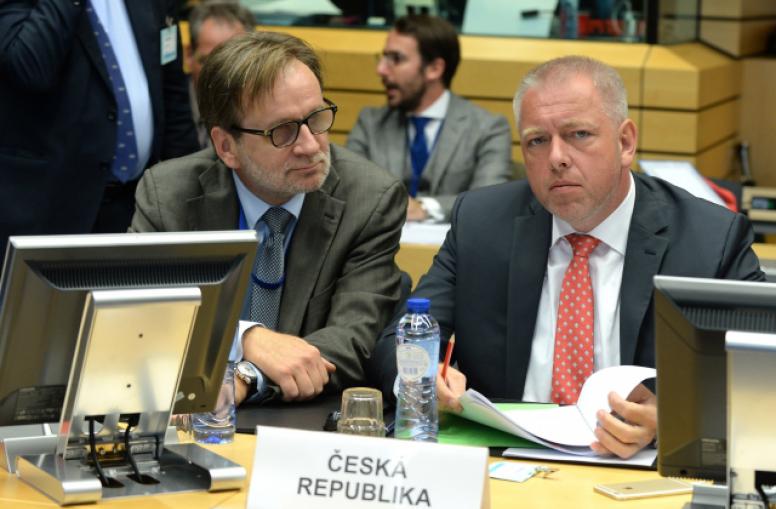
EU approves migrant quota plan despite massive opposition

EU interior ministers have approved a relocation plan on distributing 120,000 refugees among member states. The Czech Republic, Romania, Slovakia, and Hungary, voted against it, while Finland abstained.

Under the plan, refugees will be relocated from Italy, Greece, and Hungary to other countries in the EU.

Prague’s decision did not come as a surprise, as Prime Minister Bohuslav Sobotka said hours before the meeting began that the country would reject any quota system.

He added that any attempt to impose such a scheme could end in “big ridicule for the European Commision” and the governments supporting the plan.

Czech Interior Minister Milan Chovanec expressed his distaste for the plan after the vote, tweeting:”We will soon realise that the emperor has no clothes. Common sense lost today.”

Slovakian Prime Minister Robert Fico said those who decided to push through quotas nonsensically caused a deep rift over a very sensitive issue.

However, under European law, three of the countries that voted against the proposal — the Czech Republic, Romania and Slovakia — would be required to accept migrants against their will, an EU diplomat told The New York Times on condition of anonymity after the vote.

Finland was the only country of the EU’s 28 members to abstain from the vote. Poland, which had previously opposed the proposal, voted in favor of it.

The plan has been criticized by the UN refugee agency (UNHCR), which says it is insufficient.

“A relocation programme alone, at this stage in the crisis, will not be enough to stabilise the situation,” UNHCR spokeswoman Melissa Fleming said, urging the EU to set up reception facilities able to handle tens of thousands of refugees at a time.

The UN estimates that around 480,000 migrants have arrived in Europe this year alone, and are now reaching European shores at a rate of nearly 6,000 a day.

Earlier in the day, German rail operator Deutsche Bahn suspended services to Austria and Hungary until October 4th, citing border controls introduced to manage the record surge of refugees.

Hungary has come under fire for its construction of a 110 mile fence along its border with Serbia. Budapest is expected to extend that barricade by also building fences along the Croatian and Romanian borders.

Slovakia introduced temporary controls on its borders with Hungary and Austria last week, sending an additional 220 police officers to the area.

Germany and France have been rallying for a quota system for weeks, with German Chancellor Angela Merkel saying earlier this month that such a plan would be a “first step.” She has stressed that all member states should share responsibility.

The Organisation for Economic Co-operation and Development says Europe can expect a record one million people to request asylum this year, almost half of which will likely qualify to be taken in.

Source: RT

An estimated 35 million migrants heading for Europe

Shock estimates predict up to 35 million refugees could head for Europe due to hugely unstable situations across the world.

The huge figure was revealed today by Hungary’s minister for foreign affairs and trade Peter Szijjártó.

Speaking as the country begins work on its second fence to stop migrants heading across its border he predicted the current crisis will continue for years.

Mr Szijjártó told the Hungarian Times: “The name of the fence is ‘Temporary Security Border Fence’ but I think there is no question that in this case temporary means years.

“It’s a self delusion to call this situation a migration crisis; it is a massive migration of nations, with inexhaustible reserves.

“I don’t think that the analysis results, stating that 30-35 million people out there could possibly become migrants, would be an exaggeration.

“Libya, Yemen, Syria, Iraq and Afghanistan are all countries with a huge population and an extremely unstable situation.”

The Hungarian government also defended itself from criticism over its fences.

The first barrier was put up at its border with Serbia but, after migrants changed their route, they have now begun erecting a 41 kilometre fence at Croatia.

Migrants look to break through to Hungary as that sees them enter the European Union’s Schengen Zone which offers free movement between member countries.

He said: “The recent international political decisions created an unstable situation around Europe that makes sure that the amount of people won’t decrease.

“This is why it’s extremely important to protect our borders.

“This issue wasn’t this important until now, so the European Union neglected it a little bit.

“It became clear that – though its the border of Schengen – Greece couldn’t protect the border of the European Union.

“The Hungarian/Serbian border is another border of Schengen. If we want to follow the orders of Schengen, we have to build a physical obstruction, because this 175 km long area is quite easy to cross.

“The European Union just realised what the Schengen border means.

“If we want to keep the freedom of movement in the European Union, we have to protect the outer borders.”

Source: Express

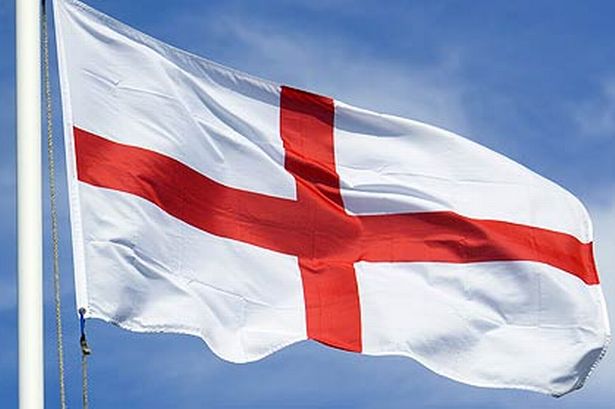
English the least patriotic nation

It may be St George’s Day in April, but don’t expect a sea of red and white flags to be flying across the nation.

England is the least patriotic country in Europe, according to a survey that found only 10% of people would proudly display our national emblem in public.

Political correctness and fears of being branded racist because of the flag’s links with far-right groups have left folk too “scared” to fly the cross.

But, incredibly, just one in three people actually knows when St George’s Day is, the survey by This England magazine found. Editor Stephen Garnett said: “It was shocking to see the results.

“We’re disappointed English people are afraid of displaying the St George’s Cross. We want to reclaim the flag from extremists by asking as many people as possible to fly it.

“It was shocking to see the amount of people who don’t fly the flag because of fear of being judged. It was also very worrying that so many said political correctness stopped them celebrating their national pride.”

The study found most English people gave themselves 5.8 out of 10 when asked how patriotic they felt. The Dutch are Europe’s most loyal at 7.18, narrowly ahead of the Welsh on 7.06.

Four out of 10 participants said they felt England has completely lost its identity.

Source: The Mirror

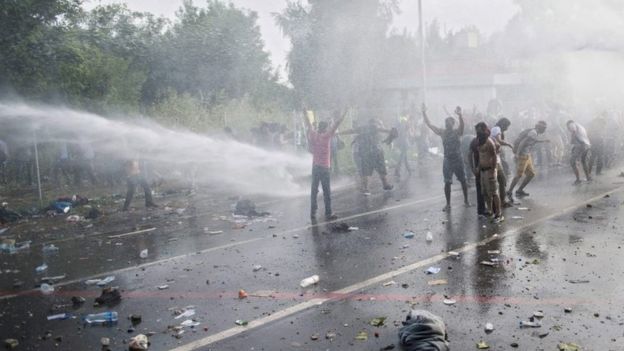
Riot police clash with migrants on Hungarian border

Hungary detained 29 asylum seekers in clashes at the Hungarian-Serbian border on Wednesday. Among them was “an identified terrorist,” according to a PM security aide.

Gyorgy Bakondi, a security adviser to Hungarian Prime Minister Viktor Orban, said that 20 police officers were injured in the violence after refugees and migrants broke through a razor wire fence on the border between the Hungarian town of Roszke and Horgos in Serbia on Wednesday.

Twenty-nine people were detained, said Bakondi who added that “police also captured an identified terrorist” RT reported.

Meanwhile Hungarian riot police have fired tear gas and water cannon to force migrants back from the Serbia-Hungary border.

Hundreds of people have massed at a closed crossing point near the Serbian town of Horgos, and are involved in a tense stand-off with police on the other side of the border.

Some migrants threw missiles, including stones and water bottles.

Many of the migrants want to reach Germany, amid divisions within the EU over how to deal with the crisis.

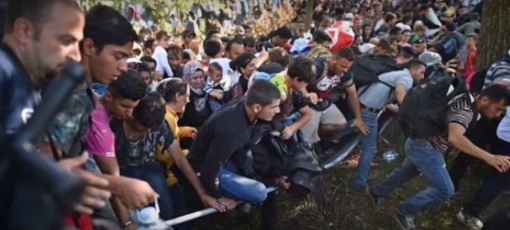
Migrants break through police lines in Croatia

Amid chaotic scenes in Croatia, hundreds of asylum seekers surged past security forces on Thursday to continue their journey to Western Europe.

Some 9,000 migrants and refugees have now poured into Croatia after riot police and a razor wire fence thwarted their efforts to pass from Serbia into Hungary.

Fed up with waiting for transport to continue their journey, huge crowds at the Croatian border town of Tovarnik pushed past police lines.

Now there seems no stopping this surge of humanity – including many people fleeing the Syrian conflict – despite Croatia saying it can’t take any more migrants.

Interior Minister Ranko Ostojic said Croatia would provide migrants with safe passage to reception centres around the capital, Zagreb, but that those not seeking asylum would be considered illegal immigrants.

He said 6,500 had entered in the past 24 hours.

Source: Euronews

Journalist buys fake Syrian passport for Dutch premier Rutte

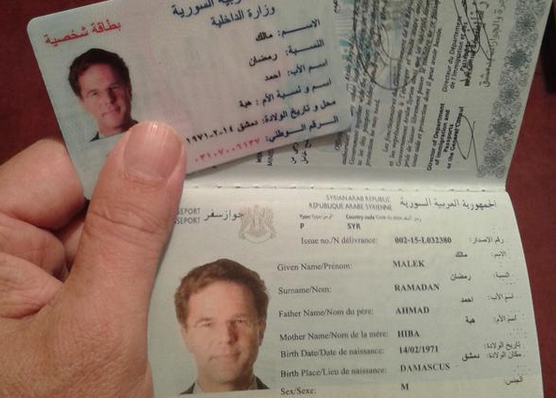
A Syria-based journalist for news magazine Nieuwe Revu has managed to obtain a forged Syrian passport and ID card with a photograph of prime minister Mark Rutte on it.

Harald Doornbos paid some €750 for the passport, which he was able to pick up from the forgers within 40 hours.

The fixer told Doornbos that he would be able to enter Cyprus with the passport, which was in the name of Malek Ramadan.

Doornbos said the aim of the exercise had not been to buy a forged passport featuring Rutte, but he had been asked to supply a name and photograph, so he opted for the prime minister.

Since the outbreak of the Syrian war, thousands of blank passports and the Assad government’s printers have ended up in the hands of insurgents, according to Revu. These insurgents will sell passports showing any photo given to them to anyone willing to pay.

Doornbos describes the consequences as terrifying as it will be even more difficult for security services to detect terrorist if getting hold of a fake identity is this easy. Doornbos describes the route a terrorist will take, according to his sources:

“From an ISIS or al-Qaeda area in northern Syria a returning foreign terrorist fighter will travel to Bodrum in western Turkey. From there he makes the illegal crossing to Greece. In Greece he shows his false Syrian passport to the authorities. Since the fake passport gives a fake name, the Greeks have no idea that they are not dealing with a Syrian refugee but a member of ISIS or al-Qaeda. From Greece the journey goes through Macedonia and Serbia to Hungary. After arriving in Schengen member Hungary, the jihadist can travel with his false Syrian passport through all the other Schengen states without any further checks.”