English the least patriotic nation

It may be St George’s Day in April, but don’t expect a sea of red and white flags to be flying across the nation.

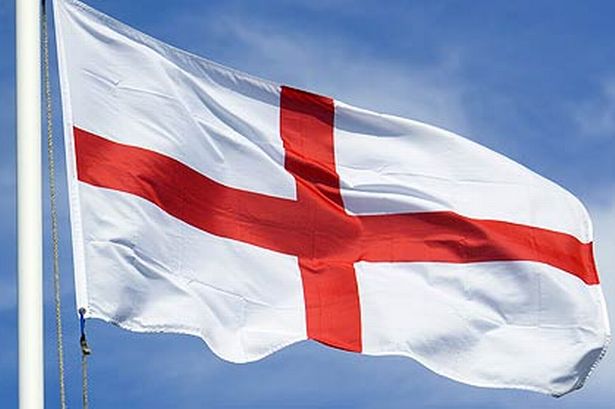
England is the least patriotic country in Europe, according to a survey that found only 10% of people would proudly display our national emblem in public.

Political correctness and fears of being branded racist because of the flag’s links with far-right groups have left folk too “scared” to fly the cross.

But, incredibly, just one in three people actually knows when St George’s Day is, the survey by This England magazine found. Editor Stephen Garnett said: “It was shocking to see the results.

“We’re disappointed English people are afraid of displaying the St George’s Cross. We want to reclaim the flag from extremists by asking as many people as possible to fly it.

“It was shocking to see the amount of people who don’t fly the flag because of fear of being judged. It was also very worrying that so many said political correctness stopped them celebrating their national pride.”

The study found most English people gave themselves 5.8 out of 10 when asked how patriotic they felt. The Dutch are Europe’s most loyal at 7.18, narrowly ahead of the Welsh on 7.06.

Four out of 10 participants said they felt England has completely lost its identity.

Source: The Mirror

Britten’s indifference

One very positive side-effect of the Red October protest was that it aired the stale house of the MSM in Mandelatopia. This breath of fresh air made the usual suspects, and a few newbies, cough convulsively, as expected.

The loudest convulsion was a coarse phlegm-ejecting piece by the foul-mouthed Irish colonial reject Chris McEvoy. It is not worth reading. The second raffish algospasm was by Georgina Guedes. She tried, via an attempt at irony, to persuade her readers that it was oh so bleeding-heart symbolic of the freedom of democratic expression in Mandelatopia seeing a “dignified” black policeman escorting and “protecting” the white Red October marchers. She somehow conveniently forgot that the “dignified” policeman’s colleagues killed another peaceful protester, Mark Tatane, not so long ago – not even to speak of the Marikana massacre, the 1000-plus deaths per year in police custody since 1994, or the fact that both the ex-bosses of the “dignified” policeman are criminals.

The third bawdy paroxysm came from Lady Nicky Falkof, fresh from her 14-year sabbatical at the feet of Her Majesty the Queen of England. Her strident call for “progressive language” (e.g. rights, minorities, diversity, etc.) to remain the sole moral property of those who run Manor Mail & Guardian – at the behest of the Queen and her moneymongers – is only out-cramped by her near-autistic fixation with proper syntax and correct spelling. I’ll deal with Miss Commonwealth Spelling Bee 2013 in my next column.

The most interesting throe was thrown by the ever-so-swanky MSM darling, Sarah Britten. Her piece, albeit well-argued and neatly packaged, was pure sentiment. And it was precisely this appeal to emotion which prompted me to, once more, put my theory about white liberal irrationality to the test.

It only took six tweets of 140 letters/characters each to confirm said theory.This was how it was done. I simply asked her if she supported black lesbians protesting against “corrective” rape. She answered in the affirmative, of course. Then I pointed out that rape affects all women, not just black lesbians. Meaning that black lesbians form a sub-group protesting that which affects them specifically namely “corrective” rape. But, as mentioned before, rape affects all women, not just black lesbians.

From this it follows that it is logically and, even more importantly, morally inconsistent to laud one sub-group (black lesbians, in this case) for their “discriminatory” form of protest – i.e.they only protest against corrective rape, and not all rape – whilst demonising another (in this case, Red October whites) by accusing them of partaking in a “discriminatory” form of protest.. based on the fact that crime affects all, not just whites. Ergo, the rationale underpinning the protest by whites against their slaughter at the hands of blacks is no different to that of black lesbians protesting against corrective rape. Yet, the former is demonised while the latter is lauded and applauded by Britten and her MSM ilk.

It suffices to say that that which is good for the black lesbian goose is not good for the Red October white gander. This means that people like Britten discriminate on the basis of race – in terms of the above-mentioned biased sentiments expressed publicly. Given the above context, and what we know from all the standard definitions of racism, this would make Britten a racist.

Yet I doubt whether Britten could be classified as a racist, for she loves all those whites and blacks, et cetera, who agree with her. Meaning that her irrationality must be founded on something other than race-based zealotry. Or is it?

Britten is part and parcel of the upper-class British establishment in Mandelatopia. This group is the richest and (still) most influential collective in the country. They are just another appendage of her Majesty the Queen of England. And, as we know, England is the fons et origo of Pax Britannica. This (former) global empire was built by men like Cecil John Rhodes… whose moral motivations can best be summed up by the following quote; “

I contend that we British are the finest race in the world and that the more of the world we inhabit the better it is for the human race. Just fancy those parts that are at present inhabited by the most despicable specimens of human beings what an alteration there would be if they were brought under Anglo-Saxon influence…

At first glance the above quote seems like the paragon of racism. Not even Verwoerd ever said anything remotely similar. But I think it goes deeper than that. Is it “hate”? I mean, you really need to dislike others quite a lot to refer to them as “despicable specimens of human beings”. In short: are upper-class Brits like Britten hateful racists, like their forebearers, like Rhodes?

I think not. They are simply indifferent to all others, other than themselves. If dislike were an adjective, hate would be its comparative… and indifference its superlative. I mean it is beyond hate to, for example, kill 33 000 women and children in concentration camps and coldly go about carrying out a scorched-earth policy which reduced a unique nation to the poorest white nation on the planet, just for the sake of gold and diamonds. Similarly, it is beyond hate to try and turn the whole population of one of the oldest civilisations on the planet, the Chinese, into opium drug addicts… simply because your love of/for tea caused a huge trade deficit at the time.

It is a cardinal mistake to think that this indifference has, somehow, mysteriously vacated the non-soul of the British upper-class. Just think about the following fact: England is the only country in the Western world which (still) has such a huge divide between the upper and middle class. This divide is rigorously enforced, by complete indifference to the wishes and aspirations of the British middle and lower classes.

And this indifference is still very much present in modern South Africa. Just listen to Nobel Prize winner Nadine Gordimer – a representative of the British elite in this country:

Afrikaner women are lower than rats, closer related to plants, just fit enough to be raped in an act of genus preservation.

Lovely lady, ain’t she? She may have said “hate”, but it is clear from the magnitude of her hate that it is indifference. They only disguise their indifference as hate, so as to appear as if they actually give a continental toss… as if they actually still have one shred of humanity left.

Meaning that the imperial indifference that was once projected (and protected) by the military might of the old British Empire has simply morphed into an imperial indifference enforced by morality. In short; what the sword did for Rhodes, neo-liberalism (à la Pax Brittanica) is now doing for Gordimer, Britten and their useful idiots like Helen Zille, boy-man Fransie Cronje, Eusebius McKaiser, Piet Croucamp, Djonitin Jansen, Anton van Niekerk, Tim du Plessis, Max du Preez, Leopold Scholtz, Willie Esterhuyse, FW de Klerk and ilk.

Therefore never think that they actually care. They feel zilch for other nations, other peoples, cultures, traditions and their moral idiosyncrasies. They are completely indifferent to the plight of all others, especially poor blacks and the white farmers in this country.

The quickest way to rid this warm country of these cold bastards would be to unleash Raka in the form of a Mugabe-Malema on them. But that would lead to wanton slaughter; something the Afrikaner, unlike the British upper-class, has not got the stomach for, unfortunately. The Afrikaner hates wanton slaughter… that is why they organized the Red October protest.

The most humane way to ship their pitiless afters back to their crappy little mud-island with its Islam(ic) weather (partly Sunni, mostly Shiite) would therefore be to treat them with the exact same indifference they display towards all and sundry on the planet. Now that would be cricket, wouldn`t it, Sarah?

On different kinds of Untruth

Stoic

by Albert Brenner

[followbutton username=’albertbrenner1′ count=’true’ lang=’en’ theme=’light’]

Man is not affected by events but by the view he takes of them. Epictetus

It is simply not a winning recipe anymore to use Reason as a tool to counter the irrationality inherent in modern discourses on race. It is as if the methods of the natural sciences – and positivism in the social sciences – have become all but redundant.

For example, the use of statistical analysis to prove that black-on-white crime is vastly more prevalent than white-on-black crime has proven to be ineffective when it comes to calling for even-handedness in academic debates, good faith in politics and legal justice for white individuals and their communities. Similarly, (most) white liberals and their black disciples have no problem acknowledging the scientific validity of IQ test scores when it suits their purposes. Yet when it does not, they deny its validity. This is completely irrational, for the litmus test of rationality demands that one cannot hold A and non-A simultaneously.

Even the utilisation of precise scientific measurements leading to empirically-valid facts are denied by (most) liberals. For example, the average male body has ten times more testosterone than the average female body. Testosterone plays a huge role in behaviour, as any expert in physiology and human behaviour would readily attest to. Meaning that it is simply false to believe that gender is a social construct, because the amount of testosterone in the human body hugely impacts average gender – ergo, role – behaviour.

The above-mentioned examples, and numerous others, proves that traditional forms of truth-validation do not hold sway anymore in the irrational universe of modern discourses on race. Meaning that we are, literally, back in the days of Galileo and the Inquisition… where even 100% proof of heliocentricity could not negate the dogma underpinning geocentricity.

It is therefore imperative that conservatives devise new forms of critique – hence, a new methodology – in order to regain their foothold in the narrative on/of race in the academic and public spheres.

In order to do so, it is necessary to isolate and examine the core rationale, the thesis, holding the (still dominant) liberal race-narrative together. Once this has been done, one only needs to define its antithesis and, if present, exploit the synthesis.

The two most salient characteristics of the liberal race narrative are individual agency and emotionality. The former flows (mostly) from the aestheticism of Nietzsche, Heidegger, Foucault and Derrida. The latter obviously flows from Freud.

Both the above-mentioned are, generally, present in academic discourses in the form of interpretivist theory. This theory is, in very basic terms, underpinned by epistemological assumptions that hold that the “truth” is in man. This is obviously the dialectical opposite (the antithesis) of the classic modernist view that the “truth” is out there somewhere. In short; man creates knowledge, s/he does not discover it… in the Cartesian sense.

These two theoretical perspectives were the main combatants in the so-called Paradigm Wars, as initiated by Thomas Kuhn – in lieu of his relativization of (a single) Truth. It suffices to say that a compromise, a synthesis, has been found after the fog of battle has cleared, namely, sociocultural theory. This theory, albeit a synthesis, is inherently antithetical (to the liberal race narrative) because it emphasises collective agency. Meaning that conservative thinkers would be well-advised to use it as a truth-validating method/ology to counter the emphasis on individual agency, as espoused by liberals. In short; sociocultural theory has the potential to become a marvellous instrument of/for exposing “untruths” in the irrational universe of liberal discourses on race.

To the trickier one, emotionality: what is the antithesis of emotionality? As mentioned in the introductory paragraphs of this column, cold hard scientific facts are unable to function as untruths in the wacky irrational universe inhabited by (most) white liberals. Could indifference be the antithesis of emotionality? This seems to be happening in the public sphere… where the normal white conservative citizenry is becoming increasingly immune to the incessant screams of “Racist, Hater, and Nazi baby-seal clubber!” by bleeding-heart white liberals.

It is as if indifference has become a potent weapon in the fight against the emotion-laden zealotry of the white liberal establishment in the public sphere. But now the question obviously is; how does one colloquialize indifference into solid academic theory with which to counter the still dominant left-wing narrative on race-related issues?

I can only think of one school of (Western) philosophy that was passionate about indifference (pun intended): Stoicism. Maybe therefore a re-evaluation of Stoicism could assist in developing the necessary theoretical foundations from which to utilise indifference as weapon – alongside sociocultual theory – with which to expose untruths in Cloud Cuckoo Land.

Stoicism was, after all, the moral backbone of the old British Empire… which, as we know, was very successful. So why not try a winning recipe…?

[followbutton username=’albertbrenner1′ count=’true’ lang=’en’ theme=’light’]

Britain, the global bully

The global reach by Britain is astounding. A new study has found that at various times the British have invaded almost 90 per cent of the countries around the globe.

The analysis of the histories of the almost 200 countries in the world found only 22 which have never experienced an invasion by the British.

Among this select group of nations are far-off destinations such as Guatemala, Tajikistan and the Marshall Islands, as well some slightly closer to home, such as Luxembourg.

The analysis is contained in a new book, All the Countries We’ve Ever Invaded: And the Few We Never Got Round To.

Stuart Laycock, the author, has worked his way around the globe, through each country alphabetically, researching its history to establish whether, at any point, they have experienced an incursion by Britain.

Only a comparatively small proportion of the total in Mr Laycock’s list of invaded states actually formed an official part of the empire.

The remainder have been included because the British were found to have achieved some sort of military presence in the territory – however transitory – either through force, the threat of force, negotiation or payment.

Incursions by British pirates, privateers or armed explorers have also been included, provided they were operating with the approval of their government.

So, many countries which once formed part of the Spanish empire and seem to have little historical connection with the UK, such as Costa Rica, Ecuador and El Salvador, make the list because of the repeated raids they suffered from state-sanctioned British sailors.

Among some of the perhaps surprising entries on the list are:

* Cuba, where in 1741, a force under Admiral Edward Vernon stormed ashore at Guantánamo Bay. He renamed it Cumberland Bay, before being forced to withdraw in the face of hostile locals and an outbreak of disease among his men. Twenty one years later, Havana and a large part of the island fell to the British after a bloody siege, only to be handed back to the Spanish in 1763, along with another unlikely British possession, the Philippines, in exchange for Florida and Minorca.

*Iceland, invaded in 1940 by the British after the neutral nation refused to enter the war on the Allies side. The invasion force, of 745 marines, met with strong protest from the Iceland government, but no resistance.

* Vietnam, which has experienced repeated incursions by the British since the seventeenth century. The most recent – from 1945 to 1946 – saw the British fight a campaign for control of the country against communists, in a war that has been overshadowed by later conflicts involving first the French and then Americans.

It is thought to be the first time such a list has been compiled.

Mr Laycock, who has previously published books on Roman history, began the unusual quest after being asked by his 11-year-old son, Frederick, how many countries the British had invaded.

After almost two years of research he said he was shocked by the answer. “I was absolutely staggered when I reached the total. I like to think I have a relatively good general knowledge. But there are places where it hadn’t occurred to me that these things had ever happened. It shocked me.

“Other countries could write similar books – but they would be much shorter. I don’t think anyone could match this, although the Americans had a later start and have been working hard on it in the twentieth century.”

The only other nation which has achieved anything approaching the British total, Mr Laycock said, is France – which also holds the unfortunate record for having endured the most British invasions. “I realise people may argue with some of my reasons, but it is intended to prompt debate,” he added.

He believes the actual figure may well be higher and is inviting the public to get in touch to provide evidence of other invasions.

In the case of Mongolia, for instance – one of the 22 nations “not invaded”, according to the book – he believes it possible that there could have been a British invasion, but could find no direct proof.

The country was caught up in the turmoil following the Russian Revolution, in which the British and other powers intervened. Mr Laycock found evidence of a British military mission in Russia approximately 50 miles from the Mongolian border, but could not establish whether it got any closer.

The research lists countries based on their current national boundaries and names. Many of the invasions took place when these did not apply.

The research covered the 192 other UN member states as well as the Vatican City and Kosovo, which are not member states, but are recognised by the UK government as independent states.

The earliest invasion launched from these islands was an incursion into Gaul – now France – at the end of the second century. Clodius Albinus led an army, thought to include many Britons, across the Channel in an attempt to seize the imperial throne. The force was defeated in 197 at Lyon.

Mr Laycock added: “One one level, for the British, it is quite amazing and quite humbling, that this is all part of our history, but clearly there are parts of our history that we are less proud of. The book is not intended as any kind of moral judgment on our history or our empire. It is meant as a light-hearted bit of fun.”

The British invented concentration camps in South Africa where they killed 27 000 white Afrikaner women and children.

The countries never invaded by the British:

Andorra

Belarus

Bolivia

Burundi

Central African Republic

Chad

Congo, Republic of

Guatemala

Ivory Coast

Kyrgyzstan

Liechtenstein

Luxembourg

Mali

Marshall Islands

Monaco

Mongolia

Paraguay

Sao Tome and Principe

Sweden

Tajikistan

Uzbekistan

Vatican City

– Daily Telegraph