Britten’s indifference

One very positive side-effect of the Red October protest was that it aired the stale house of the MSM in Mandelatopia. This breath of fresh air made the usual suspects, and a few newbies, cough convulsively, as expected.

The loudest convulsion was a coarse phlegm-ejecting piece by the foul-mouthed Irish colonial reject Chris McEvoy. It is not worth reading. The second raffish algospasm was by Georgina Guedes. She tried, via an attempt at irony, to persuade her readers that it was oh so bleeding-heart symbolic of the freedom of democratic expression in Mandelatopia seeing a “dignified” black policeman escorting and “protecting” the white Red October marchers. She somehow conveniently forgot that the “dignified” policeman’s colleagues killed another peaceful protester, Mark Tatane, not so long ago – not even to speak of the Marikana massacre, the 1000-plus deaths per year in police custody since 1994, or the fact that both the ex-bosses of the “dignified” policeman are criminals.

The third bawdy paroxysm came from Lady Nicky Falkof, fresh from her 14-year sabbatical at the feet of Her Majesty the Queen of England. Her strident call for “progressive language” (e.g. rights, minorities, diversity, etc.) to remain the sole moral property of those who run Manor Mail & Guardian – at the behest of the Queen and her moneymongers – is only out-cramped by her near-autistic fixation with proper syntax and correct spelling. I’ll deal with Miss Commonwealth Spelling Bee 2013 in my next column.

The most interesting throe was thrown by the ever-so-swanky MSM darling, Sarah Britten. Her piece, albeit well-argued and neatly packaged, was pure sentiment. And it was precisely this appeal to emotion which prompted me to, once more, put my theory about white liberal irrationality to the test.

It only took six tweets of 140 letters/characters each to confirm said theory.This was how it was done. I simply asked her if she supported black lesbians protesting against “corrective” rape. She answered in the affirmative, of course. Then I pointed out that rape affects all women, not just black lesbians. Meaning that black lesbians form a sub-group protesting that which affects them specifically namely “corrective” rape. But, as mentioned before, rape affects all women, not just black lesbians.

From this it follows that it is logically and, even more importantly, morally inconsistent to laud one sub-group (black lesbians, in this case) for their “discriminatory” form of protest – i.e.they only protest against corrective rape, and not all rape – whilst demonising another (in this case, Red October whites) by accusing them of partaking in a “discriminatory” form of protest.. based on the fact that crime affects all, not just whites. Ergo, the rationale underpinning the protest by whites against their slaughter at the hands of blacks is no different to that of black lesbians protesting against corrective rape. Yet, the former is demonised while the latter is lauded and applauded by Britten and her MSM ilk.

It suffices to say that that which is good for the black lesbian goose is not good for the Red October white gander. This means that people like Britten discriminate on the basis of race – in terms of the above-mentioned biased sentiments expressed publicly. Given the above context, and what we know from all the standard definitions of racism, this would make Britten a racist.

Yet I doubt whether Britten could be classified as a racist, for she loves all those whites and blacks, et cetera, who agree with her. Meaning that her irrationality must be founded on something other than race-based zealotry. Or is it?

Britten is part and parcel of the upper-class British establishment in Mandelatopia. This group is the richest and (still) most influential collective in the country. They are just another appendage of her Majesty the Queen of England. And, as we know, England is the fons et origo of Pax Britannica. This (former) global empire was built by men like Cecil John Rhodes… whose moral motivations can best be summed up by the following quote; “

I contend that we British are the finest race in the world and that the more of the world we inhabit the better it is for the human race. Just fancy those parts that are at present inhabited by the most despicable specimens of human beings what an alteration there would be if they were brought under Anglo-Saxon influence…

At first glance the above quote seems like the paragon of racism. Not even Verwoerd ever said anything remotely similar. But I think it goes deeper than that. Is it “hate”? I mean, you really need to dislike others quite a lot to refer to them as “despicable specimens of human beings”. In short: are upper-class Brits like Britten hateful racists, like their forebearers, like Rhodes?

I think not. They are simply indifferent to all others, other than themselves. If dislike were an adjective, hate would be its comparative… and indifference its superlative. I mean it is beyond hate to, for example, kill 33 000 women and children in concentration camps and coldly go about carrying out a scorched-earth policy which reduced a unique nation to the poorest white nation on the planet, just for the sake of gold and diamonds. Similarly, it is beyond hate to try and turn the whole population of one of the oldest civilisations on the planet, the Chinese, into opium drug addicts… simply because your love of/for tea caused a huge trade deficit at the time.

It is a cardinal mistake to think that this indifference has, somehow, mysteriously vacated the non-soul of the British upper-class. Just think about the following fact: England is the only country in the Western world which (still) has such a huge divide between the upper and middle class. This divide is rigorously enforced, by complete indifference to the wishes and aspirations of the British middle and lower classes.

And this indifference is still very much present in modern South Africa. Just listen to Nobel Prize winner Nadine Gordimer – a representative of the British elite in this country:

Afrikaner women are lower than rats, closer related to plants, just fit enough to be raped in an act of genus preservation.

Lovely lady, ain’t she? She may have said “hate”, but it is clear from the magnitude of her hate that it is indifference. They only disguise their indifference as hate, so as to appear as if they actually give a continental toss… as if they actually still have one shred of humanity left.

Meaning that the imperial indifference that was once projected (and protected) by the military might of the old British Empire has simply morphed into an imperial indifference enforced by morality. In short; what the sword did for Rhodes, neo-liberalism (à la Pax Brittanica) is now doing for Gordimer, Britten and their useful idiots like Helen Zille, boy-man Fransie Cronje, Eusebius McKaiser, Piet Croucamp, Djonitin Jansen, Anton van Niekerk, Tim du Plessis, Max du Preez, Leopold Scholtz, Willie Esterhuyse, FW de Klerk and ilk.

Therefore never think that they actually care. They feel zilch for other nations, other peoples, cultures, traditions and their moral idiosyncrasies. They are completely indifferent to the plight of all others, especially poor blacks and the white farmers in this country.

The quickest way to rid this warm country of these cold bastards would be to unleash Raka in the form of a Mugabe-Malema on them. But that would lead to wanton slaughter; something the Afrikaner, unlike the British upper-class, has not got the stomach for, unfortunately. The Afrikaner hates wanton slaughter… that is why they organized the Red October protest.

The most humane way to ship their pitiless afters back to their crappy little mud-island with its Islam(ic) weather (partly Sunni, mostly Shiite) would therefore be to treat them with the exact same indifference they display towards all and sundry on the planet. Now that would be cricket, wouldn`t it, Sarah?

Miners shot in the back says lawyer

Fourteen of the 34 Lonmin platinum miners killed by the police in August were shot in the back, a judicial inquiry into the Marikana shooting heard on Monday.

“All fatal projectile wounds were sustained from the back,” advocate Dumisa Ntsebeza told the Farlam commission at the Rustenburg Civic Centre, North West.

“Those who were killed were unlawfully killed by SAPS [the SA Police Service],” he said in his opening remarks.

On 16 August the police opened fire while trying to disperse a group of striking mineworkers encamped on a hill in Nkaneng, killing 34 and wounding 78.

The workers had been carrying knobkerries, pangas, sticks, and iron rods.

The miners went on strike on 10 August, demanding a monthly salary of R12 500. Within four days, 10 people had been killed, two of them policemen and two of them security guards.

Ntsebeza represents the Eastern Cape families of 20 of the men who died.

The family members, many of the women wearing black and blue mourning clothes, sat in the first two front rows of the auditorium at the hearing.

Ntsebeza said the police had claimed the mineworkers charged at officers because they had taken muti (traditional medicine) which made them feel invincible. This was the police’s justification for killing them.

“For us, the subtext of this justification… is that the miners, according to them [police], acted like possessed men, that they had to be destroyed like vermin and that they were destroyed like vermin,” he said.

“Whatever the truth of that tragic day, it cannot be that the SAPS could not have acted differently. [They] could and should have brought the gathering to an end peacefully and without loss of life,” Ntsebeza said.

He said his team would contend that every step the police took leading up to 16 August, and on the day itself, made the workers’ deaths foreseeable and inevitable.

Ntsebeza agreed it was the police’s job to disarm people and disperse gatherings, and that the way they had done so in Marikana was not legitimate.

“The manner and timing… invited injury and death as well.”

He said the police’s decision to send National Union of Mineworkers and Association of Mineworkers and Construction Union officials to discuss the striking workers’ demands was not the correct one.

“SAPS officers on the scene must have known workers were not under the control of the unions… This was a public order issue, not a labour issue,” said Ntsebeza.

It appeared the police had not given the mineworkers an official order to disperse, but rather an ultimatum, and had encircled and entrapped the protesters with barbed wire.

“Blocking the miners’ dispersal route to Nkaneng informal settlement… [they] had no choice but to move in numbers towards police with nowhere else to go,” he said.

“Some of these miners were shot in the back and the back of the head while trying to get away.”

Ntsebeza said the police’s response to the protest was aggressive, misguided, disproportionate, unreasonable, and unlawful. – Sapa

Marikana massacre scene inspected

A rock on Marikana Hill

By Genevieve Quintal and Jonisayi Maromo

A judicial inquiry into the shooting of striking Lonmin platinum workers at Marikana in August concluded an inspection on Monday of the hills where the workers were killed.

Two North West crime scene experts led retired judge Ian Farlam and his team around the area where 34 miners were shot dead by police.

Warrant Officer Patrick Thamae pointed out where bodies were found near the main hill, where the mineworkers assembled in the days leading up to the shooting on August 16.

A large crowd of observers and advocates representing the different parties followed Farlam and the experts.

Thamae pointed out the place where seven bodies were found. Another five were found next to a kraal, he said.

Farlam asked him to show the commission where barbed wire was rolled by police on the day of the shooting.

The commission was then taken a few hundred metres further, to where a single body had been found.

Thamae said the body was found “in the road”.

Cartridge cases of various calibres had been found near the body, he said.

He told the commission a number of R5 rifle and pistol cartridges were found lying in areas surrounding the hill, where police were believed to have been standing at the time of the shooting.

In another area, pistol cartridges and rubber bullets were discovered.

Another crime scene expert, Captain Apollo Mohlaki, led the commission in inspecting a small hill.

Mohlaki pointed out where bodies had been found.

He also showed the judge the place where traditional weapons recovered from the protesters were heaped.

The judge held an umbrella to shield himself from the sun as he was helped up the steep hill.

Large boulders on the hill were chipped by bullets.

The procession inspected other areas where other bodies and bullet cartridges were discovered. The locations had been marked with yellow paint.

Mohlaki pointed out bullet markings and drops of blood on some of the boulders surrounding the small hill.

A group of miners, arrested after the shooting and since released on bail, stood watching on the sidelines of the commission’s inspection. They would not talk to the media.

The workers are represented by advocate Dali Mpofu, who defended expelled ANC Youth League president Julius Malema during his disciplinary hearing.

During the inspection, Mpofu stopped to speak to his clients.

He told Farlam they wanted to point out that three or four helicopters had hovered over the scene on the day of the shooting.

Earlier, the mineworkers undertook their own scene inspection, separately from that of the judicial commission of inquiry.

A miner showed Association of Mineworkers and Construction Union (Amcu) leader Joseph Mathunjwa areas where striking mine workers were shot by the police.

He pointed to an area surrounded by rocks where a body was found, and indicated that the miner was shot from a helicopter above.

[ad 1]

Mathunjwa, wearing a white Amcu T-shirt, took photographs and asked questions.

Before the formal inspection started, residents from the nearby informal settlement approached the scene, singing struggle songs and carrying placards reading: “Don’t let the police get away with murder”.

The crowd shouted “amandla, awethu” while they danced.

A group of policemen stood watching.

The 34 miners were killed and 78 were wounded when police opened fire on them while trying to disperse a group of protesters near Lonmin’s platinum mine in Marikana in August.

Some reports since the event have suggested that several miners were shot dead among rocks a distance from where the police clashed with workers.

The commission’s inspection in loco continues on Tuesday, when the mine hostels, informal settlements and formal settlements will be visited.

The commission will also inspect shafts and any other areas deemed important to the inquiry. – Sapa

Bobby Godsell says Marikana violence ‘outrageous’

Bobby Godsell, former CEO of Anglogold Ashanti and chairman of Business Unity

The violence at Marikana was “outrageous” and the killers needed to be held accountable, Business Unity SA chairman Bobby Godsell said on Monday.

“In an apartheid South Africa with no (democratic) constitution you can say that violence was regrettable and understandable,” he said during a discussion at the Gordon Institute of Business Science in Johannesburg.

“In a constitutional democracy, (violence) is not understandable. It is completely outrageous.

“People must be held accountable for those murders.”

For South Africa to fix what happened at the Lonmin platinum mine in Marikana, North West, wage negotiation processes had to change.

“We have to make wage negotiation work. It has to be inclusive. We have to include people in the negotiation process.

“It has to deliver outcomes that people find broadly acceptable.”

A panel consisting of business leaders, economists and political commentators discussed what led to the deaths of 44 people, most of them striking Lonmin employees, in August.

Executive head of joint venture operations at Anglo American Platinum, Vishnu Pillay, said South Africa needed successful communities to prevent the Marikana tragedy.

Pillay said it was clear there was a link between the social problems faced by Lonmin workers and what the workers wanted from management.

The tragedy, he added, taught the mining community that it needed to conduct its business differently.

Pillay said both the mining company and unions had “in some way” failed the mineworkers in Marikana.

On August 16, police fired on a group of protesters near Lonmin’s Marikana mine, killing 34 and wounding 78. Another 10 people were killed in the preceding week, including policemen and two security guards.

SA Chamber of Mines CEO Bheki Sibiya echoed some of Pillay’s views.

“Mining is a microcosm of what happens in South Africa. Because it is a microcosm we find that a lot of problems which are happening around [the country] are happening in the mining industry as well.”

The fact that most of the 260 people who were arrested on August 16 did not work at Lonmin showed the Marikana tragedy was underpinned by social issues.

Sibiya urged all parties involved in Marikana to stop blaming one another.

“Let’s hang our heads in shame and fix the problem.”

Most of the panellists also criticised he inefficiency of the National Economic Development and Labour Council (Nedlac), a forum where government, labour, business, and community organisations negotiate.

“I don’t go to Nedlac because it’s a waste of time. I don’t go there because the government officials who were supposed to be making it successful decided not to attend,” Sibiya said.

Chief executive of Pan-African Capital Holdings, Iraj Abedian, pinned the blame on the nation’s failure to practice what it preached.

Abedian said everyone knew the mining sector had not complied with its social responsibility targets, and nothing had been done about it.

The government and society had done little about structural risks in the mining sector.

“In economics if you do not manage the structural risk and you hope that it will go away… it bounces back,” he said. – Sapa

Return to work, or be fired! Lonmin tells striking mineworkers

Miners must return to work Monday or face being fired from the platinum mine where rivalry between unions exploded into violence that led to the deaths of 44 people in a week, Lonmin PLC said Sunday. Thirty-four were gunned down by police in one of the worst displays of state violence since apartheid ended in 1994.

One of the leading figures in South Africa’s ruling ANC, former union boss Cyril Ramaphosa, is a non-executive director in the company and also owns a stake in it.

President Jacob Zuma declared a week of national mourning starting Monday to commemorate the lives of all South Africans who have died violently, especially the 44 at Marikana mine.

“The nation is in shock and pain,” Zuma said in a statement. “We must this week reflect on the sanctity of human life … We must avoid finger-pointing and recrimination. We must unite against violence from whatever quarter.”

Hundreds of rock-drill operators have been leading an illegal strike among the mine’s 28,000-strong labor force. Threats of violence kept many more away.

Lonmin had initially ordered miners to return to work by Friday, then, after the shootings, changed the deadline to Monday, spokeswoman Sue Vey explained.

Strikers said they were not sure what to do about the ultimatum. The company has not responded to their demands for the minimum wage to be increased from R5,500 ($688) to R12,500 ($1,560).

Last year after a similar dispute over labor representation stopped work at its nearby Karee mine, Lonmin fired all 9,000 workers. Then it asked them to reapply for their jobs and most were rehired.

“Because we work as a majority, if the majority goes back to work tomorrow I’m going too,” said miner Vuyisile Mchiza.

But “If the majority is not going back to work tomorrow, I’m not going either because I won’t be able to go to work while others are sitting grieving.”

Jeff Mathunjwa, head of the union to which the strikers belong, said he was not talking to journalists until Tuesday, when asked how he was advising his members.

More than 100 people, miners, their families and local community members, processed past the mine Sunday singing hymns as they made their way to the dusty veld where police officers fired a barrage of shots from automatic rifles and pistols at a group of charging miners on Thursday.

A moving memorial was led by Pastor Sakhumzi Qiqimana of Marikana New Creation Ministry who told those gathered: “Now we have no power to come in the middle of the negotiations of the company and the workers, but we are here now to pray and say ‘God forgive us,’ and now we are here to say ‘This (killing) must stop.'”

Police say one of the charging miners shot at them first with a pistol and that they acted in self-defense. Earlier in the week, the strikers had butchered two captured police officers with machetes.

Lonmin said Saturday that it will pay for the educations of all children of mine employees killed in the unrest, up to university level.

A presidential statement Sunday said Zuma would announce the composition of a judicial commission of inquiry into the killings and its terms of reference within a few days. It said he had appointed 10 Cabinet ministers and a provincial premier to visit Marikana on Monday to lead support for bereaved families including the identification of bodies, burials and counseling.

Many people have said they do not know whether missing husbands and sons are among the dead, among 78 wounded, or among more than 250 arrested on charges ranging from public violence to murder.

Zuma urged South Africans to “reaffirm our belief in peace, stability and order and in building a caring society free of crime and violence.”

The shootings have South Africans debating their country’s magnified levels of violence, and the frequency with which they resort to violence to resolve disputes. South Africa has one of the highest murder and rape rates in the world. – AP

Malema asks police to retreat from crowds at Marikana

Former ANC Youth League president Julius Malema asked police on Saturday to distance themselves from the crowds at the Wonderkop village near Rustenburg.

The negotiations between Malema and the police came after complaints from Lonmin workers and residents that they felt uncomfortable engaging with Malema with the police there.

Around three police nyalas were parked in the area.

Police heeded Malema’s call and moved their vehicles about a kilometre away from the gathering.
Malema arrived in Wonderkop a short while ago.

He was given a warm welcome by the residents and mineworkers when he arrived.

‘Malema, stand up’

Women ululated while men who had been seated stood up and clapped their hands.

Some of the women were waving placards reading: “Julius Malema, Boeremag, please stand up.”

The woman holding up that placard explained that she meant to send a message to Malema that the boer (white men) have killed their husbands.

She said they wanted Malema to help them.

Another woman carried a placard reading “R500 reward for killing police, Musina to Cape Town do your best.”

She explained that her placard meant that anyone who could kill police officers from the Limpopo end of the country to the tip of it in the Western Cape would receive a R500 reward.

For the first time, women and men were seated in one gathering since the start of the unrest.
The women were still however, separated from the men by a fence.

Former ANC Youth League spokesperson, Floyd Shivambu, and suspended league secretary, Sindiso Magaqa were also present.

‘Most people shot in the back’

Earlier, Shivambu said he understood the pleas of the miners and said the police were wrong to utilise maximum force to disperse them.

“Most of the people were shot at the back, indicating that they were running away so police actions were not justified,” he said.

A total of 34 people were killed in a shootout that erupted near the mine on Thursday when police tried to disperse striking miners.

More than 78 people were injured. Another 10 people had by then been killed in the violent protests at the mine over the past week.

President Jacob Zuma visited Lonmin on Friday where he condemned the violence. He called for an inquiry into the incident. – SAPA

Dan Roodt: Britain’s hatred of Afrikaners

Following on the Marikana massacre where 36 black miners were killed yesterday, shot by the ANC’s police service, the usual nauseating comments about apartheid and Afrikaner racism are being made by the BBC and other British media. As if we have any control over the behaviour of mine workers at, in this instance, a British-owned corporation Lonmin. Not to mention the ANC regime’s corrupt and often incompetent police force.

A few years ago, the BBC broke into a hysterical fit when an Afrikaner rugby player, Geo Cronjé, moved to share a hotel room with a friend rather than with another player who happened to be “of colour”. The bearded Cronjé was immediately accused of being an odious “racist”. That prompted me to tweet today: “Wonder whether British Lonmin management will share a hotel room with a black miner? BBC please investigate.”

However, on Facebook I was immediately accused of  “dividing South African whites”. I do believe that South Africa’s increasingly oppressed and marginalised white population, who even get blamed when the mostly black police fire upon some very violent and aggressive miners, should find some common ground. But not at the expense of the truth that Britain has always posed a real threat to us. Once again her media are exploiting a tragic incident to cast us in a bad light.

Historically, all the poison against South Africa and Afrikaners was spread by the BBC, The Observer, The Guardian, as well as of course the local English newspapers who, according to Communst Party leader Bram Fischer, “were doing a splendid job”. The caricature of us as khaki-clad Nazis who were barely literate was broadcast all over the world.

Then the English are always going on about anti-Semitism and Nazi propaganda, but their propaganda has actually played a big role in reducing us to a threatened minority in our own country. If blacks today feel justified in torturing and killing us, it is due to the venom and hate pouring out of London, as well as the pens and minds of London’s local sycophants. No wonder Napoleon spoke of “perfidious Albion”.

The problem is, our people have been so damaged by anglicisation that they see the world through Anglo-Saxon eyes and prefer emigraton to other Commonwealth countries where they try to asimilate, ashamed of themselves, hiding from John Bull’s hate. Many Afrikaners disdain the French, the Germans, the Russians, the “dumb Dutch” (Holland actually has the highest average IQ of any white country) and even the Americans as if they were part of the infernal Empire themselves.

In Afrikaans literature, especially in the Cape, there is a nauseating obession with British literature, as if no books had ever been written in other great European languages. There are some exceptions, such as Jan Rabie who married a Scotswoman in Paris, but refused to speak English to her. To her death she spoke Afrikaans with a kind of Scottish drawl.

The blacks around us are Englishmen gone wrong. Only an Englishman can be so megalomaniac as to think he could completely anglicise an African and make him into something which he is not. The English churces in South Africa, especially the Anglican Church, have been in the forefront of inciting South African blacks against the indigenous whites, bearing a large share of the responsibility for the black-on-white  atrocities currently taking place in South Africa.

Our only hope is that Germany might colonise the European Union to such an extent that Britain becomes finally marginalised. There is a rumour that the US wants to “move the City” to New York and so take away 25% of British GDP. We can only hope.

In a recent edition of Die Afrikaner newspaper there was an article on how the infiltrated SA Foreign Ministry prevented immigrants from the Netherlands from coming to SA in the 1960’s but threw open our doors to Britons, fleeing Harold Wilson’s socialist Britain. The author argues that those British immigrants, many of whom still have dual passports, tilted South African politics in favour of the British view of capitulation to the ANC. Although conservative, their children were often radicalised by the local English universities with their neo-Marxist leanings and so became converts to South Africa’s left-wing, anti-Western revolution.

They also voted overwhelmingly “yes” for black rule in the fateful 1992 referendum.

But the tide is turning against the island of hate, in France, in Germany, Russia, South America and even parts of the USA. Once our story gets out into the world, we will again enjoy the sympathy of the whole world, with people volunteering to come and join us in our struggle for liberation here.

While I was indulging in these thoughts of casting off the British yoke – the ANC is largely a creation of the British Left and the Anglican Church – my wife reminded me of how the English had messed up our indigenous Cape Dutch archicture when they first started buying up such properties in the nineteenth century.

The English have always been ranting against us for having owned slaves during the early Cape period. Of course, they forget that Britain was heavily involved in the transatlantic slave trade. A recent book by Marthinus van Bart shows that they even traded slaves in Cape Town.

Not all Afrikaners at the Cape owned slaves in the seventeenth and eighteenth centuries, however. But the Dutch East India Company’s representatives in the Cape normally did.

My wife comes from a family that owned one of the magnificent Cape Dutch houses, Rhone, which is today a tourist attraction. It had no slave bell, indicating that there were probably no slaves.

However, the English were keen to pass themselves off as “landed gentry” and therefore preferred the official residences of former Company officials, having slave bells, such as Vergelegen.

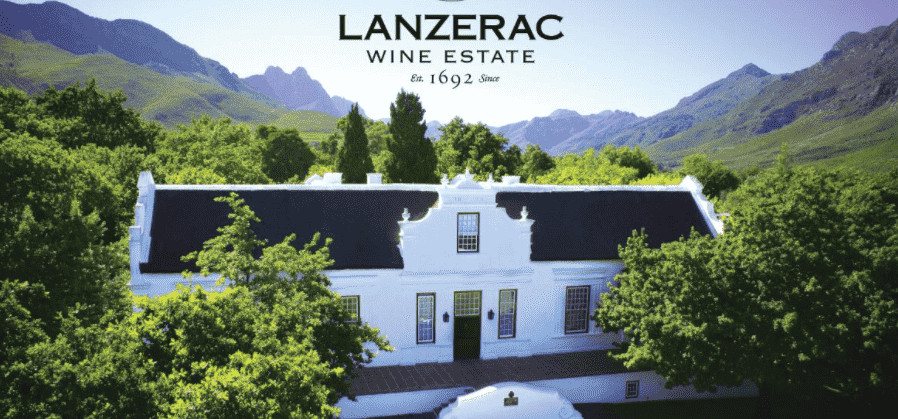
Lacking our sober, Germanic taste, they erected horrible kitsch copies of Cape Dutch houses such as Groote Schuur or destroyed the original architecture as at Lanzerac to add servants quarters. Otherwise, they removed those stately gables.

Today the ANC regime is continuing the proud tradition of name changes, first brought by the British. They invented “classy” French-sounding names like Lanzerac, replacing the poetic Schoongezicht, meaning “fair countenance”.

The Arts and Crafts movement in Britain further added to the aesthetic degeneration of the Cape in the nineteenth century. Since the ANC came to power and with Afrikaner influence on the wane, we have had a similar explosion of ugly, Tuscan-style buildings on the Transvaal Highveld as another British fashion got imported to South Africa.

A black man in an ugly, quasi-Italian house, speaking English and watching soccer on TV; that is about the contempory definition of British civilisation, as can be seen in South Africa.

‘Warning signs of a failing state’ at Marikana – Law society of South Africa

The legal fraternity has blamed a breakdown in conflict resolution in the mining industry for Thursday’s shooting near Lonmin’s Marikana mine, in North West.

“These workers have been the victims of an escalating breakdown in conflict resolution, particularly in the mining industry,” the Law Society of SA (LSSA) said on Friday.

It said in a statement this had been brought about by those who put vested interests before the lives of workers

“This breakdown is symptomatic of our society and body politic in South Africa.”

A total of 34 people were killed and 78 were injured when police tried to disperse striking workers who had encamped at the Wonderkop hilltop, near the mine, in Rustenburg.

Another 10 people had already been killed in violent protests at the mine in the past week.

The LSSA said there had been a failure to rely on the rule of law to resolve conflicts.

“Violence, vigilantism, corruption, xenophobia, disrespect for the law and law enforcement agencies, as well as greed for power, influence and wealth are all collectively destroying the values of nation building, patriotism and respect for law and order. These are the warning signs of a failing state.”

A fresh approach was needed by political parties, workers’ unions, NGOs, religious bodies, gender lobby groups, youth groups, community-based organisations, professional and business organisations.

Leaders in these fields and academics with socio-political and economic skills should to get together “to find common ground in order to reverse the growing damage to our society and country that we see around us”, the LSSA said. – Sapa

‘I understand miners’ frustration’ – farmer near Marikana

Families and friends continued to arrive at Lonmin’s Marikana mine on Friday in the hope of tracking down people who went missing, after 34 people were killed in a clash with police.

“I have been trying to call my brother since yesterday and his phone is off,” said Vuyani Feni outside the Andrew Saffy Memorial Hospital, on the grounds of the platinum mine.

“I don’t know whether he is alive or dead, or if he is in prison,” said Feni.

Thirty four people were killed, 78 injured, and 259 arrested after police fired on a group of protesters near the mine on Thursday afternoon, National Police Commissioner Riah Phiyega said at a media briefing at the mine.

Jacobeth Rapoo said she was at the hospital looking for her partner, who she has a child with.

She left the hospital disappointed because she hadn’t heard any news about him.

Feni said they were disappointed with the National Union of Mineworkers (NUM) for not securing higher wages for workers, and in the mine for always “preaching” safety but not protecting them.

He was also disappointed with the police, saying the Lonmin workers felt they were protected when they saw police were present.

Gcobani Tiya, also trying to find a relative since he had arrived at the Rustenburg mine from Bethal after not being able to make contact by phone, complained that he was being sent from pillar to post.

He had been sent to a police station where he saw a large group of people in a truck who had been arrested. Not seeing his relative there, he left as they were led into the police station.

“I wish they would release a statement or a list that has all the deceased’s names, or tell us which hospitals our relatives are in, because we are going from pillar to post,” said Tiya.

He complained that the mine and police appeared to be giving information to the media, but not to families.

A hospital official said some of the people who were wounded in the shooting on Thursday had been sent to hospitals in Johannesburg, central Rustenburg, and Pretoria.

She said she was not allowed to speak to the media and asked not to be named by journalists who had heard her speaking to the people gathered.

Meanwhile, Marthinus Barnard, who farms in the area, said land owners were “fed up” with the mine.

“People can’t approach the mine. The mine shuts them out. And they cannot approach government. Government has been called, [but] they never come,” he said.

“All I can say is that the miners have it hard. I understand their frustration.”

The people who died were among a group of protesters who went on strike last Friday.

Another 10 people, including police officers and security guards, have died in separate incidents since the unrest began.

Marikana massacre makes world headlines

The scene at Marikana, near Rustenburg, yesterday

The bloodbath that claimed the lives of over 30 people in Marikana in the North West has made international headlines.

The Guardian, New York Times, Sky News, Denver Post, BBC, Washington Post, CNN, and several other media reported on the massacre.

Wikipedia, an online encyclopaedia, put up a detailed one-page entry on it with references to local newspapers and reporters.

On Thursday, police opened fire with live ammunition on armed, striking workers who had gathered on a hill in the area.

Ten people, among them police and security guards, had already died since the start of their protest a week ago.

The protests were believed to be linked to rivalry between the National Union of Mineworkers (NUM) and the Association of Mineworkers and Construction Union over recognition agreements at the mine.

Workers also wanted higher wages. They claimed to be earning R4000 a month, while those living outside the hostel were earning an extra R1000. Reported demands included pay of R12,500 a month.

On Friday, the NUM said the death toll in the shooting had risen to 36.

People around the world were using the social networking sites Facebook and Twitter to share their views on who they believed were to blame for the bloodbath.

Some believed the police were accountable and asked why live ammunition had been used. Others shifted blame to the company for not giving in to the demands of poorly-paid workers.

The Guardian reported that the shooting had led to a drop in the company’s share price.

It said Lonmin’s shares dropped almost five percent in London and four percent in Johannesburg.

Lonmin executives said all its shafts across the South African platinum belt, which account for 12 percent of global supply, were closed to all but essential services, such as ventilation.

Although the price of platinum had fallen steeply in the past six months, the spot price rose two percent on Tuesday in the wake of the violence, it said.

Lonmin executive vice-president Barnard Mokwena was quoted as saying: “Until the place is safe we don’t want to talk about production.”

South Africa accounts for about three-quarters of the world’s platinum, which is used to make catalytic converters in cars.

London-based Lonmin told the Guardian that 96 percent of its production comes from Marikana. – Sapa