Top Gear too white, too male

Has Danny Cohen finally got his man? BBC television chief Cohen appears determined to go down in history as The Man Who Sacked Jeremy Clarkson.

If he succeeds he’ll be the toast of fashionable Shoreditch salons, a folk hero to the Guardianistas and all those who despise Top Gear for being too white, too male and, frankly, too damned British.

The Lilliputian Lefties who infest the BBC see Clarkson as an embarrassment — a racist, sexist, homophobic, xenophobic caveman, who shouldn’t be given house room by a publicly funded broadcaster.

Certainly, Cohen has made no secret of his contempt for Clarkson and this week seized his chance to suspend him over a ‘fracas’ on location, during which the presenter is alleged to have punched producer Oisin Tymon.

Cohen has also pulled the remaining three episodes of the programme while an ‘investigation’ is carried out by the BBC’s human resources department.

What’s to investigate? My understanding is that the facts are not in dispute and Tymon hasn’t made an official complaint. Clarkson denies punching him, but admits there was ‘contact’ and has apologised profusely.

The incident inevitably came to Cohen’s attention, presenting him with an irresistible opportunity to dispose of his bête noire once and for all.

Clarkson was already on a ‘final warning’ following a series of so-called ‘gaffes’, most of them confected.

He was forced by Cohen to make a grovelling public apology after being accused of using the N-word while reciting the nursery rhyme Eeny Meeny Miny Moe to compare two indistinguishable cars.

At best the “offending” clip was inconclusive. Halfway through the second line, he deliberately avoids dropping the N-bomb. More to the point, on Clarkson’s own instructions, it was never broadcast — precisely to avoid another bout of artificial outrage.

That didn’t stop someone at the BBC retrieving the footage from the cutting room floor and passing it to the Daily Mirror in an attempt to discredit him.

Instead of supporting Clarkson, Cohen deliberately humiliated him.

When the rest of the Top Gear presenters jumped ship to Channel 5 fifteen years ago, Clarkson stayed put. His main concern was securing for his producer and old schoolfriend Andy Wilman a proper salary and a piece of the action.

Together, they reinvented the format, turning the show into a global phenomenon bringing in around £50 million a year for the BBC.

And make no mistake, this is Clarkson and Wilman’s triumph. BBC executives simply bask in the reflected glory. So you’d expect the show and its star presenter to be handled with more respect.

Clarkson is fiercely loyal to his Top Gear team, who travel the world together. The reason he complied with Cohen’s order to apologise over the ridiculous N-word furore was because he felt an obligation towards his staff to keep the show going and them in work.

So it’s no surprise that he was appalled at the lack of backing from Cohen when the Top Gear crew were viciously attacked in Argentina recently and had to flee for their lives.

The only thing that seemed to bother the BBC bigwigs was whether Clarkson had set out to provoke the Argentinians by driving a car with a number-plate intended deliberately to remind them of Britain’s victory in the Falklands War.

Funny how the Lefties at the BBC were quick to proclaim ‘Je Suis Charlie’ after a French magazine offended Muslims, but never declare themselves ‘Je Suis Jeremy’ whenever he upsets someone.

Cohen’s decision to pull the remaining Top Gear episodes will mean wasting hundreds of thousands, maybe millions, of pounds of licence-payers’ money already spent on filmed sequences. It will also incur massive compensation claims from foreign broadcasters.

He couldn’t get away with that if he was a director of a commercial organisation, answerable to shareholders. And what about the millions of viewers being deprived of their favourite Sunday night show?

Cohen cares more about pandering to the political prejudices and petty jealousies of his Left-wing peer group in those Shoreditch salons. And that means securing his place in history as The Man Who Sacked Jeremy Clarkson.

By Richard Littlejohn

BBC discovers Afrikaans is spoken in Orania!

‘We sleep with the doors unlocked. You can walk in the street at 3am without any fear’

In the sparsely populated Karoo desert in the heart of South Africa’s Northern Cape, the spirit of Afrikaner independence lives on.

I spent a few days in Orania, a town established in 1991 where no black people live.

I was part of a BBC crew, including Zimbabwean journalist Stanley Kwenda, who were accredited to visit.

And during that time, Stanley and I were the only black people in the town of 1,000 – an unusual experience in modern South Africa.

It is an Afrikaner-only town, where only Afrikaans is spoken, because of fears about “diluting culture”.

“We do not fit in easily in the new South Africa. It [Orania] was an answer to not dominating others and not being dominated by others,” says Carel Boshoff Jr, the community leader.

Mr Boshhoff inherited the town from his father Carel Boshoff Snr, an Afrikaner intellectual and son-in-law of the former South African prime minister, assassinated in 1966, Hendrik Verwoerd.

The town was founded by Mr Boshoff Snr as a registered company shortly before white-minority rule ended in the rest of the country.

Mr Verwoerd’s grandson tells me that his people were faced with a tough question about their future when the black government was elected in 1994.

“In terms of Afrikaners who had been standing very close to the state, when the policies such as black economic empowerment and affirmative action came into place, Afrikaners needed to seriously think about their future. It wouldn’t make sense not to,” he said.

Black Economic Empowerment (BEE) was introduced to encourage more black participation in business.

Orania has also proved to be the answer for those Afrikaners who felt displaced in the land their people had ruled for many decades.

“I see nothing wrong with apartheid,” says Martin Kemp, one of the older residents.

“Of course you get the petty apartheid: ‘You use this toilet I use that toilet’, I don’t think that was necessary but the real apartheid as Dr Verwoerd saw it, there was nothing wrong with it,” he said.

We were taken on a guided tour of the town’s facilities by John Strydom, a retired doctor.

The town’s leaders insist that Orania is misunderstood. “We are not against black people. We are for ourselves,” is their message.

However, black people cannot live here.

Prospective residents are screened by the town council using a strict criterion, which includes first and foremost being an ethnic Afrikaner.

It is not enough to simply speak Afrikaans, as is the case with many black and mixed-race South Africans.

Eerie place

As we sat down with Mr Boshoff for a cup of what the cafe described as “proper Boere [Afrikaner] tea… strong”, I took in some of the surroundings.

Near the entrance of the gated community was a statue of Mr Verwoerd, one of a few of the apartheid-era prime ministers, and the Orania flag – with similar colours to the old republic’s orange, white and blue horizontal stripes – which hung proudly.

The town was quiet; the sound of birds and rustling leaves interrupted by a few cars passing by. It is an eerie place for an outsider.

  • Afrikaners are descendants of Dutch, German and French settlers who arrived in the 17th Century
  • The Dutch, who arrived in 1652, took over land from local people and put them to work as farm workers
  • Afrikaners dominated South Africa for many decades and introduced the apartheid system which was based on racial segregation
  • Orania was established in 1991, by Afrikaner intellectual Carel Boshoff Snr
  • The town is built on 8,000 hectares of farmland along the Orange River

The town boasts amenities such as shops, hair salons, a library, a post office, a hotel, a couple of schools – and churches, a lot of churches.

But beneath the surface of this solitude lurks a fear that leads people to abandon high-paying jobs in the city for lowly jobs in this arid land.

“The levels of crime and violent crimes in South Africa are definitely pushing powers that bring people to Orania. Many of them have been victims of crimes,” says Mr Boshoff.

South Africa is considered to be one of the most violent societies in the world, with one of the highest murder rates.

Official statistics suggest that most crimes actually happen in poor communities between people known to each other, but this has not stopped the fear of crime in other communities.

‘Little giant’

As a result, Orania officials say the town has had an annual growth rate of nearly 10% since its inception.

The Afrikaner community’s totem is the “the little giant”, a man with rolled-up sleeves who features in the flag and the local money, the Ora which is pegged to the South African rand.

The people do their own work from gardening to plumbing, bricklaying and waste-collection – jobs usually done by black labourers in the rest of the country.

“We sleep with the doors unlocked. You can walk in the street at 3am without any fear” – Quinton Diedrichs Bar owner

“It takes some adjusting to. It is more difficult for some people because they are used to how things were done in South Africa, they are not used to manual labour,” says Mr Strydom.

The locals explain that one of the goals in Orania is to help create a generation of pure Afrikaners untouched by the “outside world”.

Bizarrely, the town’s existence is protected by South Africa’s constitution through a clause that ensures the right to self-determination – introduced to reassure those worried about the transition to democracy.

With its old Cape-Dutch styled houses it is like stepping back in time, but some families fear this place could eventually be too small for their children.

‘Respect’

George van Staden moved from Johannesburg recently after he was offered a job in Orania.

Mr Van Staden says his two children are enjoying life in the countryside but he and his wife are preparing them for a world where there is not just one race or culture.

“There is no tertiary institution here for example. They need to be equipped to handle the outside world,” says Mr Van Staden.

“I teach them that there is no difference in skin colour. I teach them if they respect the people in Orania they must also respect the people outside Orania,” his wife Tisha adds.

Another couple, Theunie and Annelize Kruger, say they are still adjusting to Orania’s rules, which include getting permission from the town council before receiving visitors.

“We understand it but it’s a bit frustrating at times,” Mr Kruger says.

‘Defend with our lives’

At the local bar, framed newspaper articles hang on the wall and Afrikaner memorabilia adorns the place.

The owner, Quintin Diedericks, is well-travelled but became disillusioned with South Africa and moved to Orania with his wife, a beauty therapist, about four years ago.

“It’s very safe here. We sleep with the doors unlocked. You can walk in the street at 3am without any fear. You don’t have that where you live,” he tells me.

He blames FW de Klerk, the last Afrikaner to rule South Africa, for the plight of his people.

“We can’t get jobs. It’s like we are being punished for the past” – Drinker in an Orania bar

“He gave away the country for nothing. We had the army,” he says and stops abruptly, beginning to shake his head.

Inside the dimly-lit pub, a game of rugby is on the TV, apart from a few odd glances, no-one seems to pay much attention to Stanley or me.

A few more locals do come over to our table and conversation is polite and largely politically correct, much like in the rest of South Africa.

The pernicious issue of jobs and pro-black policies rears its head.

One local explains it as “reverse racism”.

“We can’t get jobs. It’s like we are being punished for the past,” he says.

They seem oblivious to the oppression of black South Africans during apartheid. For them it was a system that gave order.

“It [apartheid] didn’t affect me. So many people get aggravated now for things they didn’t even witness. It’s over, move on,” says Yolandie Jonk, 29, a call centre agent.

As the sun sets, the bronze busts of Afrikaner leaders spanning over many decades – Paul Kruger, JBM Herzog, DF Malan, JG Stridom and, of course, Mr Verwoerd – look protectively over the town.

Held in disdain elsewhere, they are Orania’s heroes – yet it is difficult to see how the community will be able to remain so completely isolated in such an inter-connected world.

But as one pub drinker put it – being an Afrikaner in Orania is “something we will defend with our lives if we need to”. – By Pumza Fihlani, BBC News, Orania

You can hear a BBC World Service programme about Orania on Tuesday 7 October .

A truly awful British BBC presenter

Jimmy Savile sounds like a prison guard from the concentration camps of the Anglo-Boer War where Afrikaner women and children were subjected to extreme abuse.

Investigators were given “macabre accounts” of disgraced British BBC presenter Jimmy Savile “acting unacceptably” with dead bodies in the mortuary of a hospital.

An investigation into Savile’s abuse at Leeds General Infirmary (LGI) heard the now-dead entertainer claimed to have “interfered with the bodies of deceased patients”, including performing sex acts on them.

Investigators concluded that “it is evident his interest in the mortuary was not within accepted boundaries”.

Dr Sue Proctor, who led the investigation into Savile’s abuse at the LGI, told a press conference a student nurse reported having had a conversation with Savile in which he claimed he performed sex acts on the dead.

Savile’s professed interest in the dead was described by Dr Proctor as “pretty unwholesome”.

Savile visited the mortuary in his role as voluntary porter.

Investigators said he publicly acknowledged his fascination with the dead and there were a lack of stringent procedures surrounding the mortuary.

A series of chilling reports have revealed Savile subjected patients in hospitals across the country to “truly awful” sexual abuse for more than four decades.

Savile’s victims at the LGI ranged from five-years-old to pensioners and included men, women, boys and girls.

Savile, a Radio 1 DJ who also presented the BBC’s Top Of The Pops and Jim’ll Fix It, died aged 84 in October 2011 – a year before allegations that he had sexually abused children were broadcast in ITV documentary Exposure: The Other Side Of Jimmy Savile.

The documentary ultimately led to a joint review by the Metropolitan Police and NSPCC into allegations that the television presenter abused women, girls and boys.

The findings of the review, published in January last year, saw 214 criminal offences, including 34 rapes, recorded against Savile’s name across the UK between 1955 and 2009.

Claims that some of the abuse happened in hospital settings triggered separate NHS investigations published today.

Source: Western Daily Press

BBC embroiled in further child abuse scandal

bbcReportedly, a BBC executive sexually abused boys at his home in Amsterdam.

According to the Sunday Express, in the 1980s, the BBC executive reportedly –

1. Had a known British child abuser staying at his home.

2. Made child porn films at his home.

3. Had boys from British care homes brought to his home to be abused and filmed.

4. Played a key role in distributing the films.

The BBC executive is now retired.

The Sunday Express knows both the identity of the alleged abuser and his former address in Amsterdam.

A former child victim, shown a picture of the BBC executive, has “confirmed that this was one of the men who abused him at the flat in Amsterdam when he was a boy.”

The BBC executive “is said to have travelled back and forth between London and Amsterdam, playing a key role in the distribution of the videos throughout Britain and Europe.”

Meanwhile, Dutch prosecutors have recently ­confirmed that they are to investigate the former Dutch justice ministry secretary-general Joris Demmink for allegedly raping two boys in the 1990s.

Demmink reportedly raped the boys, aged between 12 and 15, while visiting Istanbul.

In 1998, Demmink was mentioned in connection with the Rolodex Affair, an investigation of an Amsterdam child abuse network. The investigation was shut down leading to accusations of a Dutroux-style cover-up.

Children were taken from UK care homes to Amsterdam to be abused and sometimes tortured and murdered.

South Africa’s war of perspectives and the whites’ dwindling fortunes

roodt_dan_wiki

by Dan Roodt dan[at]praag.org

Ever since Britain started getting seriously interested in South Africa after the discovery of diamonds at Kimberley in 1866, there have been at least two conflicting views of the country. Throughout the twentieth century too, South Africa has borne the brunt of the Western ideological revolutions, all the way from colonialism and so-called “white supremacy” to contemporary political correctness. In fact, in the aftermath of the Mandela funeral, one could almost speak of the West’s religious devotion to black Africans who are being endowed with all the capricious amoral innocence of Greek gods.

More precisely, South Africa has been the theatre of an “epistemic war” if I could be excused such a French-sounding term. Apart from the very palpable shifts in demographic, political, economic and military power towards South African blacks, locals are also acutely aware of how the Western world view is no longer the dominant one in South Africa.

A few years ago I spoke to a liberal, anglophone, Jewish woman who lived in Johannesburg but who had some connection to the huge Baragwanath hospital in Soweto, one of the proud achievements of the former Afrikaner-led government. Within the Afrikaner mind, blacks had wanted not real political power but hospitals, schools, universities and jobs which is why they put so much effort into constructing such public institutions. Those institutions are currently being derided as having been entirely useless and a sop, or an insult to blacks, especically to the divine black leaders such as Mandela.

The point is, however, that since the black takeover in the country “they have changed the frame of reference” as my liberal Jewish friend put it. But she wasn’t really speaking in general terms, referring to the broad sweep of history and politics. First and foremost, she was speaking in medical terms. What she was saying, was that with the new order had come a new way of looking at healthcare, at patients and the function of a hospital. In short, the age-old belief systems of Africans have been reasserting themselves and “success” is no longer measured in white or European terms. That is why, when whites decry the deterioration of the state hospital system, as well as standards of professionalism and hygiene there, blacks are quick to retort with the ubiquitous cry of “racism”. After all, blacks are now in charge and they make the rules and set the standards against which a hospital, a school, a university or even a government will be measured.

It is really hard to understand the hullabaloo over President Zuma’s expenditure on what amounts to a private Zulu homestead or kraal at Nkandla. Compared to the billions being frittered away in corruption and unauthorised expenditure, the R240 million (about $20 million) involved seems almost paltry.

It is a truism of historians and philosophers alike, that one’s assessment of a situation – any situation – depends on one’s perspective. Not so long ago I read a paragraph by French political philosopher Alain de Benoist wherein he said:

… I am not fighting for the white race. I am not fighting for France. I am fighting for a world view. I am a philosopher, a theoretician, and I fight to explain my world view. And in this world view, Europe, race, culture, and identity all have roles. They are not excluded. But mainly I am working in defense of a world view. Of course, I am very interested in the future and destiny of my own nation, race, and culture, but I am also interested in the future of every other group.

That all sounds very interesting, but somewhat abstract. To the Afrikaner farmer who is being attacked in his or her home by a group of blacks who had imbibed some form of “medicine” or muti to make them invincible, the quesion is one, not of philosophy but of survival.

At a more mundane or political level, the clash is one of perspectives, even a traditional fight between the left and the right. In South Africa, any statement expressing concern over the future of whites or their well-being is almost always characterised as “right-wing”. Blacks are simply too good-natured and inherently moral ever to commit evil on a significant scale against whites.

This is also the foreign perspective. A Marxist theologian in Germany or a pro-white militant in America would concur that whites “have no place in South Africa, at the southern tip of a black continent”. On the other hand, the Afrikaner perspective is quite the opposite. They feel deeply rooted in South Africa and reject the “black supremacism” of both the foreign whites and the anglicised, superficially Westernised blacks who see them as being “not indigenous” to the country or the continent.

For most of the twentieth century, there has been a perspectival war around the notion of whether Afrikaners or whites really “belong” in South Africa or not. Once, I was shocked to see the former leader of the opposition, Tony Leon, being bluntly told by a BBC announcer on the programme Hard Talk that he was a “white politician” and that South Africa had always been “their country” – meaning that of the blacks – even in former centuries when their numbers were limited to about a million, nomadically drifting through parts of a mostly unpopulated territory twice the size of France.

Buy Dan Roodt's book through Amazon.com
Buy Dan Roodt’s book through Amazon.com

History, as the ruling ANC politicians usually put it in their quasi-communist way, is “a terrain of ideological struggle”. Needless to say, whites have lost that ideological struggle – or the perspectival war over the past – hands down. It is now better to kiss the feet of Mandela’s bronze colosssus than to voice your own opinions or interpretation of history.

Faulkner, that strange author from the American South who uses the “N word” in his novels but depicts his own Southern whites with relentless cynicism, once wrote: “The past is never dead. It’s not even past.” So there will always be a feud over history, everyone’s history.

But looking at the future of South Africa, or even our present safety in a physical sense, it also depends on one’s perspective. To foreigners and overseas correspondents in South Africa, this is Mandelatopia, a liberal democracy with same-sex marriages and universal suffrage – although cannabis is not yet quite legal. According to this view, which is based on a very superficial “multicultural” reading, “South Africa belongs to all who live in it, united in our diversity”, as it is stated in our incongruous constitution, replete with rancour and affirmative-action clauses.

Many whites, especially women, have a sense of impending doom. The crime, corruption and general sense of lawlessness portend worse to come. Usually, they are not arguing against the dominant ideology with its illusions of democratic bliss. Rather, they intuit some kind of typically African implosion or civil war during which whites will be punished for all the evil they have wrought in their zeal to “uplift” and “civlise” blacks, admittedly ridiculous notions within the present context.

To the pessimist or the more intuitive analyst, South Africa’s future represents the “chronicle of a death foretold”, or many deaths, if you will pardon my paraphrasing the fetching title of Gabriel Márquez’s little novel. It will be Zimbabwe on a much vaster scale, and much bloodier. It is already much bloodier, and ultimately the country will be ethnically cleansed of its Caucasian undesirables, probably to universal acclaim.

Depending on one’s point of view, South Africa is either a “problem that has been happily solved” or a disaster in the making. Looking at the past, especially the nineteenth century when indigenous whites were as weak as they are now and were regularly massacred by blacks, as well as the history of postcolonial Africa, I am not macho enough to cast all caution to the winds and believe in the foreign male fantasy of a South Africa that is some kind of Switzerland or Singapore, clean, tolerant and law-abiding.

There being no common ground in this war of perspectives, no rational debate will take place either. I am inclined to trust those “womanly” truths that are as unspeakable as they are likely to come to pass.

Donate or subscribe to praag!

BBC host arrested on sex offenses

Paul Gambaccini
Paul Gambaccini

Veteran BBC TV and radio presenter Paul Gambaccini was arrested on suspicion of sexual offenses, the broadcaster said Friday.

Gambaccini, 64, has worked at the BBC for four decades and is one of Britain’s best-known music presenters. The BBC said he was held at his home and was questioned in police custody Tuesday. He was released on bail later that day.

Gambaccini’s spokesman said the presenter denies the allegations.

Police didn’t confirm the report, saying only that two men, aged 64 and 74, were arrested Tuesday as part of an operation probing historical sexual abuse. The investigation was triggered by the abuse scandal surrounding late BBC broadcaster Jimmy Savile, and has so far arrested more than a dozen people.

Police in Britain don’t name suspects until they are charged.

The BBC said Gambaccini wouldn’t be presenting his weekly radio show Saturday and would stay off-air in the next few weeks.

“Paul Gambaccini has decided that, in light of today’s media attention, he would rather not be on air at present and we respect that decision,” a BBC statement said. – AP

British DJ in court on sex assault charges

Dave Lee Travis
Dave Lee Travis

British radio presenter Dave Lee Travis, who counts Aung San Suu Kyi among his fans, appeared in court Friday charged with committing 11 indecent assaults and one sexual assault.

The 68-year-old former BBC star, wearing a suit and a colourful tie, faced a scrum of photographers and cameramen as he arrived at a London magistrates’ court.

Travis is one of several older celebrities in Britain arrested under the police’s Operation Yewtree, set up in the wake of revelations that late BBC star Jimmy Savile was a prolific sex offender.

Asked by reporters outside court if he would be protesting his innocence, Travis said: “I’m not protesting anything.

“I’d like to speak for three hours to everybody to tell you the story but no sound bites, I’m sorry.”

Travis has consistently denied any wrongdoing since he was arrested in November and his lawyer told the court he would be pleading not guilty.

The disc jockey, whose real name is David Griffin, spoke only to give his name, address and date of birth, and will appear at a higher court in London on September 6.

As he left the magistrates’ court, he told the press: “I am supported by my wife and my friends.”

The charges of indecent assault relate to eight women aged between 15 and 29 at the time of the alleged offences. They date from 1977 to 2003.

He is also charged with one offence of sexual assault relating to a woman aged 23 in 2007.

Travis, nicknamed the Hairy Cornflake, worked at BBC Radio 1 during the 1970s and 1980s and was one of the most recognisable faces in British broadcasting.

Myanmar’s pro-democracy leader Suu Kyi said his BBC World Service music request show had helped her to get through more than two decades under house arrest.

Travis met Suu Kyi when she visited BBC studios during a visit to Britain last year.

Some 14 people have been arrested under Operation Yewtree, three of whom have been charged.

The charges against Travis are not connected to his former colleague Savile, who police believe was one of Britain’s worst-ever sex offenders. – AFP

BBC to cut Israel ‘apartheid’ comments from Nigel Kennedy broadcast

Nigel Kennedy with the Palestine Strings

The BBC is due to cut comments made by violinist Nigel Kennedy about “apartheid” in Israel when it broadcasts his concert, performed with Palestinian artists as part of the Proms musical festival, on British television channels next week.

The concert, held at London’s Royal Albert Hall last week, featured 17 musicians from the Palestine Strings, the troupe performed Vivaldi’s Four Seasons alongside Kennedy.

Kennedy likened the situation in Israel to apartheid in South Africa.

“Ladies and gentlemen, it’s a bit facile to say it but we all know from experiencing this night of music tonight that giving equality and getting rid of apartheid means there’s a chance for amazing things to happen,” said Kennedy.

The decision to cut Kennedy’s comment was made due to “editorial reasons,” they removed because of “the way it fitted in with the program, ” a BBC spokesperson told Al Arabiya English.

“Nigel’s comment to the audience at his late-night prom on August 8 will not be included in the deferred BBC 4 broadcast on August 23 because it does not fall within the editorial remit of the proms as a classical music festival.”

Kennedy has previously refused to play concerts in Israel, but has participated in the Palestinian-run Jerusalem Festival in East Jerusalem.

In 2007 he told the Israeli newspaper Haaretz: “It’s no coincidence. I became aware of the Palestinian story while I was a student in New York. My girlfriend then was Palestinian, and, through her, I began to familiarize myself with and understand the problem even before the [separation] wall and the other atrocities.

“She had to return home every year or she would lose her citizenship, and, like it was for all of us students, that wasn’t exactly her thing. Then I understood that it was simply a way to harass the Palestinians and prevent them from studying,” he added.

Kennedy dedicated his performance at the Proms to Palestinians, according to his introduction.

“The concert tonight is very emotional, because I am performing for people who are imprisoned, to give them two hours of fun and show them that the world has not forgotten about them,” he said.

Dressed in popular Palestinian garments, the players from the Palestinian orchestra played a specially-curated fusion of classical work with Arab and folk music alongside the celebrated violinist. – Al Arabiya

Complaint to the BBC – media release by PRAAG

COMPLAINT FILED ONLINE WITH THE BBC

At the beginning of the programme and also on the BBC’s website at http://www.bbc.co.uk/news/magazine-22554709 John Simpson states: “Apartheid South Africa looked after white people and nobody else. Now some of its white communities face a level of deprivation, or of violence, which threatens their future in the country.” The first sentence is factually incorrect because so-called “Apartheid South Africa” (National Party rule from 1948 to 1994) supplied social and educational services to all inhabitants of the country, albeit at differential rates, from budgets tabled in parliament and therefore widely available. Schools, universities for the use of non-whites were built, as well as hospitals, including the Baragwanath Hospital in Soweto where medical students from the University of the Witwatersrand also trained.

The programme and website article then establish a causal link between such “lack of care” for non-whites under the previous dispensation with the deprivation and violence currently suffered by poor whites. Or at least this is how the viewer/reader will interpret it as they are seen to be “getting their just deserts”.

Although the rest of the programme is not unsympathetic to the current plight of Afrikaners, the factual inaccuracy concerning so-called “apartheid” is but one in a general, systematic, ethnocentric bias against Afrikaners on the BBC, intended to incite world-wide hatred against an essentially powerless minority in South Africa.

END OF COMPLAINT TEXT

PRAAG, as well as Dr. Dan Roodt in his personal capacity, reserves the right to lodge further complaints against the BBC, either with the relevant bodies in South Africa or with the Council of Europe for promoting intolerance and hate speech against Afrikaners.


Dan Roodt: Britain’s hatred of Afrikaners

Following on the Marikana massacre where 36 black miners were killed yesterday, shot by the ANC’s police service, the usual nauseating comments about apartheid and Afrikaner racism are being made by the BBC and other British media. As if we have any control over the behaviour of mine workers at, in this instance, a British-owned corporation Lonmin. Not to mention the ANC regime’s corrupt and often incompetent police force.

A few years ago, the BBC broke into a hysterical fit when an Afrikaner rugby player, Geo Cronjé, moved to share a hotel room with a friend rather than with another player who happened to be “of colour”. The bearded Cronjé was immediately accused of being an odious “racist”. That prompted me to tweet today: “Wonder whether British Lonmin management will share a hotel room with a black miner? BBC please investigate.”

However, on Facebook I was immediately accused of  “dividing South African whites”. I do believe that South Africa’s increasingly oppressed and marginalised white population, who even get blamed when the mostly black police fire upon some very violent and aggressive miners, should find some common ground. But not at the expense of the truth that Britain has always posed a real threat to us. Once again her media are exploiting a tragic incident to cast us in a bad light.

Historically, all the poison against South Africa and Afrikaners was spread by the BBC, The Observer, The Guardian, as well as of course the local English newspapers who, according to Communst Party leader Bram Fischer, “were doing a splendid job”. The caricature of us as khaki-clad Nazis who were barely literate was broadcast all over the world.

Then the English are always going on about anti-Semitism and Nazi propaganda, but their propaganda has actually played a big role in reducing us to a threatened minority in our own country. If blacks today feel justified in torturing and killing us, it is due to the venom and hate pouring out of London, as well as the pens and minds of London’s local sycophants. No wonder Napoleon spoke of “perfidious Albion”.

The problem is, our people have been so damaged by anglicisation that they see the world through Anglo-Saxon eyes and prefer emigraton to other Commonwealth countries where they try to asimilate, ashamed of themselves, hiding from John Bull’s hate. Many Afrikaners disdain the French, the Germans, the Russians, the “dumb Dutch” (Holland actually has the highest average IQ of any white country) and even the Americans as if they were part of the infernal Empire themselves.

In Afrikaans literature, especially in the Cape, there is a nauseating obession with British literature, as if no books had ever been written in other great European languages. There are some exceptions, such as Jan Rabie who married a Scotswoman in Paris, but refused to speak English to her. To her death she spoke Afrikaans with a kind of Scottish drawl.

The blacks around us are Englishmen gone wrong. Only an Englishman can be so megalomaniac as to think he could completely anglicise an African and make him into something which he is not. The English churces in South Africa, especially the Anglican Church, have been in the forefront of inciting South African blacks against the indigenous whites, bearing a large share of the responsibility for the black-on-white  atrocities currently taking place in South Africa.

Our only hope is that Germany might colonise the European Union to such an extent that Britain becomes finally marginalised. There is a rumour that the US wants to “move the City” to New York and so take away 25% of British GDP. We can only hope.

In a recent edition of Die Afrikaner newspaper there was an article on how the infiltrated SA Foreign Ministry prevented immigrants from the Netherlands from coming to SA in the 1960’s but threw open our doors to Britons, fleeing Harold Wilson’s socialist Britain. The author argues that those British immigrants, many of whom still have dual passports, tilted South African politics in favour of the British view of capitulation to the ANC. Although conservative, their children were often radicalised by the local English universities with their neo-Marxist leanings and so became converts to South Africa’s left-wing, anti-Western revolution.

They also voted overwhelmingly “yes” for black rule in the fateful 1992 referendum.

But the tide is turning against the island of hate, in France, in Germany, Russia, South America and even parts of the USA. Once our story gets out into the world, we will again enjoy the sympathy of the whole world, with people volunteering to come and join us in our struggle for liberation here.

While I was indulging in these thoughts of casting off the British yoke – the ANC is largely a creation of the British Left and the Anglican Church – my wife reminded me of how the English had messed up our indigenous Cape Dutch archicture when they first started buying up such properties in the nineteenth century.

The English have always been ranting against us for having owned slaves during the early Cape period. Of course, they forget that Britain was heavily involved in the transatlantic slave trade. A recent book by Marthinus van Bart shows that they even traded slaves in Cape Town.

Not all Afrikaners at the Cape owned slaves in the seventeenth and eighteenth centuries, however. But the Dutch East India Company’s representatives in the Cape normally did.

My wife comes from a family that owned one of the magnificent Cape Dutch houses, Rhone, which is today a tourist attraction. It had no slave bell, indicating that there were probably no slaves.

However, the English were keen to pass themselves off as “landed gentry” and therefore preferred the official residences of former Company officials, having slave bells, such as Vergelegen.

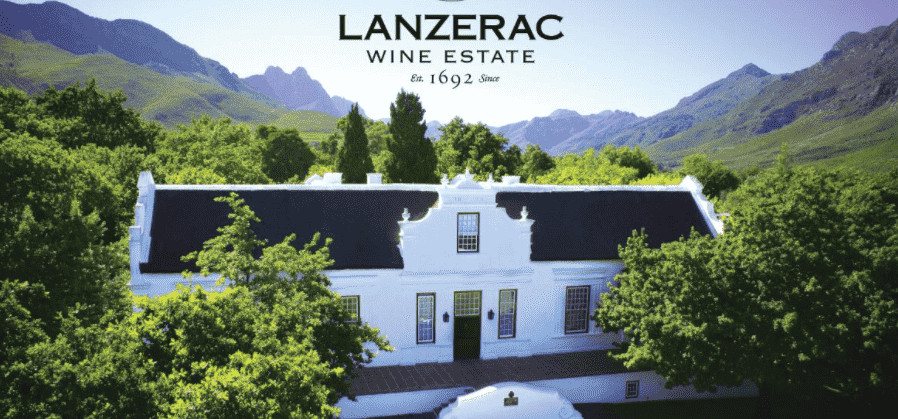
Lacking our sober, Germanic taste, they erected horrible kitsch copies of Cape Dutch houses such as Groote Schuur or destroyed the original architecture as at Lanzerac to add servants quarters. Otherwise, they removed those stately gables.

Today the ANC regime is continuing the proud tradition of name changes, first brought by the British. They invented “classy” French-sounding names like Lanzerac, replacing the poetic Schoongezicht, meaning “fair countenance”.

The Arts and Crafts movement in Britain further added to the aesthetic degeneration of the Cape in the nineteenth century. Since the ANC came to power and with Afrikaner influence on the wane, we have had a similar explosion of ugly, Tuscan-style buildings on the Transvaal Highveld as another British fashion got imported to South Africa.

A black man in an ugly, quasi-Italian house, speaking English and watching soccer on TV; that is about the contempory definition of British civilisation, as can be seen in South Africa.