Dan Roodt: Afriforum and Ernst Roets’s betrayal

Recently, Ernst Roets sought to assure the world that Afriforum “rejects white nationalism”. Whatever he means by that is open to interpretation but he saw fit to characterise me as “white nationalists” in his statement.

I am the father of dizygotic twins, but am not myself a Siamese twin so that one could refer to me in the plural. Unless Roets wanted to show that he was now venturing so far out on the spectrum of PCspeak that he was referring to “he” and “she” as simply “they” as some LGBTI activists do. According to Wikipedia, “In the early 21st century, use of singular they with known individuals has been promoted for those who do not identify as male or female”.

Now, I have news for Ernst Roets. I definitely identify as male, even “toxically male”. I do not wear make-up or dresses, so there is no need for him to refer to me in the plural or “singular they”, as the case may be.

However, his link to a News24 article, contains a previous unwarranted attack on me when his colleague Kallie Kriel sided with the American Daily Show, who fraudulently edited an interview with me to convey exactly the opposite of what I had actually said, to call me a “racist”.

There may be honour amongst thieves, but not among Afrikaners being called “racists”. I think both Kallie Kriel and Afriforum have been vilified as racists more times than I have, but they instinctively side with the enemy rather than with their fellow Afrikaner. Or whites.

This reminds me a bit of a fascinating conversation I had with PW Botha not long before his death. Speaking to him was almost like dialing up history on those old communal telephone lines, with voices activated out of the past. PW Botha had known or met many famous twentieth-century figures, including of course Margaret Thatcher, as well as the first president of Israel, Chaim Weizmann, who had given him a sword. But as a young man in the NP, PW had also served as an aide to Dr. DF Malan.

Apparently PW had quizzed Malan on why the split of 1933 had taken place between the Hertzog and Malan factions. Malan had remained silent for a while, while PW created the same anticipation in me, listening to his firm, well-articulated voice, even at his advanced age. When he spoke the word, it was almost as if I could hear DF Malan pronouncing it himself: “Afrikanerverraad.” That one, terrible word said it all, a century of betrayals that stretched from the Anglo-Boer War right to the moment when Tertius Delport was begging FW de Klerk not to surrender completely to the ANC, one early morning in the Union Buildings prior to the release of the so-called “Record of Understanding”.

Roets’s denunciation of “white nationalism” by referring to me has no other logic than that of a bizarre, atavistic lapse into Afrikanerverraad. Instead of citing any of my multifarious writings, of which there are about a million words scattered on the internet, he prefers linking to Adriaan Basson’s stereotypically liberal News24 with its regular diatribes against both whites and Afrikaners. Clearly, in his zeal to distance himself from “white nationalism”, Roets would collude with the looney left, perhaps even Julius Malema or Andile Mngxitama, with whom Afriforum seem to skirmish in the courts for light entertainment but does not criticise their black nationalism.

As Roets puts it, “black nationalism could be equally problematic, but that is not the point of this article”. No, black nationalism, which is threatening to plunge South Africa into the kind of downward spiral reminiscent of Zimbabwe or Uganda under Idi Amin, may be tolerated. The real danger against which Roets seems to fulminate is “white nationalism”. He defines it thus:

“White nationalism has been described in many different ways, but essentially it boils down to promoting the interests of white people, because they are white.”

Then he goes on to explain that Afriforum has a “communitarian approach” and that “people freely associate with particular communities” that are “naturally organised along cultural, linguistic or religious lines”. Also, “Afriforum does not have a focus on the rights of the ‘white community’ and would object to such a description…”

So whites being singled out for affirmative action or racial quotas in sport or even genocidal rhetoric such as that spouted by Malema or Mngxitama will no longer be defended by Afriforum, being opposed to “white nationalism”. We know that South African whites are not popular, neither with the ANC nor with the mainstream media with whom Afriforum is so cosily aligned, especially News24, so what Ernst Roets is really intimating to us is:

“Whitey, you’re on your own.”

But, Ernst Roets diffidently assures us, it is

“not inaccurate” to “describe Afriforum as a conservative organisation… while we dissociate with the stigma that is today associated with conservatism as an ideology that seeks to return to the past, or that objects to change merely because it isn’t able to deal with change, or that seeks to preserve heritage at the expense of progress”.

Roets’s defence of “conservatism” sounds about as wishy-washy as Afriforum’s objection to the blanket ban on the 1928 flag which it would never display itself and “discourages” people from displaying, but would defend as an expression of “freedom of speech”. So I suppose in tune with Roets’s Canadian-style, multicultural “communitarianism” whereby “people freely associate with particular communities”, including a few die-hard Afrikaners and KhoiSan, but also the communities of Rastafarians, gays and swingers, Afriforum would always be there for them, provided they have signed a debit order.

Gay white nationalists exist and possibly there are conservative Christian swingers too, who knows? Afriforum would reject the former but embrace the latter, or at least it would champion non-nationalist white gays. Nationalism seems to be the thorn in the side here.

Given that it does not itself fly the oranje-blanje-blou, Afriforum would do well to follow the example that I saw at the Canadian embassy in Warsaw in 2018, and hoist the gay flag! After all, no-one would be offended and suspect it of “seeking to preserve heritage at the expense of progress”.

Take it from me, Ernst, if Afriforum had to hoist the gay flag above its headquarters it would be seen as downright progressive and I am sure Eusebius McKaiser would give you at least an hour’s worth of enthusiastic airtime on Radio 702.

Gay pride is kosher, but not white pride, as we know. Call it the Zeitgeist or the dominant ideology, but we are all painfully aware of the weight with which it presses down upon us.

Apart from its casual betrayal of many committed and patriotic Afrikaners such as myself, I see other problems with Afriforum’s lack of conviction in the face of the leftist sewage pipe (“stigmatising and stereotyping”) that is trained on anyone daring to stand up for the rights of the white minority in South Africa. As many people have already said: One does not choose one’s race, despite what the “whiteness theorists” say. Being white, is not something you can be cured of.

Guillaume Faye who died early this year, associated with the so-called “new right” and identitarianism, often stressed that one does not choose one’s identity, but is at least partially defined by one’s enemies. Even if every white in South Africa had to abjure “whiteness” (I must apologise for using this obnoxious term again but it seems apposite), the DA, ANC and all the black-nationalist parties left of it would still see us as “whites”. We are criticised and attacked, sometimes as Afrikaners, but more often simply as “the whites”.

Again, this is none of our own choosing. The moment we object to being insulted, attacked and legislated against as whites, we will be stigmatised as “racists”, “fascists”, “white nationalists”, “heteronormative toxic males” and every other flavour in the leftist cookbook.

Evidently, Afriforum is not up to weathering such a semantic onslaught and would prefer to scurry down the multicultural rabbit hole, together with Justin Trudeau, who may or may not be wearing Islamic robes or his gay-pride costume, depending on the day of the week.

Afriforum seems to have some courage in taking on the powers-that-be. But not enough, I am afraid. In many of its fights, and not only regarding the flag, it seems lukewarm, without passion. Is that what we need, in these times of decay and every-day terror?

The old National Party did not really fight the ANC so much as those Afrikaner parties and groups to the right of it such as the CP, HNP and AWB, Afrikanervolksfront, Freedom Front, etc. Having divided the conservative or righ-wing movement in South Africa, is it any wonder that the NP finally capitulated to the Marxist ANC and South African Communist Party? Afriforum will enter into agreements with Malema’s EFF, such as it did around the “Kill a Boer” song, yet it would not be seen in public, let alone make an agreement with Afrikaner organisations it deems “nationalist”.

It seems to have taken a leaf from the American “cuckservative” handbook: to make youself more respectable to liberals, the left and, of course, the mainstream media, you have to attack other conservatives and stigmatise them as “right-wing” and “nationalist”. The ANC or the EFF does not have to fight Afrikaner organisations; Afriforum will do it for them, in its quest to become the cuckservative champion in South Africa. Soon Ernst Roets will even call Helen Zille of the former Progressive Party and Rand Daily Mail, “right-wing” and “racist”.

Recently, Helen Zille told Max du Preez during their tête à tête recorded on video: “Max, everybody on Twitter calls everybody else ‘racist’.” But I suppose Afriforum wants to make sure it is part of the crowd calling others “racist”, instead of at the receiving end of the insult, where they currently find themselves.

However, the thing that bothers me the most about Afriforum is its lack of intellectual rigour. It reminds me of the National Party in its death throes, when it was everything to everyone. It was finally swallowed up by its arch-enemy, the ANC, under Kortbroek van Schalkwyk. In its many compromises and tip-toeing around fake lexical traps (such as “white nationalism”), the organisation is betraying a fear of being “caught out” by the PC mob, rather than any clear strategic thinking or set of convictions.

In the face of extremism — even the ruling party is extremist in many of its policies — Afriforum is offering us a few half-hearted clichés about “community rights” and “freedom of speech”. I am almost tempted to say that, confronted with white genocide (which many overseas observers are discerning in South Africa, given the violence and arsenal of laws and policies deployed against us whites), Afriforum is offering us a band-aid or some aspirin.

It is too scared or too shallow of intellect to think through to the heart of the problem which is, admittedly, complex and not easy to circumscribe or to find solutions for. In many respects, South Africa is the first quasi-Western society collapsing under the weight of its own unmanageable diversity, be it ethnic, ideological, cultural or linguistic.

My oft-repeated slogan is that the National Party did not fail due to a lack of resources or funds. It had a functioning state, media, embassies in the most sought-after parts of Western capitals, a powerful army, dedicated police and universities full of loyal academics. Ultimately its failure was an intellectual one, because it was not prepared to confront its enemies in the battle of ideas. Long before it embraced an ANC takeover, it had capitulated intellectually.

Afriforum might be a well-financed NGO, taxing hundreds of thousands of Afrikaners every month with debit orders, but it has nothing compared to the resources of the former National Party government. The current state can fight it in the courts every day, using taxpayer funds.

Our only hope is that there could arise a group or organisation that would fearlessly expose the moral and ideological bankruptcy of the ANC-terrorist regime and its fatal grip on the country, no matter how much the deranged leftists in the media and in the ANC itself would hurl their usual abuse: “racist”, “fascist”, “white nationalist”, “white supremacist”, “toxic male”, etc. It must not only confront and break down the dominant ideology, but also offer an alternative vision for the country, a way out of the present impasse.

Alas, Afriforum is not that organisation. It and its “head of policy and action”, Ernst Roets, are too frileux, as the French say. Which one might translate as: “cautious”.
English-speaker wants an Afrikaner volkstaat too

Dear Dan Roodt,

I am a Canadian who married a Boere Meisie. I have three Afrikaans-speaking children. I read your Volkstaat article from 2010: “Volkstaat is inevitable (sorry to the naysayers)”.

The gap that the White South Africans live in where they can still live a decent life and get employment and enjoy their culture and walk safely down the road is narrowing every year. I was working at a company that employed nearly 1000 staff and I was in HR department when we received a notification of the new increased BEE quotas. The new quota meant we would have to lay off a couple of hundred white workers. A great way to go out of business – get rid of your loyal and experienced staff members (and yes – we went out of business a year later). I did a stint at Eskom and that was BEE+++++. You felt like an alien working there if you are White. They were not allowed to give me a full-time job due to the colour of my skin even though my managers endorsed me highly! So where do all these laid-off whites go?

Then the government tries to step by step erode the Afrikaans culture. I will never forget Thabo Mbeki’s speech a few years ago where he said the Afrikaner White is no different to an English White. As if a culture of 350 years had no significance. Increasingly there is more pressure for Afrikaans schools to move to English.

Place names change, statues removed, disarming decent citizens, increasingly racist politicians and openly racist Black citizens, massive crime, etc. I am a foreigner who had nothing to do with Apartheid and yet when I shop, or eat at my canteen I see Black workers being friendly to Black customers and then they serve a White and then become unfriendly. At my work canteen I often get given a small serving and see all the Blacks in the same line getting large servings. I get treated poorly by most Black service industry workers. My municipality charged me R120,000 for one month’s electricity and I was told by the meter reader that my municipality will never fix a White man’s account.

When the gap gets too narrow then the Whites will have to form a Volkstaat. The sad thing is that this may end up happening amid total chaos and civil war. Five million persecuted people can do a lot of damage. I remember the World War II footage where they noted how the Europeans pulled together in times of extreme hardship. We don’t just die or jump into the ocean as seems to be the expectation.

It was interesting to see the amount of support that Steve Hofmeyr received recently. Couple of hundred thousand supporters. Its not 5 million supporters yet for White figureheads. But the 200 thousand will grow as things get worse. Obviously it’s easy to pretend there isn’t a problem while you have your decent house, drive down your safe highway to your reasonable job. Its easy to criticise people like Steve and yourself while people still live in the gap. In the last 2 years, I have had two attempted car jackings, my brother-in-law and his wife and toddler were tied up and were lucky not to be shot by military-weapon=toting criminals (got interrupted when about to shoot), my wife was robbed at an ATM, our Church Pastor’s son was stabbed, etc.

Slow erosion of culture is a clever tactic. Let the old school ex-army/police die of old age. Change things slowly so the change creeps up on people. But I am seeing new Black political and union forces getting impatient. Afrikaner culture just won’t die quick enough for them. It must really upset them to see the growth of the Afrikaans music culture and the persistence of the White-dominated Springbok rugby team and the support structures amongst families and friends that prevent Whites from sinking into poverty when BEE’ed out of the employment market and the large number of Whites returning from overseas now that the global economy is in trouble, etc. Malema’s call for taking all White-owned farms just won’t go away. They seem to be more and more in a rush to grab their share regardless of the cost to the economy.

I can’t wait to see the change in the Whites’ attitude when one of these big changes hits them hard and fast. When the gap gets too narrow too quick.

I agree with you that a Volkstaat should be centered on an Afrikaner culture. I would gladly shift to your language. I have travelled the world and have a love for the Afrikaner culture since for me it stood out as being vibrant and strong and non-Americanised.

See you at the border of the Volkstaat.

Regards,

Tim Edmundson

Dan Roodt: On two ex-spies’ tirade against ‘the white Afrikaner’

It has been at least a month since I visited that cauldron of leftist platitudes, The Daily Maverick. Talking of platitudes, the other day I discovered HL Mencken’s definition which everyone in this country should memorise as it is singularly apposite in this colonial society that is slowly slouching towards its Zimbabwe:

“Platitude: an idea (a) that is admitted to be true by everyone, and (b) that is not true.”

So this afternoon I decided it was time to boost my ego again by confirming just how stupid our PC brethren – although maybe we don’t belong to the same species at all, so we are hardly brothers – could be.

roodt_fbfotoAnd sure enough after reading Ranjeni Munusamy’s nebulous threat of the revolution, “transformation” and “radical economic change to come” (kind of Marx and Engels’s historical inevitability for Malema’s woodwork class), lo and behold, the latest anglocentric tirade against us, the much-maligned “white Afrikaner” by Nel Marais and Jo Davies:

White Afrikaner, repent or be damned

“Apartheid” in any of its senses is such a dead horse, especially while your marvellous system is flooding our dams and rivers with e. coli, farmers get tortured, babies get raped – you all know about the psychopathic, sadistic “substructure” of this so-called “democracy”, it’s more of a demonocracy – yet you keep flogging it!

Take note: your propaganda victory of 1976 or 1989 or whenever you felt the surge of testosterone and cried, “Aha, now we’ve got the hated Boers where we want them!”, is fast receding into memory. It’s like the Battle of Majuba for us, a magnificent victory and every year on 27 February a thousand Afrikaners climb the mountain to see where we beat the hell out of Britain’s finest soldiers in 1881, but it does nothing for our plight in the present.

Every dire right-wing prophecy by Eugene Terre’Blanche or Jaap Marais of the HNP – who knew a lot more than FW de Klerk’s whole cabinet put together – has come to pass! South Africa is a few inches – note the “imperial measurements” to gladden your English hearts – away from becoming another Liberia or Sierra Leone. Anarchy on steroids. Gentlemen in drag or in bridal gowns or naked with AK47s who are out to make war against the civilians, the elderly, the children, the weak and, of course, to rape the women. Despite everything that Africa Check and other PC, foreign-funded NGOs may say, South Africa is indeed “the rape capital of the world”.

Blaming the devil or the moon or apartheid will not help you one bit. You have made your bed and now you must lie in it. You wanted to place these people, many of whom couldn’t do a simple interest-rate calculation without a calculator, in charge, their greedy hands on every lever of power. Now they are robbing us blind and turning our once beautiful country into a human and ecological disaster, but guess what: It is your fault, not ours! You crazy left-wing, Marxist, feminist, anti-white, “progressive” mobs and “collectives” – how you love that word and its herd-like warmth – wanted all of this to happen. You placed bombs on our streets and in Wimpy bars in your fanatical thirst for revolution, transformation, radical change… Google “chimpanzee with AK-47” and you might find the YouTube video where a chimpanzee shows that he can also handle an AK-47 and hold it aloft as a victory sign, in the “African way”. Well, actually, I’ll save you the trouble:

That is more or less the content of your revolution and your much-vaunted “struggle” which, without Swedish money and East German intelligence, would never have happened.

This country is broken and like Humpty Dumpty, it will never be put together again. More people have been murdered and raped, more money and more goods stolen or defrauded over the last 20 years, than in the previous three centuries, since the arrival of Jan van Riebeeck in his three little ships!

Rolene Strauss
Rolene Strauss

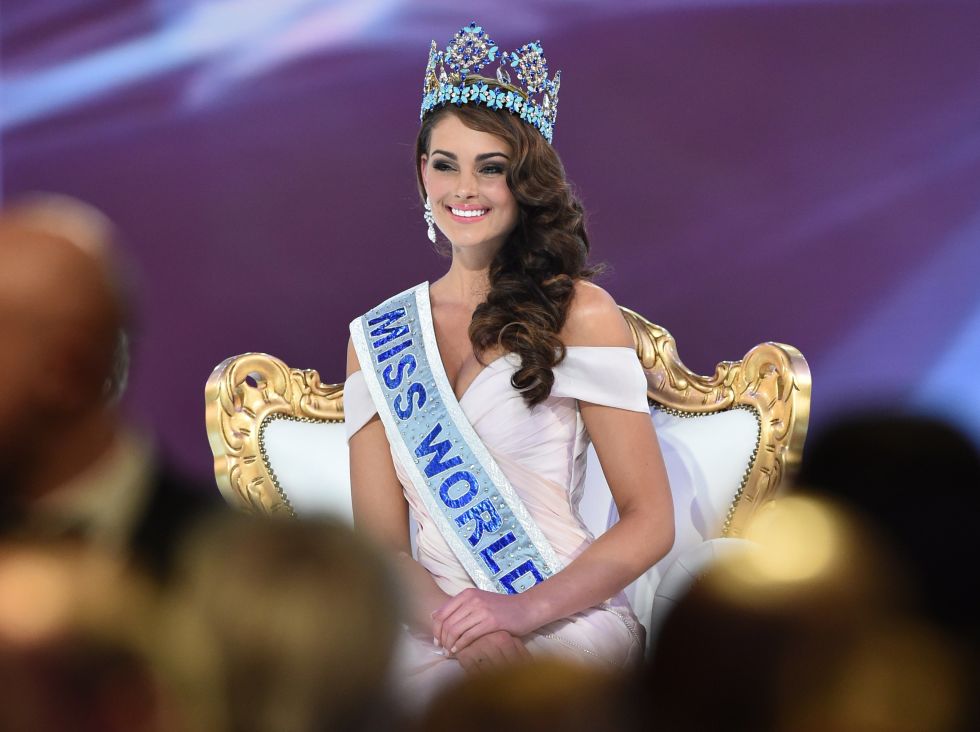
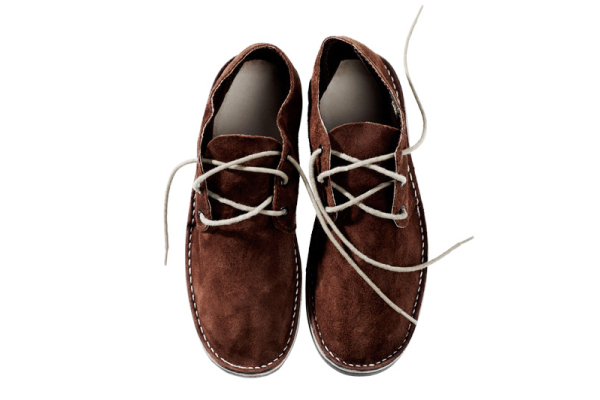
These two ex-spooks writing on The Daily Maverick are just making fools of themselves. They are trying to live up to a stereotype of what they imagine a British leftist would recognise as “the Afrikaner”. The reality, of course, is far more complex and an Afrikaner could be anyone from a farmer in shorts, two-tone shirt and velskoens to a derivatives dealer in New York or a lawyer or the current Miss World, Rolene Strauss. We are a quarrelling, disparate bunch but we share a common, highly standardised language spoken from the Limpopo to Cape Agulhas, not to forget Windhoek, as well as a love of the braai, biltong, melktert, Die Stem and politically incorrect singers such as Steve Hofmeyr and Bok van Blerk. Let’s leave rugby out of it and the sooner they transform the Springbok rugby team into the “All Blacks”, the better. Sport and alcohol have been our downfall and usually the two go together.

Quoting a few poems in a tendential way does not make up for the inability to think, I am afraid. The theory of “white privilege” is just a theory and no-one in this country has even bothered to write a book about it, unlike in the USA where they agonise much more over these things than we do.

The first contradiction you should try to deal with is the fact that, culturally and otherwise, we do not exist in this so-called “New South Africa”, your politically correct “Little England” where everybody tries very hard to emulate some lost British model (see my recent little essay: Raiders of the lost Empire: South Africa’s ‘English’ identity), replete with a stiff upper lip and cucumber sandwiches at the club. We have been completely marginalised, which was part of the grand plan concocted by De Klerk and his British masters, so it follows that:

  1. It does not matter what we believe, what we do or what we talk about, as it is of no consequence to the inner workings of the ANC, what Malema will say next, Robert Mugabe’s next state visit, Eskom’s load-shedding schedule or any of the issues that are really important.
  2. We have absolutely no influence over the fate of South Africa, hurtling towards a desired status as “just another African country” with attendant needs and ills such as food aid, IMF bailouts, peace-keeping and foreign doctors. Neither do our dead ancestors and their past political policies exercise any residual effects on today’s merry mayhem and “progressive” slide into Africanist utopia, which we would call “dystopia” as you couldn’t drink the tap water and you would have to carry a gun to go shopping.

You do not have to worry about “nothing changing”. It will definitely change – for the worse, and soon. We won’t enjoy it, but you will, as you revert to some Cuban or Maoist dream of riding around on antique bicycles past gigantic posters exhorting you to greater equality, as well as a few prison camps dotted around the countryside to hold it all together.

But we’ve also got plans, lots of them. In our future there is some little Luxemburg, a tiny corner of the country with an ocean view, full of banks and high-tech firms, symphony orchestras and opera companies belonging to a kunsteraad and lots more Afrikaans poetry, velskoens and shorts, Die Stem and other stuff you won’t like. But guess what, you will be so busy with your panoply of problems, internecine power struggles, civil wars between locals and xenos, as well as keeping the aid money flowing, that you won’t even notice. And most of these imperial, British leftists and their pseudo-Afrikaans emulators such as Nel Marais and Jo Davies won’t be here anymore, having packed for Perth or Toronto.

Also read J. Smith: The media try to make us whites feel guilty

Could ignorance about Paul Kruger be real?

Tshwane officials on Monday said it was still unclear who had defaced the historical statue of Paul Kruger at Church Square in the Pretoria city centre.

“No one has claimed responsibility for it,” said mayoral spokesperson Blessing Manale.

Kruger’s bronze statue was defaced with lime green paint on Sunday. Strangely, security cameras did not capture the vandals.

Manale said the mayor had been expecting to receive a petition from the African National Congress Youth League on Tuesday.

Displaying their ignorance or perhaps their paymasters, both the ANC Youth League and EFF have called for the removal of the statue, describing Kruger as a “colonial and apartheid figure”.

Kruger, an Afrikaner, served as president of the Zuid-Afrikaanse Republiek in the late 1800s, well before the British introduced apartheid to exploit mining labour.

Kruger represents the ultimate resistance against British colonialism in Africa and was lauded by European governments in his day for his efforts.

Security tightened

Security had since been “tightened” at several points around the capital city which have historic statues.

“The city has decided to up security at the Voortrekker Monument, Freedom Park, the City Hall and at the Union Buildings,” Manale declared.

The defacing of Kruger comes amid calls for historic statues to be removed from central areas.

Last week, the Economic Freedom Fighters [EFF] in the Nelson Mandela Bay region claimed responsibility for the torching of the War Memorial statue in Uitenhage’s Market Square.

“Unfortunately we could not topple the statue, as the police came and stopped us,” said deputy chairperson for the region, Bo Madwara.

Hofmeyr, Roodt vow to fight on for Afrikaans

A magistrate at the Randburg Magistrates Court, Naren Sewnarain, accepted the arguments put forward by Conrad Koch that there exists American-style freedom of speech in South Africa and everyone may insult everyone else in the grossest of manners, as well as wage open cyber war on social media. Harming your opponent in any way you see fit, apart from physically assaulting him, was given the imprimatur of the court.

According to Dr. Dan Roodt of the Pro-Afrikaans Action group said: “Although we lost the case, we succeeded in our strategic aim of safeguarding the popular Afrikaans is Groot concerts from disruption by leftist extremists over the past three weeks. That anyone would want to disrupt peaceful, non-political music concerts simply to score points in the media, shows to what extent conditions in South Africa have already degenerated into low-intensity ethnic conflict between language groups.”

The effect of the judgement, which essentially ignored the statute on harassment in favour of a vague appeal to the constitution, will be greater polarisation between groups in South Africa. Public discourse will deteriorate into invective, vituperation, calumny and other forms of what was euphemistically called “robust” speech.

In statements to the media outside the court, Dr. Dan Roodt of PRAAG said that he and Mr. Steve Hofmeyr were campaigning for a less violent and more decent society.

Evidently, decency is no longer a South African value and we may expect even greater degeneration into harmful campaigns, boycotts, race-baiting and other techniques in the cultural-Marxist arsenal.

Arguing before the magistrate, Mr. Steven Budlender, appearing for Conrad Koch, appeared to equate the previous dispensation in South Africa with Nazism, claiming that large numbers of people were wantonly killed. There was even question of it being forbidden to discuss such “facts” as it amounted to “apartheid denial”, which was akin to “Holocaust denial”.

According to both Hofmeyr and Roodt the day was “hardly a victory for free speech. Instead it was a victory for those who wish to curtail a rational and balanced debate about South African history and wish to drown it out with their hysterical exaggerations and intolerance toward dissenting viewpoints. Nonetheless we will continue to question the manufactured consent that every Afrikaner is a Nazi and that therefore our language, culture and history should simply be effaced from South Africa. We will continue to assert the right to write, sing and create in Afrikaans before our own people, regardless of how offensive a certain radical Nomenklatura might find what is after all a basic human right of all peoples and all cultures.”

On Oscar Pistorius, singularity and libtards

Regarding convicted murderer Oscar Pistorius, almost everyone has had “an egg to lay”, as the Afrikaans expression goes. I purposefully tried to avoid his trial and its attendant hype, as it displayed once more the painful and colonial stupidity of South African society, with its stereotypical concerns that make the average TV soap opera look like Dostoevsky.

roodt_fbfotoHordes of local and foreign journalists swarmed around the court room, tweeting incessantly. More than one book rolled off the presses, in which the orgiastic display of superficiality, Schadenfreude and political correctness was apparently canonised. I say, “apparently”, as I have not read any of these tomes and probably never will.

The only comment worth making about Oscar Pistorius is that he is not an Afrikaner. Despite his surname which, incidentally, is of Dutch origin, being a Latinisation of “baker” (“pistor” means “baker” in Latin), he was raised as English and attended English schools. So if one’s culture makes one commit murder or shoot your girlfriend through the bathroom door, English must be lethal.

However, I strongly suspect that even if Pistorius had been a “Smith” or a “Jones” – the two most common surnames in Great Britain – he would still have been crucified by the media vampires as a kind of “Afrikaner by association”. So every journalist or commentator vaguely able to spell “sociology” or “psychology” launched into quasi-learned “explanations” of Pistorius’s behaviour which was mostly attributed to being a white, middle-class and “Afrikaner” male.

Alex Perry even wrote an early piece for Time magazine, in which he fell back on the ultimate English-South African cliché, the laager, retaining the antiquated Dutch spelling that Afrikaners never use:

The ultimate example of this private crime control is the security estate. The ancestors of the white Afrikaners, 19th century Dutch settlers, had their own response to overwhelming danger: circling their wagons in an impenetrable laager. The most celebrated laager was at the Battle of Blood River in 1838, in which 470 Dutchmen killed 3,000 Zulu warriors while sustaining light wounds to just three of their own. The security estate–a walled-off cluster of houses protected by razor wire, electric fences, motion detectors and guards–is the 21st century laager. Its purpose is the same: separation from what Afrikaners call the swart gevaar or “black threat.” The security estate is a private, individual, exclusive solution to that fear. And Silver Woods in Pretoria, where Pistorius lives behind electrified 8-ft.-high (2.5 m) security walls watched over by the estate’s dedicated security force, is one of the most exclusive guarded communities in the country.

Our crime statistics are, as everyone knows, “off the charts” as they say in America, and post-1994 South Africa has the dubious distinction of having both the highest incidence of rape in the world and almost the highest murder rate. OK, so Honduras and Venezuela beat us in the number of murders per 100 000 members of the population, but in absolute terms an extraordinary 16914 people got murdered last year. Probably Pistorius’s crime will be classified as a “culpable homicide” of which there were 11257 in 2013. If you add the two together, you get 28171 people killed in one year. On average, 43 people are murdered every day, 77 if you include the culpable homicides. That means our daily number of murders exceeds the annual body count in places like Denmark (47 murders per year), Switzerland (46 per year) and New Zealand (41 murders per year).

I specifically mention Switzerland, as it is well-known that the Swiss army system, a citizens’ militia, entails that every man aged 55 and under has a government-issue assault rifle at home. As the adage goes, guns don’t kill people… and Switzerland is the living proof of that.

So the avalanche of clichés in the media on “Afrikaner gun culture”, “whiteness”, “masculinity”, the “laager”, “black peril”, etc., merely represents the self-referential black box of libtardism and its incapacity to grasp or describe even the stuff of so-called “genre fiction”: murder.

One of the first and most obvious aspects of the Oscar Pistorius story is that it is a singularity. Here is a man without legs who ran in the Olympics and then shot his girlfriend through the bathroom door for some peculiar personal reason which may have been tantamount to a crime passionel. It will never happen again. We all know how lawyers train their witnesses to say certain things in court to make the evidence fit a certain legal outcome. The entire narrative around Pistorius’s “fear of crime” may have been the figment of Barry Roux’s imagination, for all we know. Yet Steinberg and his fellow libtards see in this statement a corroboration of their “white/Afrikaner paranoia theory”.

Within the delirious fantasy world of the libtard where whites are always violent and evil, as opposed to blacks who are congenitally innocent, but sometimes “pushed” into crime or violence by white racism or socioeconomic conditions, Oscar Pistorius was the ultimate “proof” of white, male and Afrikaans wickedness. Security estates, or “gated communities” in American parlance, of which there are literally thousands in South Africa, are an expression of “white paranoia” and have nothing to do with defending oneself against the ambient social war raging on the streets of South Africa.

I have referred before to the English-South African need for imitation and colonial deference to Britain. For the elites of Johannesburg and Cape Town, white or black, London will always be our real capital, and Washington to a lesser extent. Anglo-American political correctness is also the national creed, and woe betide anyone who deviates from it. South African “intellectualism” consists of simulating or conforming to such British or American PC views, regardless of local culture or conditions.

Even where a “muti” or “medicine murder” takes place in the age-old African tradition, it will be explained in terms of “apartheid” and things like “white patriarchy” or “masculinity”. The resulting anachronism, logical absurdity and sheer dishonesty of such explanations are cavalierly disregarded by libtard genii whose racial fixation trumps all other interpretations or even facts. Naturally, every libtard is a genius who regularly sneers haughtily at any conservative, rational or logical criticism of his or her prejudices, as being “stupid” or “dumb” in a revealing demonstration of the Dunning-Kruger effect.

Even though the Pistorius murder case was a clear-cut interpersonal crime between two people with an intimate relationship, white-on-white as they say, the libtard mainstream media (MSM) immediately set about racialising it. Even where any form of racial motive shines in its utter absence, it has to be imagined or filled in, because otherwise they would have nothing left to say.

Op my ou ramkiekie met net een snaar, we say in Afrikaans to convey someone’s one-dimensional conversation or ideas. Libtardism is indeed a musical instrument with a single string: race. Without a racial monotone, the libtard reaches the end of his little universe where, as Wittgenstein said:

“What we cannot speak about we must pass over in silence.”

One day even maths and physics, or the origins of the universe, will be described in terms of a libtardist, racial paradigm.

Forgetting for a moment about Oscar Pistorius’s notoriety even before his murder trial, the hullabaloo over the trial was indicative of a kind of cognitive and semantic crisis at the heart of political correctness. Conditions in South Africa being what they are, with rampant crime and violence, including the killing and rape of children, even babies, the most confident libtard must sense imminent mind-control failure. No matter how powerful the Anglo-Saxon media machine and “neurolinguistic programming” in this country, sooner or later the average citizen is “mugged by reality”, as the expression goes. Or rather, the fortunate ones get mugged, the unfortunate ones become rape or murder statistics.

From within the newsrooms and the inner sanctums of academe where an even more convoluted jargon circumlocutes the generalised sociopathy, or sadism, of South Africa, the ramkiekie is sounding more and more like a crackling short-wave radio somewhere in the Congolese jungle. London is calling, but she is no longer getting through.

Some of the most pitiful imitations of politically correct cultural-Marxist or feminist “discourse” – a word more commonly used in French, but that became strangely fashionable in English – are to be found among South African blacks. Political correctness for blacks has the added advantage of also being profitable, in that it justifies affirmative action, BEE (black economic empowerment) and the other Orwellian policies pursued by our government. As I have also stated elsewhere, South Africa is the only country in the world where an ethnic majority with unfettered political, military, police and economic power – if its share of the state-owned economy is taken into account – has to be protected from a dwindling, disenfranchised and powerless minority.

It follows that, not only does a white “perp” like legless Oscar represent a valuable pawn in the ongoing semantic war against Afrikaners/whites by the PC horde, but he also has great economic and political value. Like Penelope’s face launched a thousand ships, the abject figure of Oscar the white “Afrikanerised” criminal will launch a thousand tenders. As “white male evil incarnate”, he will assuage the pangs of conscience in looting our state down to the last, devalued rand, if ever there were such pangs. The ultimate objective of revolution in South Africa was not to “liberate us” but to fall upon the state and municipal coffers in a feeding frenzy of sleaze and corruption that puts the Caribbean piracy of yore to shame.

But let me get back to the “feminist” interpretation of Oscar, alluded to a paragraph or two ago. A black male and a deputy director-general in the Presidency at that, Mr. Busani Ngcaweni, has alerted me on Twitter to his “analysis” of Oscar under the ominous title, White masculinity since 1994, published in the Sunday Independent yesterday.

The astute reader will by now have realised that, in South Africa, we do not really have a problem with rapists or murderers committing all these heinous crimes, but with abstract nouns. As rape is notoriously under-reported, it is estimated that up to a million women get raped every year, not by real, live rapists, but by abstract nouns such as “masculinity” and “patriarchy”. In the libtard media and in academic journals, there is a whole industry devoted to blaming “masculinity” and “patriarchy” for rape and murder and “femicide”, with the underlying suggestion that white, middle-class males are somehow also involved in the rape and murder epidemic. Anyone questioning this is immediately censored, or fired.

However, even a casual perusal of the South African Police’s own statistics, will demonstrate that violent crime, including rape and murder, is not reported at police stations like Randburg or Bellville where middle-class white males cluster, but in areas like Soweto or the Cape Flats where few, if any, whites live. Now, unless the victims of crime in white middle-class areas, pursued by white male accountants, lawyers and members of middle management, drive across Johannesburg or Cape Town to go and report their crimes in black or Coloured areas, we may safely assume that those crimes had indeed been committed within or near the police precincts where they were first reported. Unlike what Jonny Steinberg claims, there is no “culture of violence” in predominantly white, Afrikaner suburbs and legal gun owners do not shoot up the neighbourhood, as a rule.

So while sundry white libtard-feminist harpies like Gillian Schutte or Christi van der Westhuizen rail against abstract nouns such as “whiteness” or “masculinity” or “patriarchy”, no-one has ever tendered any concrete evidence that white South African males commit any more crime than ones in Denmark, Switzerland or New Zealand, our already-mentioned three low-crime countries.

Oscar Pistorius’s singular murder is therefore not representative of anything, let alone “a source of racial shame” as Steinberg in his libtard zeal pontificated shortly after his sentencing:

…I get the sense that the feelings of vengeance are much stronger among whites than blacks. Pistorius has offended a sense of racial pride, and a lot of white people are hungry for his blood.

Wandering around the eastern Free State and Gauteng these past couple of weeks, I get the sense that many people in the townships don’t care one way or another about Pistorius. Another rich person received soft justice. So what? It happens all the time.

The vitriol spewing across the airwaves has been disproportionately white, as far as I can tell.

Are libtards capable of “sense”? As someone said, journalism is a low-paid job where most of the job satisfaction comes from fraternising with important people and regularly smearing them. So it does not really attract the mathematically gifted or people with analytical, logical skills.

On Twitter last night, Busani Ngcaweni suggested that Steinberg had even gone so far as to claim that Afrikaners had “initiated” pristine, innocent blacks into violence during the ninenteenth century:


Even though libtards are capable of the most extreme and outlandish statements, I would be surprised to see such a quote, even from a Boerehaat author such as Steinberg, but then in South Africa, anything is possible.

South Africa’s one saving grace is that we are a member of BRICS, with the ultimate hope that either Russia or China will assume a neo-colonial role in this country, to staunch the destructive excesses of Anglo-American, racialised political correctness. However, Ngcaweni does not offer me any hope, as he sounds just like some indoctrinated 2nd-year social-science student from Wits or UCT, although he claims never to have been to university. He merely recapitulates the groundless speculations of Steinberg et al when he concludes his piece on Oscar by saying:

It is the fascinating peep into a particular world that this trial gave us: the life of guns, sport cars and blondes, the new cultural signifiers of Afrikaner masculinity in post-apartheid South Africa.

If anything, the non-Afrikaner Oscar’s evidently shallow and flashy Hollywood-lifestyle is more indicative of the dominant “global” culture than anything remotely Afrikaans or Afrikaner. Being Calvinists, with a strong patrician bond to the land, the plebeian display of material wealth and symbols of consumption has never been part of the Afrikaner make-up. Around Johannesburg, I see more black males in expensive, million-rand plus sports cars than white ones. Most Afrikaners drive utilitarian bakkies or pick-ups as many are self-employed and have to transport stock or equipment in their struggle for survival against a hostile, anti-white system.

One of the many paradoxes of our self-proclaimed “genius” pundits is that, apart from mixing metaphors and facts so often, they also have no sense of logical consistency. When using modish, postmodern language from a few decades ago, you should at least be aware that, by implication, you are rejecting the very notion of “representation” in favour of complexity, paradox, multiplicity, singularity, and so on. That is Postmodernism 101.

Not only has representative government failed us in South Africa, but the libtard in search of his “representative” white male perpetrator has become even more risible than some of our politicians.


BBC discovers Afrikaans is spoken in Orania!

‘We sleep with the doors unlocked. You can walk in the street at 3am without any fear’

In the sparsely populated Karoo desert in the heart of South Africa’s Northern Cape, the spirit of Afrikaner independence lives on.

I spent a few days in Orania, a town established in 1991 where no black people live.

I was part of a BBC crew, including Zimbabwean journalist Stanley Kwenda, who were accredited to visit.

And during that time, Stanley and I were the only black people in the town of 1,000 – an unusual experience in modern South Africa.

It is an Afrikaner-only town, where only Afrikaans is spoken, because of fears about “diluting culture”.

“We do not fit in easily in the new South Africa. It [Orania] was an answer to not dominating others and not being dominated by others,” says Carel Boshoff Jr, the community leader.

Mr Boshhoff inherited the town from his father Carel Boshoff Snr, an Afrikaner intellectual and son-in-law of the former South African prime minister, assassinated in 1966, Hendrik Verwoerd.

The town was founded by Mr Boshoff Snr as a registered company shortly before white-minority rule ended in the rest of the country.

Mr Verwoerd’s grandson tells me that his people were faced with a tough question about their future when the black government was elected in 1994.

“In terms of Afrikaners who had been standing very close to the state, when the policies such as black economic empowerment and affirmative action came into place, Afrikaners needed to seriously think about their future. It wouldn’t make sense not to,” he said.

Black Economic Empowerment (BEE) was introduced to encourage more black participation in business.

Orania has also proved to be the answer for those Afrikaners who felt displaced in the land their people had ruled for many decades.

“I see nothing wrong with apartheid,” says Martin Kemp, one of the older residents.

“Of course you get the petty apartheid: ‘You use this toilet I use that toilet’, I don’t think that was necessary but the real apartheid as Dr Verwoerd saw it, there was nothing wrong with it,” he said.

We were taken on a guided tour of the town’s facilities by John Strydom, a retired doctor.

The town’s leaders insist that Orania is misunderstood. “We are not against black people. We are for ourselves,” is their message.

However, black people cannot live here.

Prospective residents are screened by the town council using a strict criterion, which includes first and foremost being an ethnic Afrikaner.

It is not enough to simply speak Afrikaans, as is the case with many black and mixed-race South Africans.

Eerie place

As we sat down with Mr Boshoff for a cup of what the cafe described as “proper Boere [Afrikaner] tea… strong”, I took in some of the surroundings.

Near the entrance of the gated community was a statue of Mr Verwoerd, one of a few of the apartheid-era prime ministers, and the Orania flag – with similar colours to the old republic’s orange, white and blue horizontal stripes – which hung proudly.

The town was quiet; the sound of birds and rustling leaves interrupted by a few cars passing by. It is an eerie place for an outsider.

  • Afrikaners are descendants of Dutch, German and French settlers who arrived in the 17th Century
  • The Dutch, who arrived in 1652, took over land from local people and put them to work as farm workers
  • Afrikaners dominated South Africa for many decades and introduced the apartheid system which was based on racial segregation
  • Orania was established in 1991, by Afrikaner intellectual Carel Boshoff Snr
  • The town is built on 8,000 hectares of farmland along the Orange River

The town boasts amenities such as shops, hair salons, a library, a post office, a hotel, a couple of schools – and churches, a lot of churches.

But beneath the surface of this solitude lurks a fear that leads people to abandon high-paying jobs in the city for lowly jobs in this arid land.

“The levels of crime and violent crimes in South Africa are definitely pushing powers that bring people to Orania. Many of them have been victims of crimes,” says Mr Boshoff.

South Africa is considered to be one of the most violent societies in the world, with one of the highest murder rates.

Official statistics suggest that most crimes actually happen in poor communities between people known to each other, but this has not stopped the fear of crime in other communities.

‘Little giant’

As a result, Orania officials say the town has had an annual growth rate of nearly 10% since its inception.

The Afrikaner community’s totem is the “the little giant”, a man with rolled-up sleeves who features in the flag and the local money, the Ora which is pegged to the South African rand.

The people do their own work from gardening to plumbing, bricklaying and waste-collection – jobs usually done by black labourers in the rest of the country.

“We sleep with the doors unlocked. You can walk in the street at 3am without any fear” – Quinton Diedrichs Bar owner

“It takes some adjusting to. It is more difficult for some people because they are used to how things were done in South Africa, they are not used to manual labour,” says Mr Strydom.

The locals explain that one of the goals in Orania is to help create a generation of pure Afrikaners untouched by the “outside world”.

Bizarrely, the town’s existence is protected by South Africa’s constitution through a clause that ensures the right to self-determination – introduced to reassure those worried about the transition to democracy.

With its old Cape-Dutch styled houses it is like stepping back in time, but some families fear this place could eventually be too small for their children.

‘Respect’

George van Staden moved from Johannesburg recently after he was offered a job in Orania.

Mr Van Staden says his two children are enjoying life in the countryside but he and his wife are preparing them for a world where there is not just one race or culture.

“There is no tertiary institution here for example. They need to be equipped to handle the outside world,” says Mr Van Staden.

“I teach them that there is no difference in skin colour. I teach them if they respect the people in Orania they must also respect the people outside Orania,” his wife Tisha adds.

Another couple, Theunie and Annelize Kruger, say they are still adjusting to Orania’s rules, which include getting permission from the town council before receiving visitors.

“We understand it but it’s a bit frustrating at times,” Mr Kruger says.

‘Defend with our lives’

At the local bar, framed newspaper articles hang on the wall and Afrikaner memorabilia adorns the place.

The owner, Quintin Diedericks, is well-travelled but became disillusioned with South Africa and moved to Orania with his wife, a beauty therapist, about four years ago.

“It’s very safe here. We sleep with the doors unlocked. You can walk in the street at 3am without any fear. You don’t have that where you live,” he tells me.

He blames FW de Klerk, the last Afrikaner to rule South Africa, for the plight of his people.

“We can’t get jobs. It’s like we are being punished for the past” – Drinker in an Orania bar

“He gave away the country for nothing. We had the army,” he says and stops abruptly, beginning to shake his head.

Inside the dimly-lit pub, a game of rugby is on the TV, apart from a few odd glances, no-one seems to pay much attention to Stanley or me.

A few more locals do come over to our table and conversation is polite and largely politically correct, much like in the rest of South Africa.

The pernicious issue of jobs and pro-black policies rears its head.

One local explains it as “reverse racism”.

“We can’t get jobs. It’s like we are being punished for the past,” he says.

They seem oblivious to the oppression of black South Africans during apartheid. For them it was a system that gave order.

“It [apartheid] didn’t affect me. So many people get aggravated now for things they didn’t even witness. It’s over, move on,” says Yolandie Jonk, 29, a call centre agent.

As the sun sets, the bronze busts of Afrikaner leaders spanning over many decades – Paul Kruger, JBM Herzog, DF Malan, JG Stridom and, of course, Mr Verwoerd – look protectively over the town.

Held in disdain elsewhere, they are Orania’s heroes – yet it is difficult to see how the community will be able to remain so completely isolated in such an inter-connected world.

But as one pub drinker put it – being an Afrikaner in Orania is “something we will defend with our lives if we need to”. – By Pumza Fihlani, BBC News, Orania

You can hear a BBC World Service programme about Orania on Tuesday 7 October .

Why I hate South Africa, part 1

by Dan Roodt

Like Dan Roodt’s Facebook page

South Africa is a land of great natural beauty. Its unique flora and fauna attract tourists from all over the world. Due to geological accident, we also have buried beneath our soil and rock the biggest or second biggest mineral bonanza of all time, including 80% of the world’s platinum. Since 1886 when gold was discovered, various fortunes have been made in mining those mineral deposits.

The weather, at least where I live in the north of Johannesburg, is more than ideal; it is perfect. We have three hundred days of sunshine per year or thereabouts and it is never too hot or too cold. Visitors from the northern hemisphere mistake our winters for summer as midday temperatures go above twenty Centigrade.

When the Voortrekkers, our nineteenth-century pioneers crossed the Drakensberg in their ox-wagons and arrived in the Transvaal, they stumbled upon a pristine land of sunshine, savannah and plentiful game, a true paradise.

South Africa could have been utopia, if it had not been for her people. Even using such a possessive pronoun in the feminine gender implies some kind of connection between the land and its inhabitants, if not patriotism. Now, patriotism and a sense of belonging would be the last thing the average interloper strutting and stomping about this fair land could be suspected of. Rather, he or she regards this bountiful place as the forty thieves did the cave of Ali Baba, simply a source of loot!

The turning point in South African history came in the nineteenth century when the gold rush drew like a magnet a horde of crazed would-be capitalists and criminals to these shores. For a few decades during the twentieth century we had managed to staunch the mayhem, the cold, unscrupulous greed venting itself upon us. Alas, for a variety of reasons – not least the utter cowardice and stupidity of the former Afrikaner leadership – that time of growth and hope for the future is long past. All that we may look forward to is more decadent dissolution, more crime and venality that will rage unabatedly. It is as if the land itself has been wounded, stung and, like a predator sensing its own demise, lashes out at every living being within the arc of its claws and fangs.

The floodgates of hell have been opened, in the name of “democracy”, that exalted term. It has become, in our context, comical, ironic and even absurd. It reminds me of the GDR, the German “Democratic” Republic which was equally lacking in real democracy. But let me not insult that erstwhile “farmers’ and workers’ state”, the GDR, by comparing contemporary South Africa to it. At least in the GDR there were still some principles held by a few people, communists at that, whereas South Africa has descended to the level of delinquent insouciance in which values or principles only exist to be mocked or sneered at.

Normally I would write these words in our noble local language, Afrikaans, which washed up on the shores of the Cape from Northern Europe. A spoken language, a patois of Dutch and Low German, we have lovingly preserved and standardised it to become one of the world’s great cultural languages. Yet, in recent times and under the influence of the ambient nihilism of South Africa, many of our people have discarded this age-old tongue, full of mysterious words and expressions that formed that “bridge between Europe and Africa” that NP van Wyk Louw, perhaps our greatest poet, spoke of.

South Africa has become a dump in every sense of the word. And I say that not only because garbage or litter is literally strewn all over, but because its inhabitants have no real sense of value. Money is proverbially “easy”, obtained through corruption or simple robbery and theft. So like all parvenus the “South Africans” do not know what it means to save, invest or work for money. However, in a more fundamental sense, things of great value – cultural, historical, linguistic, architectural, artistic – are simply thrown away, dumped. Some of our greatest buildings, monuments to a past of taste and a strong national identity, have been demolished without so much as a second thought.

Afrikaans too, has been dumped, with everything else, including by many Afrikaners who have become caught up in the general decay, the loss of societal moorings that have come to characterise this entity which we still mistakenly call a “republic”. To say that I feel alienated from South Africa represents an understatement. However, I feel almost equally alienated from my fellow Afrikaners, these new, obsequious, treacherous and venal people who are but a pale shadow of their patriotic and pioneering forebears. Apart from a tiny minority of proud and civilised Afrikaners who still honour their culture, language and traditions, the rest have become almost mimic men in the sense given to that term by V.S. Naipaul, a second-hand, quasi-British people and as rootless as the illegal African immigrants that wander over our borders on a daily basis.

Perhaps predictably, the Afrikaner has become ashamed of himself. Taunted and vilified by the invective and propaganda of his enemies, he has lacked the courage and the intelligence to respond in any meaningful way. The abjectness of the Afrikaner’s spiritual surrender is painful to behold. That is why this text would be simply lost on the vast majority of Afrikaners, milling about in their confusion, self-doubt and self-hatred. The glib clichés of their journalists and pundits, imitating American-liberal or politically correct discourse, are quite beyond any form of serious discussion or reflection. Like Captain Ahab confronting Moby Dick, I have to face up to this monstrous entity with the bland geographical name, South Africa, casting this message appositely to sea like a message in a bottle that might be read somewhere on the other side of the globe, or not read at all.

Apparently the first Roodt came to South Africa in the early 1700s, so despite what Afrocentric blacks proclaim to the contrary, that “Africa belongs to the Africans”, I may consider myself to some extent naturalised. I hold no other passport. Yet I am also very aware of the murderous xenophobia at the heart of contemporary South Africa which holds that both the white man and the foreign African are unwanted, “foreign”, fit only to be expelled or to be killed.

Like any sensible person of European descent has to admit, South Africa hates us. We are despised for many reasons, some more atavistic and preposterous than others, but in no other country has pure, unadulterated ethnic hatred been so mythologised and so obfuscated by largely spurious interpretations of history as here. Lest I be accused of lapsing into the commonplace black-white rhetoric representing analysis or thinking in South Africa, I am accutely aware that much of what passes for racial feeling in South Africa has always been stirred up from outside or been a handy way for the oligarchy currently looting us to justify its domination and ludicrously discriminatory policies, however much they may be clothed in US-style, politically correct jargon.

Sooner or later, one has to confront the salient fact: South Africa, or the gathering mob on the way to another necklace killing, that symbol of “liberation”, hates me. In turn, and increasingly so, I have come to hate South Africa. With a passion.

I may still love boerewors and biltong, and soaking up the winter sun through my window, but I have only contempt for this failed-state-in-the-making, this pseudo-democracy, this Little England, Little America and everything little, belittling and petty that one may imagine.

South Africa has no reason for existing. It is not the name of a country, but of a pathology. It possesses no identity to speak of. It is just a big parasite preying on the labours of the few who are still, against all odds, pursuing a normal existence under the Southern Cross.

I think I could write a book about why I hate South Africa. However, immediately I have to concede that writing books in South Africa is generally a waste of time. The few people who are still able to read, after umpteen educational experiments, the advent of cellphones and the ambient degeneracy, do not constitute a market for books. There is no literary society. Like everything else in South Africa, the book industry is controlled by a few colonial souls who make money out of importing British books. What is known as the local book, especially the so-called non-fiction book, is merely the endless repetition of baseless clichés and idées reçues. Otherwise there are various talking heads from radio and TV who somehow think that they should also bestow upon themselves the imprimatur of “author” by having their usual vacuous sayings coagulated into print.

The notion of “debate” and especially a debate by means of an argument that might span two or three hundred pages of a book, is so foreign to South Africa that it would make me even more of an outsider than I already am if I had to attempt anything like it. It would appear to be some foreign activity, like playing pétanque on a rugby field.

It remains therefore for me to sum up the very good and multifarious reasons why I hate South Africa.

(To be continued)

Donate or subscribe to praag!

The shambles we’re in

roodt_dan_wikiby Dan Roodt

The two responses to my letter alerting people to the destructive influence of Marxism and liberalism in South Africa do not really respond to the core of my argument. (See Speak for yourself and Move on, Mr Roodt, change is good.)

Mr. Deon Crafford of Pretoria states that “we are not divided by nationalism anymore, only by economic means”. If that were the case, why are the politicians campaigning in this election not arguing over interest rates, tariffs and trade, or the minutiae of macroeconomic policy? Instead, every party has some kind of ethnic platform, whether it is “taking back the land that whites stole from us” (the EFF) or support for racial quotas in the form of so-called broad-based black economic empowerment (DA and ANC).

During the current Oscar Pistorius trial which has been turned into a mass media event, the state could not even supply a trained interpreter from Afrikaans to English in Pretoria, the epicentre of Afrikaans in South Africa and in the world! This is just another indication of the shambles we find ourselves in, with a system founded on some 1940s melting-pot dream that could only have been invented in Sweden, where everybody has blue eyes and drives a Volvo.

How low do we have to go before people acknowledge that the current system is not working and will never work because it is not suited to a multi-ethnic state? Show me one province in South Africa that does not have a premier from the locally dominant tribe and I will eat my hat. Or just appoint a few Pedis to run Kwazulu-Natal and watch what happens. That is real diversity, not the fantasy-world of beer adverts proclaiming “One nation, one beer.”

The Constitutional Court decides whether there should be same-sex marriage or Afrikaans in schools. Is that democratic? Does anyone think that a referendum on same-sex marriage will get a “yes” vote? Most South Africans have probably more in common with Uganda than with Sweden or New York State.

Mr. Vladimir Putin has become the most popular world leader since Ronald Reagan. He opposes globalism and champions national sovereignty. In a recent speech to the Duma he quoted Nikolai Berdyaev, an early Bolshevik who soon turned to a kind of Christian existentialism and conservatism. The quote was:

“‘The point of conservatism is not that it prevents movement forward and upward, but that it prevents movement backward and downward, into chaotic darkness and a return to a primitive state.”

A haunting statement, given South Africa’s descent into anomic violence, as reflected in the media every day.

A slightly shortened version of this column appeared in the Johannesburg daily Business Day.

Donate or subscribe to praag!

Why everyone should support the Afrikaner struggle

roodt_dan_wiki

by Dan Roodt

With violence and anti-white racism rising in South Africa, Afrikaners need international support to survive. Our unique testimony of how a Western nation is being dominated by non-Westerners may just save the whole of our civilization!

Donate or subscribe to praag!

It is now commonly accepted that Afrikaners and South African whites generally are in deep trouble. There are now two, no three, major black political parties who are trying to outbid one another in confiscating white-owned land, taxing us more, putting stricter racial quotas on our rugby and cricket teams, swamping the remaining white-majority schools with black pupils and making it harder for white students to gain entry to university. Even local taxes are used in an attempt to bankrupt many white-owned small businesses or family-owned farms.

All in all, the multicultural experiment is failing dismally in South Africa. Violence and mayhem are rising (70 000 of us killed since 1994), like corruption, environmental degradation and intolerance among South Africa’s linguistic and ethnic groups. Foreign Africans, like white farmers, are routinely killed and more often than not the police and the criminal justice system are turning a blind eye.

The city of Pretoria, with the Voortrekker Monument in the foreground

To many people overseas, South Africa is a lost cause, a sinking ship only worth abandoning. Yet, the very failure of our society presents a powerful argument against political correctness that may still save us and European civilization. It will take decades for Europe or North America to reach the state of advanced decay that South Africa finds itself in. We are ahead of the curve, as they say. We are the empirical proof that multiculturalism, affirmative action, the adulation of black people simply because they are black, lead straight to disaster!

But still, the skeptic may ask, why is it worth saving three or four million million whites in South Africa when the entire European/Western civilization is currently at risk? When support is needed to save France, Britain, the USA, from a programmed demise and takeover by other cultures, why bother about South Africa?

I accept that laying down our lives for most of the twentieth century in at least four wars fought for the Allies of for the West, does not count for much. But here are some persuasive reasons why you should support us now, in our final battle for survival. It is not a physical, but a spiritual battle, one of the will. We have many enemies and few friends… Yet we continue, against all odds, to resist being murdered, being acculturated, being assimilated!

Why the Afrikaner people is worth saving (and supporting)

Most of us come from Northern Europe which, for the last 300 years or so, ever since the Enlightenment, has produced some of the foremost breakthroughs in science, philosophy, art, music and literature. If it is worth saving Northern Europeans, it is worth saving us. In fact, we are a unique group of interbred Dutch, Germans, French and Scots who mostly speak a modernised Germanic dialect called Afrikaans. During the twentieth century we were united during a great national movement that was only brought down through foreign intervention, terror, intense propaganda, financial sanctions and more. Instead of getting a federal system and tolerance for ethnic diversity, we got Leninism and ethnic domination, even a slow genocide during which we are being killed one by one, family by family.

To many people, language is but a means of communication. Yet without Milton or the English Romantic poets, the English language would never have expressed a unique national identity, nor would German have acquired a high status without Goethe, Russian without Pushkin and Dostoevsky, etc. The astonishing aspect about our language, Afrikaans, is that, while evolving into a simplified grammar, its lexicon or vocabulary has remained more or less intact since the European Middle Ages, much more so than even the major European languages. We maintain a unique link with our distant past in Europe. There is some evidence that most of Northern Europe spoke dialects very similar to Afrikaans from 1300 to 1600 when Low German was the lingua franca of the Hanseatic League, a forerunner of the European Union which bound hundreds of cities together, from Russia to England and the Low Countries. This trade and seafarer’s tongue finally beached right here in South Africa in 1652. We nurtured and cared for this language which today, against the hostility of the state and global corporations who would like to see it disappear, remains a vehicle for cultural and scientific expression, for teaching anything from law to mathematics, from film to cooking, from information technology to accounting or high finance.

farmer_potatofieldAfter more than three centuries in Africa, we have become hardy and strong. Is there any other country in the world where blacks have to impose racial quotas favouring themselves because they feel threatened by the sporting prowess of whites? Not to mention the most radical affirmative action programme on earth, in order to starve us economically, intellectually, even literally, so as to prevent us from producing food on our farms, like we have done since the 1650s!

The battle for South Africa is not over. One would have thought our fate was sealed in 1994 when Nelson Mandela became president of this country, after the dismal failure of the then Afrikaner leadership during the negotiations at Kempton Park. An avowed communist and co-conspirator of the East German Stasi, Joe Slovo, triumphed over them all. Yet, such is our resilience in the face of terror, farm murders, racial and language discrimination, economic and educational injustices, that after 20 years of very hostile government we are still here!

The unique contribution of Afrikaners to the future of Europe?

Just today I saw a French TV debate on Ce soir ou jamais! in which a Cameroonian author, Léonora Miano, told Elisabeth Lévy “not to be afraid of becoming a minority in France”. Lévy took the risk of articulating the apprehension of many French people in seeing their country changed culturally by immigration. With supreme arrogance, Miano told her bluntly that “this is what is called a mutation” and “it is going to happen”.

What wil life be like once the French are a minority in France, the Dutch a minority in the Netherlands, the Italians a minority in Italy, and so on? Well, they need look no further than South Africa to find the nightmarish answer. Once one becomes a minority under a non-Western majority, one is simply forced to undergo constant violence, debasement, humiliation and impoverishment through racial and ethnic quotas.

The testimony that we Afrikaners bring to the international debate on immigration, multiculturalism, race and ethnicity, may yet save Western and European civilization! Yet for that possibility to be realised, we ourselves need to survive.

We did not ask to be cast ashore in 1652, yet we have made the most of our opportunity by building the most successful country in Africa, a country where we are today cast as foreigners. We are denied access to the very institutions our forebears had founded while our names are removed from towns, streets and buildings, to bring home to us that we are the racial and cultural “other”. We are good enough to pay taxes but not to be counted as full citizens; a myriad of laws impose a fundamental inequality on us under the pretext of ensuring, precisely, “racial equality”.

In South Africa, as there will no doubt soon be all over the world, something caled “fair discrimination”, which is nothing other than anti-white racism.

If you believe our voice and unique testimony should be heard and that we do not deserve simply being killed or expelled from our own country, then we humbly ask you to support our struggle for dignity, equality and fair treatment by the black majority and their radical communist allies. For our long-term survival, like that of the Palestinians, only self-government will suffice.

Please support us, in word and in deed!

Donate or subscribe to praag!

Let us be!

Eugene Marais
Eugène Marais

by Albert Brenner

[followbutton username=’albertbrenner1′ count=’true’ lang=’en’ theme=’light’]

I have been asked many times to write a column about Afrikaner identity. It`s a task I have always dreaded, for it will need to also involve examining questions like: can an atheist be an Afrikaner? Similarly, can an English-speaking white South African be an Afrikaner? Can Afrikaner political parties not supporting self-determination still be called “Afrikaner”? Or even: can non-whites be Afrikaners? Any honest elucidation of (the) Afrikaner identity must also include the less savoury aspects of said people. But then; nobody is perfect. That said, here goes…

Afrikaner identity, like all others, is comprised of three distinct, yet intimately intertwined aspects: the individual, the collective and the nation.

The individual sustains the collective which, in turn, sustains the nation… and vice versa. Meaning that it is the primary responsibility of the individual to contribute to the collective in such a way that his/her collective – in this case, the Afrikaner collective – takes precedence over all other collectives. The collective is comprised of various sub-collectives. For example, (the individual) Naas Botha – the famous ex-Springbok rugby player – has recently stated that he is in favour of race-quotas in rugby. This means that he, as an individual, does not support the Afrikaner sub-collective (Afrikaner rugby players, in this case), ergo, he is not sustaining the collective. Hence, he is a “South African”, not an Afrikaner. This obviously also applies to individuals like Dr Piet Croucamp, Fransie Cronje, Tim du Plessis, Anton van Niekerk, etc.

Moving to the collective/s; aforesaid has the primary responsibility to sustain the interests of the individual, be it as welfare organisation, church, academic institution, etc. For example, Stellenbosch University (as a collective) supports discrimination against Afrikaner students. This means it is not Afrikaner anymore… it is “South African”.

Moving to the nation; if a sub-collective is primarily involved in politics (e.g. the Freedom Front political party) its main responsibility is to strive for nationhood. The aforesaid can only be sustained if it dominates physical territory. It is possible to be a people (i.e. a collective) without physical territory. But one only has to look at the history of the Jewish People – arguably the most successful in terms of survival – in order to realise that dominance over a physical territory is the only sure-fire guarantee of/for progressive survival. This means that the (traditionally Afrikaner) Freedom Front party is not Afrikaner anymore, because it has forsaken its primary responsibility… self-determination in/on a physical territory dominated by Afrikaners.

To the tricky questions; e.g. can an atheist be an Afrikaner? Yes, but only if s/he sustains the “default” of the collective which, in the case of the Afrikaner (identity), is Christian. Meaning that as long as atheists put the well-being of the Christian Afrikaner collective above their individual well-being as atheists, they can be 100% Afrikaners. Ditto for English-speaking white South Africans – or any other white person, for that matter – in terms of language. Afrikaans is, and therefore must stay, the default. The same could be said for non-whites wanting to be Afrikaners. But this, in itself, would be self-contradictory and, ultimately, irrational. For in order to sustain the Afrikaner default identity (which is white, in terms of race), non-whites would have to forsake any and all attempts at demographic dominance.

The above-explained dynamics are also being played out in traditional Western countries with, hitherto, distinct identities. Just think about the American identity when, in 2060, white English-speaking (and mostly Christian) “Americans” will be demographically swamped by Spanish-speaking Hispanics. In short; (the) American identity will no longer be “American”.

To the specifics of (the) Afrikaner identity; we are the most inherently pharmaconian people on the planet. I derived the adjective pharmaconian from the Greek root pharmacon… meaning to heal or to kill. Afrikaners like to fight and to heal. We make the best soldiers and the best doctors. We, as a people, are absolutely unique in this regard! In terms of the former, there is no need to blow our own trumpet – others do it for us, with aplomb…

The Americans fight for a free world. The English mostly for honor glory and medals. The French and Canadians decide too late that they have to participate. The Italians are too scared to fight. The Russians have no choice. The Germans for the Fatherland. The Boers? Those sons of bitches fight for the hell of it! – American General George “Guts and Glory” Patton

Give me 20 divisions American soldiers and I will beach Europe. Give me 15 consisting of Englishmen, and I will advance to the borders of Berlin. Give me two divisions of those marvellous fighting Boers and I will remove Germany from the face of the earth. – Field Marshall Bernard L. Montgomery (Commander Allied forces WWII)

It is therefore no wonder that we love rugby so much. It has become a substitute for our warrior-like psyche. An opium, unfortunately.

In terms of our passion for healing, we can only look at incredible doctors like Christiaan Barnard, or the fact that we had one of the very few defence forces in the world with a separate medical services arm. This pharmaconian essence of the Afrikaner also has its drawbacks. In terms of liking to fight; we tend toward bullying behaviour, especially because of our big physical size – inherited from the Dutch. This bad characteristic has always necessitated a very strong (mostly patriarchal) hierarchy… to keep the boys in line, so to speak.

The above characteristic was, in my opinion, the main reason why nearly the whole Afrikaner society collapsed after 1994, for when our leaders jumped ship, all the power structures collapsed like a house of cards. The main bullies then turned on their own people, selling them out like flies at the TRC, and in nearly every Afrikaner sphere imaginable. This thuggish behaviour is (now) exemplified by people like Piet Croucamp, Max du Preez, Pik Botha, Anton Van Niekerk, Pierre de Vos, etc.

Our passion for healing was, in my opinion, also the main motor behind the majority Yes vote in the referendum in 1992. Many Afrikaners thought that being “nice” (like e.g. the Swedes) was the only way out of all the fighting. I.e. many Afrikaners wanted to “heal” the bad relationship they had with blacks. The only problem is that this innate propensity to heal is not suited for African conditions… for here the Rule of the Jungle is still very much prevalent. And hell, what do the Swedes know about Africa in any case?!

Be that as it may; we share identity characteristics with other people that are also unique. We, like the Bushman, are in awe of Nature. No wonder the Afrikaners and the Bushmen get along so well, especially during the Angolan War. We established nature reserves long before it became cool to like the natural environment. Unlike our European peers, our art and literature is mainly devoted to the admiration of nature in connection with existential deliberations, e.g. Eugène N. Marais`s Die siel van die mier. (Eng title: The soul of the ant.)

We, as a people, prefer to spend every free minute in nature, be it camping, hunting, or visiting game/nature reserves. This also has its drawbacks. You`d hardly see an Afrikaner family going to a museum or art gallery on the weekend. This has, unfortunately, seen us lag behind our European peers.in terms of sustained “intellectuality”. But then, we live in the most beautiful country in the world… and we have been forced to fight for our continued survival as a unique people ever since we landed here 350 years ago.

Last, but definitely not least; if it were up to me, I’d change the word history to herstory when it comes to summarising the history of the Afrikaner, for the Afrikaner woman is the most unique woman on the planet. They know exactly what they want, and will go through hell and high water to get it… even if it means whipping their men all the way there.

In conclusion: I think that, given our absolutely unique pharmaconian character, the identity of the Afrikaner can best be summed up in the (moral) imperative of the German philosopher Martin Heidegger; sein lassen.

This idea/l, letting be, is a battle-cry to consciously demand and strive for an independent Lebensraum for yourself, as a unique people… as well as for all other things unique, be it other people, races, cultures, beliefs, or nature herself. Even during Apartheid, warped as it was, the Afrikaner promoted the independence of the various unique black peoples of South Africa. It is certainly not the Afrikaner’s fault that the latter did not stay true to their own identities… something they now yearn for with all their (identity-less) soul.

A discussion about the difference between the Boer and the Afrikaner is conspicuous by its absence in this column. In my opinion, the Boer is just a much hardier version of the Afrikaner – true grit… best summed up by Sir Arthur Conan Doyle.

Take a community of Dutchman of the type of those who defended themselves for fifty years against all the power of Spain at a time when Spain was the greatest power in the world.Intermix with them a strain of those inflexible French Huguenots, who gave up their name and left their country forever at the time of the revocation of the Edict of Nantes. The product must obviously be one of the most rugged, virile, unconquerable races ever seen upon the face of the earth. Take these formidable people and train them for seven generations in constant warfare against savage men and ferocious beasts, in circumstances in which no weakling could survive; place them so that they acquire skill with weapons and in horsemanship, give them a country which is immanently suited to the tactics of the huntsman, the marksman and the rider. Then, finally, put a fine temper upon their military qualities by a dour fatalistic Old Testament religion and an ardent and consuming patriotism.Combine all these qualities and all these impulses in one individual and you have the modern Boer.

That said; the very survival of the Afrikaner is now at stake. At the heart of this war is the battle for his identity. It is now up to the Afrikaner to decide his own fate… for letting others be definitely does not imply forsaking your own right to be!

[followbutton username=’albertbrenner1′ count=’true’ lang=’en’ theme=’light’]

Rugby and the Afrikaner

pienaar+mandelaby Albert Brenner

You`ll find him sauntering through the streets of many a city in the West – especially in Commonwealth capitals like London, Dublin and Sydney.

And in the cities and towns of South Africa he is a common sight… the lone big Afrikaner man wearing the Springbok jersey with rightful pride. It is as if wearing the jersey of the national rugby team makes him the real Springbok player, that winner – if only for a moment.

And who can blame him? The Springboks – those gloriously sculptured athletes of a physical game perfectly suited for the rough-and-tumble Afrikaner man – are legends. They have always been one of the top two teams on the planet. It is a tremendous source of pride… for winners they are!

By wearing the Springbok jersey in public, Afrikaner men are finally receiving that positive recognition, that international ego-boost, which they have been denied ever since being blamed – by their peers in the West – for all the woes besetting blacks in South Africa.

It is, in fact, the only source of pride the Afrikaner is allowed to nurture… the sole recognition s/he may claim. For they find themselves in a socio-cultural and politico-economic environment that still regard them, their whole being, only in terms of Apartheid. Not unlike post-WWII Germans, the Afrikaner has, literally, been stripped of all his achievements – his very historical being – before Apartheid.

His unique language, Afrikaans – the third youngest Germanic language on the planet – is still being criminalized and marginalized as the “language of the oppressor” … and derided as the uncool “dumb Dutchman” language by arrogant native English-speakers in South Africa.

His legendary military prowess – as, once again, displayed in the Angolan War – has also been criminalized. Those brave young Afrikaner men – many of them 18-years old at the time – who helped win the Cold War for the West have been vilified as nothing but cruel Apartheid “killers” by the black-run ANC government… which actually rooted for the other side.

His remarkable performance and achievement in having built South Africa into the richest, most powerful and most developed country in Africa have been all but wiped from History by the black government and white liberals in the West – simply because they assume that South Africa`s blacks would have done so any case, had it not been for the “evil” Afrikaner’s Apartheid “intervention”.

Not even to speak of the Afrikaner’s incredible guts and determination for having literally pulled himself, without any help, from the ashes left by Lord Milner’s cowardly scorched-earth “warfare” during the Anglo-Boer War. A war in which the Afrikaner was outnumbered 10/1, a war that left 33 000 of his women and children dead in British concentration camps – and reduced the Afrikaner to the poorest white nation on the planet at the time.

In short; the Afrikaner’s whole historical being has suffered the same fate as his farms during Milner’s attempted genocide a century ago… except this time round it is his mind that has been scorched!

But this doesn`t bother the international community in the least. And most disturbing of all; it does not seem to bother the majority of the modern Afrikaner. Why? I mean, how come a unique people with an incredible history simply forget, as if nothing has happened?

Well, this is where rugby comes in. The recognition the (majority of the) Afrikaner gets through rugby seemingly suffices to keep him happy… even amid all the barbaric chaos in Mandelatopia.

The search for recognition (thymos) is one of the most powerful drives in the human psyche. So powerful that it has even been postulated as the motor of history, by Francis Fukuyama. His (rather trite) book, The End of History and the Last Man, had many a Western leader in hysterical glee, because it provided a utopian underpinning/validation for neo-liberalism, after the Cold War against Communism had been won.

Be that as it may; all of us crave recognition – some more (and on a larger scale) than others. The puberty-wing on the boot of a Ford Escort may be that thing which strokes your ego the most, or a beach house in Hermanus, or a Dr. title before your name, or a multi-national company that gets you invites to Davos (like Kdoos Bekker of Naspers). Whatever the size and shape of your ego, you will go through hell and high water to have it stroked. And when it finally gets stroked, you are that winner… you have craved to be for so long.

And that is exactly why Afrikaners are willing to live with a scorched mind in a lost kingdom run by “noble” savages. For winning in rugby is all the recognition he (thinks he) needs, because just like the Springboks he has never really lost. He is still the “Baas of the Plaas” in his mind.

The dastardly Old Empire Brits won the Anglo-Boer War, but they never succeeded in breaking the Afrikaner’s spirit. The Afrikaner won the Angolan War outright, even though they lost the peace, thanks to the treachery of their half-wit leaders. The Afrikaner never lost their “kingdom” to god-Mandela; they simply gave it to him – like the Springbok jersey they gave him at the closing ceremony of the 1995 RWC.

All in all, Afrikaners, as individuals, are still (on average) winners in Mandelatopia, and globally as expats – especially financially – just like their Springbok heroes and role-models.

The only problem is that rugby is a team sport, like a nation… like a civilization. Even the mighty Springboks can only remain winners, provided they play as a team. That is why fewer and fewer lone big Afrikaner men wearing Springbok jerseys will saunter pridefully through the streets of the cities of the West in the future.

Read Albert’s blog.

Lees dié rubriek in Afrikaans.

Two Afrikaners on trial for bestiality in Pretoria

A labrador, such as allegedly used by Smit

The Pretoria News reports that the case of a Pretoria East woman who allegedly had sex with two dogs is finally ready to go to trial next week, having been transferred to a court with an Afrikaans-speaking magistrate.

Smartly dressed in a black suit and red blouse, Jana Smit, 31, and her co-accused and former lover, Morne Fourie, 38, stood in the dock as State prosecutor Heinrich Scholtz told the court the case had been transferred from another court because of language issues.

Scholtz indicated that the accused and defence in the matter were all Afrikaans-speaking and it would make it easier if the magistrate could speak Afrikaans too.

Smit and Fourie face five charges of bestiality, possession of child pornography and sexual enticement.

Scholtz also indicated that he was waiting for feedback from the senior public prosecutor after “discussing certain matters with her regarding the case”.

Smit was arrested in August last year after a complaint from an animal protection organisation. It is alleged that the organisation and the NSPCA had received home-made video footage and photographs of Smit having sex with a Staffordshire bull terrier and a Labrador.

The footage was immediately taken to the Moot police station. Smit was arrested hours later. It is believed that the Staffie belonged to Smit’s neighbours. At the time of her arrest, the Labrador was taken to the NSPCA where it was put up for adoption.

Fourie, an IT specialist from Garsfontein, was arrested three days later. It is alleged that he helped to produce some of the pornographic images.

Both were released on bail of R1 000 each following their first court appearance.

At the time the court ordered Smit to undergo a mental assessment at the Moot police station. The outcome of the assessment will be disclosed during her trial.

Earlier, the court heard that investigators trawled through 31 000 e-mails on Smit’s laptop as part of the investigation.

European Union must not side with the farm murderers of South Africa

by Dan Roodt

The news that South Africa supplies 70% of the citrus fruit consumed in the European Union adds another ingredient to the debate around farmland in South Africa. In strictly economic terms, both farm murders and ANC’s radical land reform plans serve European protectionist interests.

Our farmers are almost superhuman. Against all odds, they manage to compete against the pampered, subsidised EU agricultural producers. They live within a virtual war zone of terrorist attacks on farms, hostile propaganda from the left-liberal media and concerted attempts by neo-Marxist think tanks like the Cape-based PLAAS that advocate the abolition of property rights altogether.

The ANC government is amenable to the radicals of PLAAS, such Dr. Ruth Hall, an Afrikaner-hating, Oxford academic who came to this country with the sole intention of instigating a Soviet-style “agrarian revolution” that would push Afrikaners off their ancestral, family-owned lands. In the process, agriculture as we know it will be destroyed and our sought-after fruit will again disappear off European supermarket shelves as in the days of the anti-apartheid boycott against South Africa when French communists and Dutch anarchists focussed their hate on the word “Outspan”.

Apart from the teaching profession, there are few areas of economic activity in South Africa that are so dominated by Afrikaners as agriculture. To understand why, one must briefly look at the history of this country. During the nineteenth century, colonial British mining companies snapped up all the minerals in the old Boer republics and when that wasn’t enough, they persuaded Britain to invade us, burn all our farms and put our women and children in concentration camps.

In the cities, Afrikaners were discriminated against and even forbidden to speak their language in stores. With most of business, mining and industry closed to us, we had only farming and the professions open to us. That is how Afrikaners doggedly stuck to agriculture, through droughts and crises, and managed to get fifty percent of the postgraduate qualifications in this country. We also produced a large number of accountants, doctors and lawyers.

With the ANC’s revolutionary takeover, the first thing they did was to apply stringent affirmative action to our medical schools so that hardly any Afrikaner physicians are being trained anymore. The legal profession was dumbed down so that just about anybody could get a degree and even a mediocre advocate could become a judge, as long as he happened to be black. Accounting standards are still being upheld, but one wonders for how long before racial quotas will be applied there too.

Agriculture therefore represents a last economic foothold for Afrikaners. Despite European and American protectionism, we have managed to carve out a niche in the world market. Our beautiful, tasty, healthy oranges and grapefruit grace the breakfast tables of Europe.

However, when EU Commissioner Catherine Ashton and the South African Minister of International Relations, Maite Nkoana-Mashabane, met yesterday in Brussels, there was no-one representing the Afrikaner interest around the table. Neither the protectionist EU, nor the anti-white, anti-Afrikaans ANC, gives two hoots about our economic survival in this country. We are already excluded from government, from the big corporations, from the mines, from the bench, from hospitals and banks.

Once our academics were able to build some of the finest universities in this country and in the world. Yet even there, the imperatives of “transformation” have dictated our exclusion on racial and cultural grounds from the very institutions our fathers and grandfathers had founded and developed. Foreign academics from the United Kingdom, Nigeria, Zimbabwe and other African countries have flocked to our universities to displace us, the indigenous whites of South Africa.

Until now, the European Union has said nothing about the vicious attacks on our farmers. Unless Europeans want to be seen as siding with the radical, ethnocentric and even genocidal elements in this country who wish to ethnically cleanse Afrikaners from the land, they will have to speak out and condemn such attacks.

At the same time, we insist upon open access to the EU market in fruit as it is one of the few lifelines we have left in this left-fascist environment where an alliance of UK academics and farm killers threaten to destabilise our agriculture further, or even destroy it completely.

We also appeal to European political parties sympathetic to Afrikaners to voice their concerns about maintaining the health of our exports and trade. Stability needs to return, against the outlandish ideas of “land reform” advocated by unreconstructed communists. “Land reform” is a slogan for extending the full-spectrum racial dominance that we already experience in the rest of the economy and the public sector, but it will also serve those in Europe who see a threat in our honest and fair competition with them.