Coronavirus has hit South African sport

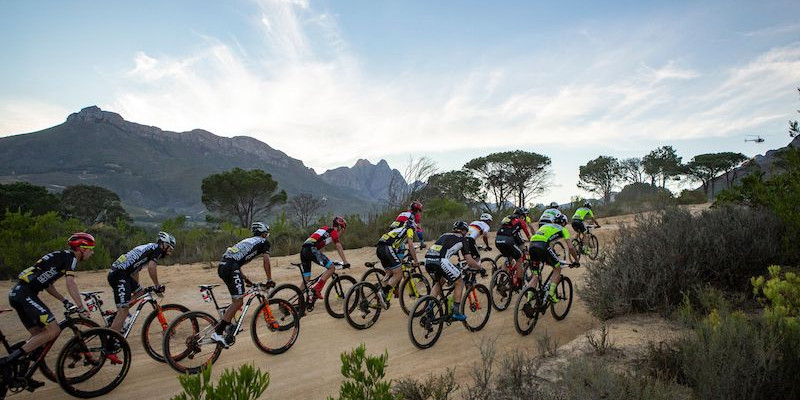
South Africa is one of the most sports-crazy countries in the world. Until a month ago, no-one could have predicted the devastating effect that the coronavirus would have on the country’s normally lively sports calendar. Not only has the popular Super Rugby tournament been suspended but the world-famous Cape Epic mountain bike was called off just 40 hours before it was due to start on 15 March 2020.

In addition, the equally renowned Two Oceans Marathon that would have taken place on 11 April in Cape Town has been called off, dealing a blow to the city’s tourism-oriented economy.

“We have been monitoring the status of the novel coronavirus pandemic as events have unfolded internationally and locally and we’ve consulted with public health experts and authorities,” stated Two Oceans director Debra Barnes.

“The health and safety of the competitors, staff, sponsors and the global community are paramount and an event of this scale poses far too great a risk to continue. Guided by this priority and global best practice, the TOM NPC has made the difficult decision to cancel the world’s most beautiful ultra-marathon for 2020.”

The cancellation of the Cape Epic mountain bike event has been a particular disappointment, especially for overseas competitors. One Swedish amateur participant, Hampus Rinne, complained that the decision to cancel had been taken too late, costing him and others significant amounts of time and money for nothing.

“We have all the facts now, so it’s easy to say what should have been done in retrospect, but I really think the Cape Epic should have called it off earlier.

“They should have reconsidered because of all the cyclists from Europe, Australia, New Zealand, the US and Canada who have come over here. Maybe the Cape Epic should have followed the news a bit closer, although South Africa has not had a huge breakout yet.

“We don’t know, but the law of averages would suggest that at least some of us who came here for the Epic are carrying the virus.

“My manager at work said to me that if I came to South Africa there would be a problem. And guess what? He was right. That’s perhaps the worst thing – going to my boss and saying he was right.”

Rugby is South Africa’s national sport. Not only is it a topic of daily commentary in all the media, but there are various betting sites in South Africa offering odds on matches.

It therefore came as a major shock when it was announced on 19 March that SANZAAR (South Africa, New Zealand, Australia and Argentina Rugby) would call a halt to all Super Rugby events. Super Rugby is the biggest rugby tournament series in the southern hemisphere and its fifteen top-notch teams regularly fill stadiums, as well as generate millions of dollars in advertising revenues and sponsorships.

SANZAR CEO Andy Marinos stated, “the safety and welfare of the public, our players and other stakeholders is paramount and as previously stated we were always going to abide by government and health authority instructions on the issue of COVID-19 containment.”

“We are extremely disappointed for the players, our fans, broadcasters and partners but given the complexity of our competition structure, and the multiple geographies that we cover, we have no other option but to align with such directives. We also believe it is time for all those players currently overseas to return home and to be with their families.”

“Our priority is, therefore, to ensure our players are within their homes territories from the end of this weekend. SANZAAR will also remain engaged with its stakeholders and will continue to explore avenues to see if we can keep the rugby product alive within our core markets, with the possibility to be in a position to resume the tournament if at all possible in future weeks. We have currently played seven rounds out of the 18 in the normal regular season”.

Rugby Australia tried to set up an alternative, local competition, envisaged to start on 3 April but this too had to be suspended until 1 May at the earliest after the Australian government and various state and territory governments implemented further measures to counter the spread of coronavirus.

The total lockdown that started on 26 March in South Africa has equally made any further rugby games, local or international, well-nigh impossible.

Coloureds declare war on rugby

Angry coloured fans have declared war on “white” Springbok rugby, demanding more players of colour in the national squad.

Supporters Against Racist Rugby Associations (SARRA) was launched in Mossel Bay at the weekend and things got off to a fiery start.

The group, supported by former Bok coach Peter de Villiers, set a Green and Gold jersey on fire, and said they will continue to destroy shirts until their demands are met.

National coach Heyneke Meyer is due to name his 31-man squad to play in next month’s Rugby World Cup on Friday.

De Villiers was the keynote speaker and told supporters even though he was the first Bok coach to beat the All Blacks five times, his achievements meant nothing to his South African Rugby Union (Saru) bosses and he was ridiculed in the local media.

The leader of SARRA, Dawid Kamfer, says they decided to burn the jersey to show their anger at what they believe is the exclusion of “talented players of colour” from the Bok squad.

Kamfer says: “We want the coloured players to have a fair chance to play for the Springboks, we asked people and they agreed that Heyneke Meyer and [Saru President] Oregan Hoskins let us down.”

Kamfer said the IRB world rankings says it all – SA is ranked fifth, after New Zealand, Ireland and England.

“Peter de Villiers was a coloured coach who took us to number two. Today we’re at number five and no one is saying anything,” he notes.

Source: IOL

Dallaglio says England must beat South Africa at Twickenham

Lawrence Dallaglio says England must make a priority of beating South Africa and turning Twickenham into a fortress ahead of the World Cup.

The Red Rose legend issued his twin challenge as Stuart Lancaster claimed to already know 80 per cent of his squad for next year’s tournament.

England boss Lancaster also revealed the “pain of losing” which he admits “drives” a squad that has yet to win a Six Nations title.

Lawrence Dallaglio when he still captained England

Dallaglio believes that winning silverware in the 339 days before the World Cup kicks off in England is not the be-all and end-all.

But he said: “What England’s priority has to be is winning as many, if not all, their games at home because, come the World Cup, if they win every game at Twickenham they win the tournament.”

England, who name their squad a week tomorrow, face four autumn Tests at Headquarters – including matches against New Zealand, South Africa and Australia – and three at home in the Six Nations.

Of those, Dallaglio insists the most important is next month’s clash with the Springboks, recent conquerors of the world champion All Blacks.

“Going into a World Cup you want to know in the back of your head that you can beat every side,” he said. “And South Africa is the only side England haven’t beaten under Stuart.

“In fact the last time they played them at Twickenham they got properly beaten up. So this is a fascinating fixture.

“If England can come away with two out of three southern hemisphere victories, that would show me that they are genuine World Cup contenders.”

Lancaster insists his squad’s aim is to win every game as anything else would be an admission that they are happy to lose one, “which is not the mindset we want”.

He added: “We know we’ve been close, we’ve won some big games, but equally we’ve not nailed some as well, so we need to be better at that final hurdle.

“We’d like to have won something and it is really frustrating for all of us that we haven’t. The pain of losing certainly drives us.”

England’s autumn internationals

Nov 8: England v New Zealand

Nov 15: England v South Africa

Nov 22: England v Samoa

Nov 29: England v Australia

Sprinboks invincible except for All Blacks

Jean de Villiers in the Springbok jersey

by Barnaby Chesterman

South Africa ended a long, hard season with a bruising victory over France in Paris on Saturday and in so doing reaffirmed the difference between the top two in the world and the rest.

Only one team have beaten the Springboks in 2013 and, barring an unlikely upset in Dublin later on Sunday, New Zealand will record the first ever 100 percent calendar year in the professional era.

While there is no doubt that the world champions, beaten only once in the last two years — a stunning 38-21 defeat to England at Twickenham last November — are the best team in the world, South Africa underlined at the Stade de France that they are clearly the best of the rest.

Although the 19-10 scoreline in Paris was relatively close, it did not tell the full story of a masterful display from South Africa.

Twice they were denied adding to JP Pietersen’s second-minute try by the video review system and, although the French did score through Yoann Huget right at the end of the first period, it came from a rare turnover offered up by the Boks deep in their own 22.

Otherwise they largely controlled territory, if not as much possession, and put such a huge amount of pressure on France deep down in the Les Bleus half that fly-half Remi Tales’s kicking appeared ineffectual.

By contrast Boks fly-half Morne Steyn, and particularly the excellent full-back Willie Le Roux, showed measured tactical nous in keeping France pinned down in their own half with a range of deep, long clearances, perfectly weighted up-and-unders and even a few cunning dinks over the fast approaching backline.

One excellent grubber from Le Roux deserved more than to see Francois Louw beaten to the end zone touch-down by a sliding, scrambling Huget.

In truth, France were really holding on to such a close result rather than knocking on the door and threatening to snatch a victory.

It means that this year South Africa have beaten Australia, Argentina and Scotland at home and away, turned over Six Nations champions Wales, earnt victory against France and defeated Samoa and Italy to boot.

If it wasn’t for the mighty All Blacks, this would possibly be hailed as one of the best South African teams of all time.

Captain Jean de Villiers alluded as much to that when he pointed out just how impressive their recent form has been.

Including last year’s November tests — when they beat Ireland and England, as well as Scotland — South Africa have beaten all of the rest of the top 11 teams in the world at least once in the last year — except New Zealand of course.

“We’re very happy with the last 12 months, if you take the end of the last year as well, that’s 13 (wins) from 15,” said De Villiers.

“It makes it results-wise one of the best years South African rugby’s had in a very long time.”

While the All Blacks’ dazzling brilliance is there for all to admire, it is easy to overlook just how talented the Boks are.

As well as their traditional strengths of power and commitment, and an impenetrable wall of defence, they also have creativity brimming through the side, with pace to spare on the flanks in Pietersen and former world player of the year Bryan Habana.

It was in the rucks and at the breakdown that France found them most effective, though.

“They were more solid than us in the rucks where they managed quite a few turnovers,” said France captain Thierry Dusautoir.

The question now for South Africa, is how to take that next step up and challenge New Zealand for the number one spot.

And that’s a conundrum that De Villiers says they are working on.

“For us (beating France) is not the end of the year, it’s just another step in our journey towards where we want to be and where we’re going.” he said. – AFP

Springboks en route to Paris after 28-0 victory over Scotland

Springbok rugby players

The Springboks move on to Paris on a roll of two wins out of two from their November tour of Europe, and with their try-line yet to be breached.

Having succeeded in shutting out Wales on the try front in their 24-15 victory in Cardiff eight days previously, South Africa managed to prevent Scotland from scoring a single point in a clinically-executed 28-0 victory at Edinburgh’s Murrayfield on Sunday.

“You’ll always take four tries to nil in Test match rugby,” said South Africa coach Heyneke Meyer.

“The great thing for me is that we wanted to work harder on our defence. Last week was awesome; we didn’t give away any tries against Wales. And this week we didn’t give Scotland any points.

“I was very happy with that — especially at the end, when we were down to 14 men (replacement flanker Marcell Coetzee was in the sin-bin for the final 10 minutes).

“We had a back-line player on the scrum (centre Jaque Fourie).

“That’s what I like about this team. They don’t like giving points away. They put their bodies on the line. It was awesome defence.”

The Springboks effectively had victory in the bag at half-time. Tries from Willem Alberts, Willie le Roux and JP Pietersen, making his 50th Test appearance, plus three conversions from Patrick Lambie, put them 21-0 up at the interval.

A fourth try 13 minutes into the second half, scored by replacement prop Coenie Oosthuizen and converted by Lambie, completed the routine victory as Meyer’s charges looked ahead to their final tour match against France in Paris this Saturday.

There was, however, some collateral damage to the South African squad.

Tighthead prop Frans Malherbe limped off in the 33rd minute and is unlikely to feature against the French, whom the Springboks have not beaten away from home for 16 years.

“Frans has got a ripped cartilage,” Meyer reported. “We’re not sure if he’s going to be fine. The doctor will make a decision tomorrow (Monday) but at this stage we’re not very hopeful that he will be able to continue.”

Blindside flanker Francois Louw was stretchered from the field in a neck brace with four minutes remaining but Meyer said: “I’ve spoken to the doctor and it was precautionary. He’s injured his neck but he should be fine. We’re still monitoring him.”

On the subject of his squad’s form, having followed up their impressive second-place in the Rugby Championship with two clinical victories in Europe, Meyer commented: “I’m very proud of the guys and the way we’ve been playing. There are a lot of youngsters coming through and there’s a great blend. To have a 75 percent winning record this year is awesome. I’m very, very happy with our consistency.

“We’ve scored seven tries to nil on this tour so far. If we win next week, I think it will be an 80 percent win record for the year, which hasn’t happened a lot.

“But we have to keep our feet on ground and stay humble. I believe we’re on the right track but there’s still a long way for us to go.”

As for Scotland, they were left licking the wounds of their first blank on the scoreboard since a 40-0 Murrayfield defeat by New Zealand during the 2007 World Cup.

“We let ourselves down early on and put ourselves under a heap of pressure,” Scotland’s interim head coach, Scott Johnson, reflected.

“We were up against a clinical side who took all of their chances.”

Scotland finish their November home series against Johnson’s native Australia at Murrayfield this Saturday. – AFP

Former rugby player jailed for fraud

scalesofjusticeA rugby player for the former Northern-Transvaal rugby team, Paul Botes, was on Thursday sentenced in the Specialised Commercial Crimes Court in Pretoria to serve 10 years in jail for fraud, Beeld reported.

Botes, 51, reached a guilty plea agreement with the State on 12 charges of theft and one of money laundering after stealing about R19.5 million from investors.

He stole the money between 1993 and 2012 while he worked as a broker.

He was first arrested in 2012 at his home in Pretoria, after an investor registered a complaint with the serious economic offences unit of police unit the Hawks.

Botes admitted to having received money from investors, some of whom were elderly, which he then used to fund his own lifestyle. – Sapa

Red card struck from Bismarck’s record

bismarck2A red card against Springbok hooker Bismarck du Plessis in a weekend rugby test between South Africa and New Zealand has been removed from his record.

“The judicial officer found that the decision made by referee Romain Poite to issue a yellow card as a result of the tackle by Du Plessis on Dan Carter was wrong, as it was within the laws of the game,” Southern hemisphere rugby body Sanzar said on Monday.

“No further sanction was imposed on the player. However, the second yellow card remains on his record for the remainder of the Rugby Championship.”

Du Plessis received a yellow card in the 17th minute of the Rugby Championship match in Auckland on Saturday, for what proved to be a perfectly legitimate tackle on New Zealand flyhalf Dan Carter.

Poite ignored the advice of the Television Match Official (TMO) and deemed his tackle to have been high and without arms.

The International Rugby Board admitted in a statement on Sunday that Poite had made the wrong decision in carding Du Plessis for the tackle.

“Just as players and coaches make mistakes, the decision was an unfortunate case of human error by the match officials who, having reviewed the match, fully recognise and accept that they made a mistake in the application of the law,” the IRB said.

“All match official performances are thoroughly reviewed and assessed by the IRB and are considered when appointments are made for future test matches.”

Du Plessis copped a second yellow card in the 42nd minute for elbowing flanker Liam Messam in the throat, which resulted in a red card.

Judicial officer Terry Willis removed the red card from Du Plessis’ disciplinary record following a judicial hearing on Monday.

Gerrie Swart appeared at the hearing — which was originally scheduled for Tuesday — on behalf of Du Plessis, via teleconference.

“Submissions were made on behalf of the player and the video footage was reviewed,” Sanzar said. – Sapa

Rugby: All Blacks crush Springboks in controversial test

Brodie Retallick is congratulated on his try by All Blacks teammate Liam Messam. Picture: Phil Walter

The All Blacks took the outright lead in the Rugby Championship here Saturday when they comprehensively beat South Africa 29-15 in a bitter contest between the heavyweights of world rugby.

In a match marred by a red card for Springboks hooker Bismarck du Plessis, the All Blacks also picked up a bonus point with their overwhelming victory over the previously unbeaten South Africans.

The All Blacks finished with only 13-men with two yellow cards in the final 10 minutes when captain Kieran Read was dismissed for a lineout foul and Ma’a Nonu was sent from the field for a shoulder charge.

The Springboks came to New Zealand confident they could shatter their Eden Park hoodoo, where they have not won since 1937.

Instead they were outplayed by pace on attack and the staunch defence by the All Blacks who scored four tries to the visitors’ two.

All Blacks coach Steve Hansen said du Plessis may have been “unlucky” with his first yellow card but overall he had no complaints about the refereeing.

“In an intense battle like that your going to get moments,” he said.

“You don’t like seeing it but it happens and you pay the price for being ill disciplined. We paid it twice.”

The Springboks coach Heyneke Meyer refused to blame the cards for the loss and said he had no excuses.

“The ref is always right,” he said.

“If you start making excuses for your team then they start to make excuses. There were a lot of things that weren’t good enough even when we had 15 men on the field.”

The intensely physical battle erupted into an all-in brawl in the 15th minute when All Blacks playmaker Dan Carter was bowled in a shoulder charge by du Plessis.

It took referee Romain Poite a full minute to restore order, and when the dust settled the injured Carter was out of the game and du Plessis received 10 minutes in the sin-bin.

Du Plessis received his second yellow, and subsequent red card, in the first minute of the second half when he elbowed Liam Messam in the throat.

In between the cards, the All Blacks lost fullback Israel Dagg with an ankle injury and Sam Cane spent 20 minutes receiving medical treatment for a head wound.

When Carter went down the All Blacks led 7-3 and by the time du Plessis returned to the field they were 14-3 ahead and on their way to extending their unbeaten run at Eden Park to 32 (31 wins, one draw) dating back to 1994.

The All Blacks also overtook France for the most Test wins, moving to 383, and also extended their records for the most test points (13,242) and most Test tries (1,726).

The All Blacks kicked off with the breeze behind them and punished South Africa early when Nonu latched on to a misdirected Bryan Habana clearing kick.

The All Blacks centre’s return kick forced a lineout in the corner from where Read drove over for his first try.

Morne Steyn landed a penalty for the Springboks before the punch up, then when the All Blacks had a one-man advantage they struck again with their second try.

Replacement fly-half Beauden Barrett carved through the Springboks backline on a 55-metre run and lock Brodie Retallick finished off the move when he crashed over by the posts.

Du Plessis returned to the field to briefly restore his place in the South African good books when he scored from a lineout drive.

Steyn kicked the conversion and Barrett landed a penalty for the All Blacks who took a 17-10 lead into the break.

The second half had barely started when du Plessis was sent from the field and when the All Blacks went a player up they immediately struck again.

Read crossed for his second try when he stormed through an attempted tackle by Janie du Plessis, Bismarck’s brother, and Barrett’s conversion lifted the All Blacks to 24-10.

Cane scored the bonus point try in the 67th minute before South Africa came back with a late try to replacement back Pat Lambie. – AFP

Cheetahs played full 80 minutes to win: Prinsloo

Boom Prinsloo
Boom Prinsloo

Free State Cheetahs captain Boom Prinsloo praised his side for playing the full 80 minutes to beat the Golden Lions 26-23 in their Currie Cup game in the Free State stadium in Bloemfontein on Friday.

The hosts are now second on the logm pending the results of Saturday’s other Currie Cup games between Griquas and the Sharks and the Blue Bulls and Western Province, but for the time being eighth-man Prinsloo,is relieved that his team stood their ground for victory.

The Cheetahs nearly squandered a half time lead of 23-3 and gave the Lions ample chance to make a come back, with a penalty by Cheetahs winger Riaan Smit the only difference.

“We made it very difficult for ourselves in the second half, but I am glad that the guys kept their cool and did not lose their concentration. In the end we finished well,” said Prinsloo.

“This Lions team never gives up. Credit must go to my team mates for playing untill the final whistle. I am really proud of the effort they put in.”

The Cheetahs looked impressive in the line outs, but struggled in the scrums with Lions Springbok front rower CJ van der Linde an important factor.

“Our lineouts improved a lot since last week after we worked hard on it in our preparation, but our scrums weren’t up to scratch. We are still struggling a bit with the timing and the new calls, but we need to rectify that this coming week,” Prinsloo added.

“Next week we play the Sharks. It is always tough to travel to Durban. But if we can build on the momentum we now have after beating the Lions we can not only beat the Sharks in their own back yard, but really finish well this season,” Prinsloo added.

The Lions followed their lacklustre performance in the first half with a stellar 40 minutes in the second, but in the end good tries by winger Anthony Volmink and replacement full back Ruan Nel were not enough to see the visitors travel back to Johannesburg with a win.

“We struggled to get into our rhythm in the first half and made it very difficult for ourselves. The guys really pitched in the second half, but we can’t just play rugby in the second 40 minutes, we have to play the full game, something we did not do against the Cheetahs. It is really something we need to work on,” Lions flanker and captain Derick Minnie said. – Sapa

Lions maul Bulls 62-23

Josh Strauss, supported by Derek Minnie, of the Lions in action against the Bulls during a Super Rugby match last year

The Golden Lions secured their second victory over the Blue Bulls at Loftus Versfeld with an emphatic 62-23 triumph in a Currie Cup match on Saturday.

The visitors ran in eight tries to two for the Bulls, while Lions flyhalf Marnitz Boshoff also played a central role with a 100 percent kicking record converting all eight tries and slotting over two more penalties.

After last weekend’s snore fest, the Loftus faithful were treated to an action-packed Jukskei Derby in the Capital City.

The scoreboard ticked over for the first time four minutes after the start and continued do that almost every five minutes.

Bulls flyhalf Tony Jantjies opened the scoring with a penalty conversion, while his opposite number Boshoff replied with a penalty goal two minutes later.

The hosts again made the first move in terms of crossing the whitewash when Travis Ismail scored in the left-hand corner after a good passage of play, with Jantjies missing the conversion.

Five minutes later the Lions responded with a devastating driving maul from a lineout with Jaco Kriel scoring from the back.

In a typical tit-for-tat battle, it was the turn of the Bulls to cross the line, with fullback Jurgen Visser adding a five-pointer, but failing to convert his own try.

Just before the half-hour the Lions trailed by three points before flanker Willie Britz picked up a fumbled Bulls ball and showed a burst of speed to advance to within five metres of the line with Deon Helberg fielding to go over the lin.

Visser brought his side within a point of the Lions before Boshoff had the last say of the half with a penalty conversion to give his side a four-point lead going into the break.

The Bulls made an encouraging start to the second half thanks to a superb break by Clayton Blommetjies, who gave a well-weighted pass to Francois Venter for the score, with Visser converting.

The game, however, swung in the Lions’ favour when Bulls prop was given a yellow card in the 49th minute for a repeated offence.

A minute later Man-of-the-Match Britz scored his second try of the match after another rolling maul by the Lions.

Lions captain Derick Minnie scored his side’s bonus-point try four minutes later after some great interplay between Anthony Volmink and Britz.

The rampage continued unabated as the Bulls could not plug the holes with Minnie adding his second five-pointer in the 59th minute, while Volmink broke the Bulls’ spirit with an intercept try seven minutes later.

The Bulls’ suffering was far from over as the Lions added two more tries with Warwick Tecklenburg adding his name to the scorers, while Volmink gave up his second try to Elton Jantjies bringing their try fest to an end four minutes from time.

Scorers: Blue Bulls 23 (16): Tries: Travis Ismaiel, Jurgen Visser, Francois Venter.

Conversion: Visser.

Golden Lions 62 (20): Tries: Willie Britz (2), Deon Helberg, Derick Minnie (2), Anthony Volmink, Warwick Tecklenburg, Elton Jantjies. Conversions: Marnitz Boshoff (8). Penalties: Boshoff (2). – Sapa

Springboks aim to keep momentum against Argentina

by Daniel Lorenzo

South Africa hope to maintain the momentum from four victories and 25 tries this season when they face Argentina for the second consecutive weekend in Mendoza Saturday.

The Springboks made a dream start to the Rugby Championship last Saturday in Soweto, scoring nine tries in a 73-13 romp against Los Pumas.

It was a record winning margin for the southern hemisphere championship and cast South Africa in a new light of adventurous and exciting rugby rather than a predictable kick-and-chase outfit.

Full-back Willie le Roux

South Africa scored 23 tries in 12 Tests last year — this season they have already notched 25 against Italy, Scotland, Samoa and Argentina with JJ Engelbrecht and Bryan Habana claiming four each.

The try fest stems from a settled backline with full-back Willie le Roux, wings Bjorn Basson and Habana, centres Engelbrecht and Jean de Villiers, and star goal-kicking fly-half Morne Steyn beginning all four games.

Forwards have also got in on the scoring act with hooker Adriaan Strauss and flank Francois Louw bagging two apiece and four others also dotting down.

Satisfied that the team have improved since he took charge last year, coach Heyneke Meyer wants to see the recent home form transferred to western Argentina.

His ambition with an unchanged starting line-up is another bonus-point victory against opponents who have made five alterations, three of them injury induced.

“We are developing a killer instinct as a team and the challenge now is to have the same attitude away from home,” Meyer told reporters.

“Last weekend has to be forgotten and we must show ruthlessness against a wounded opponent. We were clinical in Soweto and we must be equally clinical in Mendoza.

“Those tries did not come from throwing the ball around, the team played with structure and purpose and wore down the Pumas. That is what we must build on.”

Meyer hardly needs to remind his men in green and gold how close they came to suffering a first defeat in Argentina at the Estadio Malvinas Argentinas last season.

A try by currently injured centre Francois Steyn after he charged down a clearance kick gave the Springboks a 16-16 draw they did not deserve.

Among the Argentine stars last August in the city at the foothills of the Andes were prop Rodrigo Roncero and No.8 and captain Juan Martin Hernandez Lobbe.

They instilled a passion to the Pumas pack that was sadly lacking last weekend with the South Americans a beaten team long before the final whistle.

It did not help a team competing in the Championship for only the second season that they lost lock Patricio Albacete and full-back Juan Martin Hernandez to early injuries.

Nor were chances of a maiden win boosted by the yellow carding of hooker Eusebio Guinazu for a deliberate knock-on and No.8 Leonardo Senatore for a high, dangerous tackle.

England-based Guinazu and Senatore are in the starting line-up again, but veteran workhorse Albacete and enterprising Hernandez have not recovered.

Lobbe, who helped French side Toulon win the Heineken Cup last season, remains sidelined and his continued absence is a massive blow.

“We had a lot of things to do this week, starting with the mentality of the players,” admitted Argentina coach and former star forward Santiago Phelan.

“The team realises that the second season is going to be much tougher than the first and we are up against the three best rugby teams in the world.

“We need to grow up, we need to learn about intensity, we need to keep playing the top teams in order to learn and improve,” he stressed.

Dominant in the set pieces and loose exchanges a week ago, South Africa seem set to triumph in a country where their biggest winning margin was 32 points nine years ago.

But if Argentina can rekindle the passion of last season and tackle better — they missed one in three in Soweto — another humiliating defeat should be avoided. – AFP

Springboks dump black player for missing flights

Trevor Nyakane
Trevor Nyakane

by David Legge

Prop Trevor Nyakane has been dumped from the South Africa squad for missing flights and a video session, the national rugby union announced Sunday.

A statement said the 24-year-old forward would miss the trip to Argentina for a Rugby Championship match on August 24 because of “repeated breaches of team protocol”.

And a tweet from the official Springbok rugby account shed greater light: “No great scandal folks. Breach of protocol in Trevor’s case means missing flights and video session.”

Nyakane was among 30 players chosen for home and away Tests against the Pumas at the start of the annual southern hemisphere rugby championship that includes title-holders New Zealand and Australia.

But the prop from Bloemfontein-based Super 15 outfit the Cheetahs did not make the matchday 23 in the 73-13 rout of Argentina at Soccer City stadium in Soweto this weekend.

The 118-kilogram forward rose to prominence as an second-half impact player for his province and won his first Springboks cap against Italy last June as a replacement.

Nyakane also came off the bench against Scotland and Samoa in other four-nation tournament games and is considered a long-term challenger to tighthead incumbent Jannie du Plessis.

Coach Heyenke Meyer has replaced Nyakane with uncapped Lourens Adriaanse in his 26-man touring squad while Piet van Zyl takes the place of unavailable scrum-half Fourie du Preez.

Japan-based Du Preez, who came off the bench this weekend after a two-season absence, has been freed by Suntory Sungoliath only for the three South African home fixtures in the Championship..

Nyakane, injured hooker Chiliboy Ralepelle, full-back Zane Kirchner, centre Juan de Jongh, Du Preez and lock Franco van der Merwe drop out of the original 30-strong squad.

“We are allowed to travel with only 26 players and it was difficult to leave out a few of our squad members,” Meyer admitted before the Springboks flew to South America Sunday.

“The players that stay behind will benefit from game time in the Currie Cup and will certainly be in the selection frame when we select the squad for Australia and New Zealand.”

Despite the 60-point triumph against the Pumas, South Africa will be wary of facing them in western city Mendoza, where they snatched an undeserved 16-16 draw last season.

Squad

Backs: Bjorn Basson, JJ Engelbrecht, Bryan Habana, Patrick Lambie, Ruan Pienaar, Willie le Roux, Jan Serfontein, Morne Steyn, Jano Vermaak, Jean de Villiers (capt), Piet van Zyl

Forwards: Lourens Adriaanse, Willem Alberts, Marcell Coetzee, Eben Etzebeth, Siya Kolisi, Juandre Kruger, Francois Louw, Flip van der Merwe, Tendai Mtawarira, Coenie Oosthuizen, Bismarck du Plessis, Jannie du Plessis, Gurthro Steenkamp, Adriaan Strauss, Duane Vermeulen – Sapa

New Sharks recruit SP Marais has Springbok ambitions

SP Marais
SP Marais

New Sharks recruit SP Marais said it was not easy leaving Port Elizabeth for Durban, following his recent switch from the Southern Kings, but felt the move was necessary for his long-term ambitions.

The 24-year-old was the biggest pre-Currie Cup signing for the KwaZulu-Natal side and their new coaching staff.

Marais revealed on Tuesday he turned down offers from the Bulls and Cheetahs following his former team’s relegation from Super Rugby.

“There were a few options but I had to look at the bigger picture,” he said.

“I had to make a sound decision and, for any rugby player, the most important thing is your game time and that was one of the big factors that brought me here.”

The Cape Town-born player made a successful start with the Sharks scoring a match-winning try on debut against the Lions last Friday.

“As you see, I’ve been here a week and already got the opportunity,” Marais said.

“I need to use these opportunities now, so that when Super Rugby comes around next year, I’ve already found my place here.

“The first game was good, but it was more about the team winning and I’m glad I was part of that.”

His decision to leave Eastern Province was based on his ultimate goal to play for the Springboks.

“If you want to go further and into the green and gold, then this is the way to do it.

“So it was time for me to move and I’m very happy to be here.”

Marais credited Alan Zondagh, former Western Cape coach and founder of the Rugby Performance Center (RPC), as well as ex-Springbok assistant Alan Solomons, who recently left the Kings, for enhancing his development.

“The two of them played quite a big role in my career,” he said.

The Sharks on Tuesday confirmed Jacques Botes would stay on as captain for the competition, despite the return of Keegan Daniel.

The regular skipper missed the opening two games of the campaign with a knee injury, but would be back this week, said backs coach Sean Everitt.

“We want to keep Jacques as captain just for continuity purposes,” Everitt said. “

Just because it’s a new group, with new coaches, the more continuity you have the better. He’s done really well and we want him to continue.”

Daniel would wear the number six jersey instead of Brynard Stander, who was ruled out due to a ligament problem.

Odwa Ndungane and Tim Whitehead (ankle and rib) were also out — the former after sustaining a hamstring injury on Friday, although Sizo Maseko, Jean Deysel and Marco Wentzel have all been passed fit to play. – Sapa

Rugby and the Afrikaner

pienaar+mandelaby Albert Brenner

You`ll find him sauntering through the streets of many a city in the West – especially in Commonwealth capitals like London, Dublin and Sydney.

And in the cities and towns of South Africa he is a common sight… the lone big Afrikaner man wearing the Springbok jersey with rightful pride. It is as if wearing the jersey of the national rugby team makes him the real Springbok player, that winner – if only for a moment.

And who can blame him? The Springboks – those gloriously sculptured athletes of a physical game perfectly suited for the rough-and-tumble Afrikaner man – are legends. They have always been one of the top two teams on the planet. It is a tremendous source of pride… for winners they are!

By wearing the Springbok jersey in public, Afrikaner men are finally receiving that positive recognition, that international ego-boost, which they have been denied ever since being blamed – by their peers in the West – for all the woes besetting blacks in South Africa.

It is, in fact, the only source of pride the Afrikaner is allowed to nurture… the sole recognition s/he may claim. For they find themselves in a socio-cultural and politico-economic environment that still regard them, their whole being, only in terms of Apartheid. Not unlike post-WWII Germans, the Afrikaner has, literally, been stripped of all his achievements – his very historical being – before Apartheid.

His unique language, Afrikaans – the third youngest Germanic language on the planet – is still being criminalized and marginalized as the “language of the oppressor” … and derided as the uncool “dumb Dutchman” language by arrogant native English-speakers in South Africa.

His legendary military prowess – as, once again, displayed in the Angolan War – has also been criminalized. Those brave young Afrikaner men – many of them 18-years old at the time – who helped win the Cold War for the West have been vilified as nothing but cruel Apartheid “killers” by the black-run ANC government… which actually rooted for the other side.

His remarkable performance and achievement in having built South Africa into the richest, most powerful and most developed country in Africa have been all but wiped from History by the black government and white liberals in the West – simply because they assume that South Africa`s blacks would have done so any case, had it not been for the “evil” Afrikaner’s Apartheid “intervention”.

Not even to speak of the Afrikaner’s incredible guts and determination for having literally pulled himself, without any help, from the ashes left by Lord Milner’s cowardly scorched-earth “warfare” during the Anglo-Boer War. A war in which the Afrikaner was outnumbered 10/1, a war that left 33 000 of his women and children dead in British concentration camps – and reduced the Afrikaner to the poorest white nation on the planet at the time.

In short; the Afrikaner’s whole historical being has suffered the same fate as his farms during Milner’s attempted genocide a century ago… except this time round it is his mind that has been scorched!

But this doesn`t bother the international community in the least. And most disturbing of all; it does not seem to bother the majority of the modern Afrikaner. Why? I mean, how come a unique people with an incredible history simply forget, as if nothing has happened?

Well, this is where rugby comes in. The recognition the (majority of the) Afrikaner gets through rugby seemingly suffices to keep him happy… even amid all the barbaric chaos in Mandelatopia.

The search for recognition (thymos) is one of the most powerful drives in the human psyche. So powerful that it has even been postulated as the motor of history, by Francis Fukuyama. His (rather trite) book, The End of History and the Last Man, had many a Western leader in hysterical glee, because it provided a utopian underpinning/validation for neo-liberalism, after the Cold War against Communism had been won.

Be that as it may; all of us crave recognition – some more (and on a larger scale) than others. The puberty-wing on the boot of a Ford Escort may be that thing which strokes your ego the most, or a beach house in Hermanus, or a Dr. title before your name, or a multi-national company that gets you invites to Davos (like Kdoos Bekker of Naspers). Whatever the size and shape of your ego, you will go through hell and high water to have it stroked. And when it finally gets stroked, you are that winner… you have craved to be for so long.

And that is exactly why Afrikaners are willing to live with a scorched mind in a lost kingdom run by “noble” savages. For winning in rugby is all the recognition he (thinks he) needs, because just like the Springboks he has never really lost. He is still the “Baas of the Plaas” in his mind.

The dastardly Old Empire Brits won the Anglo-Boer War, but they never succeeded in breaking the Afrikaner’s spirit. The Afrikaner won the Angolan War outright, even though they lost the peace, thanks to the treachery of their half-wit leaders. The Afrikaner never lost their “kingdom” to god-Mandela; they simply gave it to him – like the Springbok jersey they gave him at the closing ceremony of the 1995 RWC.

All in all, Afrikaners, as individuals, are still (on average) winners in Mandelatopia, and globally as expats – especially financially – just like their Springbok heroes and role-models.

The only problem is that rugby is a team sport, like a nation… like a civilization. Even the mighty Springboks can only remain winners, provided they play as a team. That is why fewer and fewer lone big Afrikaner men wearing Springbok jerseys will saunter pridefully through the streets of the cities of the West in the future.

Read Albert’s blog.

Lees dié rubriek in Afrikaans.