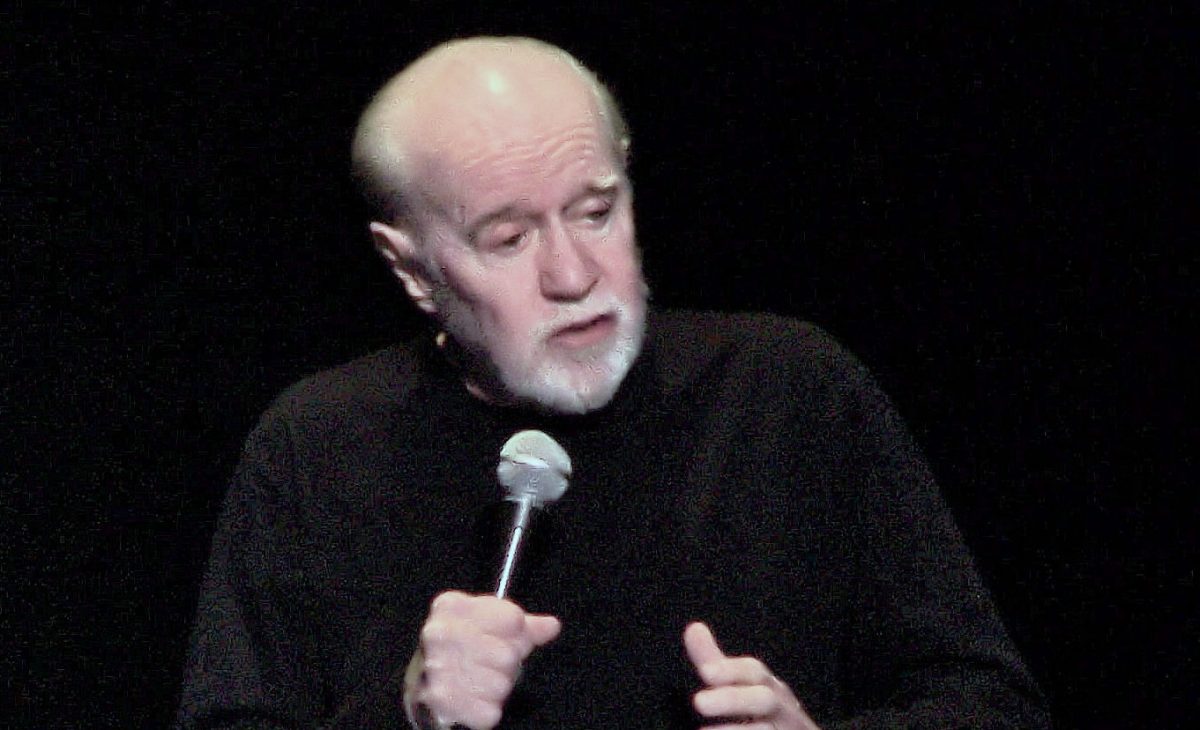
Faith in Humanity Restored, 2018 Edition

In his 2005 HBO stand-up comedy special, world-famous philosopher and social critic (posing as a stand-up comedian) George Carlin has enumerated quite a few things humanity should be ashamed of, like war, genocide, consumerism, and several others. If you look at the mainstream media, all you see is bad news: an earthquake here, famine there, a caravan of desperate people heading for the US border, armed conflicts all over the world, and countless examples of corporate greed exploiting not only humans but animals, nature, the planet as a whole. In times like these, it’s hard to remember that there are still things that make us as a species worthy of survival. If you find it hard to think of any, here are a few things that will – at least for a while – restore your faith in humanity.

England’s soccer team donates all World Cup winnings to charities

Sports stars are just a bunch of overpaid entertainers – this is something that probably crosses the minds of many when seeing the fabulous amounts they make year after year. This might be true – but, it seems, not all of them are greedy. After failing to take home the World Cup this year (France proved it’s better at football),
England’s national football team donated all its World Cup winnings to charity. And it’s not two pennies either – the team took home at least $22 million by reaching the semi-final in the competition.

Prepare to be even more surprised: England’s footballers have been playing internationally for free for more than a decade. Since 2007, all their wages from international games to charity through the England Footballers Foundation (EFF), supporting charities like UNICEF, Cancer Research UK, The Honeypot Children’s Charity, and many others.

March for Our Lives, Washington DC, USA

Everyone in the United States of America has the right to bear arms, according to their Constitution’s Second Amendment. Sometimes, this leads to tragic incidents – like the Stoneman Douglas High School shooting in Parkland, Florida, on Valentine’s Day 2018. This tragic event triggered a massive outrage not only from the media but from the students, too – on March 24, they organized a massive demonstration in Washington DC (and inspired over 800 similar events all across the US and the world) demanding tighter gun control.

While the protests were criticized by many, claiming that their goal was to “destroy the Second Amendment”, media outlets have described them as a potential tipping point for gun control legislation in the country.

The Two Koreas

North Korea and South Korea have had an antagonistic relationship for decades – and they both took a step in the right direction this year. This spring, the presidents of the two countries – North Korean leader Kim Jong Un, and South Korean president Moon Jae-In met for the first time, each of them stepping on the soil of the neighbouring country as a symbolic gesture. Their first summit was mostly ceremonial, with symbolic gestures made by both, including the planting of a tree, the signing of the Panmunjom Declaration for Peace, Prosperity and Unification on the Korean Peninsula, and had a formal dinner.

Since then, the two leaders met twice – in May and September – and are planning to organize another in December, when North Korean president Kim Jong Un will visit Seoul.

FIFA’s Blatter resigns

Sepp Blatter has announced he is stepping down as president of FIFA, football’s governing body, and has called on a special congress to elect a successor. The news comes less than a week after Blatter was reelected as FIFA chief amid a bribery scandal.

Switzerland’s office of attorney general (OAG) said that it is not investigating Blatter in connection with the FIFA corruption probe.

“Joseph S. Blatter is not under investigation by the OAG. His announced resignation will have no influence on the ongoing criminal proceedings,” the attorney general is cited as saying by Reuters.

Jordan’s Prince Ali bin al-Hussein, who gave in to Blatter during the vote last Friday, will run in the new FIFA election for president, AFP reported.

Sepp Blatter has taken this step to save the organization, Russian Sports Minister Vitaly Mutko has told the Tass news agency.

The new congress will take place between December 2015 and March 2016, the chairman of FIFA’s audit and compliance committee, Domenico Scala, has said. He has taken the floor after Blatter.

Former Daily Show host, the very unfunny John Oliver made Sepp Blatter his personal White Whale, repeatedly calling out the FIFA President on his show with lengthy items detailing the FIFA corruption scandals.

On last Sunday’s show, Oliver begged FIFA sponsors – which include McDonalds, Adidas and Budweiser, to pull their support.

The Guardian as well as the Financial Times singled out South Africa. From The Guardian:

Blatter’s announcement comes after Fifa had admitted it paid $10million destined for the South Africa World Cup to an account controlled by the disgraced former vice-president Jack Warner. The payment followed a letter from the South African FA to Fifa secretary general Jérôme Valcke.

From the FT:

His resignation came at the end of another bruising day for Fifa, after one of his most senior lieutenants, Jérôme Valcke, was alleged to have had personal knowledge of a $10m payment at the heart of a US corruption probe.

Mr Valcke was the recipient of a letter from the South African football association on March 4, 2008, asking him to withhold $10m from the funding of the World Cup “operational budget” and for the money to be “advanced” to a fund controlled by the then “President of Concacaf”, Jack Warner.

The letter, which was shown on South African television, was confirmed by its South African signatory, Molefi Oliphant. “The copy is official,” he said. “That is the copy, you have it, so you can draw any opinion you want to. That is the correct letter,” he said.

Blatter understands New World Order

Fifa boss understood very early that there’s a new world order in which westerners don’t matter much, writes Simon Kuper in the FT.

Blatter knows which of the soccer nations have money, and that is why he will be re-elected.

In the 19th century, it was the British, later Americans, then Russians and currently Gulf Arabs.

That’s why on Friday he will be re-elected to his fifth term as president of Fifa, the corrupt global football authority. Western countries rightly decry Blatter. However, we ought to recognise his genius. This 79-year-old understood very early that there’s a new world order in which westerners don’t matter much.

I only realised how deluded most of us westerners were on December 2 2010. That afternoon Fifa’s executive committee (Exco) chose Russia to host the 2018 World Cup and Qatar to stage the 2022 tournament. I had followed the bidding campaigns for years. I had had many off-the-record conversations with western bidders. A few had predicted Russia’s victory. Almost nobody foresaw Qatar’s.

Writing in the Financial Times before the vote, I chastised bookmakers William Hill for making Qatar runaway favourites. Hadn’t Fifa’s own evaluation report called Qatar’s extreme heat “a potential health risk for players, officials, the Fifa family and spectators”? I tipped Russia and the US to win. I was wrong. So were almost all other western observers. Theo van Seggelen, president of the international footballers’ trade union Fifpro, says: “For me — and I was reasonably close to the fire — the vote was a complete surprise.”

It turned out that Fifa cared only about naked power and money. In addition, more than a third of Exco’s 24 members were accused of corruption linked to the vote. Several resigned from football. Jérôme Valcke, Fifa’s secretary-general, wrote in a leaked memo that Qatar “bought” the World Cup. (He later said he’d been misinterpreted.) Last year The Sunday Times alleged that a Qatari, Mohamed bin Hammam, made payments totalling $5m to win support for Qatar’s bid.

Western countries, hopping mad to lose the World Cups, have cried “corruption!” But most non-western participants dismiss them (with some justification) as hypocritical, whining losers. Richard Attias, a French communications consultant who works with Qatar, told me: “Only a microcosm is interested in how World Cups are attributed — a very British microcosm.”

Fifa’s vote presciently recognised the geopolitical rise of Qatar and Russia. Fifteen days after the vote, a Tunisian fruit seller set himself on fire, and north Africans rose in revolt. Qatar, “flush with the success of winning the rights to host the . . . World Cup and with its international recognition soaring as a result,” then helped spark the Arab spring, writes Kristian Coates Ulrichsen, Baker Institute fellow for the Middle East. Qatar funded Islamists across north Africa, and helped unseat Libya’s Colonel Gaddafi. In 2014, Russia annexed Crimea. We live in a new world order.

It suits Blatter. Coming from a small country, he is skilled at accommodating big power brokers.

Moreover, he thinks like them: Blatter, too, likes legal immunity, motorcades on empty highways, and respectful underlings. The central American football officials who recently compared him with Jesus and Nelson Mandela presumably knew the comparisons were absurd. But the absurdity simply emphasised their loyalty.

Western countries are powerless to change Fifa. They could boycott the World Cup but, characteristically, they won’t make sacrifices for their principles.

Now some westerners are complaining about Blatter’s unfair advantages over any opponent in Friday’s vote. Many national football associations fear their supposedly secret ballots won’t stay secret.

SA soccer bid got clean audit from EY

Minister in the Presidency Jeff Radebe said that the claims that a South African official paid a bribe to FIFA to host the 2010 World Cup are untrue.

The awarding of the 2010 FIFA World Cup to South Africa is being investigated by the FBI.

The US Attorney General told a press conference on Wednesday that bribes were allegedly paid to FIFA officials to award the 2010 tournament to South Africa.

“As far as we were concerned, we received a clean audit report from Ernst and Young a reputable audit firm.

“There has never been a suggestion that anything untoward happened,” Radebe said.

Radebe was speaking at a post cabinet briefing in Pretoria on Thursday.

“I was also part of the local organising committee,” Radebe said laughing.

He reminded journalists that at the end of the 2010 FIFA World Cup, FIFA president Sepp Blatter said the event in South Africa was one of the best ever.

“About what came yesterday [Wednesday], the due process will take place,” he said.

Sports Minister Fikile Mbalula is expected to release a statement on the issue later on Thursday.

Source: eNCA

Cricket: South Africa forced to select injured Coloured player for World Cup

According to an Australian newspaper, the South African cricket team was forced to include an injured Coloured (mixed-race) player in their line-up for the Cricket World Cup in order to adhere to the government’s racial quotas for sports. This may have cost the country, one of the world’s foremost cricketing and rugby nations, the championship as it lost in the semi-final against New Zealand which is less highly rated.

Vernon Philander
Vernon Philander

The injured Vernon Philander (see picture) was selected and star bowler Kyle Abbott ousted on account of belonging to the white race. For the semi-final played last Tuesday, the South African minister of sport, Fikile Mbalula, ordered that “at least four players of colour” had to be included in the team.

According to reports, captain AB de Villiers was highly upset about the political and racial interference in the selection process. A source close to him said:

“AB didn‘t want to play in the semi because of this; it is a clear case of interference by the board — they ordered Philander‘s selection.”

“It was a purely political decision. The players are fuming about it but they won‘t say so.”

De Villiers declined to comment publicly.

Tony Irish, chief executive of the SA Cricketers‘ Association, merely said:

“I will be talking to the players [today] when they get back [from Australasia].”

The ANC sports minister is unrepentant, however. He has threatened national sports bodies with deregistration if they do not axe more white players from both rugby and cricket.

“We will …withdraw national colours; we will ensure that we deregister those that are intransigent,” Mbalula threatened.

Dallaglio says England must beat South Africa at Twickenham

Lawrence Dallaglio says England must make a priority of beating South Africa and turning Twickenham into a fortress ahead of the World Cup.

The Red Rose legend issued his twin challenge as Stuart Lancaster claimed to already know 80 per cent of his squad for next year’s tournament.

England boss Lancaster also revealed the “pain of losing” which he admits “drives” a squad that has yet to win a Six Nations title.

Lawrence Dallaglio when he still captained England

Dallaglio believes that winning silverware in the 339 days before the World Cup kicks off in England is not the be-all and end-all.

But he said: “What England’s priority has to be is winning as many, if not all, their games at home because, come the World Cup, if they win every game at Twickenham they win the tournament.”

England, who name their squad a week tomorrow, face four autumn Tests at Headquarters – including matches against New Zealand, South Africa and Australia – and three at home in the Six Nations.

Of those, Dallaglio insists the most important is next month’s clash with the Springboks, recent conquerors of the world champion All Blacks.

“Going into a World Cup you want to know in the back of your head that you can beat every side,” he said. “And South Africa is the only side England haven’t beaten under Stuart.

“In fact the last time they played them at Twickenham they got properly beaten up. So this is a fascinating fixture.

“If England can come away with two out of three southern hemisphere victories, that would show me that they are genuine World Cup contenders.”

Lancaster insists his squad’s aim is to win every game as anything else would be an admission that they are happy to lose one, “which is not the mindset we want”.

He added: “We know we’ve been close, we’ve won some big games, but equally we’ve not nailed some as well, so we need to be better at that final hurdle.

“We’d like to have won something and it is really frustrating for all of us that we haven’t. The pain of losing certainly drives us.”

England’s autumn internationals

Nov 8: England v New Zealand

Nov 15: England v South Africa

Nov 22: England v Samoa

Nov 29: England v Australia

Racism in English football is ‘right in your face’

‘ The lack of black and ethnic minority figures in the dugout and the boardroom (is) overt’ – Jeffrey Webb

Racism in English football is overt according to Fifa’s vice-president Jeffrey Webb.

The head of Fifa’s anti-racism task force has said that discrimination in English football is “right in front of your face” and backed calls for the introduction of the Rooney Rule.

Jeffrey Webb, the Concacaf president and Fifa vice-president, said the lack of black and ethnic minority figures in the dugout and the boardroom was overt but that no one wanted to deal with the problem.

Jeffrey Webb
Jeffrey Webb

The Professional Footballers’ Association chief executive Gordon Taylor recently said that racism was a “hidden problem” in English football, making his own call for the Rooney Rule to be introduced.

Webb responded: “I don’t know how it could be hidden. You have 92 clubs, you have two coaches of colour. How many board members or executives are in various club positions or at the FA, in Uefa? So, it’s not hidden.

“It’s hidden from a discussion standpoint. No-one wants to deal with it. No-one wants to deal with it from a commercial standpoint.”

Webb said that he had recently spoken to Eddie Newton, the Chelsea youth coach who has been linked with a move to Schalke 04 with Roberto Di Matteo, who had described his frustration at being unable to secure an interview.

“I hosted a dinner a few months ago, last time I was here. I met a young guy coaching at Chelsea, assistant coach, won a Champions League final, doing well,” said Webb.

“Can’t even get an interview. Eddie Newton. I’m not talking about getting a job, getting an interview. That’s not hidden. That’s right in front of your face.”

Taylor’s intervention kicked off a renewed debate within English football about whether the Rooney Rule should be introduced.

The Kick It Out trustee Garth Crooks hit out at the Football League chairman Greg Clarke for not raising the issue at their summer meeting, while the Football Association and the Premier League have also faced questions over their stance on the issue.

Webb said the Rooney Rule, which would force clubs to ensure that at least one person from a BME background was included on each interview list, should not be necessary in the modern age, but it was.

“In this day and time, in this era, in this century, should we really be having to mandate opportunities for qualified individuals? Sadly, the answer is yes.”

Webb said the pressure for change needed to come from club owners and from fans.

“It has to come within. It has to come from the clubs. It has to start with clubs. It has to start with ownership,” he said. “And, of course, the fans have to demand that there is opportunity, that there is equality. And, unless we have that, don’t expect any changes.

“How many American owners do we have from English Premier League clubs in the UK? So, why have certain standards here and then, of course, in the US, in the NFL leagues, where you live, where you conduct business, you live by different standards?”

Webb also said that Fifa faced a “huge, huge challenge with Russia” ahead of the 2018 World Cup given the prevalence of racism in football there and said that action “must start with education, must come from the top down”. – The Guardian

Cry for me, Argentina

Riot police fired tear gas and rubber bullets late Sunday to restrain a group of vandals who disturbed a peaceful rally celebrating Argentina’s gutsy performance in a 1-0 loss to Germany in the World Cup finals.

Parents with small children could be seen fleeing in fear after police, who initially remained on the sidelines as jubilant fans poured into downtown Buenos Aires, began chasing down the vandals on motorcycles. The youths, many of them with their faces covered and drinking heavily, responded by hurling rocks, destroying store fronts and even breaking into a theater.

Police said 20 officers were injured and at least 60 people were arrested. The vandals tore down street lights and ripped up the stone from some streets to throw at officers.

The chaotic situation marred what was an otherwise spontaneous show of support for Argentina’s national team after its best World Cup run in 24 years.

Amid the outpouring of gratitude, there was a hint of frustration that Messi, the four-time world player of the year, didn’t turn in a stronger performance.

“Messi still isn’t Maradona,” said 31-year-old Eduardo Rodriguez, referring to Diego Maradona, who lifted the championship trophy for Argentina in 1986 and led the ‘albiceleste’ to its last World Cup final, also against Germany, in 1990. “But this here is a party. We’re all proud of our warriors.”

Despite the pride over their team’s performance, many Argentines couldn’t hide the pain.

In Rio de Janeiro, more than 70,000 Argentina fans cheered on their team, many having traveled upward of 40 hours by car.

Source: AP

Black Brazilians fight ‘religious intolerance’

Religious syncretism is ever present in Brazil.“The evangelists deny a great section of Brazilian culture. Indeed, they are racist,” says a Candomble priestess.

Her indignation came after devil worshippers were stopped from slaughtering animals and performing rituals in some newly built stadiums.

During the recent riots in Brazil ahead of the World Cup, Afro-Brazilian religious leaders were joined by Jews, Protestants, Buddhists and Baha’is, dressed in the traditional garb of their faiths, to draw attention to “intolerance”.

On April 28 a federal judge in Brazil stated as part of an official court ruling that “African-Brazilian cults are not religions” because their “religious events do not contain [the] necessary traits of a religion,” adding fuel to the flames.

The ruling continues on to define these necessary traits as “a basic text a hierarchical structure and a God to be worshiped.” (O Globo, 5-20-2014). In the opinion of Federal Judge Eugenio Rosa de Araujo, Candomblé and Umbanda do not meet that definition.

The drumbeat of Candomble — a religion introduced in Brazil in the 16th century by west African slaves — resounded during the riots.

A Candomble priest, or “babalawô,” said he wanted to gain the world’s attention, because “religious intolerance generates racism and threatens democracy”.

Black followers of Candomblé and Umbanda say they want to isolate “racist” Christian evangelical churches, while showing that Brazilians of all religions can live together.

“For 25 years, they have hit us over the head with the Bible. In school, our children are treated like followers of the devil,” the priest told AFP.

They might be treated as followers of the devil, because many are. One of the “spiritual leaders” on Brazil’s biggest football club Vasco, openly calls himself a devil worshipper.

Police did not confirm the estimated numbers of demonstrators.

Evangelical churches have flourished among the poor in this giant South American country, where more than 80 million people — 45 percent of the population — are black or of mixed race.

But Jose Flavio Pessoa de Barros, an anthropologist at the Federal University of Rio de Janeiro, charged that they “demonize cults of African origin to recruit followers.”

Followers of Candomble and Umbanda, have held annual marches against religious intolerance since 2008, after several places of Afro-Brazilian worship were sacked and their leaders attacked.

Nigerian coach blames white US referee for Africa’s loss

Nigeria’s coach Stephen Keshi blamed American referee Mark Geiger after his side lost 2-0 to France in the World Cup last 16 in Brasilia.

Germany and France snuffed out African hopes after both European powerhouses left Africa with no teams to support.

France beat African champions Nigeria 2-0 and Germany secured their 2-1 victory over Algeria in extra time.

Joseph Yobo from Nigeria scored an own goal to add to France’s 1-0 victory.

It was the first time two African teams had reached the second round.

Both black teams went out within hours of each other to leave the continent still struggling to make an impact despite many teams including black players.

SABC commentators in South Africa openly favoured only-black teams in the competition, often making it a case of racial pride.

Many Nigerian supporters however, wore white-face to cheer their team.

Keshi opined at his post-match press conference at the Mane Garrincha National Stadium. “I’m not happy with the officiating,” because Emmanuel Emenike had a first-half goal ruled out for offside.

Replays show however that the call was correct.

Keshi also complained that France had been allowed to get away with certain offences.

FIFA 2014: Monkey chants,bananas and homophobia

During a training session with the Spanish national team in 2004, the Spanish national coach Luis Aragonés was recorded by a Spanish TV crew referring to French soccerplayer Thierry Henry as a “black piece of s***” to José Antonio Reyes, Henry’s Arsenal teammate.

That experience, however, is not his alone. In fact, West Ham United players Clyde Best and Ade Coker were subjected to monkey chants when they were playing soccer during the 1960s, 40 years earlier. The chants have continued, and players, such as Jozy Altidore and Danny Alves, have inherited this treatment.

Many believe that thirst for justice will go unquenched and racism will persist.

Racism has given way to a spout of homophobia: Mexico’s fans harmonized a chant, singing “puto” during two recent matches when Mexico was pitted against Cameroon and Brazil.

HBO’s “Real Sports,” hosted by Bryant Gumbel, aired an episode in April, entitled “Soccer Racism.” The episode reported on the frequent displays of racism in European football, which have gone to show the “ugly side of a beautiful game.” Several black soccer players spoke about it.

Sometimes slang for “fag” or “man whore” or “coward,” the word being used during Mexican soccer matches only dates back to 2003, which discredits the usage as a tradition. FIFA, which isn’t a fan of inflammatory remarks, has launched an investigation to examine Mexican fans’ use of “puto.”

Giovanni Marti from FIFA’s Media Department encourages individuals and groups to submit any evidence in their possession with regard to discriminatory behavior for the analysis and consideration of the FIFA Disciplinary Committee.

While it’s too early to know how FIFA plans to handle Mexico’s fans, if history is any indicator, little may be done. Though, if they were looking to make an example of a team, it’d more likely be Mexico than a European team. But, why punish Mexico now and not 10 years ago when the word first came into rotation?

And with 2018’s World Cup taking place in Russia, a country that known for its anti-black sentiment, many wonder if banana tossing and monkey cries will persist.

Source: latinpost.com

Black identity and racism in Brazil

Integration and miscegenation were actually government policy in Brazil.

Before teams representing their countries from around the world arrived in Brazil, the country’s president, Dilma Rousseff, took the opportunity to label 2014 the “anti-racism World Cup.”

The declaration came after a wave of racist incidents in soccer around the world targeting black players, many of whom are Brazilian. While it’s a well-intentioned gesture and a particularly important one for a World Cup being hosted in the country that’s home to the largest population of people of African descent outside of Africa, Brazil has a complex past and present when it comes to race.

That complexity can perhaps best be illustrated by the fact that many black Brazilians don’t think of themselves as black. Brazilian soccer star Neymar is a great example. Asked during an interview in 2010 if he had ever experienced racism, his response was, “Never.” He added, “Not inside nor outside of the soccer field. Even more because I’m not black, right?”

This denial of blackness may seem confusing to many Americans, because despite his long, straightened and occasionally blond hair, Neymar is clearly black. But for Brazilians, being black is very different from what it is in the United States.

“The darker a person is in Brazil, the more racism she or he is going to suffer. Light-skinned black people don’t identify as black most of the time,” says Daniela Gomes, a black Brazilian activist who is currently pursuing a doctorate in African Diaspora studies at the University of Texas. “A lot of people choose to deny their blackness. They don’t believe they are black, but they suffer racism without knowing why.”

Gomes calls it a “brainwash” that Brazilians go through in a country that likes to hold itself up as a model for racial harmony. But she also points to differences in the histories of the United States and Brazil. “We never had segregation, we never had the one-drop rule, we never had those kinds of things that are so normal for an African American,” she said. “What happened in Brazil was the opposite.”

Integration and miscegenation were actually government policy in Brazil. Around the time that slaves were freed, in 1888, the government sought to whiten its population through the importation of European immigrants. This idea was made law by Decree 528 in 1890 and opened the country’s borders to foreign immigrants, except for those from Africa and Asia.

The goal of this immigration effort was depicted in an 1895 painting by Brazilian artist Modesto Brocos known as The Redemption of Ham, which features a black grandmother, mixed-race mother, white father and white baby. The grandmother stands to the left with her hands raised in prayer, praising God that her grandson is white. This, says Brazilian entrepreneur and activist Carlos Alberto David, is the “final point” of racism in Brazil.

“Racism in Brazil is very sophisticated and structured,” says David. “The racism here is not physical. It works on people psychologically.”

Neymar, whose son looks very similar to the grandson in The Redemption of Ham, seems to have had quite a different experience in the four years since saying that he wasn’t black. The star forward has been subjected to monkey noises made by his own teammates, had multiple bananas thrown at him during international matches and even confronted an opposing coach he thought called him a monkey during a game.

Source: The Root

Spying on rivals with drones hits the World Cup

Spying on rivals has hit the World Cup on the tournament’s first day of matches.

After spotting a drone hovering over its practice yesterday, France’s team manager Didier Deschamps has called for an investigation into the possibility that the team was spied on, according to Yahoo Sports.

Deschamps told Football Italia the drone’s operator was likely one of France’s potential opponents, or a French news agency. France is in Group E with Switzerland, Honduras, and Ecuador.

The story is gaining traction in the French media.

The tweet translates to: “A drone flies over the Blues during training,” referring to a colloquial name for the French soccer team. It also alludes to an investigation.

BFMTV has reported that the drone wasn’t Honduran. The article says the drone’s pilot, who was apprehended by local police “wanted to have fun watching training since he could not be at the stadium.” The article doesn’t give the nationality of the pilot, though if BFMTV is right, it was probably a fan using it rather than a journalist or sports operative.

Regardless, the presence of a drone at the World Cup says a lot about how popular and relatively affordable drones have become.

Source: Business Insider


Soccer: France, Portugal nervous ahead of World Cup match

france_soccerFrance and Portugal, two of Europe’s footballing heavyweights, face a fraught test of nerves on Tuesday with their places at the 2014 World Cup finals at stake.

France, the 1998 world champions, are 2-0 down to Ukraine after the first leg of their play-off ahead of the return in Paris while Portugal, semi-finalists in 2006, take a slender 1-0 advantage to Sweden.

Elsewhere, Greece look well set to make the finals in Brazil next year as they enjoy a 3-1 lead over Romania while Iceland, bidding to become the smallest country to reach the World Cup, are 0-0 with Croatia ahead of their trip to Zagreb.

France are clearly most at risk of failing to qualify for a major championships for the first time since they missed the boat for the 1994 World Cup.

And although Ukraine have lost their previous three play-offs — against Croatia (1998), Germany (2002) and Greece (2010) — they arrive in Paris with a two-goal cushion from the first leg, a psychological advantage and facing a home team smarting from a pasting in the press.

The manner of their defeat in Kiev on Friday prompted the sports daily L’Equipe to write off their chances.

“In terms of what we saw on Friday night … the French would do well just to draw the second leg,” offered the newspaper.

And if they are to overcome the Ukrainians, they will have to do so without Laurent Kolchensky at the heart of their defence after the Arsenal defender was sent off late on following a clash with Oleksandr Kucher as tension spilled over.

France coach Didier Deschamps, who admitted his side were undone by Ukraine’s sheer physicality in the first leg, said: “We’ve got to put them under pressure, to go at them. On Tuesday, we’ve got to be in the battle. We have the ability to turn it round and that’s what we have to do.”

In Solna, near Stockholm, things are more finely poised, with Sweden taking on Portugal in the second leg a goal down from Lisbon, predictably scored late in the game by Cristiano Ronaldo.

Swedish hopes rest even more squarely than ever on the broad shoulders of Zlatan Ibrahimovic, especially with his phenomenal goalscoring record at the Friends Arena, where he has found the net 10 times since the stadium was inaugurated a year ago.

Elsewhere, Greece should complete the formality of qualifying in Bucharest, having racked up a surprising 3-1 advantage from the first leg in Piraeus.

But little Iceland travel to Zagreb with their improbable World Cup dream still just about alive after a desperate draw in the goalless first leg in Reykjavik.

That match saw them fight a constant rearguard action against relentless waves of Croatian attacks after being reduced to 10 men for the last 40 minutes after defender Olafur Skulason was sent off.

Yet they still have everything left to play for and should they achieve the unthinkable and win in Zagreb they would become the fist nation with a population of under a million ever to reach the final stages of the competition.