French coronavirus patients sent to Germany, Luxembourg by helicopter

STRASBOURG, France – Medical workers dressed head-to-toe in protective gear emerge from Strasbourg university hospital, push a coronavirus patient on a wheeled stretcher across the parking lot, load the patient into a helicopter, then retreat as the aircraft lifts off.

This has become a daily ritual in eastern France as intensive care units there have been unable to cope with the numbers of critically-ill cases and have instead been transferring patients to nearby Germany, Switzerland and Luxembourg.

As one patient on Tuesday was loaded onto a red-and-yellow helicopter of the French Civil Security agency, a helicopter crewman watched over, dressed in blue surgical scrubs, topped with an orange aviation helmet.

The area in eastern France around the city of Strasbourg has seen one of the biggest coronavirus clusters in France. Local doctors have warned that the healthcare system is at breaking point.

The so-called air bridge to fly coronavirus patients out of eastern France began at the weekend and has so far involved around 10 helicopters from France, Germany and Luxembourg.

One flight delivered a patient from a clinic in France’s eastern Alsace region to a military hospital in Ulm, southern Germany. “If everything goes well he will survive,” said German Army colonel and doctor Matthias Helm.

Another flight brought a 64-year-old patient from Colmar in France’s eastern Alsace region to Germany’s Mannheim hospital.

“Our French colleagues are currently under excessive strain”, said Mannheim senior intensive care doctor Thomas Kirschning.

“Currently we have the advantage that we still have capacity and can prepare ourselves for a potential wave of cases. ”

France reported a cumulative 1,100 coronavirus deaths on Tuesday with 22,300 infected people.

The epidemic in eastern France led the French army to set up a field hospital with 30 intensive care beds. The field hospital admitted its first patient on Tuesday.
French flee from Paris to the countryside

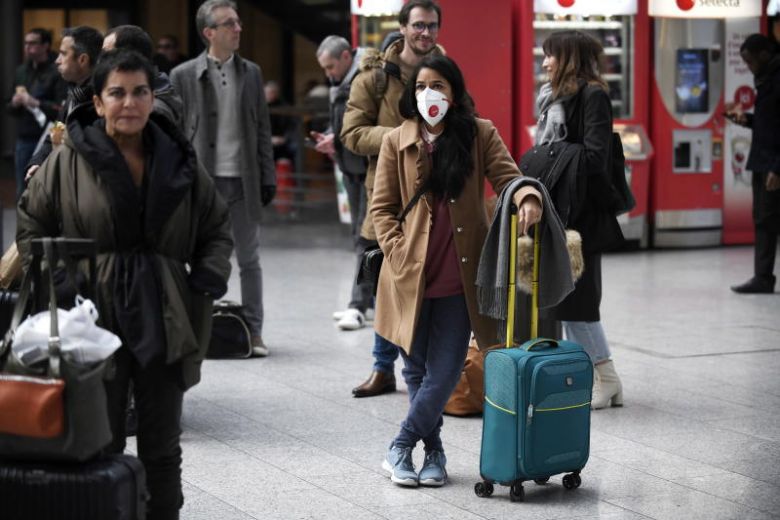
PARIS – Parisians thronged the city’s rail stations and took to the highway early on Tuesday to escape the French capital before a lockdown imposed to slow the rate of coronavirus contagion kicked in at midday.

The Paris exodus drew dismay from provincial France, where many fear that city-dwellers will bring the virus with them and accelerate its spread.

Health Minister Olivier Veran said the government had no intention of preventing people travelling to secondary residences but said the stringent restrictions on public life would apply on the coast as they would in the city.

At Paris’s Gare du Nord, passengers, many wearing masks, stared up at departure boards.

“We’d rather be in a more open environment, in a bigger house with a garden, than in a Parisian apartment,” said education journalist Camille, who was travelling to her mother’s home in northern France with her partner. Both plan to work remotely.

France’s death toll from the coronavirus has reached 148 and a total of 6,600 people have been confirmed infected.

President Emmanuel Macron late on Monday said the country “was at war” with coronavirus and announced restrictions unprecedented in post-war France.

He ordered people to stay at home from Tuesday lunchtime. He said they should leave only to buy groceries, travel to work if essential, exercise or for medical care. The army will be mobilised to help move the sick to hospitals, he said.

Junior transport minister Jean-Baptiste Djebbari said services of the high-speed intercity TGV trains would be reduced under the lockdown to help curb infections.

But many in the provinces remained incredulous.

“Parisians are fleeing the city and will infect the provinces, just to be confined in the open air. This exodus is unthinkable, selfish and a ticking time-bomb,” one Twitter user wrote. – Reuters

Is Europe doomed as Gadaffi promised?

As Europe’s migrant crisis grows far and wide, many Russian media are recalling the late Libyan leader Muamar Gaddafi’s gloom prophecy made several months before his violent death. “Now listen you, people of NATO. You’re bombing a wall which stood in the way of African migration to Europe, and in the way of Al-Qaeda terrorists. This wall was Libya. You‘re breaking it. You’re idiots, and you will burn in Hell for thousands of migrants from Africa and for supporting Al-Qaeda. It will be so. I never lie. And I do not lie now,” said Gaddafi in an open letter obtained by the Russian daily Zavtra and published in May 2011 several months before the Lybian leader was killed.

Since the beginning of the year 500,000 refugees have arrived in Europe. The migrant crisis has become number one priority for the EU countries, European Commission President Jean-Claude Juncker told the European Parliament in his annual message regarding the state of affairs in the European Union.

“It is Europe today that represents a beacon of hope, a haven of stability in the eyes of women and men in the Middle East and in Africa. That is something to be proud of and not something to fear,” said Juncker.

The question what caused the migrant crisis in Europe has evoked a deluge of comments from the expert community and Russian society in general. Europe is about to lose its reputation of the most stable place in the world, largely because the leading European countries and the United States have been shaking loose the regimes precisely in those countries whose people are now storming railway stations in the EU, experts say.

“That the refugee crisis is an outcome of US-European policies is clear to the naked eye,” says senior research fellow Boris Dolgov, of the Oriental Studies Institute under the Russian Academy of Sciences. “The destruction of Iraq, the destruction of Libya and attempts to topple Bashar Assad in Syria with the hands of Islamic radicals — that’s what EU and US policies are all about, and the hundreds of refugees are a result of that policy,” he told TASS.

“It’s a very serious and multi-faceted problem,” Professor Irina Zvyagelskaya, of the oriental studies department at the Moscow state institute of international relations MGIMO, told TASS. “The civil war in Syria and tensions in Iraq and Libya keep fueling the flow of migrants, but that is not the only cause. I agree with those who see the current events as a trend towards another mass resettlement of peoples, which leave the weaker countries with ineffective economies. There are systemic problems that cause people to abandon their homes and take to the road. And the liberal European legislation allows many of them to not only stay in Europe, but also to live there on social benefits without seeking employment.”

“These people are exhausted, angry and humiliated. They have no idea of European values, lifestyles and traditions, multi-culturalism or tolerance. They will never agree to abide by European laws,” says Russian author, playwright and stage director Yevgeny Grishkovets in his blog. “They will never feel grateful to the people whose countries they have managed to get into with such problems, because the very same states first turned their own home countries into a bloodbath.”

“Angela Merkel vows modern German society and Europe are prepared for problems… That’s a lie and nonsense! I am certain that many of those in France, Italy and Germany, who are pretending compassion and shaking their heads in bewilderment at the news more migrants have drowned or died of suffocation or fatigue on the way, in reality are saying to themselves something like this: ‘This serves them right! That will teach others a lesson!” says Grishkovets.

Columnist and blogger Vitaly Tretyakov wonders why the European Union has walked into this trap which it will never be able to get out of.

“The reasons are many, but all of them are confined to arrogance and exaggerated self-confidence. In most cases this high-handedness is never expressed aloud, but the ‘Europeans’ always feel superiority over everybody else in this world.”

“It remains to be seen whether the European Union succumbed to Washington’s pressures or preferred to manifest solidarity with the United States when it decided to speed up the so-called ‘process of democratization’ in North Africa and the Middle East. Whatever the case, by doing so it helped thrust open Pandora’s Box. Now a vast territory has plunged into civil wars and armed chaos and millions of refugees were forced to flee for life,” Tretyakov said.

Source: TASS

French forces brace for civil unrest

French security forces are bracing for the eventuality of civil unrest.

The army has made contingency plans for the “reappropriation of national territory”, meaning to win back control of neighbourhoods where the population become hostile to the security forces and where guns are easily obtainable, according to the source.

“There are a lot of alienated and angry fourth-generation immigrant kids in the suburbs and the prospect of radicalisation is increasingly likely,” the source said.

“The idea that attacks like the one on the train are carried out by individuals acting on their own is not credible. We’re dealing with highly-organised networks of militant Islamists embarked on a campaign of violence and determined to intensify it.”

Kalashnikov automatic rifles — used by the train gunman and Islamist terrorists who killed 17 people in Paris in January — and anti-tank missiles are now obtainable in France.

Many were smuggled in from the former Yugoslavia after the Balkan wars in the 1990s. More weapons have come in from Libya, the sources said, adding that organised crime and terrorist groups were working together to procure them.

Fears of a possible missile strike on a passenger airliner or a September 11-style attack, according to sources close to French intelligence, are also mentioned.

“Airlines have been warned of a possible attack on a plane with an anti-tank missile,” a source told The Telegraph. “But pilots are unsure how to take evasive action.”

After Friday’s thwarted attempt to massacre passengers on an Amsterdam-Paris train and a series of terrorist attacks and attempted killings in France this year, President François Hollande warned the nation to prepare for more violence, considered inevitable as the Islamist threat grows.

Source: The Telegraph

Ex-Saffer foils terror attack on French train

When a gunman armed with an AK-47 attempted to attack a packed passenger train in a terror attack in France, Chris Norman, 62 – who grew up in South Africa – thought he was going to die.

But he was determined to die fighting, and therefore “sprang into action”.

Ayoub El-Khazzani, 25, has been arrested by French police after opening fire in the packed high-speed train. But his attack was cut short by four men, including Norman and Americans Alek Skarlatos, Spencer Stone and Anthony Sadler.

The train was travelling between Amsterdam and Paris on Friday and the attack happened shortly after the gunman emerged from the toilet inside carriage 12. One man was hit in the neck by a bullet as terrified passengers and staff fled. Three people were injured in the attack, including Stone.

The men “tackled, beat up and hogtied the suspect”. Besides the assault rifle, they also confiscated a Luger pistol, ammunition and a box cutter.

Norman said he was scared when they decided to tackle the would-be attacker but carried on, with the idea of stopping him.

He spoke to French media after the eventful train journey.

“My first reaction was to sit down and hide. Then I heard one guy, an American, say, ‘go get him’. Then I heard another American saying, ‘don’t you do that buddy’, or something like that.

“I think that was it. So then I decided it was perhaps the only time or only chance to take on the terrorist.”

Norman said the man had extra magazines for the AK-47 and he thought he was going to die.

“My thoughts were I’m probably going to die anyway. I thought I’d rather die being active, trying to take him down than sitting in the corner and being shot. But once you start moving you are not afraid anymore,” he said.

Norman lives in France and has a UK passport. He was born in Uganda and grew up in South Africa before starting his own IT consultancy business in 2012.

Source: IOL

France, Russia sink Mistral

Talks between Russia and France concerning the future of the Mistral contract have ended. The contract will be terminated in the near future, a top Russian official has stated.

Paris and Moscow have agreed on and amount of the penalty France will have to pay Russia for not delivering the Mistral helicopter carriers, and the date on which it must be paid, thus bringing the negotiations to conclusion. The contract will be cancelled shortly, Vladimir Kozhin, the Assistant to the President for military and technical cooperation, told RIA Novosti.

“The talks have already ended. Everything is settled – both the date and the amount of penalty. I hope that the agreement concerning the cancellation of the contract will be signed in the nearest future. Then the sum that France will pay Russia will be officially announced,” Kozhin said.

It was reported earlier that Russia and France would settle on the amount of penalty before July 10.

“The penalty amount is only predefined, as this decision has yet to be approved by the governments of the two countries,” a Russian government source told RIA Novosti.

French famers protest against EU ban on Russia

French milk and meat farmers demanded an increase in purchasing prices for their produce and a negotiated lifting of a Russian ban on food imports from France.

The farmers complained that prices for their products are so low that they can’t even meet their costs. In protest, they are blocking roads to tourist attractions, RTL radio reported on Wednesday.

In response to the farmers’ protests, which have been going on for several weeks now, officials argue that the government is unable to regulate the purchasing prices.

Former Agriculture Minister, Bruno Le Maire, believes that new markets for French food exports could help solve the problem and that Russia is an indispensable trading partner.

Le Maire, who served as the French Minister of Food, Agriculture and Fishing from 2009 to 2012, blames the farmers’ plight on an “ongoing tug-of-war over other diplomatic issues.”

The French government has already set in motion a program to help the country’s struggling agricultural sector, but the farmers fear that the promised assistance may never come.

Russia banned the import of meat, fish, diary, fruit and vegetables from the European Union last summer in response to European economic sanctions imposed on Russia earlier over its alleged involvement in the Ukrainian conflict.

Source: Sputniknews

French delegation to Crimea ignores Ukranian authorities

Member of the French National Assembly Thierry Mariani who will head the French delegation during its visit to Crimea, has told reporters about the aims and the agenda of the visit.

The members of the French delegation did not consult with the Ukrainian authorities before the visit to Crimea.

“We arrive in Moscow in the evening on Wednesday, on Thursday we will meet with the State Duma speaker Sergey Naryshkin and then we will head for Yalta and Sevastopol. The agenda includes meetings with the local authorities [including chairman of the Crimean State Council Vladimir Konstantinov, Crimean Prime Minister Sergey Aksyonov and governor of Sevastopol Sergey Menyailo] and the visit will have its ‘French’ part as well.

In Sevastopol we will visit the Alliance Francaise cultural center and the French military cemetery [the burial place of soldiers who perished during the siege of Sevastopol in 1854-1855]. This is the largest French cemetery abroad, somewhat unkempt recently because of the political events,” he added.

Answering a question on whether the members of the delegation consulted with the Ukrainian authorities before the visit, Mariani said, “No, we didn’t. The French Foreign Ministry also said the idea of such a trip would not be supported. But French parliamentarians are free to make decisions. We want to understand how people live there,” the parliamentarian told the Kommersant daily.

French scrabble champ speaks no French

The Francophone world crowned a new Scrabble champion on Monday – a man from New Zealand who barely speaks a word of French.

Nigel Richards, considered one of the world’s greatest players of the word-based board game, beat opponents from France, Canada, Belgium and Francophone Africa on his way to claiming the title at the 44th World Championships of French Scrabble in the Belgian town of Louvain.

But unlike his competitors who all grew up speaking French as their mother tongue, Richards cannot even string a sentence together in the language.

He claims to have memorised the entire French dictionary in just nine weeks before the tournament began, without learning how to pronounce the words or their meanings.

“Nigel can say ‘bonjour’ – with an accent – he can tell you the scores in French … But that’s all,” Yves Brenez of the Belgian Federation of Scrabble told Francetv info.

“He learnt the French vocabulary in just nine weeks. For him, words are just a combination of letters. I exaggerate a bit, but he knows [words] that others have taken ten years to learn.”

If Richards’ victory injured the Gallic pride of the players or audience in Belgium, they didn’t show it, instead giving the New Zealander a standing ovation.

Richards, who lives in Malaysia, is already something of a legend in the world of Scrabble, with one English-language world championship to his name and five US national championship titles.

Source: France24

No more Mohammed cartoons says Charlie Hebdo

The editor of Charlie Hebdo has said that cartoons of the Prophet Mohammed will no longer be published by the French satirical magazine, six months after 12 people were killed in an attack on its Paris offices by Islamist gunmen.

The magazine has frequently provoked outrage among Muslims by publishing cartoons of the Prophet Mohammed, whose image is considered blasphemous by many followers of Islam. Its “survivors’ issue”, the first to be published after January’s attack, featured a cartoon of the Prophet Mohammed on the front page.

But Charlie Hebdo editor Laurent Sourisseau, also known by his pen name “Riss”, told German magazine Stern that the Prophet Mohammed would no longer appear in the magazine’s pages.

“We have drawn Mohammed to defend the principle that one can draw whatever they want. We’ve done our job. We have defended the right to caricature,” Sourisseau said.

“We still believe that we have the right to criticise all religions,” he added.

Riss took over as Charlie Hebdo’s editor in the wake of January attack – which he survived by playing dead – taking over the role from Stéphane “Charb” Charbonnier, who was killed in the massacre.

Riss’s announcement comes after one of the magazine’s most prominent cartoonists Rénald “Luz” Luzier said in April he would no longer draw the Prophet Mohammed as it “no longer interests me”.

Luz, who drew the front cover of the “survivors’ issue”, quit the magazine altogether a month later.

Source: France24

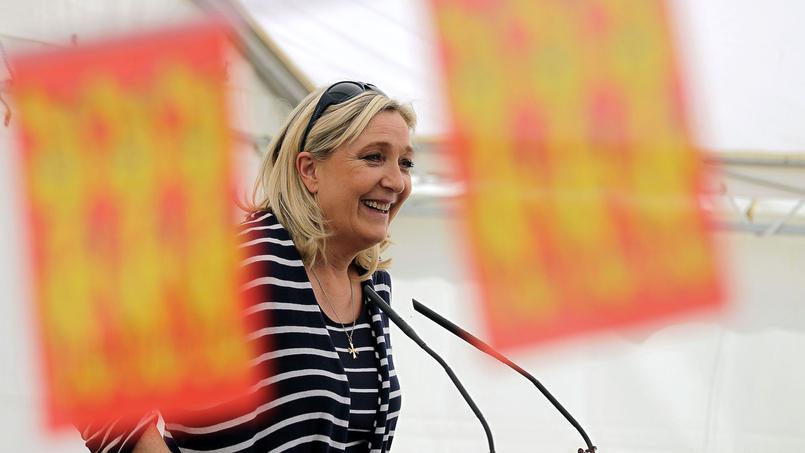
Marine Le Pen announces candidature for Northern region, takes lead in polls

Marine Le Pen has announced her candidature in the Nord-Pas-de-Calais-Picardie region in the north of France during elections to be held on 6 and 13 December 2015, assuming a lead in the polls. If she is successful, her party, the Front National, will control an entire region in France for the first time.

According to an opinion poll for Le Figaro – LCI which was conducted by OpinionWay, she will win both the first and second rounds of the election, finishing with 5 percentage points more than her immediate, centrist rival, Xavier Bertrand of The Republicans.

Nord-Pas-de-Calais-Picardie used to be a Socialist area, but with rising joblessness and the problems with a refugee camp in the coastal town of Calais, support for the the Socialist Party has waned, with many voters now placing their hopes for a better life in Marine Le Pen’s Front National.

In announcing her candidature, Le Pen said that she could “immediately make a difference on the regional level and on the national level a bit later”, referring to her ambition to become the French president during the election of 2017. Asked why she hesitated until today to announce her candidature in the region, she said that “many people thought that my regional candidacy would clash with my presidential candidacy” but that she felt it imcumbent upon her to get involved in the “great and beautiful region”.

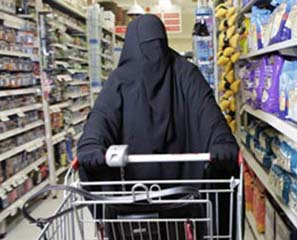
French Muslim grocery store open for gender-specific days

A grocery store in Bordeaux has caused a furor among local residents after the store’s owners, who are newly converted to Islam, reserved gender-specific days for its customers to make sure that men’s and women’s paths never cross.

The “De L’Orient à L’Occidental” grocery in Bordeaux has put a sign on its front door saying that “sisters” can only shop during the weekend, while “brothers” are welcome at the store twice as often – on Monday, Tuesday, Wednesday and Friday. Bordeaux Mayor Alain Juppé has condemned the initiative, calling it “unacceptable,” and saying it “totally contradicts the republic’s rules of equality and diversity.”

The mayor has called on the authorities to “address this issue in order to stop such discriminatory practices and implement measures, which the law provides in such circumstances,” LePoint.fr reported. Discrimination cases can see penalties of up to three years in prison and fines of up to €45,000.

The head of French equality group ACSE, Naima Charai, wrote on Twitter that gender-related opening hours are “unimaginable and unacceptable,” adding that “respect for the republic” is supposed to be 24/7.

The grand imam of Bordeaux, Tareq Oubrou, appeared to be among those who slammed gender-related opening hours at the “De L’Orient à L’Occidental” grocery store.

“We never saw that at the time of the Prophet! The markets were mixed,” Oubrou told France 3 Aquitaine, adding that the practice of gender-specific days for customers “seemed a bit odd in a world where diversity is an established culture.”

According to the imam, it was more like the owners’ “psychological than theological choice.”

The owner of the business, Jean-Baptiste Michalon, has defended his move, telling French newspaper Sud Ouest that he “didn’t know it was forbidden” by law. “It was for a savvy public that knows that our practice of [Muslim] religion does not allow the mix.”

“It’s not an obligation, everyone does what he wants,” said Michalon, a recent convert Islam who has taken the name Yahya.

Le Pen and Wilders announce new EU parliamentary group

Marine Le Pen, the leader of France’s National Front, announced the creation of Europe of Nations and Freedoms, a new far-right European Parliament group that will qualify for up to €17.5 million of EU money over the next four years.

Le Pen failed to form a group after the European elections last year, despite a surge in support for far-right parties. Her party topped the French vote, returning 24 MEPs.

At least 25 MEPs from seven different countries are needed to form a political group.The new group will include Geert Wilders’ Dutch Party for Freedom, the Freedom Party of Austria, Italy’s Lega Nord, and Belgium’s Vlaams Belang.

Le Pen did not reveal which MEPs from which countries have joined that core but that news is expected later today. At least two MEPs from two different countries not already linked to the alliance are needed to form the faction.

Parliament sources told EurActiv that at least one of the MEPs are thought to be from Poland’s Congress of the New Right. EurActiv understands that Hungary’s Jobbik party will not be joining because they are too extreme. Some press reports claimed a UK Independence Party member could be joining.

Le Pen announced last night that she would hold a press conference to unveil the faction. Wilders also hinted at an important announcement, according to Dutch media reports.

J’annoncerai demain à Bruxelles la constitution de notre groupe “Europe des Nations et des Libertés”. MLP

— Marine Le Pen (@MLP_officiel) June 15, 2015

She said on Twitter, “Tomorrow in Brussels, I will announce the creation of our group, Europe of Nations and Freedom.”

According to research by think tank Open Europe, based on 38 MEPs, the new group could apply for:

an annual grant of €2,974,718.39 to set up and run the new group;
a grant for a linked pan-European political party;
a grant for a linked political foundation or think tank;
amounting to €4,442,759.83 every year;
or about €17.5 million over the remaining four years of Parliament’s term.

Source: euractive.com

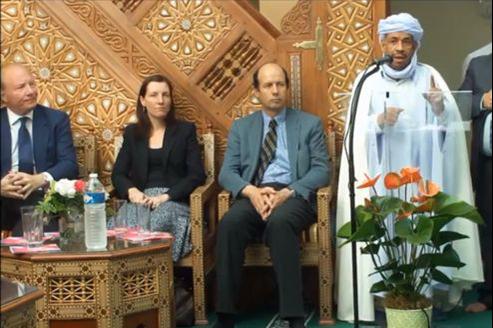
French Muslim leader asks for 5000 churches to be turned into mosques

France’s top Muslim official has suggested turning empty or abandoned Catholic churches into mosques, saying as many as 5,000 are needed for the country’s Muslim population – the largest in Europe.

“It’s a delicate issue, but why not?” Dalil Boubakeur, rector of the Grand Mosque in Paris and the president of the French Council of Muslim Faith, told Europe 1 radio on Monday.

There are currently about 2,500 mosques in France with another 300 under construction, but the number falls short of what is needed, he said. With roughly 5 million Muslims in France, at least 5,000 mosques are needed, Boubakeur said.

During the interview with French radio he gave an example of the transition of a church into a mosque in Clermont-Ferrand, which was welcomed by the local religious community. The church had been abandoned for more than 30 years and the building was given to the Muslim community in 2012.

“It’s the same God, these are neighboring rites, fraternal, and I think that Muslims and Christians can coexist and live together,” he said.

It’s not the first time the lack of places of worship for millions of Muslims has been brought up in France. In April, Boubakeur called for doubling the number of mosques.

His remarks were welcomed by the Christian community as a “legitimate” demand.

“Muslims should, like Christians and Jews, be able to practice their religion,” Monseigneur Ribadeau-Dumas, spokesperson for the Bishops’ Conference of France, told French radio station Europe 1.

However, this suggestion has been criticized by the National Front party. In April, Florian Philippot, its vice-president, argued France doesn’t need more, because “100 percent of places of radicalization are mosques.”

The party’s leader Marine Le Pen called to stop the construction of new mosques in March.

“We must today freeze the construction of new mosques while we verify the origin of their financing,” she said in an interview to France 24.

The question of building closer ties with the Muslim community was discussed at the talks between the French government and about 150 Muslim leaders in Paris on Monday.

French Prime Minister Manuel Valls stressed there was no link between extremism and Islam.

“We must say all of this is not Islam,” he said. “The hate speech, anti-Semitism that hides behind anti-Zionism and hate for Israel… the self-proclaimed imams in our neighborhoods and our prisons who are promoting violence and terrorism…

“Islam still provokes misunderstandings, prejudices, and is rejected by some citizens,” he added. “Yet Islam is here to stay in France. It’s the second largest religious group in our country.”

The first conference between the government and Muslim community leaders comes five months after the Charlie Hebdo and kosher store jihadist attacks in Paris that killed 17 people.

The terrorists responsible for the attacks “belong to a different world than we do,” said Boubakeur, speaking at the conference. – RT.COM