French delegation to Crimea ignores Ukranian authorities

Member of the French National Assembly Thierry Mariani who will head the French delegation during its visit to Crimea, has told reporters about the aims and the agenda of the visit.

The members of the French delegation did not consult with the Ukrainian authorities before the visit to Crimea.

“We arrive in Moscow in the evening on Wednesday, on Thursday we will meet with the State Duma speaker Sergey Naryshkin and then we will head for Yalta and Sevastopol. The agenda includes meetings with the local authorities [including chairman of the Crimean State Council Vladimir Konstantinov, Crimean Prime Minister Sergey Aksyonov and governor of Sevastopol Sergey Menyailo] and the visit will have its ‘French’ part as well.

In Sevastopol we will visit the Alliance Francaise cultural center and the French military cemetery [the burial place of soldiers who perished during the siege of Sevastopol in 1854-1855]. This is the largest French cemetery abroad, somewhat unkempt recently because of the political events,” he added.

Answering a question on whether the members of the delegation consulted with the Ukrainian authorities before the visit, Mariani said, “No, we didn’t. The French Foreign Ministry also said the idea of such a trip would not be supported. But French parliamentarians are free to make decisions. We want to understand how people live there,” the parliamentarian told the Kommersant daily.

‘Good thing that whites will be absolute minority’

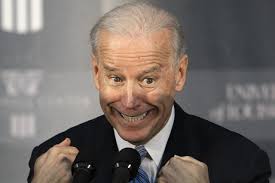
On Tuesday, Vice President Joe Biden said it will be a “good thing” when whites are an “absolute minority” in America in 2017.

The U.S. Census, though, has projected that America will be a majority-minority nation in 2044. The Census report, released in March, also projected that “by 2060, nearly one in five of the nation’s total population is projected to be foreign born.”

“By 2017, those of us of European stock will be an absolute minority in the United States of America,” Biden said at a State Department luncheon for Brazilian President Dilma Rousseff. According to pool reports, Biden added that that’s “not a bad thing, that’s a good thing” because it means the country is becoming more diverse.

The U.S. Census Bureau revealed last week that in 2014, minorities made up a majority of children under five years of age in the United States for the first time.

Biden is reportedly considering a run for the White House and his party’s chances of keeping the White House depend on whether minorities and young voters who made up Obama’s coalition turn out again with the same level of enthusiasm. Recent polling has found that non-white voters are less enthusiastic about the 2016 election than white voters who tend to lean more Republican.

Source: Breitbart

‘US drawing Europe into crusade against Russia, against our interests’

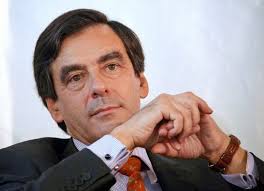
The US is drawing European states into a “crusade” against Russia, which goes against Europe’s interests, former French Prime Minister Francois Fillon has said. Speaking to French media, he stressed that Europe now is dependent on Washington.

“Today, Europe is not independent… The US is drawing us [the EU] into a crusade against Russia, which contradicts the interests of Europe,” Fillon told the BFMTV channel.

The ex-French prime minister, who served in Nicolas Sarkozy’s government from 2007 till 2012, lashed out at Washington and its policies.

Washington, Fillon said, pursues “extremely dangerous” policies in the Middle East that the EU and European states have to agree with.

He accused German intelligence of spying on France “not in the interests of Germany but in the interests of the United States.”

Fillon pointed out that Washington is pressurizing Germany to concede to Greece and find a compromise.

He noted the “American justice system” often interferes with the work of “European justice systems.”

“Europe is not independent,” the ex-PM said, calling for “a broad debate on how Europe can regain its independence.”

This, however, would not be possible if Europe goes ahead and signs the Transatlantic Trade and Investment Partnership (TTIP), a proposed EU-US treaty, which has drawn much criticism for its secretiveness and lack of accountability.

“I am definitely against signing this agreement [TTIP] in the form in which it is now,” he added.

The TTIP agreement seeks to formalize the economic relationship between the EU and US economies across the board. The two partners trade nearly €1 billion (US$1.1 billion) worth of goods and services annually.

Its supporters promise €100 billion in GDP growth for the EU and almost $90-billion growth for the US, as well as the creation of over 700,000 extra jobs in the US. However, TTIP critics warn the deal would create environmental problems, a loss of economic sovereignty, bring in torrents of genetically modified food and cause unemployment.

Berlusconi’s party urge lifting of anti-Russian sanctions

The members of the Forza Italia party plan to come forth with the initiative that envisages the lifting of sanctions imposed on Russia by Italy, party leader Silvio Berlusconi said

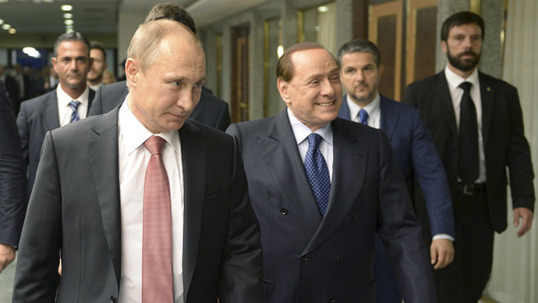
Silvio Berlusconi’s party, Forza Italia, will urge the government to lift anti-Russian sanctions, which are crippling bilateral ties and harming Italy’s national interests, the former Prime Minister said after his meeting with President Vladimir Putin.

“Tomorrow we will present a motion calling on [the] government not to continue the sanctions against Russia, sanctions which harm our interests, causing significant financial losses,” Silvio Berlusconi said after his meeting with Putin at Fiumicino airport in Rome.

Berlusconi also said his Forza Italia party was planning to urge the Italian government to “commit itself” in convincing other European countries to follow its lead in lifting sanctions and “convince our American friends that the return to the atmosphere of the Cold War is inadmissible.”

The issue of Western sanctions and bilateral trade ties took center stage of Putin’s short visit to Italy.

While meeting with the current Italian Prime Minister Matteo Renzi in Milan, Putin was quick to point out that Italian companies had lost more than $1 billion due to the restrictive measures, while the trading volume shrank by one quarter in the first three months of 2015. The Russian president said that the sanctions also affected Russian-Italian military cooperation.

In Rome, meeting with Italian President Sergio Mattarella, the leaders discussed the necessity of maintaining strategic bilateral relations in “all spheres” and not allowing them to “become hostage” of current difficulties, Kremlin spokesman Dmitry Peskov said. He added both Mattarella and Putin agreed “all countries in Europe are paying too high a price for the ongoing internal Ukrainian conflict.”

Mattarella’s stance seems to echo statements by the Italian Foreign Minister Paolo Gentiloni who recently said that “Italy can’t afford to close the doors to Russia” and “can’t cut ties” with Moscow.

Berlusconi got a chance to meet Putin right before his departure to Moscow, and reminisce about the good old days of positive NATO-Russia relations.

The 78-year-old Italian said he remembers the times when world peace was fragile between the two nuclear superpowers. Berlusconi and Putin recalled the 2002 dialogue and cooperation, which established the NATO-Russia Council (NRC), which the former Italian Prime Minister said had put an end to the nuclear “nightmare.”

Berlusconi stressed the need to normalize relations between the West and Russia, insisting that is vital for cooperation on a global scale.

The 78 year-old said he is happy that Putin found time to visit Italy and even meet him personally, announcing that he will soon return the favor and come to Moscow. Berlusconi and Putin share a long personal connection over the years, and according to the Russian President, the bond of friendship they share doesn’t depend on political necessities.

Russian investigators release name of key witness in MH17

The Russian Investigation Committee released the name of the key witness to the Malaysian Airlines flight that had been downed over eastern Ukraine last year, Russian Investigation Committee spokesman Vladimir Markin said Wednesday.

Markin said that investigators had decided to release the name in light of the numerous media reports that were somewhat doubtful.

“The [key] witness is a Ukrainian, Evgeniy Agapov, who served as a mechanic in the First Squadron Brigade of Tactical Aviation of the Ukrainian Air Force (Military Unit Number A4465).”

“[Agapov] is currently under state protection,” Markin added.

Malaysia Airlines flight MH17 was downed by a Buk 9М38-М1 guided missile fired from Ukrainian military-controlled territory, Russia’s air defense systems manufacturer Almaz-Antey said in a press conference presenting its report on Tuesday.

The investigation into the crash that killed all 298 people on board is headed by the Dutch Safety Board.

According to a September preliminary report, the plane was hit by multiple high-energy objects causing it to break up in mid-air. The final report on the crash is due by October 2015.

The Russian maker of the Buk air defense missile system said Tuesday that it has concluded that Malaysian Airlines flight 17 was downed by an older version of the missile, which isn’t in service with the Russian military but is in Ukrainian arsenals.

Controversy continues over who shot down the plane last summer over eastern Ukraine, killing all 298 people aboard.

Ukraine and the West suspect it was destroyed by a “Russian surface-to-air missile fired by Russian soldiers or Russia-backed separatist rebels” fighting in the area, but refuse to release evidence to back their claims.

Russia has denied the allegations and has provided material in support.

Mikhail Malyshevsky, an adviser to the director general of the missile maker, state-controlled Almaz-Antei consortium, said at a news conference Tuesday that its analysis was based on photographs of the wreckage available to the public. He said the holes in the plane’s parts were consistent with a specific type of Buk missile and its warhead.

Source: Sputniknews

Autonomy proposed for Russians in Ukraine

The self-proclaimed Donetsk People’s Republic and Luhansk People’s Republic have proposed amendments to the Ukrainian constitution to vest individual districts in eastern Ukraine with vast autonomy, including authority to regulate cross-border cooperation and the use of the Russian language.

What are termed as districts with “a special status” would also be authorized to control law courts and prosecution services on their territory, those the district prosecution services would be parts of the Ukrainian national prosecution service.

The consent of the government bodies of “special status” districts would be necessary for the appointment and dismissal of the districts’ chief prosecutors, but other regulations on their prosecution services would be established by Ukrainian law.

The DPR and LPR also proposed a formal non-bloc status for Ukraine by “making an amendment to the Constitution of Ukraine, for instance supplementing Article17 or 18 with the following words: ‘Ukraine shall not be a member of any military bloc or alliance, maintain neutrality and refrain from participation in hostilities outside its territory,’ and/or bringing out a law of Ukraine to enshrine the non-bloc, neutral status for Ukraine.”

Such districts would be authorized to call local referendums and elections, draft and adopt their own budgets, and participate in drafting the Ukrainian budget in order to make sure that their interests are taken into account and to “guarantee their financial independence.”

“Special status” districts would be empowered to permit the use of Russian and other languages on their territory and to sign economic agreements with foreign states or individual regions of foreign states.

They would be authorized to set rates for local taxes and fees for local administrative services.

The DPR and LPR also proposed a constitutional amendment to prescribe that the Ukrainian government sign economic or cultural agreements with “special status” districts or associations of such districts and to help them step up cross-border cooperation.

Source: Interfax

‘EU could lift Russian sanctions by end of 2015’

The EU sanctions against Russia could be lifted by the end of the year, Czech President Milos Zeman said.

“I will also add that it may be possible to lift the sanctions fully, maybe even before the end of this year. The

European Council will discuss this in June, I think,” Zeman said in an interview with the Kommersant newspaper published Tuesday.

According to the Czech president, economic sanctions are “completely pointless”, while the political restrictions were introduced to prevent Russia from invading eastern Ukraine.

“I believe that all official moves by the Russian politicians prove that there will be no intervention in eastern Ukraine,” Zeman said, adding that he believed that the internal conflict in the region was dying down.

Russia’s relationship with the European Union deteriorated greatly amid the Ukrainian crisis, with the bloc introducing several rounds of sanctions against Moscow, accusing it of meddling in Ukraine’s internal affairs.

Source: Sputniknews

Germany puts pressure on Kiev

The Financial Times has disclosed the first attempt by Germany to put pressure on Kiev to implement the Minsk 2.0 peace agreement for East Ukraine.

Germany, in a bid to remain neutral amid rising trans-Atlantic tensions, may have warned the Ukrainians that unless they fulfill the Minsk Memorandum, something the Ukrainians have no intention of doing, there may be renewed aggression.

Kiev has welcomed military training missions from Canada and the US to Ukraine adding to what might become a US -Russian proxy war.

Atlanticist neocons entertain maximalist ambitions and have shown but intransigence to the bloodshed.

It seems as though Germany will exert some pressure on Kiev to back down from further escalating the conflict that have cost thousands of lives and seen the rise of modern Nazis.

From the Financial Times:

Germany and key European partners are pressing Ukraine to speed up implementing the Minsk ceasefire agreement — for fear of giving Russia excuses for renewed aggression.

The warnings from Berlin, Paris and London come as EU officials led by Jean-Claude Juncker, European Commission president, are due on Monday to start their first EU-Ukraine summit in Kiev since the Ukraine crisis broke out a year ago.

They coincide with renewed tensions between Russia and the US over Ukraine, with Washington and Moscow trading allegations of increased military involvement in conflict zones.

The latest European comments highlight EU desires to ease tensions with Russia’s President Vladimir Putin, even at the cost of irritating Kiev.

EU diplomats readily admit the separatists violate the Minsk ceasefire far more often than Kiev. But they urge president Petro Poroshenko to stick to the accord and implement its political clauses.

The word among German diplomats is that Kiev needs to be “more co-operative”. Stefan Meister, of Berlin’s DGAP foreign policy think-tank, said: “German officials are talking to both sides, but especially to the Ukrainians because if they don’t do what’s necessary, the Russians will always have the possibility of renewing the conflict.”

In France, President François Hollande said during a visit by Mr Poroshenko last week: “The only line of conduct is the full implementation of the Minsk accord.”

In the UK, which has followed the US in taking a tougher line against Moscow, an official said Ukraine should fulfil its side of the Minsk deal and “not give Russia the space to criticise them”.

The latest Minsk accord, agreed in February under pressure from Germany and France, has reduced fighting and led to the withdrawal of some heavy weapons from front lines, though soldiers and civilians still die almost daily.

But Berlin is worried that Kiev is dragging its feet over other parts of the fragile deal, notably in trying to postpone political decentralisation until after local elections are staged in separatist-held territory.

For Ukraine this is critical because it does not want to hand over power to separatist leaders in the Donbas region, who are not recognised by the international community. EU diplomats say, however, that while local elections are indeed envisaged under Minsk, the accord does not insist that they take place before decentralisation.

Dmytro Kuleba, a senior Ukrainian foreign ministry official, dismissed charges of delaying tactics as “perfect hypocrisy”, saying Russia was encouraging this perception while continuing its aggression.

Kiev has, however, acted on another EU concern. Last week, lawmakers softened recent legislation banning Soviet and Nazi symbols. The planned law had raised fears in Russia of a campaign to remove monuments and rename streets dating from the Soviet era. Now such decisions are planned to be devolved to regional authorities.

But Russia is maintaining the pressure. The foreign ministry on Friday accused Kiev of having “no political will” to implement the Minsk agreement.

Meanwhile, Berlin is also pressing EU officials to be conciliatory with Moscow. Foreign minister Frank-Walter Steinmeier wrote this month to Mr Juncker urging the EU to ease “Russian concerns” over a deep free-trade agreement with Ukraine.

The planned deal helped trigger the initial crisis when it fuelled Russian fears of losing influence in Kiev. Implementation was postponed last year in the face of Russian resistance, with the hope of discussing the matter at trilateral talks between Moscow, Kiev and Brussels.

But Kiev is loath to involve Russia in what it sees as a bilateral accord — and Moscow has warned Ukraine against unilateral implementation. Mr Steinmeier has urged a start to the three-way talks, asking Mr Juncker to “use the considerable flexibility that the agreement offers”.

UK rich list includes two South Africans

Two South Africans have made it into the respected Sunday Times Rich List released on Sunday, with Ukrainian businessman Len Blavatnik taking the top spot with a personal wealth of £13.17bn (R240bn).

South-African born Swazi business mogul Nathan Kirsh claimed 17th position and is said to be worth £5.06bn (R93bn), while Nicky Oppenheimer and family made it to 19th position with £4.55bn (R83.6bn) in their wealth coffers.

Blavatnik, an investor in several industries including oil, petrochemicals and media and who was in 4th place last year, added £3bn to his fortune to oust brothers Sri and Gopi Hinduja.

Despite adding £1.1bn to their fortune, the brothers, who run a multinational conglomerate of the same name, fell £0.17bn short of meeting Blavatnik’s fortune.

The index found that Britain’s 1 000 richest individuals and families now have a combined fortune of over £547bn, more than double the wealth of ten years ago.

It is also no longer easy for ordinary millionaires or even multi-millionaires to make it into the top 1 000, as people now need to be worth at least £100m to make the list. That is £15m more than last year’s minimum, while 18 years ago you only needed £15m to cut the grade, according to The Sunday Times Rich List.

Other famous names featuring on the list include Lakshmi Mittal and family (7th; £9.2bn), owners of ArcerlorMittal, Roman Abramovich (10th; £7.29bn), the Russian oligarch who owns Chelsea Football Club, and Richard Branson (20th; £4.1bn), the British entrepreneur behind the Virgin brand. Lakshmi is also a major stakeholder in Queens Park Rangers Football Club.

Formula One driver Lewis Hamilton was named Britain’s richest sportsman in the separate Sunday Times Sport Rich List and is said to be worth £88m, according to AFP.

He was followed by Manchester United and England footballer Wayne Rooney on £72m and fellow racing driver Jenson Button on £71m.

Chelsea manager Jose Mourinho was named the richest manager in British sport with a £40m fortune.

The top 20 on The Sunday Times Rich List are:

1. Len Blavatnik (£13.17bn)
2. Sri and Gopi Hinduja (£13bn)
3. Galen and George Weston and family (£11bn)
4. Alisher Usmanov (£9.8bn)
5. David and Simon Reuben (£9.7bn)
6. Ernesto and Kirsty Bertarelli (£9.45bn)
7. Lakshmi Mittal and family (£9.2bn)
8. Kirsten and Jorn Rausing (£8.7bn)
9. The Duke of Westminster (£8.56bn)
10. Roman Abramovich (£7.29bn)
11. John Fredriksen and family (£7.24bn)
12. Charlene de Carvalho-Heineken and Michel de Carvalho (£7.145bn)
13. Sir David and Sir Frederick Barclay (£6.5bn)
14. Hans Rausing and family (£6.4bn)
15. Mohamed Bin Issa Al Jaber and family (£5.935bn)
16. Carrie and Francois Perrodo and family (£5.8bn)
17. Nathan Kirsh (£5.06bn)
18. Earl Cadogan and family (£4.8bn)
19. Nicky Oppenheimer and family (£4.55bn)
20. Sir Richard Branson and family (£4.1bn)

Will Kiev take down statue of Soviet general?

Rumors are swirling the man who liberated Kiev from the Germans may not be allowed to rest there any longer

There have been rumors in the Russian press about Ukraine’s alleged plans to dismantle the monument to Vatutin in central Kyiv, a stone’s throw from parliament.

According to the reports, Ukrainian authorities intend to cremate Vatutin’s remains, buried under the monument, unless his relatives collect them.

Kyiv, however, firmly denies the claims.

A Just Russia, a Russian political party seen as loyal to the Kremlin, ratcheted up tensions this week by stating that Vatutin’s daughter had requested that her father’s body be repatriated to Russia after authorities in Kyiv personally informed her of their plans.

Party leader Sergei Andrei Mironov was quick to throw his weight behind the reburial initiative.

“Our duty is to shield the grave and the monument from the danger they face today,” in the April 8 press release. “Reburying the general and transferring the monument to his homeland would be a correct and timely act.”

With relations between Russia and Ukraine at their lowest since the demise of the Soviet regime, Vatutin has become a polarizing figure.

The Russian general commanded Red Army operations in Ukraine during World War II.

Despite liberating Kyiv from Nazi German forces, he was attacked by the Ukrainian Insurgent Army (UPA), a partisan unit that fought both Nazi troops and the Red Army, and died of his wounds in April 1944.

The UPA was organized by supporters of controversial Ukrainian nationalist leader Stepan Bandera, branded a neo-Nazi by Russian state media.

Since Ukraine’s pro-Russian President Viktor Yanukovych was ousted following mass protests in Kyiv, Russia has repeatedly accused the new Western-leaning government in Kyiv of being followers of Bandera, or “Banderovtsy.”

A Just Russia is no exception.

“General Vatutin died after being attacked by nationalists, Banderovtsy from the so-called Ukrainian Insurgent Army,” Mironov wrote in the press release. “Today, their heirs and successors are in power in Ukraine. And they don’t hide their hatred for heroes of the Great Patriotic War such as Nikolai Vatutin.”

Vatutin’s daughter, too, has only harsh words for the Ukrainian leadership.

Yelena Vatunina, who lives in Prague, confirms writing to Russian President Vladimir Putin last month to petition for her father’s reburial in Moscow.

She has yet to receive an answer.

“My father’s grave is located where they stirred all this trouble, near the Verkhovna Rada,” she told RFE/RL. “And who are they? They are all Banderovtsy. My father also died because of Banderovtsy.”

But she says her request was inspired solely by her distaste for Ukraine’s new government and denies being contacted by Ukrainian authorities about plans to dismantle the memorial.

“We don’t know anything yet,” she says.

Vatunina is also unlikely to back proposals to transfer the entire monument, which she describes as an architectural “monster,” to Russia.

Meanwhile, Ukraine insists the monument will remain in place, together with Vatutin’s ashes.

Lawmaker Oleksandr Brygynets, the former head of the Kyiv City Council’s commission on culture, admits that feelings are mixed in Ukraine about Vatutin’s legacy.

But he says the general’s final resting place should still be in Ukraine, not Russia.

“I’m not in favor of people who symbolize Soviet rule being actively represented in the streets of Kyiv,” he says. “On the other hand, I strongly believe we need to preserve monuments to people who are part of Kyiv’s history, and Vatutin is unquestionably one of them.

Source: Radio Free Europe

French intel chief questions NATO claims

France’s intelligence chief has questioned NATO’s claims of Russia preparing to attack Ukraine as their agents failed to spot any activities signaling this – either before or after the crisis began.

A statement by the chief of France’s military intelligence, General Christophe Gomart, was published on the National Assembly’s website.

“NATO announced that the Russians were about to invade Ukraine. But, according to French intelligence, there is nothing to corroborate this hypothesis – we determined that the Russians were deploying neither command posts nor logistical facilities, including field hospitals, needed for a military incursion,” General Gomart told a parliamentary hearing.

NATO’s top brass has been incanting mantras about a “Russian invasion” ever since the crisis in Ukraine began a year ago. NATO Secretary-General Jens Stoltenberg, as well as his predecessor Anders Fogh Rasmussen, have lashed at Russia on numerous occasions, claiming that the Russian military is present on the ground in Ukraine, but failing to provide evidence supporting these claims.

“Our conclusion eventually proved correct because even if some Russian soldiers had indeed been seen on the Ukrainian side of the border, it was just a ploy, meant to bring pressure to bear on President Poroshenko, rather than an attempt to invade Ukraine,” General Gomart said.

The French intelligence chief’s remarks came in the context of France’s role in NATO. Gomart noted that at the moment the alliance is dominated by US intelligence, while France’s intelligence is taken not taken into consideration so much.

“France will not be fooled. France has its own sources of information and we are aware what the explanation for the crisis in Ukraine is,” Philippe Migault, expert on Ukraine from the University of International and Strategic Relations, said.

Meanwhile an American RC-135U reconnaissance aircraft was buzzed by a Russian Sukhoi Su-27 fighter jet over the Baltic Sea near Russia’s Kaliningrad Region, according to the Pentagon.

Major-General Igor Konashenkov, spokesman for the Russian Defense Ministry, said that the interception was launched after “Russian air defense radars spotted an unidentified air target over the Baltic Sea making steady progress toward the national border.” The aircraft had its transponder turned off, Konashenkov said.

The head of Russia’s Upper House Committee for Foreign Relations, Konstantin Kosachev, called on to NATO to stop their “hysterics” over flights by the Russian Air Force, “presenting them as aggression and demonizing Russia.”

“In connection with the incident over the Baltic one should keep in mind that Russia is a Baltic country, whereas the US is not,” Kosachev said.

Frants Klintsevich, of the United Russia party, said the report showed US intelligence has been working to fulfill a political order.

Meanwhile, on Friday five Northern European states, non-NATO Finland and Sweden included, signed a declaration on the expansion of military cooperation to counter “Russian aggression against Ukraine.”

Since Finland and Sweden intend to interact with NATO on a matching contribution basis, which might indicate a desire to join the alliance, Moscow will view this declaration as an act of aggression, Norwegian defense analyst Janne Haaland Matlary warned.

“Finland and Sweden have also decided to keep their exercises to NATO standards, which implies a step on the way toward NATO. Today, there are no political grounds for them to join NATO, public opinion is not frightened enough, and referendums will be required. But what is happening now still looks like a preparation for membership,” Matlary told Aftenposten newspaper on Friday.

US, UK and NATO up the infowar

Documents posted on the web reveal a high-level anti-Russian propaganda war being waged in south and eastern Ukraine by the US, the UK and NATO on behalf of the Kiev Government, using non-governmental organisations (NGOs) as agents.

According to the Drakula blog, the West is raising its game in its campaign against Russian President Vladimir Putin. While it is — on the one hand — pumping up the military volume by moving NATO and US hardware nearer to the Ukraine and Russian borders, it is also playing a hybrid war by pumping funds into an anti-Russian propaganda war.

NATO documents show that a “co-ordination meeting on StratCom training for Ukraine” was held in Riga, Latvia on February 19, 2015 as part of its “on-going capacity building programme”.

StratCom stands for Strategic Communication, which means dealing with the “inability of Ukrainian media to provide sufficient reach for the south/east of the country; vast reach of media originating from Russia; lack of strong Public Broadcaster; lack of success stories; [and] lack of trust of the population of the south/eastern regions in the central government”.

The NATO document reveals the Kiev Government has a “weak Public Affairs capacity” and sets out proposals to counter Russian influence and tackling what it describes as a lack of cross-government work and co-ordination as well as a lack of understanding of the importance of “national narrative”.

Further documents reveal a project run by the UK Foreign Office, the Department for International Development and the Ministry of Defence worth $360,500 with the purpose of: “National reconciliation in Ukraine through effective communication for restoring public trust and empowering of the participatory democracy mechanisms using regional media coverage, counteraction to Russian information influence”.

It outlines a pro-Kiev propaganda battle using Ukrainian agencies including the Ukrainian Institute for International Politics (UIIP); the Analytical Center for Geopolitical Studies ‘Borysfen Intel’ (BI); and the Department of the civil-military cooperation, HQ of the armed forces.

The program involves “resuming the communication and community dialog in Eastern and Southern regions of Ukraine using international experience shared by UIIP and BI foreign partners; informational support of national reconciliation ideas through broadcasting and media coverage of Eastern and Southern Ukraine regions by new alternative regional mass-media and Internet resources; and decreasing the Russian information influence in Ukraine, discredit of the Russian political and military leaders.”

The revelations will embarrass the US, NATO and UK who have been at pains to denounce Russia for promoting what they call a ‘hybrid war’ in Ukraine.

Source: Sputniknews

Witch hunt against Ukraine-born pianist over anti-Kiev posts

A Ukrainian-born pianist was barred from playing at Canada’s Toronto Symphony Orchestra (TSO) for expressing views on the situation in Ukraine via Twitter, according to the soloist herself. The move led to a social media storm tagged #LetValentinaPlay.

The orchestra has officially announced its decision to drop pianist Valentina Lisitsa from its Rachmaninoff Concerto #2 program earlier this week. TSO President and CEO Jeff Melanson cited “ongoing accusations of deeply offensive language by Ukrainian media outlets,” adding that Lisitsa’s “provocative comments” had allegedly “overshadowed past performances.”

In the statement, Melanson seems to be referring to Lisitsa’s Twitter posts, in which she expresses her views on the situation in Ukraine.

Lisitsa turned to Facebook on Monday with a plea, asking her fans for support to “tell Toronto Symphony that music can’t be silenced.”

“Someone in the orchestra top management, likely after the pressure from a small but aggressive lobby claiming to represent Ukrainian community, has made a decision that I should not be allowed to play,” she wrote, referring to her TSO performances on Wednesday and Thursday. “I don’t even know who my accusers are, I am kept in the dark about it.”

Lisitsa said she took to Twitter to shed some light on the other side of the story, “the one you never see in the mainstream media – the plight of my people, the good and bad things that were happening in Ukraine.

Some of her work included translating Ukrainian-language websites and eyewitness accounts.

“I became really good in unmasking fakes published by Western media,” Lisitsa said.

Her statement also gives a brief summary on her actual views: “The worst thing that can happen to any country is fratricide war, people seeing each other, their neighbors as enemies to be eliminated …[a] Year later, we have the same rich people remaining in power, misery and poverty everywhere, dozens of thousands killed, over a million of refugees.”

After expressing her views, Lisitsa claimed to have received numerous death threats.

The last straw was the decision to drop her performance: “My haters didn’t stop there. Trying, in their own words, to teach me a lesson, they have now attempted to silence me as a musician.”

Lisitsa revealed that TSO offered to cover her entire fee for the canceled program, if she chose to stay silent about the reason behind the decision.

“They even threatened me against saying anything about the cause of the cancellation … If they do it once, they will do it again and again, until the musicians, artists are intimidated into voluntary censorship,” she wrote.

The reaction on Twitter was massive, with the hashtag #LetValentinaPlay surging in popularity and thousands of supporters speaking out.

International concert violinist and recording artist Hannah Woolmer tweeted: “To me, this IS a VITAL campaign pls can all my followers retweet if they agree that @TorontoSymphony should #letvalentinaplay.”

Seventy-two-year old Hana Ustohal wrote on Facebook: “What kind of monsters are in power of this country to make such an insane and sadistic decision to not allow you to play. I’ve cancelled my ticket for Wednesday concert.”

Twitter user Ike Hike warned that the TSO’s decision “looks bad,” adding: “Would you seek fame as silencing art for partisan politics and smear Canada? You should #letvalentinaplay.”

Lisitsa maintained on her Twitter account that she does not mix music with politics, and does not “preach” during performances. Her opponents, however, accused her of being a “Kremlin mouthpiece” and a “hate monger.”

Maria Kolos wrote on Facebook, supporting the TSO’s decision: “Thank you TSO for not tolerating this offensive Kremlin mouthpiece.” Mat Babyak also said: “Thank you for not giving a platform to a racist hate monger! Keep her out of Canada!”

Lisitsa has a substantial following on YouTube and Twitter. One of her most popular videos – Beethoven’s ‘Moonlight Sonata’ – has over 9 million views. Due to her successful online career, she is sometimes referred to as “the web’s favorite pianist.”

Her career was successfully launched through a YouTube channel, which now has received around 43 million visitors. Lisitsa now travels around the world performing classical pieces.

The Clintons received millions from Ukranian oligarch

During Hilary Clinton’s tenure as US Secretary [of State] up to 2013, grants to the tune of tens of millions of dollars flowed from Viktor Pinchuk, one of the richest Ukrainian oligarchs, to the Clinton Global Initiative. The goal of the fundraising was to make the Ukraine a “successful, free and modern country on the basis of European values”. Shortly thereafter, the country broke apart.

Viktor Pinchuk has excellent contacts. Not only is the Ukrainian steel magnate number 54 on the Forbes list of the richest people in the world, the Pinchuks’ family connections are also in evidence. Thus in 2002 the multi-billionaire married Elena Kuchma, daughter of the second Ukrainian President Leonid Kuchma, who held office from 1994 to 2005. Among the areas of responsibility of Kuchma included the privatisation of Kryvorizhstals, the largest steel plant in Ukraine. The buyer of the company was the Interpipe Group, which in turn is part owned by Kuchma’s son-in-law Pinchuk. The purchase price was about one-sixth of the company’s actual value.

Various other start-ups and the acquisition of four Ukrainian TV channels characterised Pinchuk’s business activity over the following years. The empire was ultimately rounded off with the establishment of the “Pinchuk Foundation”, which claims to be the largest “philanthropic foundation” of Ukraine. No charitable activities on the part of the Foundation, however, have ever been documented.

The Pinchuk Foundation made up for it by being more active in the international arena. Already in 2007 the first payments of around 5 million dollars flowed to Hillary and Bill Clinton’s Global Initiative, which picturesquely describes their foundation’s purpose as “gathering global leaders to devise and implement innovative solutions to the most pressing challenges facing the world”. De facto, however, the Foundation can be considered in terms of an international support network for the political career of Hillary Clinton.

From 2008, Pinchuk committed to a further 29 million US dollar donation to the Clinton Global Initiative, split over five years. In this way, funds from the Ukrainian steel magnate flowed directly across the Atlantic to the accounts of the Clintons during Hillary Clinton’s tenure as US Secretary of State during the Obama Administration of 2009-2013, as a report in the Wall Street Journal has recently lain bare.

While the Clintion Foundation officially accepts no funds from foreign governments, during the period in which Hillary Clinton led the US State Department, the doors to financial benefits were on the rebound, as in the Pinchuks case, obviously always wide open. This also raises the question of direct influence over the US government through interest groups from Ukrainian big capital circles in the immediate vicinity of the EU.

The stated aim of the donation in the order of tens of millions of dollars may have been, as the Pinchuk Foundation claims, to “establish a successful, free and modern country, based on European values.” It’s a choice of words that may carry a pleasant connotation; however, a seasoned observer of transatlantic geopolitics is unlikely to expect any good to come of it.

In November 2013, Ukraine entered a phase of domestic instability, which eventually led to the overthrow of the Ukrainian President Yanukovych following his refusal to sign the EU Association Agreement. As a result, the country was plunged into civil war.

Viktor Pinchuk continues to run successful businesses in Ukraine and Hillary Clinton is on course to run for the highest office in the 2016 US Presidential elections. She can be assured of the strong financial support of the Pinchuk Group.

Meanwhile there’s no going back to email from Hillary’s Secretary of State days beyond the 30,490 messages on the record, or roughly half of what the server held during the period. In short, she has effectively wiped her dealings with the likes of Pinchuk clean. Officials now have to take it on faith that Clinton followed the letter of the law and delivered all the messages related to her political life.

Translated from German RT