Le Pen – US no ‘ally or friend’ to France

The leader of France’s far right Front National party, Marine Le Pen, has declared that the United States is not “an ally or a friend” to the French, in light of Wikileaks reports that the National Security Agency (NSA) spied on three French presidents.

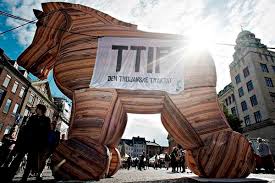
“France should react with firmness and send out a strong signal today by pulling out of discussions over the Transatlantic Trade and Investment Partnership (TTIP) treaty,” Le Pen wrote in a statement, referring to the deal being discussed by the European Parliament to revise corporate rights in dealings with governments. She and other eurosceptics have opposed the TTIP plan.

“The US are a hegemonic power, prepared to do anything in order to increase its grip on our country” Le Pen said. “The French must recognize that the United States, which is to say its government that we clearly distinguish from its people, are not a country that is an ally or a friend.”…

Le Pen also dismissed Sarkozy’s decision to restore France to Nato’s integrated military command in 2009 as a “strategic mistake”. Former leader Charles de Gaulle removed France from the role in 1966, fearing it harmed France’s sovereignty.

In the conversation the two negotiate the possibility of Le Pen endorsing the Russian annexation of Crimea and visiting the peninsula as “an observer”.

Source: Newsweek

‘US drawing Europe into crusade against Russia, against our interests’

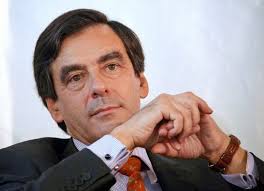
The US is drawing European states into a “crusade” against Russia, which goes against Europe’s interests, former French Prime Minister Francois Fillon has said. Speaking to French media, he stressed that Europe now is dependent on Washington.

“Today, Europe is not independent… The US is drawing us [the EU] into a crusade against Russia, which contradicts the interests of Europe,” Fillon told the BFMTV channel.

The ex-French prime minister, who served in Nicolas Sarkozy’s government from 2007 till 2012, lashed out at Washington and its policies.

Washington, Fillon said, pursues “extremely dangerous” policies in the Middle East that the EU and European states have to agree with.

He accused German intelligence of spying on France “not in the interests of Germany but in the interests of the United States.”

Fillon pointed out that Washington is pressurizing Germany to concede to Greece and find a compromise.

He noted the “American justice system” often interferes with the work of “European justice systems.”

“Europe is not independent,” the ex-PM said, calling for “a broad debate on how Europe can regain its independence.”

This, however, would not be possible if Europe goes ahead and signs the Transatlantic Trade and Investment Partnership (TTIP), a proposed EU-US treaty, which has drawn much criticism for its secretiveness and lack of accountability.

“I am definitely against signing this agreement [TTIP] in the form in which it is now,” he added.

The TTIP agreement seeks to formalize the economic relationship between the EU and US economies across the board. The two partners trade nearly €1 billion (US$1.1 billion) worth of goods and services annually.

Its supporters promise €100 billion in GDP growth for the EU and almost $90-billion growth for the US, as well as the creation of over 700,000 extra jobs in the US. However, TTIP critics warn the deal would create environmental problems, a loss of economic sovereignty, bring in torrents of genetically modified food and cause unemployment.

EU in chaos on TTIP vote

An historic vote on the biggest trade deal ever negotiated between the EU and the US has had to be postponed after the European Parliament descended into chaos.

European MPs were due to vote on the Transatlantic Trade and Investment Partnership on Wednesday. But the vote had to be delayed because there were too many proposed amendments.

“It’s panic in parliament,” Yannick Jadot, a Green MEP from France, told AFP.

David Cameron has claimed that signing the deal would add £2 billion to the UK economy every year.

But the plan has been violently opposed by campaign groups across Europe that fear it would be at the expense of national services and social and environmental welfare.

Source: The Independent

Rule By The Corporations

TTIP: The Corporate Empowerment Act

The Transatlantic and Transpacific Trade and Investment Partnerships have nothing to do with free trade. “Free trade” is used as a disguise to hide the power these agreements give to corporations to use law suits to overturn sovereign laws of nations that regulate pollution, food safety, GMOs, and minimum wages.

The first thing to understand is that these so-called “partnerships” are not laws written by Congress. The US Constitution gives Congress the authority to legislate, but these laws are being written without the participation of Congress. The laws are being written by corporations solely in the interest of their power and profit. The office of US Trade Representative was created in order to permit corporations to write law that serves only their interests. This fraud on the Constitution and the people is covered up by calling trade laws “treaties.”

Indeed, Congress is not even permitted to know what is in the laws and is limited to the ability to accept or refuse what is handed to Congress for a vote. Normally, Congress accepts, because “so much work has been done” and “free trade will benefit us all.”

The presstitutes have diverted attention from the content of the laws to “fast track.” When Congress votes “fast track,” it means Congress accepts that corporations can write the trade laws without the participation of Congress. Even criticisms of the “partnerships” are a smoke screen. Countries accused of slave labor could be excluded but won’t be. Super patriots complain that US sovereignty is violated by “foreign interests,” but US sovereignty is violated by US corporations. Others claim yet more US jobs will be offshored. In actual fact, the “partnerships” are unnecessary to advance the loss of American jobs as there is nothing that inhibits jobs offshoring now.

What the “partnerships” do is to make private corporations immune to the laws of sovereign countries on the grounds that laws of countries adversely impact corporate profits and constitute “restraint of trade.”

For example, under the Transatlantic Partnership, French laws against GMOs would be overturned as “restraints on trade” by law suits filed by Monsanto.

Countries that require testing of imported food, such as pork for trichnosis, and fumigation would be subject to lawsuits from corporations, because these regulations increase the cost of imports.

Countries that do not provide monopoly protection for brand name pharmaceuticals and chemical products, and allow generics in their place, can be sued for damages by corporations.

Obama himself has no input into the process. Here is what is going on: The Trade Representative is a corporate stooge. He serves the private corporations and will go on to a million dollar annual salary. The corporations have bribed the political leaders in every country to sign away their sovereignty and the general welfare of their people to private corporations. Corporations have paid US senators large sums for transferring Congress’ law-making powers to corporations. When these “partnerships” pass, no country that signed will have any legislative authority to legislate or enforce any law that any corporation regards as inimical to its bottom line.

Yes, the great promiser of change is bringing change. He is turning Asia, Europe, and the US over to rule by the corporations.

Only those who have sold their integrity for money sign these agreements. Apparently Merkel, a Washington vassal, is one of them.

According to news reports, both of France’s main political parties have sold out to the corporations, but not Marine Le Pen’s National Front Party. In the last EU elections, the dissident parties, such as Le Pen and Farage’s, prevailed over the traditional parties, but the dissidents are yet to prevail in their own countries.

Marine Le Pen objects to the secrecy of the agreements that establishes corporate rule. As Europe’s only leader, she speaks:

“It is vital that the French people know about TTIP’s content and its motivations in order to be able to fight it. Because our fellow countrymen must have the choice of their future, because they should impose a model for society that suits them, and not one forced by multinational companies eager for profits, Brussels technocrats bought by the lobbies, and politicians from the UMP [party of former president Nicolas Sarkozy] who are subservient to these technocrats.”

It is vital that the American public also know, but not even Congress is permitted to know.

How does it work, this “freedom and democracy” that we Americans allegedly have, when neither the people nor their elected representatives are permitted to participate in the making of laws that enable private corporations to negate the law-making functions of governments and place corporate profit above the general welfare?

Dr. Paul Craig Roberts was Assistant Secretary of the Treasury for Economic Policy and associate editor of the Wall Street Journal. He was columnist for Business Week, Scripps Howard News Service, and Creators Syndicate. He has had many university appointments. His internet columns have attracted a worldwide following. Roberts’ latest books are The Failure of Laissez Faire Capitalism and Economic Dissolution of the West and How America Was Lost.

Marine le Pen: We must resist corporations

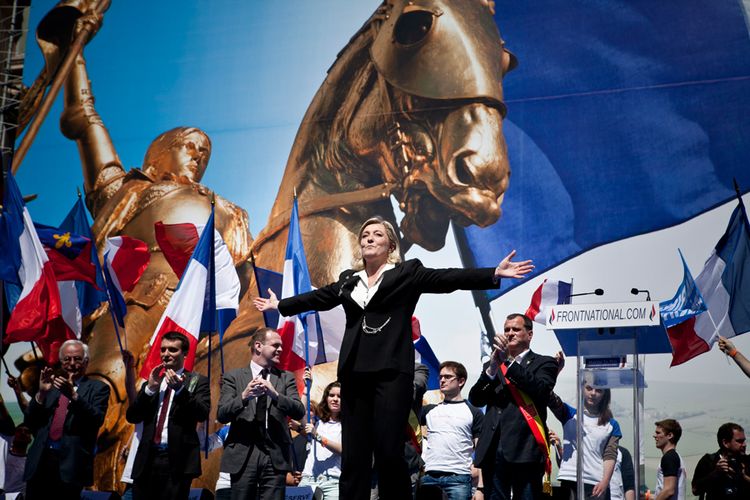
Leader of France’s National Front party, Marine Le Pen, has launched a month-long blitz against the Transatlantic Trade and Investment Partnership (TTIP) – a proposed EU-US treaty, which has been criticized for secretiveness and lack of accountability.

“It is vital that the French people know about TTIP’s content and its motivations in order to be able to fight it. Because our fellow countrymen must have the choice of their future, because they should impose a model for society that suits them, and not forced by multinational companies eager for profits, Brussels technocrats sold to the lobbies, politicians from the UMP [party of former president Nicolas Sarkozy], who are subservient to these technocrats,” Le Pen said during a press conference in Paris.

Since 2013, open-ended negotiations between Washington and Brussels have drawn up the framework for the agreement, intended to standardize legislation and bring down trade barriers between them.

As per US practice, the contents of all economic treaties are classified. The EU has recently set up reading rooms throughout Europe for officials with clearance – but only a few thousand people have had access to the working documents.

Le Pen hit out at the secrecy of the negotiations, which have featured mostly bureaucrats from the European Commission, the EU’s executive body, and nebulous “stakeholders” from businesses and public organizations. As a member of the European parliament, she forwarded a motion for greater transparency in negotiations last year. Le Pen’s motion was defeated.

She is now hoping for grassroots support.

“I am convinced that we can push back the TTIP if the peoples are informed of its content, and if they decide themselves to join us in order to express their disagreement concerning this treaty,” Le Pen told journalists.

Both of France’s leading parties have endorsed the treaty, but Le Pen is relying on strong the anti-European sentiment that propelled her party to first place in last year’s elections for the European parliament.

While TTIP’s authors promise that the treaty will bring an extra 0.5 percent GDP to Europe and the US, figures across the political spectrum have expressed concern.

US President Barack Obama, who is also negotiating a similar treaty with Asia, was defeated by his own party in the Senate last week when he asked for fast-track approval to handle negotiations. Additional votes will be required if the proposed legislation is not to be bogged down in the US chambers of Congress.

Meanwhile, European legislators have raised a host of issues, in particular concerning the investor-state dispute settlement (ISDS) mechanism outlined in the treaty. The controversy centers on the proposed special economic tribunal, which would operate outside the traditional legal system and allow corporations to challenge governments.

In April, thousands took to the streets of Brussels, Madrid, Berlin and Helsinki to protest against the secretive deal.

EU to set up global court for investor disputes

The EU’s trade chief has unveiled plans to set up a global court to decide on disputes between investors and governments in a bid to defuse one of the main controversies in the ongoing EU-US trade talks.

A “concept paper” published on Tuesday (May 5), drafted for trade commissioner Cecilia Malmstrom, stated that the EU should “pursue the creation of one permanent court,” to rule on so-called investor state dispute settlement (ISDS).

The EU executive is keen to make clear that investor protection rules offer no guarantees to businesses that the legal regime in which they invested will remain the same. It also wants to include an article in the transatlantic trade and investment partnership (TTIP) stating that governments are free to pursue public policy objectives without fear of being sued.

Meanwhile, it also calls on arbitration panels to be more like the traditional court system, with permanent litigators and tenured judges ruling on cases.

The EU proposal is similar to that advocated by Germany’s economy minister Sigmar Gabriel, one of the strongest critics of ISDS.

Gabriel has called for a public trade and investment court to replace the current system of private arbitration, and to enable appeals against arbitration rulings.

Speaking at a hearing with MEPs in March, Malmstrom commented that, in the future, governments should be expected to nominate “a limited list of trustworthy arbiters who would decide on all TTIP investment cases”.

A multilateral court would “be a more efficient use of resources and have more legitimacy,” she added.

In a blog post on Tuesday, Malmstrom described the ‘traditional ISDS system’ as being “not fit for purpose in the 21st century”.

“Our new approach ensures that a state can never be forced to change legislation, only to pay fair compensation in cases where the investor is deemed to have been treated unfairly,” she added.

Malmstrom will present her proposals to MEPs on the International Trade committee on Wednesday and to trade ministers the following day. If approved, they could form the basis of negotiations with the US.

ISDS has become one of the most hotly-disputed elements in the EU-US trade talks, which have now completed their ninth round. Critics of the process say that arbitrations are carried out in secret by trade lawyers, and that it allows companies to sue governments that pass social protection legislation that could harm their investments.

Campaigners frequently point to a ongoing case brought by tobacco giant Philip Morris against the Australian government over new legislation requiring plain packaging for cigarettes sold in the country.

Following rising concern about the regime, the commission opened the three-month online consultation last March and suspended discussions on ISDS with US trade officials.

In January, the commission published a 140-page report from the consultation, to which 97 percent of submissions were opposed to the inclusion of ISDS.

However, EU governments are parties to around 1,400 of the 3,000 international investment agreements that are currently in force across the world, and the commission is under pressure from the US government to include investor protection in any agreement.

Source: EU Observer