Oxford to remove Rhodes statue

The statue of Cecil John Rhodes is to be removed from Oriel College at Oxford University.

In a statement this week, the Oxford Oriel College’s governing body said it would launch an independent commission of inquiry into issues relating to the statue and recommended it be taken down.

“They also expressed their wish to remove the statue of Cecil Rhodes and the King Edward Street Plaque. This is what they intend to convey to the independent commission of inquiry.

“Both of these decisions were reached after a thoughtful period of debate and reflection and with the full awareness of the impact these decisions are likely to have in Britain and around the world.

“The commission will deal with the issue of the Rhodes legacy and how to improve access and attendance of BAME (Black, Asian and minority ethnic) undergraduate, graduate students and faculty, together with a review of how the college’s 21st century commitment to diversity can sit more easily with its past.”

The commission is expected to be chaired by Carole Souter, the current head of St Cross College and former chief executive of the National Lottery Heritage Fund. A report for the governing body will be produced by the end of the year, the statement read.

Oriel had said in 2016 that it would keep its own statue as “an important reminder of the complexity of history”.

The decision to remove the statue also comes in light of the #BlackLivesMatter global wave of anti-racism protests in the wake of the death of George Floyd in Minneapolis and a number of colonial and confederate statues being taken down.

On June 9, large demonstrations were held outside Oriel College college.

South African graduate student at Oxford and RhodesMustFall campaigner Sizwe Mpofu-Walsh said that this was a moment for celebration.

However, pressure must still be exerted on Oriel to see its wish to fruition.

In a statement yesterday, the Oxford RhodesMustFall campaign said the group was “optimistic” following the decision but urged the college to commit to removing the statue.

“We have been down this route before, where Oriel College has committed to taking a certain action, but has not followed through.

“While the governing body of Oriel College has ‘expressed their wish’ to take down the statue, we continue to demand their commitment,” they said.

The UCT RhodesMustFall movement and the Black People’s National Crisis Committee said in a statement: “Our inability to breathe is precipitated not only by the physical violence of the white knee on our necks, but also the psychological violence imposed on us by the presence of colonial symbols such as the statues of genocidal and colonialists par excellence such as Cecil John Rhodes that occupy public spaces in South Africa and metropolitan cities across the globalising world.”

They said racism was endemic and institutionalised to dehumanise black people as a race wherever they found themselves.

“The clarion call by the Oxford RhodesMustFall to have the statue of Rhodes removed is long overdue.” – BBC & Cape Times
French coronavirus patients sent to Germany, Luxembourg by helicopter

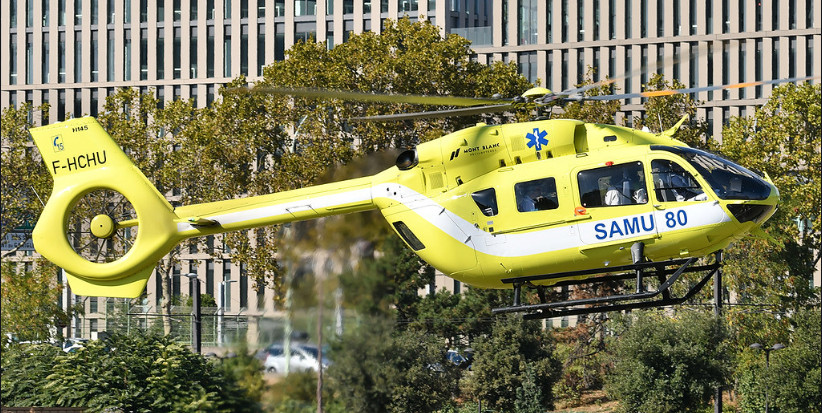
STRASBOURG, France – Medical workers dressed head-to-toe in protective gear emerge from Strasbourg university hospital, push a coronavirus patient on a wheeled stretcher across the parking lot, load the patient into a helicopter, then retreat as the aircraft lifts off.

This has become a daily ritual in eastern France as intensive care units there have been unable to cope with the numbers of critically-ill cases and have instead been transferring patients to nearby Germany, Switzerland and Luxembourg.

As one patient on Tuesday was loaded onto a red-and-yellow helicopter of the French Civil Security agency, a helicopter crewman watched over, dressed in blue surgical scrubs, topped with an orange aviation helmet.

The area in eastern France around the city of Strasbourg has seen one of the biggest coronavirus clusters in France. Local doctors have warned that the healthcare system is at breaking point.

The so-called air bridge to fly coronavirus patients out of eastern France began at the weekend and has so far involved around 10 helicopters from France, Germany and Luxembourg.

One flight delivered a patient from a clinic in France’s eastern Alsace region to a military hospital in Ulm, southern Germany. “If everything goes well he will survive,” said German Army colonel and doctor Matthias Helm.

Another flight brought a 64-year-old patient from Colmar in France’s eastern Alsace region to Germany’s Mannheim hospital.

“Our French colleagues are currently under excessive strain”, said Mannheim senior intensive care doctor Thomas Kirschning.

“Currently we have the advantage that we still have capacity and can prepare ourselves for a potential wave of cases. ”

France reported a cumulative 1,100 coronavirus deaths on Tuesday with 22,300 infected people.

The epidemic in eastern France led the French army to set up a field hospital with 30 intensive care beds. The field hospital admitted its first patient on Tuesday.

Italy records another 800 deaths in a day

The Italian region of Lombardy has introduced stricter measures in a bid to tackle the spread of coronavirus.

Under the new rules announced late on Saturday, sport and physical activity outside, even individually, is banned. Using vending machines is forbidden.

The move comes as Italy reported nearly 800 coronavirus deaths on Saturday and saw its toll for the past month reach 4,825, the highest in the world.

Lombardy is the worst-affected region in the country with 3,095 deaths.

The region’s President Attilio Fontana announced the new measures in a statement.

Businesses have been asked to close all operations excluding “essential” supply chains. Work on building sites will be stopped apart from those working on hospitals, roads and railways.

All open-air weekly markets have been suspended.

Across Italy there have been 53,578 total cases to date, with about 6,000 people having recovered.

Sources: BBC, Johns Hopkins

French flee from Paris to the countryside

PARIS – Parisians thronged the city’s rail stations and took to the highway early on Tuesday to escape the French capital before a lockdown imposed to slow the rate of coronavirus contagion kicked in at midday.

The Paris exodus drew dismay from provincial France, where many fear that city-dwellers will bring the virus with them and accelerate its spread.

Health Minister Olivier Veran said the government had no intention of preventing people travelling to secondary residences but said the stringent restrictions on public life would apply on the coast as they would in the city.

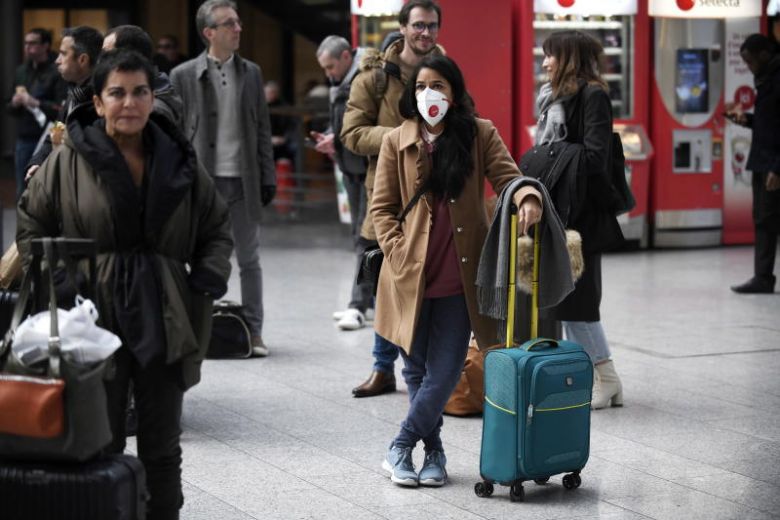
At Paris’s Gare du Nord, passengers, many wearing masks, stared up at departure boards.

“We’d rather be in a more open environment, in a bigger house with a garden, than in a Parisian apartment,” said education journalist Camille, who was travelling to her mother’s home in northern France with her partner. Both plan to work remotely.

France’s death toll from the coronavirus has reached 148 and a total of 6,600 people have been confirmed infected.

President Emmanuel Macron late on Monday said the country “was at war” with coronavirus and announced restrictions unprecedented in post-war France.

He ordered people to stay at home from Tuesday lunchtime. He said they should leave only to buy groceries, travel to work if essential, exercise or for medical care. The army will be mobilised to help move the sick to hospitals, he said.

Junior transport minister Jean-Baptiste Djebbari said services of the high-speed intercity TGV trains would be reduced under the lockdown to help curb infections.

But many in the provinces remained incredulous.

“Parisians are fleeing the city and will infect the provinces, just to be confined in the open air. This exodus is unthinkable, selfish and a ticking time-bomb,” one Twitter user wrote. – Reuters

Food shortages in case of no-deal Brexit?

Britain will experience shortages of certain foods in the event of a “disastrous” no-deal Brexit, with “serious disruption” expected for months, the country’s food and drink lobby warned Wednesday.

“The food sector is absolutely clear that a no-deal exit is a disastrous outcome for us, but we’ve never said that the country is going to starve,” Tim Rycroft, corporate affairs director at the Food and Drink Federation, told BBC Radio 4’s Today programme.

“There will be selective shortages and they will be to some extent random because it depends on which trucks get through,” he added.

Britain is due to leave the European Union on October 31, but there appears to be little prospect at the moment of a deal being reached to ensure the free-flow of goods after that date.

New Prime Minister Boris Johnson has vowed to take the country out, deal or no deal, which would mean trading with the EU according to World Trade Organization rules.

The deadline is “pretty much the worst date” said Rycroft, “because it’s peak Christmas pre-season, and warehouses are full.”

“We think there will be some serious disruption and it will go on for weeks or months,” he added.

“Fresh food is obviously the tip of the iceberg but we expect that there will be shortages on a whole range of things.”

Christopher Haskins, a Labour politician and former chairman of food manufacturer Northern Foods, warned that Britain could enter a “wartime situation of limited food rationing”.

Johnson has urged EU leaders again to drop their opposition to renegotiating the terms of Brexit, claiming recent European elections required a change of approach.

The European Union said it was bracing for tough talks, but will stand firm as Boris Johnson tries “to play on the fear of ‘no deal’.”

Mario Salvini’s Northern League receives one third of votes in EU elections

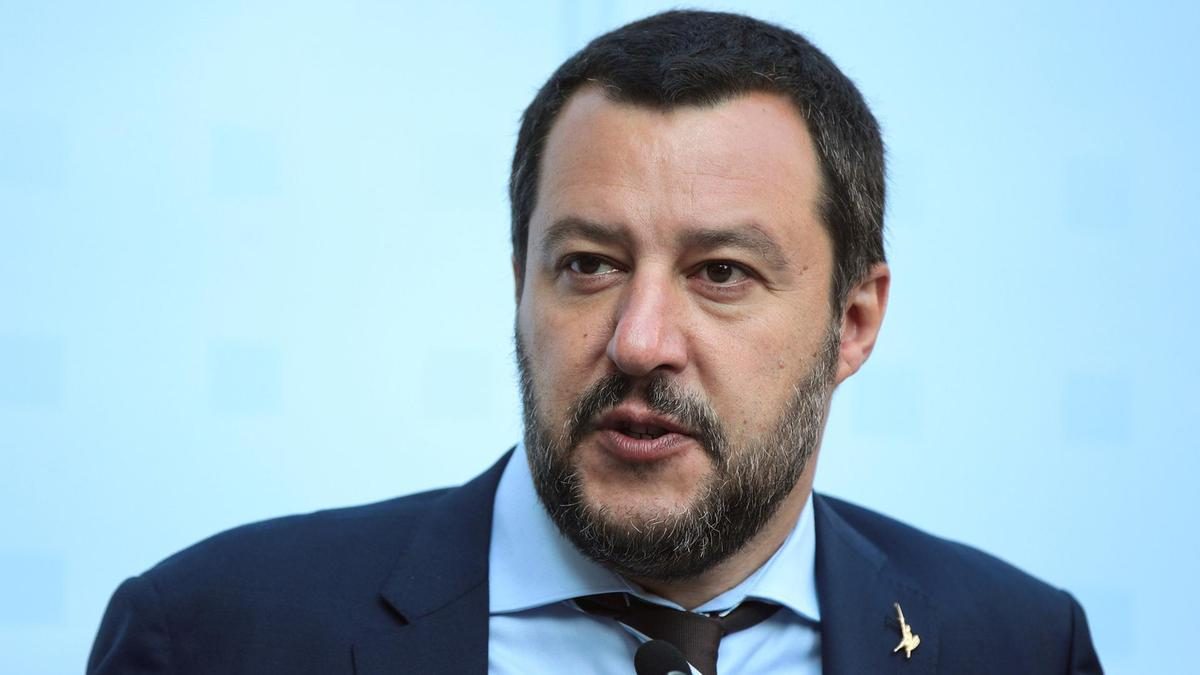
The League party of Italy’s popular interior minister, Matteo Salvini, was one of the most successful during the European elections, its support rapidly rising to a level that makes it the natural leader of the “alternative” or patriotic parties in Europe.

With one-third of the Italian vote, the League is poised to become one of the biggest parties in the European Parliament with 28 seats, according to provisional results.

Meanwhile, Salvini’s coalition partner in Italy, the populist 5-Star Movement, got only 17 percent, shifting the balance of power from last year’s Italian election.

Salvini said before the European vote that a strong result for his party wouldn’t change the coalition agreement, but it strengthens his hand in negotiations over government policies that intensified during the election campaign.

“The allies in our government are my friends and from tomorrow we have to go back and work with serenity, lowering the tone,” Salvini told reporters as the results were coming in.

His party’s backing has doubled since the national election a little over a year ago and increased exponentially since the last European election, when it got just 6 percent.

It remains to be seen how Salvini, 46, will capitalize on the momentum. He could demand a reshuffle of the Cabinet or even new elections — or just use his leverage to put more focus on his ambitions to curb illegal immigration and introduce a flat tax in Italy.

The left-wing opposition Democratic Party, which overtook the 5-Star Movement with 24 percent of the vote, suggested the result would lead to a stalemate in the government.

“The challenge is to create an alternative to Matteo Salvini who without doubt comes out of these elections as the true leader of a motionless and dangerous government,” Democratic Party leader Nicola Zingaretti said.

While the European election outcome doesn’t change the makeup of the Italian parliament, it underscores Salvini’s rise from the head of a regional party in northern Italy to the country’s most influential politician with an impact far beyond the country’s borders.

Salvini has emerged as the informal leader of a group of nationalist and euroskeptic parties seeking to limit the European Union’s influence on national policies, though it remains to be seen which of those parties will come together as bloc when the new European Parliament is formed.

Clutching a crucifix and casting himself as a defender of Europe’s Judeo-Christian roots, Salvini noted that his colleagues in France and Britain also scored important victories.

“Not only is the League the first party in Italy, but also Marine Le Pen is the first party in France, Nigel Farage is the first party in the UK,” Salvini said. “It is the sign of a Europe that is changing.” – Praag and wire services

French minister denies calling her cat ‘Brexit’

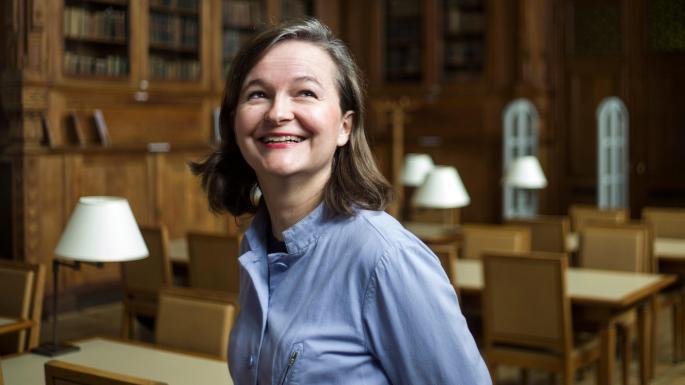
Despite reports to the contrary, French Europe Minister Nathalie Loiseau has not named her cat “Brexit”, her office said on Tuesday.

Reports began circulating on Sunday after the Journal du Dimanche newspaper reported that the 54-year-old had written about her pet on her private Facebook page.

“I’ve ended up calling my cat Brexit,” the paper quoted Loiseau as writing. “It wakes me up meowing like crazy every morning because it wants to go out, but as soon as I open the door, it just sits there undecided and then looks angry when I put it outside.”

The joke at British expense — an allusion to Britain’s inability to decide when and how it wants to leave the European Union — was picked up by numerous London-based newspapers and American media outlets, and amplified on social media.

But it was in fact just a joke as “Brexit” the cat — unlike the cat thought up as an experiment by Austrian physicist Erwin Schroedinger — is neither alive, nor dead. It simply does not exist.

“It was a joke, obviously,” Loiseau told Radio J on Sunday afternoon. “I don’t have a cat.”

This did not stop her facing a question from a British journalist at EU negotiations in Brussels on Tuesday who enquired about her feline.

“I think I have to have a certain sense of humour to deal with Brexit. Not only me, but my fellow citizens,” she replied.

A member of her cabinet, reached by telephone, confirmed that the minister does not own a cat.

Faith in Humanity Restored, 2018 Edition

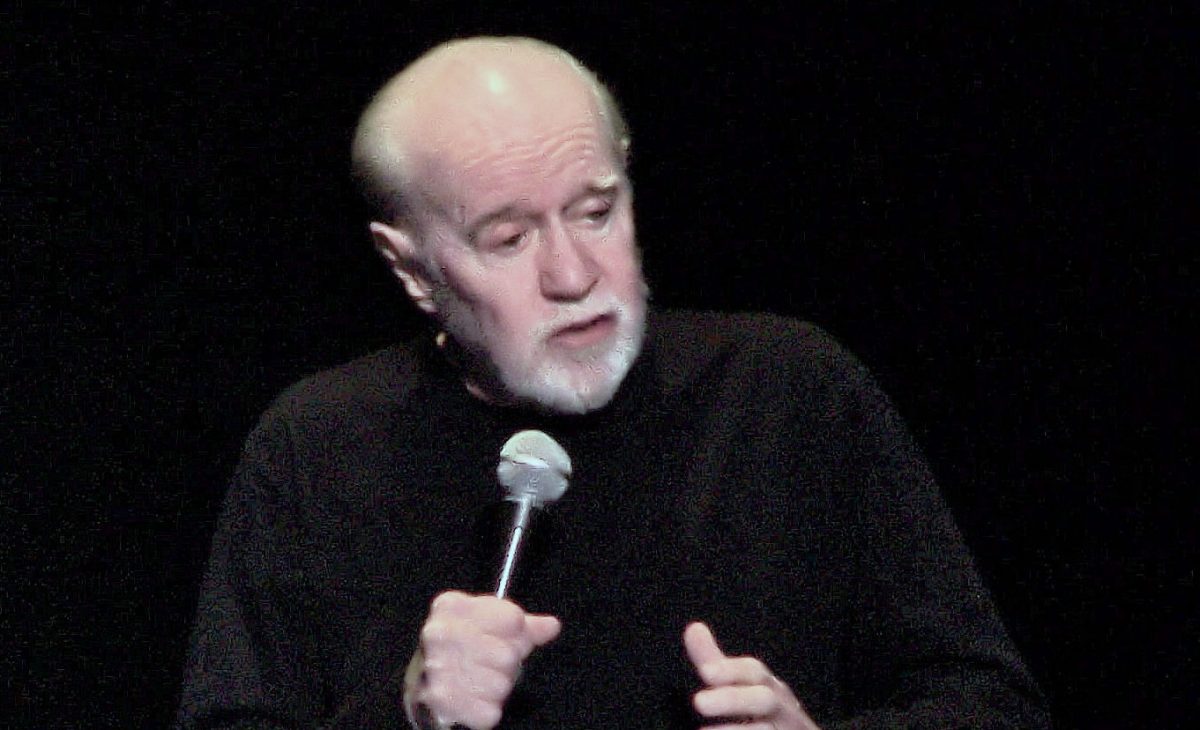
In his 2005 HBO stand-up comedy special, world-famous philosopher and social critic (posing as a stand-up comedian) George Carlin has enumerated quite a few things humanity should be ashamed of, like war, genocide, consumerism, and several others. If you look at the mainstream media, all you see is bad news: an earthquake here, famine there, a caravan of desperate people heading for the US border, armed conflicts all over the world, and countless examples of corporate greed exploiting not only humans but animals, nature, the planet as a whole. In times like these, it’s hard to remember that there are still things that make us as a species worthy of survival. If you find it hard to think of any, here are a few things that will – at least for a while – restore your faith in humanity.

England’s soccer team donates all World Cup winnings to charities

Sports stars are just a bunch of overpaid entertainers – this is something that probably crosses the minds of many when seeing the fabulous amounts they make year after year. This might be true – but, it seems, not all of them are greedy. After failing to take home the World Cup this year (France proved it’s better at football),
England’s national football team donated all its World Cup winnings to charity. And it’s not two pennies either – the team took home at least $22 million by reaching the semi-final in the competition.

Prepare to be even more surprised: England’s footballers have been playing internationally for free for more than a decade. Since 2007, all their wages from international games to charity through the England Footballers Foundation (EFF), supporting charities like UNICEF, Cancer Research UK, The Honeypot Children’s Charity, and many others.

March for Our Lives, Washington DC, USA

Everyone in the United States of America has the right to bear arms, according to their Constitution’s Second Amendment. Sometimes, this leads to tragic incidents – like the Stoneman Douglas High School shooting in Parkland, Florida, on Valentine’s Day 2018. This tragic event triggered a massive outrage not only from the media but from the students, too – on March 24, they organized a massive demonstration in Washington DC (and inspired over 800 similar events all across the US and the world) demanding tighter gun control.

While the protests were criticized by many, claiming that their goal was to “destroy the Second Amendment”, media outlets have described them as a potential tipping point for gun control legislation in the country.

The Two Koreas

North Korea and South Korea have had an antagonistic relationship for decades – and they both took a step in the right direction this year. This spring, the presidents of the two countries – North Korean leader Kim Jong Un, and South Korean president Moon Jae-In met for the first time, each of them stepping on the soil of the neighbouring country as a symbolic gesture. Their first summit was mostly ceremonial, with symbolic gestures made by both, including the planting of a tree, the signing of the Panmunjom Declaration for Peace, Prosperity and Unification on the Korean Peninsula, and had a formal dinner.

Since then, the two leaders met twice – in May and September – and are planning to organize another in December, when North Korean president Kim Jong Un will visit Seoul.

Research poll: 70% of Germans want migrants to be sent back

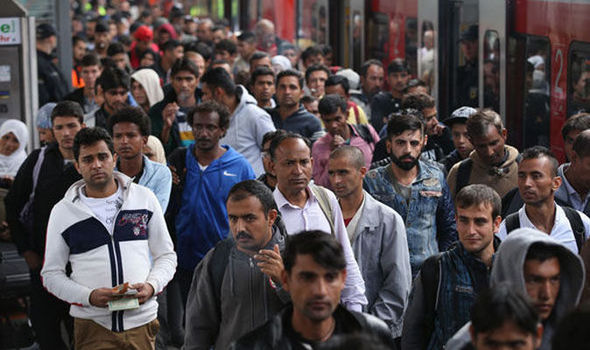
A new study has revealed that the vast majority of Germans do not see the migrants coming across the Mediterranean as legitimate refugees and want to see them deported back to North Africa.

The study, conducted by research institute Civey shows that 69.8 per cent of Germans do not regard the migrants rescued and transported by NGOs in the Mediterranean as legitimate refugees despite claims from the NGOs themselves.

Many of the NGOs have called for Germany to stop cooperating with the Libyan coastguard which has been turning back migrant boats, but according to the survey, most Germans disagree with them, Die Welt reports.

When the survey data is broken down by age, it shows that the largest section of those who want to return the migrants to North Africa are aged 65 and older at 74.6 per cent. The data also differs depending on the region of Germany the participant comes from with East Germans being the most favourable to deportations.

Along political lines, a majority of members of all parties support the deportation of Mediterranean migrants except for the left-wing Green party with only 34.7 per cent approving of the idea and 48.8 per cent rejecting the idea.

The Green party have long been in favour of the NGOs and their rescue missions in the Mediterranean, including Hamburg Green politician Anna Gallina who joined the crew of the Sea Eye NGO earlier this year. Ms. Gallina justified her actions saying: “I am going to Libya in the next few weeks because I want to contribute to the salvation of the people.”

The survey deeply divided the far-left Die Linke, or Left Party, with the number of those agreeing and disagreeing being close to equal. Some members of the far-left party, which finds its origins in the Communist party of former East Germany, have been against mass migration while others like Left Party politician Diether Dehm are so pro-migrant that Dehm was accused of smuggling migrants himself.

Perhaps least surprisingly, anti-mass migration Alternative for Germany (AfD) members voted 98.8 percent in favour of deporting Mediterranean migrants. The AfD has consistently been against mass migration and for the strengthening of Germany’s borders since the start of the migrant crisis.

A new poll, from Insa, shows the AfD regaining some of the momentum they had in regional and local elections last year. The poll shows the party once again in third place nationally behind German Chancellor Angela Merkel’s Christian Democrat/Christian Social Union (CDU/CSU) coalition and the Social Democrats (SPD) led by former European Union parliament president Martin Schulz.

Thousands of Spaniards march against immigration

Thousands of far-right protesters marched through Madrid on Saturday, demanding “social aid” for Spaniards and holding banners and placards reading “Spaniards Welcome,” a play on the “Refugees Welcome” movement currently organising across Europe.

About 10% of Spain’s 46 million people are foreigners, according to the National Statistics Institute.

Many were drawn by opportunities during a real-estate boom that preceded the crash of 2008. The population has declined each of the past three years due to an outflow of immigrants to their home countries.

With the unemployment rate at 22.4%, many immigrants who remain have had to resort to working in the underground economy.

They are commonly seen on the streets of Spanish cities selling pirated handbags and videos.

Facebook to help Merkel censor anti-migrant posts

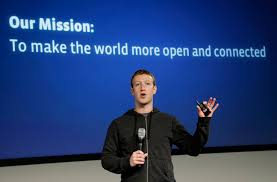
Facebook CEO Mark Zuckerberg was caught discussing the censorship of anti-migrant posts at the United Nations development summit Saturday while speaking with German Chancellor Angela Merkel.

According to CNBC, the pair were picked up by a hot mic after Merkel confronted Zuckerberg on social media posts critical of “the wave of Syrian refugees entering Germany.”

After being asked about Facebook’s efforts to curtail speech, Zuckerberg stated, “We need to do some work,” confirming he’d already started looking at ways to hinder comments in opposition to Merkel’s immigration stance.

“Are you working on this?” Merkel asked. “Yeah,” Zuckerberg responded before their microphone was cut.

In response to the shocking revelation, media outlets such as Bloomberg immediately leapt to the defense of the tech giant, insinuating that any critique of the German government’s response to the migrant crisis would be “racist” and “xenophobic.”

Only just last week, an article by Infowars’ Kit Daniels examining the pope’s controversial comments on mass immigration was pulled and barred from Facebook without explanation.

Since the migrant crisis began, news outlets across the globe have both covered up crucial facts, specifically NATO’s responsibility in destabilizing Syria, and gone out of their way to outright ignore any stories that highlight the criminal acts of migrants.

Zuckerberg’s penchant for censoring speech deemed politically incorrect is unsurprising given his meeting late last year with Lu Wei, the czar of China’s authoritarian Internet censorship system.

Source: Infowars

Mood against Merkel changing as migrants turn to rape

Germany is in a state of siege.

On the busy shopping street in Giessen, a German university town twinned with Winchester, migrant Atif Zahoor tucks into a chicken dish with his brother and cousin at the curry restaurant Chillie To Go.

They have left good jobs back in Karachi, Pakistan, and now want to be Europeans.

In late July the three slipped into Germany with their wives and children, using illegal documents. They live together in a five-bedroom house, rented for them by Chancellor Angela Merkel’s government, a 40-minute drive away from Giessen, which is home to the biggest migrants’ camp in the country.

‘We paid a trafficking agent for false visas to fly here to Germany,’ says 34-year-old Atif. ‘We claimed asylum and came to Giessen camp with other migrants. Three weeks ago, because we had families, they gave us a proper home.’

Atif is well-dressed and speaks perfect English. He used to be a transport manager at Karachi airport and is from a well-to-do family. Between mouthfuls of curry, he adds: ‘But there is violence between political gangs in Karachi.

Lots of people are leaving for Europe. The trafficker decided that Germany was the place for us because it is welcoming refugees.’

Yet the raw truth is that Atif is not fleeing war or persecution. He is one of thousands of economic migrants getting into Germany as the EU’s immigration crisis grows bigger each day.

Jens Spahn, a deputy finance minister in Chancellor Merkel’s government, said this week: ‘Not everyone can stay in Germany, or in Europe. If people are coming for poverty reasons… we have to send them back.’

Mrs Merkel’s offer last month to accept all refugees from war-ravaged Syria opened the floodgates. More than a million migrants are expected this year alone, the bulk of them far from genuine asylum seekers. There is now deepening disquiet in this Christian country, dotted with churches, that it is being overwhelmed by people of a different religion and culture.

The Mail reported how social workers and women’s groups in Giessen wrote a letter to the local state parliament claiming that rape and child abuse were rife in the refugee camp. The allegations were corroborated by Atif over his curry. ‘The camp is dangerous,’ he agreed. ‘Men of different nationalities fight and women are attacked.’

The letter says the camp, far from being a peaceful haven for those fleeing war, is a dangerous melting-pot, where there have been ‘numerous rapes and sexual assaults, and forced prostitution’.

There are even reports of children being raped and subjected to sexual assault, it adds.

‘Many women have felt the need to sleep in their clothes… they won’t go to the toilet at night because rapes and assaults have taken place on their way to, or from, there. Even in daylight, a walk through the camp is fraught with fear.’

At the Lidl supermarket a few hundred yards from the camp, a well-dressed German woman packing her shopping into a Mercedes saloon rolls her eyes at me as a group of Middle Eastern youths walk by. ‘What do we do?’ she asks. ‘It has happened now and it will never be the same again.’

Source: Daily Mail

Austrian right doubles votes in regional election

The far-right Freedom Party (FPOe) doubled its votes Sunday in a regional election in Upper Austria province dominated by the issue of migration, according to final results issued by the provincial government.

With a result of 30 per cent, FPOe became Upper Austria‘s second-strongest party, relegating the Social Democratic Party (SPOe) to third place.

The FPOe had “taken the worries and concerns of the population seriously and understood them,” partly leader Heinz-Christian Strache said.

Voter surveys showed that nearly two thirds of voters felt that the refugee issue was important.

Austria is the main transit country for migrants travelling from the Balkans to Germany. Nearly 19,800 people arrived in Austria on the weekend, police estimated.

The populist right-wingers had called for stricter border controls and a fence similar to Hungary‘s to control the flow of thousands of migrants that have been arriving daily in recent weeks. They also accused the government in Vienna of inaction amid what they called “asylum chaos.”

The central government and regional politicians had bickered for months over creating sufficient accommodation for new refugees.

As arrivals soared over the past weeks, the government introduced border controls, deployed the army at the border and started discussing more restrictive asylum rules shortly before the regional election.

Social Democratic Chancellor Werner Faymann said the migratory flow from Syria was not the government‘s fault. “I say yes to controls and order, but it must absolutely done in a humane manner,” he said.

Faymann‘s party got 18 per cent of the votes, nearly 7 percentage points less than in the previous election in 2009.

The conservative People‘s Party (OeVP), which forms a coalition with the Social Democrats in Faymann‘s cabinet, remained the strongest force in Upper Austria but plummeted 10 percentage points to 36 per cent.

Upper Austria‘s conservative governor Josef Puehringer said the EU‘s migration policy decisions in the past days had come too late to alter the election result.

The FPOe hopes to carry Sunday‘s momentum forward to the Vienna city council polls on October 11. Three years before the next regular parliamentary election, the rightists have been leading surveys for months, ahead of the two national coalition parties.

Source: dpa

President urges Germans to work harder for migrants

Germany’s domestic intelligence chief warned Sunday of a radicalisation of right-wing groups amid a record influx of migrants, as xenophobic rallies and clashes shook several towns at the weekend.

President Joachim Gauck meanwhile warned of Germany’s “finite capacity” to absorb refugees, cautioning against more “tensions between newcomers and established residents”.

Domestic spy chief Hans-Georg Maassen said that “what we’re seeing in connection with the refugee crisis is a mobilisation on the street of right-wing extremists, but also of some left-wing extremists” who oppose them.

He added, speaking on Deutschlandfunk public radio, that for the past few years his service had witnessed a “radicalisation” and “a greater willingness to use violence” by all extremist groups, including the far right, the anti-fascist far-left and Islamists.

Maassen spoke as Germany expects up to one million migrants this year, and after protests against refugee homes and clashes with police again rocked several towns, mostly in the former communist East Germany.

Police and soldiers guarded two buses carrying about 100 migrants Saturday night to a shelter in the town of Niederau, in the eastern Saxony state, after right-wing protesters had rallied at the site, a former supermarket, since Friday.

More than 1,000 people also demonstrated against refugees in several towns in the eastern state of Mecklenburg-Western Pomerania Friday, including in coastal Stralsund where three people were wounded in clashes with counter-protesters.

In the eastern city of Leipzig, the right-wing rally “Offensive for Germany”, organised by local anti-Islam activists with about 400 marchers, sparked a larger counter-protest that police said drew more than 1,000 activists.

In the ensuing street clashes, the rival groups hurled rocks and fireworks at each other.

In the western city of Bremen unidentified people attempted to set fire to a tent that was to house refugees from October.

Gauck, in an evening speech, urged “a broad social debate” on managing the influx, to ensure a “humane reception policy into the future”.

“Our hearts are wide open, but our capabilities are finite,” Gauck said, according to the pre-released text of a speech he was to give in the western city of Mainz.

“Given the rapid influx,” he said, the government must now “promote the construction of apartments and build schools, hire teachers and kindergarten staff, adjust the labour market and vocational training, teach the German language and German law — and do all of that at the same time”.

Gauck called Germany’s massive volunteer efforts to welcome the migrants a “grassroots movement of humanity”, but also warned of more impending “tensions between newcomers and established residents”.

Source: AFP