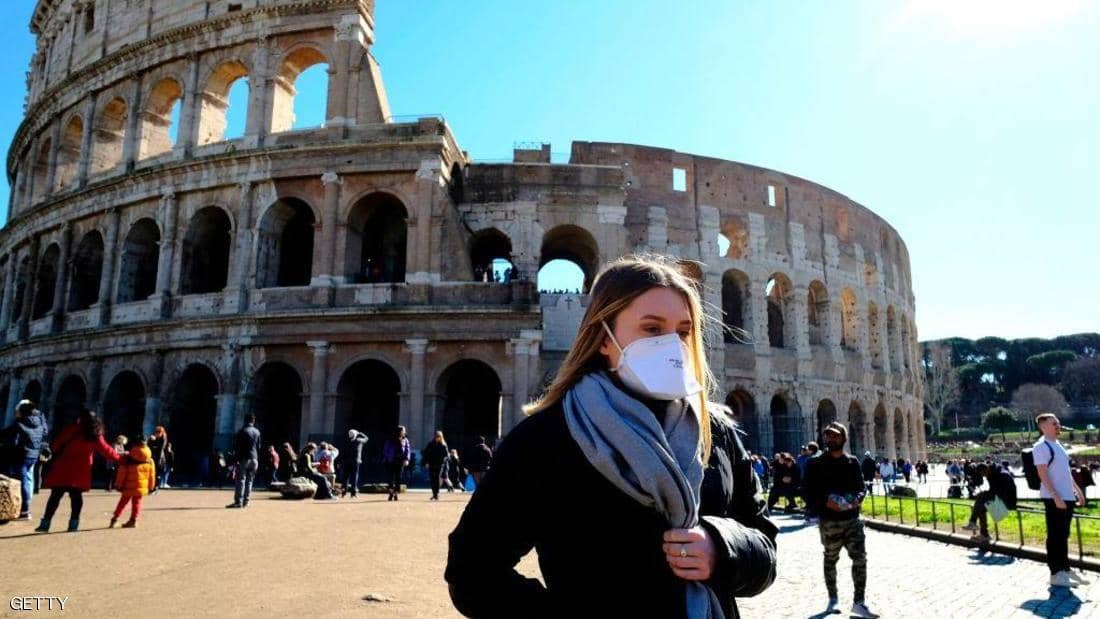
The Italian region of Lombardy has introduced stricter measures in a bid to tackle the spread of coronavirus.
Under the new rules announced late on Saturday, sport and physical activity outside, even individually, is banned. Using vending machines is forbidden.
The move comes as Italy reported nearly 800 coronavirus deaths on Saturday and saw its toll for the past month reach 4,825, the highest in the world.
Lombardy is the worst-affected region in the country with 3,095 deaths.
The region’s President Attilio Fontana announced the new measures in a statement.
Businesses have been asked to close all operations excluding “essential” supply chains. Work on building sites will be stopped apart from those working on hospitals, roads and railways.
All open-air weekly markets have been suspended.
Across Italy there have been 53,578 total cases to date, with about 6,000 people having recovered.
North West Premier Thandi Modise has called on provincial authorities to clamp down on initiation schools that operate outside the law. This follows the death of two teens at an initiation in Makwaneng near Amalia since Friday.
“Chancers and those who commit atrocities at initiation schools undermine our tradition and culture and should be brought to book. We call on traditional leaders as custodians of our tradition and culture to monitor initiation schools within their areas of jurisdiction and report ill-treatment and illegal operations to authorities,” stressed Premier Modise
According to police, a 16-year-old started vomiting after drinking water on Friday. He reportedly collapsed and died
“The next day, a 17-year-old complained of stomach cramps after eating and was later declared dead by emergency services, The remaining initiates were taken to a hospital in Schweizer-Reneke,”said Colonel Emelda Setlhako.
While investigations are continuing,Setlhako said that no arrests had been made.
The bloodbath that claimed the lives of over 30 people in Marikana in the North West has made international headlines.
The Guardian, New York Times, Sky News, Denver Post, BBC, Washington Post, CNN, and several other media reported on the massacre.
Wikipedia, an online encyclopaedia, put up a detailed one-page entry on it with references to local newspapers and reporters.
On Thursday, police opened fire with live ammunition on armed, striking workers who had gathered on a hill in the area.
Ten people, among them police and security guards, had already died since the start of their protest a week ago.
The protests were believed to be linked to rivalry between the National Union of Mineworkers (NUM) and the Association of Mineworkers and Construction Union over recognition agreements at the mine.
Workers also wanted higher wages. They claimed to be earning R4000 a month, while those living outside the hostel were earning an extra R1000. Reported demands included pay of R12,500 a month.
On Friday, the NUM said the death toll in the shooting had risen to 36.
People around the world were using the social networking sites Facebook and Twitter to share their views on who they believed were to blame for the bloodbath.
Some believed the police were accountable and asked why live ammunition had been used. Others shifted blame to the company for not giving in to the demands of poorly-paid workers.
The Guardian reported that the shooting had led to a drop in the company’s share price.
It said Lonmin’s shares dropped almost five percent in London and four percent in Johannesburg.
Lonmin executives said all its shafts across the South African platinum belt, which account for 12 percent of global supply, were closed to all but essential services, such as ventilation.
Although the price of platinum had fallen steeply in the past six months, the spot price rose two percent on Tuesday in the wake of the violence, it said.
Lonmin executive vice-president Barnard Mokwena was quoted as saying: “Until the place is safe we don’t want to talk about production.”
South Africa accounts for about three-quarters of the world’s platinum, which is used to make catalytic converters in cars.
London-based Lonmin told the Guardian that 96 percent of its production comes from Marikana. – Sapa
This website uses cookies to improve your experience. We'll assume you're ok with this, but you can opt-out if you wish. Cookie settingsACCEPT
Privacy & Cookies Policy
Privacy Overview
This website uses cookies to improve your experience while you navigate through the website. Out of these cookies, the cookies that are categorized as necessary are stored on your browser as they are essential for the working of basic functionalities of the website. We also use third-party cookies that help us analyze and understand how you use this website. These cookies will be stored in your browser only with your consent. You also have the option to opt-out of these cookies. But opting out of some of these cookies may have an effect on your browsing experience.
Necessary cookies are absolutely essential for the website to function properly. This category only includes cookies that ensures basic functionalities and security features of the website. These cookies do not store any personal information.
Any cookies that may not be particularly necessary for the website to function and is used specifically to collect user personal data via analytics, ads, other embedded contents are termed as non-necessary cookies. It is mandatory to procure user consent prior to running these cookies on your website.