We have ‘higher cultural standard’: Japanese FM on coronavirus outcome

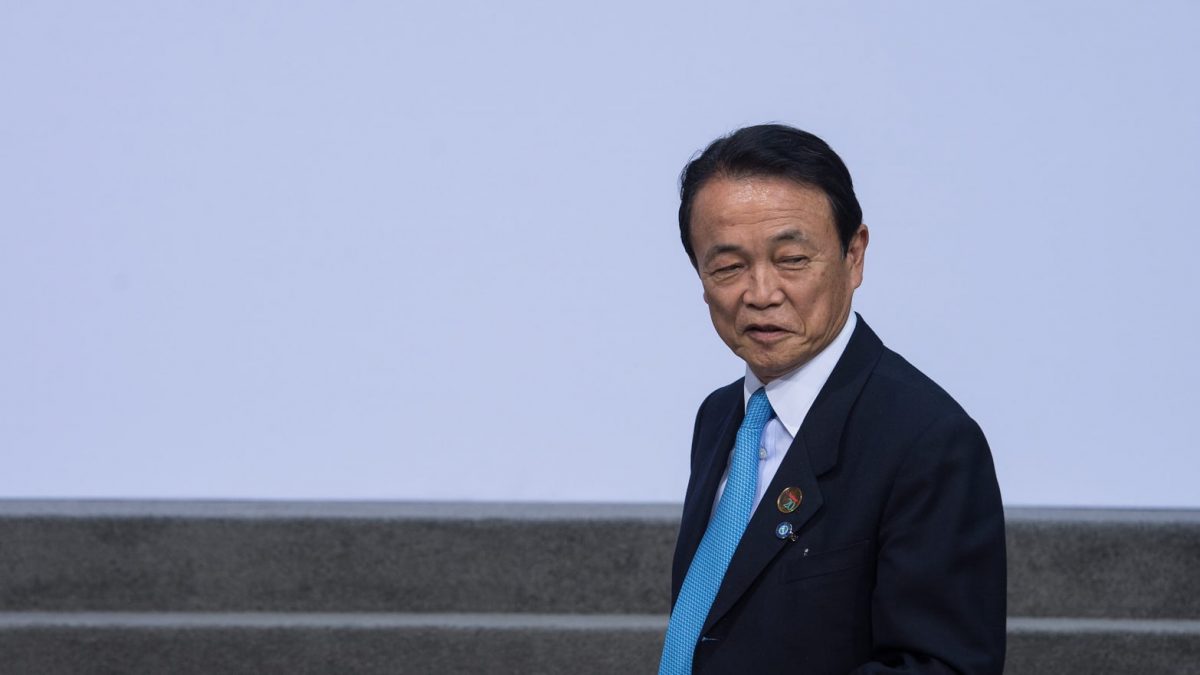
Japan’s success against the coronavirus without enforcing a strict lockdown is due to the citizens’ “cultural standard” that is different from other nations, Finance Minister Taro Aso said, drawing criticism from the public that the comments were inappropriate.

“Other countries have called me up and asked me if we’re the only ones with some drug against the virus or something,” Aso said on Thursday in response to a question from a lawmaker on Japan’s reputation of successfully containing the pandemic. “When I tell them ‘our country’s cultural standard levels are different to yours,’ they’re left speechless. That’s the simplest way to put an end to the questions.”

Despite the lack of harsh measures, Japan suffered far fewer coronavirus infections than any of its Group of Seven peers, with about 7 deaths per million, a track record that Aso noted in his comments. Japan isn’t an exception though in Asia, with Taiwan and South Korea reporting lower mortality rates. —Bloomberg

Read the full article here.

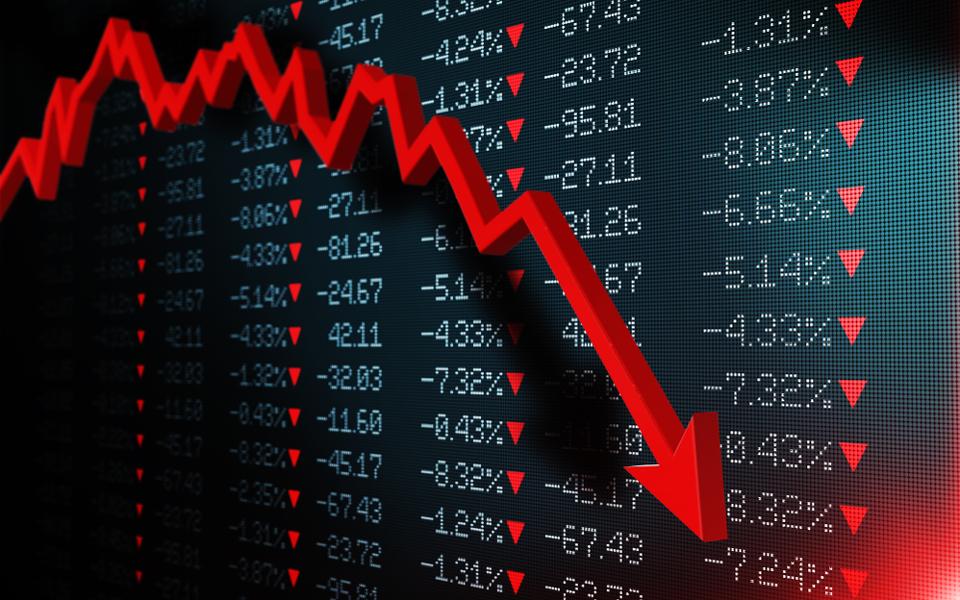
These financial moves can help you prepare for a recession

A recession is inevitable for any economy that faces an immense decline. This fact can be scary for people who have experienced it before, and those who haven’t.

What is a recession?

Put simply, a recession occurs when the economy shrinks in the gross domestic product (GDP) for two consecutive quarters. It brings with it fear, uncertainty and extreme conditions of poverty for the country’s citizens. And, although we know that recession is bound to happen – anywhere in the world – we never really know when it will take place, how severe the conditions will become or how long it will last.

This opens the door for a myriad of speculations to being formed and perpetuated, causing chaos in their wake. As governments continue to fight the current pandemic caused by the coronavirus, also known as COVID-19, fears of the global recession are intensifying.

Many experts are expressing uneasiness about the severity of the impact of the coronavirus on the global economy. Unfortunately, the recession in South Africa is already in full swing. This happened after the gross domestic product (GDP) declined by 1.4 percent in the last quarter of 2019, according to Statistics South Africa (StatsSA). The question about whether the coronavirus will deepen the recession hole for South Africa remains an answered one. Experts warn that it is a futile exercise to try to do the guesswork.

But it doesn’t mean that you should sit back and wait for a deeper plunge. While it might seem all too late, it isn’t; you can still prepare yourself the best way you can. Below we’ve compiled a list of tips on how you can prepare your business for a recession.

Reassess and rework your business goals

This new reality calls for a big reflection and assessment of all of your short-term and long term business goals. Consider what the change means for your business’s finances, and rearrange your goals to fit the new circumstances. For example, if you were planning to buy new equipment, it would be wiser to relook at this goal. If you were looking to buy any of the equipment because you simply wanted to upgrade, then postponing it for later – when things have become better – might not be a bad idea. In essence, look into your business wants and needs, and rearrange them according to what your business needs right now.

Create a business essentials budget

Budgeting is important even under normal circumstances, but it is even more important now during these difficult circumstances. Your company’s accountant needs to reassess and rearrange the business’s budget to fit in only essentials, as we’re only allowed to purchase essentials. That refers to food, toiletry, medical and health-related items, but also items that help run a business efficiently such as laptops. There are also several online business budgeting tools available in South Africa to help with managing your business budget better.

These tools can be a healthy addition to the balance sheet you normally use. It can help you with your business’s financial planning and give you an overview of your business account(s), investments and history of transactions.

Build up business savings

If your business is in a position to continue building up savings, do that. If you have not started a savings account, perhaps it’s time you start to fix that and open one. Asking any business to save their money during these tough times can sound ridiculous, but every little bit helps. You will need the money for unplanned expenses or business emergencies. You will also need savings for future projects that might become a valuable addition to your business, or kick-start old ones that you might have put on hold due to financial implications.

Pay your debts

Again, if you’re in a position to continue paying off your business’s debts, do not pause any of these payments. The more you hold off on paying, the more the interest rates will soar. It’s possible that by the time you start paying again, you’ll be overwhelmed. Paying off your debts will also give you peace of mind; should things get worse or should company take a knock, you’ll feel at ease knowing that you’re not too behind with your debt payments. Even If you’re secure about the future of your company, you still need to continue to pay your debts as it impacts on your company’s credit health.

Apply for financial relief

We just told you to pay your debts, but now we’re talking about taking on new debts, why? Well, business is in a complicated situation, and the state of affairs is not exactly the same for everyone. If your business is managing financially, it makes sense to steer clear of a new financial obligation, but for some businesses, financial relief is the only option they have.

For example, small businesses have either permanently or temporarily shut down, and some are working remotely. Some of these active businesses have had to cut down money spending to focus on priority areas. And, while the government has offered some relief to these groups of small businesses, there’s still a huge demand for financial relief. This is where corporate finance comes to the rescue. Corporate finance deals with providing money to businesses. What’s important here is to assess your risk appetite and tolerance. You can have a conversation with an expert who can guide you through this process and help you find out if you qualify for corporate finance, as well as where to apply for corporate finance.

Take control

Some things in life are within your control, and a recession is not. A country can work collectively to boost up the economy to try and avoid recession. However, it’s inevitable and can take place at any moment, should a country’s economy take a slump in two quarters consecutively. The best thing to do is to shift focus on things that are within your control. The above financial tips can help you take control and weather the storm as the fight continues.

Coronavirus has hit South African sport

South Africa is one of the most sports-crazy countries in the world. Until a month ago, no-one could have predicted the devastating effect that the coronavirus would have on the country’s normally lively sports calendar. Not only has the popular Super Rugby tournament been suspended but the world-famous Cape Epic mountain bike was called off just 40 hours before it was due to start on 15 March 2020.

In addition, the equally renowned Two Oceans Marathon that would have taken place on 11 April in Cape Town has been called off, dealing a blow to the city’s tourism-oriented economy.

“We have been monitoring the status of the novel coronavirus pandemic as events have unfolded internationally and locally and we’ve consulted with public health experts and authorities,” stated Two Oceans director Debra Barnes.

“The health and safety of the competitors, staff, sponsors and the global community are paramount and an event of this scale poses far too great a risk to continue. Guided by this priority and global best practice, the TOM NPC has made the difficult decision to cancel the world’s most beautiful ultra-marathon for 2020.”

The cancellation of the Cape Epic mountain bike event has been a particular disappointment, especially for overseas competitors. One Swedish amateur participant, Hampus Rinne, complained that the decision to cancel had been taken too late, costing him and others significant amounts of time and money for nothing.

“We have all the facts now, so it’s easy to say what should have been done in retrospect, but I really think the Cape Epic should have called it off earlier.

“They should have reconsidered because of all the cyclists from Europe, Australia, New Zealand, the US and Canada who have come over here. Maybe the Cape Epic should have followed the news a bit closer, although South Africa has not had a huge breakout yet.

“We don’t know, but the law of averages would suggest that at least some of us who came here for the Epic are carrying the virus.

“My manager at work said to me that if I came to South Africa there would be a problem. And guess what? He was right. That’s perhaps the worst thing – going to my boss and saying he was right.”

Rugby is South Africa’s national sport. Not only is it a topic of daily commentary in all the media, but there are various betting sites in South Africa offering odds on matches.

It therefore came as a major shock when it was announced on 19 March that SANZAAR (South Africa, New Zealand, Australia and Argentina Rugby) would call a halt to all Super Rugby events. Super Rugby is the biggest rugby tournament series in the southern hemisphere and its fifteen top-notch teams regularly fill stadiums, as well as generate millions of dollars in advertising revenues and sponsorships.

SANZAR CEO Andy Marinos stated, “the safety and welfare of the public, our players and other stakeholders is paramount and as previously stated we were always going to abide by government and health authority instructions on the issue of COVID-19 containment.”

“We are extremely disappointed for the players, our fans, broadcasters and partners but given the complexity of our competition structure, and the multiple geographies that we cover, we have no other option but to align with such directives. We also believe it is time for all those players currently overseas to return home and to be with their families.”

“Our priority is, therefore, to ensure our players are within their homes territories from the end of this weekend. SANZAAR will also remain engaged with its stakeholders and will continue to explore avenues to see if we can keep the rugby product alive within our core markets, with the possibility to be in a position to resume the tournament if at all possible in future weeks. We have currently played seven rounds out of the 18 in the normal regular season”.

Rugby Australia tried to set up an alternative, local competition, envisaged to start on 3 April but this too had to be suspended until 1 May at the earliest after the Australian government and various state and territory governments implemented further measures to counter the spread of coronavirus.

The total lockdown that started on 26 March in South Africa has equally made any further rugby games, local or international, well-nigh impossible.

French coronavirus patients sent to Germany, Luxembourg by helicopter

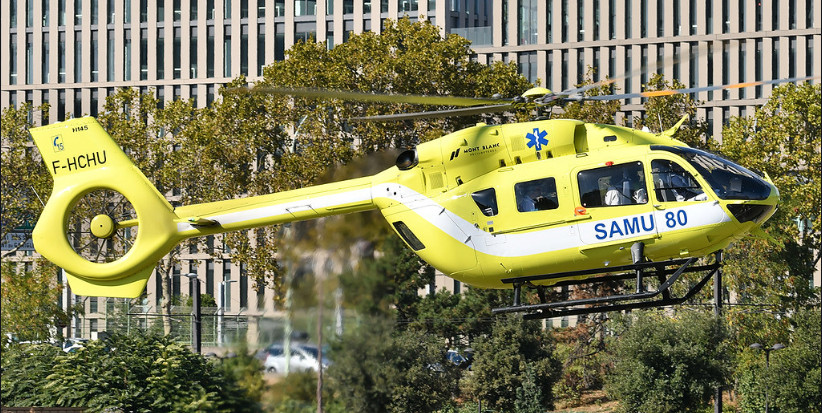
STRASBOURG, France – Medical workers dressed head-to-toe in protective gear emerge from Strasbourg university hospital, push a coronavirus patient on a wheeled stretcher across the parking lot, load the patient into a helicopter, then retreat as the aircraft lifts off.

This has become a daily ritual in eastern France as intensive care units there have been unable to cope with the numbers of critically-ill cases and have instead been transferring patients to nearby Germany, Switzerland and Luxembourg.

As one patient on Tuesday was loaded onto a red-and-yellow helicopter of the French Civil Security agency, a helicopter crewman watched over, dressed in blue surgical scrubs, topped with an orange aviation helmet.

The area in eastern France around the city of Strasbourg has seen one of the biggest coronavirus clusters in France. Local doctors have warned that the healthcare system is at breaking point.

The so-called air bridge to fly coronavirus patients out of eastern France began at the weekend and has so far involved around 10 helicopters from France, Germany and Luxembourg.

One flight delivered a patient from a clinic in France’s eastern Alsace region to a military hospital in Ulm, southern Germany. “If everything goes well he will survive,” said German Army colonel and doctor Matthias Helm.

Another flight brought a 64-year-old patient from Colmar in France’s eastern Alsace region to Germany’s Mannheim hospital.

“Our French colleagues are currently under excessive strain”, said Mannheim senior intensive care doctor Thomas Kirschning.

“Currently we have the advantage that we still have capacity and can prepare ourselves for a potential wave of cases. ”

France reported a cumulative 1,100 coronavirus deaths on Tuesday with 22,300 infected people.

The epidemic in eastern France led the French army to set up a field hospital with 30 intensive care beds. The field hospital admitted its first patient on Tuesday.

Video: No ubuntu from South Africa’s black billionaires

From midnight on 26 March, South Africa will be in lockdown due to the coronavirus, with many small businesses suffering. Two white billionaires, Nicky Oppenheimer and Johann Rupert, have stepped up to the plate and donated R1 billion each to a fund to help them, but no black billionaires are showing “ubuntu” or the mythical African altruism. The ANC regime also wants to exclude white-owned small businesses from being helped, it seems.

Italy records another 800 deaths in a day

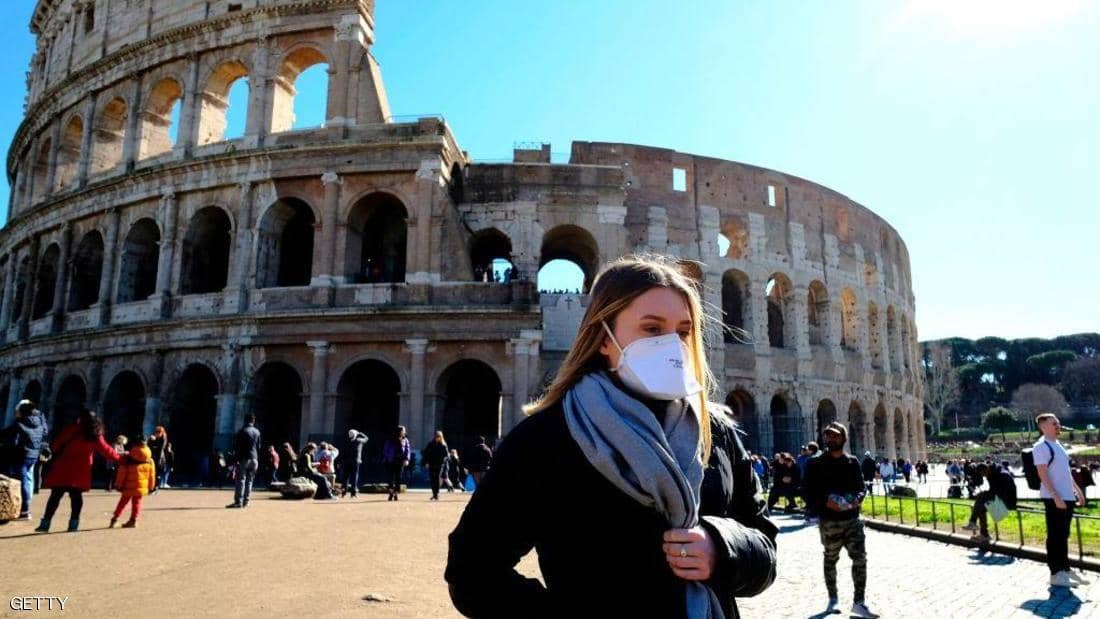
The Italian region of Lombardy has introduced stricter measures in a bid to tackle the spread of coronavirus.

Under the new rules announced late on Saturday, sport and physical activity outside, even individually, is banned. Using vending machines is forbidden.

The move comes as Italy reported nearly 800 coronavirus deaths on Saturday and saw its toll for the past month reach 4,825, the highest in the world.

Lombardy is the worst-affected region in the country with 3,095 deaths.

The region’s President Attilio Fontana announced the new measures in a statement.

Businesses have been asked to close all operations excluding “essential” supply chains. Work on building sites will be stopped apart from those working on hospitals, roads and railways.

All open-air weekly markets have been suspended.

Across Italy there have been 53,578 total cases to date, with about 6,000 people having recovered.

Sources: BBC, Johns Hopkins

French flee from Paris to the countryside

PARIS – Parisians thronged the city’s rail stations and took to the highway early on Tuesday to escape the French capital before a lockdown imposed to slow the rate of coronavirus contagion kicked in at midday.

The Paris exodus drew dismay from provincial France, where many fear that city-dwellers will bring the virus with them and accelerate its spread.

Health Minister Olivier Veran said the government had no intention of preventing people travelling to secondary residences but said the stringent restrictions on public life would apply on the coast as they would in the city.

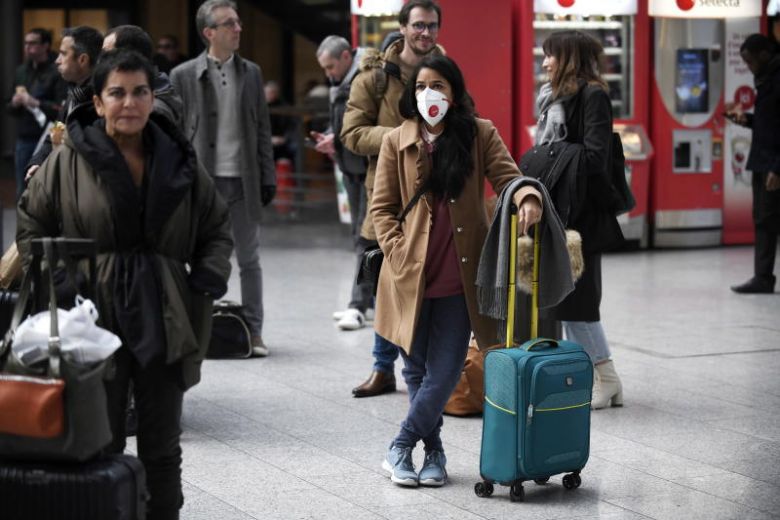
At Paris’s Gare du Nord, passengers, many wearing masks, stared up at departure boards.

“We’d rather be in a more open environment, in a bigger house with a garden, than in a Parisian apartment,” said education journalist Camille, who was travelling to her mother’s home in northern France with her partner. Both plan to work remotely.

France’s death toll from the coronavirus has reached 148 and a total of 6,600 people have been confirmed infected.

President Emmanuel Macron late on Monday said the country “was at war” with coronavirus and announced restrictions unprecedented in post-war France.

He ordered people to stay at home from Tuesday lunchtime. He said they should leave only to buy groceries, travel to work if essential, exercise or for medical care. The army will be mobilised to help move the sick to hospitals, he said.

Junior transport minister Jean-Baptiste Djebbari said services of the high-speed intercity TGV trains would be reduced under the lockdown to help curb infections.

But many in the provinces remained incredulous.

“Parisians are fleeing the city and will infect the provinces, just to be confined in the open air. This exodus is unthinkable, selfish and a ticking time-bomb,” one Twitter user wrote. – Reuters