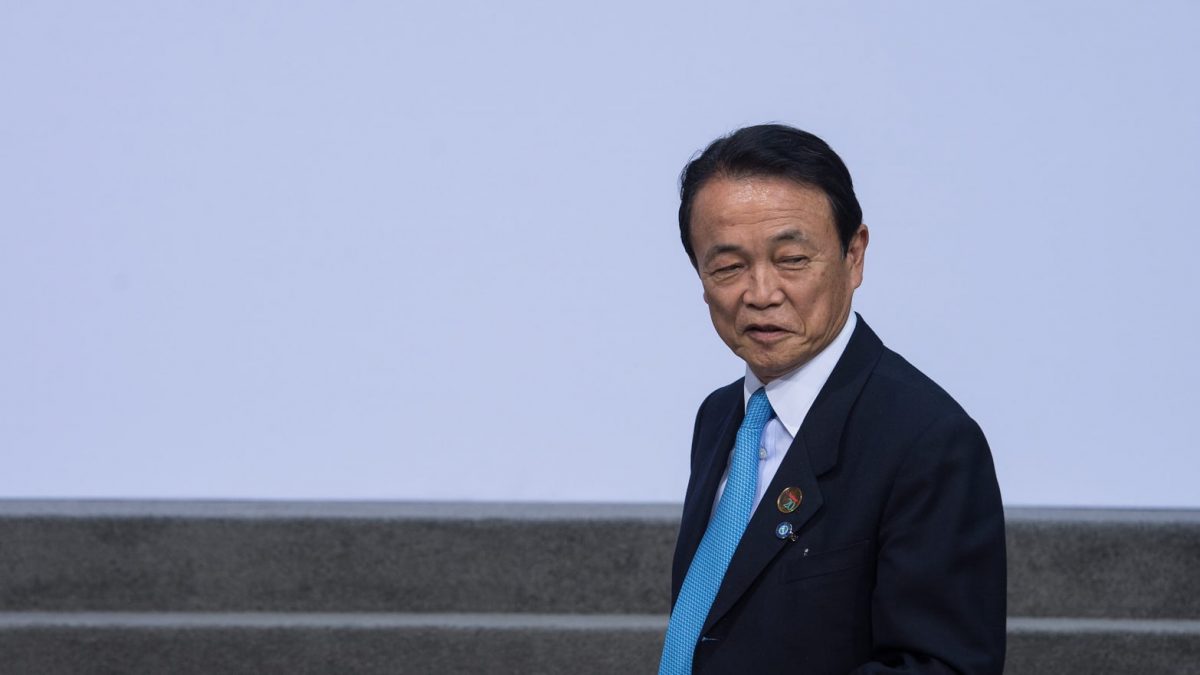
Japan’s success against the coronavirus without enforcing a strict lockdown is due to the citizens’ “cultural standard” that is different from other nations, Finance Minister Taro Aso said, drawing criticism from the public that the comments were inappropriate.
“Other countries have called me up and asked me if we’re the only ones with some drug against the virus or something,” Aso said on Thursday in response to a question from a lawmaker on Japan’s reputation of successfully containing the pandemic. “When I tell them ‘our country’s cultural standard levels are different to yours,’ they’re left speechless. That’s the simplest way to put an end to the questions.”
Despite the lack of harsh measures, Japan suffered far fewer coronavirus infections than any of its Group of Seven peers, with about 7 deaths per million, a track record that Aso noted in his comments. Japan isn’t an exception though in Asia, with Taiwan and South Korea reporting lower mortality rates. —Bloomberg
Japan’s Finance Minister Taro Aso refused on Friday to resign or apologise over remarks suggesting Japan should follow the Nazi example of how to change the country’s constitution stealthily and without public debate.
The ruling Liberal Democrats want to revise the US-inspired postwar constitution, in part to allow a higher profile for Japan’s military.
Following protests by neighbouring countries and human rights activists, he “retracted” the comments on Thursday but refused to go further.
“I have no intention to step down” as Cabinet minister of lawmaker, Aso, who is also the deputy prime minister, told reporters. The government also said it is not seeking Aso’s resignation, which some opposition members have demanded.
Aso, who is known for intemperate remarks, drew outrage for saying Japan should learn from how the Nazi party stealthily changed Germany’s pre-World War II constitution before anyone realised it. He also suggested that Japanese politicians should make visit Tokyo’s Yasukuni war shrine quietly to avoid controversy. Such visits currently take place amid wide publicity and are a sore point for Southeast Asian nations, who suffered under Japanese occupation during World War II.
Aso said on Thursday he was misunderstood and only meant to say that loud debate over whether Japan should change its postwar constitution, and other issues is not helpful.
In retracting his comments, he said it was “very unfortunate and regrettable” that his comments were misinterpreted.
On Friday, Aso said he stands by all his other remarks in the speech made earlier this week in Tokyo to an ultra-conservative audience.
Japan and Nazi Germany were allies in World War II, when Japan occupied much of Asia and Germany much of Europe, where the racial supremacist Nazis oversaw the killings of an estimated 6 million Jews before the war ended in 1945 with their defeat. Japan’s history of military aggression, which included colonising the Korean Peninsula before the war, is the reason its current constitution limits the role of the military.
According to a transcript of the speech published by the newspaper Asahi Shimbun, Aso decried the lack of support for revising Japan’s pacifist constitution among older Japanese, saying the Liberal Democrats had held quiet, extensive discussions about its proposals.
“I don’t want to see this done in the midst of an uproar,” Aso said, according to the transcript. Since revisions of the constitution may raise protests, “doing it quietly, just as in one day the Weimar constitution changed to the Nazi constitution, without anyone realising it, why don’t we learn from that sort of tactic?”
He has apologised previously for accusing the elderly of being a burden on society, joking about people with Alzheimer’s disease, saying the ideal country would be one that attracts “the richest Jewish people”, and comparing the opposition Democratic Party of Japan to the Nazis.
On Thursday, Aso insisted that he was referring to the Nazis “as a bad example of a constitutional revision that was made without national understanding or discussion …I just don’t want [the revision] to be decided amid a ruckus”. – AP
This website uses cookies to improve your experience. We'll assume you're ok with this, but you can opt-out if you wish. Cookie settingsACCEPT
Privacy & Cookies Policy
Privacy Overview
This website uses cookies to improve your experience while you navigate through the website. Out of these cookies, the cookies that are categorized as necessary are stored on your browser as they are essential for the working of basic functionalities of the website. We also use third-party cookies that help us analyze and understand how you use this website. These cookies will be stored in your browser only with your consent. You also have the option to opt-out of these cookies. But opting out of some of these cookies may have an effect on your browsing experience.
Necessary cookies are absolutely essential for the website to function properly. This category only includes cookies that ensures basic functionalities and security features of the website. These cookies do not store any personal information.
Any cookies that may not be particularly necessary for the website to function and is used specifically to collect user personal data via analytics, ads, other embedded contents are termed as non-necessary cookies. It is mandatory to procure user consent prior to running these cookies on your website.