Cyril Ramaphosa’s letter on Brendin Horner

Dear Fellow South African,

Just over a week ago, Brendin Horner, a young farm manager in the Free State, was murdered in an appalling act of cruelty.

His killing should anger and upset every one of us.

No matter who we are, no matter what community we live in, no matter our race, creed or language, we should be as deeply affected by the death of Brendin Horner as we are by the many other South Africans who die violent deaths each year.

Just as we mourn the loss of his life, we also mourn the deaths of Mogamad Cloete, Tawqeer Essop and André Bennett, three young men who were shot in a car in Delft in the Western Cape in the same week.

Our thoughts are with their families at this time of grief. It is at such moments that we are called on to reach out to each other as South Africans, to show compassion, empathy and solidarity.

These crimes are a stark reminder of the levels of violence in our country.

While crime affects everyone, the majority of victims of violent crime are black and poor; and it is young black men and women who are at a disproportionately greater risk of being murdered.

We have a huge task to bring an end to murder, assault, robbery, rape and violence against women and children wherever it happens and whoever it affects. It requires that all peace-loving South Africans stand together not only to condemn these criminal acts, but also to work together to end them.

It requires that we hold fast to the principles contained in our Constitution, that we uphold the rule of law and that we strengthen our justice system to ensure that the perpetrators are brought to book.

The violent protests that took place in Senekal following the arrest of suspects in Brendin Horn’s murder show that we have not yet escaped the divisions and mistrust of our past. While anger at the senseless killing is justifiable, vigilantism is not.

The brutal killing of a young white farmer, allegedly by black men, followed by the spectacle of white farmers storming a police station to get to a black suspect has opened up wounds that go back many generations.

If we are to succeed in tackling violent crime, particularly in rural communities, we must confront this trauma and challenge the racial attitudes that prevent a united response.

Those people who think that farm attacks affect just a small part of our population are wrong. The farming community is an integral part of our economy. The farming community produces the food that we eat. Violent crime on farms poses not just a threat to the safety of our rural communities, but to our nation’s food security.

The claim that violent crime on farms is part of an orchestrated campaign by blacks to drive white farmers off their land is simply not borne out by fact.

Numerous studies show that crime in farming communities is largely opportunistic. Rural communities are more vulnerable because of their isolated location and, as a result, the relative lack of access to security and other services.

Contrary to the irresponsible claims of some lobby groups, killings on farms are not ethnic cleansing. They are not genocidal. They are acts of criminality and must be treated as such.

The success of our Rural Safety Strategy rests on greater coordination and better communication between the South African Police Service, business, farming organisations and communities.

There needs to be more collaboration between farm watch organisations and Community Policing Forums. Farming communities, including farmworkers, must actively participate in these forums, because it is they who are the eyes and ears on the ground. Traditional leaders need to be empowered to play a greater role in safety in farming communities.

Farmers need to more readily provide access to their lands to law-enforcement officials. Private security companies operating in farming communities need to work more closely with the SAPS, and at the same time ensure that arrests of suspects are done within the confines of our Constitution. We must continue to explore additional measures, such as integrated communications technologies, to step up rural safety.

At the same time, we have to invest in rural development and tackle the severe inequality that persists in farming communities. We need a coordinated effort to improve the quality of life of all people living in rural areas if we are to eliminate poverty, which is a major contributing factor to crime.

We would be naïve to assume that race relations in farming communities have been harmonious since the advent of democracy. Unless this is addressed in an open and honest manner, unless we are prepared to engage in dialogue, this will remain a festering wound that threatens social cohesion.

What happened in Senekal shows just how easily the tinderbox of race hatred can be ignited. As a nation we must resist any attempts to use crime on farms to mobilise communities along racial lines.

One murder is a murder too many. We stand in solidarity with all victims of crime, regardless of whether they live in cities or on farms, whether they are farmers or farmworkers.

We must work together to root out criminality, whether it is in Senekal or on the streets of Delft. Crime is not somebody else’s problem; it is our collective problem.

We must remain vigilant and work with the police to keep our communities safe. We must not harbour criminals among us. In far too many instances, perpetrators are known to communities and are sheltered by them.

We must not be blinded by our own prejudices to the suffering and pain of others. It should not matter to us if the victim of violent crime is black or white.

To do so would be a betrayal not just of this country’s founding principles, but of our own humanity.

With regards,

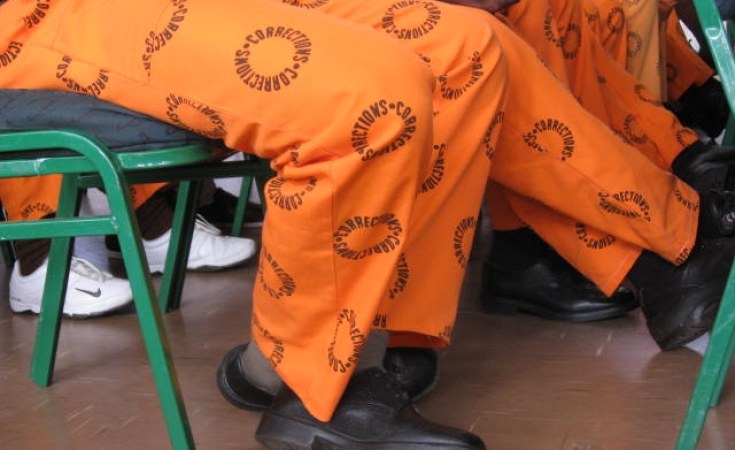
South African prisoners riot for a ‘mass release’, citing Covid-19

Whereas President Cyril Ramaphosa already released 19 000 inmates out of a total prison population of 155 000 in May this year, prisoners in Gauteng province are rioting for another mass release. They claim that they are at risk of the Covid-19 virus that has already cause a number of deaths among both warders and prisoners.

One of the prisons where riots have been noted, is the vicious “Sun City” prison in Soweto, ironically nick-named after the famous casino and hotel complex in the former homeland of Bophutatswana.

The country’s Department of Correctional Services (DCS) has declines to react to their demands, saying that the riots are being “orchestrated… by unruly elements intent on forcing the government into a mass release of prisoners”

Prisoners are alleging that not all of the 19 000 “low-risk inmates” have been freed, following upon Ramaphosa’s parole announcement. According to them, overcrowding is still at 30% in all prisons. Despite a rise in South African crime rates and convictions since the ANC regime took over, the regime has not built any new prisons.

A DCS spokesperson, Singabakho Nxumalo, said out that infections in prisons have been rising in line with national trends; that 1012 active cases existed for inmates and officials, with only 88 active cases out of a community 146 732 offenders countrywide.

Sources within the prisons, however, said over the past week alone, clinics, kitchens, security and records offices at Sun City – Johannesburg Correctional Centre – and at Kgosi Mampuru II in Pretoria, had to close down as numbers of Covid-19 infections increased inside the facilities.

An anoymous inmate told the Sunday Independent newspaper “there were delays in the preparation of food after some prisoners were quarantined because of the virus” at the hat a Kgosi Mampuru II prison in Pretoria (formerly Pretoria Central Prison).

An internal memo posted on the prison walls at the facility announced that it had 28 active cases and one death. But an official said the notice was two weeks out of date because more people had tested positive and a colleague was buried just last week.

“There are inmates who worked in the kitchen, who are currently under quarantine. These are inmates who prepared meals for us, so we’ve seen a delay in our meal preparations.

“This is supposed to be a rehabilitation centre, but there is no rehabilitation, whatsoever.

“We were told that 19000 low-risk inmates would be released to curb the spread of the virus, but not even 40 were released from this side, Kgosi Mampuru,” he said.

However, Nxumalo is adamant that there isn’t a crisis in correctional facilities saying: “Our officials do report for duty. Those who were in direct contact with positive cases have been placed in quarantine, so as isolating those who have tested positive.

“No sections in any of our facilities have been closed down due to Covid-19. We decontaminate sites where there are positive cases and open them for operations.

“This is going to be the norm moving forward across all institutions in the country”.

He said a picture is being painted of a chaotic environment with the hope that the public will be mobilised and pushed for the mass release of prisoners.

“Fortunately, numbers do tell the truth. Unfortunately, some individuals purporting to be representing the interest of offenders have engaged in an offensive campaign, misinforming the public.

“Only 195 inmates in the whole country have the virus in their system and thus require daily monitoring and treatment.

“It must be emphasised that such will never happen (the mass release). We live in a democratic state where the rule of law is supreme.”

South African Medical Association objects to imported Cuban doctors

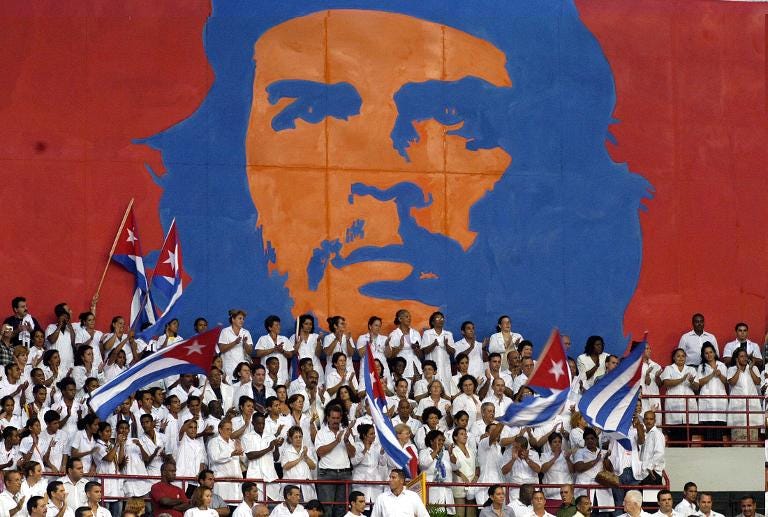
Pretoria – The South African Medical Association (Sama) has criticised the government for bringing in just over 200 Cuban medical experts to help South Africa’s fight against the coronavirus, arguing that the government should have exhausted local expertise first.

Sama chairperson Dr Angelique Coetzee said South Africa has many public and private health specialists, family physicians and epidemiologists who would have heeded the president’s call for assistance during this very challenging period.

“Retired doctors can be brought back into the service delivery system – even for a short time. They can also mentor younger doctors who lack the necessary experience and skills.

“Only when we have exhausted all our internal human resources should a consultative process between Sama, the Department of Health and the Presidency been initiated to bring the Cuban specialists to South Africa,” Coetzee said.

She added that Sama finds it “unacceptable that silo approaches” have been followed in the decision to bring the Cuban specialists to South Africa.

Sama will be requesting a meeting with Health Minister Dr Zweli Mkhize “to express its unhappiness on the processes and principles involved”.

Coetzee said Sama was not against roping in the Cuban Brigade, but added that the government did not consult all stakeholders.

“While we are not averse to the so-called Cuban Brigade assisting us, we feel strongly that the principle of not engaging with Sama – as the biggest representative body of doctors in the country – is flawed and wrong,” Coetzee said.

Sama insisted that in light of the current poor economic environment in South Africa, the money spent on bringing the Cuban specialists to South Africa would have been better spent on first employing local doctors who have the necessary skills and experience to drive this process, especially in rural areas.

“There are many unemployed doctors in South Africa and many community service medical officers have still not been placed. In addition, many private practitioners have indicated their willingness to assist,” Sama said.

President Cyril Ramaphosa on Monday welcomed the Cuban health professionals who arrived in Pretoria to support ongoing efforts to curb the spread of the novel coronavirus across South Africa.

The 217 Cuban health specialists and workers landed in South Africa on Monday as the country commemorated Freedom Day.

“Their arrival follows a request made by President Cyril Ramaphosa to President Díaz Canel Bermúdez of Cuba. The experts will support efforts being made in South Africa to contain the spread of Covid-19,” the Presidency said in a statement.

The group consists of experts in the fields of epidemiology, biostatistics and public health; family physicians to guide interventions through door-to-door testing and to assist local healthworkers in health promotion and disease surveillance at the community level; healthcare technology engineers to assist in maintaining the inventory, deployment and repair of aged medical equipment; and experts to provide technical assistance working with local experts. – African News Agency

Video: No ubuntu from South Africa’s black billionaires

From midnight on 26 March, South Africa will be in lockdown due to the coronavirus, with many small businesses suffering. Two white billionaires, Nicky Oppenheimer and Johann Rupert, have stepped up to the plate and donated R1 billion each to a fund to help them, but no black billionaires are showing “ubuntu” or the mythical African altruism. The ANC regime also wants to exclude white-owned small businesses from being helped, it seems.

Decision to continue with expropriation without compensation is short-sighted – TLU SA

The decision of the ANC government to go ahead with changes to Section 25 of the Constitution – which relates to expropriation without compensation – is short-sighted, according to South African farmers’ union, TLU SA.

A motion about the ad hoc committee which will initiate and introduce this legislation, was today approved by the National Assembly. The committee will continue where the fifth parliament ended in December 2018 and has to give feedback to the National Assembly by the end of March 2020.

“Expropriation without compensation will not deliver any good results,” says Mr Louis Meintjes, the President of TLU SA. “Research shows most of the applicants do not have the knowledge or capacity to sustainably manage the land, which at the moment contributes significantly to the rural and national economy. In most cases, they would instead opt to be financially compensated than to be in charge of the land.

“The past has shown us most of the land previously expropriated now lies barren because the government did not care enough to support the new owners to manage the land successfully.”

TLU SA believes that it is hugely irresponsible to go ahead with these amendments. Not only will it have a direct effect on farmers, their workers and the rural parts of the country, but also on the confidence foreign investors have in the future of the country.

“When an investor’s private ownership is implicated, it will naturally not be wise for them to invest their assets there,” says Mr Meintjies.

“These types of decisions also have an effect on the safety of farmers with supporters of Andile Mngxitama of the BLF and like-minded people being swept up by the process and taking the law into their own hands.

“Just last week President Ramaphosa said he condemns farm murders, but today his government makes decisions which contradicts it completely.”

Ramaphosa calls for closer Asian ties

Deputy President Cyril Ramaphosa told delegates at the Asia-Africa Business Summit in Jakarta, Indonesia on Tuesday that Afro-Asian economic and cultural ties needed to be strengthened.

Ramaphosa said Asia and Africa could collaborate in a number of areas, such as agriculture, News24 reported.

“Because of the diversity of crops cultivated on the continent, Africa has the potential to increase the nutritional value of global food supply more than any other region in the world.

“However, for African farmers to benefit fully from their contribution to global food supply, they need to be more involved in the food value chain – from seed to market.”

Another area for greater collaboration is manufacturing.

“Manufacturing is vitally important to Africa’s economic future as it can contribute substantially to improving growth, reducing unemployment and addressing balance of payment issues.

“With a market of close to 900 million people, Africa has the capacity to become a manufacturing success.”

Africa’s ability to trade is hampered by a lack of physical infrastructure, he said.

“Many African countries – without adequate rail, road and port infrastructure – are unable to productively exploit their abundant natural resources.

“Asian countries – with their skills, capital and technical and engineering expertise – can partner with African countries in developing this critical area.

“Infrastructure development is crucial to the success of the Tripartite Free Trade Agreement, both to connect markets and to generate enough electricity to support the development of manufacturing and other sectors.

“By strengthening South-South cooperation, we can begin a new era in global trade – one that will be driven and sustained by two of the world’s fastest-growing regions,” said Ramaphosa.

Pandor acting president

Science and Technology Minister Naledi Pandor will be acting president until Tuesday while Jacob Zuma is away on a working trip this week, the presidency said.

Zuma was travelling to Algeria to meet President Abdelaziz Bouteflika for a South Africa-Algeria binational commission meeting, spokesman Mac Maharaj said on Monday.

Deputy President Cyril Ramaphosa was in Lesotho in his capacity as Southern African Development Community facilitator, for the closure of the body’s facilitation office in the region following successful elections.

The SADC facilitation mission to Lesotho, led by Ramaphosa, will end on Monday, his office said.

Ramaphosa was in Maseru to close the Southern African Development Community (SADC) offices, where an official ceremony would take place, his spokesman Ronnie Mamoepa said in statement.

“The closing ceremony marks the end of the facilitation mission following the successful SADC intervention which culminated in the recently held elections declared credible, free and fair by elections observers,” Mamoepa said.

“The elections arose from provisions of the Maseru Facilitation Accord signed by all Lesotho’s political parties and facilitated by deputy president Ramaphosa as part of efforts to create political stability in the country.”

During this period, law enforcement agencies signed the Maseru Security Accord which resulted in three senior defence and police officers taking a leave of absence. This helped stabilise the security situation in Lesotho.

Ramaphosa hoped Lesotho’s political role-players would continue to focus on constitutional and security sector reforms, Mamoepa said. He was expected back in the country on Tuesday.

Farmers fear wineland inferno

Several wine farmers, including rugby star Schalk Burger’s family, were on high alert as a raging fire destroyed about 1700ha of bush in the Wellington area outside Cape Town.

Firefighters said the fire spread up Bain’s Kloof Pass and onto the Groenberg mountain.

On the Schalk Burger & Sons wine estate, the family was up all night at the weekend keeping watch.

The devastating fires come in the wake of deputy President Cyril Ramaphosa calling on white farmers in the Boland Region to stop the eviction of farm workers.

ANC Provincial Chairperson Marius Fransman called a moratorium on what he calls “mass evictions” of farm workers earlier.

Ramaphosa warned white farmers to embrace the “transformation process” of handing over white property to black workers for no compensation.

He expressed his anger at the evictions, saying that it is totally unacceptable. “We cannot accept a situation where working people particularly on farms are treated as badly,” he said, but could give no examples of mistreatment.

During the door-to-door Campaign in Mbekweni Township, Ramaphosa interacted with various families. He visited a family where a 29-year-old disabled woman, Nthabiseng Tofile resides.

Nthabiseng’s mother told Ramaphosa that her daughter became disabled after an Eskom Pole fell on her in 2004. She was living in a township at the time and not on a farm.

A pending by-election is to take place in the Mbekweni area soon. Fransman says Ramaphosa’s visit has nothing to do with the by-election. He is confident that the ANC will retain the ward.

“Luckily, the fire did not come close to us,” said Schalk’s father, Tiaan Burger.

Another farmer, who did not want to be named, said his farm was on the slopes of the Groenberg.

“The flames were humongous and my father single-handedly started bulldozing a firebreak in the early hours. Our family came from Cape Town to help,” an owner said.

Alien vegetation and fynbos were razed on the mountain and on private property.

‘Vote or the Boers will be back!’

Cyril sharing with his 'Boer' friend Roelf Meyer
Cyril sharing with his ‘Boer’ friend Roelf Meyer

ANC deputy president Cyril Ramaphosa has urged Limpopo residents to vote or else the “Boers” will come back to power, according to a report. Ramaphosa evidently believes the black fear of whites will persuade blacks to vote, even though whites represent no danger at all at the ballot.

“If you don’t vote the Boers will come back to control us,” Ramaphosa reportedly said in Seshego.

The Star newspaper reported on Monday that he was speaking to disgruntled resident, Johanna Phala, 49, who had vowed not to vote in next year’s elections because the ANC had disappointed her.

The unemployed single mother of three blamed the high unemployment rate on the ANC and said she had lost hope in the party.

Ramaphosa asked her to reconsider her anger towards the ANC-led government.

He was in Seshego, hometown of Economic Freedom Fighters leader Julius Malema, to drum up party support.

“If all South Africans don’t vote, we will regress. The Boers will come back to control us.”

Ramaphosa’s remarks echoed a study released in April by consumer insights company Pondering Panda which found that 46% of youth respondents of all races believed the DA would bring back apartheid if it won next year’s elections. – Sapa

Beware the Stockholm syndrome

Cyril and Roelf, laughing

by TAU Bulletin

“Adjusting” to the ANC and the consequences thereof.

Stockholm Syndrome: This syndrome refers to a group of psychological symptoms that occur in some persons or groups in a captive or hostage situation. It is sometimes referred to as a Survival  Identification Syndrome.

In early June of this year, a meeting was held between Afrikaner groups and the ANC. A former National Party minister Mr. Roelf Meyer facilitated the meeting which was attended, inter alia, by some commercial farmers and was designed to discuss the government’s land reform policy. In press pictures, Mr. Meyer was seen laughing and joking with ANC bigwigs including Mr. Gwede Mantashe, secretary general of the ANC, but it was the ANC which was laughing all the way to the bank. TAU SA’s public statement at the time explained why it would not attend – numerous TAU SA requests to see the country’s president, the Minister of Water Affairs and the Ministers of Transport and the Police were systematically ignored. All efforts to get appointments were fruitless.

So what was to be discussed under the sponsorship of Mr. Meyer? If the government is not prepared to meet representatives of organized agriculture, it can only be assumed the Meyer meeting was a public relations exercise for the ANC, with the hapless attendees along for the ride.

There is a growing trend in South Africa, particularly within the Afrikaans press and other organizations, that reconciliation (from one side only of course), a healthy guilt complex  and “live and let live” with the government is the way forward. Attitudes within the English language press seem to have hardened, although there are still sycophants who urge us not to be pessimistic:  that “false alarmism” is wrong.

But the University of Pretoria’s politics lecturer  Mzukisi Qobo says we must “face the truth”. (Business Day  29.6.2012).  He says “peddlers of good news” are trying to convince us that things are not so bad. “Anyone who dares point to the reality of a creaking public service or worsening leadership is likely to be reminded that there are many good stories happening elsewhere in the country”. They point to Zimbabwe, Nigeria and Iraq as being worse than South Africa.

“There is nothing as dangerous as unguarded optimism” says Qobo. “It is a convenient refuge for those who find reality too discomfiting and want to be left alone to wallow in their apathy. They think that to be discontented is a bad thing when in fact it is the absence of meaning and too much comfort in the face of crisis that gives succor to bad leadership. What our optimists don’t realize is that they are fostering idle indifference.  Action is a progeny of discontent.  It is when we are deeply dissatisfied with a political framework which lowers the benchmark for success and excellence that we are most likely to take action and insist on meaningful change.”

Mr. Qobo’s words should cause those who are succumbing to a group version of the Stockholm Syndrome to take stock of themselves. Now that we are enslaved by the ANC, let’s make the best of it. Let’s sit down and chat and try and get them to be “reasonable”.  After all, it’s all we’ve got left. They run the country, they have the power and if we’re nice to them, maybe they’ll leave us alone! For the sake of peace and quiet, we can overlook the ANC’s bad governance, its corruption, its venal theft and plunder of the country’s assets, its corrosive indifference to the needs of the people, its dismissive contempt of criticism and its wholesale destruction of a country that took 350 years of hard work to build. Let’s all be friends, even if the ANC treats us with disdain. They are our captors, but so what? We can’t do anything about it so let’s just get on with it and stop complaining!

Mr. Qobo quotes US admiral Jim Stockdale who survived torture in captivity during the Vietnam war.  He didn’t try and escape from reality by invoking a false sense of optimism. This “cripples human agency by leaving everything to fate”. Stockdale’s counsel is that “you must never confuse faith that you will prevail in the end… with the discipline to confront the most brutal facts of your current reality”. How many times have we heard that “it has to get worse before it will get better!”  Who says it will get better?

At the same time

At the Meyer group’s convivial get-together, the ANC’s Gwede Mantashe assured the meeting that land reform without compensation wasn’t the policy of the ANC. Soon after, at the ANC Midrand policy conference, delegates passed a motion where the “willing seller, willing buyer” principle regarding agricultural property ownership, was rejected.  In mid April, TAU SA’s legal representatives told the Equality Court in Johannesburg that it is more dangerous being a farmer in South Africa than being a member of the police. This evidence was proffered in the case against the ANC and its Youth League’s Julius Malema on the hate speech issue. The song “Shoot the Farmer” has been widely sung at ANC rallies, with no comment from the ANC’s hierarchy and no strong objections from others in civil society who should have been shouting from the rooftops about this exhortation to kill!

During the ANC’s centenary celebrations in KwaZulu/Natal in April and May of this year, President Jacob Zuma sang (in Zulu)  – “We will kill them with a canon (gun); They will flee, shoot them;  You are a Boer, we will kill you;  You will be killed, you will flee”.

(During this period, blacks occupied a farm in Komatipoort and ordered the farmer to leave. The levels of aggression displayed by the crowd were similar to the same type of behavior exhibited by land invaders in Zimbabwe.)

It was AFTER the President’s outburst that Mr. Meyer organized the meeting with the ANC. Did Mr. Meyer complain to the ANC about these obvious crimes, urging people to kill the farmers? Or is this to be cast aside in order to” get along” with the ANC and the President?

The government’s Green Paper on land reform and its Draft Land Tenure Security Bill have caused shockwaves not only within the farming community but throughout the country. Why bother talking to the ANC when they are at the same time undermining commercial agriculture? (Has Mr. Meyer read through these destructive Bills?)   At virtually the same time as Mr. Meyer’s affable June 6 meeting with the ANC, TAU SA declared in a press release that ANC Youth League threats to occupy farms and put farmers’ safety in jeopardy was being taken very seriously. “Is it meaningful to stay involved with government forums?” asked TAU SA. “We are being deceived and cajoled in official circles while being threatened and intimidated outside these circles.”

State president

The State President continues with his obfuscation about land ownership (the old 13% black/87% white  ownership fiction), and it’s time those who care should take action to counter this propaganda. South Africans who do not want to see their country descend into yet another African abyss should do all in their power to disseminate throughout the world the appalling failures of ANC rule. There are not enough “successes” to counteract the decline.

Are citizens really content to “go along” with the third world “values” of the ruling party? Where our hospitals are death traps, where doctors are raped and where a cake and a bottle of Coke will get the nurse out of her chair to attend to you? Where our municipalities don’t function, yet salary increases and bonuses are lavishly awarded? Where the civil service’s inertia, incompetence and corruption degrades us; where you can buy a passport on the street, forge your matriculation certificate and indeed your Ph.D. documentation;  where the government  cannot keep the country clean, where it pollutes the water and trashes school books? The ANC has turned South Africa into the world’s laughing stock, so why the obsequiousness towards them?

If there is no public discontent  and rebellion against certain media and groups who continue to urge us to reconcile with criminals, incompetents and thieves, then we deserve everything we get.

When farm murders figures cease to shock us so that we consider it “normal” that those who supply South Africa’s food are wiped out;  when we say Thank Heaven we were not killed when thugs rob and assault us, then it’s time to take stock. There was a time when the police WERE dependable, when the hospitals WERE the best in the world, when our fences WEREN’T bedecked with barbed wire, when our transport ran on time, our cities were clean, our civil service functioned efficiently, and our borders repelled transients, criminals and illegal entrants to what used to be a sovereign country.

It’s time to remind the ANC that if they don’t ship up, then they must ship out! It’s our constitutional right to do so.

‘Racism’: South Africa’s biggest industry

delport_manfred_600by Manfred Delport

There is an email joke currently doing the rounds, which contains more than just a grain of truth. A black boy asks his mom: “Mommy, what is democracy?” His mother answers that democracy is something that allows the black majority to elect a government which will use the money provided by the mostly white tax base for all kinds of goodies to black people, including housing, expensive cars for black officials and child grants. The boy then asks his mother whether the mostly white taxpayers don’t complain about this. His mom answers: “Yes, they do, and that’s what we call racism.”

The often-imaginary concept known as racism can mean almost anything. For example, Makaziwe Mandela complains that the extensive media interest in her father’s feared passing away is somehow “racist.” Nobody knows how she arrived at that particular conclusion, but apparently it is racist for Agence France Presse to set up its cameras outside the Pretoria Heart Hospital.

While some may accept that a media frenzy indeed somehow equals racism, it is notable how well Mkaziwe Mandela and the rest of the Mandela gang have done financially by being victims of racism. Were it not for their imaginary victimhood, they would merely have been a bunch of below-average nonentities. And I would certainly include Nelson Mandela in the latter group of mediocrities.

People such as US president Obama continuously refer to the so-called “Madiba legacy”. However, nobody can supply a good definition of exactly what this so-called legacy is supposed to entail. Mandela was jailed for a failed terrorist conspiracy, although it was thought up mostly by white communists. Mandela is nobody’s intellectual, clearly, and did not have much in the way of strategic thinking to contribute to the failed terror plot. He stayed in jail longer than necessary because of his hard-line refusal to renounce violence. Cyril Ramaphosa and Joe Slovo were more important ANC negotiators at Codesa than Mandela was. After only one mediocre term as president, during which Thabo Mbeki was the real power behind the scenes, and during which the country exploded into an orgy of criminal violence, Mandela retired to enjoy his wealth.

(Funny thing that, incidentally. How does a person who’s been in jail for 27 years get to be so filthy rich so quickly? A South African president only earned approximately 200,000 US dollars per annum at the time.)

Let me then repeat my question: What, exactly, is meant by Mandela’s legacy? What did he actually do, except to participate in a failed terrorist plot? The answer is simple. Mandela, once described as somebody of only average intelligence by a black American writer, is really a professional victim of imaginary racism, and this has proven extremely lucrative for both Mandela and the rest of the Mandela gang.

It would not be far-fetched to say that South Africa’s biggest industry is not mining, financial services or agriculture. It is rather extorting money in the name of imaginary white racism, by posing as professional black victims of racism. This, then, is Mandela’s true and only legacy. He is the most famous professional victim of imaginary white racism in the world, a poster boy for white guilt, as another writer put it. He was jailed for plotting to commit violent acts of terror against innocent civilians, white and black, but somehow he has managed to transform himself into the victim of his own conspiracy to commit terror. Perhaps Osama Bin Laden should have taken a cue from Mandela and transformed himself into the actual victim of 9/11, so that he too could be feted by liberal whites, instead of being deservedly eliminated by Seal Team 6.

One sees this phenomenon in all walks of South African life. The entire ANC; all its elected officials and its supporters who have been appointed to the public service after whites, as well as competence, were ethnically cleansed from the civil service, are really making a living by being professional victims of so-called racism. The logic, if that is the right term, is that they may not be competent to run a government or a municipality (or even a brothel), but that the world owes them because they are victims. The civil service and municipalities are, predictably, collapsing because of this mentality.

Exploiting misplaced white guilt is also a highly profitable pursuit. Prior to 1994 Scandinavian donors were lining up to hand over money to fraudsters like the Reverend Allan Boesak, who promptly abused their donations to buy luxury cars and a large home.  His black victimhood, incidentally, didn’t prevent him from marrying a white journalist. He clearly didn’t think that one through – he could have doubled the household income if both he and his spouse were both to become professional black victims.

The private sector is by no means immune to this. Black Economic Empowerment of BEE is nothing but a huge and racially-based extortion racket aimed at blackmailing companies into handing over chunks of their equity to connected ANC cadres. Should they resist, they are threatened with being exposed as “racists”, which is the worst crime imaginable these days, worse even than raping and murdering babies.

When one realizes that professional victimhood – of imaginary racism perpetrated by those evil whites – is the biggest growth industry in South Africa, if not also in loony-left universities in the USA, you gain an entirely new perspective on many issues.

For example: the Affirmative-Action rector of the University of the Free State, Jonathan Jansen, is wont to vociferously condemn imaginary white racism, by writing acres of column space shrilly condemning such iniquity, but says nary a word about the endemicm, murderous violence and drug culture amongst his own ethnic group. Perhaps Jansen feels it’s better to be shot to death during a drive-by shooting at a crack house, than it is to suffer an imaginary racial slur. What Jansen is really doing, however, is affirming his credentials as a victim because of the post he currently occupies to the powers that be, because he knows his appointment was political, and not based on academic or managerial merit.

When Makaziwe Mandela draws the ridiculous conclusion that media interest equals racism, it’s not about racism at all. It is really a marketing ploy. She is affirming her status as a professional victim to the world, and naïve white liberals are falling over themselves to further enrich her and the rest of the Mandela gang.

This industry is so pervasive that it even extends into the field of religion. The same Boesak fraudster mentioned above was involved in drawing up a document known as the Confession of Belhar, which is nothing but a sorry political tract pointing the finger at whites, posing as a serious theological document. This document is being forced down the throats of whites belonging to the largest white church grouping in South Africa, the Dutch Reformed Church. In addition to confessing to sinning against God, whites are also now apparently expected to confess to the mortal sin of racism during their Sunday sermons.

It is an open question for how long whites will continue to entertain and endure this absurd situation.

Oh, wait, silly me! Yes, of course!

It would be racist to resist.

This column was first published in Afrikaans earlier today.

Miners shot in the back says lawyer

Fourteen of the 34 Lonmin platinum miners killed by the police in August were shot in the back, a judicial inquiry into the Marikana shooting heard on Monday.

“All fatal projectile wounds were sustained from the back,” advocate Dumisa Ntsebeza told the Farlam commission at the Rustenburg Civic Centre, North West.

“Those who were killed were unlawfully killed by SAPS [the SA Police Service],” he said in his opening remarks.

On 16 August the police opened fire while trying to disperse a group of striking mineworkers encamped on a hill in Nkaneng, killing 34 and wounding 78.

The workers had been carrying knobkerries, pangas, sticks, and iron rods.

The miners went on strike on 10 August, demanding a monthly salary of R12 500. Within four days, 10 people had been killed, two of them policemen and two of them security guards.

Ntsebeza represents the Eastern Cape families of 20 of the men who died.

The family members, many of the women wearing black and blue mourning clothes, sat in the first two front rows of the auditorium at the hearing.

Ntsebeza said the police had claimed the mineworkers charged at officers because they had taken muti (traditional medicine) which made them feel invincible. This was the police’s justification for killing them.

“For us, the subtext of this justification… is that the miners, according to them [police], acted like possessed men, that they had to be destroyed like vermin and that they were destroyed like vermin,” he said.

“Whatever the truth of that tragic day, it cannot be that the SAPS could not have acted differently. [They] could and should have brought the gathering to an end peacefully and without loss of life,” Ntsebeza said.

He said his team would contend that every step the police took leading up to 16 August, and on the day itself, made the workers’ deaths foreseeable and inevitable.

Ntsebeza agreed it was the police’s job to disarm people and disperse gatherings, and that the way they had done so in Marikana was not legitimate.

“The manner and timing… invited injury and death as well.”

He said the police’s decision to send National Union of Mineworkers and Association of Mineworkers and Construction Union officials to discuss the striking workers’ demands was not the correct one.

“SAPS officers on the scene must have known workers were not under the control of the unions… This was a public order issue, not a labour issue,” said Ntsebeza.

It appeared the police had not given the mineworkers an official order to disperse, but rather an ultimatum, and had encircled and entrapped the protesters with barbed wire.

“Blocking the miners’ dispersal route to Nkaneng informal settlement… [they] had no choice but to move in numbers towards police with nowhere else to go,” he said.

“Some of these miners were shot in the back and the back of the head while trying to get away.”

Ntsebeza said the police’s response to the protest was aggressive, misguided, disproportionate, unreasonable, and unlawful. – Sapa

Did South African police kill at Marikana to help black billionaire Ramaphosa’s finances?

The scene at Marikana, north west of Johannesburg, last week

Over the past few days PRAAG obtained new information about the Marikana massacre that is currently still making frontpage news in South Africa. It appears as if the miners of the Association of Mineworkers and Construction Union (AMCU) were deliberately murdered by the police as part of a campaign to get rid of the bothersome union.

AMCU was busy replacing the NUM (National Union of Mineworkers) as the majority union at the mine. The NUM is affiliated with COSATU, which is a member of the ANC regime’s so-called “tripartite alliance”. Before the shooting started, police ordered the media to leave the area.

Lauren Clifford-Holmes, the multimedia editor for the Johannesburg Mail & Guardian, was prevented last Thursday night from speaking to injured mineworkers. However, she stumbled upon two workers at Lonmin who confirmed that strife between the two trade unions was responsible for the problems, as NUM representatives were not re-elected by dissatisfied miners.
Cyril Ramaphosa

Black businessman and high-ranking ANC politician, Cyril Ramaphosa, apparently owns a contract to supply labour to the Lonmin mine at Marikana via his company Shanduka. “Ramaphosa and the NUM is practising a form of slave labour at the mine,” a source said at Marikana. “He is supplying labour at about R12 000 ($1500) per worker per month, but only pay his workers R4000 ($500) per month, thereby pocketing the difference. As a former NUM chief, he is able to control the union leaders and sees to it that he maintains this grotesque form of exploitation.”

However, NUM’s rival, AMCU, demands that the R12 000 received by Shanduka as labour broker in terms of the contract, should be paid directly to workers. Particularly the rock drillers, who perform the most difficult and dangerous work, felt that they were entitled to this wage, given that this was the tariff already received by Cyril Ramaphosa’s company for work at the mine.

An ex-policeman that PRAAG spoke to, but who prefers to remain anonymous, said that judging from the photographs he had seen, the workers were not attacking the police, but were fleeing from an area where a second police contingent was throwing tear gas at them. “One could see how some of them were trying to protect their eyes and faces. They thought they were fleeing to a safe place, where the heavily armed policemen mowed them down with automatic weapons, however,” said the ex-policeman.

The motive for the mass murder at the Lonmin mine at Marikana was apparently the protection of Shanduka’s lucrative service contract for supplying labour to the mine. Shanduka has already annouced that it will donate R2 million for the funeral of the 34 workers.

The workers are mostly from Lesotho, an independent country, and areas in the Eastern Cape. It would therefore be difficult for them to defend their rights and lives against the ANC-controlled state, cooperating closely with the British-controlled mining company. Until now, the only questions abut the massacre have come from black politicians and activists from outside governing ANC circles.

A group known as the September National Imbizi did a local investitagion and talked to an eyewitness alleging that the mineworkers were “drawn into an ambush” and that they were first bombarded with a “blue substance”, after which they were shot dead during the confusion. Many were executed while trying to hide among rocks and under bushes. On the websit of September National Imbizo, the eyewitness is referred to as “our friend”:

“…our friend shows us how several people were shot while they were hiding between the rocks and under bushes. We see for ourselves splatters of blood that indicate the determination to dig workers out of their hiding holes and shoot them dead. All sorts of items of clothing and shoes, soiled with blood lie all around the scene.”

The website also claims:

“What is clear from what we are told is that this was an ambush. The video material in mainstream media showing workers charging at the police was in fact workers running away from bullets being hurled from behind. Why would workers, armed with knobkierries [African-style clubs – ed.] charge at armed police? The workers were completely surrounded and what we’ve been seeing in the media is only half the story. There was clearly a mission: shoot to kill, thus the deployment of the army.”

Other strange incidents took place.

The media were kept away from the scene for hours so that it would be difficult to reconstruct the exact events. A contact of The Star newspaper was shot dead during the massacre. The police also forced a photographer from the Johannesburg Mail & Guardian to delete his photographs. Why were the police so scared that particular evidence regarding the shooting would leak out?

A video shown in the Netherlands, contained a Vodafone ambulance on the scene. The same vido was later shown in South Africa on News24.com, but without the ambulance, indicating that the video must have been edited.
Beforehand SAPA reported the following statement by the leader of the AMCU:
“We are not safe. Our phones have been tapped,” the Association of Mineworkers and Construction Union president Joseph Mathenjwa told a crowd in the Wonderkop informal settlement at Lonmin.
“We have been democratically colonised – workers work under very harsh conditions.”
After the massacre Mathenjwa demanded a really independent investigation, but the ANC simply appointed one of its own ministers, Collins Chabane, to lead the commission of enquiry. Under the previous, so-called “apartheid government” judges were always appointed to commissions of enquiry.
What Mathenjwa is probably referring to when he talks of “democratic colonisation”, is that workers are paid R4000 per month while Cyril Ramphosa is receiving three times as much per worker.

A Johannesburg businessman PRAAG spoke to and who is also in the services sector, confirmed that the ANC’s cadres have virtually instituted a system of “slave labour” in the country. The former officers of their militia, Umkhonto we Sizwe, is currently providing labour to the mines by recruting foreigners. Few, if any, mines still employ workers directly.

“Everything which the ANC described as apartheid, including the system of migrant labour, now applies, except in a far worse degree,” said the businessman. “The ANC’s cadres control everything. They have dug themselves into all sectors of the economy. They do not rule, they are in business. The state is for them just another business, with resources that they may use to enrich themselves. That is what BEE stands for, Black Elite Enrichment.”

Among those state resources controlled by the ANC, is the police force. Was it used to punish the AMCU and “make an example” of the rival union? In the run-up to the 1994 elections the ANC committed necklace murders against so-called “sell-outs”. Where tens of millions of rand are at issue in the provision of labour to a mine, one may therefore expect that an organisation as ruthless as the ANC will use all means at its disposal to eliminate a rival.

During the shooting a journalist from The Star, Poloko Tau, tweeted from the scene:  “Auto guns creacking [sic] and cocked like 100 at a time, scary … warzone down here, 1st shot fired … journalist running, diving and hiding amid shots, water canon spewing water at the strikers … my contact has just been shot dead …”

After the Marikana massacre, some people simply “disappeared”. SAPA reported the following:

“Around 100 women arrived at the Ga-Rankuwa Magistrate’s Court outside Pretoria today where more than 250 protesters were expected to appear for public violence.

One woman, Nombulelo Jali, 37, wept hysterically. She said police did not know what happened to her husband Themba Khalo Jali, 40, who she says was arrested on Thursday.

‘I have come all the way from Harding in KwaZulu-Natal but we can’t find him. We have frantically searched everywhere and we can’t locate him. Police took him,’ said Jali.”

Julius Malema alleges that many of the striking workers are currently detained “irregularly in a private prison”. His friend and ex-colleague from the ANC Youth League, Floyd Shivambu, also said that many of the workers were shot in the back, which would indicate that they were running away from the police when they were shot.

This could not be verified, as a security blanket has been pulled over the area and journalists are not allowed at the mine hospital.

The narrow links between the British-controlled mining houses and the ANC may be traced back many decades. The first contact between the Afrikaner establishment and the exiled ANC was arranged by the mining company Consolidated Goldfields in England during the eighties. On that occasion Thabo Mbeki and Willie Esterhuyse met each other. Their relationship later played a crucial role in the capitulation of the Afrikaner government as Esterhuyse had persuaded several cabinet ministers that the ANC could be “trusted”.

The mining houses also played a leading role in portraying the ANC as the new government for South Africa and probably entered into private agreements with the so-called “liberation movement”.

Yesterday the chairman of Lonmin, Roger Phillimore, blamed “apartheid” for the poor conditions in which his mineworkers have to live, knowing that Shanduka and Lonmin are pocketing the greater share of the mine’s income for themselves.

Riah Phiyega

Julius Malema held Jacob Zuma and Cyril Ramaphosa responsible for the mass murder: “They presided over the massacre of our people… Not even the apartheid government killed as many.”

It is unclear whether the police’s actions will be investigated internally, as the executive director of South Africa’s Independent Police Investigative Directorate, Mr. Francois Beukman, has recently resigned “to pursue other interests”. He is leaving the service at the end of the month. His contract would only have expired in August 2014. At any rate, the new national police commissioner, Riah Phiyega, does not consider the shooting of 34 people “to be a massacre”.

Return to work, or be fired! Lonmin tells striking mineworkers

Miners must return to work Monday or face being fired from the platinum mine where rivalry between unions exploded into violence that led to the deaths of 44 people in a week, Lonmin PLC said Sunday. Thirty-four were gunned down by police in one of the worst displays of state violence since apartheid ended in 1994.

One of the leading figures in South Africa’s ruling ANC, former union boss Cyril Ramaphosa, is a non-executive director in the company and also owns a stake in it.

President Jacob Zuma declared a week of national mourning starting Monday to commemorate the lives of all South Africans who have died violently, especially the 44 at Marikana mine.

“The nation is in shock and pain,” Zuma said in a statement. “We must this week reflect on the sanctity of human life … We must avoid finger-pointing and recrimination. We must unite against violence from whatever quarter.”

Hundreds of rock-drill operators have been leading an illegal strike among the mine’s 28,000-strong labor force. Threats of violence kept many more away.

Lonmin had initially ordered miners to return to work by Friday, then, after the shootings, changed the deadline to Monday, spokeswoman Sue Vey explained.

Strikers said they were not sure what to do about the ultimatum. The company has not responded to their demands for the minimum wage to be increased from R5,500 ($688) to R12,500 ($1,560).

Last year after a similar dispute over labor representation stopped work at its nearby Karee mine, Lonmin fired all 9,000 workers. Then it asked them to reapply for their jobs and most were rehired.

“Because we work as a majority, if the majority goes back to work tomorrow I’m going too,” said miner Vuyisile Mchiza.

But “If the majority is not going back to work tomorrow, I’m not going either because I won’t be able to go to work while others are sitting grieving.”

Jeff Mathunjwa, head of the union to which the strikers belong, said he was not talking to journalists until Tuesday, when asked how he was advising his members.

More than 100 people, miners, their families and local community members, processed past the mine Sunday singing hymns as they made their way to the dusty veld where police officers fired a barrage of shots from automatic rifles and pistols at a group of charging miners on Thursday.

A moving memorial was led by Pastor Sakhumzi Qiqimana of Marikana New Creation Ministry who told those gathered: “Now we have no power to come in the middle of the negotiations of the company and the workers, but we are here now to pray and say ‘God forgive us,’ and now we are here to say ‘This (killing) must stop.'”

Police say one of the charging miners shot at them first with a pistol and that they acted in self-defense. Earlier in the week, the strikers had butchered two captured police officers with machetes.

Lonmin said Saturday that it will pay for the educations of all children of mine employees killed in the unrest, up to university level.

A presidential statement Sunday said Zuma would announce the composition of a judicial commission of inquiry into the killings and its terms of reference within a few days. It said he had appointed 10 Cabinet ministers and a provincial premier to visit Marikana on Monday to lead support for bereaved families including the identification of bodies, burials and counseling.

Many people have said they do not know whether missing husbands and sons are among the dead, among 78 wounded, or among more than 250 arrested on charges ranging from public violence to murder.

Zuma urged South Africans to “reaffirm our belief in peace, stability and order and in building a caring society free of crime and violence.”

The shootings have South Africans debating their country’s magnified levels of violence, and the frequency with which they resort to violence to resolve disputes. South Africa has one of the highest murder and rape rates in the world. – AP