Pandor acting president

Science and Technology Minister Naledi Pandor will be acting president until Tuesday while Jacob Zuma is away on a working trip this week, the presidency said.

Zuma was travelling to Algeria to meet President Abdelaziz Bouteflika for a South Africa-Algeria binational commission meeting, spokesman Mac Maharaj said on Monday.

Deputy President Cyril Ramaphosa was in Lesotho in his capacity as Southern African Development Community facilitator, for the closure of the body’s facilitation office in the region following successful elections.

The SADC facilitation mission to Lesotho, led by Ramaphosa, will end on Monday, his office said.

Ramaphosa was in Maseru to close the Southern African Development Community (SADC) offices, where an official ceremony would take place, his spokesman Ronnie Mamoepa said in statement.

“The closing ceremony marks the end of the facilitation mission following the successful SADC intervention which culminated in the recently held elections declared credible, free and fair by elections observers,” Mamoepa said.

“The elections arose from provisions of the Maseru Facilitation Accord signed by all Lesotho’s political parties and facilitated by deputy president Ramaphosa as part of efforts to create political stability in the country.”

During this period, law enforcement agencies signed the Maseru Security Accord which resulted in three senior defence and police officers taking a leave of absence. This helped stabilise the security situation in Lesotho.

Ramaphosa hoped Lesotho’s political role-players would continue to focus on constitutional and security sector reforms, Mamoepa said. He was expected back in the country on Tuesday.
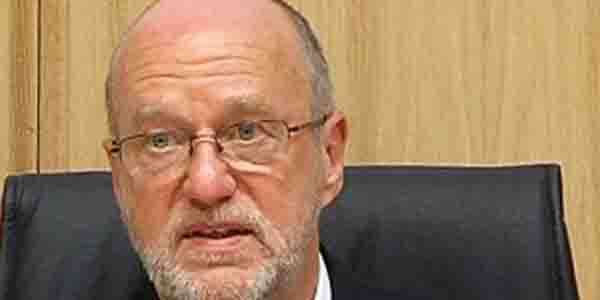
Hanekom becomes Minister of Science and Technology

Derek Hanekom

Newly-appointed Science and Technology Minister Derek Hanekom will continue to steer South Africa towards a knowledge economy, his department said on Wednesday.

“Hanekom is familiar with the portfolio of science and technology and he will continue with the drive to steer the country towards a knowledge economy,” director general Phil Mjwara said in a statement.

Hanekom’s appointment and that of his predecessor Naledi Pandor as minister of home affairs were announced earlier in the day.

President Jacob Zumka said in a statement: “They have distinguished themselves in their current portfolios and I am confident that they will do exceptionally well in their new responsibilities as well. I wish them all the best.”

The department thanked Pandor for her leadership, her enthusiasm for science and technology and the role she played in South Africa’s successful bid for the Square Kilometre Array.

Hanekom said it had been a privilege working with Pandor.

“I will build on the foundation laid by my predecessors, including the former minister of science and technology, Mosibudi Mangena,” he said in a statement.

Nkosazana Dlamini-Zuma resigned as home affairs minister last month to chair the African Union Commission in Addis Ababa, Ethiopia.

Hanekom will be sworn in as minister at the Union Buildings, in Pretoria. at 10am on Thursday. – Sapa

Minister urges engineers not to leave South Africa

The Minister of Science and Technology, Naledi Pandor, today challenged some 200 graduating engineers from Wits University to forget about their “boarding passes and visas until every village in South Africa have a bridge, everyone walks on tar roads and all cities are greened”.

Opening the University’s June-July Graduation Cluster, Pandor told some 200 graduates from the Faculty of Engineering and the Built Environment (EBE), that recent statistics show that in South Africa one engineer services 3 166 people, while in Brazil there is one engineer for every 227 people.

“South Africa is in desperate need of professional men and women who have the courage to do great things and who could make practical changes,” she said.

According to Pandor South Africa has many great debaters and many people with excellent ideas, but there are still millions of people who live in poverty on the perimeters of social change. “We need practical agents of change. We need people who can roll-up their sleeves and who can bring radical and progressive social change,” she said.

On Monday, the 25th of June 2012, Wits awarded 13 students with doctorates in engineering; as well as 47 Masters of Engineering degrees; and 44 Masters of Science in Engineering degrees.

The midyear graduations are for under-graduate as well as postgraduate students in the Faculties of EBE; Humanities; Science; Commerce Law & Management; and Health Sciences, and run until the 5th of July 2012.

Wits will also be awarding five Honorary Doctorates: Archbishop Njongonkulu Ndungane, Dr Elza Miles, David Nthubu Koloane and Professors Duncan Mitchell and Albert Solomon. Bishop Paul Verryn will receive a Gold Medal.

Pandor disappointed at delay over telescope

Science and Technology Minister Naledi Pandor is disappointed at the delay of the announcement of whether South Africa would host the world’s largest radio telescope, the Square Kilometre Array (SKA), she said on Wednesday.

“I am disappointed at the delay. I hope that the SKA organisation will make a decision in the first half of 2012 and that the decision will reflect the best scientific outcome,” she said in statement.

On Tuesday, the SKA organisation met in the Netherlands and decided more time was needed to investigate how investments made by the candidates –Australia and South Africa — could be maximised, according to a statement on the SKA website.

Information leaked to the media last month suggested the committee, which conducted its assessments earlier this year, had recommended the project be awarded to South Africa.

The five SKA member countries that will take the final decision are Canada, China, Italy, the Netherlands, and the United Kingdom.

Pandor remained optimistic that South Africa would be chosen as the host country.

“We believe we have an excellent site at which exciting science will be done. We in Africa are ready to host the SKA,” she said.

South Africa has partnered with Botswana, Ghana, Kenya, Madagascar, Mauritius, Mozambique, Namibia, and Zambia to host the 3,000 antenna that will make up the SKA.

Half of these will be located in a five-kilometre diameter central region in the Karoo, while the rest will be spread up to 3,000 kilometres from this central concentration.

South Africa winning the bid for the SKA — one of the world’s biggest science projects — would provide a huge boost for the country’s economy, especially in the construction, engineering, and IT sectors.

– SAPA