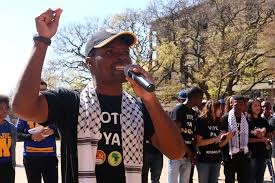
“They (Jews) are devils, they are good for nothing… they (Jews), like Adam Habib, are uncircumcised at heart,” ranted ousted Wits Student Representative Council (SRC) president Mcebo Dlamini in an interview with PowerFM on Tuesday night.
In defence of these remarks, he said the Jewish community had misconstrued his “I love Hitler” comments and taken them out of context. “After this, I thought to myself, I will show you exactly who you are… they (Jews) are hypocrites!”
Defending his “I love Hitler” comments, Dlamini reiterated that he was comparing Nazi Germany to apartheid Israel.
“When a black student says that ‘white people hate Adolf Hitler, but they are doing exactly what he did’, I say that I love Adolf Hitler,” he said.
National director of the South African Jewish Board of Deputies (SAJBD) Wendy Kahn told The Star on Thursday morning that Dlamini’s comments were nothing short of hate speech.
She said they were “nothing more than a resurfacing of old-style European anti-Semitism”, and were reminiscent of medieval anti-Jewish hatred, in which Jews were dehumanised and demonised. “We are appalled that a young South African would choose to utilise this bigoted speech.”
Kahn said the SAJBD had lodged a complaint with the South African Human Rights Commission in April against Dlamini’s initial comments, and would take further action against his latest comments.
Wits University vice-chancellor Professor Adam Habib has been given 48 hours to reinstate ousted Wits Student Representative Council (SRC) president Mcebo Dlamini or have the institution come to a standstill.
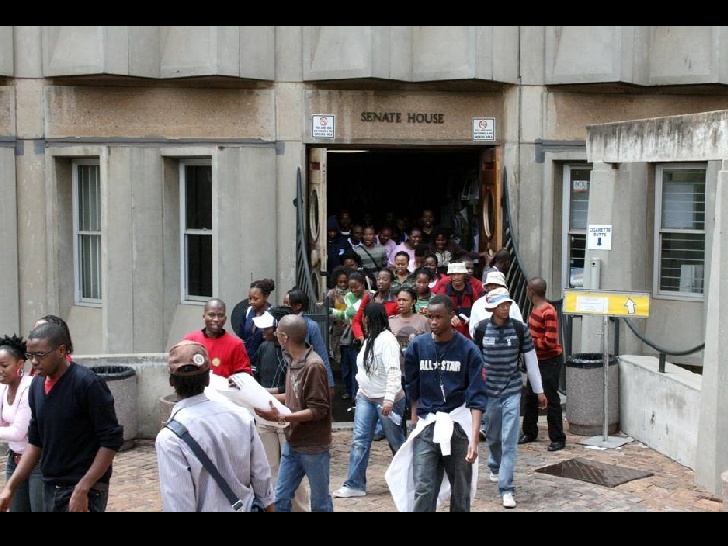
Wits students – among them the South African Students Congress (Sasco) and the student political party, the Progressive Youth Alliance – who took part in a march in support of Dlamini earlier this week, vowed that the university would be rendered ungovernable if Habib did not meet Friday’s deadline.
On Wednesday, a Wits Sasco member, who asked not to be named, said: “We give Adam Habib 48 hours to make sure that there is a review committee on Dlamini’s case. He needs to be reinstated.”
Dlamini also posted a number of similar remarks on his Facebook page and added: “Failure to do so (adhere to these demands) will ensure that Wits comes to a standstill.
“It has nothing to do with me as a person, but everything this institution stands for.”
About 250 students attended the march on Monday, all calling for Dlamini to be reinstated.
Sasco deputy provincial deputy secretary Joy Phiri said: “No vice-chancellor can tell us who our president is. Reinstate our president.”
The Star also spoke to Habib, who said the request to expedite the next sitting of the independent appeals and review committee had been received.
“The matter is now in the hands of the chairperson. Any decision regarding the reinstatement of Mr Mcebo Dlamini as SRC president will be determined by the finding of the committee,” he said.
Dlamini was removed as the SRC president last week after being found guilty of physically assaulting a senior member of university staff and verbally assaulting staff members via e-mail.
He was recently thrust into the media spotlight for his controversial “I love Hitler” Facebook posts, which gained national attention and criticism.
Support is pouring in for the University of Witwatersrand’s expelled SRC president.
Mcebo Dlamini’s Facebook post that mentioned Hitler has sparked outrage from the South African Union of Jewish Students.
Students from the Rhodes Must Fall campaign and activist group, Open Stellenbosch, are marching in support of Mcebo Dlamini.
The Higher Education Transformation Network also says the decision to expel him was harsh.
It says action is being taken against Dlamini when other students from Cape Town and Stellenbosch universities got a slap on the wrist for racist incidents.
The Network was referring to, among others, the white students who painted their faces black.
Chief Justice Dikgang Moseneke, George Bizos and Vice-Chancellor Adam Habib
At a ceremony held at the University of the Witwatersrand yesterday, the audience heard that “Madiba was a radical and revolutionary” who met his fellow revolutionaries such as communist leader Joe Slovo, Ismail Meer, JN Singh, Ruth First, George Bizos and Bram Fischer at the same university. Together they went on to triumph and subjugate their Afrikaner opponents.
Wits University will honour and preserve the legacy of Nelson Rolihlahla Mandela by erecting a wall of remembrance in his name and in the names of those who fought in the struggle with him.
This was announced by the Vice-Chancellor and Principal of Wits, Professor Adam Habib, last night during a memorial service in honour of the great icon and Wits alumnus.
“Madiba was Wits’ most renowned student, our greatest asset. It was at Wits where he met Ismail Meer, JN Singh, Joe Slovo, Ruth First, George Bizos and Bram Fischer. At Wits, he met the very people who stood by his side and defended him during the Rivonia trial,” said Habib.
The Vice-Chancellor said he would table a resolution to the Wits Council in the new year to erect a wall of remembrance for Madiba and his comrades, as a visible sign of Wits’ pledge and commitment to making education the most powerful tool in transforming the campus, the country and the world.
The memorial service was graced by renowned struggle veterans and longstanding friends of Mandela, Dr Ahmed Kathrada and Advocate George Bizos, in conversation with Deputy Chief Justice Dikgang Moseneke. The three men regaled the audience with stories about how they met Mandela, as well as their time together during the Rivonia trial and their subsequent jail sentence.
Bizos and his fellow legal counsel represented Mandela, Kathrada, Walter Sisulu, Denis Goldberg, Govan Mbeki, Rusty Bernstein, Raymond Mhlaba, James Kantor, Elias Motsoaledi and Andrew Mlangeni in the trial, which took place in 1964 and lasted for eight months.
Personal tales and anecdotes abounded, and Kathrada and Bizos had the audience hanging on their every word as they spoke about what a great man Mandela had been, not just as a fellow freedom fighter, but also as a friend and comrade.
“The world has united in his illness and upon his death. He was a great man, but he always emphasised that he was part of a collective. He always said he did not make policy, but that the collective made policy. I will be very disappointed to see the policies that he helped to form, be changed,” said Kathrada.
Bizos spoke with great emotion about the man he called one of his best friends, and said Mandela had saved South Africa from war when he was released after 27 years of incarceration.
“Mandela saved South Africa from a bloody civil war because he believed that fanatics were responsible for civil wars. He was not a fanatic, he was a conciliator. For him, South Africa was not a one-man state,” said Bizos.
The memorial service was attended by more than a thousand mourners who came to pay tribute to Madiba. Other speakers included Johannesburg Mayor Parks Tau; President of the Wits Convocation, Professor Mamokgethi Phakeng; and President of the Wits Student Representative Council, Shafee Verachia, who received a standing ovation after his moving tribute.
Award-winning South African songstress Lira performed “Something So Strong Inside”, one of Madiba’s favourite songs, while the Wits School of Music and the Wits Choir, in their usual colourful and poignant fashion, also entertained the guests. – Wits Communication Service
France has provided maps from its archives on African borders to the African Union.
France was one of the top colonisers of Africa and was involved in creating borders of most of the countries.
The AU’s Director for Peace and Security, Wane El-Ghassim, says knowing this kind of information will help curb some of the conflicts we still see today.
He says when borders are not clearly defined there is a huge risk of tensions resulting in conflict.
El-Ghassim says borders were defined by treaties signed by colonisers as a result these countries have a lot of information on Africa.
This is why the AU is trying to generate as much information as possible from the colonisers.
Africa has 80 000km of borders, but only 30% are precisely demarcated and this has been a source of disagreements among many countries in the continent.
Meanwhile, Analyst and Senior lecturer at Wits University, Koffi Kouakou, says Africa should not be relying on outsiders to give them information. He says it is important for Africans to have their own information.
More young black graduates are needed to fill academic posts at universities, President Jacob Zuma said on Monday.
“… We want to attract more young black graduates into academic careers,” he said in a speech prepared for delivery at the Gauteng Manifesto Forum at the University of the Witwatersrand, in Johannesburg.
“Our research indicates that one fifth of our university academics will retire within a decade, of which 32 percent are professors, meaning most experienced academics will be leaving the field.”
There were only limited numbers of younger researchers entering academia to replace those leaving.
The government was prioritising investment in education and skills development to help boost youth employment.
“The National Development Plan envisages an increase in higher education enrolments from 17.9 percent in 2012 to 25 percent by 2030.
“Indeed, our young people are hungry for education,” Zuma said.
In the past 10 years, the number of enrolments had grown by more than half.
Two new universities were being built in Mpumalanga and the Northern Cape in response to the demand for education.
“Our economy has expanded, more opportunities are becoming available for all,” he said.
Since 1994, total employment had increased by more than 3.5 million
In mining and industry, the average real wages had increased by more than 150 percent, also since 1994.
“While income inequality remains high, the expansion of our social grants system has contributed to a reduction in the proportion of households living in poverty,” said Zuma.
There had also been progress in transformation of ownership and the management of the economy.
“To date, over R600 billion in Black Economic Empowerment transactions have been recorded since 1995,” he said.
Black people and women in senior management positions had increased from less than 10 percent in the 1990s to over 40 percent.
“More progress is needed, but the trend is in the right direction.”
While the global economic meltdown had affected the economy considerably since 2009, the resilience of South Africa’s banking sector had shielded the economy to some extent.
On the issue of e-tolling, Zuma said: “The roads are to be tolled to pay back the money we borrowed to build the freeways.
“… It is not fair to make the whole of South Africa pay for Gauteng’s road use by taxing everyone’s petrol more or put more burden on the already strained fiscus.”
On October 9, the Supreme Court of Appeal in Bloemfontein dismissed the Opposition to Urban Tolling Alliance’s (Outa) challenge to the e-tolling of Gauteng’s freeways.
On Friday, Outa announced that it would abandon its legal battle as it had insufficient funds.
“We still owe our lawyers R1.8 million and it will cost R1.5m to continue. We realised that we are out of money,” Outa chairman Wayne Duvenage said at the time. – Sapa
A row over a concert due to take place Wednesday has raged at the University of the Witwatersrand. Opponents of th Daniel Zamir Israeli Jazz Quartet staged what was called a “silent protest” outside the Wits Great Hall, where the concert was being held.
According to a Mail & Guardian reporter on the scene, Tawana Kupe, the university’s deputy vice-chancellor for finance, explained to the small crowd that they couldn’t stage their protest inside the concourse of the hall. But the organisers maintained they had permission to picket inside.
Being a silent protest, songs were only murmured. But placards expressed displeasure against both the university’s decision to allow the concert, Zionism and the state of Israel.
“We say no to exclusionary Jewish-only events at our institution,” read one placard, while another said, “don’t entertain Israel apartheid”. Another urged the university to “stop muzzling protest due to Israel lobby”.
But some students were clearly frustrated by the form of protest. “Silent protest never achieved anything guys, we’re not a silent country,” one student was heard saying.
Tokelo Nhlapo, deputy president of the university’s students representative council (SRC), told the protestors they had to ensure Zionists do not use Wits to further their agenda. “Zionism will not be tolerated at this university,” he said. “Not in our name.”
Comparing Israel to apartheid, Nhlapo said the state, which has been in a bitter war over land with Palestine since 1948, must exist to promote everyone’s human rights, not just those of Jewish people.
In its turn, Mr. David Saks of the South African Jewish Board of Deputies issued a statement denouncing the “desperate last-ditch tactic to discredit a concert by an eminent Israeli jazz quartet that was taking place at Wits University on Wednesday’. He described the protestors as “anti-Israel extremists who have resorted to leveling scurrilous and thoroughly baseless smears against the Jewish communal leadership”.
Saks said: “Those making these accusations are the self-same activists whose members were responsible for the disgraceful break-up of a piano recital by an Israeli musician on the same campus earlier this year. Having blatantly trampled on the rights of those who wanted to attend that event and greatly embarrassed Wits University in the process, they now presume to cry ‘racism’ when steps are taken to prevent a repetition of such thuggish behavior.
Saks denied that only Jews were permitted to attend the concert. “The only ‘evidence’ that has been advanced is the response by an independent contractor engaged to sell tickets, who had simply misunderstood what the brief was,” he said.
The Jewish leader “applauded Wits University for upholding the democratic values and freedoms that have made it so fine an academic institution and for its forthright rejection of the intimidatory, bullying tactics of those who do not scruple to undermine those freedoms in order to push their own radical political agendas.”
Genetically, culturally and ethically the Khoe-San have something special to add to this world. The importance of this study is to put the Khoe and San heritage in the right place in history and this research will provide a genetic backdrop for future studies – Mattias Jakobsson
The largest genomic study ever conducted among Khoe and San groups reveals that these groups from southern Africa are descendants of the earliest diversification event in the history of all humans – some 100 000 years ago, well before the ‘out-of-Africa’ migration of modern humans.
Some 220 individuals from different regions in southern Africa participated in the research that led to the analysis of around 2.3 million DNA variants per individual – the biggest ever.
The research was conducted by a group of international scientists, including Professor Himla Soodyall from the Human Genomic Diversity and Disease Research Unit in the Faculty of Health at the University of the Witwatersrand in Johannesburg.
Entitled Genomic variation in seven Khoe-San groups reveals adaptation and complex African history, the study has been selected for early online publishing in the renowned scientific journal, Science, on Thursday, 20 September 2012 at 20:00 SATS (14:00 U.S. EST).
“The deepest divergence of all living people occurred some 100 000 years ago, well before modern humans migrated out of Africa and about twice as old as the divergences of central African Pygmies and East African hunter-gatherers and from other African groups,” says lead author Dr Carina Schlebusch, a Wits University PhD-graduate now conducting post-doctoral research at Uppsala University in Sweden.
Soodyall, from the National Health Laboratory Services in South Africa, has a long standing relationship with Khoe and San communities and said that the findings are a “phenomenal tribute to the indigenous Khoe and San people of southern Africa, and through this magnificent collaboration, we have given the peoples of Africa an opportunity to reclaim their place in the history of the world”.
Besides the publication of the study, the authors will also be visiting the San groups of the Kalahari in the Askam area in South Africa on the 24th of September 2012 for the country’s Heritage Day celebrations. “We are excited that together with some of our colleagues from Uppsala University, we will be able to join in the celebrations with the San groups in the Kalahari who participated in our research and to acknowledge their contribution in making our research possible”.
The researchers are now making the genome-wide data freely available: “Genetic information is getting more and more important for medical purposes. In addition to illuminating their history, we hope that this study is a step towards Khoe and San groups also being a part of that revolution,” says Schlebusch.
Another author, Professor Mike de Jongh from the University of South Africa adds, “It is important for us to communicate with the participants prior to the genetic studies, to inform individuals about the nature of our research, and to not only to share the results with them, but also to explain to them the significance of the data for recapturing their heritage.”
[ad 1]
About the research
According to Assistant-Professor Mattias Jakobsson from Uppsala University, these deep divergences among African populations have important implications and consequences when the history of all humankind is deciphered.
The deep structure and patterns of genetic variation suggest a complex population history of the peoples of Africa. “The human population has been structured for a long time,” says Jakobsson, “and it is possible that modern humans emerged from a non-homogeneous group.”
The study also found surprising stratification among Khoe-San groups. For example, the researchers estimate that the San populations from northern Namibia and Angola separated from the Khoe and San populations living in South Africa as early as 25,000 – 40,000 years ago.
“There is astonishing ethnic diversity among the Khoe-San group, and we were able to see many aspects of the colorful history that gave rise to this diversity in their DNA”, said Schlebusch.
The study further indicates how pastoralism first spread to southern Africa in combination with the Khoe culture. From archaeological and ethnographic studies it has been suggested that pastoralism was introduced to the Khoe in southern Africa before the arrival of Bantu-speaking farmers, but it has been unclear if this event had any genetic impact.
The Nama, a pastoralist Khoe group from Namibia showed great similarity to ‘southern’ San groups. “However, we found a small but very distinct genetic component that is shared with East Africans in this group, which may be the result of shared ancestry associated with pastoral communities from East Africa,” says Schlebusch.
With the genetic data the researchers could see that the Khoe pastoralists originate from a Southern San group that adopted pastoralism with genetic contributions from an East African group – a group that would have been the first to bring pastoralist practices to southern Africa.
The study also revealed evidence of local adaptation in different Khoe and San groups. For example, the researchers found that there was evidence for selection in genes involved in muscle function, immune response, and UV-light protection in local Khoe and San groups. These could be traits linked with adaptations to the challenging environments in which the ancestors of present-day San and Khoe were exposed to that have been retained in the gene pool of local groups.
The researchers also looked for signals across the genome of ancient adaptations that happened before the historical separation of the Khoe-San lineage from other humans. “Although all humans today carry similar variants in these genes, the early divergence between Khoe-San and other human groups allowed us to zoom-in on genes that have been fast-evolving in the ancestors of all of us living on the planet today,” said Pontus Skoglund from Uppsala University.
Among the strongest candidates were genes involved in skeletal development that may have been crucial in determining the characteristics of anatomically modern humans.
The Minister of Science and Technology, Naledi Pandor, today challenged some 200 graduating engineers from Wits University to forget about their “boarding passes and visas until every village in South Africa have a bridge, everyone walks on tar roads and all cities are greened”.
Opening the University’s June-July Graduation Cluster, Pandor told some 200 graduates from the Faculty of Engineering and the Built Environment (EBE), that recent statistics show that in South Africa one engineer services 3 166 people, while in Brazil there is one engineer for every 227 people.
“South Africa is in desperate need of professional men and women who have the courage to do great things and who could make practical changes,” she said.
According to Pandor South Africa has many great debaters and many people with excellent ideas, but there are still millions of people who live in poverty on the perimeters of social change. “We need practical agents of change. We need people who can roll-up their sleeves and who can bring radical and progressive social change,” she said.
On Monday, the 25th of June 2012, Wits awarded 13 students with doctorates in engineering; as well as 47 Masters of Engineering degrees; and 44 Masters of Science in Engineering degrees.
The midyear graduations are for under-graduate as well as postgraduate students in the Faculties of EBE; Humanities; Science; Commerce Law & Management; and Health Sciences, and run until the 5th of July 2012.
Wits will also be awarding five Honorary Doctorates: Archbishop Njongonkulu Ndungane, Dr Elza Miles, David Nthubu Koloane and Professors Duncan Mitchell and Albert Solomon. Bishop Paul Verryn will receive a Gold Medal.
This website uses cookies to improve your experience. We'll assume you're ok with this, but you can opt-out if you wish. Cookie settingsACCEPT
Privacy & Cookies Policy
Privacy Overview
This website uses cookies to improve your experience while you navigate through the website. Out of these cookies, the cookies that are categorized as necessary are stored on your browser as they are essential for the working of basic functionalities of the website. We also use third-party cookies that help us analyze and understand how you use this website. These cookies will be stored in your browser only with your consent. You also have the option to opt-out of these cookies. But opting out of some of these cookies may have an effect on your browsing experience.
Necessary cookies are absolutely essential for the website to function properly. This category only includes cookies that ensures basic functionalities and security features of the website. These cookies do not store any personal information.
Any cookies that may not be particularly necessary for the website to function and is used specifically to collect user personal data via analytics, ads, other embedded contents are termed as non-necessary cookies. It is mandatory to procure user consent prior to running these cookies on your website.