Operation “Burn the CD” against Steve Hofmeyr is in full swing, according to informed sources. Skoppensboer has some friends in high places. Or maybe low ones. Afrikaners are not supposed to have any connections beyond the local barman or primary-school teacher who has not yet been affirmative-actioned out of the way or worse, killed by one of our roving human-rights mentors, formerly known as “murderers”.
In South Africa, murder is more or less the national sport, but you’re not allowed to say the M-word. Or the A-word, B-word, C-word, and most other letters in the alphabet. That’s racist, you see. After all, this is a Latin alphabet, and the Romans were the first racists. So our South African libtards are pushing the idea that the “three R’s” are not for nothing R-words, to be shunned at all costs. As everyone knows, burning down a school is a profoundly emancipatory act, which Seffrikin libtards have profusely lauded.
Anyone knowing the 9-times table is a potential Nazi, as it shows a suspicious reverence for deceased white male (and Arab) mathematicians, not to mention Hitlerian engineers who gave us the Messerschmitt and the V-2.
Skoppensboer’s friends say that within the hallowed hierarchy of the National Intelligence Service, not to mention Crime Intelligence, there exist pangs of worry over the Afrikaans singer, Steve Hofmeyr. Just to clarify: there being no crime to solve in the South African libtard utopia, Crime Intelligence and most other intelligence agencies are involved in matters of state security.
As South Africa no longer has any defined borders and anyone from Africa is welcome to settle anywhere – except “white settlers” who are encouraged to leave – it’s sort of difficult to say where the state begins and ends. But state security, in addition to first-class air travel and staying in five-star hotels at taxpayer expense, is a top priority.
So what is known as “the media” have been infiltrated – one could also say, taken over – by men and women “of intelligence”. There is one thing better than censorship of the media and that is self-censorship of the media. The intelligence hacks out there get paid some perks out of the secret accounts – and still earn some kind of salary on top. “Intelligent” people moonlighting as journalists; what a brilliant idea!
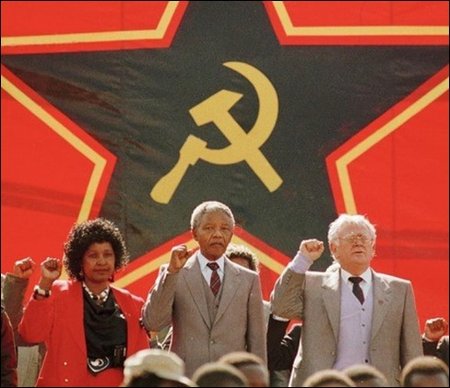
After all, such libtard heroes as Joe Slovo and Ronnie Kasrils were intimately involved with the East German Stasi where such ideas were a staple, so to speak.
But why has Special Branch become so suspicious of Steve, to the extent that every libtard rag or website has broken out into a rash of anti-Hofmeyr opprobrium, not to mention “satire”?
As satire is a uniquely Roman, as opposed to Greek, genre, it is best treated with caution, being inherently racist. But within the ranks of the South African intelligence community and its media appendage, all caution has been thrown to the winds in a spirit of: let’s fight racism with racism!
Oops, there I’ve employed the R-word again. As long as I do not sing Die Stem, which is a patriotic poem composed in Afrikaans circa 1918 by one C.J. Langenhoven and set to music by his fellow perpetrator, M.L. de Villiers in 1921, and later adopted – God forbid! – as South Africa’s national anthem.
Patriotism, as everyone knows, is the underbelly of fascism. Any ardent feelings about one’s own country, including the disappointment at seeing its rivers being polluted with human waste by Mercedes-driving, Gucci-wearing mayors, or litter next to all the roads, are cause for extreme suspicion.
Hence all the libtard obsession with Steve, who is known to have sung Die Stem in front of an audience in the “deep platteland”. There is nothing that inspires greater fear in libtard hearts and minds than the “deep platteland” where people engage in food production, church-going, heterosexual marriage and other unspeakably fascist activities. South Africa is working hard towards a Zimbabwean-style famine and the constant resistance of farmers – the ones who have not yet been tortured to death – to the five-year famine plan is seen as something of a “prime evil” to be vigorously combatted.
Operation “Burn the CD” has now been launched against Steve Hofmeyr and teams of journalists and their intelligence handlers are flying sorties against the singer in the press, TV, radio and social media. Experts in neurolinguistic programming from MI6 and the CIA are on standby to rid South Africa of the scourge of the singing Steve phenomenon.
But, oh drat! one of the unintended consequences of the operation has been to remind participants of South Africa’s long-forgotten literacy, otherwise known as “a legacy of apartheid”. Writing in the Mail & Guardian, a local libtard rag, one of the agents referred to Steve Hofmeyr’s “library”, consisting of misspelt British and American titles.
Libraries were the first casualties of South Africa’s revolution, as books contained all those undesirable, objectionable and dignity-destroying alphabetic “constructs”, impeding progress towards an egalitarian state of illiterate, ignorant bliss among the masses. So most of the books were sent away to be pulped, especially Afrikaans ones that were deemed even less politically correct.
But the mere mention of the L-word (“library”) might have rekindled memories of the R-word (“reading”) in the hapless, subjugated animals out there, enjoying their 1994, which turned out to be a lot worse than 1984.
Another article about the subversive Steve, hinted at his being “without a brain”. This was meant as a kind of threat, that government-sponsored libtard lobotomists could give him the One-flew-over-the-cuckoo’s-nest treatment.
So the carefully planned “information campaign” is off to a bad start, with most agents falling back onto heated invective, calling the enemy the R-word (“racist”), shouting phrases like “jou me se P-word” and similar Capetonian refinements.
For a while now, I have been interested in the “Swedish connection”. The intriguing question for me is: What role did Nadine Gordimer play in securing the Swedish funding for the ANC and South African Communist Party? Without the Swedish millions or hundreds of millions, there would never have been a campaign of Red Terror with bombs and gruesome necklace murders, and South Africa might never have had a change of government.
I have even taken to learning some Swedish, sensing that somewhere in Stockholm must lie the secret to the calamity that has befallen my country, descending into violence, corruption, anarchy. Nadine Gordimer received the Nobel Prize for Literature from the Swedish Academy and one of the current members of that academy, Per Wästberg, played a singular role in making South Africa a political cause in Sweden. He was also a friend of the radically socialist prime minister, Olof Palme. Gordimer-Wästberg-Palme… that is how I suspect it went, and there exist both fact and fiction to back it up.
In the 1960s the South African Communist Party received only £30 000 per year from the Soviet embassy in London, which was obviously too little to fund the military takeover of South Africa about which the party fantasized. If any of the communists had prayed, one could say that their prayers were answered by Sweden.
In a country as violent as contemporary South Africa, I have often thought that someone should write a kind of satire based on Boccacio’s Decameron, where people escape to some remote farm somewhere to tell one another stories while the rest of the country endures the daily dose of rapes, murders and armed robberies.
This morning there was a news report about a four-year old girl who was shot near Cape Town. In a sense, then, someone like Nadine Gordimer dying at the ripe old age of 90 is almost a cause for celebration. She was attacked once in her Parktown home, and somehow managed to ascribe it to “unemployment”, not to the singular nihilism of our roving sadists who terrorise us all.
I suppose many people would find it inappropriate for me to speculate about her possible role in securing the huge amounts of Swedish crowns that financed the Red Terror campaign of the 1980s when car bombs went off in the street, as well as other explosive devices in shopping centres and restaurants. But in a country where the Grim Reaper lurks on every street corner and in every suburb, we have already bidden farewell to etiquette or quaint customs requiring us to offer only eulogies to the recently deceased.
Although most people call Nadine Gordimer a South African author, I daresay that few people bought her books in this country. I often heard bookshop managers complain that her works “don’t sell”. Of course, overseas, especially in the US and Great Britain, she was much more popular and decidedly more appreciated. In all the obituaries she is described as an “anti-apartheid author”, whatever that might mean in literary terms.
In a way, Gordimer took pride in her contempt for us, the born-and-bred South Africans, especially whites and Afrikaners. She belonged to the radical-chic set who took it upon themselves to vilify us from the safety of their homes in Johannesburg’s northern suburbs, where opulence and leftism have often vied with one another.
I first met Nadine Gordimer as an undergraduate student at the University of the Witwatersrand. At the time I remember I wrote some “cultural” pieces for Wits Student, the campus newspaper. Two of us made an appointment to see her. She was quite aloof in her treatment of us and as far as I recall, she did not offer us anything to drink. Or maybe that was just my Afrikaans upbringing and our famous sense of hospitality that made me notice that. And then we were students, hardly New York celebrities who could further her career or her international renown.
I recall something else from that visit: while she pretended to be some kind of intellectual, most of her opinions and remarks were quite shallow. One of us tried to draw her into a discussion on literary theory, but she shied away from that and just got more haughty, with an ill-disguised irritation filtering through to the conversation.
We were eventually shown the door and I can hardly even remember the article that was published afterwards.
The second time I more or less “bumped into her”, to put it colloquially, was chez les Goldblatt, meaning the house of Mr. and Mrs. David Goldblatt, the photographer. I was more or less friends with the Goldblatts’ son, with whom I studied political science. In those days, especially at Wits, political science meant Karl Marx. OK, so we also dipped into Hegel and a bit of Jean-Jacques Rousseau, but that was about it in the second year.
The Goldblatts had quite an old-fashioned kitchen and may even have had one of those ancient coal stoves that became fashionable for their art deco extravagance at one point in the seventies. There was also a kitchen table and they were making coffee in an Italian espresso pot, real coffee, not the instant stuff that most people drank in those days. I was a sucker for real coffee, especially people who ground their own beans. I remember when my wife and I moved into a flat in Hillbrow a few years later, the first thing we bought was an extravagant designer coffee maker and coffee grinder. The Brazilian in Loveday Street sold us that, together with the beans for which we made regular pilgrimages into downtown Johannesburg. Yes, in those days it was still white, believe it or not.
Imagine my surprise then when Nadine Gordimer came casually strolling into the kitchen, clutching a copy of the afternoon’s Star, the terrible Johannesburg newspaper. You might retort that all Johannesburg newspapers have always been terrible and I would have to agree.
She did not recognise me from the time of the interview or if she did, she did not let on. I think we students excused ourselves, with or without coffee, and that was the end of that little vignette from my youth.
Or should I call it a piece of the puzzle? For, unlike most white South Africans who were not privy to the inner circles of Johannesburg radical chic – especially not Afrikaners who still have no clue about Marx and Hegel – I collected all these souvenirs in both senses of the word, from books and real-life encounters.
Not so long ago, I wrote a review in Afrikaans of Joe Slovo’s biography, Ruth First and Joe Slovo in the war against apartheid (Monthly Review Press). For those who do not know, Monthly Review Press is just about the most famous Marxist publisher in the United States, so it is only natural that they should publish Slovo’s biography.
That is another piece of the puzzle. Somewhere in another interview with a British newspaper, Gordimer referred to Joe Slovo and his wife Ruth as “those wonderful Slovos”. I gather that they were friends at some point.
Slovo was the mastermind behind the so-called “armed struggle” or urban terrorism campaign against South African in the 1970s and 1980s, assisted by the Soviets and East Germans, but financed by Sweden! Eventually the poor old National Party, which by that time was run by utter morons, capitulated to Slovo and the rest of the radicals, old and new, and today we are on our way to emulating the former Soviet Union, with extremist policies just round the corner, such as “land reform”. Even the oafish journalist, Max du Preez, wrote a few days ago that a real, Soviet- or Cuban-style revolution is looming ahead for us. In his parlance, Uhuru is weer op die tafel (Uhuru is on the table again).
On 27 April 2004, the then Swedish ambassador to South Africa announced on the Afrikaans radio station RSG that “without Sweden, the ANC would never have come to power in South Africa”. For all their other faults, Swedes are usually honest.
How did the “wonderful Slovos” get to the Swedish money? is the intriguing question. For that, one must read one of Nadine Gordimer’s early novels, A world of strangers. Here and there, the narrator breaks into a kind of political soliloquy, fulminating against the newly elected National Party government that was busy banning communism and threatening to move the multiracial slum area, Sophiatown, to a new place called Soweto. A world of strangers represents an ode to Sophiatown and its main character, a British journalist who comes to work on the mythical black magazine, Drum.
The novel is something of a roman à clef, because in real life the protagonist was Anthony Sampson, who also played a major role in making Mandela famous in the pages of The Observer, a London newspaper. I read his autobiography in which he paradoxically expresses his suprise that Mandela ever became a leading figure as he had found him dull and narcissistic, back in the nineteen-fifties.
Per Wästberg definitely publicised Nadine Gordimer’s writings in Sweden too. I suppose he must have had some hand in her nomination for the Nobel prize.
However, as my knowledge of “svenska” grows, I am increasingly able to piece together the role played by Per Wästberg in securing the funding bonanza for the radical movement that made possible the Red Terror that in turn brought the National Party to its knees.
Wästberg is himself an author and a journalist. All through the 1950s and the 1960s he had written many articles on South Africa in Sweden’s most influential newspaper, the Dagens Nyheter, owned by the Bonnier family. In 1960 he was apparently banned from both Rhodesia and South Africa, no doubt because he was writing very negative material on both countries. From what I can see, he published a book on his experiences in Southern Africa, På svarta listan (On the black list). During the crucial period from 1976 to 1983 when the international propaganda campaign against South Africa really got going, Wästberg was the editor of Dagens Nyheter. I can just imagine what kind of coverage he gave to South Africa at the time, with his intimate knowledge of what was going on behind the scenes, with the distribution of Swedish funds to the ANC and SACP, as well as the “New Radicals” within South Africa. A recent book by that title, written by one Glen Moss, claims that the ANC did not so much overthrow the old government, as a small group of radicalized Marxist or neo-Marxist students on the campus of the University of the Witwatersrand. Well at least I had the honour of rubbing shoulders with Moss, Barbara Hogan and other illustrious revolutionaries.
Did Gordimer also channel some Swedish government funds into South Africa to publish her own books here? I strongly suspect so, because the local edition of her dystopian short novel, July’s People, was brought out by an Afrikaner liberal imprint Taurus, with whom I had some contact at the time. Even calling Taurus “liberal” sounds wrong. They were more like sycophants, enthralled to Gordimer and her views. No-one would have told me at the time about the underground Swedish money fuelling the revolution in South Africa, so I have no direct evidence of such a transaction. But during the 1980s while my wife and I lived near the place de la République in Paris, I received a visit from Taurus’s bearded Afrikaner lay-out artist who had just been to, guess which country? Sweden. Now, at that time the degree of interest in Sweden among Afrikaner layout artists was at about the same level as Swedish winter temperatures, in the negatives.
In fact, the poor man could not stop telling us how Sweden and its “overly civilized people” had horrified him. He was something of a nature freak and therefore felt much more at home in the African bush, studying vultures through binoculars, than dealing with taciturn, politically correct Swedes whose social codes he probably understood as little as they did his. He had no reason to travel to Sweden, except as a minor part of the grand plan to overthrow the South African government, financed by Sweden and other Nordic states.
The Swedish connection was there alright. Without the friendship between Gordimer, the “wonderful Slovos” and Wästberg, as well as their shared leftist politics, the South African revolution might never have happened.
If only Afrikaners today could have had some Nordic sugar daddy, we could still have saved this country. Alas, and partly thanks to Per Wästberg’s propaganda in the Dagens Nyheter, that will never be the case.
We will have to find it in ourselves to not only survive in Africa but also to break down all the stereotypes and half-truths so copiously distributed through Nadine Gordimer’s novels and short stories.
Shortly before I went to Paris in 1985, there was a conference of the Afrikaanse Skrywersgilde in Johannesburg, in the sports centre of the University of the Witwatersrand. My intellectual irritation with Nadine Gordimer finally reached a critical point when she confounded structuralism and post-structuralism and did not understand that great Nietzschean strand of post-humanism running through so-called “French theory” at the time. The other day a caller reminded me of the minor philosophical clash I had with Gordimer that day.
In a sense, South Africa and not even Afrikaans have any real literature. There is some good Afrikaans poetry, and one or two novels from the first half of the twentieth century, but it more or less stops there. I do not know too much about Russian, but apparently 70 years of communist rule in Russia also produced a few good satires, such as Bulgakov’s The master and Margarita, but not much else. The greatest Russian novelist of the twentieth century, Vladimir Nabokov, was fiercely anticommunist and also claimed by the Americans as he wrote his later works in English.
Without the Afrikaans word apartheid, neither Gordimer nor JM Coetzee would ever have received the Nobel prize for literature. Being the antipodes of the world, a strange formerly Western country in Africa, South Africa lends itself to being violently misunderstood. These days, of course, the confident foreign equations between South African and American race problems are making way for a kind of muted horror that no-one will ever admit to. We have run out of master copies, a bit like Nadine Gordimer in her so-called “post-apartheid period”.
As I tried to intimate in my much-maligned novel set in the 1980s, we have been semantically carpet-bombed, a bit like Iraq’s entire infrastructure was destroyed by the USA during the second Gulf War. There is no meaning left in South Africa. We are even going to kill the last religion left, Democracy. As a country, South Africa has no beliefs, no principles left, apart from sadism, perhaps. The Marquis de Sade, not Nelson Mandela, is our patron saint.
In one of her rare moments of introspection, Nadine Gordimer spoke about the “Manichean poisons” she had to “imbibe” in order to make her prose “relevant”. It was more or less an admission that she practised a genre that would please the foreigners and her friends in the communist underground, but that would not speak to us, Afrikaners de souche. How I love that newly politically incorrect expression that has lately become popular in France!
Gordimer’s parting shot to me was a letter to International PEN in which she tried to oppose any form of Afrikaans literary society coming into being on South African soil. She partially succeeded in that the whole of Cape Town and Stellenbosch at one point banished me to a kind of Siberia. In making me persona non grata among the pen-pushers in my own language, Gordimer had a kind of last laugh on me.
Not that being persona non grata in Afrikaans literary circles is anything to regret. That was the way it was thirty years ago, and it will continue that way. If “Marx turned Hegel on his head”, our southern peninsula lives permanently upside down, blood running into our heads all the time, sometimes spurting in the streets or in restaurants where our Red Terror has hardly abated.
And if my comments should be seen as amiss, as a bit of an overly politicised obituary, I simply claim that political licence that Gordimer did in so many of her books, to launch into a proletkult tirade against the social conditions or government policies around her.
Twenty years ago, on 28 March 1994, the ANC’s militia massacred a crowd of protesting Zulus in downtown Johannesburg, using automatic weapons against men armed only with symbolic “cultural weapons”, such as spears and cowhide shields. Mandela himself gave the order “to kill, if necessary”.
The official death toll ranges from 9 to 53, but anecdotal evidence suggests it may have been much larger. Pamela Wallace, a commenter on the Daily Maverick article on the massacre, claims that there was so much blood on the floors of the Johannesburg General Hospital on 28 March that staff had to wear gumboots:
My late husband was working at the Johannesburg General at the time. They wore gum boots as they waded in blood and that hospital alone declared more than a hundred and fifty dead when the official figure at the time was about ten. I wonder what that figure is today?
And here lies the rub: no-one has ever been charged with any wrongdoing! Mandela, who gave the order to mow down the Inkatha men, afterwards delivered a speech in parliament exonerating himself and placing the blame squarely on the Zulu nationalist movement. Even more curiously, the De Klerk government – who were still in charge at the time – did nothing to ensure justice for the many people who were killed on 28 March.
FW de Klerk was just a puppet leader at the time; his response to the Shell House massacre constitutes one more proof of his spineless expediency.
If ever I find the time, I want to write a proper history of South Africa from after World War II to the present, showing the rapid rise and decline of the Afrikaner nation. Thanks to the patriotic fervour of our people, our previously fine education system with its emphasis on literature, mathematics and science, we were able to build an industrial society on the African continent within a few decades. The whole of the subcontinent benefited from this feat and even today South Africa is considered an exception, surrounded by countries such as Zimbabwe and Mozambique that have held or are still holding the dubious position of “poorest country in the world”. The growing squalor, corruption and decay of present-day South Africa stands in stark contrast to the order, progress and optimism of the immediate postwar period. Ultimately Afrikaners were not conquered militarily, but they were utterly defeated through propaganda, terrorism and calumny.
In the grand scheme of the relentless propaganda war against Afrikaners, the armed police response to the black rioters at Sharpeville on 21 March 1960 became a cause célèbre and to this day is constantly referred to in the media worldwide, while Shell House and the ANC’s war crimes in the form of terrorist attacks on unarmed civilians go almost unmentioned. It is therefore curious that a liberal website such The Daily Maverick should even recall the events of Shell House as they did today, including some gruesome photographs of the bloodshed.
Incidents such as Shell House, together with the ANC and Communist Party’s terror campaign during the 1980s demonstrate the doctrine of “people’s war”, an apparently North-Vietnamese strategy whereby one gains “democratic support through terror and violence”. The seasoned political and historical researcher, Dr. Anthea Jeffery, wrote a lengthy book on the ANC’s strategy of People’s War: New Light on the Struggle for South Africa (Jonathan Ball Publishers, 2009), which explains why we were destined to become a one-party state.
Video warning the public against ANC terrorist bombings in the 1980s:
Communist Party leader Joe Slovo had a master plan to conquer South Africa through a combination of propaganda, people’s war and urban terror, in which he largely succeeded.
And still the carnage continues; just look at the murder of Afrikaner farmers today which have as object the destruction of the rural economy and agriculture. When there is famine, he who controls the food supply, controls the population, as Mengistu and his British “humanitarian” collaborators so amply demonstrated in Ethiopia.
South Africa remains in the grip of the ruthlessly radical people who summarily shot practically unarmed Zulu nationalist demonstrators in the streets of Johannesburg twenty years ago. That the whole of the so-called West, in the form of the USA and EU, still bend over backwards in rolling out the red carpet to them at every occasion, speaks volumes about the moral confusion that exists out there.
What is the shelf life of a system that rewards confidence-gaming sociopaths rather than competence?
Let’s connect the dots of natural selection and the pathology of power.
In his 2012 book The Wisdom of Psychopaths: What Saints, Spies, and Serial Killers Can Teach Us About Success, author Kevin Dutton described how the attributes of sociopathology are in a sense value-neutral: the sociopathological attributes that characterize a dangerous criminal may also characterize a cool, high-performing neurosurgeon.
As Dutton explains in his essay What Psychopaths Teach Us about How to Succeed(Scientific American):
Psychopaths are fearless, confident, charismatic, ruthless and focused. Yet, contrary to popular belief, they are not necessarily violent. Far from its being an open-and-shut case–you’re either a psychopath or you’re not–there are, instead, inner and outer zones of the disorder: a bit like the fare zones on a subway map. There is a spectrum of psychopathy along which each of us has our place, with only a small minority of A-listers resident in the “inner city.”
While there is obviously a place for high-functioning sociopaths in professions which reward those characteristics, what about sociopaths who substitute deviousness and deception for competence? For some context, let’s turn to the Pathology Of Power by Norman Cousins, published in 1988.
Cousins was particularly concerned with the National Security State, a.k.a. the military-industrial complex, which at that point in U.S. history was engaged in a Cold War with the Soviet Empire. Cousins described the pathology of power thusly:
Connected to the tendency of power to corrupt are yet other tendencies that emerge from the pages of the historians:
1. The tendency of power to drive intelligence underground;
2. The tendency of power to become a theology, admitting no other gods before it;
3. The tendency of power to distort and damage the traditions and institutions it was designed to protect;
4. The tendency of power to create a language of its own, making other forms of communication incoherent and irrelevant;
5. The tendency of power to set the stage for its own use.
In broader terms, we might add: the tendency of power to manifest hubris, arrogance, bullying, deception and the substitution of rule by Elites for rule of law.
Natural selection isn’t only operative in Nature; it is equally operative in human organizations, economies and societies. People respond to whatever set of incentives and disincentives are present. If deceiving and conning others is heavily incentivized, while integrity and honesty are punished, people will gravitate to running cons and embezzlement schemes.
What behaviors does our Status Quo reward? Misrepresentation, obfuscation, legalized looting, embezzlement, fraud, a variety of cons, gaming the system, deviousness, lying and cleverly designed deceptions.
Let’s connect the pathology of power and the behaviors selected by our Status Quo. What we end up with is a system that selects for a specific category of sociopaths: those whose only competence is in running cons.
No wonder we have a leadership that is selected not for competence but for deviousness. What’s incentivized in our system is spinning half-truths and propaganda with a straight face and running cons that entrench the pathology of power.
What is the shelf life of a system that rewards confidence-gaming sociopaths rather than competence? Unless we change the incentives and disincentives, the system is doomed.
Few outsiders understand the ethnic dynamics of South Africa. Foreign journalists come here and imagine that we are some kind of remake of the USA, transposing American ethnic categories (and Hollywood movies) onto us. Of course, many people in Johannesburg and Cape Town imagine that they are living in America too, especially the mediocre crowd who have taken over our universities, describing the world in terms of “racism”, “whiteness”, “white privilege” and so on.
Race is undeniably a driving force in South African history, but not in the way that most people think. More fundamentally, one cannot understand our past and present upheavals without appreciating what Boerehaat, or “hatred of the Boers” is.
A week ago, an associate director of the South African Jewish Board of Deputies, David Saks, casually mentioned on the News24 website in a comment that there had been an underlying current of Boerehaat in the ranks of the anti-apartheid movement. When I was at university, many people in Johannesburg and at the University of the Witwatersrand were proud of their Boerehaat and of hating Afrikaners. It could even be seen as a sign of distinction.
In the early 1970s a cartoonist for the Wits campus newspaper, Franco Frescura, went out of his way to portray Afrikaners as oafish, unintelligent and ugly. He later became a lecturer in architecture. Although Frescura was of Italian origin, he has publicly denounced his “racist parents” and he was apparently strongly influenced by his English-speaking Johannesburg peers. Call this the “uitlander culture” of Johannesburg which goes right back to the discovery of gold in 1886 when hordes of British and Eastern European thugs had descended upon Johannesburg. The uitlanders’ visceral hatred of Kruger and the Transvaal Boers soon led to the outbreak of the Second Anglo-Boer War of 1899-1902.
Franco Frescura actually has a website of his own where he describes his upbringing thus:
In Johannesburg Franco attended Houghton Primary and King Edward VII High School (KES) where, unbeknown to him, a number of the families with whom he came into contact had deep-seated links with the Communist and Liberal Parties.
He also proudly states in the same website biography:
Although Franco has gone down in student folk lore as the author of a well-known lampoon published on the cover of Wits Student in 1972 which featured a child looking into a lavatory asking the question “Excuse me, are you the prime minister?”, this is incorrect for the real author was a fellow student and co-activist who has since preferred to remain anonymous.
The South African prime minister at the time was B.J. Vorster, possibly the most popular white South African politician ever as he had managed to garner 65% of the vote and 80% of the seats during the 1977 elections. A golfer and reputedly a heavy drinker, with such tastes Vorster could almost have been described as an Englishman except that he spoke the language with a pronounced Afrikaans accent. However he did pander to English public opinion and famously discouraged Afrikaans language activists from pushing for more language equality by saying “it might upset our English-speaking voters”.
Why would Franco Frescura and so many others have held Vorster in such contempt, given his popularity with most English-speakers? The answer, of course, is to be found in David Saks’s statement: the anti-apartheid movement, as well as the South African Communist Party and ultra-liberals such as Mrs. Helen Suzman who represented the ultra-rich suburb of Houghton, were saturated with Boerehaat.
I would go much further than David Saks and state that South African communists were hardly ever motivated by love for blacks or black human rights. Instead, the driving force of the whole movement was ethnic hatred of gigantic proportions, directed against the Afrikaner people of South Africa. The current near-genocidal levels of violence as encountered in sadistic farm murders, suburban attacks, as wel as the country’s rape epidemic (more than a million women are raped every year, or about three thousand every day) have their roots in the Boerehaat movement. What unites both the gangs of anomic black killers torturing farmers to death and the more genteel haters sniffing out “Afrikaner racism” in mainstream media columns? Boerehaat pure and simple.
Except Boerehaat is not simple. Sure, most Afrikaners in this country have been exposed to English invective such as “rockspider”, “dumb Dutchman”, “bonehead”, “crunchie”, ‘white trash” and the like. But underlying it is a whole worldview, a psychosis well worth a Ph.D. thesis. Or several.
Jews are very touchy about anti-Semitism and most criticism of Jews is usually deflected as anti-Semtism. Even aspects of US foreign policy that could be construed as being detrimental to Israel are described as “anti-Semitic΅. For example, American senator Ron Paul has recently been accused of anti-Semitism by Ben Stein for criticising US bellicosity in the Middle East and the American occupation of Afghanistan.
Any cartoon or verbal caricature of Jews as being rich, greedy, devious people with hooked noses would immediately be denounced as anti-Semitic and in South Africa charges would no doubt be laid with the so-called Human Rights Commission. The Dieudonné affair in France is another case in point where the French government clamped down on the comedian and banned some of his shows for their anti-Semitic jokes.
Buy Dan Roodt’s book through Amazon.com
Caricaturing, stereotyping and even inciting hatred or genocide against Afrikaners do not carry the same weight, however. Communist Party members Nelson Mandela and Ronnie Kasrils sang their version of the “Kill the Boer” song which is all over YouTube, and it hardly dented the exemplary reputation that these two men, as well as their “comrade” Joe Slovo, enjoy in England, France, the USA and other Western countries.
Apart from Franco Frescura and his fellow cartoonist Zapiro, the list of proud Boerehaters in South Africa would be very long indeed. It would include author Nadine Gordimer, former editor of the Rand Daily Mail, Allister Sparks, as well as the newsrooms of many newspapers and radio stations, not to mention academic departments at universities where political correctness, Marxist ideology and Boerehaat are Siamese triplets. Probably the website The Daily Maverick is currently the flagbearer of Boerehaat ideas and attracts a particularly shrill kind of ultraliberal or left-wing inquisitor out to drive the final few nails in the Afrikaner coffin, sometimes literally when sadistic murders against Afrikaners are defended or minimised.
The German concentration camps of the Second World War are usually held up to be the prime example of genocide. We forget that the British – in order to further uitlander political and economic objectives – had introduced the concentration camp into South Africa where 30 000 Boer women and children died. But to understand contemporary Boerehaat and the excesses it might lead to, we have to look at the more left-wing instances of genocide that occurred during the twentieth century. There is the example of the Russian revolution during which Trotsky, Stalin and Beria killed millions of people or worked them to death in the gulags.
More recently, there is the case of the fanatical Khmer Rouge movement in Cambodia during the late seventies which blended ethnic hatred and communism to produce a particularly lethal cocktail. Just like in South Africa, there was a left-wing revolution in Cambodia with the ideal of constructing a millennarian society free of classes and races in a great “transformation”. Up to four million people were killed, many of whom were ethnic Chinese and Vietnamese.
When I lived in Paris, I had a Cambodian-Chinese neighbour whose mother was shot outside their house by the Khmer Rouge. That contributed to my increasingly critical sense when it came to left-wing revolutionary ideology. However, very much later I realised that he was telling me that his family had been victimised because they had been Chinese and not Khmer! When the race enemy and the class enemy coincide, that is when you get a particularly powerful incentive to genocide. In Cambodia the entire population was driven out of the cities, in order to effect the revolution and build “a new society”.
In an article entitled “Racial Communism: Cambodia under the Khmer Rouge”, Eric D. Weitz writes:
“Someth May was a young Cambodian… [who] recalls… when a party cadre addressed a crowd [amidst deportation]: “As you all know, during the Lon Nol regime the Chinese were parasites on our nation. They cheated the government. They made money out of Cambodian farmers…. Now the High Revolutionary Committee wants to separate Chinese infiltrators from Cambodians, to watch the kind of tricks they get up to. The population of each village will be divided into a Chinese, a Vietnamese and a Cambodian section. So, if you are not Cambodian, stand up and leave the group. Remember that Chinese and Vietnamese look completely different from Cambodians.”…. Under the new regime, the Khmer Rouge declared, “there are to be no Chams or Chinese or Vietnamese. Everybody is to join the same, single, Khmer nationality…. [There is] only one religion – Khmer religion. Similarly, a survivor recalls a cadre saying: “Now we are making revolution. Everyone becomes a Khmer.””
Does that not sound familiar to us today, here in South Africa?
“Now we are making revolution. Everyone becomes a Khmer.”
Since 1994 we have seen equally fanatical attempts at so-called “nation-building” in South Africa whereby people have to adopt a new identity and “dissolve ethnically” into “the majority nation”. Those who refuse, or prove to be unassimilable or simply “different”, are then targeted, vilified and even killed.
I have previously remarked that in South Africa, “apartheid” is a simple metonym for “Afrikaner”. The racial, ethnic, linguistic, geographical and historical complexities of this society could hardly be subsumed under the globalised myth of “apartheid” as an evil neo-Nazi system of oppression. In that sense “apartheid” is meaningless, semantically empty. But to be anti-apartheid far more concretely means hating Afrikaners. Like Helen Suzman, the MP for Houghton, once said:
“I hate the Afrikaner. I hate his ways, his language and of course his politics.”
The fires of Boerehaat have not been extinguished by the Afrikaner leadership’s abject abdication from South African politics in 1994. On the contrary, Afrikaner powerlessness and seemingly masochistic obsequiousness in suffering vituperation on a daily basis have just added fuel to the fire. It has also led to pathological manifestations and internecine conflicts within the ranks of Afrikaners themselves. The phenomenon of the “self-hating Jew” has been replicated in South Africa with the self-hating Afrikaner, ever ready to heap opprobium on his own and to serve the cause of Afrikanerdom’s enemies. Many homosexual and lesbian Afrikaners, filled with rancour against the majority heterosexual members of their own tribe, have rallied to the cause of the anti-Afrikaner propaganda war that is raging to this day.
Up to 40% of journalists writing in Afrikaans today are apparently “gay”. Whatever their private lives, their opinions are far to the left of what ordinary people are thinking, so they are fast destroying what is left of Afrikaans journalism and newspapers by alienating their readers. In fact, the entire Naspers media group seems to have lurched into a “self-hating” orgy of white guilt and a kind of cultural death or ethnocide perpetrated against the very nation that had nurtured them financially for so long. Naspers represents nothing but a gigantic “psyops” operation aimed at the ultimate destruction of the Afrikaner people, their sense of identity, belonging and togetherness. Distributing Boerehaat invective, together with exalting nihilism, rancour and guilt feelings, all in Afrikaans, may be deemed more effective than simply overwhelming Afrikaners with propaganda in English.
According to the Boerehaat stereotype, Afrikaners are:
Of low intelligence
Ugly as sin
Rough, coarse and lacking in manners
Racist and anti-black
Women are fat and men have beer bellies
Ignorant and uncultivated
Given to incest and “in-breeding”
Afrikaans sounds ugly and “guttural”
In some respects, the Boerehaat caricature of Afrikaners corresponds to the Appalachian stereotypes in the USA. Combing through the production of South African English novels and films for such caricatures would be an easy, if tedious, task. Often in such publications, incest is presented as a metaphor for racial exclusivity, as in the supreme Boerehaat novel of the 1990s, Triomf, first written in Afrikaans by an Afrikaner lesbian, Marlene van Niekerk. Often Afrikaners who spend a lot of time on neo-Marxist, English campuses in South Africa would either have an identity crisis and commit suicide or they would actually become Boerehaters themselves, despising their own family, language and traditions to varying degrees. Although Van Niekerk apparently still writes poetry in Afrikaans, she has publicly called for violence against Afrikaners and abjured any sense of an Afrikaner identity.
The main character in her book is mentally retarded, the quintessential “dumb Dutchman”; both he and his brother sleep with their mother. In one scene he voyeuristically gazes thtough the hedge at the lesbian neighbours having sex and from the narrator’s point of view it represents a kind of higher world that he may only watch from a distance, being mired in mental retardation and ethnic exclusivity, which one supposes to be mutually linked in some way.
Although horribly vulgar, tedious and badly written, Triomf was immediately hailed as a masterpiece and translated into English. It was also made into a movie which was a complete box office flop but was again feted as a work of genius by the liberal press of Johannesburg, being “a true depiction of the Afrikaner psyche”.
During the Oscar Pistorius murder trial, the global media had a feeding frenzy, extolling on the natural propensity of Afrikaner men to abuse women and possibly even kill them. One of the ANC ministers, Lulu Xingwana, immediately diagnosed the Pistorius murder as a natural outcome of Afrikaner male chauvinism, saying to the Australian Broadcasting Corporation:
“Young Afrikaner men are brought up in the Calvinist religion believing that they own a woman, they own a child, they own everything and therefore they can take that life because they own it,” she said during the interview aired on Monday.”
Pistorius, despite his surname, was not even an Afrikaner and had been educated in English schools. But it was Boerehaat on a global scale in which the local uitlander journalists, or journalists infused with the Afrikaner-hating uitlander spirit, gleefully participated. To such an extent that even a self-hating Afrikaner “useful idiot” such as Max du Preez, to my great surprise, identified it correctly in his blog entry, Fifty Shades of Boerehaat:
“I can write a book about the downside of Afrikaner Calvinism, but hating or disrespecting women and children would not feature. The women in my family were and are strong, independent human beings whom all the men in the family love and respect deeply.” (See the whole blog comment underneath.)
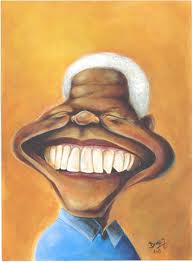
Many Afrikaners have often wondered: Why do the people in Johannesburg and Cape Town, especially in the media, hate us so much that we are consistently misrepresented? In this cartoon by Zapiro, Afrikaans singer Steve Hofmeyr and author Annelie Botes are represented as dinosaurs from a bygone age (which, by definition, should already be dead or extinct). Note also the emphasis on their “small brains” or low intelligence.
Cartoon by Zapiro, alias Jonathan Shapiro
I hope the reader has by now formed an image in his mind as to what Boerehaat is. In most parts of the world, there are to be found what Freud called the “narcissicism of small differences”: Belgian jokes in Holland or in France, and so on. When such minor ethnic chauvinism degenerates into a social and political ideology, and is married to Marxist-revolutionary doctrine, we may well see the genesis of a Khmer Rouge movement or the potential for genocide.
Afrikaners are already the scapegoats for everything that goes wrong in South Africa. The lack of performance of other groups, even their corruption and profligacy in government, is routinely blamed on the Afrikaner.
Could Boerehaat discourse and societal breakdown as a result of social anarchy, crime and corruption lead to a bloodbath in South Africa, with Afrikaners being held responsible for every kind of failure, even while completely out of power?
And what causes Boerehaat? Why is it so persistent? These are questions I want to address in a second part of this column.
To be continued.
Max du Preez writes: Fifty Shades of Boerehaat?
The killing of Reeva Steenkamp by Oscar Pistorius has brought out the worst in people, from journalists to politicians to ordinary people. We read on the weekend (Mail & Guardian) that the problem with violence against women has a relationship to the macho rugby culture among white men; that Pistorius got treated differently because he was white and rich – what an insult to Magistrate Nair, one of the best in the country.
Now we have cabinet minister Lulu Xingwana saying to (of all places) Australian radio that the problem starts with Afrikaner men and their Calvinist upbringing who think all things, including women and children, belong to them to treat as they want.
I am a product of a Calvinist Christian-National Afrikaner upbringing of the extreme Free State platteland kind and not only am I a rugby fanatic, I played the game (not very well, though) from the age of six to well into my twenties.
I can write a book about the downside of Afrikaner Calvinism, but hating or disrespecting women and children would not feature. The women in my family were and are strong, independent human beings whom all the men in the family love and respect deeply. Whenever my father or uncles acted as if they were “the head of the family”, we all chuckled behind our hinds and said Ag shame.
Minister Xingwana should read the story (in my books Of Tricksters, Tyrants and Turncoats and Oor Krygers, Korrelkoppe en Konkelaars) of the wife of General Koos de la Rey, one of the most prominent patriarchs and Calvinist fundamentalists in Afrikaner history. Her name was Nonnie. She was not only the head of the rather big De la Rey family in every sense, her husband made very few decisions without her, even when he was a general in the Anglo Boer War. More than that: she stood up to the British generals who not only respected her, but actually feared her as much as they feared her husband’s military prowess. They knew: don’t mess with a stoere Boervrou.
(By the way, I wonder if Lulu realises that one of her own struggle icons, dominee Beyers Naude, was also a staunch Afrikaner Calvinist right to the end?)
It simply boggles the mind having to witness people still prostrating themselves in the dust whenever the name Mandela is spoken. Elevated to a modern-day god, Mandela is believed to be three, a `Holy Trinity`… yet he is only one – the one ultimately responsible for having turned South Africa into a failed-state-in-the-making.
Mandela No 1 is the latest poster boy of the secularization process which dictated the morality of the West after WWII. It is, basically, the moral world in which the 10 Commandments were replaced by Human Rights. A world in which the biblical “love God and love thy neighbor like thyself” has been replaced by “love thy neighbor like thyself because /she is thyself, (both) God”.
This is the moral universe of George Soros’ Open Society Foundation – which turned the Afrikaners Beyers Naude, Van Zyl Slabbert, Max du Preez, etc. into Walter Lippman`s useful-idiots of Mandela No 2`s world. And it is the world that grounded Pax Americana…
“We hold these truths to be self-evident, that all men are created, that they are endowed by their Creator with certain unalienable Rights, that among these are Life, Liberty and the pursuit of Happiness.”
Funny; if this “Creator” is no more – i.e. the moral rationale driving secular-humanism – how can we still state with such hubristic certainty that we are still “endowed” with them? Rather silly, but then; no wonder it has become the Inquisition.
Mandela No 2 is the world of End Game. A world which saw the dumbest Afrikaner philosopher ever, Willie Esterhuyse, formally hand South Africa’s future over to the cold Queen of England… at the behest of Her Holocaust card-playing Randlords. The world which saw Mandela and his inner-circle “struggle” buddies become some of the richest men in Africa… simply because Mandela No 3 did everything KGB colonel Joe Slovo taught him.
Mandela No 3, the real Mandela, is the great “democrat” who wrote; “If force will advance [the struggle], then it must be used whether or not the majority agrees with us.” And that is precisely what he, and his murderous “necklacing” wife, Winnie Mandela, did… killing 15 000 fellow blacks in the process!
This is the true world painstakingly depicted in the fantastic book The People’s War, by Dr Anthea Jeffery of the SAIRR…
“the ANC had little compunction about attacking black civilians, including its own supporters, for the formula for people’s war draws no distinction between combatants and others and regards all civilians (irrespective of their political affiliation) as expendable in conflict;
the ANC had a motive to unleash violence, for it wanted to create enough mayhem and unrest either to spark an insurrection or to weaken its opponents to the point where it could triumph in negotiations;
the ANC had the means to unleash violence, for the peace process allowed it to bring back into South Africa some 13 000 armed and trained combatants whom it then refused to disarm or disband; and
the ANC was the only organisation to draw benefit from the 15 000 political killings that took place in the early 1990s (after all major apartheid laws had been repealed), for it used these to;
stigmatise De Klerk and the IFP,
stampede negotiators into giving it what Joe Slovo called ‘a famous victory’ in negotiations, and
put great pressure on the first all-race election, while making it unthinkable for anyone to demand a re-run of the deeply flawed April 1994 poll in which it was accorded (no accurate count being possible) some 63% of the vote” (source).
Well, there you have it. Mandela is not three. He is only one, No 3 – although No 1 and No 2 gave him – and his murderous, greedy and woefully incompetent ANC thugs – the Noble Prize for Peace… for having turned South Africa into a failed-state-in-the-making.
Chief Justice Dikgang Moseneke, George Bizos and Vice-Chancellor Adam Habib
At a ceremony held at the University of the Witwatersrand yesterday, the audience heard that “Madiba was a radical and revolutionary” who met his fellow revolutionaries such as communist leader Joe Slovo, Ismail Meer, JN Singh, Ruth First, George Bizos and Bram Fischer at the same university. Together they went on to triumph and subjugate their Afrikaner opponents.
Wits University will honour and preserve the legacy of Nelson Rolihlahla Mandela by erecting a wall of remembrance in his name and in the names of those who fought in the struggle with him.
This was announced by the Vice-Chancellor and Principal of Wits, Professor Adam Habib, last night during a memorial service in honour of the great icon and Wits alumnus.
“Madiba was Wits’ most renowned student, our greatest asset. It was at Wits where he met Ismail Meer, JN Singh, Joe Slovo, Ruth First, George Bizos and Bram Fischer. At Wits, he met the very people who stood by his side and defended him during the Rivonia trial,” said Habib.
The Vice-Chancellor said he would table a resolution to the Wits Council in the new year to erect a wall of remembrance for Madiba and his comrades, as a visible sign of Wits’ pledge and commitment to making education the most powerful tool in transforming the campus, the country and the world.
The memorial service was graced by renowned struggle veterans and longstanding friends of Mandela, Dr Ahmed Kathrada and Advocate George Bizos, in conversation with Deputy Chief Justice Dikgang Moseneke. The three men regaled the audience with stories about how they met Mandela, as well as their time together during the Rivonia trial and their subsequent jail sentence.
Bizos and his fellow legal counsel represented Mandela, Kathrada, Walter Sisulu, Denis Goldberg, Govan Mbeki, Rusty Bernstein, Raymond Mhlaba, James Kantor, Elias Motsoaledi and Andrew Mlangeni in the trial, which took place in 1964 and lasted for eight months.
Personal tales and anecdotes abounded, and Kathrada and Bizos had the audience hanging on their every word as they spoke about what a great man Mandela had been, not just as a fellow freedom fighter, but also as a friend and comrade.
“The world has united in his illness and upon his death. He was a great man, but he always emphasised that he was part of a collective. He always said he did not make policy, but that the collective made policy. I will be very disappointed to see the policies that he helped to form, be changed,” said Kathrada.
Bizos spoke with great emotion about the man he called one of his best friends, and said Mandela had saved South Africa from war when he was released after 27 years of incarceration.
“Mandela saved South Africa from a bloody civil war because he believed that fanatics were responsible for civil wars. He was not a fanatic, he was a conciliator. For him, South Africa was not a one-man state,” said Bizos.
The memorial service was attended by more than a thousand mourners who came to pay tribute to Madiba. Other speakers included Johannesburg Mayor Parks Tau; President of the Wits Convocation, Professor Mamokgethi Phakeng; and President of the Wits Student Representative Council, Shafee Verachia, who received a standing ovation after his moving tribute.
Award-winning South African songstress Lira performed “Something So Strong Inside”, one of Madiba’s favourite songs, while the Wits School of Music and the Wits Choir, in their usual colourful and poignant fashion, also entertained the guests. – Wits Communication Service
The exceedingly harsh sentences handed down by Judge Eben Jordaan in the Boeremag trial have had a mixed reception in South Africa. On the one hand, members of the black elite and the white neo-Marxist Left have reacted with unbridled Schadenfreude. On the other, patriotic Afrikaners – while not agreeing with the Boeremag’s reasoning or methods – have nonetheless evinced instinctive sympathy with them and their long-suffering families.
Jordaan has taken a very formalistic approach to the South African constitution and the country’s recent history, refusing to see the many mitigating factors that would have elicited more humane sentences.
First of all, only one person died as a result of the Boeremag explosions, some distance away from the scene. This was rightly seen by the court as a case of culpable homicide. As first offenders, in a country where even the most sadistic child murderers get released after ten years, it should not have carried a heavy penalty.
The many outlandish elements of the trial were no doubt included by the state in its evidence for the maximum propaganda effect. How could fewer than two dozen white men ever hope to displace thousands of South African blacks, let alone the whole population of forty million?
However, the most important factor that detracts from the guilt of the Boeremag trialists was the intimate involvement of state agents who did not attempt to dissuade them from pursuing their attempts at sabotage but in fact encouraged them. Not so long ago there was a similar “sting” operation in Germany during which the secret service or Verfasssungsschutz had infiltrated both the NDP, a political party and a group known as Sturm 34 which was at one point led by a government agent. German courts rejected governmental attempts to ban the NDP due to its heavy infiltration by state agents, finding that responsibility between the state and illegal political activity had actually blurred. In the USA too, courts take a dim view of overzealous state agents who “persuade” citizens to break the law.
Many people claim or suspect that the state organised the Boeremag “rebellion” in order to “mop up” right-wing dissidents. The detailed and incriminating “Document 12” was apparently supplied to the Boeremag members by the state who, through its agents, was intimately involved in so-called “strategic planning”.
The extreme, dehumanising violence associated with South African farm murders acted as a trigger for the Boeremag’s activities. One could argue that under conditions of lawlessness and violence, men are more easily persuaded to answer violence with violence. Certainly that is the line taken by Nelson Mandela and his fellow accused at the Rivonia trial who saw their sabotage campaign as justified by the police shooting at Sharpeville.
This leads to another problem of post-1994 South Africa to which Judge Eben Jordaan has not been attentive: violence is often seen as a legitimate vehicle for political objectives. With the exception of Clive Derby-Lewis and Eugene de Kock, among others, those who had committed acts of terror prior to 1994 were all amnestied by the Truth and Reconciliation Commission. Even the cold-blooded murderers of Amy Biehl were exonerated by the TRC because they supposedly killed her for “political reasons”.
So-called “democracy” has not led to a pacification of the South African population. There are more riots by South Africa’s black population now than ever under so-called “apartheid”. Together with farm attacks and house robberies, the general instability produces a climate of fear and insecurity that engender radical ideas like secession, rebellion or insurrection. In this respect, South Africa is a victim of the notion that it is “just another decolonising African country” that must be “liberated” through the kind of cleansing violence described by a theorist such as Franz Fanon.
During sentencing, Judge Eben Jordaan described South Africa as a constitutional democracy. But does that stand up to scrutiny? During the negotiations in the early 1990s, one of the objectives of the Slovo-Mandela camp was to disenfranchise ethnic Afrikaners. Both provinces and towns were demarcated in such a way that not a single area of the country is ruled by Afrikaners who have been here for 360 years. The largest concentration of Afrikaners in the country, Pretoria and environs where about 500 000 of them live, does not even control a local government and are made to undergo unpopular decisions, including humiliating name changes.
While not condoning sabotage and terrorism, at least the disenfranchisement of the Afrikaner national minority should have been taken into account in judging the actions of the Boeremag accused.
There is a further paradox in South Africa: Violence and terror are eulogised by the media, politicians and historians, as long as such violence was committed against whites or against Afrikaners. Both Communist Party leader Joe Slovo and Nelson Mandela, who had ordered the Church Street bomb and other horrific attacks on civilians, are presented as “good men” who had selflessly fought for freedom. In Amanzimtoti, terrorist Andrew Zondo who had placed a bomb in a shopping centre full of Christmas shoppers on 23 December 1985, has had the main street of the town named after him, in the very place where victims and relatives still nourish the wounds of their nightmare experience.
We see then that the South African state is increasingly suffering a legitimation crisis caused by:
the effective disenfrenchisement of the Afrikaner minority;
corruption and profligacy at all levels of government;
a plethora of racial laws limiting the employment and educational opportunities of Afrikaners, in the name of “affirmative action” for the majority;
physical insecurity which is only mitigated to some extent by private security companies, neighbourhood watches and so on;
anti-white and anti-Afrikaner rhetoric by leading ANC political figures;
the deterioration of infrastructure such as roads, electricity and water supply, as well as state hospitals where many whites are simply left to die without proper care;
systemic cultural and language discrimination, with Afrikaans schools and universities under attack by government bureaucrats and ANC politicians;
the impending radical land reform which could plunge the country into Zimbabwe-style famine and chaos;
the general perpetuation of communist/Marxist ideas in South Africa that have lost their legitimacy or attraction elsewhere in the world.
If the Boeremag trial had lasted six months and the accused had been sentenced in 2003 or 2004, shortly after their arrest, probably the Afrikaans public would have seen them simply as extremists out of touch with the new reality of ANC rule. However, given the protracted length of the trrial and the changing perceptions of our much-lauded “democracy”, public sympathies for the accused have definitely been in the asendance, even among those law-abiding middle-class Afrikaners who accept the fait accompli of National Party capitulation and a concomitant loss of Afrikaner sovereignty.
Afrikaner history is replete with martyrs after unsuccessful rebellions who received harsh treatment from a hostile government. There was the infamous death by firing squad suffered by Jopie Fourie on 20 December 1914, but also the Slagtersnek hangings of 1816 that gave rise to the Great Trek inland from the Cape.
Judge Eben Jordaan may just have given Afrikaners another Slagtersnek, apart from adding to the legitimation crisis of the current South African regime.
My first question upon reading this sorry little ego trip from a Daily Maverick columnist who obviously thinks she deserves the Nobel prize for literature in a few days, is: Why don’t you go back to the UK where you spent 14 halcyon years? Why return to this backward country where English is mostly a second language to everyone – even to people like you who are hardly on the English peerage list – and therefore in various states of creolisation, pidginisation, etc.?
Many sub-editors and journalists at English-language newspapers in this country are actually Afrikaners. Maybe you should go on a campaign and get them fired and replaced by born-and-bred Englishmen?
Recently the Coloured champion of English and anglicisation in South Africa, Jonathan Jansen, claimed that “English will unite us”, where Afrikaans divided us, or some such lunatic fallacy. The truth is that English, like any language, unites as well as divides. In the UK, the British class system has created almost two worlds, an upper class gossiped about in the tabloid press and an anomic, drug-ridden white underclass whose children pass out in public places as reported here.
In the USA, which until recently used to be an English-speaking country, there is the Mason-Dixon line which no longer exists politically, but which still defines two cultures. The New York Times regards Southern identity with the same suspicion as a Soviet commissar would look upon stirrings of nationalism in any satellite state. We Afrikaners have a lot in common with Southern Americans, having lost an important war in the nineteenth century but also being puritans and Calvinists. The other day I read a comment by the Austrian intellectual Erik von Kuehnelt-Leddihn describing American folk music, especially country, as Calvinist and I must admit, he is right! The contemptuous American-liberal view of “red-state fascism” corresponds very much to the Johannesburg leftist’s supercilious “interest in the oddities of post-Apartheid whiteness”, as Nicky Falkof puts it.
To me English is also a foreign language, like French. But I really love reading books in French and even sometimes, more rarely, in English. When a black taxi knocked me over on my bicycle in DF Malan Drive a few years ago, I lost a lot of what Falkof would call my white skin, and spent a week immobile on my side. To ease the pain and discomfort, I read three Jean Echenoz novels and I think his quirky, ironic prose anaesthetised me a little and took my mind away from my immediate inability to even get up and go to the toilet without help.
I have never come across a Frenchman or -woman who held me in contempt because I was not a mother-tongue writer of French. Yet, Nicky Falkof, this is what you seem to be doing: you despise people who do not happen to be “to the manner born”, to quote J.P. Donleavy. I gather you were raised in some deep corner of Houghton where anglophilia was part of your noble upbringing.
By implication you are also saying that Afrikaners like Sunette Bridges and others are foreigners because they do not speak or write British English properly. The theme of alienation, becoming-foreign in the land of one’s birth – my forebears only came here in 1701 so I have not been properly naturalised as a “South African” – is one that really interests me. We named most of the country’s towns and cities, yet we are now seen as strangers. Farm murders are also an expression of xenophobia because, at least since the revolution, Afrikaners are considered foreigners or settlers, as Thabo Mbeki, Ruth First and many others have assured us.
That said, and being a foreigner/stranger, an “étranger” – if you know the famous novella by Albert Camus bearing that title, you will understand the existential alienation concomitant with being “not of this place”, the RSA, which is now oh so English – I cannot say that I know too much about your exalted language.
Yet the one thing I do know about South African English is that it is really horrible, lacking in aesthetic sense and coherence. Even mother-tongue speakers – although that might be a contradiction in terms – make lots of mistakes all the time and of course spelling and grammar have fallen by the wayside since the revolution and Kader Asmal importing something called “outcomes-based education”. Have you heard how blacks speak English? Have you seen how some of them write it, even ones with university degrees? Because it is not their own language, but also because since 1994 they have had sub-Bantu education. Maybe you should apply some of your heart-felt linguistic snobbery there?
Or is it not politically correct to put blacks down on account of their English style, but in relation to those local whites who object to being killed, tortured and raped, it is almost de rigueur?
Your other concern, that these hapless non-English are not amenable to being manhandled and executed by Foucauldian freedom fighters, and are actually usurping the register of genteel leftist diction, might be more problematic than you think. You describe it as “a ham-fisted attempt at adopting progressive discourse”.
First of all, I regard as ham-fisted the attempts by English people such as yourself to adopt some kind of local identity. Why does Woolworths sell boerewors and koeksisters? Why are you not proud to say that you are English, hoist the Union Jack or preferably the St. George’s Cross, and leave us in our benighted enjoyment of sosaties and pap, dubious Afrikaans poetry and popular songs, including Steve Hofmeyr, much like British peers on a visit to Africa would gaze from a distance at the dancing natives in colonial times?
At its simplest level: why do you want to correct our grammar? Lately, you or your underlings have even taken to correcting Afrikaans grammar, something about which you know absolutely nothing.
At a more theoretical level – and this might be another primitive display of non-English mores, as we are straying from “common sense” now – what you call “progressive discourse” probably means some variation of Marxism. To the extent that Karl Marx used Hegel and German indealism to construct his little dogma of the class struggle, we “naive people of the veld” could level exactly the same accusation at you “progressives”: Why did you pollute Hegel with your quasi-religious social eschatology? Progressivism in itself stands revealed as a perverted – more precisely perverse, even in a sexual sense – form of idealism.
By the way, the expression “naive people of the veld” is derived from a statement made by Gillian Slovo, the daughter of South African Communist Party leader Joe Slovo who characterised all of Afrikaans culture, everything from Eugène Marais to Mimi Coertse or Arnold van Wyk, I suppose, as “the naive culture of the veld”. Gillian Slovo is English enough to remain in London and I sometimes wonder when all you “progressives” will follow her example.
Being “naive people of the veld”, we find some things difficult to understand. The cognitive limitations of the proverbial “dumb Dutchman”… One is the depths of sadism that the freedom fighters stoop to in their orgies of killing in rural areas, but sometimes in the cities too. The mutilation of the victim’s body is supposed to be a sign of clinical sadism, so we are not being semantically naive in referring to it as sadism.
The second conundrum is the depths of “progressive” contempt for our “naive culture of the veld”, our language, music, architecture, cuisine, art, literature, place names, and so on. How do we explain that contempt, even apart from the “progressive” penchant for everything British and colonial?
Is there some innate or structural connection between the sadism of the “natural born killers” stalking the countryside and the “progressive” need for humiliating, putting down and ultimately affirming a cultural and perhaps even racial superiority on the part of the cultural-Marxist nobility that rules the roost in South Africa, particularly in the media and the universities?
A phenomenon of which, needless to say, Nicky Falkof has just given us an exemplary demonstration.
I was still pondering the implications of “black colonialism” as set out in a previous column when it struck me that some of South Africa’s ethnic categories are completely wrong.
Afrikaners were the first group in the country to refer to themselves as “Africans”, as long ago as 1707 when Hendrik Biebouw said: “Ik ben een Afrikaander.” However, today Afrikaners have been defined as an out-group by South African legislation that simply classes them as “whites”.
Most of our affirmative-action legislation has been imported from the USA and BEE is just an adapted form of what is called “minority procurement” over there. So there is nothing “African” about the current race-classification system!
In German, “Afrikaner” means simply “African”, yet the current laws define Afrikaners as Europeans. The ultimate irony is that ANC and especially SACP ideology has been constructed by recent immigrants from Lithuania (like Joe Slovo) and, of course, Britain.
Imposing racial quotas on everything from the medical schools at Afrikaans universities to the Blue Bulls rugby team is bad enough. But stripping us of our age-old Africanness by legislative fiat represents the ultimate insult, making us interlopers in our own country.
Searching for answers, I reread Thabo Mbeki’s “I am an African” speech, but it is simply a fanciful restatement of American multiculturalism, with echoes of (Swedish) Gunnar Myrdal’s “melting pot” idea. So nothing “African” there, either.
We urgently need to bring back the term “Bantu” and I have begun to recommend its use on social media and everywhere else. There seems to be a certain squeamishness about using this word, meaning “people”, which is unfathomable. Even the famous Xhosa definition of “ubuntu” contains it: “Ubuntu ungamntu ngabanye abantu.”
Anthropologists, linguists and other people in need of proper definitions have never stopped referring to the “Bantu peoples”, “Bantu languages”, etc. Even Bantu education has been rehabilitated by such leading authorities as Dr. Mamphela Ramphele and a lecturer at Wits Business School, Mr. Rabelani Dagada, both of whom consider it better than the current schooling system.
The first ANC-supporting newspaper in the 1920s was called Abanthu-Batho and today there is a clothing brand which is thus advertised: “Abantu is a ladies wear brand which creates timeless pieces which speak to the South African audience.”
The Bantu peoples inhabit East and Southern Africa. For them or their Lithuanian theorists to arrogate unto themselves the sole right to being called “Africans” is not only intellectually unsound, but also unfair. After all, there are 200 million North Africans, including Egyptians, Arabs, Berbers, Copts and so on, who are Africans, by definition. West Africa too, is given the cold shoulder by Bantu imperialism.
In the nineteen-twenties some leading German and French anthropologists claimed, upon the basis of very ancient mining activity in these parts, that whites may have inhabited both South Africa and Zimbabwe as long ago as 3500 B.C. They must have been the first Afrikaners and we should venerate them as our true founding fathers, together with the Khoi and San.
Either we must qualify for affirmative action like other “Africans” – and even the Chinese! – or the Bantu must clearly announce their pretensions to being a kind of continental nobility with special privileges.
Any person sound of mind must be truly perplexed by Mandela`s lightning-fast deification… given the fact that he basically sat in a locked room for 27 years whilst, occasionally, hitting stones into smaller stones.
It is as if he was somehow `anticipated` by History – predestined, so to speak, to assume a `future` role engendered by a blooming (pun intended) Zeitgeist during his time in jail … and notbecause he was in jail. For he, as an individual, certainly did not do anything before and during his imprisonment to even remotely deserve all the god-like accolades bestowed on him.
Is this possible? I mean; is it possible that History can `anticipate` someone … Mandela in this case?
Well, according to (Husserlian) phenomenology, it is inevitable… given the right circumstances. For, according to Edmund Husserl, subjective experience can only be made objective through ideal meanings.
Meaning that the ever-subjective experiences of any individual, like you and me, are always `mediated/filtered` by ideal types/meanings engendered by the socio-cultural world we find ourselves embedded in.
For example, take the phenomenon of lightning. A typical traditional Westerner walking on the High Veld will –upon seeing a flash of lightning – give an ideal meaning to this (his/her) subjective experience via the instrumental reason inherent in Western Science. In other words, it was an electrical discharge – the ideal meaning, causality.
A typical traditional African walking on the High Veld will – upon seeing a flash of lightning – give an ideal meaning to this (his/her) subjective experience via basic social-bound strategic reasoning. In other words, the lightning struck because the (dead) forefathers are angry… and therefore need to be appeased – usually by sending the chief`s witch-doctor to kill one of the former`s opponents.
Be that as it may, where does god-Mandela fit in here? Well, it was his very absence that turned him into the `god` (the ideal meaning of, inter alia, morality) `anticipated` by History.
For whilst there, he never had to get his hands `dirty` like, for example, Thatcher, Kohl and Reagan did or, for that matter, Castro, Khrushchev and Ho Chi Min… in order to fight the Cold War.
Just imagine if Mandela had not been incarcerated in 1964 and had, instead, been democratically elected to be the President of South Africa in 1964.
Do you really think that, given his communist leanings, his great friends and backers like, Castro, Khrushchev, Joe Slovo (a KGB colonel), Ronny Kasrils et cetera, that the zealously-capitalist Americans and, especially, the Anglo-Saxon mine owners in South Africa would have sat idly by if he, Mandela, did exactly what he had written about in his only original, albeit very trite, intellectual piece called How to be a Good Communist?
I think not!
Inversely; do you really think the KGB, Chris Hani, Joe Slovo, Ronnie Kasrils, Castro et ceterawould have sat idly by if Mandela had gone all neo-liberal (as he did in 1994) on them … at the height of the Cold War in 1964?
I think not!
This just illustrates that Mandela`s absence from real life (i.e. his time in jail) was his saving grace… his path to deification. For, as mentioned before, it allowed him the space not to get his hands dirty by having had to make tough decisions during a very difficult and inherently viscous period in History, the Cold War.
Now, given the fact that Pax Americana won – and became the, hitherto, unchallenged ruling morality of planet Earth – it, the Sheeple, needed a secular-humanist `ideal meaning `, a Messiah (after a symbolic `ordeal` in the desert) – to embody (i.e. to `become the flesh` of) this new `eternal` utopia.
The exact neo-liberal utopia Francis Fukuyama tried to peddle with his rather boring book calledThe End of History and the Last man.
Be that as it may; the West – after having sighed a collective sigh of relief after they had won this very dirty war – desperately needed an ideal meaning to consolidate its moral superiority… someone `unmarked/unblemished` by the bitter war they had just won.
We can, as mentioned before, only make subjective experiences objective through ideal meanings. This includes moral phenomena, of course.
So who better to step up to the (moral) plate than South Africa`s own Rip van Winkle – theegomaniacal Xhosa goat herder from Quonu – whose hands and soul appeared ever sounstained… simply because he sat in a locked room for 27 years whilst, occasionally, hitting small stones into smaller stones.
More and more, the term “genocide” is entering our everyday vocabulary. Many people, including columnists, have already explained that it is not the absolute number of people killed that defines a genocide, but the motives and the manner in which they are slaughtered.
The atrocities committed on South African whites during farm murders, house robberies, car hijackings and the shooting of children, even toddlers such as Willemien Potgieter, point to a disturbing form of ethnic cleansing going on in the country.
In a current survey on our Afrikaans website and with more than 700 people participating, 93,9% of those polled declared: “I believe there is a white genocide taking place in South Africa.”
How did this Afrikaner genocide arise? Where did it come from? When did it start? Many people believe it is caused by racial tension. Although race does play a role in that the perpetrators are normally black and the victims white, race in itself does not account for the nature of this genocide which is as pervasive as it is officially denied and passed over in silence by the so-called mainstream media.
I believe the genocidal movement against Afrikaners started already in the 1940s. Early in the fifties there were the first incidents when whites were randomly attacked and butchered by black rioters, so there was already an inchoate form of ethnic violence even back then. In East London a nun doing charity work in the local black township was murdered and then set upon by the rioters who ate parts of her body. Such acts of cannibalism endure to this day, as was reported in Witchdoctor who cooked farmer’s testicles a few days ago. More importantly, however, the ideology of Afrikaner genocide was being formed at the time with mostly communists dreaming of a day when South Africa would be cleansed of its indigenous whites altogether.
Recently a biography by Alan Wieder, Ruth First and Joe Slovo in the war against apartheid was published. I have not read it, but it is certainly significant that an unreconstructed communist such as Slovo should be widely honoured today. [Postscript: I did read it after writing this and wrote a review in Afrikaans.] Although Slovo spent most of his adult life in London, he was by far the most influential revolutionary in South Africa during the twentieth century. Through his skillful use of both terrorist violence and propaganda, he was able to conquer the once seemingly invincible Afrikaner government with its strong military backed by a powerful industrial state.
It would be fair to say that a coterie of communist intellectuals from the 1940s introduced the notion that South Africa should either “return to the origin” of a putative, Edenic, unspoilt Africa before the coming of the evil white man or it should undergo a violent revolution that would create a completely new and strictly egalitarian society. Either way, a radically “new country” had to be constructed.
Commentators as diverse as Dr. Gregory Stanton of Genocide Watch and the French “new philosophers” (nouveaux philosophes) of the 1970s have argued that there is an intrinsic link between communism and genocide. Most genocides of the twentieth century, be they in Soviet Russia, China, Cambodia, Vietnam and elsewhere, have been committed by communists. At least sixty million people were murdered in what has become known as a “Red Holocaust” perpetrated under the leadership of figures such as Joseph Stalin, Kim Il Sung, Mao Zedong, Ho Chi Minh and Pol Pot.
Communism is an absolutist ideology that brooks no dissent, therefore a causal link seems to exist between communism and genocide. Since the quasi-communist takeover of South Africa in 1994 and with the country since moving further and further to the Left, genocide has also started to appear as a fundamental characteristic of the so-called “new South Africa”.
Intolerance towards the Afrikaner ethnic group, the Afrikaans language, literature and culture have grown rapidly. Many communists regard the Afrikaans language in itself as “offensive” and therefore want it banned from the public domain. Afrikaans place names too have been systematically removed from towns, streets, buildings and other places.
A foreign African set alight by local South African blacks
At the same time the country is often shaken by xenophobic riots and killings, directed against foreign Africans. During 2009, 80 people were slain during a spate of xenophobic attacks, with hardly anyone charged with the murders.
In a sense, Afrikaners are also considered to be foreigners, being non-black and non-English. Having been excluded from political power, they are now caught between two chauvinisms, two forms of intolerance: racial and linguistic. Even though they have been in the country for 360 years, they are deemed “not to fit in” with the new, revolutionary culture which is Afro-Saxon, black and English.
However, neither all blacks nor all English-speakers display intolerance towards Afrikaners and Afrikaans. Millions of black people also speak Afrikaans as a second language and as a lingua franca in large parts of South Africa. Where does Afrikaner hatred come from then?
It comes from the revolutionary minority, of whom Joe Slovo is the progenitor. In a sense, Marxism is the ultimate uitlander ideology. After the discovery of gold in the Transvaal in 1886, about 50 000 foreign speculators descended upon Johannesburg. Despite being very tolerant and accomodating to them, the then Afrikaner or Boer government was not to their liking and a process of fomenting war and ethnic hatred towards Afrikaners was launched.
Many of the stereotypes and caricatures created by the uitlander press of Johannesburg are still with us today and have never been challenged. These have simply been adapted and amended to suit the ends of the Marxist revolutionaries. Whereas in the nineteenth century the Afrikaner was depicted as being “backward and uneducated” (even though many uitlanders crawled out of the slums of European cities), he is now seen as “conservative and racist”.
To Slovo and his followers, the Afrikaner’s love of his language and culture, his patriotic attachment to South Africa, his pride in his intellectual and economic achievements, are all signs of his incorrigible “fascism”. The continued existence of some Afrikaans schools, churches, cultural associations and so on, is seen as a reactionary refusal to bend to the will of the revolutionary Left that conquered the country in 1994. The Afrikaner must therefore be punished for his dissidence and his children preferably brainwashed into accepting the dissolution of their culture and identity, as well as their integration into a kind of mulatto multitude.
Slovo was not alone in his abhorrence of Afrikaners. In the writings of his close friend, the Nobel-prize winning author Nadine Gordimer, as well as the photographs of the acclaimed photographer, David Goldblatt, we find a similar treatment of Afrikaners as uncouth and even mentally retarded “white trash”. In emulation of Gordimer, the renegade Afrikaner author André Brink has created some even more extreme caricatures from Afrikaner history. Many of these left-wing cultural Marxists drew on American “Appalachian” stereotypes to portray Afrikaners to foreign audiences. Afrikaners are seen as “white trash”, despite the fact that as a group in South Africa they have produced more postgraduates, more accountants, more lawyers, more classical musicians, more scientists and mathematicians than any other. Until recently, more books had been published in Afrikaans in South Africa than in English.
But to the communist revolutionaries, we are “backward” and “mentally retarded”.
In fact, even the finest examples of modern Afrikaner architecture have been derided as expressions of the apartheid ideology and a kind of “degenerate art”. Ironically, those who object to the Nazi concept of Entartete Kunst or “degenerate art”, apply it themselves when looking at Afrikaans architecture, paintings, music, literature and so on.
The Rand Afrikaans University (now University of Johannesburg) as photographed by David Goldblatt (Museum of Modern Art, New York)
Like the French new philosophers such as André Glucksmann and Jean-François Revel have claimed, Marxism is a totalitarian ideology. It demands total revolution: a radical change in the whole world and all culture. But it may also stigmatise a culture as useless and even pernicious. If one cannot destroy the culture itself, its bearers may always be physically eliminated. Within the totalitarian mind, all of this is perfectly logical.
Volumes may be written about the betrayal of Afrikaners by their own ruling elite, especially by Mr. FW de Klerk. But one of the most tragic consequences of that betrayal has been the passing of the formerly nationalist media group, Naspers, over to the camp of the Slovoists. The politics of Naspers, as opposed to its more neutral foreign investment decisions, is determined by one or two political commissars serving on its board of directors.
Until recently, Prof. Jakes Gerwel, a self-confessed Marxist who had wept when the Berlin wall came down, had served on the Naspers board. Another radical cultural Marxist who is strongly hostile towards Afrikaners and their tradition, is Prof. Hein Willemse who still serves on the board.
Trotsky described Czarism “as belonging in the dustbin of history”. To the uitlander communist in South Africa, Afrikaners represent “white trash” that also belong in the “trash can of history”. Since 1994, both the mass media and government have conspired to produce a series of very negative images of Afrikaners.
They purveyors of hate produce the hate crimes, creating a climate in which killing Afrikaners is seen to be permissible, even desirable. But Afrikaner or white genocide can also be a joke, presumably because:
no-one cares;
whites should just accept whatever happens to them.
Writing on a blog for the left-wing Mail & Guardian newspaper, Sarah Britten explains why joking about so-called “corrective rape” for lesbians is horrific, but making fun of white genocide on Twitter is not. Even just recognising the phenomenon of white genocide, makes one a “right-wing extremist”:
“But joking about corrective rape is very different from joking about #whitegenocide. One is real, an act of violence against a very vulnerable section of society. The other is the perception of a politically motivated programme of murder, one that is deeply entwined with right-wing extremist narratives. One kind of joke reinforces existing power structures; the other subverts them.”
To the Left, whites need never fear, even when they are killed or told that they are going to be murdered.
A novel portraying Afrikaners as mentally retarded, racist, incestuous “white trash”, such as Triomf by Marlene van Niekerk, was acclaimed as the greatest work of literature ever to come out of South Africa, apart from Gordimer’s body of writing. On the state television and in the pages of the Naspers newspapers, such caricatures of Afrikaners were eagerly embraced.
Van Niekerk spent some time at the University of the Witwatersrand where she had imbibed the Slovoist view of Afrikaners as “degenerate whites”. The theme of incest in the novel and a subsequent film was a metaphor for the Afrikaner nation itself. By dating or marrying someone of your own kind, you are committing a form of incest, which can only produce degenerates. Of course, at a certain level, the cultural Marxists of South Africa want to claim that being white or of European ancestry is in itself a form of “genetic degeneracy”. History is on the side of the creole or the mulatto, as the Marxist intellectual and Naspers director, Prof. Hein Willemse, has often explained.
“Opting out” of creolization, be it linguistic, racial or otherwise, is therefore deemed to be an affront to the system. Afrikaners who wish to continue with their tradition, as well as the standard, Germanic form of their language that may be traced back to the seventeenth century and even to the European Middle Ages and Middle Dutch, are regarded as dissidents, even heretics. In 2005 I was invited to talk about my fairly innocuous novel Moltrein in a bookshop in Stellenbosch and was almost prevented from doing so by a group of Marxist academics. I was even threatened with violence.
This was my first direct experience of the anti-Afrikaner intolerance that manifests itself in censorship, ostracism and, of course, farm murders and other kinds of ethnic killings in South Africa. Many Naspers journalists are in favour of such censorship. The full extent of the horrors and atrocities currently being visited upon Afrikaners is carefully sanitised as “just crime which one finds everywhere”, when it is not completely ignored. Among journalists and academics, there is much tacit support for the ethnic cleansing of Afrikaners. Prof. Jonathan Jansen, the affirmative-action rector of the University of the Free State, has stated on more than one occasion that there was something wrong with people who dated or married members of their own race.
Uitlander communists and other South African revolutionaries are contemptuous of Afrikaans and Afrikaners because they are seen as “Eurocentric”, “too white”, “exclusive” (even though Afrikaners are routinely excluded from government and most institutions on racial grounds) and, of course, “racist”. In South Africa, we have really come full circle and the racism of the anti-racists is far worse than any traditional ethnic chauvinism of the “nationalist” type.
“Mixing the races” is seen as imperative in South Africa, because Afrikaners need to be assimilated and coerced into “being part of one, big multicultural nation”. In the words of Leopold Scholtz, one of the Naspers ideologues, “the Afrikaner must be fused with the brown (mulatto or Coloured) people”.
But for some assimilation is too slow. Killing is so much quicker and more effective. Hence the “final solution to the Afrikaner problem” that is taking shape in South Africa.
There is an email joke currently doing the rounds, which contains more than just a grain of truth. A black boy asks his mom: “Mommy, what is democracy?” His mother answers that democracy is something that allows the black majority to elect a government which will use the money provided by the mostly white tax base for all kinds of goodies to black people, including housing, expensive cars for black officials and child grants. The boy then asks his mother whether the mostly white taxpayers don’t complain about this. His mom answers: “Yes, they do, and that’s what we call racism.”
The often-imaginary concept known as racism can mean almost anything. For example, Makaziwe Mandela complains that the extensive media interest in her father’s feared passing away is somehow “racist.” Nobody knows how she arrived at that particular conclusion, but apparently it is racist for Agence France Presse to set up its cameras outside the Pretoria Heart Hospital.
While some may accept that a media frenzy indeed somehow equals racism, it is notable how well Mkaziwe Mandela and the rest of the Mandela gang have done financially by being victims of racism. Were it not for their imaginary victimhood, they would merely have been a bunch of below-average nonentities. And I would certainly include Nelson Mandela in the latter group of mediocrities.
People such as US president Obama continuously refer to the so-called “Madiba legacy”. However, nobody can supply a good definition of exactly what this so-called legacy is supposed to entail. Mandela was jailed for a failed terrorist conspiracy, although it was thought up mostly by white communists. Mandela is nobody’s intellectual, clearly, and did not have much in the way of strategic thinking to contribute to the failed terror plot. He stayed in jail longer than necessary because of his hard-line refusal to renounce violence. Cyril Ramaphosa and Joe Slovo were more important ANC negotiators at Codesa than Mandela was. After only one mediocre term as president, during which Thabo Mbeki was the real power behind the scenes, and during which the country exploded into an orgy of criminal violence, Mandela retired to enjoy his wealth.
(Funny thing that, incidentally. How does a person who’s been in jail for 27 years get to be so filthy rich so quickly? A South African president only earned approximately 200,000 US dollars per annum at the time.)
Let me then repeat my question: What, exactly, is meant by Mandela’s legacy? What did he actually do, except to participate in a failed terrorist plot? The answer is simple. Mandela, once described as somebody of only average intelligence by a black American writer, is really a professional victim of imaginary racism, and this has proven extremely lucrative for both Mandela and the rest of the Mandela gang.
It would not be far-fetched to say that South Africa’s biggest industry is not mining, financial services or agriculture. It is rather extorting money in the name of imaginary white racism, by posing as professional black victims of racism. This, then, is Mandela’s true and only legacy. He is the most famous professional victim of imaginary white racism in the world, a poster boy for white guilt, as another writer put it. He was jailed for plotting to commit violent acts of terror against innocent civilians, white and black, but somehow he has managed to transform himself into the victim of his own conspiracy to commit terror. Perhaps Osama Bin Laden should have taken a cue from Mandela and transformed himself into the actual victim of 9/11, so that he too could be feted by liberal whites, instead of being deservedly eliminated by Seal Team 6.
One sees this phenomenon in all walks of South African life. The entire ANC; all its elected officials and its supporters who have been appointed to the public service after whites, as well as competence, were ethnically cleansed from the civil service, are really making a living by being professional victims of so-called racism. The logic, if that is the right term, is that they may not be competent to run a government or a municipality (or even a brothel), but that the world owes them because they are victims. The civil service and municipalities are, predictably, collapsing because of this mentality.
Exploiting misplaced white guilt is also a highly profitable pursuit. Prior to 1994 Scandinavian donors were lining up to hand over money to fraudsters like the Reverend Allan Boesak, who promptly abused their donations to buy luxury cars and a large home. His black victimhood, incidentally, didn’t prevent him from marrying a white journalist. He clearly didn’t think that one through – he could have doubled the household income if both he and his spouse were both to become professional black victims.
The private sector is by no means immune to this. Black Economic Empowerment of BEE is nothing but a huge and racially-based extortion racket aimed at blackmailing companies into handing over chunks of their equity to connected ANC cadres. Should they resist, they are threatened with being exposed as “racists”, which is the worst crime imaginable these days, worse even than raping and murdering babies.
When one realizes that professional victimhood – of imaginary racism perpetrated by those evil whites – is the biggest growth industry in South Africa, if not also in loony-left universities in the USA, you gain an entirely new perspective on many issues.
For example: the Affirmative-Action rector of the University of the Free State, Jonathan Jansen, is wont to vociferously condemn imaginary white racism, by writing acres of column space shrilly condemning such iniquity, but says nary a word about the endemicm, murderous violence and drug culture amongst his own ethnic group. Perhaps Jansen feels it’s better to be shot to death during a drive-by shooting at a crack house, than it is to suffer an imaginary racial slur. What Jansen is really doing, however, is affirming his credentials as a victim because of the post he currently occupies to the powers that be, because he knows his appointment was political, and not based on academic or managerial merit.
When Makaziwe Mandela draws the ridiculous conclusion that media interest equals racism, it’s not about racism at all. It is really a marketing ploy. She is affirming her status as a professional victim to the world, and naïve white liberals are falling over themselves to further enrich her and the rest of the Mandela gang.
This industry is so pervasive that it even extends into the field of religion. The same Boesak fraudster mentioned above was involved in drawing up a document known as the Confession of Belhar, which is nothing but a sorry political tract pointing the finger at whites, posing as a serious theological document. This document is being forced down the throats of whites belonging to the largest white church grouping in South Africa, the Dutch Reformed Church. In addition to confessing to sinning against God, whites are also now apparently expected to confess to the mortal sin of racism during their Sunday sermons.
It is an open question for how long whites will continue to entertain and endure this absurd situation.
Oh, wait, silly me! Yes, of course!
It would be racist to resist.
This column was first published in Afrikaans earlier today.
This website uses cookies to improve your experience. We'll assume you're ok with this, but you can opt-out if you wish. Cookie settingsACCEPT
Privacy & Cookies Policy
Privacy Overview
This website uses cookies to improve your experience while you navigate through the website. Out of these cookies, the cookies that are categorized as necessary are stored on your browser as they are essential for the working of basic functionalities of the website. We also use third-party cookies that help us analyze and understand how you use this website. These cookies will be stored in your browser only with your consent. You also have the option to opt-out of these cookies. But opting out of some of these cookies may have an effect on your browsing experience.
Necessary cookies are absolutely essential for the website to function properly. This category only includes cookies that ensures basic functionalities and security features of the website. These cookies do not store any personal information.
Any cookies that may not be particularly necessary for the website to function and is used specifically to collect user personal data via analytics, ads, other embedded contents are termed as non-necessary cookies. It is mandatory to procure user consent prior to running these cookies on your website.

 In South Africa, murder is more or less the national sport, but you’re not allowed to say the M-word. Or the A-word, B-word, C-word, and most other letters in the alphabet. That’s racist, you see. After all, this is a Latin alphabet, and the Romans were the first racists. So our South African libtards are pushing the idea that the “three R’s” are not for nothing R-words, to be shunned at all costs. As everyone knows, burning down a school is a profoundly emancipatory act, which Seffrikin libtards have profusely lauded.