Half of global wealth held by the 1%

Billionaires and politicians gathering in Switzerland this week will come under pressure to tackle rising inequality after a study by Oxfam found that – on current trends – by next year, 1% of the world’s population will own more wealth than the other 99%.

The charity’s research, published on Monday, shows that the share of the world’s wealth owned by the best-off 1% has increased from 44% in 2009 to 48% in 2014, while the least well-off 80% currently own just 5.5%.

Oxfam added that on current trends the richest 1% would own more than 50% of the world’s wealth by 2016.

Winnie Byanyima, executive director of Oxfam International and one of the six co-chairs at this year’s WEF, said the increased concentration of wealth seen since the deep recession of 2008-09 was dangerous and needed to be reversed.

“The message is that rising inequality is dangerous. It’s bad for growth and it’s bad for governance. We see a concentration of wealth capturing power and leaving ordinary people voiceless and their interests uncared for.”

Oxfam made headlines at Davos last year with a study showing that the 85 richest people on the planet have the same wealth as the poorest 50% (3.5 billion people). The charity said this year that the comparison was now even more stark, with just 80 people owning the same amount of wealth as more than 3.5 billion people, down from 388 in 2010.

Separate research by the Equality Trust, which campaigns to reduce inequality in the UK, found that the richest 100 families in Britain in 2008 had seen their combined wealth increase by at least £15bn, a period during which average income increased by £1,233. Britain’s current richest 100 had the same wealth as 30% of UK households, it added.

Pope Francis and the IMF managing director Christine Lagarde have been among those warning that rising inequality will damage the world economy if left unchecked, while the theme of Thomas Piketty’s best-selling book Capital was the drift back towards late 19th century levels of wealth concentration.

Barack Obama’s penultimate State of the Union address on Tuesday is also expected to be dominated by the issue of income inequality.

He will propose a redistributive tax plan to extract more than $300bn (£200bn) in extra taxes from the 1% of rich earners in order to fund benefits specifically targeted at working families.

However, the odds of the White House having any success persuading Congress to adopt the plan, given the Republicans’ new grip on both chambers, are extremely long.

Oxfam said the wealth of the richest 80 doubled in cash terms between 2009 and 2014, and that there was an increasing tendency for wealth to be inherited and to be used as a lobbying tool by the rich to further their own interests. It noted that more than a third of the 1,645 billionaires listed by Forbes inherited some or all of their riches, while 20% have interests in the financial and insurance sectors, a group which saw their cash wealth increase by 11% in the 12 months to March 2014.

These sectors spent $550m lobbying policymakers in Washington and Brussels during 2013. During the 2012 US election cycle alone, the financial sector provided $571m in campaign contributions.

Source: The Guardian

‘Racism’: South Africa’s biggest industry

delport_manfred_600by Manfred Delport

There is an email joke currently doing the rounds, which contains more than just a grain of truth. A black boy asks his mom: “Mommy, what is democracy?” His mother answers that democracy is something that allows the black majority to elect a government which will use the money provided by the mostly white tax base for all kinds of goodies to black people, including housing, expensive cars for black officials and child grants. The boy then asks his mother whether the mostly white taxpayers don’t complain about this. His mom answers: “Yes, they do, and that’s what we call racism.”

The often-imaginary concept known as racism can mean almost anything. For example, Makaziwe Mandela complains that the extensive media interest in her father’s feared passing away is somehow “racist.” Nobody knows how she arrived at that particular conclusion, but apparently it is racist for Agence France Presse to set up its cameras outside the Pretoria Heart Hospital.

While some may accept that a media frenzy indeed somehow equals racism, it is notable how well Mkaziwe Mandela and the rest of the Mandela gang have done financially by being victims of racism. Were it not for their imaginary victimhood, they would merely have been a bunch of below-average nonentities. And I would certainly include Nelson Mandela in the latter group of mediocrities.

People such as US president Obama continuously refer to the so-called “Madiba legacy”. However, nobody can supply a good definition of exactly what this so-called legacy is supposed to entail. Mandela was jailed for a failed terrorist conspiracy, although it was thought up mostly by white communists. Mandela is nobody’s intellectual, clearly, and did not have much in the way of strategic thinking to contribute to the failed terror plot. He stayed in jail longer than necessary because of his hard-line refusal to renounce violence. Cyril Ramaphosa and Joe Slovo were more important ANC negotiators at Codesa than Mandela was. After only one mediocre term as president, during which Thabo Mbeki was the real power behind the scenes, and during which the country exploded into an orgy of criminal violence, Mandela retired to enjoy his wealth.

(Funny thing that, incidentally. How does a person who’s been in jail for 27 years get to be so filthy rich so quickly? A South African president only earned approximately 200,000 US dollars per annum at the time.)

Let me then repeat my question: What, exactly, is meant by Mandela’s legacy? What did he actually do, except to participate in a failed terrorist plot? The answer is simple. Mandela, once described as somebody of only average intelligence by a black American writer, is really a professional victim of imaginary racism, and this has proven extremely lucrative for both Mandela and the rest of the Mandela gang.

It would not be far-fetched to say that South Africa’s biggest industry is not mining, financial services or agriculture. It is rather extorting money in the name of imaginary white racism, by posing as professional black victims of racism. This, then, is Mandela’s true and only legacy. He is the most famous professional victim of imaginary white racism in the world, a poster boy for white guilt, as another writer put it. He was jailed for plotting to commit violent acts of terror against innocent civilians, white and black, but somehow he has managed to transform himself into the victim of his own conspiracy to commit terror. Perhaps Osama Bin Laden should have taken a cue from Mandela and transformed himself into the actual victim of 9/11, so that he too could be feted by liberal whites, instead of being deservedly eliminated by Seal Team 6.

One sees this phenomenon in all walks of South African life. The entire ANC; all its elected officials and its supporters who have been appointed to the public service after whites, as well as competence, were ethnically cleansed from the civil service, are really making a living by being professional victims of so-called racism. The logic, if that is the right term, is that they may not be competent to run a government or a municipality (or even a brothel), but that the world owes them because they are victims. The civil service and municipalities are, predictably, collapsing because of this mentality.

Exploiting misplaced white guilt is also a highly profitable pursuit. Prior to 1994 Scandinavian donors were lining up to hand over money to fraudsters like the Reverend Allan Boesak, who promptly abused their donations to buy luxury cars and a large home.  His black victimhood, incidentally, didn’t prevent him from marrying a white journalist. He clearly didn’t think that one through – he could have doubled the household income if both he and his spouse were both to become professional black victims.

The private sector is by no means immune to this. Black Economic Empowerment of BEE is nothing but a huge and racially-based extortion racket aimed at blackmailing companies into handing over chunks of their equity to connected ANC cadres. Should they resist, they are threatened with being exposed as “racists”, which is the worst crime imaginable these days, worse even than raping and murdering babies.

When one realizes that professional victimhood – of imaginary racism perpetrated by those evil whites – is the biggest growth industry in South Africa, if not also in loony-left universities in the USA, you gain an entirely new perspective on many issues.

For example: the Affirmative-Action rector of the University of the Free State, Jonathan Jansen, is wont to vociferously condemn imaginary white racism, by writing acres of column space shrilly condemning such iniquity, but says nary a word about the endemicm, murderous violence and drug culture amongst his own ethnic group. Perhaps Jansen feels it’s better to be shot to death during a drive-by shooting at a crack house, than it is to suffer an imaginary racial slur. What Jansen is really doing, however, is affirming his credentials as a victim because of the post he currently occupies to the powers that be, because he knows his appointment was political, and not based on academic or managerial merit.

When Makaziwe Mandela draws the ridiculous conclusion that media interest equals racism, it’s not about racism at all. It is really a marketing ploy. She is affirming her status as a professional victim to the world, and naïve white liberals are falling over themselves to further enrich her and the rest of the Mandela gang.

This industry is so pervasive that it even extends into the field of religion. The same Boesak fraudster mentioned above was involved in drawing up a document known as the Confession of Belhar, which is nothing but a sorry political tract pointing the finger at whites, posing as a serious theological document. This document is being forced down the throats of whites belonging to the largest white church grouping in South Africa, the Dutch Reformed Church. In addition to confessing to sinning against God, whites are also now apparently expected to confess to the mortal sin of racism during their Sunday sermons.

It is an open question for how long whites will continue to entertain and endure this absurd situation.

Oh, wait, silly me! Yes, of course!

It would be racist to resist.

This column was first published in Afrikaans earlier today.

Gerard Depardieu is granted Russian citizenship by Putin decree

Gerard DepardieuPresident Vladimir Putin has signed a decree granting Russian citizenship to French film star and tax exile Gerard Depardieu, who is renouncing his French citizenship to search for an easier tax climate outside of his native country.

­The Academy Award-nominated Depardieu is a regular in Moscow. The actor made headlines across the world when he announced in late December that “Putin has already sent me a passport!” The statement was a joke, but it soon became reality.

The day after the announcement, Putin told a press conference that the French bon vivant was a welcome guest in Russia: “If Gerard Depardieu really wants to have Russian residence permit or a Russian passport, we can consider the issue resolved positively.”

Putin also said that he has long had “kind, friendly, personal relations” with the leading light of French cinema.

On the morning of January 3, the Kremlin released a statement announcing that “Vladimir Putin has signed a decree granting Russian citizenship to France’s Gerard Depardieu.”

The 64-year-old actor said he was renouncing his French citizenship over the “insulting” accusations of tax evasion he faced after announcing plans to move to Belgium. “I don’t ask for approval, but I could at least be respected!” Depardieu wrote in an open letter to Prime Minister Jean-Marc Ayrault.

“All those who have left France have not been insulted as I have been,” Depardieu said, referring to French Prime Minster Jean Marc Ayrault’s comment that the actor was “pathetic”for deciding to leave his native country.

Last week, Depardieu confirmed he would stay in Belgium despite the fact that a French court struck down the proposed 75 percent income tax rate for the country’s wealthiest. The French government agreed to axe the notorious measure after it “failed to recognize equality before public burdens.”

Depardieu earlier mentioned three countries ready to offer him residence: Belgium, where he recently bought a house; Montenegro, where he has friends and some businesses; and Russia, which has a flat 13 percent income tax rate and could become a tax haven for the actor. – RT

‘The American Dream is a Myth’

The finance industry must take the blame for the growing divide between the rich and poor in the United States, says Nobel Prize-winning economics professor Joseph Stiglitz. In an interview with SPIEGEL, he accuses the industry of preying on the poor and buying government policies that help them get richer

American economist and 2001 Nobel Prize winner Joseph Stiglitz works as a professor at Columbia University. Stiglitz discusses how wealth disparity is dividing America and how Europe can best overcome the euro crisis.

SPIEGEL: What is the scale this inequality?

Stiglitz: In the last decades, income and wealth disparity have grown dramatically in this country. Let me give you an example: In 2011, the six heirs to the Walmart empire commanded wealth of almost $70 billion, which is equivalent to the wealth of the entire bottom 30 percent of US society.

SPIEGEL: What has become of the American dream?

Stiglitz: This belief is still powerful, but the American dream has become a myth. The life chances of a young US citizen are more dependent on the income and education of his parents than in any other advanced industrial country for which there is data. The belief in the American dream is reinforced by anecdotes, by dramatic examples of individuals who have made it from the bottom to the top — but what matters most are an individual’s life chances. The belief in the American dream is not supported by the data.

There has been no improvement in well-being for the typical American family for 20 years. On the other side, the top one percent of the population gets 40 percent more in one week than the bottom fifth receive in a full year. In short, we have become a divided society. America has created a marvelous economic machine, but most of the benefits have gone to the top.

SPIEGEL: With five more weeks to go in the presidential campaign, inequality hasn’t played a serious role yet, though.

Stiglitz: It has been a topic, but typically only underneath the surface. One cannot expect a scientific debate on the Gini coefficient, the statistical measure of inequality.

SPIEGEL: But who exactly represents the one percent?

Stiglitz: It is the group of people who get 20 to 25 percent of the income. Their share has doubled in the last 30 years. And they own about 35 percent of the wealth or more. They have the best houses, the best education and the best lifestyles.

SPIEGEL: Don’t the rich also give something in return? In Germany, the upper one percent contributes almost a quarter to the tax revenue, and the top ten percent more than half of the taxes. Isn’t that an appropriate share?

Stiglitz: I don’t know about the German numbers. What I can say is that the top one percent in the United States has an average tax rate of less than 30 percent of their reported income, and the large proportion who take much of their income as capital gains pay far less. And we know that they are not reporting all of their income.

SPIEGEL: We thought that as a rule Americans don’t begrudge the rich their wealth, though.

Stiglitz: There is nothing wrong if someone who has invented the transistor or made some other technical breakthrough that is beneficial for all receives a large income. He deserves the money. But many of those in the financial sector got rich by economic manipulation, by deceptive and anti-competitive practices, by predatory lending. They took advantage of the poor and uninformed, as they made enormous amounts of money by preying upon these groups with predatory lending. They sold them costly mortgages and were hiding details of the fees in fine print.

SPIEGEL: Why didn’t the government stop this behavior?

Stiglitz: The reason is obvious: The financial elite support the political campaigns with huge contributions. They buy the rules that allow them to make the money. Much of the inequality that exists today is a result of government policies.

SPIEGEL: Can you give us an example?

Stiglitz: In 2008, President George W. Bush claimed that we did not have enough money for health insurance for poor American children, costing a few billion dollars a year. But all of a sudden we had $150 billion to bail out AIG, the insurance company. That shows that something is wrong with our political system. It is more akin to “one dollar, one vote” than to “one person, one vote.”

SPIEGEL: Ninety-nine percent against 1 percent: That actually sounds like the perfect setting for a revolution. Why are things still so calm in the US?

Stiglitz: The United States doesn’t have much of a revolutionary spirit. My real concern is that people get alienated from politics. In the last election we had a voter turnout among young people of around 20 percent. These are the people whose future is most at stake, and 80 percent of them think it’s not worth to vote because it is a rigged system and in the end the banks are going to run the country anyway.

SPIEGEL: With a debt burden of $16 trillion there is not much room for maneuvering.

Stiglitz: The United States can borrow at close to a zero percent interest rate, we would be stupid not to invest more money and create jobs. And we could also make efforts to ensure that the super-wealthy pay their fair share. We could raise more money in a variety of ways. Look at the mining companies: The government grants them the right to extract resources for far less than it should, but auctions could make sure that they pay appropriately.

SPIEGEL: So your answer to the inequality problem is to transfer money from the top to the bottom?

Stiglitz: First, transferring money from the top to the bottom is only one suggestion. Even more important is helping the economy grow in ways that benefit those at the bottom and top, and ending the “rent seeking” that moves so much money from ordinary citizens to those at the top.

SPIEGEL: Is redistribution also the strategy when it comes to Europe and the euro crisis — moving money from the north to the south?

Stiglitz: The main problem in Europe right now are the austerity packages, they depress demand and weaken economic growth. The reversal of this policy is absolutely essential to develop growth and more equality. Spain, for example, gets weaker and weaker, money flows out of the country, and it is a vicious downward spiral.

SPIEGEL: Isn’t the real problem the lack of competitiveness? Spain and the other countries in crisis have lived beyond their means, that’s why they are in trouble.

Stiglitz: No, Europe’s crisis is not caused by excessive long-term debts and deficits. It is caused by cutbacks in government expenditures. The recession caused the deficits, not the other way around. Before the crisis Spain and Ireland ran budget surpluses. They cannot be accused of fiscal profligacy. More fiscal discipline will only worsen the downturn. No economy ever recovered from a downturn through austerity.

SPIEGEL: You assume that a government knows best where to create jobs. Don’t you overestimate that ability?

Stiglitz: We need roads, bridges and airports. That’s obvious. The returns from public investments in technology on average have been very high — think about the Internet, the Human Genome Project and the telegraph.

SPIEGEL: There are also many examples of public money that was wasted. The US space program cost a fortune, and the results were questionable.

Stiglitz: But even those expenditures are still less than the money wasted by America’s private financial sector, and the billions spent to bail out companies from the financial sector. One corporation alone, AIG, got more than $150 billion — more than was spent on welfare for needy families from 1990 to 2006.

SPIEGEL: The government also became owner of these companies and even managed to sell parts of them with a profit, though. Aren’t you afraid that this strategy of ever bigger stimulus packages might lead to inflation?

Stiglitz: Not necessarily. The central bank has the ability to take out liquidity from the system.

SPIEGEL: But it is much harder getting the liquidity out than getting it in.

Stiglitz: A well-managed central bank has lots of tools. It can raise interest rates or reserve requirements for private banks. So I think there is actually relatively little danger. The weakness in the European economy poses much more of a risk than any risk of moderate inflation. Better some job where the pay has declined in real terms by a few percent than no job at all.

SPIEGEL: What do you think Europe’s future prospects are?

Stiglitz: Europe is facing a critical point. The alternatives are “more Europe” or “no Europe.” The halfway configuration is unstable.

SPIEGEL: Which option would be better for Germany?

Stiglitz: Both strategies will cost Germany money, but the “more Europe” option will cost less. Europe needs a common banking system and a common financial framework. If Europe borrows as a whole it could have even better access to credit than the United States. So “more Europe” is not only better for Spain or Italy, but also for Germany.

Romney-Obama debate aggressive

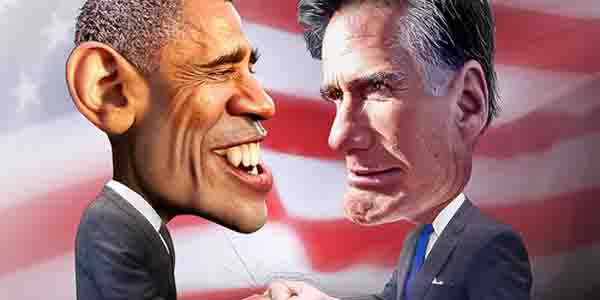
DENVER (AP) — In a showdown at close quarters, an aggressive Mitt Romney sparred with President Barack Obama in their first campaign debate Wednesday night over taxes, deficits and strong steps needed to create jobs in a sputtering national economy. “The status quo is not going to cut it,” declared the Republican challenger.

Democrat Obama in turn accused his rival of seeking to “double down” on economic policies that actually led to the devastating national downturn four years ago — and of evasiveness when it came to prescriptions for tax changes, health care, Wall Street regulation and more.

With early voting already under way in dozens of states, Romney was particularly assertive in the 90-minute event that drew a television audience likely to be counted in the tens of millions — like a man intent on shaking up the campaign with a little less than five weeks to run.

He seemed at ease in debate with the man who has been in the White House for four years. “It’s fun, isn’t it?” Romney said. In a rare post-debate concession, some Democratic strategists not involved in the campaign conceded the president was not at his best and missed opportunities to challenge his rival.

The former Massachusetts governor virtually lectured Obama at one point after the president accused him of seeking to cut education funds. “Mr. President, you’re entitled to your own airplane and your own house, but not your own facts,” he said.

The economy dominated the evening, as it has the race for the White House all year. Pre-debate opinion polls showed Obama with a slight advantage in key battleground states and nationally.

Romney said he had plans to fix the economy, overhaul the tax code, repeal Obama’s health care plan and replace with a better alternative, remake Medicare, pass a substitute for the legislation designed to prevent another financial crash and reduce deficits — but he provided no new specifics despite Obama’s prodding.

Said Obama: “At some point the American people have to ask themselves: Is the reason Governor Romney is keeping all these plans secret, is it because they’re going to be too good? Because middle class families benefit too much? No.”

The two men debate twice more this month, but they were first going their separate ways on Thursday. Obama had campaign stops in Colorado and then Madison, Wis., while Romney was booked into Virginia. All three states are among the nine battlegrounds likely to settle the race.

At times the debate turned into rapid-fire charges and retorts that drew on dense facts and figures that were difficult to follow. The men argued over oil industry subsidies, federal spending as a percentage of the GDP, Medicare cuts, taxes and small businesses and the size of the federal deficit and how it grew.

Obama sometimes seemed somewhat professorial. Romney was more assertive and didn’t hesitate to interrupt the president or moderator Jim Lehrer, who seemed to struggle to maintain control.

The wonky tone of the debate was a stark contrast to the harsh, broad-brush and sometimes personal attacks the two men make in person and in multimillion-dollar television advertising.

At the same time, Romney managed to make some points by personalizing his comments with recollections of people he said he had met on the campaign trail. In another folksy reference, Romney told Lehrer, a veteran of the Public Broadcasting Service, that he would stop the federal subsidy to PBS even though “I love Big Bird.”

Generally polite but pointed, the two men agreed about little if anything.

Obama said his opponent’s plan to reduce all tax rates by 20 percent would cost $5 trillion and benefit the wealthy at the expense of middle income taxpayers.

Shot back Romney: “Virtually everything he just said about my tax plan is inaccurate.”

The former Massachusetts governor and businessman added that Obama’s proposal to allow the expiration of tax cuts on upper-level income would mean tax increases on small businesses that create jobs by the hundreds of thousands.

The two campaign rivals clasped hands and smiled as they strode onto the debate stage at the University of Denver, then waved to the audience before taking their places behind identical lecterns.

There was a quick moment of laughter, when Obama referred to first lady Michelle Obama as “sweetie” and noted it was their 20th anniversary.

Romney added best wishes, and said to the first couple, “I’m sure this is the most romantic place you could imagine, here with me.”

Both candidates’ wives were in the audience.

Without saying so, the two rivals quickly got to the crux of their race — Romney’s eagerness to turn the contest into a referendum on the past four years while the incumbent desires for voters to choose between his plan for the next four years and the one his rival backs.

Romney ticked off the dreary economic facts of life — a sharp spike in food stamps, economic growth “lower this year than last” and “23 million people out of work or stropped looking for work.”

But Obama criticized Romney’s prescriptions and his refusal to raise taxes and said, “if you take such an unbalanced approach then that means you are going to be gutting our investment in schools and education … health care for seniors in nursing homes (and) for kids with disabilities.”

Not surprisingly, the two men disagreed over Medicare, a flash point since Romney placed Wisconsin Rep. Paul Ryan on his ticket.

The president repeatedly described Romney’s plan as a “voucher program” that would raise out-of-pocket costs on seniors.

He continued, directly addressing the voters at home: “If you’re 54 or 55 you might want to listen because this will affect you.”

Romney said he doesn’t support any changes for current retirees or those close to retirement.

“If you’re 60 or 60 and older you don’t need to listen further,” he said, but he contended that fundamental changes are needed to prevent the system from becoming insolvent as millions of baby boom generation Americans become eligible.

Romney also made a detailed case for repealing Obamacare, the name attached to the health care plan that Obama pushed through Congress in 2010. “It has killed jobs,” he said, and argued that the best approach is to “do what we did in my state.”

Though he didn’t say so, when he was governor Massachusetts passed legislation that required residents to purchase coverage — the so-called individual mandate that conservatives and he oppose on a national level.

Romney also said that Obamacare would cut $716 billion from Medicare over the next decade.

The president said the changes were part of a plan to lengthen the program’s life, and he added that AARP, the seniors lobby, supports it.

With a two-minute closing statement, Obama said he had spent his first four years in office fighting for those in the middle class and those seeking to make it there. “If you’ll vote for me, I’ll fight just as hard in my second term,” he said.

Romney was as critical of Obama’s tenure as he was the moment the two men walked onto the stage.

If the president is re-elected, he predicted continued economic trouble for the middle class, chronic unemployment, higher costs for health insurance and “dramatic cuts to the military.”

Obama took office in the shadow of an economic crisis but promised a turnaround that hasn’t materialized. Economic growth has been sluggish throughout his term, with unemployment above 8 percent since before he took office.

The two presidential rivals also are scheduled to debate on Oct. 16 in Hempstead, N.Y., and Oct. 22 in Boca Raton, Fla.

Vice President Joe Biden and Republican Rep. Paul Ryan of Wisconsin have one debate, Oct. 11 in Danville, Ky. Both men have already begun holding practice sessions.

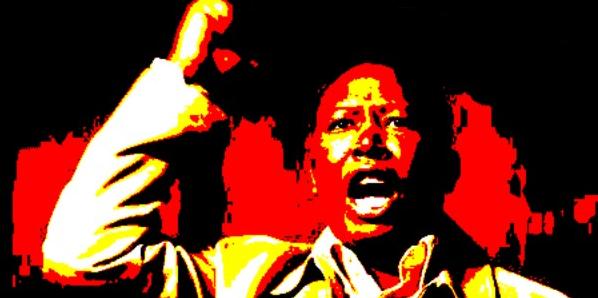
Malema owes R16 million in tax

Julius Malema
Julius Malema

The SA Revenue Service (Sars) has obtained a R16 million judgment against former ANC Youth League leader Julius Malema for unpaid taxes, according to a report on Sunday.

The judgment was obtained in the High Court in Pretoria on September 11, City Press reported.

Malema did not oppose the application by Sars.

Sars spokesman Adrian Lackay confirmed the judgment against Malema for R16 million was obtained.

[ad 1]

He told the newspaper the amount included unpaid taxes, penalties and interest.

Lackay said he could not give any more details of Malema’s tax affairs because a “taxpayer’s confidentiality is a legal obligation imposed on Sars”.

According to the report Sars was about to seize Malema’s property and assets in Gauteng and Limpopo.

Alan Lewis, a tax law consultant and advocate, told City Press the judgment showed two things: Malema had a “hell of a lot of money” and he was in deep trouble.

Lewis, a former Sars employee, said the revenue service would most likely hand the judgment to a sheriff of the court, who would attach Malema’s properties and assets.

Sars started looking into Malema’s tax affairs last year after it was revealed that he was linked to companies which had obtained lucrative contracts from the Limpopo provincial government.

Millions of rands were channelled through Malema’s Ratanang Family Trust, according to the report. – Sapa

Microsoft evaded $6,5 billion in US taxes

The giant US software company evaded $6,6 billion in taxes

Large multinational companies such as Microsoft and Hewlett Packard have used tax loopholes to avoid billions of dollars in income taxes over the last three years, according to a Senate committee report issued Thursday.

The report says multinationals dodge taxes by shifting profits to low-tax jurisdictions overseas and using loopholes to avoid taxes on repatriated income. The Senate Permanent Subcommittee on Investigations released the report ahead of a hearing Thursday at which representatives of Microsoft and Hewlett Packard were to testify.

The report says Microsoft used offshore tax avoidance strategies with subsidiaries in Puerto Rico, Ireland, Singapore and Bermuda to save at least 6.5 billion dollars in federal corporate income taxes.

Hewlett-Packard used a different tactic, according to the report. It created a series of occasional short-term internal loans with the apparent support of its auditor that allowed it to access offshore cash for domestic operations without paying taxes.

Senator Carl Levin, a Michigan Democrat and chairman of the Permanent Subcommittee on Investigations, didn’t accuse the companies of acting illegally.

“Major US corporations are increasingly earning their profits here but shipping them overseas to avoid paying the taxes they owe,” Levin said in a news release.

“At a time when we face such difficult budget choices, and when American families are facing a tax increase and cuts in critical programs from education to health care to food inspections to national defense, these offshore schemes are unacceptable.” – DPA