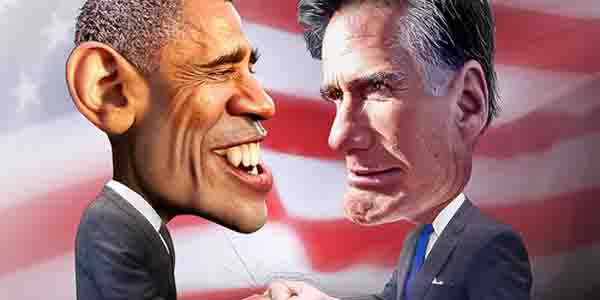
 DENVER (AP) — In a showdown at close quarters, an aggressive Mitt Romney sparred with President Barack Obama in their first campaign debate Wednesday night over taxes, deficits and strong steps needed to create jobs in a sputtering national economy. “The status quo is not going to cut it,” declared the Republican challenger.
Democrat Obama in turn accused his rival of seeking to “double down” on economic policies that actually led to the devastating national downturn four years ago — and of evasiveness when it came to prescriptions for tax changes, health care, Wall Street regulation and more.
With early voting already under way in dozens of states, Romney was particularly assertive in the 90-minute event that drew a television audience likely to be counted in the tens of millions — like a man intent on shaking up the campaign with a little less than five weeks to run.
He seemed at ease in debate with the man who has been in the White House for four years. “It’s fun, isn’t it?” Romney said. In a rare post-debate concession, some Democratic strategists not involved in the campaign conceded the president was not at his best and missed opportunities to challenge his rival.
The former Massachusetts governor virtually lectured Obama at one point after the president accused him of seeking to cut education funds. “Mr. President, you’re entitled to your own airplane and your own house, but not your own facts,” he said.
The economy dominated the evening, as it has the race for the White House all year. Pre-debate opinion polls showed Obama with a slight advantage in key battleground states and nationally.
Romney said he had plans to fix the economy, overhaul the tax code, repeal Obama’s health care plan and replace with a better alternative, remake Medicare, pass a substitute for the legislation designed to prevent another financial crash and reduce deficits — but he provided no new specifics despite Obama’s prodding.
Said Obama: “At some point the American people have to ask themselves: Is the reason Governor Romney is keeping all these plans secret, is it because they’re going to be too good? Because middle class families benefit too much? No.”
The two men debate twice more this month, but they were first going their separate ways on Thursday. Obama had campaign stops in Colorado and then Madison, Wis., while Romney was booked into Virginia. All three states are among the nine battlegrounds likely to settle the race.
At times the debate turned into rapid-fire charges and retorts that drew on dense facts and figures that were difficult to follow. The men argued over oil industry subsidies, federal spending as a percentage of the GDP, Medicare cuts, taxes and small businesses and the size of the federal deficit and how it grew.
Obama sometimes seemed somewhat professorial. Romney was more assertive and didn’t hesitate to interrupt the president or moderator Jim Lehrer, who seemed to struggle to maintain control.
The wonky tone of the debate was a stark contrast to the harsh, broad-brush and sometimes personal attacks the two men make in person and in multimillion-dollar television advertising.
At the same time, Romney managed to make some points by personalizing his comments with recollections of people he said he had met on the campaign trail. In another folksy reference, Romney told Lehrer, a veteran of the Public Broadcasting Service, that he would stop the federal subsidy to PBS even though “I love Big Bird.”
Generally polite but pointed, the two men agreed about little if anything.
Obama said his opponent’s plan to reduce all tax rates by 20 percent would cost $5 trillion and benefit the wealthy at the expense of middle income taxpayers.
Shot back Romney: “Virtually everything he just said about my tax plan is inaccurate.”
The former Massachusetts governor and businessman added that Obama’s proposal to allow the expiration of tax cuts on upper-level income would mean tax increases on small businesses that create jobs by the hundreds of thousands.
The two campaign rivals clasped hands and smiled as they strode onto the debate stage at the University of Denver, then waved to the audience before taking their places behind identical lecterns.
There was a quick moment of laughter, when Obama referred to first lady Michelle Obama as “sweetie” and noted it was their 20th anniversary.
Romney added best wishes, and said to the first couple, “I’m sure this is the most romantic place you could imagine, here with me.”
Both candidates’ wives were in the audience.
Without saying so, the two rivals quickly got to the crux of their race — Romney’s eagerness to turn the contest into a referendum on the past four years while the incumbent desires for voters to choose between his plan for the next four years and the one his rival backs.
Romney ticked off the dreary economic facts of life — a sharp spike in food stamps, economic growth “lower this year than last” and “23 million people out of work or stropped looking for work.”
But Obama criticized Romney’s prescriptions and his refusal to raise taxes and said, “if you take such an unbalanced approach then that means you are going to be gutting our investment in schools and education … health care for seniors in nursing homes (and) for kids with disabilities.”
Not surprisingly, the two men disagreed over Medicare, a flash point since Romney placed Wisconsin Rep. Paul Ryan on his ticket.
The president repeatedly described Romney’s plan as a “voucher program” that would raise out-of-pocket costs on seniors.
He continued, directly addressing the voters at home: “If you’re 54 or 55 you might want to listen because this will affect you.”
Romney said he doesn’t support any changes for current retirees or those close to retirement.
“If you’re 60 or 60 and older you don’t need to listen further,” he said, but he contended that fundamental changes are needed to prevent the system from becoming insolvent as millions of baby boom generation Americans become eligible.
Romney also made a detailed case for repealing Obamacare, the name attached to the health care plan that Obama pushed through Congress in 2010. “It has killed jobs,” he said, and argued that the best approach is to “do what we did in my state.”
Though he didn’t say so, when he was governor Massachusetts passed legislation that required residents to purchase coverage — the so-called individual mandate that conservatives and he oppose on a national level.
Romney also said that Obamacare would cut $716 billion from Medicare over the next decade.
The president said the changes were part of a plan to lengthen the program’s life, and he added that AARP, the seniors lobby, supports it.
With a two-minute closing statement, Obama said he had spent his first four years in office fighting for those in the middle class and those seeking to make it there. “If you’ll vote for me, I’ll fight just as hard in my second term,” he said.
Romney was as critical of Obama’s tenure as he was the moment the two men walked onto the stage.
If the president is re-elected, he predicted continued economic trouble for the middle class, chronic unemployment, higher costs for health insurance and “dramatic cuts to the military.”
Obama took office in the shadow of an economic crisis but promised a turnaround that hasn’t materialized. Economic growth has been sluggish throughout his term, with unemployment above 8 percent since before he took office.
The two presidential rivals also are scheduled to debate on Oct. 16 in Hempstead, N.Y., and Oct. 22 in Boca Raton, Fla.
Vice President Joe Biden and Republican Rep. Paul Ryan of Wisconsin have one debate, Oct. 11 in Danville, Ky. Both men have already begun holding practice sessions.

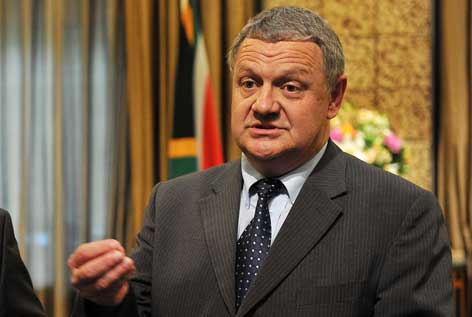
 Dr. Pieter Mulder, leader of the Freedom Front Plus, yesterday asked for an urgent parliamentary debate on affirmative action to be held in Parliament.