Solutions for a Canadian recovery in this crisis

While the world has seen quite a few economic crises, both global and local, the current situation is different to all of them, triggered as it has been by a pandemic. COVID-19 has meant that a number of small businesses all over the world have been hit the worst, and these were the ones who were struggling before the pandemic hit as well. With wafer-thin margins and small client bases, the fact that people cannot safely step out of their homes has led to a huge drop in revenues across the board, causing millions of people to lose their jobs and small businesses to shut down. A recovery will require the use of tools and tricks which are new, since the old ways of coping with a financial crisis may not be effective in this instance.

It has already been seen that small businesses have seen twice as many job losses as larger businesses during the crisis, and so any recovery plan needs to focus on them first. In Canada, 98% of employers are small businesses, which shows just how necessary it is to help these enterprises out, especially as a recent survey by the Canadian Federation of Independent Business recently found that one in seven small businesses could go bankrupt due to the impact of the crisis. This will have a snowball effect, as jobs will be lost, not to mention the loss in tax revenue and the drop in GDP that will follow. It is therefore essential that small businesses form the focus of any recovery plan in Canada.

The Canadian economy is expected to contract by 6% in 2020, but the expectation is that there will be an almost immediate rebound, with 6% growth projected for 2021. The likelihood of this rebound will depend on the success of any recovery plan. Research has shown that there are a few key areas which can help the economy to rebound faster than expected.

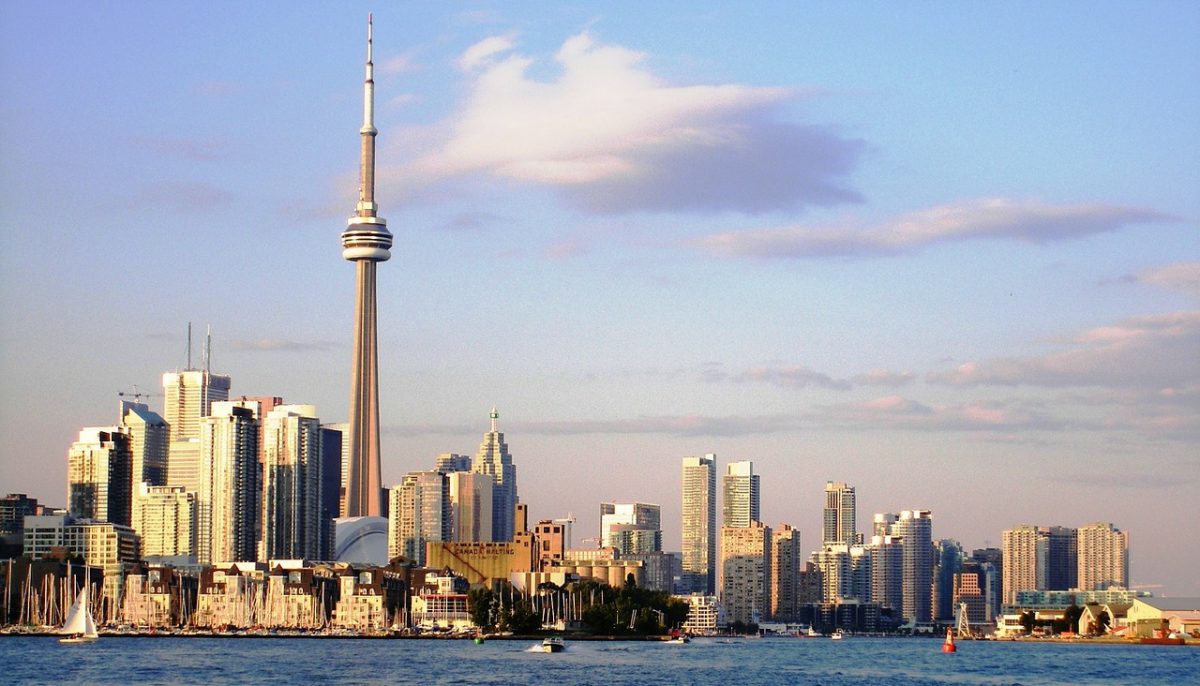
For starters, businesses in Toronto and its surroundings should not be hit too badly, as the region continues to show growth despite a slow reopening. Elsewhere, it will be important for the government to focus on the digital economy and technological solutions, as these have been resilient in the face of the pandemic. Online businesses and service providers have seen an increase in demand, as people who cannot step outside their homes turn to the internet for their needs. We have even seen traditional physical businesses turn to the internet to continue to provide their services to customers. For example, casinos have been shut in the country since March, but many operators have created new Canadian casino online websites to try and continue operations and provide a similar experience to customers as far as possible. Land-based casinos in Canada will therefore be well-advised to focus on their online presence as well, as the popularity of this medium will not go away anytime soon. This is a part of the wider technological trend in the Canadian economy. The IT and communications sectors contributed 4.8% to Canadian GDP in 2019, and increased to over 5% in 2020. These tech solutions have been utilised across sectors, from agriculture to financial services, showing just how widespread their impact on the economy can be if given the right support.

Manufacturing will be another significant sector to focus recovery efforts on. Many businesses have responded quickly to the changing environment by moving to new products, and altering their supply chains to be able to meet the demand for those new products. Healthcare products such as personal protective equipment is the best example of this, as many businesses have pivoted to manufacture PPE where possible. This shows the need to be agile and efficient, and the government will need to ensure that the right environment is provided to companies to allow them to thrive in this new scenario.

No Brains In Washington

Washington’s IQ follows the Fed’s interest rate — it is negative. Washington is a black hole into which all sanity is sucked out of government deliberations.

Washington’s failures are everywhere visible. We can see the failures in Washington’s wars and in Washington’s approach to China and Russia.

The visit of Chinese President Xi Jinping, was scheduled for the week-end following the Pope’s visit to Washington. Was this Washington’s way of demoting China’s status by having its president play second fiddle to the Pope? The President of China is here for week-end news coverage? Why didn’t Obama just tell him to go to hell?

Washington’s cyber incompetence and inability to maintain cyber security is being blamed on China. The day before Xi Jinping’s arrival in Washington, the White House press secretary warmed up President Jinping’s visit by announcing that Obama might threaten China with financial sanctions.

And not to miss an opportunity to threaten or insult the President of China, the US Secretary of Commerce fired off a warning that the Obama regime was too unhappy with China’s business practices for the Chinese president to expect a smooth meeting in Washington.

In contrast, when Obama visited China, the Chinese government treated him with politeness and respect.

China is America’s largest creditor after the Federal Reserve. If the Chinese government were so inclined, China could cause Washington many serious economic, financial, and military problems. Yet China pursues peace while Washington issues threats.

Like China, Russia, too, has a foreign policy independent of Washington’s, and it is the independence of their foreign policies that puts China and Russia on the outs with Washington.

Washington considers countries with independent foreign policies to be threats. Libya, Iraq, and Syria had independent foreign policies. Washington has destroyed two of the three and is working on the third. Iran, Russia, and China have independent foreign policies. Consequently, Washington sees these countries as threats and portrays them to the American people as such.

Russia’s President Vladimir Putin will meet with Obama next week at the UN meeting in New York. It is a meeting that seems destined to go nowhere. Putin wants to offer Obama Russian help in defeating ISIS, but Obama wants to use ISIS to overthrow Syrian President Assad, install a puppet government, and throw Russia out of its only Mediterranean seaport at Tartus, Syria. Obama wants to press Putin to hand over Russian Crimea and the break-away republics that refuse to submit to the Russophobic government that Washington has installed in Kiev.

Despite Washington’s hostility, Xi Jinping and Putin continue to try to work with Washington even at the risk of being humiliated in the eyes of their peoples. How many slights, accusations, and names (such as “the new Hitler”) can Putin and Xi Jinping accept before losing face at home? How can they lead if their peoples feel the shame inflicted on their leaders by Washington?

Xi Jinping and Putin are clearly men of peace. Are they deluded or are they making every effort to save the world from the final war?

One has to assume that Putin and Xi Jinping are aware of the Wolfowitz Doctrine, the basis of US foreign and military policies, but perhaps they cannot believe that anything so audaciously absurd can be real. In brief, the Wolfowitz Doctrine states that Washington’s principal objective is to prevent the rise of countries that could be sufficiently powerful to resist American hegemony. Thus, Washington’s attack on Russia via Ukraine and Washington’s re-militarization of Japan as an instrument against China, despite the strong opposition of 80 percent of the Japanese population.

“Democracy?” “Washington’s hegemony don’t need no stinkin’ democracy,” declares Washington’s puppet ruler of Japan as he, as Washington’s faithful servant, over-rides the vast majority of the Japanese population.

Meanwhile, the real basis of US power—its economy—continues to crumble. Middle class jobs have disappeared by the millions. US infrastructure is crumbling. Young American women, overwhelmed with student debts, rent, and transportation costs, and nothing but lowly-paid part-time jobs, post on Internet sites their pleas to be made mistresses of men with sufficient means to help them with their bills. This is the image of a Third World country.

In 2004 I predicted in a nationally televised conference in Washington, DC, that the US would be a Third World country in 20 years. Noam Chomsky says we are already there now in 2015. Here is a recent quote from Chomsky:

“Look around the country. This country is falling apart. Even when you come back from Argentina to the United States it looks like a third world country, and when you come back from Europe even more so. The infrastructure is collapsing. Nothing works. The transportation system doesn’t work. The health system is a total scandal–twice the per capita cost of other countries and not very good outcomes. Point by point. The schools are declining . . .”

Another indication of a third world country is large inequality in the distribution of income and wealth. According to the CIA itself, the United States now has one of the worst distributions of income of all countries in the world. The distribution of income in the US is worse than in Afghanistan, Albania, Algeria, Armenia, Australia, Austria, Azerbaijan, Bangladesh, Belarus, Belgium, Benin, Bosnia/Herzegovina, Burkina Faso, Burundi, Cambodia, Cameroon, Canada, Cote d’Ivoire, Croatia, Cyprus, Czech Republic, Denmark, Egypt, Estonia, Ethiopia, Finland, France, Germany, Ghana, Greece, Guinea, Guyana, Hungary, Iceland, India, Indonesia, Iran, Ireland, Israel, Italy, Japan, Jordan, Kazakhstan, Kenya, South Korea, Kyrgyzstan, Laos, Latvia, Liberia, Lithuania, Luxembourg, Macedonia, Malawi, Mali, Malta, Mauritania, Mauritius, Moldova, Mongolia, Montenegro, Morocco, Nepal, Netherlands, New Zealand, Nicaragua, Niger, Nigeria, Norway, Pakistan, Philippines, Poland, Portugal, Romania, Russia, Senegal, Serbia, Slovakia, Slovenia, Spain, Sweden, Switzerland, Taiwan, Tajikistan, Tanzania, Timor-Leste, Tunisia, Turkey, Turkmenistan, Uganda, Ukraine, UK, Uzbekistan, Venezuela, Vietnam, and Yemen.

The concentration of US income and wealth in the hands of the very rich is a new development in my lifetime. I ascribe it to two things. One is the offshoring of American jobs. Offshoring moved high productivity, high-value-added American jobs to countries where the excess supply of labor results in wages well below labor’s contribution to the value of output. The lower labor costs abroad transform what had been higher American wages and salaries and, thereby, US household incomes, into corporate profits, bonuses for corporate executives, and capital gains for shareholders, and in the dismantling of the ladders of upward mobility that had made the US an “opportunity society.”

The other cause of the extreme inequality that now prevails in the US is what Michael Hudson calls the financialization of the economy that permits banks to redirect income away from driving the economy to the payment of interest in service of debt issued by the banks.

Both of these developments maximize income and wealth for the One Percent at the expense of the population and economy.

As Michael Hudson and I have discovered, neoliberal economics is blind to reality and serves to justify the destruction of the economic prospects of the Western World. It remains to be seen if Russia and China can develop a different economics or whether these rising superpowers will fall victim to the “junk economics” that has destroyed the West. With so many Chinese and Russian economists educated in the US tradition, the prospects of Russia and China might not be any better than ours.

The entire world could go down the tubes together.

Dr. Paul Craig Roberts was Assistant Secretary of the Treasury for Economic Policy and associate editor of the Wall Street Journal. He was columnist for Business Week, Scripps Howard News Service, and Creators Syndicate. He has had many university appointments. His internet columns have attracted a worldwide following. Roberts’ latest books are The Failure of Laissez Faire Capitalism and Economic Dissolution of the West and How America Was Lost.

British banks most exposed to Chinese market instability

Disclosures from two of Asia’s largest lenders showed that British banks are among of the most vulnerable to the current market troubles in China.

In its latest report, HSBC said outstanding loans to China grew 12 percent in the past year to $36.2 billion. Standard Chartered also revealed its overall exposure to Chinese customers rose by 30 percent during the same period.

The rapid growth of the Chinese economy has seen a rise in the numbers of British banks acting as foreign lenders, resulting in a record total of $221.2 billion outstanding loans to China, more than twice the total of US banks, with $86.5 billion outstanding loans.

UK banks were also the largest source of new loans to China during the year ending March 31, topping the list of 25 countries whose banks report their lending data.

The revelations come as the pound suffered its worst day of trading against the Euro in six years.

After months of strong trading against the Euro due to the Greek financial crisis, the pound fell by 2 percent, before regaining half a percent and finishing the day in a 1.5 percent drop.

Speaking during a visit to Finland on Tuesday, Chancellor George Osborne said Britain’s open economy made it vulnerable to economic tremors across the globe.

Source: RT

Zim state broadcaster fires hundreds

Zimbabwe’s state broadcaster said on Thursday it has laid off nearly 300 workers as it battles financial woes.

The Zimbabwe Broadcasting Corporation (ZBC) board of directors has “so far terminated the contracts of some 282 staff members on three months’ notice”, chairman Fidelis Munyoro said in a statement.

It said the ZBC had decided to streamline certain operations to try to steer the national broadcaster towards “viable business-focused and results-based activities”.

A journalist at the broadcaster, which has been failing to pay staff salaries, confirmed the layoffs.

“We have been told it is ongoing so even those who have not received the letters are not sure whether their jobs are secure or not,” the journalist told AFP, requesting anonymity.

The ZBC joins several companies that have laid off workers after a Supreme Court ruling last month that allowed employers to dismiss workers after giving three months’ notice.

The Zimbabwe Congress of Trade Unions staged protests in the capital Harare last week over the dismissals.

Zimbabwe’s economy has been in a downward spiral for more than a decade following President Robert Mugabe’s land reforms, which broke the country’s agricultural backbone.

Source: AFP

South Africans face tough times

Economic growth in the first quarter is expected to have slowed mainly due to the electricity supply constraints.

Most economists have projected that gross domestic product (GDP) will decline sharply from 4.1% to 1.4% quarter-on-quarter.

On Tuesday, Statistics South Africa (Stats SA) will release the growth numbers and the country’s unemployment rate.

Economist at Sasfin Asset Managers, Liston Mentjies says the poor are already bearing the brunt of a weak economy.

“If you look on the road cars are running well, shopping malls are full, at restaurants you have to wait for a table. But for the majority of South Africans times are tough.”

Ramaphosa calls for closer Asian ties

Deputy President Cyril Ramaphosa told delegates at the Asia-Africa Business Summit in Jakarta, Indonesia on Tuesday that Afro-Asian economic and cultural ties needed to be strengthened.

Ramaphosa said Asia and Africa could collaborate in a number of areas, such as agriculture, News24 reported.

“Because of the diversity of crops cultivated on the continent, Africa has the potential to increase the nutritional value of global food supply more than any other region in the world.

“However, for African farmers to benefit fully from their contribution to global food supply, they need to be more involved in the food value chain – from seed to market.”

Another area for greater collaboration is manufacturing.

“Manufacturing is vitally important to Africa’s economic future as it can contribute substantially to improving growth, reducing unemployment and addressing balance of payment issues.

“With a market of close to 900 million people, Africa has the capacity to become a manufacturing success.”

Africa’s ability to trade is hampered by a lack of physical infrastructure, he said.

“Many African countries – without adequate rail, road and port infrastructure – are unable to productively exploit their abundant natural resources.

“Asian countries – with their skills, capital and technical and engineering expertise – can partner with African countries in developing this critical area.

“Infrastructure development is crucial to the success of the Tripartite Free Trade Agreement, both to connect markets and to generate enough electricity to support the development of manufacturing and other sectors.

“By strengthening South-South cooperation, we can begin a new era in global trade – one that will be driven and sustained by two of the world’s fastest-growing regions,” said Ramaphosa.

China comes to the Free State

The Free State province in South Africa aims to hold China Week in April with the intention of strengthening business relations and to draw more investment opportunities into the province.

Spokesperson Makalo Mohale says China is well advanced in terms of technology and business growth and by having strong associations with them can lead to a positive economic influence on the province.

The provincial is set to spend R7million on the week long programme, which will be on April the 13th until the 19th.

Mohale says more than 500 Chinese delegates will be in the province during that period.

Outsourcing in America

You’ve spent twenty plus years loyally working in Information Technology (IT) for Southern California Edison, and eighteen months ago your boss tells you that they are going to study outsourcing but not to worry, “your position is safe.” On the one hand you are worried because you know many stories of American IT workers losing their jobs to outsourcing, but on the other you feel comforted that you’ve been loyal to SCE and provide a critical service. Then eight months ago they tell you that they are outsourcing most IT functions and that they want you, get this, to train your guestworker replacement. If you say no, SCE will terminate you with cause and you would lose not only a severance package but also eligibility for unemployment insurance. This is the common story I heard from many workers at SCE.

The work that the 400 SCE IT employees do isn’t disappearing, instead it and their jobs are being taken over by foreign guestworkers here on H-1B visas. Those guestworkers are employed by the two leading India-based outsourcing firms, Tata Consultancy Services and Infosys.

The SCE workers are wondering: “Why should I lose my job when the work still needs to be done? Why is the government doing this to me and my family?”
Adding to the injustice of losing their jobs, the SCE workers are being forced to do something that is so common in the industry it is a term of art: “knowledge transfer,” an ugly euphemism that means being forced to train your own foreign replacement. The SCE workers are, “demoralized; in disbelief; beyond furious; down in the dumps; feeling anguish; depressed; feeling dehumanized; feeling humiliated; worrying about the future; worrying about paying the bills.”

The SCE workers rightly place the culpability squarely on SCE executives, the president, and Congress. One worker simply said, “Shame on Edison for doing this and shame on our politicians for enabling it.”

H-1B visas are temporary work permits issued by the U.S. government that are good for up to six years. The intent is for these visas to be used only when an American worker cannot be found. In fact, the U.S. Department of Labor states, “The Immigration and Nationality Act (INA) requires that the hiring of a foreign worker will not adversely affect the wages and working conditions of U.S. workers comparably employed.”

In practice, the H-1B visa has been used for years to undercut American workers with lower-wage, and often lesser-skilled, workers brought in from overseas. How does this happen? Congress sets the wage floors for H-1Bs, and it has set it far below market wages. And the Department of Labor has chosen not to investigate the rampant abuse of the program. As a result, over the past decade, outsourcers like Tata Consultancy Services and Infosys have become the dominant users. Just over the past four years, Tata and Infosys received more than 33,000 new H-1B visas. That’s 33,000 jobs lost due to those two companies alone. They use the program to replace American workers domestically while using their H-1B workforce stationed in America to facilitate the transfer of work and jobs to India. These are not immigrants in waiting, the firms sponsor virtually none of their H-1B workers for permanent residence (greencards). Instead of a way to fill skills gaps, the H-1B program has become a way to suppress wages and pad profits.

The practice of replacing American workers with cheaper H-1B guestworkers is widespread. It is so endemic in the H-1B program that last year the majority of the visas went to outsourcing companies. Indian Government officials have dubbed the H-1B as the “Outsourcing Visa.”

Why do companies replace Americans with foreign guestworkers? The SCE workers rightly believe the motivation is “pure greed.” According to a recent consulting report commissioned by SCE, the typical SCE IT worker is earning $110,000 while government records show Tata pays its H-1B workers $66,000 and Infosys pays $71,000. The savings go beyond just wages. H-1B workers have very limited bargaining power since the employers control their work permit. It should come as no surprise that H-1B workers are easily exploited. Those significant cost savings far outweigh the one-time H-1B legal and administrative fees of about $5,000 per worker.

The SCE workers I spoke to have a message for Secretary of Labor Thomas Perez: use your statutory authority to investigate and stop the H-1B abuse. If you find abuse debar those employers from using the program.

And their message to Congress is: close the loopholes that allow employers to use H-1Bs for cheap labor. Given all of these facts, you would think that Congress would be hard at work fixing the H-1B program. Instead, many are moving in the other direction, writing legislation to triple the number of H-1Bs while doing nothing to close the loopholes. The Skills Visa Act, introduced by Reps. Darrell Issa (R-Calif.) and Bob Goodlatte (R-Va.), in the last Congress, and the bipartisan I-Squared Act recently introduced by the Sens. Orrin Hatch (R-Utah) and Amy Klobuchar (D-Minn.) would threaten tens of thousands more middle class jobs. However, Sens. Chuck Grassley (R-Iowa) and Dick Durbin (D-Ill.) have been working for a decade to fix the program. They propose: raising the H-1B wage floors to the average wage; ensuring that American workers have a first and legitimate shot at jobs; and, ensuring that American workers aren’t being replaced by H-1Bs. This would mean the H-1B program is being used for truly skilled workers and not simply cheap labor.

Ron Hira is an associate professor of public policy at Howard University, a research associate with the Economic Policy Institute, and co-author of the book Outsourcing America

US attacks London’s ‘constant accomodation’ of China

The Obama administration accused the UK of a “constant accommodation” of China after Britain decided to join a new China-led financial institution that could rival the World Bank.

The rare rebuke of one of the US’s closest allies came as Britain prepared to announce that it will become a founding member of the $50bn Asian Infrastructure Investment Bank, making it the first country in the G7 group of leading economies to join an institution launched by China last October.

Thursday’s reprimand was a rare breach in the “special relationship” that has been a backbone of western policy for decades. It also underlined US concerns over China’s efforts to establish a new generation of international development banks that could challenge Washington-based global institutions. The US has been lobbying other allies not to join the AIIB.

Relations between Washington and David Cameron’s government have become strained, with senior US officials criticising Britain over falling defence spending, which could soon go below the Nato target of 2 per cent of gross domestic product.

A senior US administration official told the Financial Times that the British decision was taken after “virtually no consultation with the US” and at a time when the G7 had been discussing how to approach the new bank.

“We are wary about a trend toward constant accommodation of China, which is not the best way to engage a rising power,” the US official said.

British officials were publicly restrained in criticising China over its handling of Hong Kong’s pro-democracy protests while Mr Cameron has made it clear he has no further plans to meet the Dalai Lama, Tibet’s spiritual leader — after a 2012 meeting that prompted a furious response from Beijing.

While Beijing has long been suspicious about US influence over the World Bank and International Monetary Fund, China also believes that the US and Japan have too much control over the Manila-based Asian Development Bank. In addition to the AIIB, China is the driving force behind last year’s creation of a Brics development bank and is promoting a $40bn Silk Road Fund to finance economic integration with Central Asia.

The Obama administration has said it is not opposed to the AIIB but US officials fear it could become an instrument of Chinese foreign policy if Beijing ends up having veto power over the bank’s decisions.

The UK Treasury denied that Britain had acted out of the blue, saying there had been “at least a month of extensive consultation” at a G7 level, including with Jack Lew, US Treasury secretary.

George Osborne, UK chancellor of the exchequer, was unrepentant, arguing that Britain should be in at the start of the new bank, ensuring that it operates in a transparent way. He believes it fills an important gap in providing finance for infrastructure for Asia.

“Joining the AIIB at the founding stage will create an unrivalled opportunity for the UK and Asia to invest and grow together,” Mr Osborne said. He expects other western countries, which have been making positive noises privately about the new bank, to become involved.

Beijing launched the AIIB in October with the backing of 20 other countries but Japan, South Korea and Australia —US allies in the region — did not become founding members. There has been a strong debate within the Australian cabinet about whether to join, after US pressure to stay on the sidelines.

Mr Osborne’s decision reflects London’s desire to pursue commercial relations with China aggressively, even at the expense of antagonising Washington.

The UK has been keen to establish the City of London as a platform for overseas business in the Chinese currency as it starts to play a bigger role in the global economy.

Source: FT

The neoconservative threat to international relations

This week I was invited to address an important conference of the Russian Academy of Sciences in Moscow. Scholars from Russia and from around the world, Russian government officials, and the Russian people seek an answer as to why Washington destroyed during the past year the friendly relations between America and Russia that President Reagan and President Gorbachev succeeded in establishing. All of Russia is distressed that Washington alone has destroyed the trust between the two major nuclear powers that had been created during the Reagan-Gorbachev era, trust that had removed the threat of nuclear armageddon. Russians at every level are astonished at the virulent propaganda and lies constantly issuing from Washington and the Western media. Washington’s gratuitous demonization of the Russian president, Vladimir Putin, has rallied the Russian people behind him. Putin has the highest approval rating ever achieved by any leader in my lifetime.

Washington’s reckless and irresponsible destruction of the trust achieved by Reagan and Gorbachev has resurrected the possibility of nuclear war from the grave in which Reagan and Gorbachev buried it. Again, as during the Cold War the specter of nuclear armageddon stalks the earth.

Why did Washington revive the threat of world annihilation? Why is this threat to all of humanity supported by the majority of the US Congress, by the entirety of the presstitute media, and by academics and think-tank inhabitants in the US, such as Motyl and Weiss, about whom I wrote recently?

It was my task to answer this question for the conference. You can read my February 25 and February 26 addresses below. But first you should understand what nuclear war means. You can gain that understanding here:

The Threat Posed to International Relations By The Neoconservative Ideology of American Hegemony,
Address to the 70th Anniversary of the Yalta Conference, Hosted by Institutes of the Russian Academy of Sciences and Moscow State Institute of International Relations, Moscow, February 25, 2015, Hon. Paul Craig Roberts

Colleagues,

What I propose to you is that the current difficulties in the international order are unrelated to Yalta and its consequences, but have their origin in the rise of the neoconservative ideology in the post-Soviet era and its influence on Washington’s foreign policy.

The collapse of the Soviet Union removed the only constraint on Washington’s power to act unilaterally abroad. At that time China’s rise was estimated to require a half century. Suddenly the United States found itself to be the Uni-power, the “world’s only superpower.” Neoconservatives proclaimed “the end of history.”

By the “end of history” neoconservatives mean that the competition between socio-economic-political systems is at an end. History has chosen “American Democratic-Capitalism.” It is Washington’s responsibility to exercise the hegemony over the world given to Washington by History and to bring the world in line with History’s choice of American democratic-capitalism.

In other words, Marx has been proven wrong. The future does not belong to the proletariat but to Washington.

The neoconservative ideology raises the United States to the unique status of being “the exceptional country,” and the American people acquire exalted status as “the indispensable people.”

If a country is “the exceptional country,” it means that all other countries are unexceptional. If a people are “indispensable,” it means other peoples are dispensable. We have seen this attitude at work in Washington’s 14 years of wars of aggression in the Middle East. These wars have left countries destroyed and millions of people dead, maimed, and displaced. Yet Washington continues to speak of its commitment to protect smaller countries from the aggression of larger countries. The explanation for this hypocrisy is that Washington does not regard Washington’s aggression as aggression, but as History’s purpose.

We have also seen this attitude at work in Washington’s disdain for Russia’s national interests and in Washington’s propagandistic response to Russian diplomacy.

The neoconservative ideology requires that Washington maintain its Uni-power status, because this status is necessary for Washington’s hegemony and History’s purpose.

The neoconservative doctrine of US world supremacy is most clearly and concisely stated by Paul Wolfowitz, a leading neoconservative who has held many high positions: Deputy Assistant Secretary of Defense, Director of Policy Planning US Department of State, Assistant Secretary of State, Ambassador to Indonesia, Undersecretary of Defense for Policy, Deputy Secretary of Defense, President of the World Bank.

In 1992 Paul Wolfowitz stated the neoconservative doctrine of American world supremacy:

“Our first objective is to prevent the re-emergence of a new rival, either on the territory of the former Soviet Union or elsewhere, that poses a threat on the order of that posed formerly by the Soviet Union. This is a dominant consideration underlying the new regional defense strategy and requires that we endeavor to prevent any hostile power from dominating a region whose resources would, under consolidated control, be sufficient to generate global power.”

For clarification, a “hostile power” is a country with an independent policy (Russia, China, Iran, and formerly Saddam Hussein, Gaddafi, Assad).

This bold statement struck the traditional American foreign policy establishment as a declaration of American Imperialism. The document was rewritten in order to soften and disguise the blatant assertion of supremacy without changing the intent. These documents are available online, and you can examine them at your convenience.

Softening the language allowed the neoconservatives to rise to foreign policy dominance. The neoconservatives are responsible for the Clinton regime’s attacks on Yugoslavia and Serbia. Neoconservatives, especially Paul Wolfowitz, are responsible for the George W. Bush regime’s invasion of Iraq. The neoconservatives are responsible for the overthrow and murder of Gaddafi in Libya, the assault on Syria, the propaganda against Iran, the drone attacks on Pakistan and Yemen, the color revolutions in former Soviet Republics, the attempted “Green Revolution” in Iran, the coup in Ukraine, and the demonization of Vladimir Putin.

A number of thoughtful Americans suspect that the neoconservatives are responsible for 9/11, as that event gave the neoconservatives the “New Pearl Harbor” that their position papers said was necessary in order to launch their wars for hegemony in the Middle East. 9/11 led directly and instantly to the invasion of Afghanistan, where Washington has been fighting since 2001. Neoconservatives controlled all the important government positions necessary for a “false flag” attack.

Neoconservative Assistant Secretary of State Victoria Nuland, who is married to another neoconservative, Robert Kagan, implemented and oversaw Washington’s coup in Ukraine and chose the new government.

The neoconservatives are highly organized and networked, well-financed, supported by the print and TV media, and backed by the US military/security complex and the Israel Lobby. There is no countervailing power to their influence on US foreign power.

The neoconservative doctrine goes beyond the Brzezinski doctrine, which dissented from Detente and provocatively supported dissidents inside the Soviet empire. Despite its provocative character, the Brzezinski doctrine remained a doctrine of Great Power politics and containment. It is not a doctrine of US world hegemony.

While the neoconservatives were preoccupied for a decade with their wars in the Middle East, creating a US Africa Command, organizing color revolutions, exiting disarmament treaties, surrounding Russia with military bases, and “pivoting to Asia” to surround China with new air and naval bases, Vladimir Putin led Russia back to economic and military competence and successfully asserted an independent Russian foreign policy.

When Russian diplomacy blocked Washington’s planned invasion of Syria and Washington’s planned bombing of Iran, the neoconservatives realized that they had failed the “first objective” of the Wolfowitz Doctrine and had allowed “the re-emergence of a new rival . . . on the territory of the former Soviet Union” with the power to block unilateral action by Washington.

The attack on Russia began. Washington had spent $5 billion over a decade creating non-governmental organizations (NGOs) in Ukraine and cultivating Ukrainian politicians. The NGOs were called into the streets. The extreme nationalists or nazi elements were used to introduce violence, and the elected democratic government was overthrown. The intercepted conversation between Victoria Nuland and the US ambassador in Kiev, in which the two Washington operatives choose the members of the new Ukrainian government, is well known.

If the information that has recently come to me from Armenia and Kyrgyzstan is correct, Washington has financed NGOs and is cultivating politicians in Armenia and the former Soviet Central Asian Republics. If the information is correct, Russia can expect more “color revolutions” or coups in other former territories of the Soviet Union. Perhaps China faces a similar threat in Uyghurstan.

The conflict in Ukraine is often called a “civil war.” This is incorrect. A civil war is when two sides fight for the control of the government. The break-away republics in eastern and southern Ukraine are fighting a war of secession.

Washington would have been happy to use its coup in Ukraine to evict Russia from its Black Sea naval base as this would have been a strategic military achievement. However, Washington is pleased that the “Ukraine crisis” that Washington orchestrated has resulted in the demonization of Vladimir Putin, thus permitting economic sanctions that have disrupted Russia’s economic and political relations with Europe. The sanctions have kept Europe in Washington’s orbit.

Washington has no interest in resolving the Ukrainian situation. The situation can be resolved diplomatically only if Europe can achieve sufficient sovereignty over its foreign policy to act in Europe’s interest instead of Washington’s interest.

The neoconservative doctrine of US world hegemony is a threat to the sovereignty of every country. The doctrine requires subservience to Washington’s leadership and to Washington’s purposes. Independent governments are targeted for destabilization. The Obama regime overthrew the reformist government in Honduras and currently is at work destabilizing Venezuela, Bolivia, Ecuador, and Argentina, and most likely also Armenia and the former Central Asian Soviet Republics.

Yalta and its consequences have to do with Great Power rivalries. But in the neoconservative doctrine, there is only one Great Power–the Uni-power. There are no others, and no others are to be permitted

Therefore, unless a modern foreign policy arises in Washington and displaces the neoconservatives, the future is one of conflict.

It would be a strategic error to dismiss the neoconservative ideology as unrealistic. The doctrine is unrealistic, but it is also the guiding force of US foreign policy and is capable of producing a world war.

In their conflict with Washington’s hegemony, Russia and China are disadvantaged. The success of American propaganda during the Cold War, the large differences between living standards in the US and those in communist lands, overt communist political oppression, at times brutal, and the Soviet collapse created in the minds of many people nonexistent virtues for the United States. As English is the world language and the Western media is cooperative, Washington is able to control explanations regardless of the facts. The ability of Washington to be the aggressor and to blame the victim encourages Washington’s march to more aggression.

This concludes my remarks. Tomorrow I will address whether there are domestic political restraints or economic restraints on the neoconservative ideology.

Paul Craig Roberts, Address to the 70th Anniversary of the Yalta Conference, Moscow, February 26, 2015

Colleagues,

At the plenary session yesterday I addressed the threat that the neoconservative ideology poses to international relations. In this closing session I address whether there are any internal restraints on this policy from the US population and whether there are economic restraints.

Just as 9/11 served to launch Washington’s wars for hegemony in the Middle East, 9/11 served to create the American police state. The Constitution and the civil liberties it protects quickly fell to the accumulation of power in the executive branch that a state of war permitted.

New laws, some clearly pre-prepared such as the PATRIOT Act, executive orders, presidential directives, and Department of Justice memos created an executive authority unaccountable to the US Constitution and to domestic and international law.

Suddenly Americans could be detained indefinitely without cause presented to a court. Habeas corpus, a constitutional protection which prohibits any such detention, has been set aside.

Suddenly people could be tortured into confessions in violation of the right against self-incrimination and in violation of domestic and international laws against torture.

Suddenly Americans and Washington’s closest allies could be spied on indiscriminately without the need of warrants demonstrating cause.

The Obama regime added to the Bush regime’s transgressions the assertion of the right of the executive branch to assassinate US citizens without due process of law.

The police state was organized under a massive new Department of Homeland Security. Almost immediately whistleblower protections, freedom of the press and speech, and protest rights were attacked and reduced.

It was not long before the director of Homeland Security declared that the department’s focus has shifted from Muslim terrorists to “domestic extremists,” an undefined category. Anyone can be swept into this category. Homes of war protesters were raided and grand juries were convened to investigate the protesters. Americans of Arab descent who donated to charities–even charities on the State Department’s approved list–that aided Palestinian children were arrested and sentenced to prison for “providing material support to terrorism.”

All of this and more, including police brutality, has had a chilling effect on protests against the wars and the loss of civil liberty. The rising protests from the American population and from soldiers themselves that eventually forced Washington to end the Vietnam War have been prevented in the 21st century by the erosion of rights, intimidation, loss of mobility (no-fly list), job dismissal, and other heavy-handed actions inconsistent with a government accountable to law and to the people.

In an important sense, the US has emerged from the “war on terror” as an executive branch dictatorship unconstrained by the media and barely, if at all, constrained by Congress and the federal courts. The lawlessness of the executive branch has spread into governments of Washington’s vassal states and into the Federal Reserve, the International Monetary Fund, and the European Central Bank, all of which violate their charters and operate outside their legal powers.

Jobs offshoring destroyed the American industrial and manufacturing unions. Their demise and the current attack on the public employee unions has left the Democratic Party financially dependent on the same organized private interest groups as the Republicans. Both parties now report to the same interest groups. Wall Street, the military/security complex, the Israel Lobby, agribusiness, and the extractive industries (oil, mining, timber) control the government regardless of the party in power. These powerful interests all have a stake in American hegemony.

The message is that the constellation of forces preclude internal political change.

Hegemony’s Archilles heel is the US economy. The fairy tale of American economic recovery supports America’s image as the safe haven, an image that keeps the dollar’s value up, the stock market up, and interest rates down. However, there is no economic information that supports this fairy tale.

Real median household income has not grown for years and is below the levels of the early 1970s. There has been no growth in real retail sales for six years. The labor force is shrinking. The labor force participation rate has declined since 2007 as has the civilian employment to population ratio. The 5.7 percent reported unemployment rate is achieved by not counting discouraged workers as part of the work force. (A discouraged worker is a person who is unable to find a job and has given up looking.)

A second official unemployment rate, which counts short-term (less than one year) discouraged workers and is seldom reported, stands at 11.2 percent. The US government stopped including long-term discouraged workers (discouraged for more than one year) in 1994. If the long-term discouraged are counted, the current unemployment rate in the US stands at 23.2 percent.

The offshoring of American manufacturing and professional service jobs such as software engineering and Information Technology has decimated the middle class. The middle class has not found jobs with incomes comparable to those moved abroad. The labor cost savings from offshoring the jobs to Asia has boosted corporate profits, the performance bonuses of executives and capital gains of shareholders. Thus all income and wealth gains are concentrated in a few hands at the top of the income distribution. The number of billionaires grows as destitution reaches from the lower economic class into the middle class. American university graduates unable to find jobs return to their childhood rooms in their parents’ homes and work as waitresses and bartenders in part-time jobs that will not support an independent existence.

With a large percentage of the young economically unable to form households, residential construction, home furnishings, and home appliances suffer economic weakness. Cars can still be sold only because the purchaser can obtain 100 percent financing in a six-year loan. The lenders sell the loans, which are securitized and sold to gullible investors, just as were the mortgage-backed financial instruments that precipitated the 2007 US financial crash.

None of the problems that created the 2008 recession, and that were created by the 2008 recession, have been addressed. Instead, policymakers have used an expansion of debt and money to paper over the problems. Money and debt have grown much more than US GDP, which raises questions about the value of the US dollar and the credit worthiness of the US government. On July 8, 2014, my colleagues and I pointed out that when correctly measured, US national debt stands at 185 percent of GDP.

This raises the question: Why was the credit rating of Russia, a country with an extremely low ratio of debt to GDP, downgraded and not that of the US? The answer is that the downgrading of Russian credit worthiness was a political act directed against Russia in behalf of US hegemony.

How long can fairy tales and political acts keep the US house of cards standing? A rigged stock market. A rigged interest rate. A rigged dollar exchange value, a rigged and suppressed gold price. The current Western financial system rests on world support for the US dollar and on nothing more.

The problem with neoliberal economics, which pervades all countries, even Russia and China, is that neoliberal economics is a tool of American economic imperialism, as is Globalism. As long as countries targeted by Washington for destabilization support and cling to the American doctrines that enable the destabilization, the targets are defenseless.

If Russia, China, and the BRICS Bank were willing to finance Greece, Italy, and Spain, perhaps those countries could be separated from the EU and NATO. The unraveling of Washington’s empire would

Dr. Paul Craig Roberts was Assistant Secretary of the Treasury for Economic Policy and associate editor of the Wall Street Journal. He was columnist for Business Week, Scripps Howard News Service, and Creators Syndicate. He has had many university appointments. His internet columns have attracted a worldwide following. Roberts’ latest books are The Failure of Laissez Faire Capitalism and Economic Dissolution of the West and How America Was Lost.

For the illustrated version go here:

Whatever became of economists and the American economy?

According to the official economic fairy tale, the US economy has been in recovery since June 2009.

This fairy tale supports America’s image as the safe haven, an image that keeps the dollar up, the stock market up, and interest rates down. It is an image that causes the massive numbers of unemployed Americans to blame themselves and not the mishandled economy.

This fairy tale survives despite the fact that there is no economic information whatsoever that supports it.

Real median household income has not grown for years and is below the levels of the early 1970s.

There has been no growth in real retail sales for six years.

How does an economy dependent on consumer demand grow when real consumer incomes and real retail sales do not grow?

Not from business investment. Why invest when there is no sales growth? Industrial production, properly deflated, remains well below the pre-recession level.

Not from construction. The real value of total construction put in place declined sharply from 2006 through 2011 and has bounced around the 2011 bottom for the past three years.

How does an economy grow when the labor force is shrinking? The labor force participation rate has declined since 2007 as has the civilian employment to population ratio.

How can there be a recovery when nothing has recovered?

Do economists believe that the entire corpus of macroeconomics taught since the 1940s is simply incorrect? If not, how can economists possibly support the recovery fairy tale?

We see the same absence of economics in the policy response to the sovereign debt crisis in Europe. First of all, the only reason that there is a crisis is because instead of writing off that part of the debt that cannot be paid, as in the past, so that the rest of the debt could be paid, creditors have demanded the impossible–that all the debt be paid.

In an attempt to achieve the impossible, heavily indebted countries, such as Greece, have been forced to reduce old age pensions, fire government employees, reduce social services such as health care and education, reduce wages, and sell-off public property such as ports, municipal water companies, and the state lottery. These austerity packages deprive the government of revenues and the population of spending power. Consequently, consumption, investment, and government spending all fall, and the economy sinks lower. As the economy sinks, the existing debt becomes a larger percentage of the GDP and becomes even more unserviceable.

Economists have known this ever since John Maynard Keynes taught it to them in the 1930s. Yet there is no sign of this foundational economics in the policy approach to the sovereign debt crisis.

Economists it appears have simply vanished from the earth. Or, if some are still present, they have lost their voices and do not speak.

Consider “globalism.” Every country has been convinced that globalism is imperative and that not to be part of the “global economy” means economic death. In fact, to be part of the global economy means death.

Understand the economic destruction that globalism has wreaked on the United States. Millions of middle class factory jobs and professional skill jobs such as software engineering and Information Technology have been taken away from the American middle class and given to people in Asia. In the short-run this drops labor costs and benefits the profits of the US corporations that offshore the jobs, but the consequence is to destroy the domestic consumer market as jobs that permit the formation of households are replaced with lowly paid part-time jobs that do not.

If households cannot form, the demand for housing, home appliances and furnishings declines. College graduates return home to live with their parents.

Part-time jobs hurt the ability to save. People are only able to purchase cars because they can get 100 percent financing, and more in order to pay off an existing car loan that exceeds the vehicle’s trade-in value, in a six-year loan. These loans are possible, because those who make the loans sell them. The loans are then securitized and sold as investments to those desperate for yield in a zero interest rate world. Derivatives are spun off these “investments,” and a new bubble is put in place.

When manufacturing jobs are offshored, the US plants are closed, and the tax base of state and local governments declines. When the governments have trouble servicing their accumulated debt, the tendency is not to meet their pension obligations. This reduces retiree incomes, incomes already reduced by zero or negative interest rates.

This unraveling of consumer demand, the basis for our economy, was entirely obvious at the very beginning. Yet junk economists or hired corporate mouthpieces promised Americans a “New Economy” that would provide them with better, higher paying, cleaner jobs to take the place of the jobs moved abroad. As I have pointed out for more than a decade, there is no sign of these jobs anywhere in the economy.

Why did economists make no protest as the US economy was shipped abroad and deep-sixed at home?

Globalism also devastates “emerging economies.” Self-sufficient agricultural communities are destroyed by the introduction of large-scale monoculture agriculture. The uprooted peoples relocate to cities where they become a drain on social services and a source of political instability.

Globalism, like neoliberal economics, is an instrument of economic imperialism. Labor is exploited, while peoples, cultures, and environments are destroyed. Yet the propaganda is so powerful that people partake of their own destruction.

Dr. Paul Craig Roberts was Assistant Secretary of the Treasury for Economic Policy and associate editor of the Wall Street Journal. He was columnist for Business Week, Scripps Howard News Service, and Creators Syndicate. He has had many university appointments. His internet columns have attracted a worldwide following. Roberts’ latest books are The Failure of Laissez Faire Capitalism and Economic Dissolution of the West and How America Was Lost.

US, EU companies say ANC legislation a cause for concern

European and US businesses with operations based in South Africa said legislation coming from the ANC was a cause for concern.

The compulsory black ownership element in the new broad-based black economic empowerment codes were weighing on US companies in SA.

American Chamber of Commerce SA executive director Carol O’Brien said they were struggling with compliance, given that their parent companies in the US did not “sell off ownership”.

O’Brien said the Private Security Industry Regulation Amendment Bill, the Promotion and Protection of Investment Bill, the intellectual property policy paper and the Expropriation Bill were some of the other proposed laws alarming investors.

The French ambassador, Elisabeth Barbier, echoed her sentiments and said French businesses are worried about their investments too.

The American chamber represents 250 of the 600 US companies with operations in SA, such as General Electric and Google. A 2012 survey showed the 89 chamber members that participated invested R278bn in SA.

President Jacob Zuma’s announcement in his state of the nation address that foreigners would be limited to owning a certain amount of land was worrying, said O’Brien.

The Americans however welcomed Zuma’s decision to refer the Mineral and Petroleum Resources Development Amendment Bill back to Parliament. He cited inadequate public consultation as the reason.

Delusional America

Robert Parry is one of my favorite columnists. He is truthful, has a sense of justice, and delivers a firm punch. He used to be a “mainstream journalist,” like me, but we were too truthful for them. They kicked us out.

I can’t say Parry has always been one of my favorite journalists. During the 1980s he spent a lot of time on Reagan’s case. Having been on corporate boards, I know that CEOs seldom know everything that is going on in the company. There are just too many people and too many programs representing too many agendas. For presidents of countries with governments as large as the US government, there is far more going on than a president has time to learn about even if he could get accurate information.

In my day Assistant Secretaries and chiefs of staff were the most important people, because they controlled the flow of information. Presidents have to focus on fund raising for their reelection and for their party. More time and energy is used up with formalities and meetings with dignitaries and media events. At the most there are two or three issues on which a president can attempt leadership. If an organized clique such as the neoconservatives get into varied positions of authority, they can actually “create the reality” and take the government away from the president.

As I have reported on many occasions, my experience with Reagan left me with the conclusion that he was interested in two big issues. He wanted to stop the stagflation for which only the supply-side economists had a solution, and he wanted to end, not win, the cold war.

Both of these agendas put Reagan at odds with two of the most powerful of the private interest groups: Wall Street and the military/security complex.

Wall Street for the most part opposed Reagan’s economic program. They opposed it because they understood it as Keynesian deficit pump-priming that would cause an already high inflation rate to explode, which would drive down bond and stock prices.

The CIA and the military opposed any ending of the Cold War because of the obvious impact on their power and budget.

Left-wing journalists never picked up on this, and neither did right-wing journalists.

The left could not get beyond Reagan’s rhetoric. For the left, Reagan was trickle-down economics, Iran/Contra, and the fired air traffic controllers.

The right-wing liked Reagan’s rhetoric and blamed him for not delivering on it.

For the left, the Reagan years were a traumatic time. Robert Parry has never recovered from them. He can scarcely write a column about events today, which are horrific in comparison, without dragging Reagan into it. Parry doesn’t realize it, but if it is all Reagan’s fault, little wonder it has been impossible to hold Clinton, Bush 1 and 2, and Obama accountable.

Having written these lines, I already detect the denunciations coming my way for again attempting to “rehabilitate Ronald Ray-Gun.” Reagan does not need rehabilitating. This column is not about Reagan, and it is not a criticism of Parry. It is praise for Parry’s column, “‘Group-thinking’ the World into a New War.” Read it.

The pattern since Milosevic (and before) has been to demonize a foreign head of state and to take the US to war to get rid of him. That way the secret agenda is achieved under the cover of the necessity of deposing a bad or dangerous ruler.

Parry describes this well. Group-Think plays the important role of preventing any dissent, any suspicion of the case against the demonized person, and any examination of the real agenda that is being pursued.

Now it is Russian President Vladimir Putin who is being demonized. As Parry and I and Stephen F. Cohen, the most knowledgeable of the Russian experts, appreciate, Putin is not Saddam Hussein and Russia is not Iraq, Libya, Syria, Serbia, or Iran. To foment conflict with Russia that could lead to war is worse than irresponsible. Yet, as Parry writes, “from the start of the Ukraine crisis in fall 2013, the New York Times, the Washington Post and virtually every mainstream U.S. news outlet have behaved as dishonestly as they did during the run-up to war with Iraq.”

When Professor Cohen pointed out, correctly, that the lies about Russia, Ukraine, and Putin were hot and heavy, the propagandists had to get rid of the man with the facts. The New Republic, a hang-out for low IQ fools, called America’s leading Russian expert “Putin’s American toady.”

From Parry’s reporting, it appears that Group-Think has spread from the media and foreign policy community into the Association for Slavic, East European and Eurasian Studies, which has decided that academic careers require adherence to the government’s propaganda line, which means the neoconservatives’ line.

As I have written on a number of occasions, facts no longer play a role in American political life. Fact-based analysis is also disappearing from academic life and no longer plays a role in official economic reporting. A matrix has been created, an artificial reality that channels the energies and resources of the country into secret agendas that serve the interests of the ruling private interest groups and neoconservative ideology.

The United States government and the American people cannot contend with reality, because they do not know what the reality is.

In America’s make-believe world, neoconservative toadies such as New York Times columnist Thomas Friedman, set the Group-Think tone, while knowledgeable experts such as Stephen Cohen are tuned out.

In effect, America is both blind and deaf. It lives in delusions. Consequently, it will destroy itself and perhaps the world.

Dr. Paul Craig Roberts was Assistant Secretary of the Treasury for Economic Policy and associate editor of the Wall Street Journal. He was columnist for Business Week, Scripps Howard News Service, and Creators Syndicate. He has had many university appointments. His internet columns have attracted a worldwide following. Roberts’ latest books are The Failure of Laissez Faire Capitalism and Economic Dissolution of the West and How America Was Lost.

Elite fear Ferguson-style riots

Davos economist Robert Johnson, who made headlines this week for revealing that the wealthy are buying secret hideaways as a hedge against global instability, warned in a subsequent interview that the elite are also afraid of more riots in the mould of Ferguson, Missouri.

Johnson, president of the Institute of New Economic Thinking, sparked interest when he asserted during an interview at the Davos Economic Forum that many hedge fund managers were purchasing land in remote locations so as to guard against an uprising of the poor caused by wealth inequality.

“I know hedge fund managers all over the world who are buying airstrips and farms in places like New Zealand because they think they need a getaway,” he said, with the New Economics Foundation’s Stewart Wallis agreeing, telling CNBC, “If they can get off, onto another planet, some of them would.”

Johnson expanded on his comments in a subsequent interview, telling RT that wealth inequality has consequences that will result in a rise of social instability worldwide.

“A lot of wealthy and powerful people are quite afraid right now – they see us on an unstable trajectory,” said Johnson, noting that the failure of political institutions to be representative is causing strain on the system.

“As the system doesn’t have proper resources, as it doesn’t represent people, things are getting more and more dangerous as say Ferguson, Missouri brings to bear,” added the economist.

Johnson’s view that the global elite are afraid of riots arising out of wealth inequality is shared by other economists such as Martin Armstrong, who last year predicted that widespread civil unrest would hit America by 2016 as a result of an economic downturn.

“It looks more and more like a serious political uprising will erupt by 2016 once the economy turns down. That is the magic ingredient. Turn the economy down and you get civil unrest and revolution,” wrote Armstrong.

Source: infowars