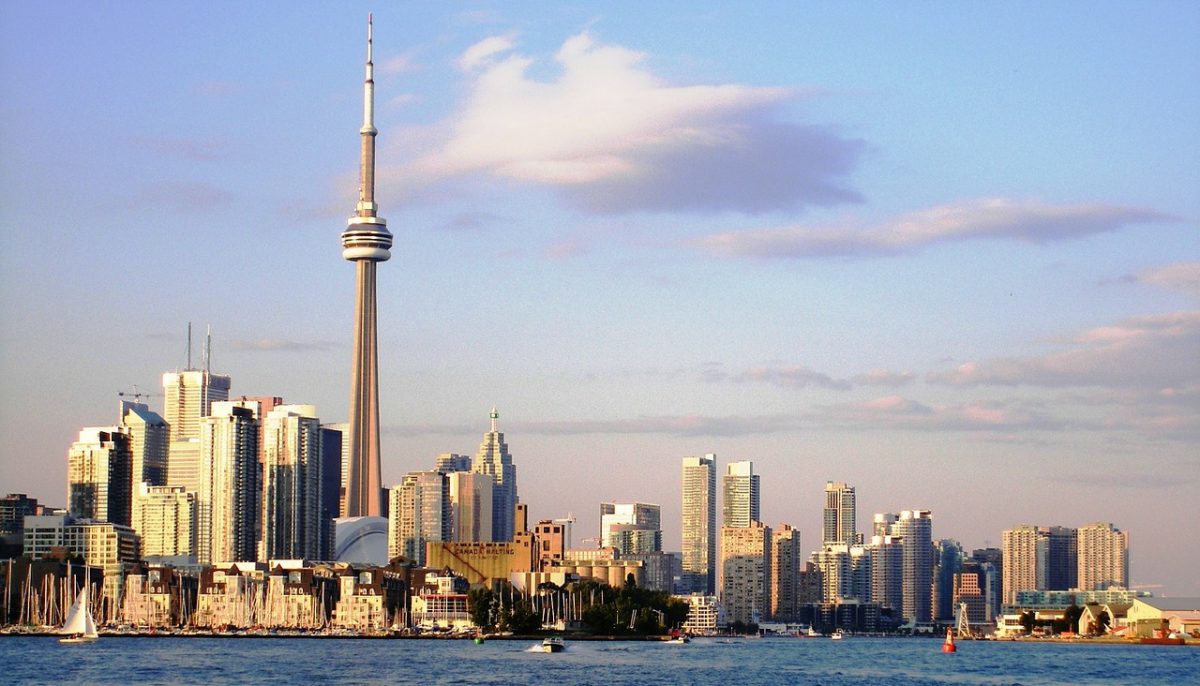
Solutions for a Canadian recovery in this crisis

While the world has seen quite a few economic crises, both global and local, the current situation is different to all of them, triggered as it has been by a pandemic. COVID-19 has meant that a number of small businesses all over the world have been hit the worst, and these were the ones who were struggling before the pandemic hit as well. With wafer-thin margins and small client bases, the fact that people cannot safely step out of their homes has led to a huge drop in revenues across the board, causing millions of people to lose their jobs and small businesses to shut down. A recovery will require the use of tools and tricks which are new, since the old ways of coping with a financial crisis may not be effective in this instance.

It has already been seen that small businesses have seen twice as many job losses as larger businesses during the crisis, and so any recovery plan needs to focus on them first. In Canada, 98% of employers are small businesses, which shows just how necessary it is to help these enterprises out, especially as a recent survey by the Canadian Federation of Independent Business recently found that one in seven small businesses could go bankrupt due to the impact of the crisis. This will have a snowball effect, as jobs will be lost, not to mention the loss in tax revenue and the drop in GDP that will follow. It is therefore essential that small businesses form the focus of any recovery plan in Canada.

The Canadian economy is expected to contract by 6% in 2020, but the expectation is that there will be an almost immediate rebound, with 6% growth projected for 2021. The likelihood of this rebound will depend on the success of any recovery plan. Research has shown that there are a few key areas which can help the economy to rebound faster than expected.

For starters, businesses in Toronto and its surroundings should not be hit too badly, as the region continues to show growth despite a slow reopening. Elsewhere, it will be important for the government to focus on the digital economy and technological solutions, as these have been resilient in the face of the pandemic. Online businesses and service providers have seen an increase in demand, as people who cannot step outside their homes turn to the internet for their needs. We have even seen traditional physical businesses turn to the internet to continue to provide their services to customers. For example, casinos have been shut in the country since March, but many operators have created new Canadian casino online websites to try and continue operations and provide a similar experience to customers as far as possible. Land-based casinos in Canada will therefore be well-advised to focus on their online presence as well, as the popularity of this medium will not go away anytime soon. This is a part of the wider technological trend in the Canadian economy. The IT and communications sectors contributed 4.8% to Canadian GDP in 2019, and increased to over 5% in 2020. These tech solutions have been utilised across sectors, from agriculture to financial services, showing just how widespread their impact on the economy can be if given the right support.

Manufacturing will be another significant sector to focus recovery efforts on. Many businesses have responded quickly to the changing environment by moving to new products, and altering their supply chains to be able to meet the demand for those new products. Healthcare products such as personal protective equipment is the best example of this, as many businesses have pivoted to manufacture PPE where possible. This shows the need to be agile and efficient, and the government will need to ensure that the right environment is provided to companies to allow them to thrive in this new scenario.


Canadian court: If South African blacks attack you, you must be a ‘white supremacist’

Canada’s Federal Court has rejected a white Afrikaner family’s bid for asylum in the country, claiming that racially skewed crime statistics from South Africa constituted “white-supremacist hate literature”. Judge René LeBlanc of the court said their refugee claim “offered no evidence the state of South Africa is incapable of offering protection for their children from rape or murder”.

Canada also rejected the notion that the South African president and other political figures singing “Kill a Boer, kill a farmer” constituted discrimination or hate speech.

Eric Williams Endre and Sonja Endre, a married couple, along with two of their children and Sonja’s parents, visited Canada in 2016 and after hearing that the country championed human rights, decided to apply for refugee status as they had already been attacked five times by blacks in South Africa. Once in 1995 their car was hijacked at gunpoint, then in 2004 they suffered a home invasion with four blacks assaulting and robbing them. In 2013 their home was burglarized. A year later, in 2014, their car was stolen outside their house and later in the same year three black men tried to steal Sonja’s cell phone while she was working.

While Canadian Prime Minister Justin Trudeau has often said in the media that “all refugees are welcome in Canada”, his statement apparently does not apply to white South Africans, specifically Afrikaners. Canada’s Immigration and Refugee Board denied the Endres refugee protection, saying “there was no reliable evidence that they were attacked due to their race, and it was more probable they were attacked for economic reasons — to steal their possessions”.

During their appeal to the Federal Court of Canada, the family argued that the IRB failed to adequately consider the children’s circumstances. They said that “their children cannot safely play in parks in South Africa; one was bullied and had been taken out of school; and their mother could not walk with her children without fearing they could be assaulted, raped or killed”.

South Africa has the highest incidence of rape in the world. However, defending the IRB’s decision, government lawyers stated that concerns for the children were based on “patently unreliable racist propaganda”.

A government lawyer said the fear of white children being raped by blacks “was highly offensive as the information the family relied on was white-supremacist hate literature that should be ignored”.

The government also said the Endres’ claim was based on a risk of generalized crime in South Africa, meaning that it could impact almost anyone, not only those who are white or Afrikaners.

According to Canada’s Immigration and Refugee Board, refugee status is “not meant to protect people who face problems the general population of a country faces, but only fears of persecution specific to race, religion, nationality, membership in a particular social group or political opinion”.

The international refugee system is not meant to offer a safe haven for all suffering people, the IRB’s published guidelines say.

In his judgment dismissing their appeal, René LeBlanc said: “It is also settled law that absent a complete breakdown of state apparatus, it is presumed that a state is capable of protecting its citizens and that this presumption can only be rebutted by the refugee claimant with clear and convincing evidence.”

Until now, very few South African citizens have been accorded refugee status in Canada. So far in 2017, none has been accepted. In 2016 there were 12, in 2015 there were 18, in 2014 there were two and none in 2013.

Ottowa, Canada’s capital of cheating liers

Canada’s capital city, Ottawa, is also it’s most potentially adulterous, Reuters reports. Around 1 in 5 of the population is registered on Ashley Madison, a social network aimed at married people that touts “Life is short. Have an affair” as its slogan.

The sleepy city, with a population of around 883,000 boasts 189,810 users, according to Avid Life Media, the Toronto-based company that owns the service.

ALM faced a huge hack this week from a group called the Impact Team, exposing 37 million users’ data in a demand to take down Ashley Madison and sister site EstablishedMen.com. The hackers referred to the site’s clients as “cheating dirtbags who deserve no discretion.”

The site says that it has suspended fees for users who want to delete their accounts.

Meanwhile, it seems like Ottawa’s politicians and civil servants are the ones having the most difficulty staying faithful — the most-registered postal code in the city represented Parliament Hill, the seat of power in the country, Reuters reports.

ALM CEO Noel Biderman thinks “power, fame and opportunity” are the likely causes of infidelity in the city. In a newspaper report published earlier this year, Biderman admitted that capital cities usually top subscription rates for the adulterous service.

Ottawa residents seem to think the reason is much simpler — everyone is just bored out of their minds.

“Why do you think everyone goes to Montreal to have a good time?” Kary, who refused to give her last name, told Reuters. “Ottawa is the city fun forgot.”

Source: Reuters

French media call G7 ‘idiots’

Nicolas Bonnal of Boulevard Voltaire believes Russia is lucky that it wasn’t invited to the G7 summit this year, comparing the group to the company of hypocritical “idiots.”

As the West is reaching new heights of absurdity, Russia should be happy that it didn’t end up in the company of “idiots,” Nicolas Bonnal said in Boulevard Voltaire.

Russia certainly shouldn’t be ashamed of not being invited to the G7 summit this year. The group of the richest Western nations gathered in Germany, without Russia and China, but with “Italy and its crowds of Libyan refugees,” Bonnal said, comparing the summit akin to being in a luxurious hotel up in mountains, but with non-alcoholic beer.

Even Ethiopia was invited to attend the summit, but not Russia. Russia was punished for not dancing to Washington’s tune.

Moscow was put in a corner for the alleged aggression against Ukraine and the lack of respect for human rights, the author said.

Meanwhile, the United States has 2.2 million prisoners, Guantanamo Bay and the Patriot Act, 1,200 victims of police brutality and over a million people killed because of drug-related gang wars.

American neoconservatives started a series of atrocious wars in Libya, Iraq, and Syria in their “irrational and even frightening desire to harm,” Bonnal said.

The contemporary G7, which was originally seen as the collection of the world’s largest economies, lacks not only Russia, but also China, India and Brazil. Currently, the group consists of the United States, Germany, Britain, France, Japan, Canada and Italy. And almost no economic growth.

Source: Sputnik News

Witch hunt against Ukraine-born pianist over anti-Kiev posts

A Ukrainian-born pianist was barred from playing at Canada’s Toronto Symphony Orchestra (TSO) for expressing views on the situation in Ukraine via Twitter, according to the soloist herself. The move led to a social media storm tagged #LetValentinaPlay.

The orchestra has officially announced its decision to drop pianist Valentina Lisitsa from its Rachmaninoff Concerto #2 program earlier this week. TSO President and CEO Jeff Melanson cited “ongoing accusations of deeply offensive language by Ukrainian media outlets,” adding that Lisitsa’s “provocative comments” had allegedly “overshadowed past performances.”

In the statement, Melanson seems to be referring to Lisitsa’s Twitter posts, in which she expresses her views on the situation in Ukraine.

Lisitsa turned to Facebook on Monday with a plea, asking her fans for support to “tell Toronto Symphony that music can’t be silenced.”

“Someone in the orchestra top management, likely after the pressure from a small but aggressive lobby claiming to represent Ukrainian community, has made a decision that I should not be allowed to play,” she wrote, referring to her TSO performances on Wednesday and Thursday. “I don’t even know who my accusers are, I am kept in the dark about it.”

Lisitsa said she took to Twitter to shed some light on the other side of the story, “the one you never see in the mainstream media – the plight of my people, the good and bad things that were happening in Ukraine.

Some of her work included translating Ukrainian-language websites and eyewitness accounts.

“I became really good in unmasking fakes published by Western media,” Lisitsa said.

Her statement also gives a brief summary on her actual views: “The worst thing that can happen to any country is fratricide war, people seeing each other, their neighbors as enemies to be eliminated …[a] Year later, we have the same rich people remaining in power, misery and poverty everywhere, dozens of thousands killed, over a million of refugees.”

After expressing her views, Lisitsa claimed to have received numerous death threats.

The last straw was the decision to drop her performance: “My haters didn’t stop there. Trying, in their own words, to teach me a lesson, they have now attempted to silence me as a musician.”

Lisitsa revealed that TSO offered to cover her entire fee for the canceled program, if she chose to stay silent about the reason behind the decision.

“They even threatened me against saying anything about the cause of the cancellation … If they do it once, they will do it again and again, until the musicians, artists are intimidated into voluntary censorship,” she wrote.

The reaction on Twitter was massive, with the hashtag #LetValentinaPlay surging in popularity and thousands of supporters speaking out.

International concert violinist and recording artist Hannah Woolmer tweeted: “To me, this IS a VITAL campaign pls can all my followers retweet if they agree that @TorontoSymphony should #letvalentinaplay.”

Seventy-two-year old Hana Ustohal wrote on Facebook: “What kind of monsters are in power of this country to make such an insane and sadistic decision to not allow you to play. I’ve cancelled my ticket for Wednesday concert.”

Twitter user Ike Hike warned that the TSO’s decision “looks bad,” adding: “Would you seek fame as silencing art for partisan politics and smear Canada? You should #letvalentinaplay.”

Lisitsa maintained on her Twitter account that she does not mix music with politics, and does not “preach” during performances. Her opponents, however, accused her of being a “Kremlin mouthpiece” and a “hate monger.”

Maria Kolos wrote on Facebook, supporting the TSO’s decision: “Thank you TSO for not tolerating this offensive Kremlin mouthpiece.” Mat Babyak also said: “Thank you for not giving a platform to a racist hate monger! Keep her out of Canada!”

Lisitsa has a substantial following on YouTube and Twitter. One of her most popular videos – Beethoven’s ‘Moonlight Sonata’ – has over 9 million views. Due to her successful online career, she is sometimes referred to as “the web’s favorite pianist.”

Her career was successfully launched through a YouTube channel, which now has received around 43 million visitors. Lisitsa now travels around the world performing classical pieces.

Canada knew NATO would be aiding extremists in Libya

Canadian military intelligence knew that NATO’s March 2011 intervention in Libya would aid militant theocratic Islamists aligned with al-Qaeda and could create long-term chaos in the country, according to David Pugliese, a reporter with The Ottawa Citizen, who obtained Canadian intelligence documents.

At the time, NATO military leader, U.S. Admiral James Stavridis, denied that opposition to the secular leftist Libyan leader Muamar Gaddafi was dominated by fundamentalist Islamist theocrats, calling the bulk of the opposition forces “responsible men and women.”

But Canadian intelligence was clear-eyed about the nature of the Libyan opposition.

Pugliese revealed that “A Canadian intelligence report written in late 2009 described the anti-Gadhafi stronghold of eastern Libya,” from which the uprising against Gaddafi erupted, “as an epicentre of Islamist extremism.”

And Canadian pilots joked privately that they were part of al-Qaeda’s air force, “since their bombing runs helped to pave the way for rebels aligned with the terrorist group.”

Pugliese reports that just days before NATO’s intervention in Libya,

Canadian intelligence specialists sent a briefing report shared with senior officers. ‘There is the increasing possibility that the situation in Libya will transform into a long-term tribal/civil war,’ they wrote in their March 15, 2011 assessment. ‘This is particularly probable if opposition forces receive military assistance from foreign militaries.’

Canada’s Prime Minister Stephen Harper later denied that NATO’s intervention created the chaos that has paralyzed Libya, despite his own military’s warning that there was a good chance it would.

This reveals a dishonest attempt to manipulate public opinion through outright deception.

‘Racism exists across Canada and is part of the human condition’

WINNIPEG—The mayor of Manitoba’s capital tearfully promised Thursday to fight racism and intolerance after his city was branded Canada’s most racist by a national magazine.

Brian Bowman stood surrounded by dozens of aboriginal and community leaders and admitted that Winnipeg has a problem with racism. The city’s first Métis mayor broke down in tears as he talked about passing on his heritage to his young children.

“My wife is Ukrainian heritage. My family is Métis,” he said as he choked back tears. “I want my boys to be as proud of both of those family lines.”

Macleans magazine published a cover story that gave Winnipeg the dubious distinction. It cited the huge gap between aboriginals and non-aboriginals, as well as the recent high-profile death of 15-year-old Tina Fontaine, whose body was found in August wrapped in plastic in the Red River.

It also comes shortly after an inquest report into the death of Brian Sinclair, an aboriginal double-amputee who died during a 34-hour wait for care in a city hospital’s emergency room in 2008. Some staff testified that they assumed he was drunk — “sleeping it off” — or homeless.

The reaction to the article from city hall was swift. The police chief, the provincial treaty commissioner, chiefs and community leaders assembled — not to refute the article — but to promise to do something about the issue it highlighted.

“We do have racism in Winnipeg . . . You can’t run away from facts,” Bowman said following a closed-door traditional smudging ceremony. “Ignorance, hatred, intolerance, racism exists everywhere.

“Winnipeg has a responsibility right now to turn this ship around and change the way we all relate.”

Bowman said that means having an open dialogue with aboriginal leaders before taking concrete action, which he said is coming.

Grand Chief Derek Nepinak with the Assembly of Manitoba Chiefs said keeping the lines of communication open is key. But he warned that combating racism is a huge challenge.

“I guarantee you that, right now, somebody is having a racist experience in a restaurant or on the streets in Winnipeg somewhere. I’m not here to pacify that or to say that it’s okay,” Nepinak said.

“There are people who are wilfully blind, wilfully ignorant to the reality of indigenous people in this society. But we will challenge them.”

Ovide Mercredi, a former national chief of the Assembly of First Nations, said he has experienced racism, but has not let it embitter him. There are many within the aboriginal community with the energy to fight prejudice and ensure there is “zero tolerance” for racism, he said.

“I have a right to be different. If we as a society make that a basic principle — that all human beings have a right to be different — we’d go a long way to solving the intolerance that many people experience,” Mercredi said. “Instead of putting each other down, we should be trying to lift each other up.”

Winnipeg police Chief Devon Clunis, who is black, said he doesn’t believe Winnipeg is the only city grappling with racism. Racism exists across Canada and is part of the “human condition,” he suggested.

“We need to have a difficult conversation in our city respective of race,” Clunis said. “I think you are seeing who is starting that conversation today.” – Toronto Star

NATO a threat to the security of its members, the world

NATO lives in some weird fantasy world. It reminds me of the Warsaw Pact

The North Atlantic Treaty Organization poses a threat to its members by involving them in interventions based on pretty flimsy evidence, Patrick Armstrong, former political counselor at the Canadian Embassy in Moscow told RT.

The new NATO Secretary General Jens Stoltenberg has made his first policy speech.

RT: The face of NATO has changed. Is this a chance for the politics to change?

Patrick Armstrong: Let me suggest what Stoltenberg should have said if he wanted to show that NATO was seriously discussing events. He might have said, and this should have been on the agenda at the recent meeting: “Mr. Kerry, a year ago you were telling us that you were absolutely certain that the Syrian government was using chemical weapons and that we had go bomb it. Today you are now telling us that we should go bomb the people that last year we would have been supporting. Please explain, discuss.” We all saw the photos of the militia cavorting in the US embassy swimming-pool in Tripoli. “Was armed NATO’s intervention in Libya a good idea or bad idea? Discuss.” A month ago we learned that the Kosovo Liberation Army that we supported -indeed we gave the entire country to it 15 years ago – was in fact a pretty nasty, criminal organization. Discuss. In conclusion, Mr. Stoltenberg, that would seem to me that based on past practice, NATO’s interventions appears to have made things worse, have detracted from the security of its members, and were based on pretty flimsy evidence. Discuss that, Mr. General Secretary, rather than blithering on about how wonderful NATO is.

RT: Why exactly does NATO see Russia as a threat? And how is that possible when at the same time the alliance is announcing such a buildup?

PA: The latest sentiment coming out of NATO is that Russia is doing terrible things on NATO’s doorstep. And NATO’s doorstep keeps moving… Speaking as a member of the country that had a great deal to do with the creation of NATO, NATO is in fact a very great threat to the security of Canada let alone its other members and the rest of the world. It keeps getting us involved in these wars for reasons that turn out to be not as solid as we were told. Why Russia? I don’t know. Maybe NATO is about being anti-Russia.

RT: The new alliance leader claimed that NATO troops are leaving Afghanistan a more stable a secure place when statistic shows the exact opposite. Is this conscious denial of the situation?

PA: NATO lives in some weird fantasy world. It reminds me of the Warsaw Pact. At some level they must know that every word they say is a lie and yet they keep on saying that. I honestly don’t know what is going on. I supported NATO back in the days of the Cold War. But at the moment it is just this destructive like a juggernaut, this huge vehicle rolls on crushing, and smashing, and destroying.

Canadian soldier dies after gunmen’s attack on parliament in Ottawa

A soldier who was shot at a war memorial at the start of an attack by one or more gunmen on Canada’s parliament has died of his wounds, a government minister said.

“Condolences to family of the soldier killed and prayers for the parliamentary guard wounded. Canada will not be terrorized or intimidated,” employment minister Jason Kenney said on Twitter.

Canada approves asylum bid after ‘Shoot the Boer’

President Jacob Zuma’s singing of the refrain ”shoot the Boer” at an ANC event was among the reasons for the Canadian Federal Court ruling that a white South African couple could continue with their bid for asylum.

Though Charl and Naira Nel have not directly been victims of crime in this country, they say they fear genocide and rape here.

Aggravating their anxiety was Zuma’s performance of a struggle song two years ago and Julius Malema’s rendition of Dubul’Ibhunu (Shoot the Boer). The song Malema sang was declared hate speech by the Equality Court in 2011. Malema was president of the ANC Youth League at the time.

The Zuma song, at the ANC centenary celebrations in 2012, was Dubula ngembayimbayi(Shoot with a machine gun). The president sang the refrain ”shoot the Boer” several times during his rendition.

The Nels left South Africa in 2010 and applied for refugee status in Canada. They sought the assistance of Russell Kaplan, a South African expatriate lawyer who had helped white Capetonian Brandon Huntley in his fight for asylum.

In June, the federal court upheld the board’s decision to deny Huntley refugee status. He had sought asylum in 2008, claiming that he had been assaulted by black South Africans.

The board granted him refugee status in 2009 but the decision was found to be “unreasonable” on judicial review.

In their application, the Nels said ”crimes against white people frequently involved mutilation and brutality, even when nothing was stolen; they observed that political leaders had sung songs about killing white people even after a South African court had declared the song racist. They submitted expert evidence by a reporter, Adriana Stuijt, and the president of Genocide Watch, Dr Gregory Stanton, indicating these crimes were racially motivated.”

But the board refused the couple’s application, saying that although they expressed fear of persecution because they were white, it found “nothing had happened to them personally” and they were not in need of protection.

The Nels then approached the federal court.

On September 4, Judge John O’Keefe set aside the board’s decision and referred their case to another panel for reconsideration.

It is not known when this will be done.

Judge O’Keefe said: “… the board’s assessment of [ Nel’s] updated narrative is puzzling. In it, [he] said that he had become fearful of returning to South Africa because [Malema] had since sung an anti-apartheid song called Kill the Farmer, Shoot the Boer .

”Even after a South African court ruled that the song was hate speech, Malema continued to sing it and Zuma also sang it at the 100th anniversary of the ANC.

“Genocide Watch also updated the situation to stage six of the eight stages of genocide because of political shifts and warned white Afrikaners to leave South Africa,” the judge said.

”The board dismissed the updated narrative on the basis that these were not significant changes and concluded that it was only done with the intent of amplifying a situation of fear.

“However, it never explained why it felt the singing of this song by political leaders or the Genocide Watch opinion could not have legitimately inspired a further subjective fear of political persecution in the applicants.”

Kaplan told the Canadian Post: ”This is the first time the Federal Court of Canada has awarded a white South African with a favourable decision – a big step.”

From 2006 to June 2014, 151 South Africans applied for asylum. Only 23 applications were accepted.

Source: Timeslive

Eritrea, US have one thing in common

Eritrea is one of only two countries in the entire world that taxes its nonresident citizens on their global income. Specifically, Eritrea levies a flat 2% tax on the income of its citizens who reside abroad.

Nearly every other country in the world bases its tax system on residency rather than citizenship. For example, if you’re an Italian citizen and leave Italy to become a resident of and earn income in Dubai, you would not have to pay taxes on that income to the Italian government. If you were an Eritrean citizen, on the other hand, you would have to pay taxes to the Eritrean government no matter where you live and work.

This practice has been condemned as “extortion” and a “repressive” measure by an “authoritarian” government by the media.

In fact, even the UN has weighed in. In Resolution 2023, the UN Security Council condemned Eritrea for “using extortion, threats of violence, fraud and other illicit means to collect taxes outside of Eritrea from its nationals.”

You may be thinking, “What’s the controversy? Eritrea is getting criticized, and rightly so.”

To understand the controversy, we have to examine the only other country on the planet that has a similar tax system.

The only other country to tax its nonresident citizens globally is of course the US.

The US essentially does exactly the same thing as Eritrea to its nonresident citizens, except that it’s done on a much bigger scale and with absolutely draconian penalties.

Eritrea’s paltry 2% tax is a mere fraction of the top 39.6% federal tax rate that expat Americans have to pay—even if they earned that income abroad and never set foot in the US. (The US does allow for an exemption of a limited amount of foreign earned income, if strict requirements are met.)

It should also be noted that Eritrea is a poor country and has a very limited capability to actually enforce its 2% expat tax. Many Eritreans who live abroad have never even heard of it, let alone are frightened by it.

The US, on the other hand—being the world’s financial and military superpower (for now at least)—does have the capability to enforce its byzantine tax system literally anywhere in the world. When you consider this capability and the penalties—which can only be described as cruel and unusual—it’s no surprise that US expats are terrified. And they should be… or they aren’t paying attention.

American expats are threatened with prison and outlandish fines merely for not filing a litany of complex forms correctly—even if no taxes are due in the first place.

When you consider the totality of it, it’s not actually a fair comparison to contrast poor little Eritrea and its relatively modest expat tax to the monstrosity of the US system.

Eritrea gets hounded, ostracized, and sanctioned for using—according to the UN—“threats, harassment and intimidation” to “extort” taxes out of its citizens living abroad. You would think there would at least be a peep of criticism for the only other country that does essentially the same thing, but on steroids. But you’d be wrong. If you listen for it, all you will hear are the crickets chirping.

This isn’t surprising, though. Even though it’s clearly a double standard, it’s easy to understand why it exists.

As the world’s sole superpower and issuer of the premier reserve currency, the US is not accountable to anyone. It’s a heck of a lot easier to push around some small, impoverished African country than it is to stand up to the US juggernaut—just ask Canada.

Recently the Canadian government took the drastic step of expelling the head of the Eritrean consulate in Toronto because he had been involved with levying the 2% expat tax on Eritreans living in Canada.

It would seem that Canada doesn’t like foreign governments shaking down Canadian residents. That is, unless the foreign government is the US government.

Somehow I don’t expect the Canadian government to give any American officials the boot… even though they’re shaking down vastly more Canadian residents for vastly more money.

Curiously, Canada’s reaction to the US’s expat tax is exactly the opposite of its reaction to Eritrea’s. Rather than taking action to prevent the US government from harassing US citizens living in Canada, the Canadian government has amazingly facilitated it, by complying with the FATCA law—even though it contradicts Canadian law.

It’s always better to face reality than to ignore ugly truths. And the story of Eritrea’s expat tax helps us reveal a big one. Namely that Americans—especially those who live abroad—are living under one of the worst tax systems in the entire world.

A rather ironic situation, when you take a look at history. Americans went from revolting over a comparatively small tax on tea to the system which exists today.

Source: International Man

About 40 countries to take part in US anti-ISIS campaign

The US is keeping quiet about which countries are taking part in the fight against ISIS.

Secretary of State John Kerry told CBS that nearly 40 nations have agreed to contribute to the fight, but “it’s not appropriate to start announcing” what roles each will play.

However, an international conference on the ISIS situation took place in Paris on Monday, with world leaders set to debate the anti-ISIS coalition. The meeting includes representatives of some 30 countries, but excludes Iraq’s neighbors Syria and Iran.

Turkey and Jordan, key US allies in the region, are thought to be reluctant to intervene directly.

Turkey is a NATO member, and borders both Syria and Iraq from the north. Despite this, it won’t let the US use its facilities in the mission against the IS, a government official in Ankara told AFP.

Turkey was also absent during the signing of a joint communiqué on the situation in Iraq on Thursday.

The US State Department meanwhile praised The Netherlands for “leading an effort” to stop the foreign fighters supporting terrorism from arriving in the country.

Britain became the first country to officially join the military operation. UK Prime Minister David Cameron called IS “the embodiment of evil” on Sunday, following the group’s beheading of its third Western hostage, this time British citizen David Haines. Earlier, IS killed two US journalists in the same manner.

Germany, Australia, France and Canada are also part of the campaign.

Canada moves gold of Switzerland, Netherlands, Sweden to unknown location

In just three months, on November 30, the Swiss will vote in a federal referendum on the future of the country’s gold reserves.

The referendum has arisen through a popular initiative called ‘Save our Swiss gold initiative’. In Switzerland, citizens can propose changes to the Swiss constitution through a mechanism called a popular initiative, even if parliament is against the proposal.

The ‘Save Our Swiss Gold’ initiative is set to highlight the important issue of sovereign gold reserves and who has possession and controls them. It may lead to an important debate about each country’s national patrimony and their gold reserves.

The ‘Save Our Swiss Gold’ initiative is proposing the following:
– rules to prevent the Swiss National Bank (SNB) selling any more of the country’s gold reserves
– to direct that the SNB must keep a minimum of 20% of its reserves in gold, and
– to require that all Swiss gold must be stored in Switzerland.

This would require repatriation of Swiss gold since some of the Swiss gold reserves are stored abroad.
The Swiss National Bank (SNB) are against the proposal but were forced last year, in reaction to the popular campaign, to reveal the storage locations of the Swiss gold.

In April 2013, Thomas Jordan, SNB President, confirmed that 70% of Switzerland’s gold is in Switzerland, 20% is at the Bank of England, and 10% is stored with the Bank of Canada, and that this mix of holdings had been in place for more than a decade.

Since the Swiss hold a total of 1,040 tonnes of gold reserves, this would mean that there are 104 tonnes of Swiss gold at the Bank of Canada and 208 tonnes in the Bank of England. Jordan’s explanation of the foreign gold storage was that it provided “adequate regional diversification and good market access”.

Since the Bank of England specialises in the custody of gold on behalf of numerous foreign central banks, it’s not surprising then that the SNB stores gold at the Bank of England.

What is surprising is that the SNB still holds gold at the Bank of Canada, since the Bank of Canada is a legacy custodian of other countries’ gold and appears to have stopped storing other nations sovereign gold in recent years.

When the Bank of Canada was asked earlier this year as to how many foreign central banks it acts as gold custodian for, it confirmed that it currently acts as gold custodian for only four foreign central banks, but that due to confidentiality, it was unable to disclose the identity of the national account holders.

However, its known from other sources that both the Netherlands and Sweden also hold some of their gold reserves at the Bank of Canada.

The Federal Reserve Bank of New York holds 1,536 metric tons of German gold, nearly half of Berlin’s reserves.
This enormous hoard of gold is stored in the fifth subfloor of the bank’s building on Liberty Street, 25 meters
80 feet) below street level, and 15 meters below sea level. Or is it? The Germans want to know and
want it back, as do the Swiss and other nations.

The Dutch central bank, De Nederlandsche Bank, has stated previously that most of its gold reserves are held at the Federal Reserve Bank in New York, the Bank of England, and the Bank of Canada, with less than 10% stored in the bank’s own headquarters in Amsterdam.

The Swedish Riksbank has also stated recently that its gold is stored in a number of foreign locations, such as the Federal Reserve, the Bank of England but also the Bank of Canada.

The identity of the 4th foreign central that stores gold at the Bank of Canada is unclear, but it may be the Bank of England or the Federal Reserve, since both banks historically held gold accounts with the Bank of Canada.

Given that Canada sold nearly all of its own substantial gold holdings a number of years ago, it seems like an anomaly that the Bank of Canada in Ottawa is still holding gold on behalf of other countries. Most countries that had held gold in Ottawa repatriated it long ago.

Citizens of Switzerland, the Netherlands and Sweden should be concerned that some of their nation’s gold is in custody with a bank that is no longer a specialist in gold custody and that did not even see fit to maintain its own gold reserves.

They should also be concerned about the secrecy and lack of transparency regarding their gold, especially given that the Bank of Canada’s remaining custody gold has recently been moved to an unknown destination.

The Bank of Canada’s headquarters on Wellington Street in Ottawa is currently undergoing an extensive multi-year renovation which required the Bank to vacate the building last year, and empty it’s entire contents, including the gold stored in the subterranean vault.

Whatever gold was still in the vault, that runs from Wellington Street on one side of the building out as far as Sparks Street on the other side, has now been relocated elsewhere.

Where the gold has been moved to is unknown since the Bank of Canada won’t comment.

The upcoming Swiss gold referendum will be very interesting and will highlight and focus minds on why the SNB vigorously defends the need to keep some of its gold reserves in Canada, especially given that the Ottawa gold is now on the move.

Owning allocated and segregated physical coins and bars is best in Hong Kong, Singapore and Zurich, investors say.

Canada gets confrontational about Arctic

Canada is ready for a confrontation with Russia if it expands its ambitions in the Arctic region, Foreign Minister John Baird told a Danish newspaper. The oil-rich region is set to become a key political battleground in the coming decades.

Canada also boycotted the high-ranking Moscow Arctic Council conference earlier this year, and with harsh rhetoric, a further escalation seems inevitable.

Baird’s statements echo the alarmist tone of his Prime Minister, the Conservative Stephen Harper.

“I just think we should not be complacent, because we have seen over the period that President Putin has been in power just a gradual growing in aggressiveness of his government toward neighbors and the gradual military assertiveness of that country, and I just think it’s something we should never be too at ease about,” the politician told the media last week.

“We are deeply concerned, and we are determined to promote and defend the sovereignty of Canada in the Arctic,” Baird said in an interview with the Danish publication Berlingske, published in the native language.

“For us, this is a strategic priority. In connection with the militarization that we are seeing, we would prefer to alleviate the conflict, but it’s clear that we will defend our own sovereign power.”

Russia, last year unsealed a long-mothballed base on Novosibirsk Archipelago, off the north-eastern coast of the country, which has since then reinforced the area with warships and icebreakers that now constitute a coherent defense system. Moscow and Ottawa also engaged in a frosty exchange earlier this summer, after Canada scrambled its fighter jets to tail Tu-95 heavy bombers, which it said came close to its airspace.

Both Russia and Canada, who along with the US, Norway and Denmark constitute the five states with Polar claims, have made legal attempts to secure their rights to large swathes of the Arctic, which is thought to contain 15 percent of the oil reserves and 30 percent of all natural gas in the world. Russia submitted claims to the UN that it is connected to a large part of the region by its continental shelf as far back as 2001, while Canada used the same argument last year, following mapping studies costing more than $200 million conducted for over a decade. If approved, these would allow the countries to exploit areas that lie beyond their natural 200 mile nautical borders.

While most of the claimed territories do not overlap, there are several disputed areas, which could guarantee income not just through hydrocarbons, but also shipping lanes, with the North Pole itself among them.

The issues in the Arctic have become entangled with those in Ukraine, Canada being one of Russia’s harshest critics in the past several month – with both countries featuring heavily on each other’s sanctions lists.

Russia in the meantime aims to develop the Arctic as a region of peace and international cooperation, however is also prepared to defend its national interests.

“While Russia is planning to defend firmly its geopolitical and economic interests in the Arctic zone, we also seek to strengthen the cooperation with other member countries of the Arctic Council and to turn the Arctic region into a zone of peace, stability and cooperation,” President Putin said addressing another Arctic Forum meeting with a letter of greetings earlier in August.