Africa’s population explosion over next 35 years

A United Nations report has projected the world’s population to reach 11.2 billion by the end of the century. Africa alone will account for half of the population growth over the next 35 years.

The world’s population is expected to grow from its current level of 7.3 billion to 11.2 billion people by end of the century, according to a UN report released Wednesday, with the earth expected to add more than a billion people in the next 15 years alone.

India is expected to surpass China as the world’s must populous country in less than a decade, with fast-growing Nigeria on course to overtake the United States as the third most populous nation by 2050, the UN predicted.

Most of the growth will happen in developing regions, especially Africa, which will account for more than half the world’s population growth in the next 35 years.

“The large number of young people (in Africa) who will reach adulthood in the coming years and have children of their own, ensures that the region will play a central role in shaping the size and distribution of the world’s population over the coming decades,” the report said.

The demographic predictions are essential for creating and implementing the new global development goals being put into place later this year in place the UN Millenium Development Goals.

“While the global projections should not be cause for alarm, we must recognize that the concentration of population growth in the poorest countries presents a distinct set of challenges,” said John Wilmoth, head of the UN population division.

Rapid population growth, Wilmoth said, will make it “more difficult to eradicate poverty and inequality, to combat hunger and malnutrition, and to expand educational enrollment and health systems.”

According to the UN, nine countries will account for half of the world’s population growth between now and 2050: India, Nigeria, Pakistan, Congo, Ethiopia, Tanzania, the US, Indonesia and Ghana.

The report also takes note of global ageing, projecting the number of people age 60 and above should more than double by 2050. In Europe, more than 34 percent of the population will be over 60 years old by 2050.

Source: Reuters/dpa/AP

French media call G7 ‘idiots’

Nicolas Bonnal of Boulevard Voltaire believes Russia is lucky that it wasn’t invited to the G7 summit this year, comparing the group to the company of hypocritical “idiots.”

As the West is reaching new heights of absurdity, Russia should be happy that it didn’t end up in the company of “idiots,” Nicolas Bonnal said in Boulevard Voltaire.

Russia certainly shouldn’t be ashamed of not being invited to the G7 summit this year. The group of the richest Western nations gathered in Germany, without Russia and China, but with “Italy and its crowds of Libyan refugees,” Bonnal said, comparing the summit akin to being in a luxurious hotel up in mountains, but with non-alcoholic beer.

Even Ethiopia was invited to attend the summit, but not Russia. Russia was punished for not dancing to Washington’s tune.

Moscow was put in a corner for the alleged aggression against Ukraine and the lack of respect for human rights, the author said.

Meanwhile, the United States has 2.2 million prisoners, Guantanamo Bay and the Patriot Act, 1,200 victims of police brutality and over a million people killed because of drug-related gang wars.

American neoconservatives started a series of atrocious wars in Libya, Iraq, and Syria in their “irrational and even frightening desire to harm,” Bonnal said.

The contemporary G7, which was originally seen as the collection of the world’s largest economies, lacks not only Russia, but also China, India and Brazil. Currently, the group consists of the United States, Germany, Britain, France, Japan, Canada and Italy. And almost no economic growth.

Source: Sputnik News

Radioatcive leak at New Delhi airport

A radioactive material leak was detected at New Delhi’s international airport on a shipment of nuclear medicine from Turkey before being plugged by emergency teams, officials said.

The incident happened near the cargo area of Turkish Airlines where four cartons containing nuclear medicine material were found to be damaged, an official in the National Disaster Response Force told AFP.

“The situation is under control, our teams are at the spot. There is no need to panic,” the official added on condition of anonymity.

“Atomic energy experts are on their way to assess and analyse the situation. The consignment has been isolated.”

India’s Home Minister Rajnath Singh confirmed the incident at the Indira Gandhi International Airport, adding that the “leakage has been plugged”.

The NDTV network reported that two cargo workers who were exposed to the leakage had been taken to hospital for precautionary checks.

The material was meant to be delivered to a private hospital in the Indian capital.

In 2010, a scrapyard worker in Delhi died from radiation poisoning and seven others were injured, raising concerns over the handling of radioactive material in India.

Source: AFP

BRICS face huge security issues says Putin

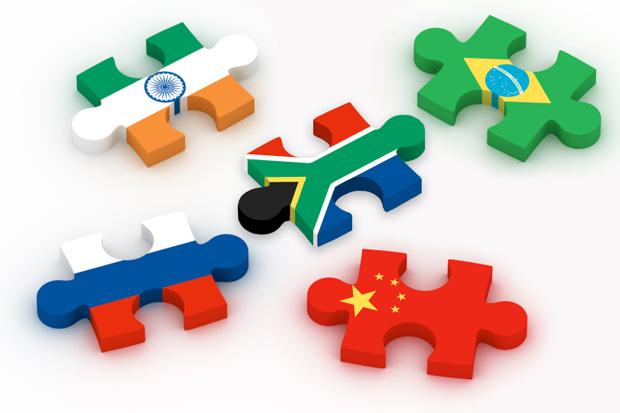
Security issues are an important sphere in the activity of BRICS member states (Brazil, Russia, India, China and South Africa) and they are related to the challenges the world community is currently facing, Russian President Vladimir Putin said on Tuesday at a meeting with the Security Council secretaries of the BRICS countries.

“Obviously, for our organization, for BRICS, it’s an important sphere of activity, considering the challenges the entire international community and our countries have to face at present. It’s obvious that the fight against organized crime, terrorism, financial crime is certainly on the agenda of the international community,” Putin said.

According to the president, it is also obvious that BRICS member countries are facing major threats. “It is also clear that our countries are facing considerable threats in connection with violation of international law norms, in connection with violation of sovereignty of different states, their activity spheres,” Putin said.

Source: Itar-TASS

Russia asks Greece to join BRICS bank

Russian Deputy Finance Minister Sergei Storchak spoke with Greek PM Alexis Tsipras today, proposed that Greece become 6th member of New Development Bank set up by Brazil, Russia, India, China, South Africa, a Greek govt official says in e-mail to reporters.

Meanwhile the $100 billion BRICS development bank will be based in Shanghai, according to its founding agreement, and will be headed by an Indian for the first five years, followed by a Brazilian and then a Russian.

Kundapur Vaman Kamath, a 67-year-old, is the non-executive chairman of India’s second largest bank by asset size, ICICI Bank, and India’s third largest IT firm, Infosys.

Now, Kamath will have another position to tend to: The first head of the BRICS bank.

The bank’s $100 billion capital—with an initial subscribed capital of $50 billion that will be equally shared by all BRICS members—will be used for infrastructure financing and sustainable development project funding within the BRICS nations. Other low- and middle-income countries will be able to access loans.

In February this year, India’s cabinet, headed by prime minister Narendra Modi, approved the establishment of the bank, after founding members sorted out several contentious issues. “The New Development Bank will mobilise resources for infrastructure and sustainable development projects in BRICS and other emerging economies and developing countries, to supplement existing efforts of multilateral and regional financial institutions for global growth and development,” the Indian government said in a statement.

The bank, according to the Russian finance ministry, is expected to be fully functional by the end of 2015.

EU paymaster Germany suggested on Monday that Greece might need a referendum to approve painful economic reforms on which its creditors are insisting, but Athens said it had no such plan for now and others warned a vote could delay vital aid.

Greece calmed immediate fears of a default by making a crucial 750 million euro payment to the International Monetary Fund a day early. But Finance Minister Yanis Varoufakis said the liquidity situation was “terribly urgent” and a deal to release further funds was needed in the next couple of weeks.

Euro zone finance ministers welcomed some progress in slow-moving talks on a cash-for-reform deal between Athens and the IMF, the European Commission and the European Central Bank but said more work was needed to each a deal.

“We acknowledged that more time and effort are needed to bridge the gaps on the remaining open issues,” they said in a short statement after spending barely an hour on a progress review on the negotiations behind held among senior officials.

Source: Bloomberg/Reuters

Major oil companies withdrawing from Southern Africa

BP is no longer trading in Kenya, Tanzania, Zambia, Zimbabwe, Malawi, Namibia, Swaziland, Lesotho, Botswana or Malawi.

In some of these countries had a BP presence for almost a century. Were all these BP associate companies suddenly unprofitable or was something deeper at work?

The sub-Saharan oil industry has registered the withdrawal from the region of major oil companies.

A clue could be the recent spat between Chevron and a new oil industry entrant in Cape Town in the shape of a black economic empowerment company called Burgan. Chevron claims it threatens the viability of their refinery with its ability to import, store and sell motor fuels.

Chevron’s complaints go further. Probably speaking for the other South African crude oil refiners, it points bitterly to the refusal or delay, by the government, to allow a “cost recovery mechanism” to make it worthwhile to upgrade local refineries to produce the higher quality fuels demanded by motor manufacturers.

Chevron argues that our regulated oil industry is a strategic asset with sacred status. It believes nothing should be changed without industry approval.

A more powerful reason for a reluctance to invest in new plant without a sweetener from the Treasury may be found in what has been happening in Saudi Arabia and India. In both countries there are now new and massive crude oil refineries producing, and selling to all comers, large volumes of motor fuels and other petroleum products.

The nearest customers for production surpluses of these huge refineries are in Africa, particularly those on its eastern seaboard – South Africa being the biggest.

The economies of scale is deadly. Saudi Arabia can undercut any refinery far from crude oil sources – such as those in Durban, Cape Town, and Gauteng. It can also produce the new higher quality fuel. Local refineries cannot do so.

South Africa’s crude oil refining capacity is 553 000 barrels a day. Saudi Arabia production is huge by comparison. Estimates are 3 million barrels a day and upwards. Some analysts (The Wall Street Journal) expect Saudi Arabian refining capacity to rise to 8 million barrels a day within a decade. Others predict 12 million barrels a day within 10 years.

Not only Saudi refineries pose a severe threat to our local ones. There are large ones in India too. In particularly the one recently completed by Reliance. It alone can produce more that all six of our refineries (including Sasol) combined. It has a reported capacity of 1.2 million barrels a day. It is the world’s largest.

Source: IOL

Nepal quake death toll rises

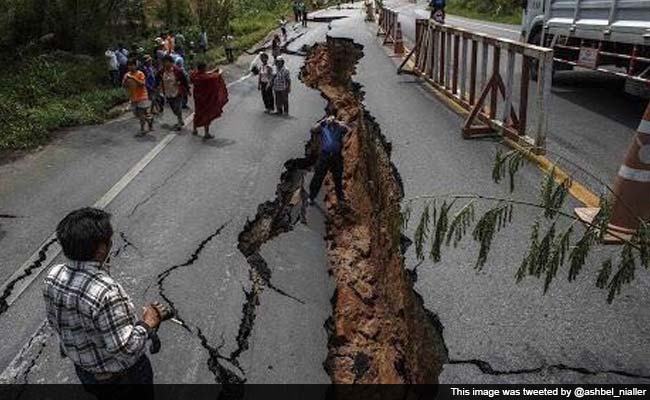
Some 3218 people have been killed in the 7.9 magnitude quake, which hit Nepal on Saturday.

It is Nepal’s worst quake since 1934 when 8 500 people died.

Nepal’s record of earthquakes dates to at least the 13th century, with significant temblors striking every 75 years.

The quake struck the heavily populated Katmandu Valley, near the capital and it was felt as far as Tibet, Bangladesh and India.

Five South Africans who had been reported missing in the quake have meanwhile been found.

It is also been reported that a group of eight Pretoria schoolgirls visiting the country, were unharmed and accounted for.

China may build rail tunnel under Mount Everest

China may build rail tunnel under Mount Everest, state media reports.

China is considering extending a railway line linking the country to Nepal via a tunnel under Mount Everest, according to Chinese state media.

The proposal is the latest in a series of ambitious rail schemes Beijing is reportedly examining. It comes amid scepticism about whether some of the projects will ever get off the ground and at a time of a growing Chinese presence in Nepal, which has caused some concern in rival regional power India.

The Qinghai-Tibet railway already links the rest of China with the Tibetan capital, Lhasa, and beyond, and an extension running as far as the international border is already being planned “at Nepal’s request”, the China Daily quoted a railway expert at the Chinese Academy of Engineering as saying.

The project is expected to be completed by 2020, the newspaper cited a Tibetan official as saying. Extending the line would potentially forge a crucial link between China and the huge markets of India. It was raised by the Chinese foreign minister, Wang Yi, on a visit to Kathmandu in December, according to Nepalese reports.

“The line will probably have to go through Qomolangma so that workers may have to dig some very long tunnels,” railway expert Wang Mengshu told the China Daily, referring to Mount Everest by its Tibetan name.

Owing to the challenging Himalayan terrain, with its remarkable changes in elevation, trains on any line to Kathmandu would probably have a maximum speed of 75mph (120km/h), he added.

Beijing’s increasing role has raised alarms in New Delhi that China, already closely allied to Pakistan, is forging closer economic ties with Sri Lanka, the Maldives and Nepal in a deliberate strategy to encircle India.

In an apparent counter-move, Indian Prime Minister Narendra Modi pledged late last year that South Asia’s largest economy would fund a series of regional investments and free up its markets to its neighbours’ exporters.

Source: investmentwatchblog.com

Indian warplanes go missing in Ukraine

Five of India’s 40 AN-32 military transport aircrafts being upgraded in Ukraine have gone missing “without a trace”; Ukrainian diplomat says the government is unable to help.

India says five of its 40 AN-32 military transport aircrafts have gone missing “without a trace” while the planes underwent upgrades in Ukraine, Sputnik reported.

“These five aircraft are almost lost as it is difficult to trace them and diplomatic efforts to find their whereabouts have failed,” the website DefenseNews quotes an Indian Air Force official as saying.

In 2009, India signed a contract with Ukraine’s state-owned arms trading agency, Ukrspetsexport Corp., to upgrade its 104 AN-32 transport aircrafts at a cost of US $400 million, as the fleet had reached its life expectancy.
The upgrade program started in 2011 and was set to run through 2017.

Under the deal, the modernization of 40 warplanes should have been completed in Ukraine at Kiev-based Antonov State Co. facilities, while the 64 others were set to be upgraded in India at the Air Force’s Kanpur-based base, under a technology transfer from Ukraine.

Out of 40 warplanes sent to Kiev, only 35 made their way back home. The remaining five have been “lost without trace”.

Russia ratifies $100 billion BRICS development bank

The Russian State Duma has ratified the $100 billion BRICS bank that’ll serve as a pool of money for infrastructure projects in Russia, Brazil, India, China and South Africa, and challenge the dominance of the Western-led World Bank and the IMF.

The New Development Bank is expected to start fully functioning by the end of 2015, according to the Russian Finance Ministry.

Russia has agreed to provide $2 billion dollars from the federal budget for the bank over the next seven years.

It will have three-tiers of corporate governance, with a Board of Governors, Board of Directors and a President.

The bank’s board of directors will hold its first meeting in Ufa in Russia in April. Russian Finance Minister Anton Siluanov is likely to become the bank’s first Chairman of the Board of Governors, according to Deputy Finance Minister Sergei Storchak talking on the Russia 24 TV channel.

The decision to establish the BRICS bank, along with a $100 billion reserve currency pool, was made in July 2014. Each of the five member countries is expected to allocate an equal share of the $50 billion startup capital that will be expanded to $100 billion.

The bank will be headquartered in Shanghai, India will serve as the first five-year rotating president, and the first Chairman of the Board of Directors will come from Brazil.

Source: RT

India scraps French Rafale deal

India has scrapped a deal with France to buy 126 Rafale medium multi-role combat aircraft (MMRCA), after three years of negotiations, due to the high cost of the project.

India has announced that a deal to buy 126 Rafale medium multi-role combat aircraft (MMRCA) from French manufacturer Dassault Aviation is “effectively dead”.

The reason is the announced high cost of the overall project, according to the country’s online newspaper Business Standard.

The global tender for 126 medium multi-role combat aircraft (MMRCA) was the first time the Indian Ministry of Defense (MoD) had awarded a contract based on life cycle costing (LCC). This meant the winner of the tender would not be the fighter with the cheapest purchase price; instead the chosen fighter would be the one that was the cheapest to buy, fly, maintain and overhaul over its 30-40 year service life.

As per the original tender, eighteen of the 126 planes were supposed to be purchased directly from Dassault, while Hindustan Aeronautics Limited (HAL) was due to manufacture the other 108 under license at a to-be-built facility in the city of Bangalore.

Dassault Aviation has refused to take full responsibility for these 108 fighters to be manufactured in India, which automatically increased the overall cost of the whole project.

Defence Minister Manohar Parrikar has recently said that Sukhoi-30 MKI fighters, which had been built by Hindustan Aeronautics at its Nashik plant, could be substituted for them, according to the website IndiaSpend.

The Sukhoi-30 MKI is currently India’s most advanced fighter and forms the backbone of its air force. It’s also half the current cost of a Rafale.

The Indian Air Force first signed a deal with the Russian government to purchase eight air defense Su-30K and 32 multi-role Su-30 MK aircraft in 1996. IAF bought an additional 10 Su-30 MKs in December 1998.

Meanwhile former French Foreign Minister Roland Dumas said his country should deliver the Mistral class helicopter carriers to Russia.

Dumas has urged the authorities to give the Mistral helicopter carriers to Russia under the existing contract and called the anti-Russian sanctions imposed by his country a gross mistake.

According to Russian experts, Paris could face penalties as high as $10 billion if it fails to fulfill its contractual obligations over the Mistral order.

Source: Sputnik News

Brazil and Russia may exit BRICS warns phrasemaker

Brazil and Russia’s membership of the BRICs may expire by the end of this decade if they fail to revive their flagging economies, according to Jim O’Neill, the former Goldman Sachs Group Inc. chief economist who coined the acronym.

Asked if he would still group Brazil, Russia, India and China together as emerging market powerhouses as he did in 2001, O’Neill said in an e-mail “I might be tempted to call it just ’IC’ or if the next three years are the same as the last for Brazil and Russia I might in 2019!!”

The BRIC grouping will be dragged down by a 1.8 percent contraction in Russia and less than 1 percent expansion in Brazil, according to the median estimate of economists surveyed by Bloomberg News. China is seen growing 7 percent and India 5.5 percent.

The BRICs were still booming as recently as 2007 with Russia expanding 8.5 percent and Brazil in excess of 6 percent that year. The bull market in commodities that helped propel growth in those nations has since ended, while Russia has been battered by sanctions linked to the crisis in Ukraine and Brazil has grappled with an unprecedented corruption scandal involving its state-owned oil company.

“It is tough for the BRIC countries to all repeat their remarkable growth rates” of the first decade of this century, said O’Neill, a Bloomberg View columnist and former chairman of Goldman Sachs Asset Management International. (GSGEPPA) “There was a lot of very powerful and fortuitous forces taking place, some of which have now gone.”

The growth slump this year isn’t a new normal though and O’Neill sees expansion in Brazil and Russia partially recovering, helping the BRICs average about 6 percent growth per annum this decade — still more than double the average for the Group of Seven nations.

Their share of global gross domestic product will “rise sharply,” he said.

O’Neill had previously estimated average annual growth of 6.6 percent for the BRICs this decade, a pace it was close to achieving through last year mainly because China exceeded the 7.5 percent annual average growth he estimated for the first three years, he said.

Unlike Brazil and Russia, China is embracing economic change while India, after the election of Narendra Modi as prime minister and benefiting from low oil prices and a young labor pool, may have brighter prospects this decade than last, O’Neill said.

With China and India spurring growth, the BRICs will remain the most dominant and positive force in the world economy “easily,” said O’Neill.

China growing at 7 percent will add about $1 trillion nominally to global output every year, O’Neill said. When measured by purchasing power parity, China’s growth adds twice as much as the U.S.’s, he said. India expanding at 6 percent will add twice as much as the U.K. in those terms, he said.

Source: Bloomberg

Russia may build 24 nuclear power stations in India

A new road map on cooperation in the nuclear industry planned as Russian President Vladimir Putin visits Delhi on Thursday

Russia may build 20-24 nuclear power units in India against 14-16 units agreed previously, the Times of India reported Monday, citing Russia’s ambassador Alexander Kadakin.

The new road map on the countries’ cooperation in the nuclear industry can be formed during Russian President Vladimir Putin’s visit to Delhi on Thursday.

“We have big plans for nuclear energy cooperation,” Kadakin said, addressing a news conference ahead of Putin’s visit. “Russia had agreed to help India build 14-16 nuclear units. Now it seems that demand of India is much bigger and this may rise to 20-24 units.”

The countries plan to start negotiations for the construction of a fifth and sixth units at the Kudankulam nuclear plant soon, he also said. An agreement on the construction of the plant’s third and fourth units will be signed during Putin’s visit, he also said.

Russian nuclear power corporation Rosatom’s unit Atomstroyexport is building the Kudankulam plant in India’s southern state of Tamil Nadu under a contract signed in 1988. The plant’s first unit was launched in July 2013, while the construction of the second unit is currently at the final stage.

Source: Itar-TASS

Daily Show host targets Indians in vain

Comedian John Oliver’s efforts to take down India’s newly elected prime minister, Narendra Modi, has come to naught.

Time magazine in its annual TIME’s Person of the Year 2014 survey has just come up with Narendra Modi as the winner.

Oliver, much tweeted and adored by Cultural Marxists and Boerhaters in South Africa after his efforts to smear Afrikaners as all being white racists and thus deserving of ethnic cleansing, did not hesitate to indulge in a racist diatribe against Indians.

The rising tide of farm killings targeting white Afrikaners, and noted by organisations such as Genocide Watch, must have worried British-born Oliver enough to warrant a whole show justifying the killing spree.

The Prime Minister of India is currently toppling the 2013’s top contestant, Abdel Fattah al-Sisi, the Egyptian President, despite Oliver’s best try to make Modi and all Indians look ridiculous.

After Modi quoted the famous Star Wars line, “May the force be with you,” in his speech in Central Park, with Wolverine (aka Hugh Jackman) by his side, Americans were smitten.

Modi had been banned from entering the US in 2005, for purportedly failing to intervene as chief minister of Gujarat state during 2002 riots in which Hindu mobs attacked minority Muslims.

According to the International Religious Freedom Act, which the US Congress passed in 1998, “foreign officials responsible for “severe violations of religious freedom” aren’t eligible for visas. Indian courts have since cleared Hindu-nationalist Modi of wrongdoing.

A recent survey by the National Council of Applied Economic Research and the University of Maryland, United States, spanning 42,000 households has found that 25% of Indians practiced caste untouchability in some form. This, despite the Constitution having banned the practice 64 years ago.

By caste-groups, Brahmins topped the list with 27% admitting to it, followed by non-Brahmin forward castes (25%) followed by other backward classes (33%).

By religions, Hindus were the biggest believers in the system (30%). The findings also found that the practice was most common in the Hindi heartland of the country, with more than 45% of the respondents from Madhya Pradesh, Himachal Pradesh, Chhattisgarh, Rajasthan and Bihar owning up to the practice.