Karel Combrinck: Too good to be true

Recently it was announced that very large sums of money emanating fom various sources have been ear-marked for aid to the South African government to help it address problems arising from the Covid-19 epidemic. An amount of 4,3 billion Dollars (US$ 4 300 000 000) was among others allocated by the International Monetary Fund. Even more amazingly, a loan was made to the South African government by (believe it it not ) by the African Development Bank. As is generally known in South Africa, a considerable portion of these funds have already been stolen or misappropriated (in South Africa “misappropriated” is a euphemism for stolen). How much, if any,  of these funds will ever go towards relieving the plight of ordinary South Africans remains to be seen. What we do know is that nothing will go to South African whites as has been decided by the racist ANC government.

Questions that arise are first of all, where do the immense sums of money come from which the IMF so lavishly throws around and whence the generosity towards the incompetent and corrupt South African government? The question is made more poignant by the fact that all three the most important credit-rating agencies have awarded South Africa the well-deserved distinction of junk status.

The IMF was established in 1944 at the UN Monetary and Financial Conference in Bretton Woods, USA. The original purpose was to place the world economy back on track after the devastation of the World War. Twenty-nine countries signed the treaty at the time and 189 countries subsequently joined. The activities of the IMF are therefore funded largely by contributions made by member states on a quota basis, that is to say each member contributes according to the size of its economy. The moneys in the final instance come from the pockets of ordinary tax payers as usual.

A further question concerns the generosity of the IMF towards South Africa. Voices have been heard expressing surprise, indeed dismay,  at the billions “lent” to a bankrupt state from which there is little chance that the moneys will ever be recovered. Over the explanation for this apparent idiocy we can only speculate. A purely economic initiative it is clearly not. One possible explanation is that the ” international community ” represented in the IMF which were largely responsible for the creation of a junk democracy in South Africa cannot stand by idly while their creature is failing. Under normal circumstances too many questions would have been asked, but now, of course, they have the Covid-19 smokescreen to hide behind.

In the unlikely event of the loan ever being repaid after having been plundered,  then it will be at the expense, once again, of the South African taxpayer. Paying taxes is the one right to which white South Africans are fully entitled. But, we suppose, this is what the international community regard as ” fair “.

There is also the possibility that in the case of non-repayment of their loan that the IMF could force the South African Government to sell national assets as happened in Greece where the Greek government had to sell their main sea port of Piraeus, a number of islands, historical monuments and art works as well as fourteen airports in order to repay their loan debts. It is dangerous to place oneself at the mercy of the great financial forces of this world. Such concerns are however immaterial in the eyes of the ANC fat cats interested only in the short-term gravy train. And at the moment, for them, the going is too good to be true.

Greece rejects austerity

Nearly 150 protesters rallied in the streets of Athens Monday just hours after the Greeks voted resoundingly to reject more austerity measures in exchange for another bailout from the country’s international lenders.

The triumph of the No camp in the Greek referendum means Athens will possibly default on its debt and run out of money because the European Central Bank will not lend the country any more cash. It will leave the EU, re-adopt its old currency, the drachma, according to a Barclays analysis.

Police said between 100 and 150 anarchist protesters had started throwing firebombs at riot police and setting trash cans on fire in the central Athens neighborhood of Exarcheia.

This is far from the place where celebrations are taking place by supporters of the “no” vote in Sunday’s referendum.

There was no indication that the violence was connected to the political campaigns involved in the vote.

The results of Sunday’s referendum — 61 percent voted “no,” compared with 39 percent for “yes” — left the country’s future in the European Union and its euro currency in tatters.

A total of 6.16 million Greeks voted in Sunday’s referendum, or 62.5 percent of eligible voters. The poll needed a minimum 40 percent turnout to be valid.

According to analysts, if Greece adopted national currency, it would automatically abandon the euro area.

The ECB is scheduled to meet tomorrow morning to decide on emergency liquidity assistance (ELA) policy. An outright suspension would effectively put the banking system into immediate resolution and would be a step closer to Eurozone exit.

All outstanding Greek bank ELA liquidity (and hence deposits) would become immediately due and payable to the Bank of Greece.

The maintenance of ELA at the existing level is the most likely outcome, at least until the European political reaction has materialized. This will in any case materially increase the pressure on the economy in coming days.

IMF coached Greek journalists on spin

The Greek authorities want to investigate alleged misconduct by a number of journalists who attended seminars organized by the IMF and were allegedly instructed to promote the organization’s advice to Greece.

The accusations were voiced by Greece’s former representative to the International Monetary Fund Panagiotis Roumeliotis, who testified Tuesday in front of a special parliamentary committee on the country’s debt. Newspaper Proto Thema published excerpts from the testimony on its website.

Roumeliotis was cited as saying that he accidentally bumped into Greek journalists during a visit to Washington DC, who told him that they were attending a seminar organized by the IMF. The fund held a number of similar events in the US and in Greece with the goal of explaining its operations and apparently was spinning its work positively, he said.

The former Greek official endorsed criticism by committee member Leonidas Vatikiotis, who said that the seminars were held in an opaque manner and that the journalists afterward became “mouthpieces of the IMF, preachers of austerity, opponents of strikes and public workers.”

The committee said the Greek parliament should demand to know from the IMF who exactly attended the seminars and what they were told there. It also said the Greek journalists’ union ESIEA should be asked to comment on a possible breach of professional ethics.

Solar panels can power the world says MIT study

An MIT report has found that regular solar panels like the ones used today could supply much of the world with power. They believe terawatts of energy could be produced by 2050 and say that investment, not technology, could be the biggest hurdle.

The world’s population currently consumes 15 terawatts of power from various energy sources, according to the Economist. Despite making up less than 5 percent of the world’s population, Americans use 26 percent of the world’s power.

The publication, by the Massachusetts Institute of Technology, shows that no revolution in solar energy needs to take place, as scientists already have everything they need to harness the energy of the sun and turn it into electricity, though minor tweaks may help to improve efficiency.

The US, for example, generates less than 1 percent of its energy from solar power. This is something the researchers are looking to change.

“Our objective has been to assess solar energy’s current and potential competitive position and to identify changes in US government policies that could more efficiently and effectively support its massive deployment over the long-term, which we view as necessary,” Robert Armstrong, the director of MIT Energy Initiative, said in a statement.

The Topaz solar farm in California went online at the end of 2014. It generates 500 megawatts of energy, which is enough energy to power at least 160,000 homes. A terawatt is 1 million megawatts of energy.

The company behind the project, First Solar, uses 9 million solar panels to generate electricity. Crucially, it also eliminates over 350,000 tons of CO2 every year, Techspot reports.

“Solar electricity generation is one of very few low-carbon energy technologies with the potential to grow to very large scale. As a consequence, massive expansion of global solar generating capacity to multi-terawatt scale is very likely an essential component of a work-able strategy to mitigate climate change risk,” the MIT report said.

The study has emphasized the need for more research at a federal level, as well as more development support to help to advance low cost and large scale electricity storage technologies.

Battery technology is expected to be a crucial part of the future development of solar power energy, as the batteries can be used to store electricity during peak production and then dispense it at times when there is no sunshine.

The CEO of Tesla industries, Elon Musk, has been a big advocate of trying to develop better batteries that could help to store electricity.

“Our goal here is to fundamentally change the way the world uses energy,” Musk said on April 30, Bloomberg reported. “We’re talking at the terawatt scale. The goal is the complete transformation of the entire energy infrastructure of the world.”

The ability to get funding is out there. For example, the International Monetary Fund has calculated that the fossil fuel industries are receiving $5.3 trillion a year in subsidies, which is the equivalent to $10 million every minute. This is a figure that those looking to promote solar power can only dream of.

The authors of the MIT publication believe that the production of solar power will only increase if carbon dioxide emissions become costly. They admit this is unlikely to happen without a drastic rethink in US government policy.

“The main goal of US solar policy should be to build the foundation for a massive scale-up of solar generation over the next few decades,” the report said.

The researchers point to the example of Germany as a standout in pursuing green energy. In 1991, Berlin adopted a Feed-in Tariff scheme which was a rebate scheme to encourage the production of low carbon source energy.

The scheme was so successful that by 2013 Germany was producing 45 percent of solar energy in the EU, and 27 percent of solar energy around the globe, despite the fact that the country is not renowned for having a year-round sunny climate.

Russia asks Greece to join BRICS bank

Russian Deputy Finance Minister Sergei Storchak spoke with Greek PM Alexis Tsipras today, proposed that Greece become 6th member of New Development Bank set up by Brazil, Russia, India, China, South Africa, a Greek govt official says in e-mail to reporters.

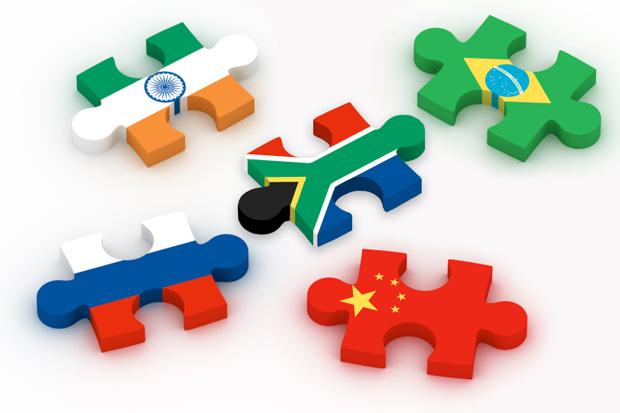
Meanwhile the $100 billion BRICS development bank will be based in Shanghai, according to its founding agreement, and will be headed by an Indian for the first five years, followed by a Brazilian and then a Russian.

Kundapur Vaman Kamath, a 67-year-old, is the non-executive chairman of India’s second largest bank by asset size, ICICI Bank, and India’s third largest IT firm, Infosys.

Now, Kamath will have another position to tend to: The first head of the BRICS bank.

The bank’s $100 billion capital—with an initial subscribed capital of $50 billion that will be equally shared by all BRICS members—will be used for infrastructure financing and sustainable development project funding within the BRICS nations. Other low- and middle-income countries will be able to access loans.

In February this year, India’s cabinet, headed by prime minister Narendra Modi, approved the establishment of the bank, after founding members sorted out several contentious issues. “The New Development Bank will mobilise resources for infrastructure and sustainable development projects in BRICS and other emerging economies and developing countries, to supplement existing efforts of multilateral and regional financial institutions for global growth and development,” the Indian government said in a statement.

The bank, according to the Russian finance ministry, is expected to be fully functional by the end of 2015.

EU paymaster Germany suggested on Monday that Greece might need a referendum to approve painful economic reforms on which its creditors are insisting, but Athens said it had no such plan for now and others warned a vote could delay vital aid.

Greece calmed immediate fears of a default by making a crucial 750 million euro payment to the International Monetary Fund a day early. But Finance Minister Yanis Varoufakis said the liquidity situation was “terribly urgent” and a deal to release further funds was needed in the next couple of weeks.

Euro zone finance ministers welcomed some progress in slow-moving talks on a cash-for-reform deal between Athens and the IMF, the European Commission and the European Central Bank but said more work was needed to each a deal.

“We acknowledged that more time and effort are needed to bridge the gaps on the remaining open issues,” they said in a short statement after spending barely an hour on a progress review on the negotiations behind held among senior officials.

Source: Bloomberg/Reuters

Russia offers Greece loans, gas discount

Russia may offer Greece a discount on gas deliveries and new loans when Greek Prime Minister Alexis Tsipras visits Moscow this week, the Kommersant business daily reported on Tuesday, citing one source in the Russian government.

A Kremlin spokesman said last week that Russian President Vladimir Putin and Tsipras planned to discuss economic ties and EU sanctions on Moscow when they meet for talks, which Kommersant said would take place on Thursday.

“We are ready to consider the issue of a gas price discount for Greece,” the newspaper said quoting an unnamed Russian government source.

Russia’s state-controlled producer Gazprom declined to comment. The Energy Ministry also declined to comment.

The source said that in exchange for the discount and some unspecified loans, Russia would want access to Greek assets. The source did not name any specific assets.

In recent weeks, the gas price charged by Gazprom has fallen, tracking lower oil prices. Gazprom said it wanted to acquire DEPA in 2013 but dropped its bid after failing to receive enough guarantees over DEPA’s financial position.

Source: Reuters

France, Germany, Italy join China’s Infrastructure Investment Bank

France, Germany and Italy have confirmed they’ll join China’s new Asian Infrastructure Investment Bank (AIIB). Participation in the rival to the US-led World Bank is seen as a setback for the Obama administration.

The three European countries on Tuesday confirmed in a statement they intend “to become founding members of the Asian Infrastructure Investment Bank,” according to AFP.

“We want to bring our long experience… to help the bank build a solid reputation,” said German Finance Minister Wolfgang Schaeuble, speaking also for Italy and France at a joint press conference with Chinese Deputy-Premier Ma Kai on Tuesday in Berlin. He added that the three countries want to make a contribution to the positive development of the Asian economy, in which German companies were actively taking part.

Chinese Foreign Ministry spokesman Hong Lei welcomed the decision, saying “the AIIB is an open and inclusive multilateral investment institution.”

“Participation by countries outside the region will intensify the extensive representatives of the AIIB,” he added.

The decision of the three European countries comes after Britain last week became the first Western country to agree to become a founding member of the AIIB, FT reports. The UK government said the decision was in the country’s national interest, but it got a negative reaction from the United States.

The new China-led bank is expected to challenge the Washington-based World Bank, so the US is increasing pressure on its allies not to join the institution. The US’ concern is that the new investment bank might not have high standards of governance and environmental and social safeguards.

The new bank is expected to challenge the Western dominance of the US-led World Bank and IMF in global infrastructure projects, which experts believe will create healthy competition.

South Korea, Switzerland and Luxembourg were also considering joining the Asian Infrastructure Investment Bank, the Financial Times reported.

Australian Prime Minister Tony Abbott said he would make a final decision on AIIB membership soon. South Korea and other countries are in discussions with China over possible participation.

China’s main regional rival Japan said earlier this month that Asian countries including Japan have until March 31 to decide on becoming AIIB founding members.

“They told us they are considering. Whether Japan will join, we do not know. It is Japan’s own decision,” Chinese Finance Minister Lou Jiwei said, according to the Xinhua news agency.

Nearly 30 countries have confirmed their participation in the AIIB, which is aimed at helping finance infrastructure projects across Asia and is expected to come into being this year.

The AIIB was formally launched by Chinese President Xi Jinping in 2014, and is expected to become a tool of a broader Chinese push for growing international power and economic significance.

‘Save our Swiss gold’

‘Gold wars’ are intensifying ahead of the polling day in the Swiss Gold Initiative.

The Swiss National Bank (SNB) and establishment parties went “all in” during the week and intensified their campaign. They suggested that passing the Swiss Gold Initiative would be a ‘fatal’ for Switzerland and would be positive only for speculators.

The ‘yes’ side countered by saying the SNB’s assertions were alarmist and over the top. They say that it is not an invitation to speculators as there would be a five year transition to gold being 20% of Swiss reserves. They warned that there is a real risk of another debt crisis and a global currency crisis and that gold reserves would protect the Swiss franc and the Swiss economy.

Because if Germany failed miserably to obtain 674 tons of gold from the US Federal Reserve in 2013, it is assured that Switzerland will find absolutely nothing in its quest to obtain more than double, or 1,500 tons, of gold as a successful November 30 referendum outcome would require.

Then again, considering it was Obama’s action that destroyed the Swiss banking sector after the US crushed the centuries-long tradition of “Swiss banking anonymity”, this could be just the right action with which “neutral” Switzerland could finally take its revenge on the regime that cost it what was for centuries the primary source of capital inflow.

In 1992, after a concerted political campaign spearheaded by some of the country’s political parties, Switzerland joined the International Monetary Fund following a national referendum.

Under IMF rules, adopted in the latter part of the 1970s, IMF member countries cannot link their currencies to gold. After joining the IMF, Switzerland was therefore constrained in how it could subsequently revalue its gold reserves since IMF Articles of Association prohibited IMF member countries from linking their currencies to gold.

Well known Swiss banker, financial adviser and author of ‘Gold Wars’ Ferdinand Lips believed that Switzerland had been put under enormous foreign pressure and duress to sell half of its gold reserves, and he wrote in 2002 questioning “Is the SNB on New York’s leash?”, saying that “In my opinion, the once strong, proud and independent SNB has been degraded to an ‘Off-shore Branch’ of the U.S. central bank (the Federal Reserve) and reports directly to Alan Greenspan and his cohorts in New York.”

Lips added that “It is a given that the Swiss gold sales will help New York money center banks to survive a bit longer. It will help them manipulate the gold market. But, gold’s time is still to come. If the SNB does not stop its sales, Switzerland will have to buy back its gold one day but at a higher price. The question is: With what?”

With the SNB now in full media mode arguing against a 20% gold holding in the reserves however, perhaps some of the Swiss media might care to interview Dr. Jean-Pierre Roth who can now be found sitting on the boards of Nestlé, Swiss Re and Swatch.

Hungary breaks ranks with EU

Hajra, magyarok! Hajra Magyarorszag! Hungary has broken ranks with the European Union and may it’s spirited defiance continue.

Not long ago Hungary was being toasted in the West for opening its border with Austria to East Germans. This bold move led to the fall of the Berlin Wall.

But Western elites are not happy with the independently minded Budapest any longer. But bullying Hungary does not make many headlines because it’s so-called “democratic” Westerners doing the bullying.

The Hungarian parliament approved a law to build the South Stream gas pipeline from Russia without the approval of the European Union, and the ruling Fidesz Party largely ignoring enraged foreign owned banks and energy companies.

The refusal of Prime Minister Viktor Orban and Fidesz to join the new US and EU Cold War against Russia has been met with anger and rage in Washington and Brussels.

Hungarian officials have been banned from entering the US, while the European Commission is trying to pressure the authorities on South Stream with legal action against the Hungarian government for its law restricting the rights of foreigners to buy agricultural land.

Viktor Orban is a nationalist and a conservative but that doesn’t really matter. Only obsequious servility to Uncle Sam and the Euro-elites matter, all in the name of “freedom” and “democracy.”

Fidesz returned to power in 2010. The previous Socialist administration was hugely popular in the West because it played lapdog to Washington and Brussels and the international banks, even taking out an unnecessary IMF loan.

Fidesz and its coalition allies, the Christian Democratic People’s Party, (KDNP) rather introduced a $855m bank tax, the highest in Europe, leaving the financial elite foaming at the mouth.

Orban clashed with the IMF too, with his government rejecting new loan terms in 2012, and paying off early a loan taken out by the previous government, to reduce interest payments.

Russia is Hungary’s third biggest trading partner and ties between the two countries have strengthened in the last couple of years, to the consternation of western Russophobes. In April, a deal was struck for Moscow to loan Hungary €10 billion to help upgrade its nuclear plant at Paks.

Orban’s policy of improving trade and business links with Russia, while staying a member of the EU and NATO, has however been put under increasing strain by the new hostile policy towards Moscow from Washington and Brussels.

Orban also spoke up for rights of the 200,000 strong Hungarian community living in Ukraine.”Ukraine can neither be stable, nor democratic, if it does not give its minorities, including Hungarians, their due. That is dual citizenship, collective rights and autonomy.”

Hungary’s Ambassador was immediately summoned to the Foreign Ministry in Kiev. Donald Tusk, Prime Minister of Poland – the US’s most obedient servant in Eastern Europe – quickly called Orban’s comments “unfortunate and disturbing” in order to impress his masters. Little did it matter that it was strictly none of Tusk’s business.

In August, Orban accurately described the sanctions policy of the West towards Russia as like “shooting oneself in the foot.”

In October, Hungarian Foreign Minister Peter Szijjarto also questioned the sanctions on Russia, revealing that his country is losing 50 million forints a day due to the policy.

Hungary has made its position clear, but for daring to question EU and US policy, and for its rapprochement with Moscow, the country has been punished.

It’s democratically elected civilian government which enjoys high levels of public support, has ludicrously – and obscenely – been likened to military governments which have massacred their opponents. “From Hungary to Egypt, endless regulations and overt intimidation increasingly target civil society,” declared US President Barack Obama in September.

Last month there was another salvo fired at Hungary – it was announced that the US had banned six unnamed Hungarian government officials from entering America, citing concerns over corruption- without the US providing any proof of the corruption.

“At a certain point, the situation, if it continues this way, will deteriorate to the extent where it is impossible to work together as an ally,” warned the Charge D’Affaires of the US Embassy in Budapest, Andre Goodfriend.

The failure to provide any evidence, understandably caused outrage in Hungary. “The government of Hungary is somewhat baffled at the events that have unfolded because this is not the way friends deal with issues,” said Janos Lazar, Orban‘s chief of staff.

“I am inclined to think that it is a punishment for the fact that we talk to Russia,” said Gabor Stier, the head foreign policy editor of the leading Hungarian newspaper Magyar Nemzet.

“America thinks that we are corrupt, but we are a sovereign state, and it is our business. Many people in the United States do not like that Viktor Orban is very independent…..Corruption is just an excuse.”

The 2013 Corruption Perceptions Index compiled by Transparency International, reveals that Latvia, the Czech Republic, Croatia, Romania, Bulgaria and Bosnia-Herzegovina are all below Hungary, as indeed is Italy. Yet it’s Hungarian officials that the US is banning.

‘Is Hungary, the EU’s only dictatorship?’ asked Bloomberg View in April. The BBC ran a hostile piece on Orban and Fidesz in October entitled ‘Cracks Emerge in leading party’.

The piece looked forward to the end of Fidesz rule.

While earlier this week, the New York Times published an OpEd by Kati Marton, whose late husband Richard Holbrooke, was a leading US diplomat, entitled ‘Hungary’s Authoritarian Descent’.

You’d never guess that the Hungarian government wasn’t the flavor of the month in the West would you?

Will Hungary be the next country to be the target of a US/EU sponsored regime change?

Attacks on Orban and his government are sure to intensify but the more the West attacks, the more popular Orban becomes as the defender of Hungary’s national interests.

Hungary gave the West everything it wanted in 1989, and its “reformist” leadership was richly rewarded. But it seems that for the West it’s never enough.


The ECB holding Europe hostage

The European Central Bank – ECB – invented yet another tool to hold Europe hostage vis-à-vis Russia

The ECB has just launched – effective 4 November 2014 – a new watchdog to control and regulate the European banking system. It is called the Single Supervisory Mechanism – SSM. It is supposed to monitor and reign in European banks that do not ‘behave’ in terms of overstretching their investment and risk lending as compared to their capital base.

In fact, the SSM is one pillar of the three pillar ‘security’ system put in place by the ECB and the European Commission – EC.

The Single Resolution Mechanism – SRM – is ECB’s strong arm to save or liquidate ‘troubled’ banks. In other words, it will administer ‘bail-ins’ to ‘too-big-to-fail’ banks in distress; meaning – over-indebted banks will rescue themselves from depositors’ money, or from shareholders. This practice was tested in Cyprus in 2013. As reported by Reuters on 30 July 2013 – According to Cyprus’s central bank, “47.5 percent of deposits exceeding 100,000 euros in Bank of Cyprus would be converted into equity to recapitalize the troubled lender as part of an international financial bailout for the island”.

This confiscating or stealing of depositors’ funds, also called the ‘haircut’ in the denigrating jargon of the Occident, is better known as a ‘bail-in’ – since it avoids the taxpayer, those who have been bearing the brunt in previous US and European ‘bail-outs’.

This atrocious predatory and outright criminal imposition by the infamous troika (ECB, EC, IMF), with no legal backing whatsoever, went largely without protests in the rest of Europe, it was shortly thereafter accepted by the EC as the new ‘norm’.

In one of his last proud statements before handing his job as European Commissioner to Jean-Claude Juncker, Manuel Barroso exclaimed – “The European Union intends to break the vicious link between sovereigns and their banks. In the future bankers’ losses should no longer become the people’s debt, putting into doubt the financial stability of whole countries.”

There it is. The ratification of the new ‘bail-in’ rule. It is surprising that there is no run of the European banks, as many of them are less stable than they were in 2008, at the onset of the man-made ‘crisis’. Bail-ins might be imminent.

The third pillar will be the Single Resolution Fund – SRF – a stabilization and rescue mechanism for banks facing bankruptcy. It is planned to become effective on 1 January 2016 – if – and that is a big IF – the necessary funding will be put in place by the member countries.

Pillars one and two are compulsory for the Eurozone countries and banks, some 6000 – which is a lot to supervise. The ECB has quickly declared that it – i.e. SSM – will directly monitor the 150 most important ones. The others will continue to be controlled by national mechanisms, whatever these are. They will be given strict regulations to follow by SSM with sanctions or fines if the rules are not followed – to make sure they will not stray.

Membership for non-Eurozone countries is voluntary. Remarkably, the UK has not (yet) volunteered for membership.

This is the biggest boost in ECB’s power since its creation some 16 years ago. ECB now sets all banking standards throughout Europe, according to which a bank may fall or rise. This is a clear infringement on the Eurozone countries sovereignty – one of the key principles to be maintained according to the Lisbon Treaty. There is no covenant in ECB’s regulations that would give it this power leverage. It is all self-serving – and the neoliberal leaders of the Eurozone countries go along with it –to the detriment of their constituency.

And let’s not forget, ECB is intimately linked to Wall Street, the FED and the IMF – Mario Draghi, the ECB President, is a former Goldman Sachs executive.

The SSM is a flagrant conflict of interest – and it looks like the financial czars of this western greed economy are getting away with it. For now.

An independent audit of all European banks, especially those 100 or 150 considered “too big to fail” – and including the ECB itself – would indeed be in order. – Independent means – the auditors would report to a special council of Eurozone countries – but independent of the European Commission. The special council would include representation from member countries parliaments, the banking, industry and service sectors, as well as civil society.

Of course – this is unlikely to happen, equally unlikely as an independent audit of the FED. That would mean transferring power to the people, to those whose money is at play, those who are really interested in a well-functioning banking system – not a predatory one as we know it today.

According to The Guardian, a recent stress test carried out by the ECB on some 100 of the largest European banks, 24, or one of five, failed (including 9 Italian and 3 Greek banks), leaving a hole of 25 billion euros in banking capital – which eventually may need to be bailed-in — if there are no bail-outs and the SRF is not yet functional.

Implementation of the SSM will be a point of no return for European banks, including for individual countries sovereign central banks. Until now, they were nominally free to print their own money. For example, Greece could have rescued them-selves by printing its own euros, instead of submitting to the draconian, literally killer conditions, imposed by the troika. But it didn’t, since the ruling elite in Greece was and is part of the scheme. As of now, there is no ECB rule that forbids a local central bank to print its own money – which in the Eurozone is the euro.

Europeans will be at the mercy of the ECB and through it, of Wall Street and the FED – the defunct greedy dollar based monetary system.

And why do the people not react? – Because they are on purpose misinformed, kept in the dark by the media. The new SSM is presented as a system that would protect them from future crises – when the contrary is true.

However, at least equally important and highly suspicious, is the timing of this new delegation of power for the ECB. The abrogation of Eurozone countries and their banks sovereignty is not coincidental. It comes at a time when a new west-east conflict, a new Cold War with Russia is being instigated by Washington and its European vassals.

ECB’s new strong arm, the Single Supervisory Mechanism, with its transboundary powers and disregard for national sovereignty is intent to hold the Euro system and its countries hostage against Russia, or the new Russia-China alliance. The new watchdog watches that none of them will stray – perhaps into the eastern camp of honest trading, into a new realm of economic prosperity and equality, where banking may serve the peoples development, instead of the accumulation of wealth for a few.

Remember, Mr. Xi Jinping, President of China, visited Germany in March 2014, to offer Madame Merkel participation in the New Silk Road – a new trading alliance from Germany, the western most borders, all the way to Shanghai, covering Russia, the former Soviet Republics, north-western and central China. An incredible potential for trade and development that can hardly be ignored. If Germany accepts, the strongest nation of the Eurozone, the rest of Europe will follow – follow a path of more security and independence than the current alliance with threats and sanctions from a warmongering White House will offer.

Washington is aware of this. They will hold no barrels to sow unrest and destabilize Europe to eventually justify a US intervention, more NATO, more CIA surveillance, more profit-yielding armament – and moving ever a step closer to Moscow. The new banking control mechanism is just an additional – but extremely powerful tool in this direction.

An alternative monetary system, detached from the predatory dollar scheme, will be a welcome means to peacefully counter this latest financial aggression.

Peter Koenig is an economist and former World Bank staff. He worked extensively around the world in the fields of environment and water resources. He is the author of Implosion – An Economic Thriller about War, Environmental Destruction and Corporate Greed – fiction based on facts and on 30 years of World Bank experience around the globe.

‘The goal of sanctions is a color revolution in Russia’

The goal of Western economic sanctions is a “color revolution” in Russia, Russian Academy of Sciences presidium member, academician Yevgeny Primakov is convinced. He told TASS in a jubilee interview of conspiracy theories around oil prices, the U-turn of Russia’s economy to the East and the role of informal diplomacy in conditions of a political crisis. On October 29, Yevgeny Primakov, who consecutively headed the Foreign Intelligence Service (SVR), the Foreign Ministry and the government, turns 85.

– How large-scale can the influence of reciprocal sanctions be on the global policy and economy?

– I can’t agree with the term “reciprocal sanctions”. The sanctions imposed by the United States and their allies against Russia are one thing. And response measures taken by Russia are quite another thing. The aim of anti-Russian economic sanctions is to weaken Russia, corner us, put into practice the idea of a “color revolution” in our country. The response measures that in their scale are not comparable to anti-Russian sanctions are mainly aimed to create an atmosphere that does not favor escalation of sanctions imposed by the West. Of course, in such a situation, a signal is sent to relevant departments and businesses on the required support for the domestic producer in order to loosen our dependence on imports, especially in the food sphere.

Economic sanctions without a relevant decision of the UN Security Council are a measure that contradicts global processes – both economic ones aimed to develop interaction in the interests of all countries, and political ones who solve the problems of creating various systems of counteraction to the real threats to the security of the modern world.

– Has escalation of the conflict discredited the leading institutions of international economic cooperation – the World Trade Organization, the World Bank and the IMF? Do they require transformation?

– The development of the conflict imposed on us by the United States directly contradicts the principles that underlie the WTO, the World Bank and the IMF, but it does not mean that Russia should quit these institutions of international economic cooperation. Even in conditions of the changed global situation, Russia does not accept a course for self-isolation.

– Does the role of informal diplomacy grow in conditions of political contradictions? In particular, do you think that representatives of big business of Russia, the US and the EU will contribute to rapprochement of political positions of the countries involved in the confrontation?

– Informal diplomacy is especially important now, including at the level of Russian, American and European businesses, interested, it seems, not in destruction but in creation, in development, first of all, of economic cooperation.

– Has China retained the status of the United States’ arch geopolitical rival against the cool-off in Russian-US relations? Or is it now Russia?

– As far as economics is concerned, in the context of the existing inter-dependence of the United States and China their competition is unlikely to fade into the background, particularly so now, that the Chinese economy has taken first place. At the same time, I do not believe that one should project this situation to the worsening of relations between the United States and Russia, which by no means signifies that Russia positions itself as the United States’ main geopolitical rival.

Soros in a corner

Those who would gain the most from an IMF spending spree in Europe would be, you guessed it, billionaires like George Soros.

The Russian “existential war threat” is, to Soros, nothing but an excuse to end the “austerity experiment” and to return to its inebriated spending ways.

The globalist American neo-cons were hoping the Ukraine civil war would become an all out war between Russia and Ukraine, thus unleashing the “spend your way to prosperity” for Soroses of the world.

This plan seems to be failing, so Soros turned to a desperate measure, an opinion piece that does more for Vladimir Putin, than Soros imagined.

Here are the highlights from what the Open Society founder has to say about the “existential Russian threat” in a just released Op-Ed in the New York Reviews Of Books:

Europe is facing a challenge from Russia to its very existence. Neither the European leaders nor their citizens are fully aware of this challenge or know how best to deal with it. I attribute this mainly to the fact that the European Union in general and the eurozone in particular lost their way after the financial crisis of 2008.

And:

[Europe] fails to recognize that the Russian attack on Ukraine is indirectly an attack on the European Union and its principles of governance. It ought to be evident that it is inappropriate for a country, or association of countries, at war to pursue a policy of fiscal austerity as the European Union continues to do.

More desperate still:

All available resources ought to be put to work in the war effort even if that involves running up budget deficits

And then really crying out openly for a full war:

[IMF] should provide an immediate cash injection of at least $20 billion, with a promise of more when needed. Ukraine’s partners should provide additional financing conditional on implementation of the IMF-supported program, at their own risk, in line with standard practice.

America usurped: China becomes world’s largest economy

Last week the International Monetary Fund updated its data on the world economy. For the first time it ranks China’s economy as the world’s biggest in purchasing-power-parity terms.

Historians, though, point out that China is merely regaining a title that it has held for much of recorded history.

In 1820 it probably produced one-third of global economic output. The brief interlude in which America overshadowed it is now over.

The White House seemed oblivious on Wednesday, crowing that “the economic policies that this president put in place are the envy of the world”.

They seemed caught flat-footed by the news.

The latest IMF figures show the Chinese economy is worth $17.61 trillion compared with $17.4 trillion for the U.S.

The figure is controversial as it requires the comparison of a huge amount of goods and services, and is therefore a vast statistical undertaking that can only be conducted infrequently with estimates used during intervening periods. The methods used to collect the data have also led to controversy in the past.

When it comes the raw GDP data base on exchange rates, China will eventually also overtake the US if it carries on growing as it has, but that is still likely to take some years.


Will China enter the heart of global finance?

The issue of whether the Chinese should be part of the International Monetary Fund’s Special Drawing Right, the composite reserve currency used in official financing, is highly technocratic, but the political questions at stake go to the core of world money and power – and will be discussed, in the background, at the annual meetings of the IMF and World Bank in Washington this week.

China is bidding to enter the heart of global finance by establishing its currency, the renminbi, as part of an ubiquitous monetary unit used in official transactions around the world.

The decision on a new SDR structure, to be made in the next 15 months, will influence how China and its currency can play a bigger part in driving world trade, investment and capital flows. The renminbi could eventually challenge the dollar and its pivotal position in world money — which is why the U.S. government and Federal Reserve are examining this with intense interest.

China is unlikely to mount an open campaign to enter the SDR, grouping the main reserve currencies, the dollar, the euro (linking countries in European monetary union led by Germany and France), the Japanese yen and British pound, and is valued at around $1.5.

Beijing would prefer the question of recalculating the composition of the SDR, which comes up for review in 2015, to follow market developments, reflecting a big increase in demand for renminbi financing from private banks, central banks, traders, corporations and asset managers.

Many hurdles remain. These include the renminbi’s lack of formal convertibility for transactions that shift capital inside and outside the country, where Beijing is reluctant to abolish all controls. In addition, China still has to release more statistics to the Fund about its monetary reserves and other matters. However, Chinese measures over the past three years to liberalize and internationalize its currency, and a big increase in financial market interest in China, are pointing toward a broadening of the SDR’s composition from January 2016.

An additional factor is China’s own action to galvanize emerging market economies toward reforming word monetary arrangements. This includes the five-nation Brics group’s decision to set up the New Development Bank in Shanghai, potentially challenging the IMF and the World Bank.

China believes it is close to earning the status of a reserve money, the first time that an emerging market currency would attain this position. Chinese entry into the “magic circle” has been advanced by the British government’s September decision to issue renminbi-denominated bonds, the first big government to take such a step, and allow the proceeds to be held as reserves by the Bank of England.

The main conditions for the renminbi to pass the SDR test are that it should be widely used in trade and be “freely usable” in international payments and asset management. Although a long way behind the dollar, the renminbi has made impressive strides recently and is challenging the euro in several key fields.

Next year’s planned review will touch, too, on the opportunity for the SDR to play a greater role on financial markets, for example in denominating bond issues. The SDR has lost ground as a financial vehicle in the past two decades, reflecting the surging importance of international private sector capital markets. But with the addition of the renminbi, it may be about to make a comeback.

Source: USA Today