Obama prophesies climate zombie apocalypse

President Obama – who graduated Columbia University with a degree in political science – became an environmental and ecological expert Monday night in time to decry America’s contributions to global warming and the alleged melting of Arctic ice caps at this year’s GLACIER Conference, predicting a dire future for humanity.

During the GLACIER event, which stands for Global Leadership in the Arctic: Cooperation, Innovation, Engagement and Resilience, Obama blamed the recent rash of wildfires sweeping parts of Washington State on global warming, insisting that “climate is changing faster than our efforts to address it.”

Overall, the speech painted a fairly doom-and-gloom outlook for America and the rest of the world. So if you’re a Doomsday Prepper, here are a few excerpts from the president’s speech explaining the climate-related disasters heading to a town near you:


Your house might slide off into the ocean…

Reduced sea levels leaves villages unprotected from floods and storm surges. Some are in imminent danger; some will have to relocate entirely.

…or it might be engulfed in flames.

Alaska’s fire season is now more than a month longer than it was in 1950. At one point this summer, more than 300 wildfires were burning at once. Southeast of here, in our Pacific Northwest, even the rainforest is on fire…this is a threat to many communities.

And if it doesn’t, it will definitely get sucked into a sinkhole.

Thawing permafrost destabilizes the earth on which 100,000 Alaskans live, threatening homes, damaging transportation and energy infrastructure, which could cost billions of dollars to fix.

Your city will either look like Atlantis or something out of the zombie apocalypse.

…we will condemn our children to a planet beyond their capacity to repair: Submerged countries. Abandoned cities.

You might run out of fresh salmon en croûte.

Warmer, more acidic oceans and rivers, and the migration of entire species, threatens the livelihoods of indigenous peoples, and local economies dependent on fishing and tourism.

Or just food, in general.

Climate change is already disrupting our agriculture and ecosystems.

You may simultaneously die of thirst and drown, all at the same time.

Entire nations will find themselves under severe, severe problems. More drought; more floods; rising sea level…

You might have to begin training for the Hunger Games.

…more refugees; more scarcity; more conflict.

And if the famine, flood, fire and fighting doesn’t get you, the fumes definitely will.

Consider, as well, that many of the fires burning today are actually burning through the permafrost in the Arctic. So this permafrost stores massive amounts of carbon. When the permafrost is no longer permanent, when it thaws or burns, these gases are released into our atmosphere over time, and that could mean that the Arctic may become a new source of emissions that further accelerates global warming.

After all, we’re running out of time.


On this issue, of all issues, there is such a thing as being too late. That moment is almost upon us.

Perhaps the president got some of his research from the crew of the Canadian CCGS Amundsen during their four-month global warming expedition — you know, before they had to bail on their mission due to ships getting stuck in ice.

Source: MRC TV

Rise of hypersonic missiles render fleets obsolete

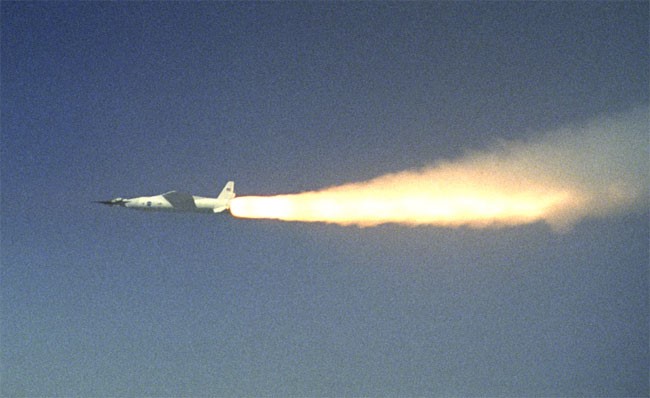
With the rise of hypersonic missiles, fleets have become largely obsolete, reduced as they are to huge sitting ducks. There is simply no defense for a large ship against an incoming MACH5 missile. Carriers can destroy small countries like Libya or Iraq, but not Russia and China.

Hypersonic weapons can achieve speeds over five times faster than the speed of sound (Mach 5) and they are the latest version of precision guided munitions (PGM) that make up part of the larger family of long-range strike weapons systems.

“Hypersonic weapons add to the complexity and elusiveness of the escalatory dynamics and this is something both sides will need to plan for”, says Eleni G. Ekmektsioglou from the American University’s School of International Service.

In the United States, hypersonic weapons are pursued in the context of the conventional prompt global strike (CPGS) commonly defined by officials as a technology of “high-precision conventional weapons capable of striking a target anywhere in the world within one hour’s time.”

Outside the United States, states such as China or Russia have been pursuing this promising technology in secrecy.

Chinese fears skyrocketed after President Barack Obama’s Prague speech and the 2010 Nuclear Posture Review (NPR). The Chinese understood America’s decreasing reliance on nuclear weapons as being tantamount to a greater reliance on conventional weapons—especially CPGS—where the United States enjoys an undeniable superiority.

Thus, the Chinese regard President Obama’s vision for a nuclear-free world as a trap that aims at containing China’s rise to power, Ekmektsioglou believes.

Russia has built a revolutionary new weapon system that can render enemy satellites and weapons useless.

Its Russian makers say it is a ‘fundamentally new electronic warfare system’ which can be mounted on ground-based as well as air- and sea-borne carriers.

‘The system will target the enemy’s deck-based, tactical, long-range and strategic aircraft, electronic means and suppress foreign military satellites’ radio-electronic equipment,’ Russia’s Radio-Electronic Technologies Group (KRET) Deputy CEO Yuri Mayevsky told Russian news agency TASS.

To comply with international weapons laws, the system will be mounted on ground-based, air-and seaborne carriers and not on satellites.

‘It will fully suppress communications, navigation and target location and the use of high-precision weapons,’ said adviser to the KRET first deputy CEO Vladimir Mikheyev.

The system will be used against cruise missiles and will suppress satellite-based radio location systems.

NATO is the root cause of EU migrant crisis

The scale of the migrant crisis Europe is facing today cannot be understated. It is truly unprecedented. What is habitually understated, however — and in fact almost completely ignored by mainstream media — are the real roots of the crisis, says Danielle Ryan.

The debate around migration into the EU is happening nearly entirely without reference to the causes of the recent influx of migrants from North Africa and the Middle East. The elephant in the room is NATO and nobody really wants to talk about it.

Hundreds of articles, laden down with numbers and proposals and predictions fail to make any direct link between cause and effect. News anchors sit seemingly baffled, mouths agape, at the apocalyptic-like pictures they are seeing land on their desks, and yet few are willing to draw the appropriate conclusions. But it is such a basic and logical connection that it’s hard to believe it is not being made very loudly and very persistently.

Maybe it’s just that these journalists are so conditioned to framing U.S. and NATO policy in a positive light that the links don’t even really occur to them. Or maybe they’re simply embarrassed and trying to shift focus from their long-recorded support for various military interventions in these countries.

Either way, the result is that the story is framed in such a way that it makes the timing of the crisis sound almost random. We’re witnessing a conversation about how to ‘deal’ with boats full of Libyans making their way across the Mediterranean — as if Libya was a country that had just self-imploded yesterday, and for no discernible reason.

A fierce debate is raging over ‘what to do’ about these migrants — and in a way that’s understandable because that is the more immediate problem — but the debate we really need to be having is about the policies, NATO’s policies, which were the catalyst.

Even if Europe unites in formulating a ‘solution’ to the problem, it will be nothing more than a bandaid fix because it will only deal with symptom. After all, what’s the point in covering your open wound with a bandaid when the guy who cut you is still wielding a knife in the same room? It doesn’t take a genius to work out how that story ends.

Whenever the cause is grudgingly mentioned by the media, it is mentioned briefly and abstractly where the author or anchor might refer to “conflict” or make mention of how violence has “reignited” in these countries in recent years and months.

The editors at the New York Times in particular, are big fans of loading all the blame squarely onto Europe’s shoulders. Here a Times piece argues that the migrant crisis “puts Europe’s policy missteps into focus”. Another piece, from the editorial board, lectures Europe on how to handle the situation.

In April, NATO head Jens Stoltenberg called for a “comprehensive response” to the crisis and promised that NATO would help to stabilize the situation. The alliance’s role in “stabilizing” Afghanistan was part of its broader approach to the refugee crisis in the Mediterranean, he said.

That is rich coming from the head of a ‘security’ and ‘defensive’ alliance which for years has pursued a policy of offensive destabilization in the very regions which people are fleeing from in their hundreds of thousands. But Stoltenberg’s comments and NATO’s actions are easily decoded by the employment of some basic common sense.

The NATO modus operandi is clear. The pattern, repeated over and over, involves the complete destabilization of a region, to be swiftly followed up with another NATO-led ‘solution’ to the problem. When you couple that with the use of spokespeople who are unashamed to feign ignorance and lie blatantly (Jen Psaki, Marie Harf etc.), and a compliant media that will regurgitate the line without question, this is what you get.

The 2011 NATO intervention in Libya was authorized by the United Nations on “humanitarian” grounds and resulted in the deaths of between 50,000 and 100,000 people and the displacement of 2 million. Very humanitarian.

Similarly, after the U.S.-led campaign to destabilize Syria in an effort to topple Bashar al-Assad, facilitating (and even supporting) the rise of ISIS in the region, a staggering 10 million have been displaced (according to Amnesty International) and European countries are left to help pick up the pieces. Germany, for example, has pledged to resettle 30,000 Syrian refugees. Sweden, a non-NATO nation, has taken in similar numbers.

It should be made clear however, that the numbers European countries have taken or pledged to take pale in comparison to the numbers being hosted in other Middle Eastern countries. Lebanon, for example, is hosting 1.1 million Syrian refugees. Jordan is hosting more than 600,000. Iraq hosts nearly a quarter of a million. Turkey hosts 1.6 million.

There is one country that’s getting off scot-free in all of this — at least on the Syrian front. That country is the United States. The U.S. has taken in less than 900 Syrian refugees after four years of war. American officials have cited “national security” in their explanations for not yet taking more, although they have said they would like to see the number increase.

Maybe this has something to do with it?
Debate not allowed

There is a second media crime flying under the radar here and it is this: In European countries where the massive influx of migrants from the Middle East and North Africa have caused serious societal divisions, where migrants have failed to assimilate (for a variety of reasons, including both government policies and often radical religious beliefs), Western media will allow no one to talk about it honestly — and woe betide the person who tries.

Take Sweden, where the disease of political correctness is at an even more advanced stage than it is in the rest of Europe. There, any attempt to debate the coherence of a ‘doors wide open’ immigration policy is branded as “racist”. A further irony in the Swedish context, is that the country is facing a housing crisis and has nowhere to put most of the people they are pledging to resettle. There’s some real forward-thinking, common sense policy for you.

This is a dangerous combination for Europe: An unsustainable influx of migrants, foreign policy which ensures its continuation, a docile media, and an epidemic of political correctness which has infected the entire continent.

Media 101 on the migrant crisis: Talk a lot about migrants, don’t mention why they fled and then call anyone who has a problem with it a “racist” — success! Oh, and you get an added bonus if you can somehow link it all to ‘Russian aggression’, Vladimir Putin and NATO as a ‘defensive’ alliance.

Some European countries are taking a more hardline approach and are getting slammed for it. Hungary, for example, is looking at building a barrier wall along its border with Serbia, similar to barriers along the Greek-Turkish and Bulgarian-Turkish borders. Again, this has sparked accusations of xenophobia and racism from media and political quarters.

But that’s part of the game, isn’t it? If NATO’s war supporters can focus the debate around the idea that anyone who wants to address or critically assess immigration policy is “racist” then we won’t have to talk about why the migrants are here in the first place or why they are facing such dire circumstances at home.

Russia Today’s Oksana Boyko tried recently, to broach this topic with Peter Sutherland, the UN’s special representative on international migration and development, but she got nowhere. She argued that the debate around migration into the EU can’t really be had without addressing the essence and heart of the problem, but found that NATO policy is apparently a topic not up for discussion.

Debating Europe’s migrant crisis without acknowledging the context in which it has been created it useless. It would be like asking Americans to debate police brutality without talking about race. The two are inescapably interlinked and any ‘solutions’ that come from an incomplete debate will ultimately fail.

For now though, it seems Europe will continue to debate this humanitarian crisis in terms of ‘what to do’ without addressing the ‘how to stop’ and we’ll keep running around in a vicious circle.

An easier solution, of course, would be for NATO to put an end to its campaign of destabilization in the Middle East and North Africa, but that would require the acceptance and acknowledgement of some very hard truths.

Danielle is an Irish journalist and blogger. She has a degree in Business and German from Trinity College Dublin and studied political reporting at the Washington Center for Politics and Journalism in Washington, DC. Special interests: American politics and foreign policy, US-Russia relations and media bias. Her blog can be found at journalitico.com.

Record 4,200 migrants rescued at sea by Italian coastguard

Up to 4,200 migrants sailing across the Mediterranean Sea were rescued by European ships on Friday, but 17 people died during the journey on unseaworthy boats. The number rescued in 24 hours appears to be one of the highest in recent years.

The 17 bodies were found on three inflatable dinghies, from which over 300 other migrants were rescued alive, the Italian Navy said on Twitter.

Friday’s rescue operations were led by the Italian coastguard, and involved German and Irish naval ships working under the auspices of the EU’s Frontex border agency.

A similar international maritime mission off the coast of Sicily on Thursday resulted in the rescue of over 700 migrants from Libya in six boats.

So far, the busiest days this year have been on April 12 when 3,791 migrants were rescued and the May 2 rescue of 3,690 people.

According British activist John Wight, the drowning of hundreds of refugees in the Mediterranean is “a crime against humanity,” and “the ultimate responsibility lies with Western governments that have proved themselves the enemy of everything good in the world and a friend to everything bad.”

Over 40,400 boat migrants, many of them fleeing poverty and conflict-stricken countries such as Syria and Eritrea, have arrived in Italy since the start of the year, according to the International Organization for Migration (IOM).

New statistics gathered by IOM confirm 2015 appears to be “an even deadlier year than 2014,” when nearly 3,300 migrants perished trying to enter Europe. While last year the number of migrants dying in all Mediterranean crossings from January to April was 96, this year’s toll is an estimated 1,770 so far through to April 30, IOM said.

IOM’s team in Italy has recently reported a persisting trend of growing numbers of women from Africa, particularly Nigerians.

“In the first four months of 2015, we have registered an increase in the number of incoming Nigerian women – three times as many as during the same period last year. There are well-founded concerns that many of them may be victims of trafficking,” Federico Soda, Director of the IOM Coordination Office for the Mediterranean in Rome, stated earlier this month.

By mid-May, some 62,500 people had crossed the Mediterranean, and at least 1,800 have died, the agency added.

“It happens a lot in waves, you could have a few days where nothing happens, then there can be a high number of arrivals at the same time,” Flavio di Giacomo, a spokesman for the IOM in Italy, told AFP.

Speaking in Lisbon on Friday, Tunisia’s Prime Minister Habib Essid said his country will consider the naval campaign the EU plans to curb the migrant problem “almost a military intervention.”

Essid added that it will not help, as “if you stop the boats in this area, they will just move to the other side.”

Swiss diplomat dissects diverging US, EU interests

It is important to understand that US interests are fundamentally different from those of Europeans, Lena Lio, a former Swiss politician and diplomat, expert on Russian studies, told the newspaper 24 Heures.

The instability in Eastern Europe is beneficial for Washington, as the ongoing conflict in Ukraine will lead to a weak Europe, implying also that mostly white nations will suffer the consequences.

The weak Europe, in turn, cannot pose an economic threat or political competition to the United States. That is one reason why Washington passionately hates “nationalists”, the real backbone of the EU.

If Europe manages to solve its internal problems, it will be a dangerous challenger for the US hegemony, Lio said.

Unable to remain the top dog in international politics, the United States deliberately destabilizes its potential competitors by creating conflicts and fueling existing disputes.

The United States is losing its dominance in the international arena and that is why Washington deliberately tries to destabilize and crush any potential competition.

Most Americans now see Russia – ahead of North Korea, China and Iran – as the US’s public enemy number one and the greatest threat to the US due to a relentless demonization campaign. Americans regard Europeans as “appeasers”.

But the EU has no energy security in the Middle East and North Africa, and without their reliable partner Russia, will have no energy security at all.

The United States can thus no longer remain the only hegemon in the world, the position it has become so used to since the fall of the Berlin Wall and the end of Cold War.

Therefore, unable to stay on the top, the United States uses aggressive style of conducting politics by deliberately damaging relations between other countries, such as fueling disputes between China and Japan, destabilizing Eastern Europe by supporting the conflict in Ukraine, artificially driving down global oil prices and damaging the Russian economy by imposing economic sanctions, said the former Swiss diplomat.

NATO in Europe embodies the ultimate geopolitical existential paradox; an alliance that exists to manage the chaos it perpetuates.

US waging a financial war for imperial ambitions

The United States is waging a finance war against Moscow in a bid to weaken Russia to a point of economic and social destruction, the Austrian Contra magazine said, adding that this campaign goes against the international law, WTO rules and bilateral agreements.

The United States has a wide array of instruments at its disposal. The Austrian magazine named assigning false credit ratings as a prime example.

“Russia’s fundamentals are the best in the world. Not a single (big) state has better fundamentals than Russia.

However, Fitch downgraded it to a 3B rating – just above junk level. The US has the worst fundamentals in the world. But the same rating agency has given it AAA, the best rating possible. It remains a mystery how the rating agency counts that,” the publication said.

The media outlet compared the US to a terrorist state that disregards general code of conduct and acts upon its whims and wishes, forcing other countries to participate. Moreover, Washington threatens any country that has chosen to act independently with war and sanctions.

The US monthly CounterPunch also called American and British imperial ambitions the real challenge to the world.

Any country resisting the American Empire, taking a stand against its hypocrisy, double standards, and complete lack of respect towards other countries and cultures, US monthly CounterPunch reported, suffers from these attacks.

The last year coup in Ukraine was openly supported by the West. US Senator John McCain along with EU representative Catherine Ashton traveled to Ukraine personally to show their support and urge on the protesters in Kiev.

The United States is a global hegemon with over 1,000 military bases and 11 navy battle carrier groups around the world and a military budget that exceeds budgets of all other industrialized nations combined.

The truth is that the challenge facing the world right now is how to deal with the United States and its imperial ambitions, rather than contain a fake Russian threat.

The Ukrainian crisis has once again shown that “we live in a world in which the West’s interests and rights are the only ones deemed legitimate”. The imperial hegemonic agenda of the United States and Britain is the root cause of the crises currently taking place in eastern Ukraine and the Middle East.

American and British hypocrisy knows no borders, the US monthly said. How the United States and Britain who played central roles in diminishing Afghanistan, Iraq, Libya and Syria into an abyss of carnage and savagery, could then make statements that Putin is a greater threat to Europe than the Islamic State?

France will not send military, arms to Kiev

France has no plans of sending military instructors or delivering equipment to Ukraine as opposed to Great Britain, French Foreign Minister Laurent Fabius said Wednesday.

On Tuesday, British Prime Minister David Cameron announced that Britain would send instructors to Ukraine to train the country’s military, Sputniknews reported.

“Great Britain has taken a hardline to the situation and is considering a number of measures that you have said [sending military instructors], which Prime Minister David Cameron announced. We have also taken a firm position, but are still pushing for the de-escalation of the conflict,” Fabius said on France Info radio station.

France is party to the Normandy format talks on Ukrainian reconciliation, which also includes Russia, Germany and Ukraine. The most recent Normandy-quartet meeting between foreign ministers took place in Paris on Tuesday.

Kiev authorities repeatedly asked foreign partners for lethal assistance. On Tuesday, Ukrainian Interior Minister Anton Gerashchenko said that the United Arab Emirates had agreed to send weapons and military hardware to Ukraine.

A number of European states, including Germany, refused to arm Kiev. The United States, where according to a recent poll by Pew Research Center more than half of the respondents oppose sending weapons to Ukraine, is yet to make a decision on the matter.

War does not love British PM back

UK Prime Minister David Cameron certainly loves war.

But events in Iran, Libya, Syria and now Ukraine, show that war does not love Cameron back, making him look rather like a dull schoolyard bully, oblivious to how he has actively contributed to global chaos.

Cameron actively supported the 2011 military operation in Libya. Back in 2011, Cameron visited Tripoli with France’s then-President Nicolas Sarkozy to declare victory over Muammar Gaddafi’s regime in what turned out to be premature celebrations with the “rebels”, now known as ISIS.

In a recent interview however, he declared that Libya shouldn’t become a “safe haven for terrorists”, something that Libya clearly has now achieved with Britain’s meddling.

Cameron was left rather red-faced after ISIS attacks killed Coptic Christians in Libya last week.

In Syria, Cameron also supported arming “rebels” in order to attempt to oust President Bashar Assad.

Cameron, while advocating British attacks against the Syrian government, admitted he was not “100 percent certain” that Assad was behind a recent chemical attack, but that it was “highly likely.”

“This is not like Iraq, what we are seeing in Syria is fundamentally different … We are not invading a country,” he insisted. No weapons of mass destruction were ever found in Iraq.

Cameron had been calling for an international rubberstamp from the UN to aid the Syrian “rebels” – aka ISIS – from the early stages of the conflict.

“Every effort should be made to secure a [UN] Security Council Resolution backing military action before any such action is taken,” Cameron said in the speech to the House of Commons in 2013.

But his attempts proved futile, as British MPs effectively ruled out direct involvement in a military campaign in Syria. The Libyan fiasco was apparently still fresh in everyone’s mind.

“Throughout this coalition government, the Conservatives have adopted a less forthright approach to the Middle East conflict, in a way which I believe risks decreasing British influence in the region,” Liberal-Dem coalition partner Nick Clegg then lamented.

Back in 2010, Cameron stated that Iran has a “nuclear weapon,” when asked about why he was backing Turkey’s bid to join the EU. The Mossad, no less, has publicly denied intelligence proving the existence of such a weapon.

Cameron then attempted to pressure the American Congress over sanctions on Iran right ahead of his visit to the US, but Republicans called it an unproductive move.

He responded that Turkey’s accession could “help solve the world’s problems, like the Middle East peace process, like the fact that Iran has got a nuclear weapon.” Perhaps no one had sent him the memo.

With an ugly conflict brewing in Ukraine, Cameron has announced that UK troops will support Kiev with tactical intelligence, training and logistics. The UK will also “be developing infantry program with Ukraine to improve the pure ability of the forces.”

The PM’s most recent warmongering comments come after the Minsk peace talks, in which a ceasefire was agreed upon by the leaders of France, Germany, Russia and Ukraine.

On top of that, Cameron hawkishly called for more sanctions against Russia, in addition to those implemented during the past year.

He is said to be upset by French and German leaders Francois Hollande and Angela Merkel, who are trying to push for a peaceful and diplomatic solution to the conflict.

“We should keep up the pressure [on Russia],” Cameron said, noting that “in this respect the interests of the United Kingdom and democracy do go together.” Vladimir Putin, the most popular president Russia has had in more than a century, was democratically elected, but perhaps Cameron believes “democracy” has several meanings not included in most dictionaries.

State Department’s Nuland wants to ‘fight against the Europeans’

There are increasingly signs that Angela Merkel and Francois Hollande operated behind the backs of the Americans, when they traveled to Minsk last week, in an attempt to reach an agreement between the warring factions.

The 53-year-old European representative of the US government, Victoria Nuland, is responsible for guiding the United States through the Ukraine crisis and solving the problems with Russian President Vladimir Putin. But in the crisis Nuland has herself become a problem.

The American gave an internal briefing to the US delegation at the Munich Security Conference last Friday. She sat on the sixth floor of the Hotel Bayerischer Hof; in the room were perhaps two dozen US diplomats and senators. The German Defense Minister Ursula von der Leyen had just publicly spoken about the fact that weapon deliveries could serve as an accelerant in eastern Ukraine. The Americans were angry.

According to the German “Bild” newspaper, Nuland said, “We can fight the Europeans.”

According to the report, Nuland called Chancellor Merkel’s trip to visit Russian President Vladimir Putin “Merkel’s Moscow stuff.” The atmosphere heated up; one of the senators was to have ridiculed the German Defense Minister (the “Defeatism Minister”); and made a reference to the Europeans’ “Moscow bullshit”.

The top diplomat Nuland will be considered a potential new Secretary of State. She is married to Robert Kagan, a neo-conservative thinker. Last year he published a text on why America must remain the undisputed leader of the world.

She already managed to make headlines after the Munich Security Conference last year with her somewhat limited mastery of language.

At that time she flew from Munich via Cyprus and Prague to Kiev, and on the way she called Geoffrey Pyatt, the US ambassador to Ukraine. Nuland dispensed with special security procedures and used her normal mobile phone. So the conversation went unencrypted.

In the evening of February 4, 2014, a four minute and eleven second recording appeared on YouTube. The conversation between the two top diplomats gave a rare glimpse into the world of American diplomacy.

At the end of the call Nuland mentioned a proposal by the US government, meant to outmaneuver the hesitant Europeans, which made her world-​​famous.

Shortly before she had spoken with the United Nations: the United Nations should send an envoy and engage with Ukraine, then the EU would no longer have much to say. “That would be great, I think, to help advance this thing, the UN would advance things,” Nuland said, and then added: “Fuck the EU”.

Source: RussiaInsider

Putin says US is already arming Ukraine

Russian President Vladimir Putin says the US is supplying Kiev with lethal weapons, telling reporters that the conflict in Ukraine will not be resolved through military escalation.

“According to our intelligence, [US] weapons are already being delivered,” Putin was shown on state television Channel One as telling a press conference on Tuesday, when asked if a shipment of lethal hardware from Washington to Kiev would fan the flames of war in eastern Ukraine.

Putin, speaking in Budapest during a presidential visit to Hungary, added that arms deliveries would only contribute to the loss of lives in the war-torn region.

“I am deeply convinced that whoever and whatever weapons are delivered to the conflict zone, the [outcome] will always be bad … the number of victims could increase,” he said in comments widely published by Russian media.

Kiev and Western nations, in turn, have for months accused Moscow of arming pro-Russian separatists in eastern Ukraine — a charge the Kremlin has repeatedly denied.

In December the US Congress passed legislation authorizing the sending of arms to Kiev. But while US President Barack Obama signed the measure into law, he has been hesitant to use the option, amid widespread warnings arming Kiev would be seen as a declaration of war.

German TV channel ZDF airs fake news

A citizen’s media group has lodged a complaint against German television channel ZDF for airing a photograph of Russian tanks in eastern Ukraine, which in reality were Russian tanks on patrol in South Ossetia in 2008.

Just days after a US politician presented on the Senate floor falsified images of Russian tanks purported to be taken in eastern Ukraine, one of Germany’s largest broadcasters appears guilty of the very same error.

The German media watchdog group, known as the Permanent Open Committee of Media Monitoring, has issued a complaint against federal channel Zweiten Deutschen Fernsehens (ZDF) over false reporting on the situation in eastern Ukraine, Deutsche Wirtschafts Nachrichten has reported.

The complaint involves a photograph that purports to show Russian military presence in eastern Ukraine, a claim that Moscow has denied on numerous occasions.

The news segment aired by ZDF featured a photo with the caption “Russian armored vehicles moved through Isvarino in the Lugansk region, February 12, 2015,” citing “Ukrainian army spokesman Andrei Lysenko.” However, there is one glaring problem with the photograph in question: it shows Russian tanks in South Ossetia, not Ukraine.

US Senator sells war with fake photographs

Serious questions have been raised about the authenticity of photographs provided by Sen. Jim Inhofe (R., Okla.) to sell a “Russian invasion”.

Inhofe released “photographic proof of Russian solders in Ukraine” in order to push forward his bill to provide U.S. arms to Ukraine. Or so he thought.

Members of the Senate Armed Services Committee first viewed the graphic pictures in December. Sen. Inhofe then obtained the photos and worked to independently verify and confirm the authenticity of the photos, before providing the fake photo’s “exclusively” to the Free Beacon.

Several images of the Russian convoys appear to have been taken in 2008, during Russia’s conflict with Georgia, but have been presented as “evidence” of an Russian invasion of Ukraine.

Inhofe wanted the Obama administration and American people to see “graphic violence inflicted upon Ukraine by the Russian-backed separatists”.

United States Senators are the people who actually play an important role in deciding when their country goes to war. Inhofe’s bill to arm the Ukrainians is sponsored by at least 16 other leading Republicans, including Sens. Ted Cruz (Texas), John Cornyn (Texas), Marco Rubio (Fla.), and Tom Cotton (Ark.).

Sen. Inhofe said in a statement: “The Ukrainian parliament members who gave us these photos in print form as if it came directly from a camera really did themselves a disservice. We felt confident to release these photos because the images match the reporting of what is going on in the region. I was furious to learn one of the photos provided now appears to be falsified from an AP photo taken in 2008.”

Ukraine agrees on ceasefire

An agreement has been brokered in Minsk to stop hostilities in Ukraine from Sunday. The deal was reached after marathon talks between the leaders of France, Germany, Russia and Ukraine, and signed by the Ukrainian rebels.

“I believe we agreed on a big deal. We agreed to a ceasefire starting at 00:00 on February 15,” Russian President Vladimir Putin told the media after the talks were finished.

“The main thing achieved is that from Saturday into Sunday there should be declared – without any conditions at all – a general ceasefire,” Ukrainian President Petro Poroshenko told journalists in a separate statement.

A compromise decision was taken over the disengagement line, which was the biggest stumbling block in the negotiation. According to the document, Kiev’s troops would pull back heavy weapons from the current frontline. The rebels would pull back from the line as it existed in September, when the previous ceasefire agreement was signed.

The security zone separating the warring parties must be at least 50km wide for artillery over 100mm caliber, 70km for regular multiple rocket launchers and 100km for heavier weapons with a longer range, such as Tochka-U ballistic missiles, the document states.

The weapons pullout must start on Sunday and be completed in no longer than 14 days. The OSCE is charged with implementing the ceasefire on the ground and will use its drone fleet and monitors to verify that both parties are sticking to the deal.

China slams US weapons to Ukraine

China is against Washington’s plans to provide Ukraine with weapons, the country’s Foreign Ministry spokesperson Hua Chunying said on Monday.

“China calls for the political settlement of the crisis in Ukraine as this meets the interests of all the sides. People in eastern Ukraine now are more in need of peace rather than weapons,” the diplomat stressed, commenting on the US plans.

Beijing welcomes and supports the active mediation efforts, which have been recently taken by the parties to ease tensions in eastern Ukraine and resolve the crisis by political means, she said.

China urges all the sides to refrain from any actions that could lead to an increase in confrontation or affect the negotiation process, the Chinese Foreign Ministry’s spokesperson said.

“China will continue playing a constructive role in the political settlement of the crisis in Ukraine,” the diplomat said.

Last Sunday, the New York Times newspaper reported that the Unites States considered supplying arms to Ukrainian forces.

Source: Itar-TASS