Who is twitter-luring refugees to Germany?

Content-analysis of a great number of tweets that triggered the ongoing wave of migration from Turkey to Germany since August this year suggests that these human streams were inspired and channeled from outside of the continental Europe.

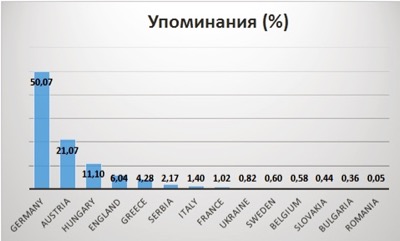
According to Vladimir Shalak from the Russian Academy of Science who developed the Internet Content-Analysis System for Twitter (Scai4Twi), his study of over 19000 refugees-related original tweets (retweets discounted) demonstrates that the vast majority of them mention Germany and Austria as the most refugee-welcoming countries in Europe:

Importantly, 93% of all tweets dedicated to Germany contained positive references to German hospitality and its refugee policy:

• Germany Yes! Leftists spray a graffiti on a train sayin “Welcome, refugees” in Arabic
• Lovely people – video of Germans welcoming Syrian refugees to their community
• Respect! Football fans saying “Welcome Refugees” across stadiums in Germany. _ • This Arabic Graffiti train is running in Dresden welcoming refugees: (ahlan wa sahlan – a warm welcome).
• ‘We love Germany!,’ cry relieved refugees at Munich railway station
• Thousands welcome refugees to Germany – Sky News Australia
• Wherever this German town is that welcomed a coach of Syrian refugees with welcome signs and flowers.

Analysis of 5704 original tweets containing #RefugeesWelcome” hashtag and a country name lead to even larger gap between Germany and the rest of Europe.

Only 6,4% of all tweets with “#RefugeesWelcome”+Germany came from Germany itself. Almost half of them were originated from UK, USA and Australia! Remote planetmates are thus inviting guests to visit your home without inquiring your opinion beforehand!

On Aug 27 forty automatic netbots @changing_news, @changing_news1,…, @changing_news39 from the United States simultaneously issued the following tweet at 8:00:33AM:

«A new welcome: Activists launch home placement service for refugees in Germany and Austria #News #Change #Help»

On Sept 1 the same group of netbots releases same tweets with caps on at 22:30:37:

«A New Welcome: Activists Launch Home Placement Service For Refugees In Germany And Austria #News #Change #Help»

On August 29 at 11.02PMa group of 80 netbots posts the following:

«Thousands Welcome Refugees to Germany at Dresden Rally: Thousands of people took to the streets of the German city of Dresden on Satu…»

Another group of fifty netbots from Australia (all created on Feb 14, 2014 between 06:02:00 до 06:24:00AM) publish a post on Aug 31 at 17:26:08:

«#hot Football Fans in Germany Unite with ‘Refugees Welcome’ Message #prebreak #best»

On Sept 1 at 07:29AM 95 netbots owned by Media for Social and Cultural Impact, Dallas, Texas, USA publish the following tweets:

«German Soccer Fans Welcome Refugees Amid Ongoing Crisis: As Europe faces the challenge of a wave of migration…»

Needless to say that every original tweet was multiplied in dozens of copies and spreaded Twitter-wide.

Andrey Fomin

Source: Oriental Review (Russia)
English the least patriotic nation

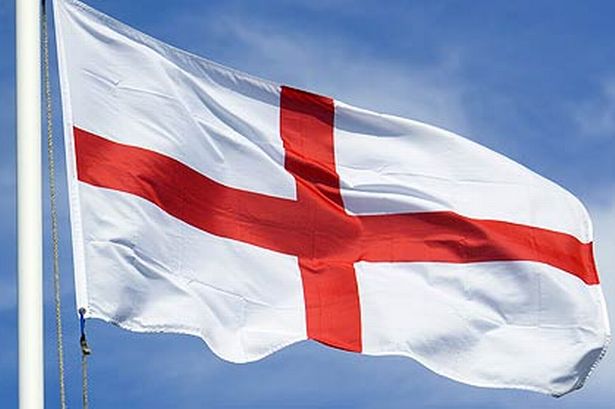
It may be St George’s Day in April, but don’t expect a sea of red and white flags to be flying across the nation.

England is the least patriotic country in Europe, according to a survey that found only 10% of people would proudly display our national emblem in public.

Political correctness and fears of being branded racist because of the flag’s links with far-right groups have left folk too “scared” to fly the cross.

But, incredibly, just one in three people actually knows when St George’s Day is, the survey by This England magazine found. Editor Stephen Garnett said: “It was shocking to see the results.

“We’re disappointed English people are afraid of displaying the St George’s Cross. We want to reclaim the flag from extremists by asking as many people as possible to fly it.

“It was shocking to see the amount of people who don’t fly the flag because of fear of being judged. It was also very worrying that so many said political correctness stopped them celebrating their national pride.”

The study found most English people gave themselves 5.8 out of 10 when asked how patriotic they felt. The Dutch are Europe’s most loyal at 7.18, narrowly ahead of the Welsh on 7.06.

Four out of 10 participants said they felt England has completely lost its identity.

Source: The Mirror

Former adviser of British PM in full panic mode

A former adviser to Gordon Brown is in full-blown panic mode over China’s Black Monday, and has urged people to stock up on canned goods and bottled water as stock markets around the world slide.

Damian McBride appeared to suggest that the stock market dip could lead to civil disorder or other situations where it would be unreasonable for someone to leave the house.

“Advice on the looming crash, No.1: get hard cash in a safe place now; don’t assume banks & cashpoints will be open, or bank cards will work,” he tweeted.

“Crash advice No.2: do you have enough bottled water, tinned goods & other essentials at home to live a month indoors? If not, get shopping.

“Crash advice No.3: agree a rally point with your loved ones in case transport and communication gets cut off; somewhere you can all head to.”

Breathable booze thrill Britons

Britons, it seems, are thrilled about the new entry in the capital’s already saturated drinking scene: breathable booze.

The pop-up bar, Alcoholic Architecture, uses a humidifier to pump a gin and tonic vapor into an enclosed space. Patrons absorb their alcohol from the “Cloud” by breathing in the vapors and by soaking it in through the skin and eyes.

Descending into a basement on the south bank of the Thames, customers are handed plastic ponchos to prevent the smell from permeating their hair and clothes, then are led into a corner of the bar sheathed in plastic strips.

They walk in. And breathe. Deeply.

Sam Bompas, one of the project’s designers, says the alcohol “goes straight into the blood stream, bypassing the liver.” Patrons are limited to one hour in the Cloud so they don’t get too inebriated.

Medical experts don’t share his excitement. Dr. William Shanahan, a consultant psychiatrist at Nightingale Hospital, which specializes in addictions and mental disorders, called the method “a gimmick.”

“The alcohol avoids first pass metabolism in the liver and goes directly to the brain, which makes it much more intoxicating and the intoxication is very rapid,” he said. “This has the potential to cause serious side effects as well as brain damage in the developing young brain.”

Dr. Niall Campbell, an alcohol addiction specialist at the Priory Hospital in Roehampton, was even more blunt. “The last thing this country needs is another way of ingesting alcohol.”

Source: AP

Obama urges UK to stay in EU for ‘ world influence’

In a wide-ranging television interview, President Barack Obama has urged Britain to stay in the European Union in order to have influence on the world stage. He also admitted US gun laws were his “biggest frustration.”

Speaking to the UK’s BBC correspondent in Washington, US President Barack Obama said Britain must remain in the European Union to maintain its global influence. In previous interviews Obama has avoided taking a stance on such issues.

“Having the UK in the EU gives us much greater confidence about the strength of the transatlantic union, and is part of the cornerstone of the institutions built after (the second world war) that has made the world safer and more prosperous,” Obama said. “We want to make sure that the United Kingdom continues to have that influence,” he added.

British Prime Minister David Cameron is following up on an election pledge to negotiate with the EU for improved terms for Britain, ad then to hold a referendum on EU membership before the end of 2017.

Obama said that Britain was the US’ “best partner” because of its willingness to project power beyond its “immediate self-interests to make this a more orderly, safer world.”

US gun laws

Obama admitted that failure to pass “common sense gun safety laws” was the greatest frustration of his presidency.

“If you look at the number of Americans killed since 9/11 by terrorism, it’s less than 100. If you look at the number that have been killed by gun violence, it’s in the tens of thousands,” he commented.

“For us not to be able to resolve that issue has been something that is distressing,” Obama said.

While he has pressed for stricter gun control during his presidency, Obama has been unable to make any significant changes to the laws due to opposition in Congress.

Source: Deutsche Welle

Landmark case exposes ArcelorMittal pollution

In 1994 a number of people bought property in a farmland area of the Vaal known as Louisrus and Steel Valley, in the south of Johannesburg.

They bought property close to the Iscor steel plant, which has now become part of ArcelorMittal South Africa (Amsa).

Two years later residents noticed oil in their borehole water and a strange, chemical smell.

When residents started to complain, Iscor engaged in a series of tests and studies to determine if their plant was causing any harm.

The reports formed part of Iscor’s environmental master plan, which was completed in 2003 but kept secret from the public until Monday.

Samson Mokoena’s father was one of the people who bought a smallholding in Steel Valley.

He grew up farming with his family, but today he is leading the cause to find out the truth about the pollution as co-ordinator of the Vaal Environmental Justice Alliance (Veja).

On Monday the alliance released the 8,000-page environmental master plan to the public after a long struggle to get access to the document.

Representing a coalition of community organisations, the alliance fought a 12-year battle to get access to environmental reports about how the steelmaker was polluting their community through wastewater and air pollution.

“The people of Steel Valley believe that Iscor and Amsa held information from the public deliberately. To us it meant that there was something fishy about the document if they were refusing to make it available in a free democratic society,” said Mokoena.

He explains that the community suffered a long time from what they believe was effects of pollution.

“People were sick with cancer, some had kidney failure. People lost their livelihoods, animals were deformed and died, crops didn’t grow properly,” he said.

The Integrated Report of January 2003 included in the plan notes that there was substantial pollution at the Vanderbijlpark plant.

“Groundwater chemistry results obtained from boreholes confirm elevated concentrations of calcium, magnesium, sulphate, chlorine, potassium, sodium, nitrate, fluorine, iron and manganese within both the perched and shallow weathered zone aquifers…” notes the report.

There were also high levels of cadmium noted which are especially harmful to the kidneys.

The alliance says it had met with Amsa for years to try to gain access to the document.

Only in 2011, when the alliance in partnership with the Centre for Environmental Rights requested the document through the Protection of Information Act (Paia), that things started to change.

Amsa refused the Paia request, which resulted in legal action and both the South Gauteng High Court and the Supreme Court of Appeal ruled that Amsa should release the report to the alliance last year.

In Amsa’s 2014 consolidated financial statements it stated that they decided not to challenge the matter further and it handed over the information on December 17, last year.

“The company seeks to pursue a path of open and transparent engagement with the Veja and all other stakeholders for that matter,” noted the statement..

The environmental centre’s attorney, Robyn Hugo represented the alliance in legal action against Amsa and said the case will change the way environmental rights are defended in court in future.

“This is a leading case on access to environmental information and we’re going to rely on it. All industries should take note that secrecy is no longer acceptable,” she said.

Dr Victor Munnik, of the Society, Work and Development Institute at the University of the Witwatersrand, has been studying pollution in Steel Valley for 15 years.

Source: eNCA

London has highest concentration of cocaine in sewers

Scientists have found that London has the highest concentration of cocaine in its sewage system, closely followed by Amsterdam, according to test results from 50 European cities.

The EU’s drug monitoring body has determined that the average daily concentration of cocaine in London’s sewer system was 737mg per 1,000 people in 2014.

Measuring the concentration of drugs in waste water helps scientists monitor the level of illicit drug use in major metropolitan cities.

For instance, the amount of cocaine in London’s waste water drastically rises on Fridays and Sundays and falls back down on Sundays and Mondays, while in Amsterdam, consumption rises later in the weekend, peaking on Sunday.

Wastewater analysis is a “rapidly developing scientific discipline with the potential for monitoring real-time population-level trends in illicit drug use,” the European Monitoring Centre for Drugs and Drug Addiction (EMCDDA) said in its research.

The study also shows that Amsterdam’s sewers have much greater concentrations of cannabis, and London has the fourth highest daily concentration of ecstasy.

At the same time, drugs like cannabis, methamphetamine, and amphetamine were not found in London’s waste water.

Oslo in Norway and Dresden in Germany had the highest levels of methamphetamine in their sewage.

According to recent statistics, there were 2,995 drug related deaths in 2013 (involving both legal and illegal drugs), according to the UK Office of National Statistics’. This is up from 2012, when there were 2,597.

Scotland warns Britain over Trident

Alex Salmond has given warning that it would be a “fatal mistake” for the UK government to proceed with its plan to renew Britain’s nuclear deterrent, refusing to rule out calling a second independence referendum if it does so.

“This government would be making a fatal mistake if they believed that for the sake of this costly trumpery that this useless, expensive, unlawful and inherently dangerous military plaything is going to be tolerated by these benches, this party or this country any longer,” said Mr Salmond.

Asked by reporters after the debate whether he saw the renewal of Trident as a possible trigger for a second independence referendum, he said: “You would have to ask Nicola Sturgeon [the first minister] whether this counts as a change in material circumstances.”

Referring to the SNP’s landslide election victory in Scotland, which gave his party 56 out of 59 seats, he added: “The government will have to take notice that they cannot go forward with the position that they used to.”

Mr Salmond was speaking during a debate about a military investigation into allegations made by William McNeilly, who worked on the Faslane base.

Mr McNeilly, a submariner, made a series of claims about the Trident weapons programme in a long online report.

He said it was harder to get into most nightclubs than into the area housing the submarines carrying Trident nuclear missiles at the Faslane naval base. He said there were significant technical defects on the boats themselves, catalogued potential fire risks and leaks, and added that safety checks were rarely carried out on contractors working on the boats.

He called the system as a whole a “disaster waiting to happen”.

Source: FT

Tories’ repeal of Human Rights Act could spark constitutional crisis

Newly appointed Justice Secretary Michael Gove will push ahead with Conservative plans to repeal the Human Rights Act – a move experts warn could spark a constitutional crisis and blight Britain’s reputation on human rights worldwide.

Conservative Party sources, fresh from last week’s general election victory, told the Guardian the human rights reforms are imminent.

Civil liberty advocates warn the soon-to-be implemented measures would erode the right to life, the right to privacy, the right to a fair trial, the right to protest and the right to freedom from torture and discrimination.

Although the Tories were keen to push ahead with the legal changes during their last term in government, the move was blocked by the party’s ex-coalition partner the Liberal Democrats. But as a majority government, the Conservatives are now poised to push ahead with the reforms.

Central to the Tories’ election manifesto was a pledge to repeal the Human Rights Act (HRA) and significantly curb the power of the European Court of Human Rights (ECHR) in Britain. The legal reforms are expected to surface in PM David Cameron’s plans for his first 100 days, which will be outlined in the Queen’s Speech on May 27.

Under these changes, the Conservatives would replace the HRA with a Tory-styled British Bill of Rights. Britain’s Supreme Court would no longer be answerable to the ECHR, with the Strasbourg-based court losing the power to order changes to UK law.

The plans were drawn up in 2014 by then-Secretary of State for Justice Chris Grayling. At the time, Grayling proposed Britain withdraw from the ECHR if the Council of Europe rejects the Conservatives’ British Bill of Rights.

Constitutional crisis

Considerable doubt exists among experts that the Council of Europe, a human rights watchdog responsible for ensuring the Convention is upheld, will accept the Tories’ proposals. As a result, it is widely believed Britain will disengage from the European Convention on Human Rights and undermine Europe’s’ civil liberties framework in the process.

Britain’s withdrawal from the ECHR has been strongly opposed by former Secretary of State for Justice Kenneth Clarke and the UK’s ex-Attorney General Dominic Grieve. Grieve has long condemned the proposal, warning its consequences would be devastating.

In December, he said the government’s threat to potentially abandon the Strasbourg court undermines international law and could fray the constitutional fabric that holds the United Kingdom together. Echoing grieve, analysts warn such a withdrawal would spark a constitutional crisis in the UK.

They suggest the move would be flatly rejected by Nicola Sturgeon’s Scottish Nationalist Party (SNP) and would mean the Conservative government has violated Northern Ireland’s 1998 Good Friday Agreement.

Kicking Scotland in the teeth

Prime Minister David Cameron on Sunday ruled out giving Scotland another independence referendum despite spectacular gains by Scottish nationalists in a UK-wide election, saying Scots had “emphatically” rejected a breakaway only last year.

Cameron, who was re-elected with a surprise outright majority last week, said he would ensure that further powers would be granted to Scotland according to an existing plan. But he dismissed the idea that Scots might get another independence referendum anytime soon.

“We had a referendum. Scotland voted emphatically to stay in the United Kingdom,” Cameron told Channel 4 News.

“There isn’t going to be another referendum,” he said, saying the pro-independence Scottish National Party (SNP), which won 56 of 59 parliamentary seats in Scotland last week, had made clear that election was not about securing another vote.

Scots rejected independence in September 2014 by 55-45 percent after a lengthy and divisive campaign. Some nationalists said afterwards that the question had been decided for “a generation.”

The startling success of the SNP, which all but wiped out the Labour Party in Scotland last week, has renewed speculation it might push for another referendum, perhaps in the run-up to a Scottish parliamentary election next year.

Source: Reuters

Hundreds march in Britain, Israel against ‘racism’

Hundreds of people marched through Brixton to protest police brutality and racism, and to show solidarity with the people of Baltimore, US. Baltimore has been seeing a surge in protests after a 25-year-old African American died in police custody.

At least 500 signed to attend the event on its Facebook page and video footage showed hundreds moving down Brixton streets in South London.

“No justice, no peace”, “Africans have a right to resist” and “Reclaim Brixton”, the banners read. The protest was addressed by speakers from families, whose members died in police custody, the London Black Revs, Latin American solidarity groups and others.

Brixton is a multiethnic community, with a large portion of its population being of African and Caribbean descent. It has seen a number of riots over the years. Brixton was one of the scenes of the 2011 riots in the UK capital.

In Baltimore, a curfew was lifted on Saturday after scores of arrests were made over the week, with over 3,000 security forces on the ground, backed up by the National Guard.

The tensions there eased after six policemen involved in Freddie Gray’s death were arrested and charges were brought against them.

Meanwhile in Tel Aviv security forces fired pepper spray, stun grenades during a protest against racism and police violence, staged by Jews of Ethiopian descent in Tel Aviv. Some 23 policemen and at least 23 protesters have been injured in the clashes.

Thousands gathered and protesters tried to break into the City Hall, according to Haaretz. Demonstrators also overturned a police car and threw bottles and stones at officers in riot gear at central Rabin Square.

At least 26 protesters were arrested following clashes, according to Israeli Police Foreign Press Spokesman Micky Rosenfeld. At least 46 people were injured, including 23 police officers, Haaretz reports.

They shouted “not black, not white, we’re all human beings” and “a violent cop should be jailed.”

“Being black, I have to protest today. I never experienced police violence against me personally, but it is aimed at my community which I have to support,” 34-year-old protester Eddie Maconen told AFP.

This is the second such protest in a week: On Thursday, hundreds of demonstrators blocked streets and the Jerusalem Light Rail, and marched on the prime minister’s home.

Katie Hopkins’ ‘viscous, xenophobic & racist’ journalism referred to ICC

A UK law society has stepped up its pursuit of the Sun and its ‘Nazi propaganda’ spouting columnist Katie Hopkins over alleged anti-migrant hate speech, referring both to a powerful international court usually reserved for war criminals.

The Society of Black Lawyers, which originally reported the column written by Hopkins and published by the Sun just hours before 800 migrants drowned in the Mediterranean, has referred the case to the International Criminal Court (ICC).

The SBL’s efforts come after UN human rights chief Zeid Ra’ad Al Hussein said the column – in which Hopkins referred to migrants as “cockroaches” – recalled Europe’s darkest days of fascist hate speech and “Nazi propaganda.”

“The case is an exceptionally strong one as the incitement of racial hatred in Hopkins’ unfounded rant illustrated her xenophobic views on the issue surrounding migrants in general,” SBL committee member Shireen Khan told RT.

“This is further portrayed from the numerous articles that are published by the Sun newspaper that are anti-immigrant and majority of the time simply untrue.”

Khan is confident the ICC, which is best known for investigating atrocities in the Balkans and Africa, will take SBL’s referral very seriously.

“I believe that the ICC will take up this case fully as they have a duty to investigate such matters especially the seriousness of this case, which is further emphasized by the UN High Commissioner for Human Rights’ endorsement of our report.

“There is also a strong evidential basis on which SBL have brought this claim. It is quite a sad reality that [the] majority of the time racist abuse is unreported as a crime and secondly is hidden behind the ideas surrounding freedom of speech.”

Khan said the legitimization of anti-immigrant rhetoric under the banner of free speech was a scourge that had become all too common.

She pointed out that Hopkins’ controversial views proved infectious in some quarters, saying they were almost immediately echoed on LBC radio.

“Katie Hopkins’ column was published in the paper but it was then echoed in a viscous, xenophobic and racist tirade on radio, which led to exposure to further parts of society who may be disillusioned in thinking that immigrants are the cause of all destruction our country is facing.

“This has led to some of the most vulnerable people in the world being turned away from the support that they are entitled to under international law. These migrants trying to come to the EU are fleeing persecution, war and death.”

“Immigrants do not deserve to be the scapegoat of this country’s problems and it’s about time we stopped making them it.”

She blasted reactionary anti-immigrant elements within UK politics, arguing they were to blame for creating the political space in which such views could be aired without due criticism.

UK rich list includes two South Africans

Two South Africans have made it into the respected Sunday Times Rich List released on Sunday, with Ukrainian businessman Len Blavatnik taking the top spot with a personal wealth of £13.17bn (R240bn).

South-African born Swazi business mogul Nathan Kirsh claimed 17th position and is said to be worth £5.06bn (R93bn), while Nicky Oppenheimer and family made it to 19th position with £4.55bn (R83.6bn) in their wealth coffers.

Blavatnik, an investor in several industries including oil, petrochemicals and media and who was in 4th place last year, added £3bn to his fortune to oust brothers Sri and Gopi Hinduja.

Despite adding £1.1bn to their fortune, the brothers, who run a multinational conglomerate of the same name, fell £0.17bn short of meeting Blavatnik’s fortune.

The index found that Britain’s 1 000 richest individuals and families now have a combined fortune of over £547bn, more than double the wealth of ten years ago.

It is also no longer easy for ordinary millionaires or even multi-millionaires to make it into the top 1 000, as people now need to be worth at least £100m to make the list. That is £15m more than last year’s minimum, while 18 years ago you only needed £15m to cut the grade, according to The Sunday Times Rich List.

Other famous names featuring on the list include Lakshmi Mittal and family (7th; £9.2bn), owners of ArcerlorMittal, Roman Abramovich (10th; £7.29bn), the Russian oligarch who owns Chelsea Football Club, and Richard Branson (20th; £4.1bn), the British entrepreneur behind the Virgin brand. Lakshmi is also a major stakeholder in Queens Park Rangers Football Club.

Formula One driver Lewis Hamilton was named Britain’s richest sportsman in the separate Sunday Times Sport Rich List and is said to be worth £88m, according to AFP.

He was followed by Manchester United and England footballer Wayne Rooney on £72m and fellow racing driver Jenson Button on £71m.

Chelsea manager Jose Mourinho was named the richest manager in British sport with a £40m fortune.

The top 20 on The Sunday Times Rich List are:

1. Len Blavatnik (£13.17bn)
2. Sri and Gopi Hinduja (£13bn)
3. Galen and George Weston and family (£11bn)
4. Alisher Usmanov (£9.8bn)
5. David and Simon Reuben (£9.7bn)
6. Ernesto and Kirsty Bertarelli (£9.45bn)
7. Lakshmi Mittal and family (£9.2bn)
8. Kirsten and Jorn Rausing (£8.7bn)
9. The Duke of Westminster (£8.56bn)
10. Roman Abramovich (£7.29bn)
11. John Fredriksen and family (£7.24bn)
12. Charlene de Carvalho-Heineken and Michel de Carvalho (£7.145bn)
13. Sir David and Sir Frederick Barclay (£6.5bn)
14. Hans Rausing and family (£6.4bn)
15. Mohamed Bin Issa Al Jaber and family (£5.935bn)
16. Carrie and Francois Perrodo and family (£5.8bn)
17. Nathan Kirsh (£5.06bn)
18. Earl Cadogan and family (£4.8bn)
19. Nicky Oppenheimer and family (£4.55bn)
20. Sir Richard Branson and family (£4.1bn)

Significant oil discovery in England

There could be up to 100 billion barrels of oil onshore beneath the South of England, says exploration firm UK Oil & Gas Investments (UKOG).

Last year, the firm drilled a well at Horse Hill, near Gatwick airport, and analysis of that well suggests the local area could hold 158 million barrels of oil per square mile.

But only a fraction of the 100 billion total would be recovered, UKOG admits.

The North Sea has produced about 45 billion barrels in 40 years.

“We think we’ve found a very significant discovery here, probably the largest [onshore in the UK] in the last 30 years, and we think it has national significance,” Stephen Sanderson, UKOG’s chief executive told the BBC.

UKOG says that the majority of the oil lies within the Upper Jurassic Kimmeridge formation at a depth of between 2,500ft (762m) and 3,000ft (914m).

Most experts believe fracking, or hydraulic fracturing, will be needed to get commercial quantities of oil from the region.

Concerns over fracking led to large-scale protests when Cuadrilla drilled at Balcombe, West Sussex, in 2013.

Source: BBC