Scotland warns Britain over Trident

Alex Salmond has given warning that it would be a “fatal mistake” for the UK government to proceed with its plan to renew Britain’s nuclear deterrent, refusing to rule out calling a second independence referendum if it does so.

“This government would be making a fatal mistake if they believed that for the sake of this costly trumpery that this useless, expensive, unlawful and inherently dangerous military plaything is going to be tolerated by these benches, this party or this country any longer,” said Mr Salmond.

Asked by reporters after the debate whether he saw the renewal of Trident as a possible trigger for a second independence referendum, he said: “You would have to ask Nicola Sturgeon [the first minister] whether this counts as a change in material circumstances.”

Referring to the SNP’s landslide election victory in Scotland, which gave his party 56 out of 59 seats, he added: “The government will have to take notice that they cannot go forward with the position that they used to.”

Mr Salmond was speaking during a debate about a military investigation into allegations made by William McNeilly, who worked on the Faslane base.

Mr McNeilly, a submariner, made a series of claims about the Trident weapons programme in a long online report.

He said it was harder to get into most nightclubs than into the area housing the submarines carrying Trident nuclear missiles at the Faslane naval base. He said there were significant technical defects on the boats themselves, catalogued potential fire risks and leaks, and added that safety checks were rarely carried out on contractors working on the boats.

He called the system as a whole a “disaster waiting to happen”.

Source: FT

Kicking Scotland in the teeth

Prime Minister David Cameron on Sunday ruled out giving Scotland another independence referendum despite spectacular gains by Scottish nationalists in a UK-wide election, saying Scots had “emphatically” rejected a breakaway only last year.

Cameron, who was re-elected with a surprise outright majority last week, said he would ensure that further powers would be granted to Scotland according to an existing plan. But he dismissed the idea that Scots might get another independence referendum anytime soon.

“We had a referendum. Scotland voted emphatically to stay in the United Kingdom,” Cameron told Channel 4 News.

“There isn’t going to be another referendum,” he said, saying the pro-independence Scottish National Party (SNP), which won 56 of 59 parliamentary seats in Scotland last week, had made clear that election was not about securing another vote.

Scots rejected independence in September 2014 by 55-45 percent after a lengthy and divisive campaign. Some nationalists said afterwards that the question had been decided for “a generation.”

The startling success of the SNP, which all but wiped out the Labour Party in Scotland last week, has renewed speculation it might push for another referendum, perhaps in the run-up to a Scottish parliamentary election next year.

Source: Reuters

Official: China recognises Crimean referendum

China is against the declaration of independence by any ethnic groups through referendums, but this does not apply to Crimea, the acting director of the Chinese Foreign Ministry’s European-Central Asian Affairs department, Gui Congyou, told Russian media on Friday.

“We should take a very careful and well-considered attitude to tackling nationalities’ issues. We are against any nationality gaining independence through referendums. As far as Crimea is concerned, it has very special features. We know well the history of Crimea’s affiliation,” the diplomat said.

“On the whole, the nationalities’ problems in some countries stem from double standard policies by certain states, which, proceeding from their own selfish interests, support one ethnic group and push it towards holding an independence referendum. This is a manifestation of double standards serving the interests of the United States. In a bid to achieve its aims, the US resorts to intervention in the internal affairs of other states by using force without UN Security Council authorization. China is firmly against this approach,” Gui said.

In his opinion, “such actions trigger aggravations of inter-ethnic contradictions and result in armed conflicts.”

On Russia’s stance on crisis in Ukraine

China supports Russia’s stance on settling the crisis in Ukraine, Gui Congyou stressed.

“China reacts with full understanding to the challenges and threats Russia has faced in connection with the Ukrainian issue and supports Moscow’s approach to its settlement. We are not interested in an armed conflict on the Ukrainian territory and wish to see the issue settled by political means. We are against external intervention in Ukraine’s internal affairs through government coups.”

“As for the causes of the Ukrainian crisis, in a telephone conversation with Russian President Vladimir Putin the Chinese leader, Xi Jingping said that ‘there is no smoke without fire’,” Gui added.

“Personally, I believe that some states and blocs stick to the Cold War mentality and are involved in geopolitical games with the aim to infringe on the geopolitical interests of Russia. China is strongly against anyone harming the security of other countries for the purpose of protecting one’s ‘absolute security’,” he noted.

Unionists attack nationalists in Glasgow

British unionists took to the streets of Glasgow where the mood was dark after the defeat of the nationalists, to “celebrate” Scotland’s decision to stay in the UK. But the “celebration” predictably descended into violent clashes with at least 11 people arrested.

Glascow voted to leave the UK in the referendum held on Thursday. Scotland’s biggest city supported independence with 194,779 votes for and 169,347 against.

Chief Superintendent Andy Bates, local policing commander for Greater Glasgow, told The Scotsman: “More than 700 people gathered in George Square last night and there have been 11 arrests for various offenses including disorder, breach of the peace and vandalism.”

“An investigation into Friday night’s disorder has begun and an incident room has been set up at Glasgow city center police office, staffed by officers dedicated to identifying and arresting anyone involved in the ugly scenes witnessed across the world on television and social media,” he said.

A spokesperson from Police Scotland told local media that there were about 100 people in each group. But then ‘Yes’ supporters started leaving the square, which became dominated by unionists. This emboldened the unionists to go on the attack.

The supporters of the ‘No’ campaign then set off red-colored fire crackers and waved Union Jack flags, singing ‘Rule Britannia’, ‘You Let Your Country Down’ and ‘Can You Hear the Yes Campaign?’ they carried banners associated with the pro-Union Orange Order. They reportedly let off flares in George Square.

On the other side of the square there were campaigners for Scottish Independence.

“We will never surrender,” read a pro-independence sign. The pro demonstrators were reportedly singing the Scottish anthem “Flower of Scotland.”

Like hooligans, the unionists then started attacking pro-Independence supporters. With tensions high, police tried to keep the opposing political forces apart.

One Vine video from George Square depicts a young blonde woman with a Scottish flag on the ground being humiliated and attacked by an angry man with a Union Jack.

One Twitter user posted a photo showing pro-Union activists performing Nazi salutes.

Will Scotland get their gold if they vote ‘Yes’?

An independent Scotland could lay claim to a part of the United Kingdom’s 310-tonne gold reserves if votes go in favour of the “Yes” campaign this month, with ownership of Britain’s bullion hoard up for negotiation along with other assets.

“The distribution of the UK’s assets in the event of Scottish independence would be subject to negotiation between an independent Scottish Government and the continuing UK government,” a spokesman for the United Kingdom Treasury said on Monday.

The United Kingdom, whose reserves are worth 7.84 billion pounds ($12.6 billion) at today’s prices, is currently the world’s 18th largest official sector gold holder.

A decision to break away from the United Kingdom when Scotland’s voters go to the polls on Sept. 18 would be followed by negotiations with London over a raft of assets, including the pound and North Sea oil.

Supporters of Scottish independence over the weekend took their first opinion poll lead since the referendum campaign began, with a YouGov survey for the Sunday Times newspaper putting the “Yes” to independence campaign on 51 percent against the “No” camp on 49 percent.

Former British Prime Minister Gordon Brown has faced persistent criticism for disposing of almost 400 tonnes of the United Kingdom’s gold via a series of auctions between 1999 and 2002, when prices were at their lowest in around 20 years.

Gold prices surged over the following decade, topping out in September 2011 at $1,920.30 an ounce, nearly five times their end 2002 level.

Brown returned to frontline politics this year to campaign for the preservation of Scotland’s 307-year old union with England.

Source:Reuters

Where’s America’s right to referendum, secession?

mercer_ilanaby Ilana Mercer

[followbutton username=’IlanaMercer’ count=’true’ lang=’en’ theme=’light’]

Like Ilana Mercer’s Facebook page

From a node in the neoconservative network, a Fox News studio, Charles Krauthammer has complained about the eviction of the Ukrainian Navy from the city of Sevastopol, where it was headquartered. Not a word did the commentator say about the city’s location: Sevastopol is on the Crimean Peninsula. It would appear that the city now falls within Crimean jurisdiction – starting March 16, the day the people of Crimea voted to secede from Ukraine.

By most estimates, between 97 and 93 percent of Crimean voters said yes to a reunion with Russia. High too was voter turnout. McClatchy pegs it at 83 percent of registered voters in Crimea. BBC News was agreed, also reporting a ballot of “more than 80 percent.” Zerohedge.com counted a “paltry” 73 percent turnout, still “higher than every U.S. presidential election since 1900.”

As rocker Ted Nugent might say, the Russians and Crimeans are blood brothers. Nugent got into trouble for using this perfectly proper appellation to describe his affinity for a politician, of all people: Texas Republican gubernatorial hopeful Greg Abbott. Notwithstanding that in the land of the terminally stupid, linguistic flourish can land one in hot water – blood brother is a good, if colorful, turn of phrase that denotes fealty between like-minded people. Steeped in state-enforced multiculturalism, America’s deracinated, self-anointed cognoscenti have a hard time grasping the blood-brother connections between the people of Russia and Crimea.

For no apparent reason other than that it is pro-Russian, Americans have reflexively aligned themselves against the swell for secession in southern Ukraine. Separatist referenda in Kosovo, Catalonia, South Sudan and Scotland have been accepted without demur by a political and media establishment unprepared to countenance a similar referendum in Crimea.

Guided by the pack animals of politics and punditry who seldom fail to shed darkness on whatever topic they tackle, a nation that struggles to locate the disputed territories on the map has been convinced of the menace posed by Russia. According to a CNN poll, 69 percent of Americans say they see Russia as a threat. A Rasmussen Report poll indicated that “52 percent support U.S. diplomatic action against Russia over Crimea.”

Helping to drive American Russophobia is the implacable logic exemplified by Bill O’Reilly of “The Factor,” yet another node in the network mentioned. At the suggestion that there are similarities between Russian and American military bellicosity, the TV host foams at the mouth. Fulmination is followed not by argument, but by a form of ad hominem or psychologizing.
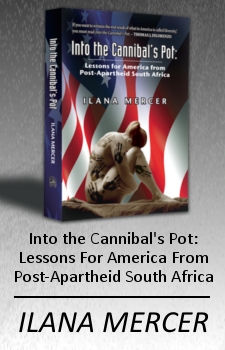
Into the Cannibal's Pot

It is absolutely verboten on this popular and powerful show to compare Russia’s “excursion” into Ukraine to America’s naturally illicit and illegal occupations of Iraq, Afghanistan and Libya. In defense of their reflexive rejection of the reasonable, if inaccurate, comparison – for decades the U.S. has been far more aggressive than Russia in its forays abroad – Bill and his gang “argued” (on March 3) as follows:

President Vladimir Putin is a thug. That’s why his actions can’t be contrasted with the actions of “a good country” like the U.S. By “logical” extension, George Bush and Barack Obama are never to be fingered as thugs.

Why, Billy, some of you will inquire? Is it because these thugs are American? Precisely.

Next, Bill O’Reilly’s mind-reading gifts were galvanized to negate the juxtaposition of the actions on the ground of the Russian and American governments. Putin, it would appear, seeks the recrudescence of the Russian empire. On the other hand, the U.S., with a military presence in 148 countries and 900 bases worldwide, has neither sought nor achieved empire status.

Why, Billy, some of you will ask? Is it because the U.S. is a good country? You got it!

Be it in Belgium, Germany, Italy, Spain, Turkey, the United Kingdom, Japan, Bahrain, Djibouti, South Korea, Iraq, Kyrgyzstan, Afghanistan and Kuwait – even Aruba, Iceland, Indonesia, Kenya, Norway and Peru – wherever it plants its military boot, a “good country” is never an empire, only a force for good.

Me, O’Reilly would dismiss as “anti-American.” But what of former secretary of state Henry Kissinger? While Kissinger has condemned Russia’s annexation of Crimea, he excoriated “the demonization of Vladimir Putin.” This antipathy “is not a policy; it is an alibi for the absence of one.” “The United States needs to avoid treating Russia as an aberrant to be patiently taught rules of conduct established by Washington,” wrote the statesman in the Washington Post.

Is Henry Kissinger anti-American or simply smarter than some Americans?

At least Secretary of State John Kerry hung on to his sense of humor. “Unless you are the United States of America, you just don’t invade another country on phony pretext in order to assert your interests,” Kerry lectured the congenitally incurious David Gregory, of “Meet the Press.”

I ad-libbed. Except for the first eight words in quotation marks, Secretary Kerry did indeed say the foregoing. Given America’s military record, the missing words are implied.

The O’Reilly school of “thought” could – and does – counteract that Crimea’s vote to join Russia was tainted by fraud. This is certainly possible. Nevertheless, it is none of our business. Americans have their own tyrants to dethrone.

We’re supposed to be the freest people in the world, aren’t we? Is this claim not the moral basis for America’s we-know-best global meddling? But if we Americans are the freest people in the world, where’s our right to a referendum on, say, that “little” legislative “blip” called Obamacare? And if we’re so bleeding free, where’s our right to secede from D.C.?

© 2014 by Ilana Mercer

[followbutton username=’IlanaMercer’ count=’true’ lang=’en’ theme=’light’]

Like Ilana Mercer’s Facebook page

Putin: Crimeans expressed their will in full accordance with intl law, UN Charter

A woman with her face painted in the colours of the Russian national flag waits for the announcement of preliminary results of today's referendum on Lenin Square in the Crimean capital of Simferopol March 16, 2014
A woman with her face painted in the colours of the Russian national flag waits for the announcement of preliminary results of today’s referendum on Lenin Square in the Crimean capital of Simferopol March 16, 2014

The referendum in Crimea was fully consistent with international law and UN Charter, Russian President Vladimir Putin told Barack Obama, after the overwhelming majority of Crimeans expressed their willingness to join Russia.

The citizens of the peninsula have been given an opportunity to freely express their will and exercise their right to self-determination, the Russian president said in a phone conversation with his US counterpart, according to Kremlin’s press service.

With a record-breaking turnout of over 80 percent, according to preliminary results, over 95 percent of the Crimean population said ‘yes’ to the reunion of the republic with Russia. International observers have not reported any violations or anything resembling any kind of pressure during the vote.

However, Obama said the Unites States and the “international community” will “never recognize” the results of the referendum “administered under threats of violence and intimidation,” according to White House spokesman.

Obama “emphasized that Russia’s actions were in violation of Ukraine’s sovereignty and territorial integrity” and that the US in coordination with its European partners is “prepared to impose additional costs on Russia,” the White House added.

Despite the existing differences in the assessment of the situation in Ukraine, the leaders of Russia and US have agreed that they must jointly seek to help stabilize the situation in the country, the Kremlin said.

“Putin drew attention to the inability and unwillingness of the current Kiev authorities to curb rampant ultra-nationalist and radical groups, destabilizing and terrorizing civilians, including Russian-speaking population, and our fellow citizens,” Kremlin statement reads.

In this context, the possibility of sending an OSCE monitoring mission to Ukraine was discussed, the press office reported. The Russian President believes such a mission should be extended to all Ukrainian regions. – RT.COM

Quebec separatists stand to gain

quebecCanada is bracing for another fight with Quebec separatists.

Premier Pauline Marois today called an election for April 7 as she met Lieutenant-Governor Pierre Duchesne to ask him to dissolve the provincial legislature. Polls show Marois’ separatist Parti Quebecois may have enough support to form its first majority government in more than a decade.

“Today, I have summoned my ministers and we have taken the necessary steps to dissolve the National Assembly and call an election,” Marois said in televised remarks in Quebec City. “It’s now up to you, Quebeckers, to decide.”

A majority would set the stage in the French-speaking province for a possible referendum on secession from the rest of Canada, roiling credit markets and threatening to push the Canadian dollar lower.

“If they get a majority, I fully expect they will hold a referendum during their next mandate,” said Harold Chorney, a political science professor at Concordia University in Montreal. “Marois isn’t going to give up sovereignty.”

A majority victory for the Parti Quebecois would mark the third time since the mid-1970s the party has taken sole control of the province’s legislature, propelling Quebec into another confrontation with the rest of Canada that a former premier once likened to a never-ending visit to the dentist.

Quebec has held two plebiscites on splitting from Canada — in 1980 and 1995 — under previous Parti Quebecois majority governments. The party will hold a third vote if a victory is in sight, Jean-François Lisée, Quebec’s international relations minister, told ICI Radio-Canada television March 1. The separatists came within 0.6 of a percentage point of gaining majority support in the 1995 referendum, but support for the cause has been stalled in the 30 percent range in recent years.

One advantage the separatists may seek to exploit is the federal Conservatives’ lack of representation and low support in the province, where the party holds five of 75 districts. The Conservatives are in fourth place in support in Quebec, polling about 9.4 percent support in the province, according to a four- week rolling survey by Nanos Research of 208 Quebeckers that ended Feb. 15.

It’s a vulnerability for Harper that the opposition Liberal and New Democratic Party, both led by Quebeckers, will try to exploit ahead of federal elections in 2015.

Source: BNN

Switzerland votes a narrow ‘yes’ to cap EU immigration

Swiss referendum posters in French

Switzerland has voted 50.3 percent in favor of limiting annual migration from the EU, thus ending the policy of free movement within the bloc that was established in 2002.

Swiss voters narrowly decided that immigration quotas would be reintroduced, thereby overturning the free movement policy introduced in the European Union 12 years ago. Early results showed the country to be very divided in opinion over the ‘Stop mass immigration’ initiative.

‘Stop mass immigration’ was introduced by the nationalist Swiss People’s Party (SVP). Its goal is to introduce annual quotas on the number of foreign workers entering the country. The result will likely vex multinational companies based there; Roche, Novartis, UBS, and other industry giants frequently utilize foreign labor.

Before Sunday’s results were fully confirmed, it appeared that Swiss voters were completely divided over the issue, with early projections gauged from partial results and estimates showing a 50-50 split (with a three percent margin of error). Ten out of 26 cantons – state districts – and half-cantons had voted in favor of the initiative.

Public opinion institute Gfs.bern stated at first that the outcome seemed too close to call. However, it emerged by Sunday evening that more than half of Swiss cantons supported the move, according to Reuters.

Many in Switzerland – which is surrounded by the EU but is not a member – believe that rising immigration levels are putting pressure on infrastructure, rent prices, the social security system, and unemployment rates.

The SVP party has been campaigning for the amendment, saying that immigrants are destroying the nation’s Alpine identity and taking away skilled jobs.

“Many people feel this is challenging their identity, even if there isn’t any concrete economic impact on a personal level,” Georg Lutz, professor of political science at the University of Lausanne Georg, told Reuters.

“I don’t want to live like a sardine in a tin can,” independent politician Thomas Minder, who supports the initiative, told tabloid newspaper Blick.

According to the latest data, 23 percent of the country’s eight million inhabitants are foreigners – the second largest proportion in Europe after Luxembourg.

Many fear the initiative would have a negative impact on the economy, which relies on foreign workers for progress and a competitive edge.

Italians and Germans reportedly comprise the largest contingent of immigrants to Switzerland, most of whom seek work in IT, healthcare, and financial sectors.

Severin Schwan, Austrian CEO of Roche Pharmaceuticals, said about half of the employees at the research and development site in Basel, Switzerland are foreigners.

Hans Hess, head of Swissmem – a leader in electrical and mechanical engineering – believes that Switzerland’s economy is successful because of innovation, which requires a steady stream of qualified immigrants.

“Innovation is the driver of the Swiss economy. That’s why we need highly qualified workers inside Switzerland and from abroad,” Hess said.

Indeed, four in every ten new companies were founded by foreigners, according to Orell Fuessli Wirtschaftsinformationen AG. Those new companies also created 30,000 jobs in 2013.

Other than a skilled workforce, immigrants benefit the economy through consumer spending. Credit Suisse reported that about 25 percent of private consumption growth since 2008 was thanks to foreigners.

The constitutional amendment could potentially erode Switzerland’s relationship with the EU, which views the freedom of movement policy as a fundamental right. – RT.COM