Israel appoints ‘irresponsible’ UN envoy

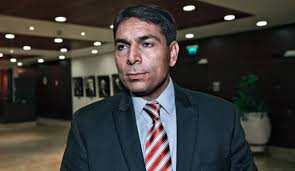
The appointment by Israeli prime minister Benjamin Netanyahu of one of his most hawkish and outspoken rivals as Israel’s new ambassador to the United Nations has prompted widespread consternation. As one analyst noted, Danny Danon’s appointment is a “cruel joke” on the international community. The new envoy “lacks even the slightest level of finesse and subtlety required of a senior diplomat”, the analyst said.

Last year, Mr Netanyahu sacked Mr Danon as deputy defence minister, describing him as too “irresponsible” even by the standards of Israel’s usually anarchic politics. Mr Danon had denounced the prime minister for “leftist feebleness” in his handling of Israel’s attack on Gaza last summer.

Mr Danon is a UN official’s worst nightmare. He is a vocal opponent of a two-state solution and has repeatedly called for the annexation of the West Bank.

The appointment comes as the Palestinians are expected to step up efforts at the UN to entrench recognition of their statehood, and as Israel tries to fend off war crimes investigations at the International Criminal Court.

The accepted explanation is that Mr Netanyahu’s move is driven by domestic, not diplomatic calculations. The two faced off for Likud party leadership in November. Mr Danon lost but Mr Netanyahu doubtless fears, as his party and the Israeli public shift to the right, that his rival’s time is coming.

The posting removes Mr Danon as head of the Likud’s powerful central committee, dispatches him to a distant land, and should provide him with opportunities aplenty to self-harm.

Mr Danon’s appointment also reveals something more significant about Israel’s deteriorating relations even with its international supporters.

In the decade following 1948, Abba Eban, Israel’s foremost diplomat, sought to carve out international recognition and respectability for his country at the UN, even as it launched wars in 1956 at Suez and again against Egypt in 1967.

Reality caught up with Israel when the UN adopted a resolution in 1975 equating Israel’s official ideology, Zionism, with racism. The resolution was only revoked 16 years later after Washington arm-twisted the General Assembly with promises that Israel would engage in a peace process with the Palestinians, culminating a short time later in the Oslo Accords.

But as Oslo slowly unravelled, Israel was forced on to the back foot again. Today, the consensus in Israel is not only that the UN is a bastion of anti-Israel prejudice but that it is an incubator of global anti-semitism.

This year, after stepping down as Israel’s ambassador to the US, Michael Oren argued that the plague of anti-semitism had infected even America’s leading Jewish journalists. Their critical coverage of Israel was proof of self-hatred, he claimed. The need for such desperate diplomacy has grown as Israel’s moral image has tarnished. But the hectoring has produced diminishing returns.

Mr Danon’s posting is part of a pattern of appointments by Mr Netanyahu that reflect a growing refusal to engage in diplomacy. It started with the decision in 2009 to let the thuggish Avigdor Lieberman lead the foreign ministry and diplomatic corps.

Most notably, Mr Netanyahu picked Ron Dermer to replace Mr Oren in 2013. Mr Dermer is credited with engineering Mr Netanyahu’s provocative address this year to the US Congress – an undisguised effort to undermine president Barack Obama’s talks with Iran.

Mr Danon’s appointment indicates the extent to which the Israeli right has abandoned any hope of persuading the international community of the rightness of its cause – or even of working within the rules of statecraft. Mr Danon can be expected to barrack, abuse and alienate fellow ambassadors at the UN.

An Israel that has no place for negotiations or compromise wants only to tell the world that it is wrong and that Israelis don’t care what others think. Mr Danon is the right man for that job.

Source: The National
Lion kills safari guide in Hwange

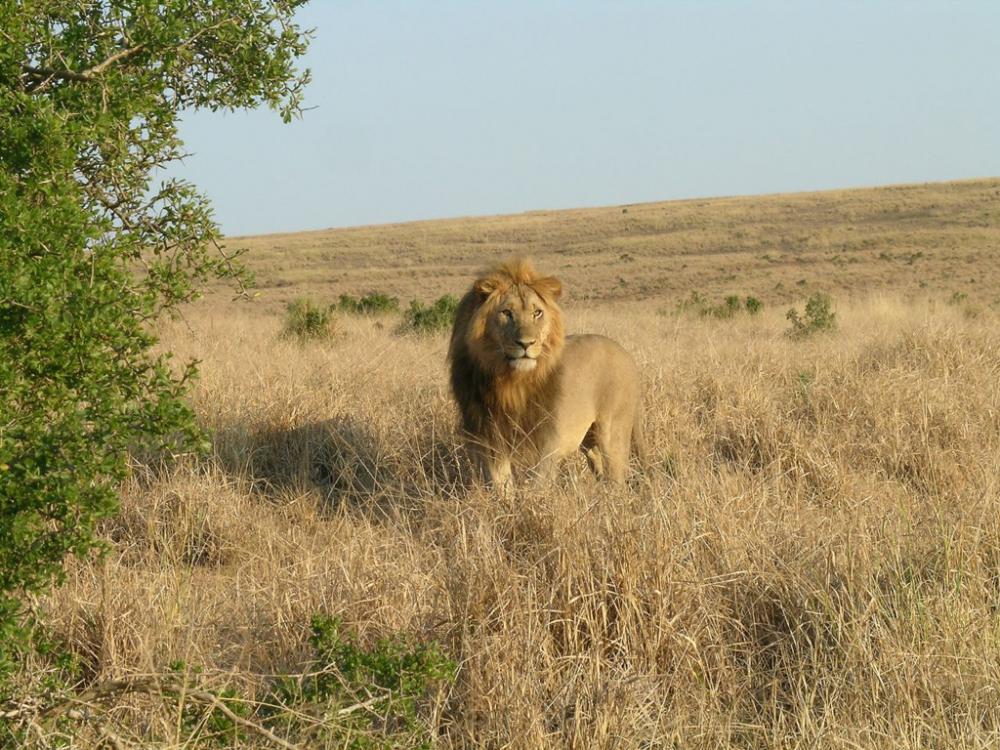
A safari guide has been mauled to death in Zimbabwe’s Hwange National Park, where Cecil the lion lived.

Camp Hwange has named the guide as 40-year-old Zimbabwean Quinn Swales.

Camp Hwange said in a statement that the attack happened on Monday morning.

It said professional guide Quinn Swales was taking guests on a photographic walking safari.

It’s understood Swales was attacked when a male lion unexpectedly charged and he died of his injuries.

This tragic incident comes after the global spotlight was turned on Hwange last month, when Cecil the lion was killed by US dentist Walter Palmer.

Swales’s last post on Facebook is a photo of a lion that is almost certainly Cecil.

Source: EWN

The killing continues: White doctor murdered on game farm

The mutilated body of a retired doctor was found on his game farm in Limpopo on Monday, after he was presumably murdered on Saturday.

Netwerk24’s Marietie Louw-Carstens reported on Tuesday that Louis-John Botha, 64, is the second farmer in the just the Waterberg district of Limpopo to be killed this year. Susan Kotze, 76, was murdered on her farm near Lephalale in January.

According to the report, Botha had practised as a doctor in Swartwater for many years. He lived on the farm Gwelo Safaris about 12km from Swartwater.

Limpopo police are not sure exactly how Botha was killed. Trackers and the canine unit are searching the area and looking for clues.

Blood was found on the porch and inside the double-storey thatch home after neighbours were alerted when the doctor did not answer his phone. The safe had been opened and some items were missing.

Police were called and a search was launched. The body was only found on Monday morning, hidden about 200 metres from the house.

The police have not released official farm murder figures for seven years. The figures showed that 271 were murdered on farms or small-holdings in the past five years.

However, the Transvaal Agricultural Union disputed the figures saying that according to their own information, including social media, there were at least 63 murders in 2012, 62 in 2013, and 67 in 2014, noting a steady increase in farm attacks and farm murders against whites across South Africa.

Russia cuts off gas to six European countries

Vladimir Putin ordered the Russian state energy giant Gazprom to cut supplies to and through Ukraine amid accusations, according to The Daily Mail, that its neighbor has been siphoning off and stealing Russian gas.

Due to these “transit risks for European consumers in the territory of Ukraine,” Gazprom cut gas exports to Europe by 60%.

The EU raged that the sudden cut-off to some of its member countries was “completely unacceptable,” but Gazprom CEO Alexey Miller later added that Russia plans to shift all its natural gas flows crossing Ukraine to a route via Turkey; and Russian Energy Minister Alexander Novak stated unequivocally, “the decision has been made.”

Russia’s decision plunged the continent into an energy crisis ‘within hours’ as a dispute with Ukraine escalated.

Six countries reported a complete shut-off of Russian gas shipped via Ukraine today, in a sharp escalation of a struggle over energy that threatens Europe as winter sets in.

Bulgaria, Greece, Macedonia, Romania, Croatia and Turkey all reported a halt in gas shipments from Russia through Ukraine.

Source: Zerohedge

S. Africa ‘prepared’ for Ebola with 9 hospitals equipped

South Africa is prepared for a potential case of Ebola, the health ministry said on Wednesday in a statement.

“We have identified 11 hospitals around the country to deal with patients who could be affected by Ebola,” spokesman Joe Maila said.

“If anything happens, and someone is discovered to have Ebola, we can send them to these hospitals.”

Such hospitals were equipped with isolation facilities and protective clothing.

The provinces of Gauteng and the Eastern Cape each had two designated hospitals, while the remaining seven provinces had one each.

Health Minister Aaron Motsoaledi last month rejected assertions that hospitals in the country were not ready to deal with an outbreak of the Ebola virus.

Replying to questions in the National Assembly, Motsoaledi insisted that the 11 hospitals and their staff could deal with Ebola in a professional manner.

“All the designated hospitals have received guidelines on viral haemorrhagic fever and Ebola virus… dealing with all aspects of diagnosis, isolation, treatment and even management of possible fatalities that may occur as a result of the Ebola virus disease,” he said.

According to the latest toll from the World Health Organisation, deaths from the virus amount to 3439 people in West Africa since the start of the year.

While South Africa spends hundreds of billions of rand on health every year from the state budget, much of which gets wasted due to endemic corruption, Motsoaledi nonetheless appealed to private-sector businesses to fund the country’s response to Ebola.

He was due to announce the setting up of an “Ebola response fund” by Friday.

Due to the ANC government’s open-borders policy, millions of people from all over Africa are clustered around South Africa’s major cities, in squalid conditions not far removed from those in West Africa.

Afrikaners need ‘Devo Max’ too

It is clear that SA is in dire need of an honest debate about what it means to be ’South African’

Scotland wasted an opportunity to become fully independent of the UK, yet the resultant national debate and soul-searching during the referendum had lasting effects on both Scottish and British identity. I was struck by septuagenarian designer Vivienne Westwood’s declaration: “I hate England. I like Scotland because somehow I think they are better than we are. They are more democratic.”

roodt_dan4Looking at the kind of ethnic discourse dished up by Jonny Steinberg and Nomalanga Mkhize on what they see as white or Afrikaner identity, it is clear that South Africa is in dire need of an honest debate about what it means to be “South African” (if such a thing exists) and whether we would not relate better at a greater distance from one another. “Devo max” was the term coined during the “Indyref” and Afrikaners definitely require it, at least as far as our schools and universities are concerned.

As I have argued recently in my ebook essay, Raiders of the lost Empire: South Africa’s ‘English’ identity, this society apes everything that Britain and the British do. Even Mandela said that he aspired to be a black Englishman. As Hendrik Potgieter expressed to the Natal governor circa 1840, I can think of no fate worse than becoming English, yet so many people here are absolutely besotted with the British royals and regard South Africa as a Little Britain, smelling of bacon and eggs, especially at the breakfast table. Robin Cook’s speech on multicultural “Chicken tikka masala Britain” would also define how this Little Britain sees itself, although its national dish is probably a Spur flame-grilled hamburger, with that touch of American ambience.

From the English point of view, Afrikaners may be a moribund minority best forgotten about unless they can be slurred with perennial caricatures of apartheid or seeing Oscar Pistorius as an Afrikaner, despite the fact that only his surname is Afrikaans. However, just like “wee Scotland”, we have a right to exist, to speak our language and not to be murdered by the thousands every year.

Until now, our Afrikaans state schools have managed to avoid the depth of the crisis in education, triggered by all the fatal experiments with “outcomes-based education” and other English or Commonwealth fads. Before it gets any worse, control over Afrikaans education at all levels must handed over to us. The notion that an English person could decide what my child should be taught, how and in what language is absolutely preposterous!

As American author Jared Taylor said, there is no such thing as “white identity”. Whites are too browbeaten by constant accusations of racism to have a racial identity. But the Afrikaner nation has a strong and enduring cultural identity, much more so than that of the Scots, in fact.

Great Britain and its leaders were at equally great pains to “embrace” Scotland, lest it flees the union. Locally, Little Britain is so contemptuous of Afrikaners, Afrikaans, boerewors, Steve Hofmeyr, Die Stem and everything that goes with it, that there seems to be a mutual feeling that more separation is not only desirable, but inevitable.

We also want Devo Max, and the first step would be to return our schools and universities to us. We made them, paid for them and still administer them. They do not belong to Little Britain.

A shortened form of this column appeared as a letter in Business Day under the title Afrikaans identity needs autonomy.

Six Tanzanians busted for heroin

Six Tanzanian nationals, five men and one woman, will be appearing in the Randburg Magistrates’ Court on 26 September in connection with a 19kg-heroin bust made by the Hawks special investigation unit in June.

The heroin was estimated to be worth R23-million and was allegedly produced in Canada before making its way to South Africa, where the suspects were arrested with the drugs in Vereeniging.

Heroin is one of the main ingredients in ‘nyaope’, a highly addictive and destructive concoction which also contains cannabis, crystal methamphetamine, and other psychoactive drugs.

Rat poison and swimming pool chlorine is sometimes added to the mix as well.

The drug is fast gaining popularity among black youths in South Africa and is a grave cause for concern to anti-drug lobbyists due its damaging nature.

‘Racist HP Lovecraft’s name should be dropped’ from World Fantasy awards

The board of the World Fantasy awards has said that it is “in discussion” about its winners’ statuette, modelled on the late HP Lovecraft, after calls for the trophy to be changed due to Lovecraft’s “fundamental racism”.

Over the past four decades, the prestigious fantasy prize has been won by writers including Michael Moorcock, Gene Wolfe and Haruki Murakami. It comes in the shape of a bust of Lovecraft, the creator of the Cthulhu mythos and prolific writer of weird fiction, who – 2011’s best novel winner Nnedi Okorafor was stunned to discover – was also the author of a poem that gives an unflattering description of black people:

When, long ago, the gods created Earth
In Jove’s fair image Man was shaped at birth.
The beasts for lesser parts were next designed;
Yet were they too remote from humankind.
To fill the gap, and join the rest to Man,
Th’Olympian host conceiv’d a clever plan.
A beast they wrought, in semi-human figure,
Filled it with vice, and called the thing a Nigger.

– H.P. Lovecraft, On the Creation of Niggers (1912)

At the time, the Nigerian-American author wrote of her conflicted feelings over the fact that “a statuette of this racist man’s head is one of my greatest honours as a writer”. Now her fellow author Daniel José Older has launched a petition calling for the organisers of the prize to make the late African-American science fiction writer Octavia Butler the inspiration for the statue rather than Lovecraft.

Older has almost 2,500 signatories to date, including Okorafor and other authors; he writes that while Lovecraft “did leave a lasting mark on speculative fiction, he was also an avowed racist and a terrible wordsmith”, and “it’s time to stop co-signing his bigotry and move sci-fi/fantasy out of the past”.

The novelist told the Guardian that while he reads Lovecraft himself, and appreciates “aspects” of his work, “there’s no reason, in 2014, to have a man who enthusiastically advocated for genocide be the face of fantasy’s greatest honour”.

“People have been debating whether Lovecraft being a racist matters or whether it’s his writing that should be at issue. I’m saying: both matter. After decades and decades of deeply embedded racism being prevalent in the fantasy genre, it’s time to make courageous moves against racism, and that includes not championing a vile racist,” said Older.

Okorafor, who was not involved with setting up the petition, said she loved the idea of Butler replacing Lovecraft, also suggesting the late Diana Wynne Jones as a possible option, “or some sort of mystical creature or plant”.

She also welcomed the controversy as an occasion for opening an important discussion. “I think seeing all aspects of authors like this (especially when it manifests clearly in the author’s work) will help us be better able to deal with issues of race. Instead of pretending it’s not there or feigning colour-blindness, it’s better to DEAL with it. Talk it out. See it. Accept it,” she said. “It’s not comfortable to question someone you idolise. It raises emotions. The practice of cognitive dissonance abounds. There are uncomfortable arguments. Snarky rebuttals and retorts are written. These are growing pains.”

Older said there had been “thoughtful and brilliant points made on all sides and some ridiculous, nonsensical trolling” in response to his suggestion, adding that he “wasn’t surprised that some folks took personal offence to the petition. Lovecraft has long been fandom’s favourite racist and it’s always fascinating to watch people tie themselves in all sorts of rhetorical knots trying to justify appalling hatred on the one hand and sloppy prose on the other.”

One lengthy defence has been offered by Lovecraft expert ST Joshi, who writes of “the significant question as to whether racism should be regarded as so much more significant a moral, intellectual, and personal flaw than many other stances one could name”, and of “the further absurdity of thinking that Lovecraft’s undeniable racism somehow negates his immense talents as a writer and also negates the many virtues – intellectual, aesthetic, and personal – that he displayed over his life”.

A Salon article by the writer Laura Miller saw the self-avowed Lovecraft fan write that “we need to be able to accept the truth that even great artists – greater ones than Lovecraft, certainly – have their ugly sides, and that ugliness can be inextricable from their greatness. Art, being human, is an expression of the whole self. This isn’t the same as accepting Lovecraft’s racism. You can acknowledge, contemplate and discuss that racism without feeling obliged to reject the work as a whole.”

She adds: “When Joshi writes, ‘If Nnedi Okorafor and China Miéville [another WFA winner who objects to the trophy] are so offended at owning the WFA, they should simply return it and be done with the matter,’ he is essentially telling writers like Okorafor that they must accept an honour from that community in the form of a man who considered [black people] to be ‘semi-human’ and filled ‘with vice’. Suck it up, or get out. I’m pretty sure this is not the message the World Fantasy Convention meant to send when they gave Okorafor the prize in the first place.”

The board of the World Fantasy awards, which will be held in November in Washington, DC, said it “has been and continues to be in discussion about the future of the award statuette”. – The Guardian

Le Pen would win in French presidential election: poll

Marine Le Pen, leader of the conservative Front National, would win the first round of a presidential election in France, according to a poll released Sunday, The Telegraph reports.

If an election were held next Sunday, Le Pen, who made major gains in recent local elections, would score a landslide victory against Francois Hollande, whose approval rating hit a record low of 13 percent in August.The survey found that she would take 30 percent of the vote as Holland would take only 16 percent. Le Pen would also led several other center right politicians, including former Premiers Alain Juppé and Francois Fillon. She would even defeat ex-president Nikolas Sarkozy, with 28 percent of the vote to his 25 percent, according to the poll. However the projections found that Le Pen would win a second round only if her rival was Hollande.

Commentators say Le Pen is taking electoral advantage of France’s weak and feuding mainstream parties. The ruling Socialist Party is in total disarray and the center right opposition Union for a Popular Movement has no leader.

In a recent interview with Le Monde, Le Pen called for parliament to be dissolved and said she would be willing to become prime minister, “cohabitating” with president Hollande. – Ria Novosti

Le Pen – France kowtows to US on Mistral

France’s decision to suspend the delivery of the first of two Mistral helicopter carrier ships to Russia shows Paris’ obedience of American diplomacy, said National Front leader Marine Le Pen. Russia still believes that France will fulfill the contract.

France says it cannot deliver Mistral warship to Russia over Ukraine

“This decision is very serious, firstly because it runs contrary to the interests of the country and shows our obedience of American diplomacy,” Le Pen told France’s RTL radio.

She added that suspension of Mistral warships is also serious “for the reputation of France and the value of its word in trade relations.”

“It will have a huge cost: four months of employment in Saint-Nazaire [where Mistral vessels are under construction], millions of working hours,” Le Pen added, “The delay will cause a fine of 5 to 10 billion euro.”

On Wednesday France suspended delivery of the first of two Mistral helicopter carrier ships to Russia because of events in eastern Ukraine.

“The situation is serious. Russia’s recent actions in the east of Ukraine contravene the fundamental principles of European security,” said a statement from the office of President Francois Hollande.

The majority of the readers of French Le Figaro newspaper believe that French government is wrong to suspend the delivery of the ships to Russia.

The poll asked: “Is the French government right in suspending Mistral ships to Russia?” Seventy-three percent of respondents answered “No.”

According to Maria Zakharova, deputy spokeswoman of Russia’s Foreign Ministry, “the reputation of France as a reliable partner who complies with the contract obligations, is thrown into a fire of American political ambitions.”

Ron Paul: US ‘likely hiding truth’ on downed Malaysian Flight MH17

Former Congressman Ron Paul said the US knows ‘more than it is telling’ about the Malaysian aircraft that crashed in eastern Ukraine last month, killing 298 people on board and seriously damaging US-Russian relations in the process.

In an effort to inject some balance of opinion, not to mention pure sanity, into the ongoing debate over what happened to Malaysian Flight MH17, Ron Paul is convinced the US government is withholding information on the catastrophe.

“The US government has grown strangely quiet on the accusation that it was Russia or her allies that brought down the Malaysian airliner with a Buk anti-aircraft missile,” Paul said on his news website on Thursday.

Ron Paul to Obama: Let’s just leave Ukraine alone!

Paul’s comments are in sharp contrast to the echo chamber of one-sided opinion inside Western mainstream media, which has almost unanimously blamed anti-Kiev militia for bringing down the commercial airline. Incredibly, in many cases Washington had nothing to show as evidence to incriminate pro-Russian rebels aside from tenuous references to social media.

“We’ve seen that there were heavy weapons moved from Russia to Ukraine, that they have moved into the hands of separatist leaders,” said White House spokesman Josh Earnest. “And according to social media reports, those weapons include the SA-11 [Buk missile] system.”

In another instance, State Department spokeswoman Marie Harf told reporters “the Russians intend to deliver heavier and more powerful rocket launchers to the separatist forces in Ukraine, and have evidence that Russia is firing artillery from within Russia to attack Ukrainian military positions.” When veteran AP reporter Matthew Lee asked for proof, he was to be disappointed.

“I can’t get into the sources and methods behind it,” Harf responded. “I can’t tell you what the information is based on.” Lee said the allegations made by the State Department on Ukraine have fallen far short of “definitive proof.”

Just days after US intelligence officials admitted they had no conclusive evidence to prove Russia was behind the downing of the airliner, Kiev published satellite images as ‘proof’ it didn’t deploy anti-aircraft batteries around the MH17 crash site. However, these images have altered time-stamps and are from the days after the MH17 tragedy, the Russian Defense Ministry revealed, fully discrediting the Ukrainian claims.

In yet another inexplicable occurrence, Russian military detected a Ukrainian SU-25 fighter jet approaching the MH17 Boeing on the day of the catastrophe. No acceptable explanation has ever been given by Kiev as to why this fighter aircraft was so close to the doomed passenger jet moments before it was brought down.

“[We] would like to get an explanation as to why the military jet was flying along a civil aviation corridor at almost the same time and at the same level as a passenger plane,” Russian Lieutenant-General Andrey Kartopolov demanded days after the crash.

Paul has slammed the Obama administration, despite its arsenal of surveillance technologies at its disposal, for its failure to provide a single grain of evidence to solve the mystery of the Malaysian airliner.

“It’s hard to believe that the US, with all of its spy satellites available for monitoring everything in Ukraine, that precise proof of who did what and when is not available,” the two-time presidential candidate said.

“Too bad we can’t count on our government to just tell us the truth and show us the evidence,” Paul added. “I’m convinced that it knows a lot more than it’s telling us.”


Although no sufficient evidence has been presented to prove that the anti-Kiev militia was responsible for the downing of the international flight, such an inconvenient oversight has not stopped the United States and Europe from slapping economic sanctions and travel bans against Russia.

Moscow hit back, saying it would place a ban on agricultural imports from the United States and the European Union. Russia’s tit-for-tat ban will certainly be felt, as food and agricultural imports from the US amounted to $1.3 billion last year, according to the US Department of Agriculture. In 2013, meanwhile, the EU’s agricultural exports to Russia totaled 11.8 billion euros ($15.8 billion).

After the crash, Ron Paul was one of a few voices calling for calm as US officials were pointing fingers without a shred of evidence to support their claims. Paul has not been afraid to say the painfully obvious things the US media, for any number of reasons, cannot find the courage to articulate.

“They will not report that the crisis in Ukraine started late last year, when EU and US-supported protesters plotted the overthrow of the elected Ukrainian president, Viktor Yanukovych,” Paul said. “Without US-sponsored ‘regime change,’ it is unlikely that hundreds would have been killed in the unrest that followed. Nor would the Malaysian Airlines crash have happened.”

Paul also found it outrageous that Western media, parroting the government line, has reported that the Malaysian flight must have been downed by “Russian-backed separatists,” because the BUK missile that reportedly brought down the aircraft was Russian made.

“They will not report that the Ukrainian government also uses the exact same Russian-made weapons,” he emphasized. – RT.COM

Glencore accused of funding Colombian terrorist group

Glencore, the largest mining company listed on the JSE and headed by South African Ivan Glasenberg, has been accused in a new 245-page report of mining and exporting “blood coal” from Colombia.

The report, “The Dark Side of Coal”,  published by Dutch nongovernmental organisation PAX in Germany last week, says that Glencore’s Colombian arm, Prodeco, secretly supported the right-wing United Self-Defense Forces of Colombia (known by the Spanish acronym AUC) during that country’s bloody civil war.

The AUC was listed by the US State Department as a terrorist organisation in 2005 and demobilised in 2006 after peace negotiations with the Colombian government. Colombia has not resolved its problems yet and the government is still negotiating with left-wing FARC guerrillas in Cuba.

Although the accusations against Glencore date back more than a decade, the report is likely to heighten scrutiny of the way it operates in some of its coal markets.

It has faced claims of tax dodging in Zambia and the Democratic Republic of Congo and of selling materials to Iran for its nuclear programme.

In South Africa, communities who live on its coal mines in Belfast, Mpumalanga, accused Glencore of trampling their rights to blast for new mines in March. Glencore, which is South Africa’s largest exporter of coal, has denied all these claims.

In the Colombian case, Glencore is said to have supported the AUC to counter kidnappings and attacks on infrastructure conducted by left-wing guerrilla groups FARC and the ELN.

The new Colombian accusations are based largely on the testimony of José del Carmen Gelvez Alvarracín, known as “El Canoso”,  who was first hired as an intelligence agent by the Colombian army and then became a defence contractor for Glencore’s security department in 1996, before joining the AUC in 2003.

Gelvez described meetings that took place since 1996 between the AUC and Glencore’s security department head, Manuel Gutiérrez.

He testified that he and Glencore’s managers, Manuel Gutiérrez and Luis Ochoa, “drove in a pick-up truck to a farm named La Ucrania …

“On entering, we saw approximately 30 people dressed in camouflage, who introduced us to the commander who went by the alias Lucho,” says the PAX report.

“Manuel Gutiérrez, as head of the security department, spoke on behalf of the company, Prodeco, about providing this group of the AUC with whatever support it might need.

“It was clear that there was a direct link between the company and the AUC.”

Glencore has criticised the report for being one-sided and uncritical in terms of evaluating the testimonies of former paramilitaries.

The company said it had contacted the human rights organisations involved in March, when the report was being written, but PAX did not include its objections in the final draft.

Last month, Glencore’s head of sustainability, Dr Michael Fahrbach, sent a letter to PAX saying: “The report is distorted and unbalanced, and blindly follows accusations made by a condemned criminal, which came up years ago, in a judicial hearing to which we had no access and didn’t have the right to be heard.” – South African Sunday Times Business Report

African population will soon rise to 2,5 billion or even higher

Africa’s population is set to double to more than 2.4 billion over the next few decades due to improved health care and medicines, a new study found.

Sub-Saharan Africa – the world’s poorest region – will record the largest amount of population growth of any area in the world between now and 2050, according to the Population Reference Bureau (PRB).

But the massive baby boom could put huge strain on resources and fledgling economies in some of the world’s most deprived areas, the PRB warned.

And the projected growth in population assumes that family planning will become more widespread in regions where, for religious or cultural reasons, contraception has not been widely adopted.

The 10 countries worldwide with the highest fertility are all in sub-Saharan Africa.

Today, women in sub-Saharan Africa average 5.2 children, a rate that rises as high as 7.6 in Niger.

And improved access to medicine and health care mean millions more of these children will now survive to adulthood.

Wendy Baldwin, the organisation’s president and CEO, said: “Nearly all of that growth will be in the 51 countries of sub-Saharan Africa, the region’s poorest.

“Rapid population growth makes it difficult for economies to create enough jobs to lift large numbers of people out of poverty.”

In addition to high birth rates, the region’s population is also quite young, with 43 percent of the population below age 15.

Carl Haub, senior demographer and co-author of the data sheet, said: “Given its youthful population, future population growth in Africa will depend upon the degree to which the parents of tomorrow use family planning.

African_children_in_poverty“The projections that we cite assume that family planning will become more widespread. If not, Africa’s population will grow more rapidly, further constraining efforts to address poverty, create jobs, and protect the environment.”

This year’s Data Sheet provides detailed information on 20 population, health, and environment indicators for more than 200 countries, and has a special focus on wealth and income inequality.

Developing countries tend to have wide income gaps between rich and poor that are associated with dramatic differences in fertility and health.

In Uganda, women from the poorest fifth of families have twice as many children as those from the wealthiest fifth.

And children from the poorest families are much more likely to die before turning 5 than their counterparts in the wealthiest families.

PRB’s 2013 World Population Data Sheet shows the stark contrasts between rich and poor countries, illustrated by comparing Niger and the Netherlands.

The demographic divide: Niger and Netherlands

                     Niger                       Netherlands

Population (2013): 16.9 million                                 16.8 million
Projected Population (2050): 65.8 million                17.9 million
2050 Projected Population as a Multiple of 2013: 3.9      1.1
Lifetime Births per Woman: 7.6                                          1.7
Annual Births: 845,000                                                 176,000
Annual Deaths: 195,000                                               141,000
% of Population Below Age 15: 50%                             17%
% of Population Ages 65+ (2013): 3%                          16%
% of Population Ages 65+ (projected 2050): 3%         27%
Life Expectancy at Birth (all): 57 years                        81 years
Infant Mortality Rate (per 1,000 live births): 51          3.7
Annual Number of Infant Deaths: 43,000                     650

Even though the two countries have almost the same population size today, Niger is projected to nearly quadruple its population from about 17 million today to 66 million in 2050. The Netherlands’ population will likely grow very slowly from 17 million to 18 million over that same time.

At the root of this “demographic divide” are differences in the average number of births per woman and the share of the population in their childbearing years.

Niger’s total fertility rate of 7.6 lifetime births per woman is more than four times the Netherlands’ rate of 1.7 per woman.

One-half of Niger’s population is younger than age 15, compared with 17 percent of the Netherlands’ population. – Daily Mail

Swiss and Chinese central banks enter into currency swap

The Swiss National Bank and the People’s Bank of China reached a currency swap agreement on Monday, allowing the two central banks to buy and sell their currencies up to a limit of 150 billion renminbi, or 21 billion Swiss francs ($23.4 billion).

The deal will also allow the Swiss central bank to invest some of its huge accumulation of foreign exchange reserves in the Chinese bond market, the SNB said in a statement Monday.

The Zurich-based SNB said the agreement will further strengthen collaboration between it and its Chinese counterpart and is a “key requisite for the development of a renminbi market in Switzerland.” It could also facilitate trade and investment between the two countries, the PBOC said.

Switzerland is the latest of a series of countries to set up swap lines with China, which is keen to promote the international use of the yuan.

Last year China signed swap agreements with the European Central Bank and a clutch of others, including the U.K., Brazil and Indonesia.

The agreement between China and Switzerland has a term of three years and can be renewed thereafter, the PBOC said. – Dow Jones Business News