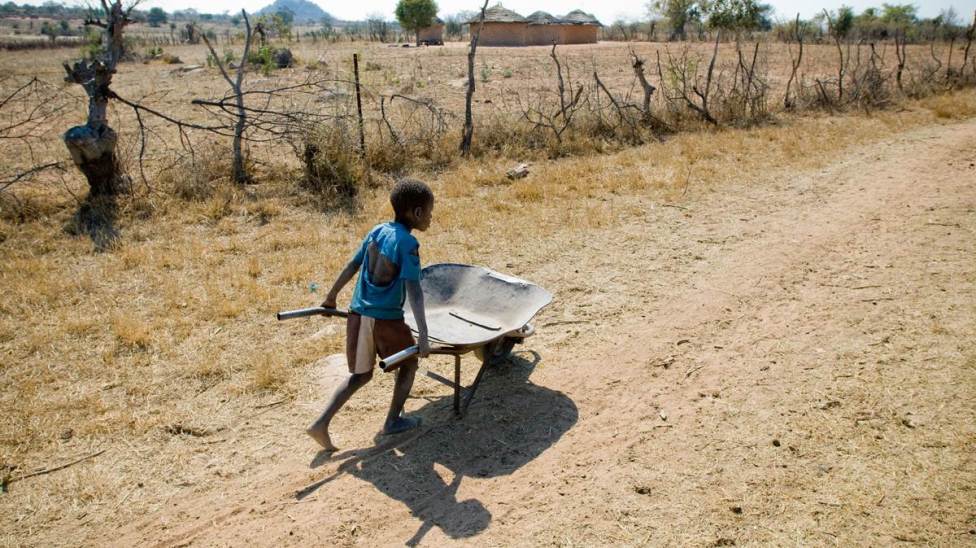
Famine: Zimbabwe’s chickens are coming home to roost

Zimbabwe, which has been ruled by the radical Afro-Marxist party ZANU PF for the last 39 years and long a darling of the global left, is finally hitting an economic brick wall with a possible famine in the offing, at least according to the United Nations World Food Programme.

The economic mismanagement of the country has been complemented by what is being called “the worst drought in almost four decades, cyclone-induced floods and an economic collapse have left Zimbabwe on the verge of its worst-ever famine”.

The southern African nation will probably run out of maize — its staple food — by January and about three out of five Zimbabweans won’t have enough to eat, according to the United Nations World Food Programme.

The government has already declared a state of disaster because of the drought, which has decimated harvests. One of the strongest-ever cyclones in the southern hemisphere also destroyed crops in March and a deepening economic crisis has limited the government’s ability to address the looming shortfalls.

Since a parity peg to the U.S. dollar was dropped in February, the local currency has slumped to 13.85 to the dollar, making it the world’s worst performer. That’s slashed spending power in a country where most goods are imported. Zimbabwe is already struggling to find sufficient foreign exchange to fund imports of fuel and wheat.

While Zimbabwe has experienced intermittent food shortages for the last two decades, the problem has mostly been limited to rural areas. This time, 3 million of the 8.5 million people at risk of food insecurity are in cities, said Eddie Rowe, the WFP’s country director in Zimbabwe.

“You will have a lot more people hungry in Zimbabwe than ever before,” he said. In the past, “in urban areas the alarm bells were not ringing.”

“The drought has just exacerbated the situation,” said Jee-A van der Linde, an economist at NKC African Economics in Paarl, South Africa. It will “deteriorate to a point where they need foreign aid.”

The country’s maize crop is expected to plummet 54% this year and Agriculture Secretary Ringson Chitsiko warned in March it only had seven months of grain stockpiles, including corn. Parts of north-western Zimbabwe had their lowest rainfall since 1981, according to the Southern African Development Community.

Zimbabwe has made attempts to replenish its maize stocks, but an international tender for at least 750,000 tons of corn failed because the government and bidders couldn’t agree on financial terms, two people familiar with the situation said.

The country has now agreed to buy 150,000 tons of maize from South Africa, the people said. However, analysts estimate Zimbabwe could need as much as 1 million tons of maize imports.

Sibusiso Moyo, the country’s foreign minister and head of its grain importation committee, didn’t respond to messages sent to his office seeking comment.

Zimbabwe’s crisis has been compounded by smaller harvests in neighboring countries, such as Zambia, which often have surpluses

The white maize preferred by Zimbabweans also limits the pool of potential suppliers, as the yellow variety is more common in other parts of the world. In southern Africa, white maize is mainly reserved for human consumption and yellow is fed to animals.
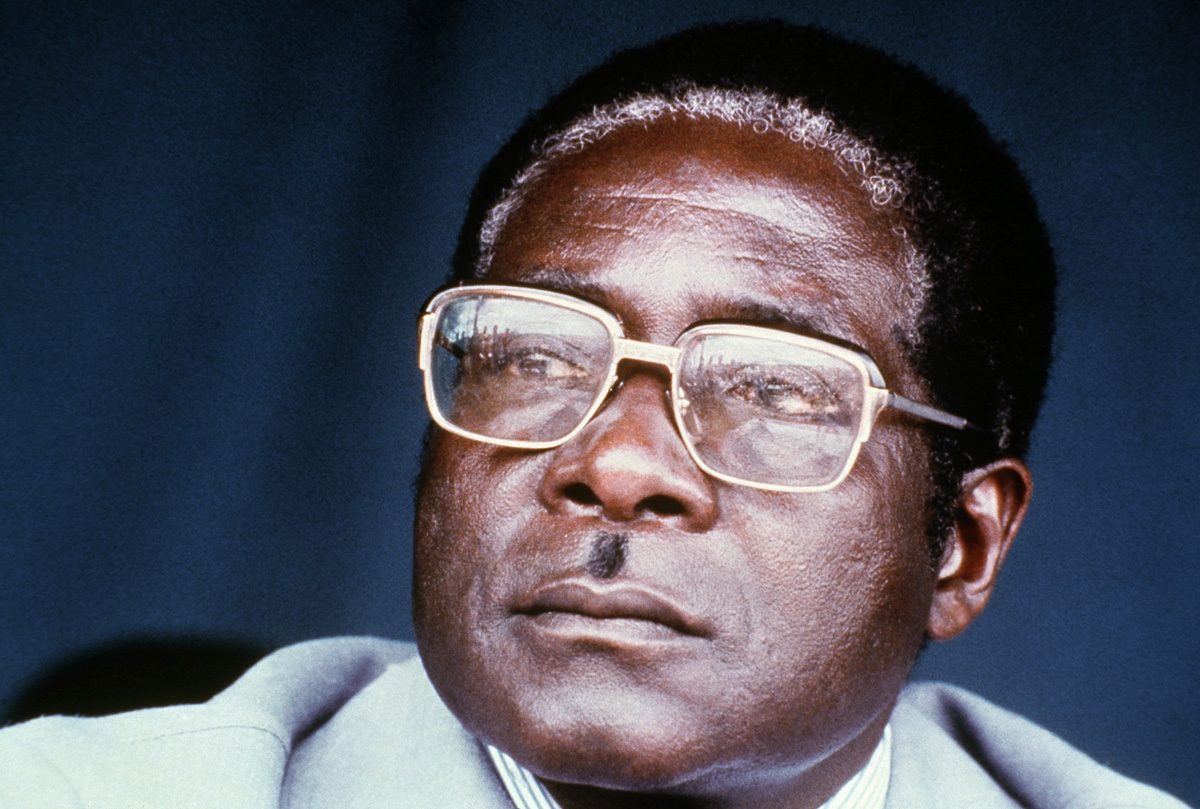
‘Mugabe was a monster’ – Daily Telegraph

Unlike in South Africa and in his native Zimbabwe where hagiographies of deceased former president Robert Mugabe were the norm, London’s Daily Telegraph did not mince words. In a leading article published on 6 September 2019, the newspaper chose the headline: Robert Mugabe was a monster who destroyed his country.

The unsigned commentary went on to state:

“Robert Mugabe once said of his rule: “Only God who appointed me will remove me.” God has finally decided to call time. Mugabe died yesterday at the age of 95, two years after being ousted in a coup. He leaves behind one of the poorest countries in the world.

“When he came to power in 1980, Zimbabwe had tremendous potential as a farming nation, and there is no denying that Mugabe put money into clinics and schools. But his grip on power was cemented early on by ethnic cleansing in Matabeleland, and later he gave the green light to a war on white-owned farmland. White farmers were not the only targets: a slum-clearing programme, for example, left at least 750,000 homeless. Money-printing destroyed the economy and life expectancy plummeted from 61 to 45. Zimbabwe’s tragedy has become a regional crisis, as refugees have poured into South Africa, driving up social tensions.”

Julius Malema, leader of the radical EFF party in South Africa, tweeted:

But the Daily Telegraph had the last word:

“Whatever fantasy Mugabe entertained of himself as a leader, by the end his greatest achievement was his ability to cling on to power through a mix of corruption, brute force and the lingering reputation as a revolutionary. Ultimately, it was his own cronies who took him down; at first there was hope of reform, but they have proved every bit as incompetent. Inflation stands at 175 per cent and around a third of the population requires humanitarian assistance.

“Change is impossible without democracy. Thirty years on from the collapse of the Berlin Wall, we have seen that those countries that expose their elites to scrutiny and fair elections enjoy the greatest development. Until Zimbabwe embraces human rights, this cycle of tyranny and poverty will continue.”

Read also: Mugabe’s bloody reign of terror in Zimbabwe

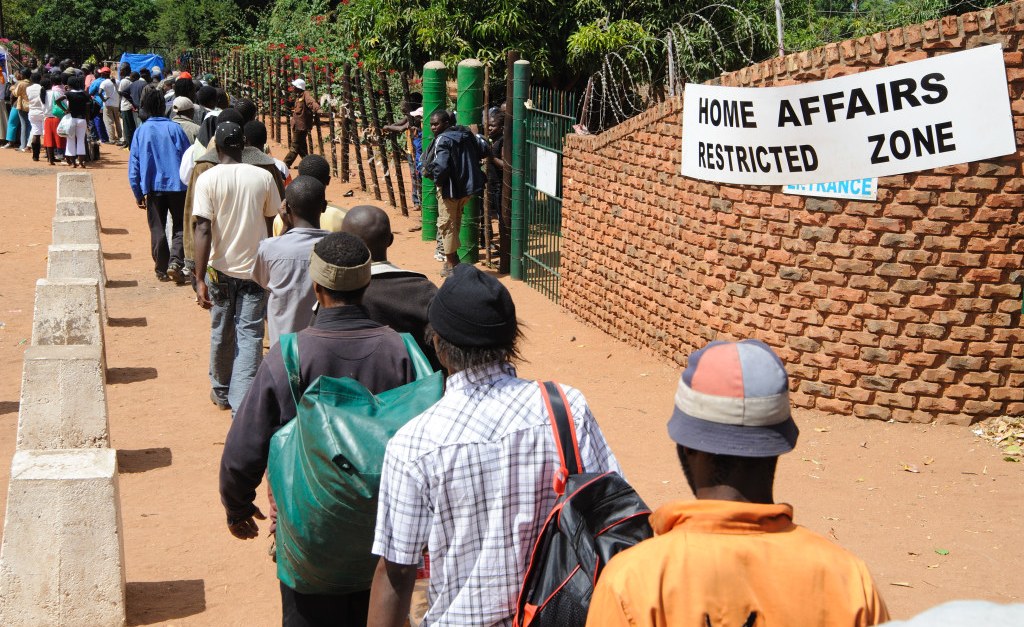
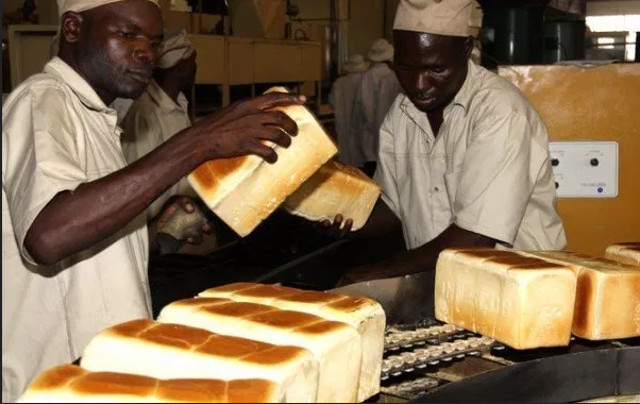
Unable to pay for wheat, Zimbabwe running out of bread

Zimbabwe could run out of bread in a week after flour stocks dwindled due to the country’s failure to pay for imported wheat, according to a confidential letter written to bakers by the country’s grain millers’ group on Monday.

The southern African nation is in the grip of a severe shortage of U.S. dollars that has sapped supplies of fuel and drugs, as President Emmerson Mnangagwa struggles to live up to pre-election promises to quickly revive the troubled economy.

Zimbabwe imports wheat, which it blends with its local crop to make flour for bread, the country’s second major staple after maize meal.

The Grain Millers Association (GMAZ) general manager Lynette Veremu wrote to the National Bakers Association of Zimbabwe (NBAZ) to tell them the country cannot pay for 55 000 tonnes of wheat in bonded warehouses in Mozambique and Harare.

“We regret to advise that the current stocks for foreign wheat for bread flour have depleted to 5 800 tonnes and … we are left with less than eight days of national bread flour supplies,” the letter said.

GMAZ spokesman Garikai Chaunza confirmed the letter, saying “this is the situation we are faced with”.

Letter: Zimbabweans are not freeloaders

Zimbabweans don’t want to be here. South Africans don’t get that. We have voted and voted against the ruling party (and Mugabe) and each time we had the opportunity to be rid of those murderers guess who came to their rescue? Mbeki, ANC, Zuma, SADC.

While I am not wholesale blaming SA for Zim’s problems the country is complicit in keeping us in the shackles of the ANC’s “liberation friends”.
We are treated like cow dung here and live transitory lives where we cannot establish any meaningful sense of a long term view which makes being in SA the very last option.

I, myself, am a Zimbabwean… been here since 2004 working my black bottom off as a software engineer contributing to the tax that pays 11 million South African free loaders monthly in grants… or free cash.

This idea that Zimbabweans are freeloaders is perpetuated by those who wish for xenophobia to reign. The bulk of Zimbabweans are here are the very same ones you see in restaurants working double shifts and making South Africa look good to tourists with their friendly, easy-going, nature. The jobs they “steal” are there for the taking but South africans don’t want them because they are beneath them. This is not fiction.

Right now, looking at how much I pay in taxes and doing a quick calculation, I am looking after at least 15 South African grant recipients each month…. but if I want a house,

a). I can’t get an RDP house,
b). if i qualify for a bond I must pay 50% upfront… what’s 50% of R1.5million again?
c). if I buy a car… for which I must pay a hefty deposit I must get comprehensive cover for it for which… while a South African may pay R400/month… I invariably get to pay R1000-R2000!
d). Because I don’t have an ID I pay more, and in full for getting my kids educated.
e). I pay for all my medical care… nothing’s free.

I’m not unique in the above… most of us foreigners live this life. SA is a hostile, violent, place that, had we a choice, we’d only read about back home… but here we are.

If white South Africans accuse us of being parasites, I totally understand; you probably think since the local blacks are bunch of lazy entitled whiners the rest of us are the same. If you are black, you are grossly misguided and need to travel to at least 2 SADC countries to see how your black brothers’ work ethic lends them well towards being constructive members of society.

—James Watadza

Bob’s latest speech blunder

Zimbabwean President Robert Mugabe made a speech blunder on Tuesday during the opening of the third session of the eighth Parliament of Zimbabwe.

Instead of reading the parliamentary opening speech, Mugabe re-read his State of the Nation Address, which he delivered in late August.

Presidential spokesperson George Charamba acknowledged the blunder.

“There has been a mix-up of speeches resulting in a situation where his Excellency, the President, delivered the wrong speech,”Charamba said.

“The mix-up happened in his secretarial office, therefore the delivery in Parliament should be set aside. The error is sincerely regretted and corrective measures are being considered.”

Last December, Mugabe shocked more than 12,000 delegates at the Zanu PF congress held in the capital when he unwittingly denounced his own party.

More often during rallies and political gatherings, Zanu PF officials usually denounce the main opposition party led by Morgan Tsvangirai, the Movement for Democratic Change.

But instead, Mugabe said then: “Pasi neZanu PF”, which means “Down with Zanu PF”.

Earlier opposition leader Simba Makoni alleged that the Mossad had been hired by President Robert Mugabe to ensure he won by computerized rigging of the vote.

Ibbo Mandaza, a senior member of Makoni’s campaign team, told the Mail & Guardian that the voters’ roll had been manipulated to favor the ruling ZANU-PF and that the format of the voter’s roll was devised by the Mossad on instructions from the Zimbabwean government.

Information technology expert Valentine Sinemane told the South African newspaper that the electronic version of the voters’ roll, sold to the opposition by the Zimbabwe Electoral Commission for $2,400, was compiled by an Israeli company named Nirkuv Projects.

Mandaza said that ZANU-PF asked for Mossad help because of the intelligence agency’s experience with elections in other countries. “They have expertise in vote-rigging. Also, Mossad is looking for any kind of support and alliances and therefore Zimbabwe is the obvious target,” he said.

He said that the opposition was aware that Mossad had been active in Zimbabwe recently. Six Mossad agents arrived in Harare and held top-secret meetings with government officials involved in state security before the election.

Source: ANA/M&G

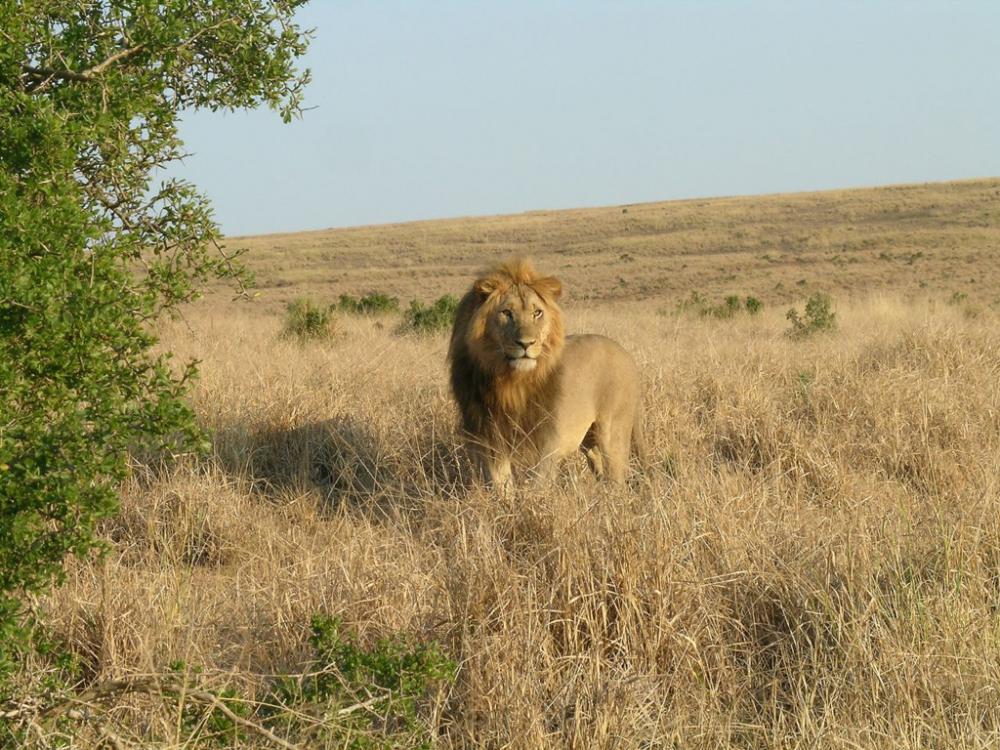
Lion kills safari guide in Hwange

A safari guide has been mauled to death in Zimbabwe’s Hwange National Park, where Cecil the lion lived.

Camp Hwange has named the guide as 40-year-old Zimbabwean Quinn Swales.

Camp Hwange said in a statement that the attack happened on Monday morning.

It said professional guide Quinn Swales was taking guests on a photographic walking safari.

It’s understood Swales was attacked when a male lion unexpectedly charged and he died of his injuries.

This tragic incident comes after the global spotlight was turned on Hwange last month, when Cecil the lion was killed by US dentist Walter Palmer.

Swales’s last post on Facebook is a photo of a lion that is almost certainly Cecil.

Source: EWN

Zim state broadcaster fires hundreds

Zimbabwe’s state broadcaster said on Thursday it has laid off nearly 300 workers as it battles financial woes.

The Zimbabwe Broadcasting Corporation (ZBC) board of directors has “so far terminated the contracts of some 282 staff members on three months’ notice”, chairman Fidelis Munyoro said in a statement.

It said the ZBC had decided to streamline certain operations to try to steer the national broadcaster towards “viable business-focused and results-based activities”.

A journalist at the broadcaster, which has been failing to pay staff salaries, confirmed the layoffs.

“We have been told it is ongoing so even those who have not received the letters are not sure whether their jobs are secure or not,” the journalist told AFP, requesting anonymity.

The ZBC joins several companies that have laid off workers after a Supreme Court ruling last month that allowed employers to dismiss workers after giving three months’ notice.

The Zimbabwe Congress of Trade Unions staged protests in the capital Harare last week over the dismissals.

Zimbabwe’s economy has been in a downward spiral for more than a decade following President Robert Mugabe’s land reforms, which broke the country’s agricultural backbone.

Source: AFP

‘What lion?’ Zimbabweans ask as Cecil circus goes global

As social media exploded with outrage this week at the killing of Cecil the lion, the untimely passing of the celebrated predator at the hands of an American dentist went largely unnoticed in the animal’s native Zimbabwe.

“What lion?” acting information minister Prisca Mupfumira asked in response to a request for comment about Cecil, who was at that moment topping global news bulletins and generating reams of abuse for his killer on websites in the United States and Europe.

The government has still given no formal response, and on Thursday the papers that chose to run the latest twist in the Cecil saga tucked it away on inside pages.

One title had to rely on foreign news agency copy because it failed to send a reporter to the court appearance of two locals involved.

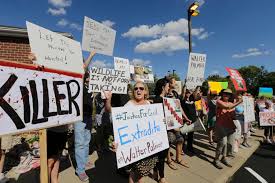
In contrast, the previous evening 200 people stood in protest outside the suburban Minneapolis dental practice of 55-year-old Walter Palmer, calling for him to be extradited to Zimbabwe to face charges of taking part in an illegal hunt.

Local police are also investigating death threats against Palmer, whose location is not known. Because many of the threats were online, police are having difficulty determining their origins and credibility.

Palmer, a lifelong big game hunter, has admitted killing Cecil with a bow and arrow on July 1 near Zimbabwe’s Hwange national park, but said he had hired professional local guides with the required hunting permits and believed the hunt was legal.

For most people in the southern African nation, where unemployment tops 80 percent and the economy continues to feel the after-effects of billion percent hyperinflation a decade ago, the uproar had all the hallmarks of a ‘First World Problem’.

“Are you saying that all this noise is about a dead lion? Lions are killed all the time in this country,” said Tryphina Kaseke, a used-clothes hawker on the streets of Harare. “What is so special about this one?”

As with many countries in Africa, in Zimbabwe big wild animals such as lions, elephants or hippos are seen either as a potential meal, or a threat to people and property that needs to be controlled or killed.

The world of Palmer, who paid $50,000 to kill 13-year-old Cecil, is a very different one from that inhabited by millions of rural Africans who are more than occasionally victims of wild animal attacks.

According to CrocBITE, a database, from January 2008 to October 2013, there were more than 460 recorded attacks by Nile crocodiles, most of them fatal. That tally is almost certainly a massive underrepresentation.

“Why are the Americans more concerned than us?” said Joseph Mabuwa, a 33-year-old father-of-two cleaning his car in the center of the capital. “We never hear them speak out when villagers are killed by lions and elephants in Hwange.”

Source: Reuters

Zim to hand back land to some white farmers

Zimbabwe’s government has for the first time suggested it may give official permission for some white farmers to stay on their land, 15 years after it sanctioned widespread land grabs that plummeted the country into an economic crisis.

Douglas Mombeshora, the Zanu-PF Lands Minister, said provincial leaders had been asked to draw up a list of white farmers they wanted to stay on their farms deemed to be “of strategic economic importance”.

“We have asked provinces to give us the names of white farmers they want to remain on farms so that we can give them security of tenure documents to enable them to plan their operations properly,” Mr Mombeshora said.

Beneficiaries of the land grabs that started in 2000, mostly President Robert Mugabe’s officials and allies, will in the future also have to pay a small rental per acre which will be used in part to pay compensation to evicted white farmers.

More than 4,000 white farmers lost their land after Mr Mugabe lost a referendum to the new Movement for Democratic Change party and, in a bid to regain popularity, authorised land grabs by disaffected war veterans.

Today, fewer than 300 white farmers remain on portions of their original land holdings in Zimbabwe and many of the seized farms lie fallow, meaning the former Breadbasket of Africa has to import food to feed its population.

Among remaining farmers who have been recommended for a reprieve of Mr Mugabe’s edict that whites can no longer own land in Zimbabwe is Elizabeth Mitchell, a poultry farmer who produces 100,000 day-old chicks each week.

Her farm, Barquest, which lies around 160 miles south of Harare in Masvingo Province, had been allocated by the government to Walter Mzembi, the tourism minister, but he recently retreated after the provincial leadership backed her request to stay.

Shuvai Mahofa, Masvingo’s Provincial Affairs Minister, has recommended five more white farmers be issued with 99-year leases because their operations were, she said, of “strategic economic importance”.

Mr Mugabe regularly tells white farmers who have survived years of uncertainty, violence and threats to move off the parcels of land they have hung on to.

“Don’t be too kind to white farmers,” Mr Mugabe told supporters at a recent Zanu PF rally. “They can own industries and companies, or stay in apartments in our towns but they cannot own land. They must leave the land to blacks.”

Mr Mombeshora also announced the long-delayed establishment of a “Land Commission”, which the EU has said it will help fund, to survey how seized white farms were distributed during the chaotic and sometimes violent land grab.

He said new land laws were almost ready to go before parliament which would require beneficiaries to pay rent. Those funds would, he said, be used to start a process of compensation for evicted white farmers.

George Charamba, Mr Mugabe’s spokesman, told The Telegraph during a recent visit to South Africa that the review would be “founded on productivity” and beneficiaries would be subjected to a “use it or lose it” rule.

“Not many have made land reform work and they will not hold on to it if they are not making it sweat,” he said. “There will be tears, black tears this time.”

Hendrik Olivier, director of the Commercial Farmers Union, which represents interests of thousands of evicted white farmers and the roughly 300 who remain, said he was “pleased” the government was talking about compensation and urged more farmers be given the right to stay.

“So many of the evicted farmers are old now and destitute and desperate for compensation,” he said.

He said he hoped that the UK, would, as the former coloniser and in accordance with Zimbabwe’s constitution since 1992, also meet its commitments to paying some compensation.

“If the UK, alone or with other donors, paid the small amount for the land, we believe international financiers, such as the World Bank would assist Zimbabwe pay white farmers for the more expensive part of the deal, improvements to the land,” he said.

“We doubt the government will raise enough money from rentals to pay much compensation, but it is a start.”

Source: The Telegraph

Biti: Zimbabweans might start eating each other

Zimbabweans might soon resort to cannibalism if the gripping hunger stalking the nation is not averted, former Finance Minister Tendai Biti has said.

Biti, now secretary general of the MDC Renewal Team, told party supporters in Harare’s dormitory town of Chitungwiza that stress related deaths had gone up in the country.

“If left to continue, the current situation will lead to cannibalism where human beings will resort to eating human flesh.

“Most of the deaths being witnessed in the country are either due to starvation or stress related ailments like High Blood Pressure, hypertension and heart attack, because of the economic, political and social decay we are witnessing,” said Biti.

“Going to funerals to pay condolences is now some form of formal employment because many people are stressed up to a level where the strain takes their lives”.

Biti said the current rise in domestic violence cases is an indication that “the stress levels in the country have gone to dangerous levels as well as a breakdown of the family structure.

Men who are no longer able to provide for their families resort to violent ways to assert themselves on the women”.

“The Renewal Team will, among other issues, launch an economic blue print Holistic Program for Economic Transformation (HOPE), that will outline the party’s strategy on curbing unemployment, attracting Foreign Direct Investment and dealing with external debt.

The economic blue print will also proffer the infrastructure expansion and development plan,” he said, urging government to move quickly to repeal the contentious indigenisation laws.

“As it is, the indigenisation policy has only resulted in massive capital flight causing companies to close en masse.

Companies closures have resulted in a serious decline of the capacity utilization of Zimbabwean Industries and sad losses of jobs, leaving many people destitute”.

The former treasury chief said his party’s economic proposals will “aim at restoration of human dignity in the country, creation of formal jobs and development of the country which is now more than 40 years behind in that respect”.

Source: newzimbabwe.com

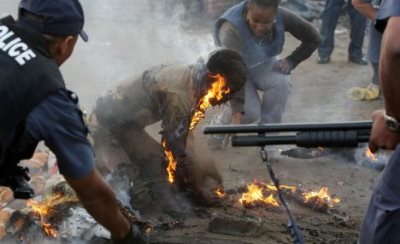
Mugabe blames xenophobic violence on whites

Zimbabwean President Robert Mugabe laid the blame for xenophobic violence in South Africa on whites, because he said they still owned most of the land and had most of the opportunities.

“It is a matter of the whites keeping things to themselves and the political dispensation brought in by Mandela, (that) did not address the question of disparities between whites and blacks, and this is what must be addressed,” he said at a press conference after visiting the headquarters of the Southern African Development Community (SADC) secretariat here. Mugabe is the current chairperson of SADC.

Mugabe said he was satisfied with the South African government’s response to the attacks. But he added that unemployment in South Africa and white dominance of land ownership made the xenophobic attacks understandable.

“Most of the land is in the hands of the whites who are in a minority…They are not talking in their country of whites being unemployed. It is blacks who are unemployed, this is what they must address first and foremost,” said Mugabe, calling for a second liberation to redress these inequalities.

South Africa should be helped to overcome the problem that former oppressors were still occupying the old positions and the advantages that they allocated to themselves during colonialism.

Countries like Zimbabwe had overcome oppression and inequalities of land ownership.

“But if you go to SA it is a different story, we need to help them, they need another liberation,” he said.

Mugabe and SADC executive secretary Stergomena Tax, dismissed suggestions that his reception in Botswana was inadequate. Some local media put this down to the chilly relations between Mugabe and Botswana President Ian Khama, the deputy chairperson of SADC, who has in the past criticised the lack of democracy in Zimbabwe and differed from SADC when it declared the 2013 elections free and fair.

But Mugabe said he had not come on a state visit and so did not expect to be welcomed with much formal ceremony. He did have a private meeting with Khama over lunch and said relations between the two were friendly and that it was journalists who had created the idea that they were not friendly.

And he shrugged off Botswana’s opinion of the Zimbabwe elections, saying perhaps Botswana had seen certain incidents that others had not seen.

Mugabe had a dig at South Africa’s economic dominance of the region, and suggested Khama shared his view.

“Right now some of us are complaining about the bigness of SA, a giant establishing itself. That is what we discussed at the meeting, that if we are trying to establish our industries they are blocked.”

“For example, pharmaceuticals. We produce some drugs, and they are in demand. We want to send them to SA then those officials in trade say we will only receive them if they come by air. We say no it is much more costly to send them to SA by air, we have planes, yes, but the planes are expensive, we can send them by road, they say no. You see, that is contrary to our free trade principles, there are lots of things we still have to discuss amongst us.”

He also noted that there was a one-way trade of South African beer into other SADC countries.

Source: ANA

Unprecedented security at Zim Pakistan clash

Thousands of police and paramilitaries have been deployed and helicopters will be buzzing over Lahore’s Gaddafi Stadium, which has been turned into a fortress for Friday’s Twenty20 cricket game against lowly Zimbabwe.

Authorities have mounted an unprecedented operation to guard insurgency-hit Pakistan’s first home international in six years.

The fixture is Pakistan’s first on home soil since 2009, when militants launched a gun attack on Sri Lanka’s team bus in Lahore, killing eight police and civilians and leaving seven players wounded.

Roads around the stadium will be closed and shops and restaurants have been shuttered for the duration of the series, consisting of two Twenty20s and three ODIs, all in Lahore.

Jammers are in use to cut out radio signals, hampering wifi at the stadium, and fans will have to go through metal detectors at three security checkpoints, raising the prospect of hours of queuing.

Zimbabwe have been under tight wraps since their arrival early on Tuesday, when they were whisked from the airport to their hotel watched by thousands of security personnel.

They are far from the usual arrangements for a cricket match, and Zimbabwe captain Elton Chigumbura said it was a new experience for him and his team.

Pakistan captain Shahid Afridi hoped the first ball on Friday will refocus attention on cricket as he attempts to lift his team after a poor World Cup and series in Bangladesh.

Despite the tight security and the late confirmation of the series, following a massacre in an attack on a bus in Karachi, organisers say the 27,000-capacity venue is a sell-out for Friday’s game.

Source: AFP

Gold stash found near Beitbridge

Gold with an estimated value of R24m and copper cable valued at around R14 000 were seized near the Beitbridge border post on Monday, the SA Revenue Service (SARS) said.

“During an inspection of a Toyota Quantum microbus at the Beitbridge border post, the occupants of the vehicle sped off,” spokesperson Luther Lebelo said.

“SARS officials pursued the vehicle. The occupants abandoned the vehicle at Waterpoort, Limpopo and fled the scene.”

An inspection of the vehicle, supervised by the SAPS, recovered 52kg in gold bars and 279kg of copper.

The gold and copper was currently being processed at the SAPS laboratories and the matter was being investigated by police, said Lebelo.

Source: News24

Mugabe toys with ‘land rentals’ to pay white farmers

An announcement from President Robert Mugabe’s government that it will soon start collecting land rentals from new black farmers to help compensate white farmers whose land was taken from them could be “very good”, the director of the Commercial Farmers’ Union (CFU) said on Saturday.

Hendrik Olivier told News24: “If there is a concrete realisation from the government that they want to sit around the table with white farmers [and discuss compensation], this would be very good and would boost the confidence of the farmers.”

The decision to extract rentals from the new farmers, almost certainly an effort to restore confidence in Zimbabwe internationally and encourage desperately-needed foreign investment, was announced by Lands and Rural Resettlement Minister Douglas Mombeshora on Thursday, the state-controlled Herald newspaper reported on Saturday.

The minister said the move was approved by Mugabe’s cabinet last week.

Olivier said that there were “lots of figures floating around” as to the total amount of compensation owed to white farmers who have lost their land under Mugabe’s controversial land reforms, which were launched in 2000. He agreed that it was “most probably” around $10bn, a figure that has been previously cited.

The CFU director said some dispossessed white farmers needed “very much” to be paid back.

Source: News24