Marine Le Pen, leader of the conservative Front National, would win the first round of a presidential election in France, according to a poll released Sunday, The Telegraph reports.
If an election were held next Sunday, Le Pen, who made major gains in recent local elections, would score a landslide victory against Francois Hollande, whose approval rating hit a record low of 13 percent in August.The survey found that she would take 30 percent of the vote as Holland would take only 16 percent. Le Pen would also led several other center right politicians, including former Premiers Alain Juppé and Francois Fillon. She would even defeat ex-president Nikolas Sarkozy, with 28 percent of the vote to his 25 percent, according to the poll. However the projections found that Le Pen would win a second round only if her rival was Hollande.
Commentators say Le Pen is taking electoral advantage of France’s weak and feuding mainstream parties. The ruling Socialist Party is in total disarray and the center right opposition Union for a Popular Movement has no leader.
In a recent interview with Le Monde, Le Pen called for parliament to be dissolved and said she would be willing to become prime minister, “cohabitating” with president Hollande. – Ria Novosti
The ruling party candidate held the lead in early vote counting to become Honduras’ next president, while two of his four main opponents began crying foul early Monday over the results in the violent and impoverished Central American nation.
With just over half the ballots tallied by late Sunday, Juan Orlando Hernandez of the governing National Party had a comfortable edge over Xiomara Castro, whose husband Manuel Zelaya was ousted in a 2009 coup that has left the country politically unstable.
Hernandez and Castro went into Sunday’s election neck-and-neck in opinion polls, and expectations of a close finish raised fears that a disputed result would produce more instability and protests. Voting went off peacefully amid a heavy turnout, however, and the uncertainty of the final results plus a cold, rainy night kept the streets quiet.
The winner will likely have no more than a third of the vote and face a divided congress, whose 128 members were also up for election. As a result, the political situation is unlikely to change in the failing state of 8.5 million people, which is home to the world’s highest homicide rate and a transit point for much of the South American cocaine heading to the U.S.
Both candidates claimed victory, with Hernandez saying he would start Monday with the job of leading Hondurans out of the misery they’ve endured. Poverty and violence have climbed in the last four years under President Porfirio Lobo, also of the National Party.
Castro said her campaign’s numbers gave her a victory by 3 points, then left her election-night party at a hotel and was not heard from the rest of the night. Zelaya urged her supporters to stay at the polls and keep monitoring the count.
“We don’t accept the results,” Zelaya said early Monday. “There are more than 1 million votes that have yet to be counted.”
Salvador Nasrallah, a popular sportscaster and candidate of the Anticorruption Party who was in fourth place, also questioned the official returns.
“Our data do not match the official data that the system is transmitting,” Nasrallah said.
David Matamoros, president of Honduras’ electoral court, said final results were not expected until Monday morning.
“The preliminary results we have given so far do not show any tendency or declare any winner,” he said Sunday night.
Both U.S. Ambassador Lisa Kubiske and Ulrike Lunacek, head of the European Union observer mission, said reports from the polls indicated the vote and subsequent count so far were regular.
“We had 110 observers in almost all Honduras states, and we have seen a transparent process with all parties represented at the table,” Kubiske said, noting that there is a system in place for people to peacefully file complaints or contest the results.
Castro, 54, had led the race for months portraying herself as the candidate for change, promising relief from violence and poverty and constitutional reform that would make the country more equitable.
“From the data from our surveys and vote counts, I am the president of Honduras,” she said early in the night. “The victory is overwhelming and irreversible.”
Hernandez, 45, erased Castro’s early lead in a field of eight candidates as he focused his campaign on a promise to bring law and order. As president of Congress, Hernandez pushed through legislation creating a military police force to patrol the streets in place of the National Police, which are penetrated by corruption and often accused of extrajudicial killings.
“Today the people voted to leave behind the political crisis of 2009 that left thousands in Honduras jobless, migrating and divided, that left us alone and isolated,” Hernandez said.
The number of people working for less than minimum wage of $350 a month in Honduras has grown from 28 percent in 2008 to 43 percent today.
“There is insecurity, fear, violence, hunger and unemployment. There are problems that are so deep that I doubt anyone can really solve them,” said Jose Barreiro, a voter. – AP
—
Associated Press writer Freddy Cuevas contributed to this report.
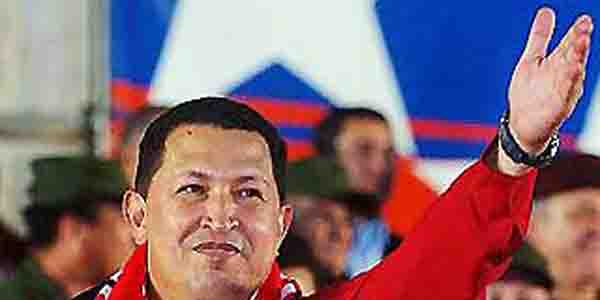
President Hugo Chavez put to rest any doubts about his masterful political touch in winning a third consecutive six-year term after a bitterly fought race against a youthful rival who has galvanized Venezuela’s opposition.
The state governor who lost Sunday’s presidential vote, Henrique Capriles, had accused the flamboyant incumbent of unfairly using Venezuela’s oil wealth to finance his campaign as well as flaunting his near-total control of state institutions.
Still, he accepted defeat as Chavez swept to a 10-point victory margin, the smallest yet for him a presidential race. This time, the former army paratroop commander won 55 percent of the vote against 45 percent for Capriles with more than 90 percent of the vote counted.
Chavez will now have a freer hand to push for an even bigger state role in the economy, as he pledged during the campaign, and to continue populist programs. He’s also likely to further limit dissent and deepen friendships with U.S. rivals.
Chavez spent heavily in the months before the vote, building public housing and bankrolling expanded social programs.
“I think he just cranked up the patronage machine and unleashed a spending orgy,” said Michael Shifter, president of the Washington-based Inter-American Dialogue think tank.
But Shifter also noted the affinity and gratefulness Venezuela’s poor feel for Chavez. “Despite his illness, I still think he retains a strong emotional connection with a lot of Venezuelans that I think were not prepared to vote against him.”
“They still think that he’s trying hard even if he’s not delivering what he promised, that he still has their best interests at heart,” Shifter said. “That’s the political skill that he has. He hasn’t lost that touch.”
Chavez spoke little during the campaign about his fight with cancer, which since June 2011 has included surgery to remove tumors from his pelvic region as well as chemotherapy and radiation treatment. He has said his most recent tests showed no sign of illness.
Tensions were high Sunday night as announcement of the results were delayed.
Finally, fireworks exploded over downtown Caracas amid a cacophony of horn-honking by elated Chavez supporters waving flags and jumping for joy outside the presidential palace.
“I can’t describe the relief and happiness I feel right now,” said Edgar Gonzalez, a 38-year-old construction worker.
He ran through crowds of Chavez supporters packing the streets around the presidential palace wearing a Venezuelan flag as a cape and yelling: “Oh, no! Chavez won’t go!”
“It’s time now to sweep away the squalid ones,” said another elated supporter, Ignacio Gonzalez, using a description of the opposition Chavez employed during campaigning.
“It’s time to get them out of governor’s and mayor’s offices. The next battle is in December,” when state and municipal elections will be held, added the 25-year-old student, who wore a red shirt that wedded the images of Chavez, Jesus Christ and South American independence hero Simon Bolivar.
Capriles posed the strongest challenge yet to Chavez, who won by a 27-point margin in 2006 and by 16 points when he was first elected in 1998.
“I will continue working to build one country,” said the wiry, 40-year-old grandson of Holocaust survivors who unified and energized the opposition while barnstorming across the country.
He said in his concession speech that he rejects the idea of two Venezuelas divided by ideology and class.
Capriles had vowed to address violent crime that has spun out of control, streamline a patronage-bloated bureaucracy and end rampant corruption, but his promises proved inadequate against Chavez’s charisma, well-oiled political machine and legacy of putting Venezuela’s poor first with generous social welfare programs.
Yet with a turnout of 81 percent, Chavez only got 551,902 more votes this time around than he did six years ago, while the opposition boosted its tally by 2.09 million. Chavez appeared to acknowledge the opposition’s growing clout.
“I extend from here my recognition of all who voted against us, recognition of their democratic weight,” he told thousands of cheering supporters from the balcony of the Miraflores presidential palace.
A Capriles victory would have brought a radical foreign policy shift including a halt to preferential oil deals with allies such as Cuba, along with a loosening of state economic controls and an increase in private investment.
Washington, which has often feuded with Chavez, declined to congratulate the president directly, but acknowledged the result.
“We congratulate the Venezuelan people for the high turnout and generally peaceful manner in which this election was carried out,” said State Department spokesman William Ostick.
“We believe that the views of the more than 6 million people who voted for the opposition should be taken into account going forward,” he added.
President Raul Castro of Cuba, which could have been badly hurt by a Chavez loss, was among Latin American leaders sending warm congratulations to the former paratrooper on his victory after nearly 14 years in office.
Chavez paid close attention to his military-like get-out-the-vote organization at the grass roots, stressing its importance at campaign rallies. The opposition said he unfairly plowed millions in state funds into the effort.
One pro-Chavez voter, private bodyguard Carlos Julio Silva, said that whatever his faults, Chavez deserved to win for spreading the nation’s oil wealth to the poor with free medical care, public housing and other government programs. The country has the world’s largest proven oil reserves.
“There is corruption, there’s plenty of bureaucracy, but the people have never had a leader who cared about this country,” Silva said after voting for Chavez in the Caracas slum of Petare. His daughter received an apartment from the state while the free medical care he gets included a recent operation to remove tissue that was clouding his vision.
First-time voter Brenda Aguirre, who is about to embark on cost-free legal studies at the Bolivarian University of Venezuela, was also willing to forgive “el comandante” for his shortcomings.
“Chavez isn’t to blame for the people who surround him,” she said.
Across town, where people from Aguirre’s neighborhood wait tables and sweep floors, Capriles told supporters not to feel defeated.
“We have planted many seeds across Venezuela and I know that these seeds are going to produce many trees,” he told them at his campaign headquarters.
At many polling places, voters began lining up hours before polls opened at dawn, some snaking for blocks in the baking Caribbean sun. Some shaded themselves with umbrellas. Vendors grilled meat and some people drank beer.
Chavez’s critics accused the president of inflaming divisions by labeling his opponents “fascists,” “Yankees” and “neo-Nazis,” and it’s likely hard for many of his opponents to stomach another six years of the loquacious and conflictive leader.
Some said before the vote that they’d consider leaving the country if Chavez won.
Gino Caso, an auto mechanic, said Chavez is power-hungry and out of touch with problems such as crime. He said his son had been robbed, as had neighboring shops.
“I don’t know what planet he lives on,” Caso said, gesturing with hands blackened with grease. “He wants to be like Fidel Castro – end up with everything, take control of the country.” – AP
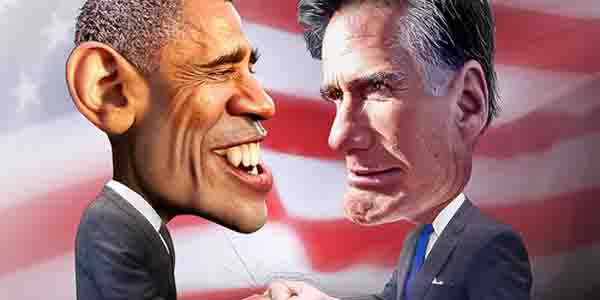
DENVER (AP) — In a showdown at close quarters, an aggressive Mitt Romney sparred with President Barack Obama in their first campaign debate Wednesday night over taxes, deficits and strong steps needed to create jobs in a sputtering national economy. “The status quo is not going to cut it,” declared the Republican challenger.
Democrat Obama in turn accused his rival of seeking to “double down” on economic policies that actually led to the devastating national downturn four years ago — and of evasiveness when it came to prescriptions for tax changes, health care, Wall Street regulation and more.
With early voting already under way in dozens of states, Romney was particularly assertive in the 90-minute event that drew a television audience likely to be counted in the tens of millions — like a man intent on shaking up the campaign with a little less than five weeks to run.
He seemed at ease in debate with the man who has been in the White House for four years. “It’s fun, isn’t it?” Romney said. In a rare post-debate concession, some Democratic strategists not involved in the campaign conceded the president was not at his best and missed opportunities to challenge his rival.
The former Massachusetts governor virtually lectured Obama at one point after the president accused him of seeking to cut education funds. “Mr. President, you’re entitled to your own airplane and your own house, but not your own facts,” he said.
The economy dominated the evening, as it has the race for the White House all year. Pre-debate opinion polls showed Obama with a slight advantage in key battleground states and nationally.
Romney said he had plans to fix the economy, overhaul the tax code, repeal Obama’s health care plan and replace with a better alternative, remake Medicare, pass a substitute for the legislation designed to prevent another financial crash and reduce deficits — but he provided no new specifics despite Obama’s prodding.
Said Obama: “At some point the American people have to ask themselves: Is the reason Governor Romney is keeping all these plans secret, is it because they’re going to be too good? Because middle class families benefit too much? No.”
The two men debate twice more this month, but they were first going their separate ways on Thursday. Obama had campaign stops in Colorado and then Madison, Wis., while Romney was booked into Virginia. All three states are among the nine battlegrounds likely to settle the race.
At times the debate turned into rapid-fire charges and retorts that drew on dense facts and figures that were difficult to follow. The men argued over oil industry subsidies, federal spending as a percentage of the GDP, Medicare cuts, taxes and small businesses and the size of the federal deficit and how it grew.
Obama sometimes seemed somewhat professorial. Romney was more assertive and didn’t hesitate to interrupt the president or moderator Jim Lehrer, who seemed to struggle to maintain control.
The wonky tone of the debate was a stark contrast to the harsh, broad-brush and sometimes personal attacks the two men make in person and in multimillion-dollar television advertising.
At the same time, Romney managed to make some points by personalizing his comments with recollections of people he said he had met on the campaign trail. In another folksy reference, Romney told Lehrer, a veteran of the Public Broadcasting Service, that he would stop the federal subsidy to PBS even though “I love Big Bird.”
Generally polite but pointed, the two men agreed about little if anything.
Obama said his opponent’s plan to reduce all tax rates by 20 percent would cost $5 trillion and benefit the wealthy at the expense of middle income taxpayers.
Shot back Romney: “Virtually everything he just said about my tax plan is inaccurate.”
The former Massachusetts governor and businessman added that Obama’s proposal to allow the expiration of tax cuts on upper-level income would mean tax increases on small businesses that create jobs by the hundreds of thousands.
The two campaign rivals clasped hands and smiled as they strode onto the debate stage at the University of Denver, then waved to the audience before taking their places behind identical lecterns.
There was a quick moment of laughter, when Obama referred to first lady Michelle Obama as “sweetie” and noted it was their 20th anniversary.
Romney added best wishes, and said to the first couple, “I’m sure this is the most romantic place you could imagine, here with me.”
Both candidates’ wives were in the audience.
Without saying so, the two rivals quickly got to the crux of their race — Romney’s eagerness to turn the contest into a referendum on the past four years while the incumbent desires for voters to choose between his plan for the next four years and the one his rival backs.
Romney ticked off the dreary economic facts of life — a sharp spike in food stamps, economic growth “lower this year than last” and “23 million people out of work or stropped looking for work.”
But Obama criticized Romney’s prescriptions and his refusal to raise taxes and said, “if you take such an unbalanced approach then that means you are going to be gutting our investment in schools and education … health care for seniors in nursing homes (and) for kids with disabilities.”
Not surprisingly, the two men disagreed over Medicare, a flash point since Romney placed Wisconsin Rep. Paul Ryan on his ticket.
The president repeatedly described Romney’s plan as a “voucher program” that would raise out-of-pocket costs on seniors.
He continued, directly addressing the voters at home: “If you’re 54 or 55 you might want to listen because this will affect you.”
Romney said he doesn’t support any changes for current retirees or those close to retirement.
“If you’re 60 or 60 and older you don’t need to listen further,” he said, but he contended that fundamental changes are needed to prevent the system from becoming insolvent as millions of baby boom generation Americans become eligible.
Romney also made a detailed case for repealing Obamacare, the name attached to the health care plan that Obama pushed through Congress in 2010. “It has killed jobs,” he said, and argued that the best approach is to “do what we did in my state.”
Though he didn’t say so, when he was governor Massachusetts passed legislation that required residents to purchase coverage — the so-called individual mandate that conservatives and he oppose on a national level.
Romney also said that Obamacare would cut $716 billion from Medicare over the next decade.
The president said the changes were part of a plan to lengthen the program’s life, and he added that AARP, the seniors lobby, supports it.
With a two-minute closing statement, Obama said he had spent his first four years in office fighting for those in the middle class and those seeking to make it there. “If you’ll vote for me, I’ll fight just as hard in my second term,” he said.
Romney was as critical of Obama’s tenure as he was the moment the two men walked onto the stage.
If the president is re-elected, he predicted continued economic trouble for the middle class, chronic unemployment, higher costs for health insurance and “dramatic cuts to the military.”
Obama took office in the shadow of an economic crisis but promised a turnaround that hasn’t materialized. Economic growth has been sluggish throughout his term, with unemployment above 8 percent since before he took office.
The two presidential rivals also are scheduled to debate on Oct. 16 in Hempstead, N.Y., and Oct. 22 in Boca Raton, Fla.
Vice President Joe Biden and Republican Rep. Paul Ryan of Wisconsin have one debate, Oct. 11 in Danville, Ky. Both men have already begun holding practice sessions.
Credit R. Wallace “Wally” Hudson, chairman of the Mecklenburg County (Va.) Republican Committee, with demonstrating how new social media platforms can broadcast ancient hates.
The Post reported this week that the county GOP’s Facebook page had displayed for months photos portraying President Obama as a witch doctor, a caveman and a drug dealer.
Virginia’s Republican Party chairman, Pat Mullins, ordered the offensive photos be taken down. But Hudson, who acknowledged posting most of the images, stood his ground, saying he didn’t see what all the fuss was about. “We know our regular readers, who are good conservatives,” he told The Post on Tuesday. “They’re gonna get a kick out of it.”
Baylor University assistant professor Mia Moody did a study of social media stereotyping of Barack and Michelle Obama; her findings appeared in the journal New Media & Culture.
Moody researched hundreds of Facebook groups and pages. She found numerous examples of the president and the first lady being targeted with racist and sexist rhetoric that, not surprisingly, also indirectly spread hatred toward women and blacks.
Moody found that some Facebook pages build on ideas that black people are different from members of the dominant group. Several photos showing Michelle Obama dancing drew comments about her “always jigging.”
One group called “Obama Sucks” primarily served as an outlet to post fake photos of the president. One picture featured him wearing a bandanna and gold teeth. The caption: “OBAMA Going For The African American Vote.”
Moody found that many Facebook hate pages also focused on cultural narratives. Some photos depict Obama or his family as animals, particularly apes. One picture showed male and female apes holding an infant ape with Obama’s face superimposed on it.
Tasteless. Disrespectful. – Colbert King, Washington Post
Hampton University, a historically black institution
WASHINGTON (AP) — Conservatives on Tuesday used a speech President Barack Obama delivered as a candidate in 2007 to accuse him of using racially charged rhetoric.
“There’s no way you can listen to this speech and not hear it as a deliberately divisive speech that pits Americans against each other and does so largely with racial innuendoes that are very, very clear when you hear the speech,” former Republican presidential candidate Newt Gingrich said on Fox News, which aired segments of the videotaped speech.
At issue Tuesday, one day before the first presidential debate and as Republican presidential candidate Mitt Romney trails in polls, was a speech then-candidate Obama made to black clergy at Hampton University, a historically black institution in Virginia. Media outlets including The Associated Press and Fox News covered the remarks at the time.
Obama – now the nation’s first black president – said in the speech that the Bush administration did nothing to defuse a “quiet riot” among blacks that threatened to erupt in the aftermath of Hurricane Katrina. Then a U.S. senator from Illinois, Obama also said the Bush administration “was colorblind in its incompetence.”
Fox News host Sean Hannity said the speech “contains some of the most divisive class warfare and racially charged rhetoric ever used by Barack Obama.”
Conservative pundit Tucker Carlson of The Daily Caller, which posted video of the speech online, argued that the speech features “racial rhetoric designed to make people fearful.” And The Drudge Report, a regular Obama critic, predicted the video would “ignite accusations of racism – in both directions!”
Obama campaign spokesman Ben LaBolt quickly dismissed the criticism, accusing “Mitt Romney’s allies” of recirculating video of a widely covered speech in “a transparent attempt to change the subject” from Romney’s comments about 47 percent of Americans who don’t pay federal income taxes.
Romney’s campaign did not immediately respond to a request seeking comment. The Republican previously distanced himself from a conservative group considering an advertising campaign featuring Obama’s former spiritual adviser, the Rev. Jeremiah A. Wright Jr., whose race-related sermons stirred controversy in Obama’s first campaign.
Five weeks to Election Day, President Barack Obama is within reach of the 270 electoral votes needed to win a second term. Republican Mitt Romney’s path to victory is narrowing.
To overtake Obama, Romney would need to quickly gain the upper hand in nearly all of the nine states where he and Obama are competing the hardest.
Polls show the president with a steady lead in many of them as Romney looks to shift the dynamics of the race, starting with their first debate Wednesday night in Denver.
Obama headed to Las Vegas for an evening rally and planned to stay in Nevada as he prepared for the debate. Romney remained in Boston on Sunday, going through preparations of his own for Wednesday’s event.
Romney’s running mate Paul Ryan says there’s time for the Republican ticket to win. “In these kinds of races people focus near the end, and that’s what’s happening now,” he told “Fox News Sunday.”
A prominent Romney supporter, New Jersey Gov. Chris Christie said he expected Romney’s debate performance in Denver to shake up the campaign after a “tough couple of weeks.” Christie predicted Romney would do “extraordinarily well,” and that come Thursday morning, “this whole race is going to be turned upside down.”
But a top Obama adviser, David Plouffe, cast doubt on how much the debate would turn around the race.
“They expect to come out of this with the race fundamentally changed. Now, what does that mean?” asked Plouffe. “If it’s going to fundamentally change, that means in seven or 10 days from now you’ll see states like Ohio tied, the state of Iowa tied because that’s what really matters here. So they have set the bar quite high.”
If the election were held today, an Associated Press analysis shows Obama would win at least 271 electoral votes, with likely victories in crucial Ohio and Iowa along with 19 other states and the District of Columbia. Romney would win 23 states for a total of 206.
To oust the Democratic incumbent, Romney would need to take up-for-grabs Florida, Colorado, Nevada, North Carolina, New Hampshire and Virginia, which would put him at 267 votes, and upend Obama in either Ohio or Iowa.
U.S. presidents are elected not by national popular vote but in state-by-state contests. Each state gets one electoral vote for each of its representatives in the House and Senate. There are 538 votes in the Electoral College, and a candidate must have at least 270 to win. Except for Maine and Nebraska, states award all their electoral votes to the candidate who wins the state.
The AP analysis isn’t meant to be predictive. Rather, it is intended to provide a snapshot of a race that until recently has been stubbornly close in the small number of the most contested states.
It is based on a review of public and private polls, television advertising and numerous interviews with campaign and party officials as well as Republican and Democratic strategists in the competitive states and in Washington.
In the final weeks before the Nov. 6 vote, Obama is enjoying a burst of momentum and has benefited from growing optimism about the economy as well as a series of Romney stumbles. Most notably, a secret video surfaced recently showing the Republican nominee telling a group of wealthy donors that 47 percent of Americans pay no federal income taxes and consider themselves victims dependent on the government.
To be sure, much could change in the coming weeks, which will feature three presidential and one vice presidential debate. A host of unknowns, both foreign and domestic, could rock the campaign, knocking Obama off course and giving Romney a boost in the homestretch.
Barring that, Romney’s challenge is formidable.
Obama started the campaign with a slew of electoral vote-rich coastal states like New York and California already in his win column. From the outset, Romney faced fewer paths to cobbling together the state-by-state victories needed to reach the magic number.
It’s grown even narrower in recent weeks, as Romney has seen his standing slip in polls in Ohio, with 18 electoral votes, and Iowa, with six. That forced him to abandon plans to try to challenge Obama on traditionally Democratic turf so he could redouble his efforts in Ohio and Iowa, as well as Colorado, Florida, New Hampshire, North Carolina, Nevada and Virginia.
Romney is hoping that come Election Day, on-the-fence voters tip his way. But there are hurdles there, too.
Early voting is under way in dozens of states, and national and key state surveys show undecided voters feel more favorably toward Obama than Romney.
Ohio’s shifting landscape illustrates Romney’s troubles over the past few weeks. No Republican has won the presidency without taking Ohio.
[ad 1]
Republicans and Democrats agree that Obama’s solid lead in public and private polling in the state is for real. Over the past month, the president has benefited from an improving economic situation in the state; its 7.2 percent unemployment rate is below the 8.1 percent national average. Obama’s team also attributes his Ohio edge to the auto industry bailout and General Motors plant expansions in eastern Ohio.
Obama and his campaign have hammered Romney on his tax policies, arguing that the former Massachusetts governor favors the rich while the president is a defender of everyone else.
Underscoring his challenges, Romney also has been forced to spend millions of dollars a week defending himself in North Carolina, a Republican-leaning state that’s more conservative than most of the states that will decide the election.
Polls now show a competitive race there. Democrats boast of having registered 250,000 new voters in the state since April 2011. It’s an eye-popping total in a state that Obama won by just 14,000 votes four years ago. A flood of new voters, presumably a chunk of them Democrats, could help keep that state within Obama’s reach this year.
Romney now faces an extraordinarily tight path and few options but to bear down in the states where he is competing aggressively. Time, though, is running out.
Plouffe appeared on NBC’s “Meet the Press” and ABC’s “This Week.” Christie spoke on NBC, ABC and CBS’ “Face the Nation.” – AP
Mitt Romney accused President Barack Obama on Tuesday of trying to “paper over” deadly unrest and crises in the Middle East and failing to stand up to Iran in its quest for a nuclear bomb.
Shortly after the president laid out an unapologetic defense of his under-fire Arab Spring policy in a speech to the UN General Assembly in New York, the Republican nominee insisted the White House was shrinking from its responsibility to lead through strength in the volatile region.
He particularly took issue with Obama’s weekend characterization of Middle East troubles as “bumps in the road” while countries like Egypt and Tunisia undergo sensitive transitions to democracy.
“Those developments include 20,000 people being killed in Syria, a Muslim Brotherhood president of Egypt, Iran on the cusp of becoming a nuclear power, and of course the assassination of our ambassador in Libya,” Romney told CNN while campaigning in the critical battleground state of Ohio.
“I’m not sure whether any of those qualifies as a bump in the road. They certainly don’t in my view.”
“The White House’s failure to acknowledge that the assassination of our ambassador was a terrorist attack, a terrorist event, suggests that they’re trying to paper over the seriousness of what’s happening in the Middle East.”
His comment came despite the White House last week describing the assault on the US consulate in Benghazi, which killed four Americans including ambassador Chris Stevens, as a “terrorist attack” that could have links to Al-Qaeda.
Romney also said Obama has pledged time after time to prevent Iran and its President Mahmoud Ahmadinejad from acquiring a nuclear weapon, but that “it’s very clear that his policies with regards to Iran have not dissuaded them from becoming nuclear by one iota.”
The Republican also reiterated his charge that the Obama administration should be “indicting Ahmadinejad under the Genocide Convention for incitation to genocide, (and) treating the diplomats of Iran like the pariah they are, the way we treated the diplomats under South Africa under apartheid.”
Republican Newt Gingrich vowed on Sunday to press ahead with his struggling presidential bid after a big loss in Nevada, saying he will focus on drawing a contrast with “timid” rival Mitt Romney.
Romney, the Republican front-runner, easily thumped Gingrich in Nevada on Saturday for his second consecutive win and third in the first five contests in the state-by-state battle to pick a challenger to face Democratic President Barack Obama in the November election.
The victory gave Romney growing momentum as the race turns to the next round contests on Tuesday – in Minnesota, Colorado and Missouri – and Maine’s weeklong caucuses that conclude next Saturday.
It also raised questions about Gingrich’s future, but the former House of Representatives speaker appeared on two national morning talk shows to repeat his vow to stay in the race despite big losses in Nevada and last week in Florida.
Gingrich, a former Georgia congressman, hopes his campaign can last until 10 “Super Tuesday” contests on March 6 and several later contests in March, when votes will be taken in southern states where he expects to do well.
“My goal over the next few weeks is to draw a very sharp distinction between Romney’s positions, which are very – the Wall Street Journal described them as timid – and in terms of tax policies, being like Obama,” he said on NBC’s “Meet the Press.”
“I hope by the time we get to Super Tuesday that I will have made the case that a genuine conservative is a dramatically better choice to defeat Barack Obama,” he said on CBS’s “Face the Nation.”
Gingrich said he hoped to pull close to even with Romney in delegates for the nomination after the Texas primary in early April.
First he will have to survive February. New polls on Sunday showed Gingrich could face a challenge from Rick Santorum, who has been vying with Gingrich to be the conservative alternative to the more moderate Romney.
A Public Policy Polling survey showed Romney with a comfortable 14-point lead in Colorado over Santorum, a former U.S. senator from Pennsylvania, with Gingrich in third. In Minnesota, Santorum had a slight 2-point edge on Romney with Gingrich in third.
In Missouri, which is a non-binding primary that does not award delegates, Gingrich is not even on the ballot.
‘BIG DAY FOR SANTORUM’
“Tuesday has the potential to be a big day for Rick Santorum,” the Public Policy Polling memo said.
Santorum said he believed he would pick up steam in the race as it moves beyond the first five contests and broadened to states where Romney, the former Massachusetts governor, has not spent as much time organizing and campaigning.
“I think we’re going to show improvement. This race is a long, long way from being over,” he said on “Fox News Sunday.” “We believe that if you look at the national polls, our numbers are moving up.”
The Romney campaign went on the attack against Santorum on Sunday, issuing a statement to reporters renewing criticism of his record in the Senate backing spending bills and local spending projects known as earmarks.
“Rick Santorum is part of the big-spending Washington establishment that ran up the national debt by trillions and stuck our grandchildren with the bill,” Romney spokeswoman Andrea Saul said.
Santorum finished a distant fourth in Nevada, behind Romney, Gingrich and U.S. Representative Ron Paul, whose third-place showing was a disappointment after spending time and building a campaign organization in the state.
Paul said on ABC’s “This Week” he was not sure where he might score a victory in the race. Santorum and Gingrich have each won one state, Iowa and South Carolina respectively, while Romney has won New Hampshire, Florida and Nevada.
“It’s hard to say exactly when, but we have three or four caucus states that we believe our numbers are doing pretty good, so we have to just wait and see and continue to do exactly what we’re doing,” Paul said.
Romney took command of the Republican race with his victory in Nevada, where he won a broad cross-section of Republican voters including conservatives, moderates and Tea Party movement supporters.
But while vote totals were not complete on Sunday afternoon, Romney’s 48 percent showing was slightly short of the 51 percent he received when he won Nevada during his failed 2008 presidential campaign.
Gingrich and Santorum said Romney had failed to seal the deal with Republican voters and there was still room for another candidate to confront him.
“The challenge is to say, do you really want to go into a fall election with a moderate candidate?” Gingrich said. “The difference between timidly trying to manage at the margins a system that has to be profoundly changed and boldly taking it on, is a very, very big difference.”
Gingrich and Romney both took the day off the campaign trail on Sunday, when many Americans were more focused on the Super Bowl football championship than on politics.
This website uses cookies to improve your experience. We'll assume you're ok with this, but you can opt-out if you wish. Cookie settingsACCEPT
Privacy & Cookies Policy
Privacy Overview
This website uses cookies to improve your experience while you navigate through the website. Out of these cookies, the cookies that are categorized as necessary are stored on your browser as they are essential for the working of basic functionalities of the website. We also use third-party cookies that help us analyze and understand how you use this website. These cookies will be stored in your browser only with your consent. You also have the option to opt-out of these cookies. But opting out of some of these cookies may have an effect on your browsing experience.
Necessary cookies are absolutely essential for the website to function properly. This category only includes cookies that ensures basic functionalities and security features of the website. These cookies do not store any personal information.
Any cookies that may not be particularly necessary for the website to function and is used specifically to collect user personal data via analytics, ads, other embedded contents are termed as non-necessary cookies. It is mandatory to procure user consent prior to running these cookies on your website.