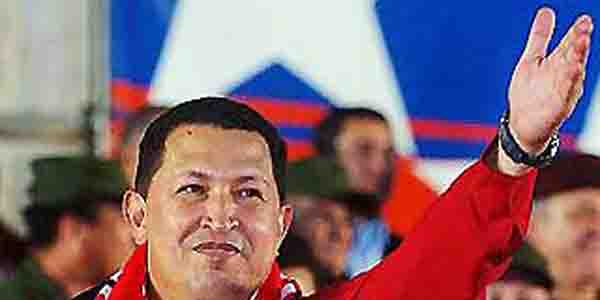
In the coming months China will lend Venezuela, which faces bankruptcy, ten billion dollars. These funds are part of a bilateral agreement. For China it’s a way to quench its energy needs, while the US continue the confrontation line with Venezuela.
Venezuela is under the threat of soverign default. In providing two five-billion dollar loans, China has become an important partner for the struggling country. The first part of the loan is the joint Chinese-Venezuelan Fund, and will be directed into major projects, CNBC reported. The agreement will be signed later this month. China extended the terms of the loan to five years, giving Venezuela more breathing room, as the terms are typically limited to three years.
The second part of the loan will be used in the oil industry. China will support investments in oil fields, intended to help Venezuelan oil company PDVSA increase production, the official said. 96 percent of Venezuela’s foreign exchange revenue comes from the export of raw materials.
The recent fall in oil prices is one contributor to Venezuela financial pressure. Interest rates on bonds have risen again. Venezuelan President Nicolás Maduro claimed the US is responsible for the fall in oil prices late last year. “Are you aware that an oil war rages?” said Maduro on Monday in a broadcast speech to businessmen. “This war has one goal – to destroy Russia.” In addition, it is also directed against Venezuela “to destroy our revolution and bring about a collapse of the economy.”
In March Obama called Venezuela a threat to the US national security. Domestically Venezuela is well under pressure. There were regularly scheduled demonstrations against the government of the country last year. In February 2015, a 14-year-old died in protests. Last week there were protests in Caracas again.
Venezuela is extremely lucrative for China’s investment interests. This is the country with the highest oil reserves in general, and China’s energy demand will increase with the increasing rural-urban migration in the coming years. China has already given Venezuela $45 billion in exchange for oil and fuel. With the new loans for Venezuela, China finds itself in opposition to the United States.
Today’s double dose of codswallop is the oil price.
Turmoil in Iraq is the predictable last chapter of the fiasco that began with a pack of lies about atomic bicycles from Dubya and Blair. Same old same old: US goes on silly half-baked venture, UK crawls up its backside, West gets bored, Islamists sit quietly waiting for laurel-resting….and then move back in.
But it’s the idea that crude oil prices have been “boosted” by the unsettled Iraqi situation that strikes me as complete poppycock. While Iraq has probably the world’s largest untapped oil reserves, it still has eleven producers ahead of it – and with the world careering towards recession aka slump, 9% of total output isn’t any kind of game changer….even if disruption were to be 100%…um, as it was when the Blair-Dubya Grand Alliance gave us all Schlockanawe.
No, the price has gone up because (1) Bourses overreact to everything – or ignore everything – depending on whether we’re talking QE or oil; and (2) the smart aka crooked money got in there first and directionalised the saps.
Remember, dark pool, algorithmic and/or speed-of-light trading (they overlap) is estimated to account for around 2 in 5 trades on the NYSE today. Or using another dimension of market concentration, just six firms on Wall Street account for 33% of all trades:
Markets are no longer there to raise money for dynamic businesses, they exist to make money for banking firms and their vaguely defined ‘clients’.
All these firms know the numbers. Their job is to suggest danger to the nervous, get them to buy, wait for the truth to dawn…and then buy back at a price lower than where they sold.
The practice contributes nothing to the real economy, but quite a lot to the unreal bonus.
If you want to see some really significant moves on this front, then look at Venezuela and Ukraine.
It’s another reason why Bourse-obsessed capitalism is on the skids.
The White House Fool has repeatedly declared erroneously and foolishly that it is “against international law” for Crimea to exercise self-determination. Self-determination, as used by Washington, is a propaganda term that serves Washington’s empire but is not permissible for real people to exercise.
On March 6 Obama telephoned Putin to tell the Russian President again that only Washington has the right to interfere in Ukraine and to insist against all logic that only the “government” in Kiev installed by the Washington-organized coup is “legitimate” and “democratic.”
In other words, the elected government in Crimea pushed by the people in Crimea to give them a vote on their future is “undemocratic” and “illegitimate,” but a non-elected government in Kiev imposed by Washington is the voice of self-determination and legitimacy.
Washington is so arrogant that it never occurs to the hubris-infected fools what the world thinks of Washington’s blatant hypocrisy.
Since the Clinton regime, Washington has done nothing but violate international law–Serbia, Kosovo, Afghanistan, Iraq, Libya, Syria, Iran, Pakistan, Yemen, Somalia, Honduras, Venezuela, Ecuador, Bolivia.
Does Russia have an Africa Command? No, but Washington does.
Is Russia surrounding the US with military bases? No, but Washington has used the NATO organization, whose purpose disappeared 23 years ago, to organize western, eastern, and southern Europe into an empire army with forward bases on Russia’s borders. Washington is determined to extend the boundaries of a North Atlantic Treaty Organization to Georgia in central Asia and to Ukraine on the Black Sea. Both Georgia and Ukraine are former constituent parts of both Russia and the Soviet Union.
Washington is doing the same thing to China and Iran. Washington is working to establish new air and naval bases in Philippines, South Korea, Vietnam, Thailand, Australia, with which to block the flow of oil and other resources into China. Iran is surrounded by some 40 US military bases and has US fleets standing off its coastline.
In Washington’s propaganda, this rank militarism is presented as “defending democracy.”
The Russian government continues to act as though Washington’s thrusts at Russia’s independence and strategic interests can be defused with good sense and good will. But Washington has neither.
Since the Clinton regime, Washington has been in the hands of a collection of ideologues who are convinced that the US is “the exceptional indispensable country” with the right to world hegemony. Everything that Washington has done in the 21st century is in pursuit of this goal.
Washington intends to break up the Russian Federation itself. Washington funnels huge sums of money into NGOs inside Russia that serve as Washington Fifth Columns and work hand-in-hand with Washington to discredit Russian free elections, to demonize Putin and the Russian government, to spread anti-Russian propaganda and agitation. It is amazing how many Russians actually believe the Western propaganda.
Washington is also working to isolate China with the Trans-Pacific-Partnership, but at this time is primarily focused on destabilizing and isolating Russia. Washington is desperate to break up the BRICS, the emerging organization of Brazil, Russia, India, China, and South Africa. With the largest countries and half of the world’s population, the BRICS organization is emerging as a political and economic power, especially with the organization’s plan to cease using the US dollar as reserve currency. Ringing Russia with US missile bases on Russia’s borders impairs Russian sovereignty and independence and, thus, weakens the BRICS as a countervailing power to Washington.
Many have been deceived by Washington’s propaganda. The world is slowly waking up, but is it in time?
The US media and much of Europe’s speak with one voice parroting Washington’s propaganda, demonizing Washington’s targets, and preparing insouciant Western populations for more war. The Western media, like Western governments, is devoid of integrity. Liars and whores rule.
Paul Craig Roberts is an economist and a nationally syndicated columnist for Creators Syndicate. He served as an Assistant Secretary of the Treasury in the Reagan Administration earning fame as the “Father of Reaganomics”. He is a former editor and columnist for the Wall Street Journal, among others. He has recently published How the Economy Was Lost: The War of the Worlds and is coauthor with Lawrence Stratton of The New Color Line and The Tyranny of Good Intentions.
Police outside Sheremetyevo international airport in Moscow
Hopes have risen that Edward Snowden may finally be able to leave Moscow, where he has been stranded in an airport for 14 days, after three Latin American countries offered the fugitive US intelligence leaker asylum.
Bolivia on Saturday became the third country to offer refuge to the former US National Security Agency (NSA) contractor, with President Evo Morales saying he was willing to take Snowden in “if he asks”.
The offer came not long after Venezuela’s leftist President Nicolas Maduro said he would grant the 30-year-old “humanitarian asylum” and Nicaraguan President Daniel Ortega said his country could offer a safe haven.
The flurry of offers arrived after a series of rejections from many of the 21 countries to which Snowden had applied to last week for refuge.
The WikiLeaks anti-secrecy website that has been supporting Snowden’s cause said he had recently applied to six additional countries that it refused to name.
But it was far from clear how exactly Snowden — hidden out of sight of reporters for the past two weeks — could reach another nation from the transit zone of Russia’s sprawling Sheremetyevo international airport.
He has been stripped of his passport by the US authorities and a refugee pass initially believed to have been offered to him by Ecuador has since been declared invalid.
“He has no passport and asylum can only be granted to a specific individual. I have grave doubts that this is now possible,” senior ruling party lawmaker Alexander Romanovich told Moscow Echo radio.
Sheremetyevo only handles commercial flights and Snowden cannot travel past passport control to another airport used by foreign dignitaries.
Even if he got on a commercial flight, the plane carrying him could be grounded — the fate suffered by the jet carrying Morales after several EU states denied it overflight rights over suspicions Snowden was onboard.
Analysts meanwhile said Moscow may be increasingly concerned about getting sucked into a diplomatic spat with Washington that it had never planned for and which it would rather avoid.
— Leftist Latin American leaders offer asylum —
Morales declared however that Bolivia has “no fear” of the United States and its European allies, and that he would be willing “to give asylum to the American, if he asks”.
The offer was echoed by Maduro, who visited Moscow at the start of the week for a gas summit during which he strongly hinted that Venezuela –long a diplomatic irritant for the United States — could welcome the opportunity to help Snowden out.
But he made his intentions absolutely clear in an address at an independence day event in Caracas.
“As head of state of the Bolivarian republic of Venezuela, I have decided to offer humanitarian asylum to the young Snowden … to protect this young man from the persecution launched by the most powerful empire in the world,” said Maduro said.
Nicaragua’s Daniel Ortega voiced a slightly more toned down message only minutes earlier.
“We are open, respectful of the right to asylum, and it is clear that if circumstances permit it, we would receive Snowden with pleasure and give him asylum here in Nicaragua,” Ortega said at a public event.
So far, only Nicaragua, of the three that have offered asylum, said it had received his formal request; that could mean a petition there is further along in the pipeline than elsewhere.
Ecuador had been seen as the American’s best hope when he arrived in Moscow from Hong Kong on June 23 after leaking secrets about the extent of the US data surveillance programme to the press.
But the leftist government in Quito has yet to consider his application.
— ‘Russia is not happy he is here’ —
Russian President Vladimir Putin has refused to extradite Snowden to the United States while still stressing that he would like to see him gone as soon as possible.
Analysts interpret the mixed message as a sign that Moscow feel like they are being drawn into a fracas with Washington at a time when it would rather avoid additional difficulties to the two sides’ strained ties.
“Russia is not happy that he is here. If it wanted to offer him asylum, this would have been done right away,” said Carnegie Moscow Centre analyst Maria Lipman.
She noted that Putin himself was a former KGB spy who cares deeply about the safety of state secrets.
Alexander Konovalov of the Institute of Strategic Assessments agreed that “there is nothing for us to gain from Snowden”.
Putin has denied ever questioning Snowden about the details of the US spy network and has even suggested that doing so was not worth the effort.
“Snowden’s asylum in Venezuela would be the best option,” said parliament’s foreign affairs committee chairman Alexei Pushkov.
“This country is in a sharp conflict with the United States,” Pushkov tweeted. “It will not get any worse.” – AFP
President Hugo Chavez put to rest any doubts about his masterful political touch in winning a third consecutive six-year term after a bitterly fought race against a youthful rival who has galvanized Venezuela’s opposition.
The state governor who lost Sunday’s presidential vote, Henrique Capriles, had accused the flamboyant incumbent of unfairly using Venezuela’s oil wealth to finance his campaign as well as flaunting his near-total control of state institutions.
Still, he accepted defeat as Chavez swept to a 10-point victory margin, the smallest yet for him a presidential race. This time, the former army paratroop commander won 55 percent of the vote against 45 percent for Capriles with more than 90 percent of the vote counted.
Chavez will now have a freer hand to push for an even bigger state role in the economy, as he pledged during the campaign, and to continue populist programs. He’s also likely to further limit dissent and deepen friendships with U.S. rivals.
Chavez spent heavily in the months before the vote, building public housing and bankrolling expanded social programs.
“I think he just cranked up the patronage machine and unleashed a spending orgy,” said Michael Shifter, president of the Washington-based Inter-American Dialogue think tank.
But Shifter also noted the affinity and gratefulness Venezuela’s poor feel for Chavez. “Despite his illness, I still think he retains a strong emotional connection with a lot of Venezuelans that I think were not prepared to vote against him.”
“They still think that he’s trying hard even if he’s not delivering what he promised, that he still has their best interests at heart,” Shifter said. “That’s the political skill that he has. He hasn’t lost that touch.”
Chavez spoke little during the campaign about his fight with cancer, which since June 2011 has included surgery to remove tumors from his pelvic region as well as chemotherapy and radiation treatment. He has said his most recent tests showed no sign of illness.
Tensions were high Sunday night as announcement of the results were delayed.
Finally, fireworks exploded over downtown Caracas amid a cacophony of horn-honking by elated Chavez supporters waving flags and jumping for joy outside the presidential palace.
“I can’t describe the relief and happiness I feel right now,” said Edgar Gonzalez, a 38-year-old construction worker.
He ran through crowds of Chavez supporters packing the streets around the presidential palace wearing a Venezuelan flag as a cape and yelling: “Oh, no! Chavez won’t go!”
“It’s time now to sweep away the squalid ones,” said another elated supporter, Ignacio Gonzalez, using a description of the opposition Chavez employed during campaigning.
“It’s time to get them out of governor’s and mayor’s offices. The next battle is in December,” when state and municipal elections will be held, added the 25-year-old student, who wore a red shirt that wedded the images of Chavez, Jesus Christ and South American independence hero Simon Bolivar.
Capriles posed the strongest challenge yet to Chavez, who won by a 27-point margin in 2006 and by 16 points when he was first elected in 1998.
“I will continue working to build one country,” said the wiry, 40-year-old grandson of Holocaust survivors who unified and energized the opposition while barnstorming across the country.
He said in his concession speech that he rejects the idea of two Venezuelas divided by ideology and class.
Capriles had vowed to address violent crime that has spun out of control, streamline a patronage-bloated bureaucracy and end rampant corruption, but his promises proved inadequate against Chavez’s charisma, well-oiled political machine and legacy of putting Venezuela’s poor first with generous social welfare programs.
Yet with a turnout of 81 percent, Chavez only got 551,902 more votes this time around than he did six years ago, while the opposition boosted its tally by 2.09 million. Chavez appeared to acknowledge the opposition’s growing clout.
“I extend from here my recognition of all who voted against us, recognition of their democratic weight,” he told thousands of cheering supporters from the balcony of the Miraflores presidential palace.
A Capriles victory would have brought a radical foreign policy shift including a halt to preferential oil deals with allies such as Cuba, along with a loosening of state economic controls and an increase in private investment.
Washington, which has often feuded with Chavez, declined to congratulate the president directly, but acknowledged the result.
“We congratulate the Venezuelan people for the high turnout and generally peaceful manner in which this election was carried out,” said State Department spokesman William Ostick.
“We believe that the views of the more than 6 million people who voted for the opposition should be taken into account going forward,” he added.
President Raul Castro of Cuba, which could have been badly hurt by a Chavez loss, was among Latin American leaders sending warm congratulations to the former paratrooper on his victory after nearly 14 years in office.
Chavez paid close attention to his military-like get-out-the-vote organization at the grass roots, stressing its importance at campaign rallies. The opposition said he unfairly plowed millions in state funds into the effort.
One pro-Chavez voter, private bodyguard Carlos Julio Silva, said that whatever his faults, Chavez deserved to win for spreading the nation’s oil wealth to the poor with free medical care, public housing and other government programs. The country has the world’s largest proven oil reserves.
“There is corruption, there’s plenty of bureaucracy, but the people have never had a leader who cared about this country,” Silva said after voting for Chavez in the Caracas slum of Petare. His daughter received an apartment from the state while the free medical care he gets included a recent operation to remove tissue that was clouding his vision.
First-time voter Brenda Aguirre, who is about to embark on cost-free legal studies at the Bolivarian University of Venezuela, was also willing to forgive “el comandante” for his shortcomings.
“Chavez isn’t to blame for the people who surround him,” she said.
Across town, where people from Aguirre’s neighborhood wait tables and sweep floors, Capriles told supporters not to feel defeated.
“We have planted many seeds across Venezuela and I know that these seeds are going to produce many trees,” he told them at his campaign headquarters.
At many polling places, voters began lining up hours before polls opened at dawn, some snaking for blocks in the baking Caribbean sun. Some shaded themselves with umbrellas. Vendors grilled meat and some people drank beer.
Chavez’s critics accused the president of inflaming divisions by labeling his opponents “fascists,” “Yankees” and “neo-Nazis,” and it’s likely hard for many of his opponents to stomach another six years of the loquacious and conflictive leader.
Some said before the vote that they’d consider leaving the country if Chavez won.
Gino Caso, an auto mechanic, said Chavez is power-hungry and out of touch with problems such as crime. He said his son had been robbed, as had neighboring shops.
“I don’t know what planet he lives on,” Caso said, gesturing with hands blackened with grease. “He wants to be like Fidel Castro – end up with everything, take control of the country.” – AP
This website uses cookies to improve your experience. We'll assume you're ok with this, but you can opt-out if you wish. Cookie settingsACCEPT
Privacy & Cookies Policy
Privacy Overview
This website uses cookies to improve your experience while you navigate through the website. Out of these cookies, the cookies that are categorized as necessary are stored on your browser as they are essential for the working of basic functionalities of the website. We also use third-party cookies that help us analyze and understand how you use this website. These cookies will be stored in your browser only with your consent. You also have the option to opt-out of these cookies. But opting out of some of these cookies may have an effect on your browsing experience.
Necessary cookies are absolutely essential for the website to function properly. This category only includes cookies that ensures basic functionalities and security features of the website. These cookies do not store any personal information.
Any cookies that may not be particularly necessary for the website to function and is used specifically to collect user personal data via analytics, ads, other embedded contents are termed as non-necessary cookies. It is mandatory to procure user consent prior to running these cookies on your website.