India summons top US diplomat about spying

India summoned the top diplomat from the US for the third time about spying.

A new document supplied by Edward Snowden and made public by The Washington Post on Monday showed that Prime Minister Narendra Modi’s Bharatiya Janata Party was among authorised targets for the NSA in 2010 while it was India’s main opposition.

India has complained to the United States on two other occasions, in July and November 2013, over other revelations — including the disclosure that its UN mission in New York and its Washington embassy were snooped on.

“What we have said is that we expect a response and an assurance that this won’t happen again,” a foreign ministry source told AFP on condition of anonymity.

Both times Washington has said it would look into what it can share about its espionage programme but failed to offer any details, the source said.

“We have said that we would like a response, which we haven’t received,” he said.

The new incident comes ahead of a visit to New Delhi by US Secretary of State John Kerry, who is expected to meet members of Modi’s government in the next few months.

Modi, whose party swept to power in May with the first majority in 30 years, will travel to the United States in September for the UN General Assembly and his first meeting with President Barack Obama.

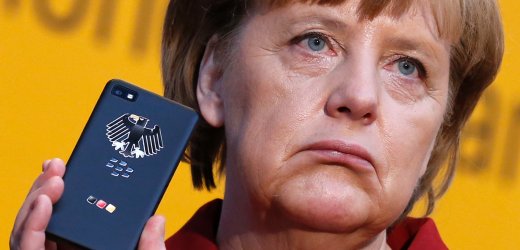
Merkel: US spying has shattered allies’ trust

German Chanellor Angela  Merkel
German Chanellor Angela Merkel

by John-Thor Dahlburg and Geir Mouson, Associated Press

European leaders united in anger Thursday as they attended a summit overshadowed by reports of widespread U.S. spying on its allies -allegations German Chancellor Angela Merkel said had shattered trust in the Obama administration and undermined the crucial trans-Atlantic relationship.

The latest revelations that the U.S. National Security Agency swept up more than 70 million phone records in France and may have tapped Merkel’s own cellphone brought denunciations from the French and German governments.

Merkel’s unusually stern remarks as she arrived at the European Union gathering indicated she wasn’t placated by a phone conversation she had Wednesday with President Barack Obama, or his personal assurances that the U.S. is not listening in on her calls now.

“We need trust among allies and partners,” Merkel told reporters in Brussels. “Such trust now has to be built anew. This is what we have to think about.”

“The United States of America and Europe face common challenges. We are allies,” the German leader said. “But such an alliance can only be built on trust. That’s why I repeat again: spying among friends, that cannot be.”

The White House may soon face other irked heads of state and government. The British newspaper The Guardian said Thursday it obtained a confidential memo suggesting the NSA was able to monitor 35 world leaders’ communications in 2006. The memo said the NSA encouraged senior officials at the White House, Pentagon and other agencies to share their contacts so the spy agency could add foreign leaders’ phone numbers to its surveillance systems, the report said.

The Guardian did not identify who reportedly was eavesdropped on, but said the memo termed the payoff very meager: “Little reportable intelligence” was obtained, it said.

Other European leaders arriving for the 28-nation meeting echoed Merkel’s displeasure. Swedish Prime Minister Fredrik Reinfeldt called it “completely unacceptable” for a country to eavesdrop on an allied leader.

If reports that Merkel’s cellphone had been tapped are true, “it is exceptionally serious,” Dutch Prime Minister Mark Rutte told national broadcaster NOS.

“We want the truth,” Italian Premier Enrico Letta told reporters. “It is not in the least bit conceivable that activity of this type could be acceptable.”

Echoing Merkel, Austria’s foreign minister, Michael Spindelegger, said, “We need to re-establish with the U.S. a relationship of trust, which has certainly suffered from this.”

France, which also vocally objected to allies spying on each other, asked that the issue of reinforcing Europeans’ privacy in the digital age be added to the agenda of the two-day summit. Before official proceedings got underway, Merkel held a brief one-on-one with French President Francois Hollande, and discussed the spying controversy.

The Europeans’ statements and actions indicated that they hadn’t been satisfied with assurances from Washington. On Wednesday, White House spokesman Jay Carney said Obama personally assured Merkel that her phone is not being listened to now and won’t be in the future.

“I think we are all outraged, across party lines,” Wolfgang Bosbach, a prominent German lawmaker from Merkel’s party, told Deutschlandfunk radio. “And that also goes for the response that the chancellor’s cellphone is not being monitored – because this sentence says nothing about whether the chancellor was monitored in the past.”

“This cannot be justified from any point of view by the fight against international terrorism or by averting danger,” Bosbach said.

Asked Thursday whether the Americans had monitored Merkel’s previous communications, White House spokesman Carney wouldn’t rule it out.

“We are not going to comment publicly on every specified alleged intelligence activity,” he said.

But while the White House was staying publicly mum, Carney said the Obama administration was discussing Germany’s concerns “through diplomatic channels at the highest level,” as it was with other U.S. allies worried about the alleged spying.

In the past, much of the official outrage in Europe about revelations of U.S. communications intercepts leaked by former NSA contract worker Edward Snowden seemed designed for internal political consumption in countries that readily acknowledge conducting major spying operations themselves. But there has been a new discernible vein of anger in Europe as the scale of the NSA’s reported operations became known, as well as the possible targeting of a prominent leader like Merkel, presumably for inside political or economic information.

“Nobody in Germany will be able to say any longer that NSA surveillance – which is apparently happening worldwide and millions of times – is serving solely intelligence-gathering or defense against Islamic terror or weapons proliferation,” said Hans-Christian Strobele, a member of the German parliamentary oversight committee.

“Because, if you tap the cellphone or the phone connection of the presidents of France or Brazil, or the cellphone of the chancellor, then this is no longer about collecting intelligence about international terrorism, but then that is about competition, about getting advantages in this competition and winning. That’s why today is a watershed moment.”

Martin Schulz, president of the European Parliament, said Europe’s undermined confidence in the U.S. meant it should suspend negotiations for a two-way free-trade agreement that would account for almost half of the global economy. The Americans, Schulz said, now must prove they can be trusted.

“Let’s be honest. If we go to the negotiations and we have the feeling those people with whom we negotiate know everything that we want to deal with in advance, how can we trust each other?” Schulz said.

European Union Commission President Jose Manuel Barroso said for many Europeans, eavesdropping on their phone calls or reading their emails is particularly objectionable because it raises the specter of totalitarian regimes of the recent past.

“At least in Europe, we consider the right to privacy a fundamental right and it is a very serious matter. We cannot, let’s say, pretend it is just something accessory,” Barroso told a presummit news conference.

Referring to the East German Communist secret police, the feared Stasi, Barroso said, “to speak about Chancellor Merkel, in Germany there was a part of Germany where there was a political police that was spying on people’s lives every day. So we know very recently what totalitarianism means. And we know very well what comes, what happens when the state uses powers that intrude in people’s lives. So it is a very important issue, not only for Germany but for Europe in general.”

In Berlin, the German Foreign Ministry summoned the U.S. ambassador to stress how seriously it takes the reported spying on Merkel. Germany’s defense minister said his country and Europe can’t return “to business as usual” with Washington, given the number of reports that the United States has eavesdropped on allied nations.

“The Americans are and remain our best friends, but this is absolutely not right,” Thomas de Maiziere, who served as Merkel’s chief of staff, told ARD television. “I have reckoned for years with my cellphone being monitored, but I wasn’t reckoning with the Americans.”

A German parliamentary committee that oversees the country’s intelligence service met to discuss the spying allegations. Its head, Thomas Oppermann, recalled previous reports to the panel that U.S. authorities had denied violating German interests, and said, “we were apparently deceived by the American side.” – AP

US spying causes new anger in France, Mexico

LogoLeMondeby Marianne Barriaux and Michael Mainville BARRIAUX, Michael MAINVILLE

The United States has become embroiled in a new row over its controversial spying programme as allies France and Mexico condemned revelations Washington tapped millions of phonecalls and hacked into leaders’ emails.

French President Francois Hollande on Monday expressed his “deep disapproval” of reports of US spying in a phone call with President Barack Obama.

France’s Le Monde newspaper reported that the US National Security Agency had secretly monitored 70.3 million phone communications in France over 30 days from December 10, 2012, to January 8 this year.

The allegations, the latest from leaks by former NSA contractor Edward Snowden, also marred a visit to Paris by US Secretary of State John Kerry, where he discussed moves to try to end the war in Syria.

At the same time, German weekly Der Spiegel reported the NSA had also hacked into former Mexican president Felipe Calderon’s email account.

Calderon, on Twitter, described the revelations as an “affront to the institutions of the country, given that it took place when I was president”.

Hollande told Obama that the alleged practices were “unacceptable between friends and allies because they infringe on the privacy of French citizens”, the French leader’s office said in a statement.

The allegations come on top of previous revelations by Snowden — who has sought safety in Russia as US authorities pursue him for leaking classified information — that the United States had a vast, secret programme called PRISM to monitor Internet users.

French prosecutors are already investigating the programme, and French Prime Minister Jean-Marc Ayrault said he was “deeply shocked” by the new revelations.

“It’s incredible that an allied country like the United States at this point goes as far as spying on private communications that have no strategic justification, no justification on the basis of national defence,” he told journalists.

French Foreign Minister Laurent Fabius, on a visit to Luxembourg, said US ambassador Charles Rivkin was summoned to his ministry early Monday.

“These kinds of practices between partners that harm privacy are totally unacceptable,” he told reporters, adding France needed assurances that the United States was no longer monitoring its communications.

His comments were relayed to the US ambassador during the meeting, a ministry spokesman said — the second time in less than four months that America’s top representative in France has been hauled in over revelations about US snooping.

Kerry refused to comment on the specific accusations, but noted that Washington was reviewing its intelligence gathering operations following protests from allied governments.

He also sought to defend the US position.

“Protecting the security of our citizens in today’s world is a very complicated, very challenging task… because there are lots of people out there seeking to do harm to other people,” Kerry said at a press conference after meeting Arab League officials.

“Lots of countries are engaged in the activity of trying to protect their citizens in the world,” he said. “Our goal is always to try to find the right balance between protecting the privacy and security of our citizens.”

According to Le Monde, the spy agency automatically picked up communications from certain phone numbers in France and recorded certain text messages under a programme code-named “US-985D”.

The French daily said the documents gave grounds to believe that the NSA targeted not only people suspected of being involved in terrorism but also high-profile individuals in business and politics.

Hollande’s office said the French president and Obama had agreed “to work together to determine the facts and the exact scope of surveillance activities” revealed by Le Monde.

Der Spiegel also revealed that US agents had hacked into the Mexican presidency’s network, gaining access to Calderon’s account.

According to the report, the NSA said this contained “diplomatic, economic and leadership communications which continue to provide insight into Mexico’s political system and internal stability”.

The agency reportedly said the president’s office was now “a lucrative source”.

Mexican authorities said they would be seeking answers from US officials “as soon as possible”.

“This practice is unacceptable, illegitimate and contrary to Mexican law and international law,” the foreign ministry said.

Glenn Greenwald, an American journalist now living in Brazil who has broken many of the recent stories about secret US surveillance programmes, says Washington has spied on all Latin American countries.

Speaking to a press association in Miami, Greenwald said he would report about each case in the region and warned that more spying within the United States would also be revealed.

He also said the disclosures published by Le Monde Monday had been in the hands of the French daily for some time.

This is not the first time there have been reports that France and Mexico have been targeted in relation to NSA spying allegations since information leaked by Snowden first emerged in June.

Mexico’s current President Enrique Pena Nieto has already complained to Obama over reports US spies have gone through his emails.

And Der Spiegel reported last month that in 2010 the NSA monitored the internal computer network of France’s diplomats and that of the foreign ministry.

But France itself has also been accused of spying. Le Monde reported in recent months that intelligence services intercepted all communications in the country, stocking telephone and computer data for years –accusations denied by the government. – AFP

Britain faces furore over Snowden-linked detention

Glenn Greenwald
Glenn Greenwald

British authorities faced increasing pressure Monday to explain why they used anti-terror laws to detain the partner of a journalist who worked with US intelligence leaker Edward Snowden.

David Miranda — the Brazilian partner of Glenn Greenwald, an American journalist with Britain’s Guardian newspaper — was held for almost nine hours on Sunday as he passed through London’s Heathrow Airport on his way to Rio de Janeiro from Berlin.

A furious Greenwald said British authorities had “zero suspicion” that Miranda was involved in terrorism and instead spent hours questioning him about the Guardian’s reporting on the activities of the US National Security Agency, which has enraged Washington.

“This was obviously designed to send a message of intimidation to those of us working journalistically on reporting on the NSA and its British counterpart, the GCHQ (Government Communications Headquarters),” Greenwald wrote in the Guardian.

“They completely abused their own terrorism law for reasons having nothing whatsoever to do with terrorism.”

Miranda, 28, often assists Greenwald with his work, the Guardian said.

He is not an employee of the newspaper but it paid for his flights. He stayed in Berlin with Laura Poitras, a US filmmaker who has been working with the Guardian.

Miranda said he had been questioned by six agents at Heathrow who confiscated his electronic equipment.

“The minute I stepped out of the plane they took me away to a small room with four chairs and a machine for taking fingerprints,” he told the Guardian.

“They asked questions about my entire life, about everything. They took my computer, video game, mobile phone, my memory card.”

A spokesman for Prime Minister David Cameron said the British government takes “all necessary steps to protect the public from individuals who pose a threat to national security”.

“But it is for the police to decide when it is necessary and proportionate to use these powers,” the spokesman said.

London’s Metropolitan Police on Monday insisted their actions were “reviewed throughout to ensure the examination was both necessary and proportionate” and that its use of anti-terror powers was “legally and procedurally sound”.

The force also dismissed reports that Miranda was denied legal representation and said that a solicitor was present.

But authorities were under increasing pressure to explain why Miranda was held, with Brazil expressing “grave concern” that one of its citizens had apparently been “held incommunicado”.

Britain’s opposition Labour party called for an urgent investigation into whether anti-terror laws had been misused.

“Any suggestion that terror powers are being misused must be investigated and clarified urgently,” said Yvette Cooper, Labour’s home affairs spokeswoman.

Brazil’s foreign ministry said its embassy in London had contacted British officials prior to Miranda’s release and that Brazil would also be seeking an explanation.

“This measure is without justification since it involves an individual against whom there are no charges that can justify the use of that legislation,” the ministry said in a statement.

— ‘Revenge tactics’ —

Greenwald, a well-known journalist in the United States, analysed and published information on documents released by former US security contractor Snowden revealing huge electronic surveillance operations by the NSA.

The United States denied it asked Britain to detain Miranda.

“There was a heads-up that was provided by the British government, so this is something we had an indication was likely to occur,” White House deputy spokesman Josh Earnest told reporters.

“But it’s not something that we requested, and it’s something that was done specifically by the British law enforcement officials.”

Snowden was granted asylum in Russia after spending five weeks in limbo at a Moscow airport attempting to avoid extradition to the United States, where he is wanted on espionage charges.

Arriving to meet Miranda at Rio’s airport, meanwhile, Greenwald said he was now even more determined to continue reporting on the intelligence leaks — with a new focus on Britain.

“Now I will be more radical in my reporting,” he warned. “This was a clear attempt at intimidation.”

Rights group Amnesty International said Miranda was “clearly a victim of unwarranted revenge tactics”, while Reporters Without Borders said it was “outraged” by his detention. – AFP

US-Russia ties damaged, not wrecked by Snowden row

Putin and Obama
Putin and Obama

by Olga Nedbaeva, Victoria Loguinova-Yakovleva

Russia’s awarding of asylum to US leaker Edward Snowden dealt a new blow to already bruised relations between Moscow and Washington but it remains in their interest to prevent the row from erupting into a Cold-War style crisis, analysts said.

Washington immediately rebuked Moscow for granting one year asylum to a man the United States wants to put on trial for leaking details of a vast US intelligence programme.

The White House said it was “extremely disappointed” and, perhaps more significantly, said the decision had called into question the need for a planned bilateral summit between Vladimir Putin and Barack Obama in September.

The dispute could barely come at a worse time in Russia-US relations with Washington deeply critical of rights violations under Putin’s rule and the two sides at odds over the conflict in Syria.

Yet in over two decades since the collapse of the Soviet Union, Russia and the United States already have a chequered history of cyclical ups and downs in relations and the blow of the Snowden row may not be terminal, analysts said.

“A cancellation of the meeting between Obama and Putin would be evidence of a serious complication in relations,” said Maria Lipman of the Carnegie Centre in Moscow.

“But it would be wrong to say that relations are collapsing,” she added, noting that one of Obama’s priorities remained agreeing more arms cuts with Russia.

“There is a risk that Obama could lose interest in relations with Russia but even in this case it is not fatal,” she told AFP.

Putin has tried to distance himself from the entire Snowden affair, declaring on July 17 that “relations between states are much more important than squabbles surrounding the work of security services.”

Minutes after the asylum decision was made public on Thursday, Putin’s foreign policy advisor Yury Ushakov rushed to describe the Snowden issue as “rather insignificant” and arguing it should not affect relations.

The Kremlin had repeatedly argued that it did not invite Snowden to come to Russia and his arrival on June 23 at Moscow’s Sheremetyevo airport from Hong Kong was completely unexpected.

“Russia did not need the Snowden problem but it happened,” said Valery Garbuzov of the US-Canada Institute in Moscow.

“The Russian leadership had to react — it would have been inhumane to hand him over but giving asylum also complicates relations,” he said.

In a strong sign that contacts have not been ruptured, US ambassador to Moscow Michael McFaul met Ushakov Friday for talks on issues including the “new status” of Snowden as well as Syria and missile defence, the American embassy said.

Obama is due to visit Russia in any case in early September to attend the G20 summit in Saint Petersburg.

But he had been expected to come to Moscow for a separate one-on-one meeting with Putin which would be the first bilateral summit between the two men since the Russian strongman returned to the Kremlin for a third term in May 2012.

Until now, they have only held brief meetings on the sidelines of international summits.

Fyodor Lukyanov, editor of the journal Russia in Global Affairs, said it was still possible that Obama could undertake the Moscow visit although he would risk domestic criticism.

“Putin has tried to distance himself from the Snowden affair and has always emphasised that Russia is a victim of circumstances,” he said.

He said that any “retaliation from the United States will only have symbolic character”.

Republican US Senator John McCain had said after the granting of asylum to Snowden that it was time to “fundamentally rethink our relationship” and take tough action against Moscow.

But Lipman said that Putin’s statements on the Snowden affair had shown that the Kremlin chief still had an interest in preserving relations with Russia.

“Other solutions were sought, including sending him to another country. Putin did not strive for Snowden to come to Russia,” she added. – AFP

Russia allows Snowden ‘to leave airport’

Police outside Sheremetyevo international airport in Moscow

US intelligence leaker Edward Snowden was set Wednesday to leave the Moscow airport transit zone where he has been holed up for the last month after being provided with a document allowing him to officially enter Russia, reports said.

The state RIA Novosti news agency said the document confirms that his application for asylum in Russia is being considered and allows him to cross into Russia proper so long as border guards do not object, it said.

The news agency added that the document was initially given to the lawyer helping him, Anatoly Kucherena, who was now at Sheremetyevo airport and meeting Snowden in a secure zone.

A large crowd of media was already outside a door marked “staff only” on the lower floor of Terminal E at Sheremetyevo, with police and security guards keeping tight control, an AFP correspondent at the scene said.

The Interfax news agency said Snowden, who is wanted by the US on espionage charges for revealing a vast spying programme, could leave the airport in the “next hours”.

“The American is currently getting ready to leave. He is being provided with new clothes. The document will be given to him by Kucherena,” Interfax said.

RIA Novosti cited a source within the Russian border guards service as saying he would be allowed to leave the airport as soon as he presents the document.

He would not cross the border with regular passengers but through a special channel, the Interfax news agency reported.

The migration service declined to comment and there was no official confirmation that he was preparing to cross into Russian territory.

Snowden earlier this month applied for asylum in Russia, a process that could take up to three months.

Kucherena has said Snowden may even apply for Russian citizenship and is interested in looking for work in Russia.

Hosting Snowden risks further straining relations between Russia and the United States. But Russia has refused to hand Snowden over, saying it has no extradition treaty with Washington.

Snowden arrived in Moscow from Hong Kong on June 23.

The former contractor for the National Security Agency was checked-in to fly on to Cuba the next day but he never boarded the plane to Havana.

He ended up marooned at the Moscow airport after the United States revoked his passport.

With the help of Sarah Harrison, an employee of anti-secrecy group WikiLeaks, the 30-year-old applied for asylum in 27 countries but most of the nations denied him a safe haven under pressure from Washington.

Three countries in Latin America known for their anti-US stance –Nicaragua, Bolivia and Venezuela — have said they would be willing to give refuge to Snowden.

But there are doubts about whether the American will be able to travel on to Latin American after Bolivian President Evo Morales’s plane flying from Moscow earlier this month was forced to land in Vienna and searched amid suspicions Snowden was on board.

Breaking his silence for the first time since arriving from Hong Kong, Snowden on July 12 summoned several rights activists and Kremlin-friendly lawyers for a dramatic, closed-door meeting at Sheremetyevo airport.

He told them he would apply for asylum in Russia and asked them to petition President Vladimir Putin on his behalf.

On July 16, Snowden applied for temporary asylum with the help of Kucherena, a pro-Kremlin lawyer who participated in the airport meeting.

The Kremlin has sought to keep Snowden’s case at arm’s length but observers said the activists’ meeting at the state-controlled airport would have never been possible without government involvement. – AFP

Snowden could sink Obama-Putin summit

It's about Snowden
It’s about Snowden

When the Obama administration discusses matters of sensitive diplomacy, it isn’t always a model of clarity.

But this week reporters have struggled to get a direct answer to what would seem to be a simple question: Is President Barack Obama still planning to attend a summit meeting with Russian President Vladimir Putin in Moscow in early September?

What’s become increasingly evident is the planned summit meeting is now entangled in the delicate negotiations between Messrs. Obama and Putin over the fate of former NSA contractor Edward Snowden.

Let’s back up to mid-June.

Mr. Obama was in Northern Ireland, meeting with various counterparts, including Mr. Putin. The two men held a private session, at which they agreed to take part in a summit meeting in Moscow prior to a separate Group of Twenty meeting in St. Petersburg, Russia.

Ben Rhodes, deputy national security adviser for strategic communications, said in a press briefing at the time: “So we’ll be going to Moscow before we go to St. Petersburg for the G-20.”

But the following week, Mr. Snowden left his hiding place in Hong Kong and showed up in Russia. Since then, the Obama administration has been imploring Russia to return Mr. Snowden to the U.S. to face criminal charges. So far, Mr. Putin hasn’t complied.

Now the summit may be a casualty of the Snowden negotiations.

In his daily briefings this week, White House Press Secretary Jay Carney has been giving careful answers to questions about whether the Obama-Putin summit is still on.

On Wednesday, he was asked if Russia’s handling of the Snowden case has any bearing on Mr. Obama’s decision to attend the scheduled summit meeting with Mr. Putin.

Mr. Carney replied that “the president intends to travel to Russia for the G20 Summit. And I have no further announcements to make beyond what we’ve said in the past about the President’s travel to Russia in the fall.”

Can he definitively say whether Mr. Obama will go to Moscow?

“I can say that the president intends to travel to Russia for the G20 Summit. I don’t have anything to add to what we’ve said in the past about that trip,” Mr. Carney said.

Later in the briefing, another reporter asked him to clarify that answer.

Mr. Carney replied that he “might have been deliberately vague, so I’m not sure I can clarify.”

He went on to say that “I have no further announcements on our travel to Russia. The President intends to go to Russia in September.”

“But you won’t say Moscow?” the reporter said.

“I just have nothing else to say on it,” Mr. Carney said.

All this seems to leave open the possibility that Mr. Obama might call off the summit. In any case, the White House statements may be a signal to Moscow that Mr. Snowden’s status and the summit’s future are now linked, one foreign policy expert said.

“I do think it is a signal,” said Heather Conley, director of the Europe Program at the Center for Strategic & International Studies.

The White House, she said, is “having to rethink [the Moscow summit] right now. This is going to be a very fluid situation.” – WSJ

NSA is more than just a spy network, it’s global fascism

by Patrick Henningsen

Despite the size and scope of Edward Snowden’s NSA whistleblowing, there’s little sign of Washington DC changing its practices, and even less of an indication that any of its European allies will actually hold it to account.

Germany Flip-Flops

Germany’s change of direction on this issue reveals a lot about the scale of the problem. Angela Merkel’s initial public response seemed to be that of outrage. “We are no longer in the cold war,” said Angela Merkel’s spokesman, Steffen Seibert. “If it is confirmed that diplomatic representations of the European Union and individual European countries have been spied upon, we will clearly say that bugging friends is unacceptable”(Guardian July 1, 2013).

Merkel’s public façade didn’t hold up for long after Snowden revealed in Der Spiegel magazine only days later that the US and Germany were in fact partnering in the global spy network. “They are in bed with the Germans, just like with most other Western states”, the German magazine quotes Snowden as saying, adding that the NSA has a Foreign Affairs Directorate which is responsible for cooperation with other countries (RT July 8, 2013). The Der Spiegel report also indicated how German Federal Intelligence Service, the Bundesnachrichtendienst (BND) and NSA work together.

The embarrassment of this Snowden bombshell seemed to force Germany down a notch, with Merkel opting for a new policy of appeasement instead. So was the initial rift between the US and Germany mere political theatre?

Merkel told Die Zeit that there was “a need to discuss the balance between privacy and security, but protection against terrorism was not possible without the option of electronic surveillance”. She then added, “(I want) the necessary discussions with the United States to be conducted in the spirit which, despite the many justified questions, never forgets that America has been our most loyal ally over the decades and still is” (Reuters July 10, 2013).

But it’s Merkel’s last statement which indicates that she may be just as out of touch with public opinion as the culture of denial which still dominates Washington DC. “For me, there is no comparison at all between the state security (Stasi) of the GDR and the work of intelligence services in democratic states,”Merkel told Die Zeit (Reuters July 10, 2013). Incredible.

No real accountability

Putting the overall theme of government abuse of power into perspective, this week provided a solid example of what should happen in an advanced civilized democracy. Luxembourg’s long-serving Prime Minister Jean-Claude Juncker announced his resignation this week over a spying scandal involving illegal phone-taps, alongside a number other highly corrupt activities.

In normal times, what happened in Luxembourg should also happen in other countries like the US, or Great Britain – but these are far from normal times. What passes for normal in this bizarre epoch is anyone’s guess, and the same goes for what is deemed to be ‘legal’, especially in the United States.

Snowden’s revelations should have been a watershed moment, but instead in 2013, there appears to be no parliamentary controls to regulate the practice of warrantless digital surveillance and data theft on the part of government agencies, and even less chance of justice in the courts, where adjudicators have been rendered impotent to enforce the law which have been buried under an avalanche of emergency war-time edicts and executive orders.

Well before the Snowden affair this year, Germany effectively cleared the legal path for one of the corporations within the NSA collective. Through the use of administrative courts and the EU, the Administrative Court of Schleswig, Germany upheld two decisions on February 14th, 2013 which ruled that German data protection laws do not apply to data processing by Facebook (file numbers 8 B 60/12 and 8 B 61/1).These controversial judicial procedure were initiated by Facebook Inc. (USA) and by Facebook Ltd. (Ireland, EU), and reversed a previous order by the Independent State Center for Data Protection of Schleswig-Holstein (ULD) which had ruled to allow users to sign in on Facebook using a pseudonym and to unblock those user-accounts that had been blocked due to the users not using their real name and personal data. At the time this was seen as a victory for Facebook the corporation – when in fact it was really a victory for the NSA – who harvests its data from Facebook.

NSA and GCHQ: A Joint Venture

Based on these latest Snowden leaks, we’ve learned more about the true nature of America’s NSA and Britain’s GCHQ partnership in this international spy network, sharing their data and communications. Through the UK Government’s Communications Headquarters known as TEMPORA, the British agency is able to tap over 200 fiber optic cables landing in the UK, saving everything – up to 27 petabytes a day, which are then parsed out to 300 GCHQ analysts and 250 NSA colleagues who then sift through it.

Over a decade of Patriot Acts, FISA laws and Wikileaks cables has left Americans and Europeans alike in a precarious state akin to Stockholm Syndrome, where their love of digital communications almost trumps their concerns for privacy. This same ambiguity has been echoed by Obama and Merkel, who both claim that protection against terrorism is not possible without the option of electronic surveillance. But the narrative which was originally framed around Washington’s invasion of its citizens’ privacy has since gone international. It’s now about governments partnering with each other – and with corporations, in the largest global digital dragnet imaginable.

The extent of the US National Security Agency (NSA) overseas spying in Europe has stunned the European public for sure, and appears to have rattled the political classes in Germany and Brussels – but only for now.

According to Edward Snowden’s revelations in the German magazine Der Spiegel last week, the NSA snoops through approximately 20-60 million German phone connections, and 10 million internet data sets a day. According to the Snowden report, all in all, the NSA combs through around half a billion German phone calls, emails and text messages on a monthly basis.

To add insult to injury, it’s been said the US intelligence regards Germany as a “third class partner”, on par with the likes of China and Iraq, making them fair game for NSA targeting. It’s not just Berlin, as the NSA are also said to have bugged EU diplomatic offices and gained access to EU internal computer networks.

So where is the crisis of international diplomacy between the US and Europe? Under normal circumstances, this might morph into a major diplomatic crisis pitting the EU members on one side and the US on the other – but alas, these are not really normal times. Germany and the EU came out swinging, well, sort of.

President of the European Parliament, Martin Schulz hit out immediately stating:

“If the allegations prove to be true, it would be an extremely serious matter which will have a severe impact on EU-US relations”.

Brussels immediately passed a non-binding resolution, which said that unless the US provided full disclosure about its email and communications data, then two EU-US transatlantic information-sharing deals could be revoked. Those deals are the Terrorist Finance Tracking Program (TFTP) and Passenger Name Records (PNR). Both were rammed through the EU Parliament during the aftermath of the September 11, 2001 attacks. It seemed like the right thing to do at the time. It gives the US Treasury carte blanche on all European stored data on international financial transfers, and gives US Homeland Security carte blanche on all passenger check-ins and ticket bookings on flights.

Few believe that the EU will actually make good on their threats, seeing the initial reaction as a mere face-saving exercise, leading to no real action by MEPs in Brussels.

Global Data Industry: A Digital Cartel

The corporate aspect should not be underrated in terms of its central role in the international digital data trade. Edward Snowden’s PRISM revelations of government controlled NSA wiretapping and data theft are nothing new, as former CIA analyst Russell Tice prove almost a decade ago in 2005 by showing that the NSA were engaged in unlawful and unconstitutional wiretaps on American citizens. But the NSA cannot operate without the partnership of these companies – all of whom have offices and operational hubs in most foreign markets.

Herein resides the key aspect in all of this – that in order for agencies like the NSA and GCHQ to get easy access to all of our digital communications and data, they still need the cooperation of corporations to do it. In the US, it’s now known what role major ISPs and mobile carriers like Verizon and AT&T play in this equation within US borders, including the existence of NSA-controlled SG3 collection rooms embedded within the companies facilities. Shocking enough, but not nearly as shocking if you consider the role of transnational corporations in enabling the NSA access to your digital threads.

Internationally, citizens have already signed over most of their privacy simply by using the digital services of US multinationals like Google, Facebook, Apple, Microsoft, Skype, Yahoo and others. All of these corporation operate within a ‘profit-first’ ethical vacuum where, in many cases, they are actually charging the NSA for the privilege of consuming their customers’ communications and data. According to the recent Snowden leaks, the level of collusion between Microsoft Corp and the NSA is astonishing, where Microsoft allows the NSA to skirt encryption protocols on Outlook, Skype video and cloud services, and where data captured by the NSA is routinely passed on to both the FBI and the CIA (Guardian July 12, 2013).

The horrible irony here is too obvious to ignore: the US government, through its NSA, is giving away taxpayer dollars so these corporations can profit from handing over all of your personal communications and data.

Such an unholy alliance between partnering governments and transnational corporations could be defined as fascism, but the global nature of this operation might require a new term to define what means as a global phenomenon.

Amidst the international Snowden media circus, it’s important not to forget that what has enabled agencies like the NSA and GCHQ to act with impunity, is the fact that both these governments have excelled in capitalising on a post-September 11th paranoia that has hijacked the national consciousness in both the US and the UK. The entire basis upon which their relentless war-time remit has been erected can be described in three words: “War on Terror”.

henningsen_patrickIt’s already clear to the global citizenry that the US federal government and its NSA are out of control, and should be reined in as soon as possible in order to preserve any remaining moral standing for a country which has exhausted nearly all of its goodwill internationally – as well as domestically.

Judging by Washington’s stoic and unapologetic stance thus far, goodwill doesn’t seem to be a high priority yet. Until the problem is properly addressed, there will remain a gaping hole of moral leadership in the international community.

What political leaders are slow the realize is that when the goodwill has been exhausted, so has the trust, and that’s a very slippery slope indeed.

Patrick Henningsen is a writer, investigative journalist, and filmmaker and founder of the news website 21stCentury Wire.com.

This piece originally appeared on RT.com

Snowden’s hopes rise on asylum offers

Police outside Sheremetyevo international airport in Moscow

Hopes have risen that Edward Snowden may finally be able to leave Moscow, where he has been stranded in an airport for 14 days, after three Latin American countries offered the fugitive US intelligence leaker asylum.

Bolivia on Saturday became the third country to offer refuge to the former US National Security Agency (NSA) contractor, with President Evo Morales saying he was willing to take Snowden in “if he asks”.

The offer came not long after Venezuela’s leftist President Nicolas Maduro said he would grant the 30-year-old “humanitarian asylum” and Nicaraguan President Daniel Ortega said his country could offer a safe haven.

The flurry of offers arrived after a series of rejections from many of the 21 countries to which Snowden had applied to last week for refuge.

The WikiLeaks anti-secrecy website that has been supporting Snowden’s cause said he had recently applied to six additional countries that it refused to name.

But it was far from clear how exactly Snowden — hidden out of sight of reporters for the past two weeks — could reach another nation from the transit zone of Russia’s sprawling Sheremetyevo international airport.

He has been stripped of his passport by the US authorities and a refugee pass initially believed to have been offered to him by Ecuador has since been declared invalid.

“He has no passport and asylum can only be granted to a specific individual. I have grave doubts that this is now possible,” senior ruling party lawmaker Alexander Romanovich told Moscow Echo radio.

Sheremetyevo only handles commercial flights and Snowden cannot travel past passport control to another airport used by foreign dignitaries.

Even if he got on a commercial flight, the plane carrying him could be grounded — the fate suffered by the jet carrying Morales after several EU states denied it overflight rights over suspicions Snowden was onboard.

Analysts meanwhile said Moscow may be increasingly concerned about getting sucked into a diplomatic spat with Washington that it had never planned for and which it would rather avoid.

— Leftist Latin American leaders offer asylum —

Morales declared however that Bolivia has “no fear” of the United States and its European allies, and that he would be willing “to give asylum to the American, if he asks”.

The offer was echoed by Maduro, who visited Moscow at the start of the week for a gas summit during which he strongly hinted that Venezuela –long a diplomatic irritant for the United States — could welcome the opportunity to help Snowden out.

But he made his intentions absolutely clear in an address at an independence day event in Caracas.

“As head of state of the Bolivarian republic of Venezuela, I have decided to offer humanitarian asylum to the young Snowden … to protect this young man from the persecution launched by the most powerful empire in the world,” said Maduro said.

Nicaragua’s Daniel Ortega voiced a slightly more toned down message only minutes earlier.

“We are open, respectful of the right to asylum, and it is clear that if circumstances permit it, we would receive Snowden with pleasure and give him asylum here in Nicaragua,” Ortega said at a public event.

So far, only Nicaragua, of the three that have offered asylum, said it had received his formal request; that could mean a petition there is further along in the pipeline than elsewhere.

Ecuador had been seen as the American’s best hope when he arrived in Moscow from Hong Kong on June 23 after leaking secrets about the extent of the US data surveillance programme to the press.

But the leftist government in Quito has yet to consider his application.

— ‘Russia is not happy he is here’ —

Russian President Vladimir Putin has refused to extradite Snowden to the United States while still stressing that he would like to see him gone as soon as possible.

Analysts interpret the mixed message as a sign that Moscow feel like they are being drawn into a fracas with Washington at a time when it would rather avoid additional difficulties to the two sides’ strained ties.

“Russia is not happy that he is here. If it wanted to offer him asylum, this would have been done right away,” said Carnegie Moscow Centre analyst Maria Lipman.

She noted that Putin himself was a former KGB spy who cares deeply about the safety of state secrets.

Alexander Konovalov of the Institute of Strategic Assessments agreed that “there is nothing for us to gain from Snowden”.

Putin has denied ever questioning Snowden about the details of the US spy network and has even suggested that doing so was not worth the effort.

“Snowden’s asylum in Venezuela would be the best option,” said parliament’s foreign affairs committee chairman Alexei Pushkov.

“This country is in a sharp conflict with the United States,” Pushkov tweeted. “It will not get any worse.” – AFP

Snowden speaks from Moscow

Snowden resides at Sheremetyevo Airport, for now

Former US spy agency contractor Edward Snowden broke his silence on Monday for the first time since fleeing to Moscow over a week ago, blasting the Obama administration and saying he remains free to make new disclosures about US spying activity.

Snowden, who faces espionage charges in the United States and is believed to be staying in a transit area at Moscow’s  airport, surfaced with a letter to the Ecuadorean government and in a statement released through the anti-secrecy group WikiLeaks, which has taken up his cause.

In the WikiLeaks statement he accused the Obama administration of deception in a campaign to prevent him from finding political asylum and of “leaving me a stateless person” by revoking his US passport.

Snowden, 30, had not been heard from in the eight days since he flew to Moscow from Hong Kong, where he had first taken refuge after fleeing Hawaii.

Snowden has sought asylum in Ecuador and in an undated letter sent to Ecuadorean President Rafael Correa seen by Reuters, said the United States was illegally persecuting him for revealing its electronic surveillance programme, Prism, but made it clear he did not intend to be muzzled.

“I remain free and able to publish information that serves the public interest,” Snowden, who had been a contract employee for the US National Security Agency, said in the letter.

“No matter how many more days my life contains, I remain dedicated to the fight for justice in this unequal world. If any of those days ahead realise a contribution to the common good, the world will have the principles of Ecuador to thank.”

Snowden said the US government was persecuting him.

“While the public has cried out support of my shining a light on this secret system of injustice, the government of the United States of America responded with an extrajudicial man-hunt costing me my family, my freedom to travel, and my right to live peacefully without fear of illegal aggression,” Snowden wrote.

In his WikiLeaks statement, Snowden lashed out at US President Barack Obama and Vice-President Joe Biden for pressing Ecuador to turn him away.

“This kind of deception from a world leader is not justice, and neither is the extralegal penalty of exile,” he said.

“Without any judicial order, the administration now seeks to stop me exercising a basic right,” Snowden said. “A right that belongs to everybody. The right to seek asylum… Their purpose is to frighten, not me, but those who would come after me.”

US Justice Department spokeswoman Nanda Chitre rejected Snowden’s claim that he was marooned “since he is still a United States citizen and his country is willing to take him back”.

“As the State Department has already said, the US government is prepared to issue individuals wanted on felony charges a one-entry travel document to return home,” she said.

Snowden has given Russian diplomats a list of 15 countries, including Russia, where he wanted to apply for asylum, the Los Angeles Times reported, citing an unidentified Russian Foreign Ministry official. A Russian immigration source told Reuters that Snowden had applied for asylum in Russia.

Foreign Ministry and Kremlin officials declined immediate comment.

Russian President Vladimir Putin said Snowden could stay in Russia on one condition.

“He must stop his work aimed at harming our American partners, as strange as that sounds coming from my lips,” he told reporters after a gas exporters’ conference in Moscow.

Putin said he suspected that Snowden would continue leaking information because “he feels himself to be a human rights activist”.

“So he must choose a country of destination and go there,” he said, speaking before the asylum request to Russia was reported. “Unfortunately, I don’t know when this will happen.”

Putin said Russia was not working with Snowden and had no intention of handing Snowden over to the United States.

“Russia has never given up anyone to anybody and does not plan to. And nobody ever gave anyone up to us,” Putin said.

Correa said on Sunday that Snowden’s fate was in Russia’s hands because Ecuador could not consider the plea until he reached Ecuador or one of its embassies.

Shortly after Snowden fled the United States to Hong Kong in May, and long before he arrived in Russia, Putin suggested the surveillance methods he revealed were justified in fighting terrorism, if carried out lawfully.

Although Russia has sometimes exchanged captured spies with the United States, Putin suggested on Monday that this was not on the cards for Snowden. “As for Mr Snowden, he is not our agent and he is not working with us,” Putin said.

Obama, at a news conference in Tanzania, repeated that the United States was working through law enforcement channels to prod Russia to extradite Snowden.

Obama said there had been “high-level discussions with the Russians about trying to find a solution to the problem”. – Reuters

Snowden: ‘Ecuador an example to the world’

Edward Snowden, shortly after his arrival in Moscow

Fugitive intelligence analyst Edward Snowden has thanked Ecuador for its support in his bid to avoid extradition to the US, saying the country was an “example to the world” in a letter publicised on Monday.

“There are few world leaders who would risk standing for the human rights of an individual against the most powerful government on earth, and the bravery of Ecuador and its people is an example to the world,” he told President Rafael Correa in a letter obtained by Britain’s Press Association.

Snowden singled out Fidel Narvaez, the Ecuadorian consul in London, for guaranteeing his protection upon fleeing Hong Kong eight days ago.

“I could never have risked travel without that,” said the letter, which was written in Spanish.

“Now, as a result, and through the continued support of your government, I remain free and able to publish information that serves the public interest.” – AFP

Snowden’s plane will pass through US airspace

moscowsnowdenEx-CIA contractor, Edward Snowden’s plane to Cuba will pass through US airspace, an Interfax source reports. Washington has an extradition notice against Snowden on charges of espionage and could intervene if the plane enters US jurisdiction.

Aeroflot flight SU150, leaves Moscow at 14:04 local time (11:04 GMT) and will fly through US airspace a couple of kilometers from the coast of New York on its way to Havana, reported Russian news agency Interfax, citing a source in Sheremetevo airport air traffic control. Snowden is checked into the flight to Havana in seat number 17A, reports the Associated Press, citing Aeroflot.

The source added that US air traffic control can legally ground the plane and take Snowden into custody on charges of espionage, theft and conversion of government property. However, the pilot may change the course of the flight so as not to pass through American airspace.

“The pilot of the plane is within his rights to change the course of the flight and there should be enough fuel to do so,” said the source to Interfax.

The Ecuadorian government has confirmed that Snowden filed for asylum and is processing the request.
WikiLeaks has actively assisted Snowden in eluding the US extradition order, has confirmed the fugitive’s final destination will be Ecuador.

Mr Snowden is “bound for the Republic of Ecuador via a safe route for the purposes of asylum, and is being escorted by diplomats and legal advisers from Wikileaks.”

The news that former CIA contractor Edward Snowden had left Hong Kong emerged on Sunday. The city’s authorities published a statement saying that Snowden had legally and voluntarily left Hong Kong on Sunday on a flight to a “third country” with a stopover in Moscow. The statement also said that the documents for Snowden’s extradition submitted to the Hong Kong authorities by Washington were not sufficient to be able to “process the request.”

The White House said it was “disappointed” with Hong Kong’s move to let Snowden go and has urged Russia to consider every option to expel the fugitive.

“The US is advising these governments that Snowden is wanted on felony charges, and as such should not be allowed to proceed in any further international travel, other than is necessary to return him to the United States,” a state department official said.

Washington has stressed they will seek cooperation from whichever country Snowden arrives in.

Snowden initially fled to Hong Kong after leaking troves of classified data to UK newspaper the Guardian, including information of the US spy program Prism.- RT

‘Criminals are being exposed by Snowden’

gchqlisteningInformation that NSA leaker Edward Snowden is exposing can lead to trials against those involved in war crimes in Afghanistan or Iraq or in money laundering and that is why “the West is so afraid,” investigative journalist Tony Gosling told RT.

The 29-year-old whistleblower – who was charged with espionage in the US for revealing secret surveillance programs – arrived in Moscow from Hong Kong on Sunday. Snowden is on his way to a third country via Russia.

Gosling says Snowden’s got his options rather limited. “The real impact of what he’s done here is only now starting to be realized. Not only is he exposing the criminality of the GCHQ – the signals intelligence part of the British intelligence services – and the NSA, but he is also showing that much of that intelligence contains information which may bring criminal prosecutions. For example, of war crimes, or criminal prosecutions against bankers, people who’ve been doing money laundering, such as Lord Green who was in charge of HSBC. There’s a vast amount of information there.

“There’s one thing I can tell you though, is that he won’t be coming to London. He doesn’t want to end up in the Tower of London like Julian Assange, fugitive, is at the moment. 

“Here in Britain, we have a very poor record. Although the government and many of our media talk about protecting whistleblowers, the fact of the matter is if you blow the whistle on anything really big and important, or, in fact, even some trivial things, you’ll be bullied and you’ll be taken out of your job. And there’s total hypocrisy. One of the reasons for this is the way our entire network of government is paid –tax-payers money that is paying for all this intelligence service stuff. 

“Sir Malcolm Rifkind, for example, who chairs the Intelligence and Security Committee, is supposed to oversee all this secret stuff. He is actually also employed by financial services firm that works for defense contractors. We are losing any kind of proper democratic oversight of these intelligence services. And that’s one of the things that Snowden has started to expose.

“If I were him, I’d actually be thinking about maybe not going to South America but looking at Iceland. It has got a couple of very useful institutions. IMMI, the Iceland’s Modern Media Institute, which has been set up by the parliament to protect whistleblowers and to make sure that Iceland is seen is a safe heaven. There’s also the AWP, the Associated Whistleblowing Press in Iceland. These are really great institutions which have started to emerge now in Europe as a resistance to the intelligence, really, I suppose the military-industrial complex and the financial cults in the European world, taking over so much of our public life, essentially – leaving our democracies in tatters.” 

Gosling thinks Moscow will probably be a transit point, because maybe it would be a little too explosive for him to stay in Moscow for too long.

“I think what’s happening now is that there’s a lack of faith in much of what our intelligence services are up to. When we’ve got no proper democratic oversight of them they are running of on their own.

“The money system as well is involved in it. This is why I point out that much of this intelligence will be to do with economic warfare. We’ve got many new types of warfare in the world – economic is just one of them. Another one is psychological warfare which is using media wars, attacking the reputations of individuals and countries around the world. So, those are the sorts of information that contained in these PRISM leaks that we are now starting to see. 

“There have been serious crimes over the last ten years – particularly since 9/11 when the war on terror started – in Afghanistan, Iraq, in places like Yemen, Pakistan where many people were murdered through the use of drones and hellfire missiles completely illegally by mainly three countries – Israel, the US and the UK. But this is what people don’t necessarily understand: there will be information that Edward Snowden has that can actually bring some of these people to trial. That’s why the West is so afraid. If Britain was serious about any kind of real justice, we would be able invite him to London and say, ‘Yes, you can tell all your secrets or stories to people here in Britain, you’ll be safe here.’”

Gosling says Snowden is actually exposing criminals “and the criminals are going for him now”. – RT