China believes hostile short-sellers caused panic

A recent sell-off in China’s stock markets is the first major challenge facing the country since the introduction of margin trading, and is believed to have been caused by hostile short-sellers.

In a report on the Chinese news site ifeng.com, an analyst said the sell-off was similar to what took place in Hong Kong in 1997, when the territory’s benchmark Hang Seng Index plunged 60% after peaking at 16,673 points.

The steep drop in share prices in Hong Kong in 1997 was caused by financier George Soros, who shorted both the Hong Kong dollar and the Hang Seng Index futures, the analyst said, adding that similar practices were observed in the last two trading sessions in China.

According to the analyst, massive funds entered the futures market, building a short position and leading to declines in the stock markets. The size of the funds and the sophisticated trading methods are beyond the ability of Chinese institutional investors, the analyst said.

In fact, Bill Gross of Janus Capital, a co-founder of global investment firm PIMCO, said in early June that the Shenzhen Stock Exchange’s Component Index presented perfect short-selling opportunities.

At the time, the index was at a seven-year high but plummeted 30% on Gross’s comments. Morgan Stanley and Credit Suisse have also been bearish on Chinese shares recently.

Several measures introduced or announced by the Chinese government, such as lower interest rates, required reserve ratio cuts, and a plan to allow the investment of pension funds in equities, have failed to prop up the Chinese stock markets.

The Chinese government is expected to introduce new policies to rescue the market, since further a decline will hurt companies’ ability to borrow money and will put pressure on the economy.

The China Securities Regulatory Commission reportedly was soliciting proposals from institutions to rescue the market.

There have also been reports of brokerages promising not to force liquidation of shares held by investors facing margin calls.

Source: China Times

China sneers at Britain’s ‘moral responsibility’

China said on Wednesday Britain has had no moral responsibility for what happens in Hong Kong since its return to China, as the two countries argue about Beijing’s ban on a group of British members of parliament visiting the city.

The British parliament held a three-hour emergency debate over the ban on Tuesday, with members warning it would damage relations between London and Beijing.

The row has escalated since Sunday, when the chairman of the British parliament’s foreign affairs committee said he had been told by Chinese embassy officials that his delegation would be refused entry to Hong Kong to monitor progress towards democracy.

Protesters have been on the streets of Hong Kong for more than two months, calling for greater democracy in their city, a British territory which returned to Chinese rule in 1997 under a “one country, two systems” formula that allowed it to keep wide-ranging freedoms and autonomy.

Chinese Foreign Ministry Hua Chunying, asked to comment on whether Britain still had any responsibility for Hong Kong as a signatory to the agreement to hand it back to China, said that was not the case.

“Britain has no sovereignty over a Hong Kong that has returned to China, no authority and no right to oversight. There is no such thing as a moral responsibility,” she told a daily news briefing in Beijing.

“The real aim of a small minority of British people trying to use so-called moral responsibility to obscure the facts is to interfere in China’s internal affairs. Such an attempt cannot succeed, and is something China certainly cannot accept.”

Moves by Beijing to control nominations for a 2017 vote for Hong Kong’s leader have prompted the weeks of protests.

On Monday, thousands of democracy activists forced the temporary closure of the city’s government headquarters and clashed with police.

Chinese Premier Li Keqiang visited London in June to strengthen diplomatic and economic ties, which had been frosty since 2012 when British Prime Minister David Cameron met the Dalai Lama, the exiled Tibetan spiritual leader who Beijing says is a dangerous separatist.

Source: Reuters

China says US behind Hong Kong protests

A commentary in the official newspaper of the Chinese Communist Party on Saturday accused the U.S. of trying to foment a “color revolution” in Hong Kong.

The commentary, which was entitled “Why is the U.S. so keen on ‘Color Revolutions’?”, appeared on the front page of the The People’s Daily overseas editions on Saturday. The People’s Daily is the official newspaper of the Chinese Communist Party.

The commentary deems it “inevitable” that the U.S. actions towards Hong Kong “will be associated with the US involvement in the ‘Color Revolutions’ in the Commonwealth of Independent States, the Middle East, North Africa and elsewhere.” The People’s Daily then slams the U.S. for pretending to be interested in democracy when it is really only trying to advance its “strategic interests.” For the United States, the commentary claims, a “‘democratic’ country is one that conducts its affairs in line with American interests.”

The commentary ends by stating that “U.S. may enjoy the sweet taste of interfering in other countries’ internal affairs, but on the issue of Hong Kong it stands little chance of overcoming the determination of the Chinese government to maintain stability and prosperity.”

Although China has strongly implied that foreigners were secretly controlling the Hong Kong protests in recent weeks, the commentary was the first time it so explicitly accused the U.S. of being behind the movement. Its support for this accusation is not very compelling, however, as it mostly focuses on the coverage of independent different media outlets, one of which appears to be a Hong Kong-based online publication.

The commentary begins by noting that, “according to media reports,” Louisa Greve, National Endowment for Democracy’s (NED) the Vice President for Asia, Middle East & North Africa, and Global Programs, met with “key people” in Occupy Central “several months ago” to “talk about the movement.” The unidentified media reports the article references likely refers to an earlier report published in a “Hong Kong-based pro-Beijing newspaper,” according to the Hong Kong-based South China Morning Post. The allegations themselves are most likely based on a NED-hosted public discussion on democracy in Hong Kong between Occupy Central leaders Martin Lee and Anson Chan that was held in Washington, DC in April of this year. Louisa Greve mediated the hour long talk, a video of which is available on YouTube.

The National Endowment for Democracy is a democracy promotion organization that, while administered as a private non-profit organization, receives the bulk of its funding from the U.S. government. In 2013 it gave two grants that together totaled less than $300,000 to two organizations for work on Hong Kong. Only one of those organizations is based in Hong Kong.

However, the National Democratic Institute (NDI), a subsidiary of the NED, does maintain a tiny office in Hong Kong. The Diplomat has learned that NDI’s Hong Kong office typically employs one international staff member and occasionally hires one or two locals to help out when needed. Most of NDI’s work in Hong Kong focuses on holding workshops attended by young leaders from all interested political parties that focus on building skills in areas like public speaking, campaign strategy, message development and message delivery. The Diplomat has learned that NDI has regularly worked with pro-Beijing political parties in Hong Kong who, like all political parties, hope to prevail in local elections. Local Hong Kong press have occasionally accused NDI of being a front for the Central Intelligence Agency (CIA) in the past.

Beyond NED, the People’s Daily article notes that three former U.S. Consuls General to Hong Kong had “recently united” to write an open letter to Hong Kong Chief Executive CY Leung.

Most of the People’s Daily’s claim that the U.S. is trying to foment a color revolution in Hong Kong, however, is based on mainstream newspapers using the term “Umbrella Revolution” in their coverage of the Hong Kong protests. For example, it notes that the Associated Press and Wall Street Journal had used the term “Umbrella Revolution” in their Hong Kong coverage. Neither organization is affiliated with the U.S. government.

The People’s Daily commentary also claimed the “The Times Asia” had used the Umbrella Revolution phrase. It wasn’t entirely clear which publication the commentary was referring to, but it most likely it meant Asia Times Online. Asia Times Online is a Hong Kong-based online publication that grew out of a former Hong Kong and Bangkok-based daily print newspaper. Asia Times Online claims to cover issues “from an Asian perspective; this distinguishes us from the mainstream English-language media, whose reporting on Asian matters is generally by Westerners, for Westerners.”

Source: The Diplomat

China warns US not to meddle in Hong Kong

China’s foreign minister made it clear Beijing would not allow other countries to meddle into its ‘internal affairs’, responding in this way to US Secretary of State’s call for Beijing to grant Hong Kong the “highest possible degree of autonomy.”

The American and the Chinese heads of foreign offices exchanged their views on the massive protests in Hong Kong before their talks at the US State Department on Wednesday.

“Hong Kong affairs are China’s internal affairs,” Chinese Foreign Minister Wang Yi said. “All countries should respect China’s sovereignty. And this is also a basic principle governing international relations. I believe for any country, for any society, no one will allow those illegal acts that violate public order.”

Wang added he believed the current Hong Kong leadership was able to handle the large-scale sit-ins by itself.

The remark was made after US Secretary of State John Kerry reiterated Washington’s support for “universal suffrage” in Hong Kong, the main demand put forward by protesters in the Asian financial hub.

“We support universal suffrage in Hong Kong accordant with the Basic Law, and we believe in open society with the highest possible degree of autonomy and governed by rule of law is essential for Hong Kong’s stability and prosperity,” Kerry said.

Wang Yi received the same message from Barack Obama, whom he met later the same day, according to a White House statement about the meeting.

“The United States has consistently supported the open system that is essential to Hong Kong’s stability and prosperity, universal suffrage, and the aspiration of the Hong Kong people,” the statement reads.

Protesters in Hong Kong have been demanding election reform. They’re against the central government’s August decision to only allow Beijing-approved nominees run for the city’s leader post in the next election in 2017.

Sunday’s massive crackdown on thousands of protesters, when police use of tear gas, pepper spray and baton charges did not lead to a dispersal of the crowds. What it did inspire is more anger with Hong Kong’s current leader, Leung Chun-ying, with protesters starting to demand his resignation.

On Wednesday, a leader of the pro-reform protests warned the demonstrators were ready to occupy government buildings if the city’s chief didn’t step down by the end of Thursday.

An unnamed government source close to Leung says Hong Kong’s chief executive is ready to wait for weeks for the protests to quiet down.

“Unless there’s some chaotic situation, we won’t send in riot police… We hope this doesn’t happen,” the source told Reuters. “We have to deal with it peacefully, even if it lasts weeks or months.”

Source: RT

Tutu salutes uprising in Hong Kong

The purple cleric, archbishop Emeritus Desmond Tutu has called on “all who believe in democracy” to support the protests in Hong Kong his foundation said on Wednesday.

“I salute the courage of the hundreds of thousands of Hong Kong citizens who have participated in mass demonstrations in the territory in recent days to assert peacefully their right to have a say in the election of their leaders,” Tutu said in a statement.

“Their struggle is one that all who believe in the principles of democracy and justice should support.”

Thousands of demonstrators were blocking major roads in various districts of Hong Kong, continuing yet another colour protest that began Sunday.

Protesters are demanding reforms ahead of the 2017 elections, including the public nomination of candidates for next chief executive.

Tutu suggested that demonstrations were peaceful. He slammed the “attack on protesters” by law enforcement agencies.

“The firing of teargas at demonstrators, as happened on Sunday, was a bitter blow to what many still hope will be a peaceful, inclusive and dignified transformation process. I pray that the voices of the people of Hong Kong will never be stifled,” he said.

China said it would not intervene in the protests. The chaos could harm Hong Kong as a money destination to favour Singapore.

Hong Kong democracy protests chaotic

Police repeatedly fired tear gas after tens of thousands of pro-democracy demonstrators brought parts of central Hong Kong to a standstill Sunday in protest at Beijing’s refusal to grant the city unfettered democracy.

The rare chaotic scenes — in which crowds fought running battles with riot police in the streets of the international financial hub — forced protest leaders to warn supporters to “retreat and save their lives” if rubber bullets were fired.

Protesters screamed “Shame!” at officers, many in gas masks and riot gear, as they tried to shield themselves from the clouds of gas which was last used in Hong Kong in 2005.

It marked a dramatic escalation of protests in the city, which rarely sees such violence, after a tense week of largely contained student-led demonstrations exploded into mass angry street protests.

Many officers had rubber bullet rifles slung over their shoulders, prompting protest leaders to call on demonstrators to pull back if police used them of they felt their lives were threatened.

“This is a matter of life or death. If their lives are threatened they should retreat and save their lives,” said professor Chan Kin-man, a co-founder of the Occupy Central group which threw its weight behind the protest on Sunday.

Around three thousand demonstrators blocked a major road, bringing traffic to a standstill and opening up a second significant flashpoint in the key financial hub.

A dozen police looked on helplessly as the demonstrators took over Nathan Road, chanting slogans and wrapping their eyes in clingfilm to protect themselves in the event of pepper spray being deployed, an AFP reporter said.

Beijing “firmly opposes all illegal activities that could undermine rule of law and jeopardise ‘social tranquility’ and it offers its strong backing” to the Hong Kong government, a spokesman for China’s Hong Kong and Macau affairs office was quoted by the Xinhua news agency as saying.

In a statement the Hong Kong government said it had “no intention to seek help from the PLA”.


China Gold Congress in Beijing

The China Gold Congress is currently in full flight in Beijing. The three day Congress is China’s biggest gold industry event of the year, drawing in participants from across the Chinese and international gold sectors including central banks, mining companies, bullion banks and refiners.

The event, co-sponsored by the World Gold Council (WGC) and the China Gold Association, showcases China’s gold industry and acts as a focus point for what is now the world’s largest gold market in terms of demand and product innovation.

Discussions and forums during the event cover everything from reserve asset management for the official or central banking sector, through to investment products and mining supply. One of the key themes this year is the internationalisation of the gold market.

China’s gold market accounts for one third of global demand, and according to the WGC, is expected to grow another 20% cumulatively from now until the end of 2017.

In what is still a very centrally planned economy despite many market related reforms, nearly all reported gold activities in China flow through the Shanghai Gold Exchange (SGE) in one form or another.

Both the China Gold Association and the Shanghai Gold Exchange were established with government backing and their growth and success reflect a very deliberate pro-gold strategy on the part of the Chinese Government.

Even though the China Gold Association is a non-for-profit member association, it still primarily acts as a conduit and coordination group between the government and the gold producers.

The Shanghai Gold Exchange is the government’s second central hub in China’s gold market.

SGE approved refiners take in production from China’s fragmented gold mining industry and in imports from Hong Kong and other countries.

The gold then flows through the Exchange after which SGE deliveries flow out to the banking sector, the official government sector, and additionally to the jewellery and technology industries.

The development of the Shanghai Futures Exchange also provides an additional venue for hedging and gold price discovery.

In China gold is money and is accepted as such by the general population.

There really does not seem to be a debate about this in Chinese government circles, and another part of the government’s strategy has been to advocate the increased innovative usage of gold by the Chinese banking sector.

This is quite a simple strategy for the government to implement since the four big Chinese commercial banks and many other Chinese banks are state-controlled.

Gold is now used widely in the banking sector in structured products, as gold collateral, and in gold leasing. The presence of the Chinese bullion banks in the market via the Shanghai Gold Exchange (SGE) provides the necessary liquidity that is turning the Exchange into a world player on the global gold market.

For example, the large Chinese banks such as Industrial and Commercial Bank of China (ICBC), Bank of China and Agricultural bank of China all offer gold accumulation plans to the investing public and the WGC estimates that these products currently represent between 100 and 200 tonnes of gold. The large banks are also active in gold trading on a proprietary basis via the SGE.

Earlier this year, ICBC via its purchase of some of Standard Bank of South Africa’s assets had been rumoured to be interested in buying a seat on the London gold fixing panel when Deutsche Bank left the panel, but a buyer of this seat never materialised.

ICBC is not yet a market making member of the London Bullion Market Association (LBMA), which would be a prerequisite to becoming part of the gold fixing panel, but given that the Chinese gold market is beginning to overtake that of London in terms of physical flows and probably price formation, there may not be a need for ICBC to bother being such an active participant in the London market as gold business continues to migrate to the East.

The Chinese government is also responsible for granting gold import licenses to international bullion banks and has supported the establishment of the Shanghai free trade zone where a gold trading platform has been set up for international banks and trading houses.

In fact, in an announcement that coincides with the China Gold Congress today, the Shanghai Gold Exchange just announced that it is launching an internationally tradable yuan denominated physical gold contracts to be traded in the free trade zone for the popular retail 1kg gold bar, the Good Delivery 12.5kg (400 oz) bar popular with central banks, and a smaller 100 gram bar contract.

The US based CME Group that runs the Comex gold futures exchange also appears to have used this week’s China Gold Congress to announce the launch of their competitor product in the form of a 1kg gold contract to be traded in Hong Kong.

With increased regulatory scrutiny on the London gold and silver fixings and what looks like a defensive attempt by the LBMA in London to protect their proprietary gold and silver price discovery auctions via the recently introduced CME/Thomson platform for silver and probably soon to be introduced similar CME platform for gold, it will be interesting to see how the Chinese government’s pro-gold strategy pans out.

We may soon see global gold hub wars between London and New York on the one hand and the increasingly powerful eastern hubs of Singapore, Shanghai and Beijing on the other.

Source: GoldCore

African entrepreneurs seek their Chinese dream

africa-phone-sellerFrom a windowless room in a dilapidated Hong Kong high-rise, Ali Diallo sells Chinese electronics to retailers across Africa. The modest surroundings belie the multi-million dollar business the West African trader has built in the five years since he moved to the city.

The 39-year-old from Guinea is part of a growing number of African entrepreneurs thriving in southern China, as trade between the world’s second-largest economy and fastest-growing continent soars.

Sitting in a small room cluttered with cardboard boxes destined for Nigeria, Diallo welcomes the latest delivery of Chinese-made mobile phones to his office in Chungking Mansions — a bustling labyrinth better known for budget hotels and no-frills restaurants.

The building is also the go-to place in Hong Kong for African buyers in search of cheap electronics, with phones selling from around $8 each.

“In China there are opportunities for people who can start from scratch and build up their own business. Obviously not in one day but through hard work and networking you can do it,” says the trader, whose company sees an annual turnover of $11 million a year through the sale of phones and tablets alone.

Trade between China and Africa hit new highs of nearly $200 billion last year, according to official Chinese data, driven by Chinese industry’s appetite for African raw materials.

The African traders in southern China are the flipside of this deepening relationship. Entrepreneurs like Diallo have made Chungking Mansions one of the most important passageways for Chinese gadgets air-freighted to Africa.

According to Gordon Mathews, professor of anthropology at the Chinese University of Hong Kong, up to a fifth of all mobiles in Africa have passed through the building’s corridors in recent years.

But while this 17-storey hive is the storefront, the engines behind this trade lie in the industrial heartland of neighbouring Guangdong province in southern China.

This mecca for low-cost manufacturing has drawn entrepreneurs from across Africa, creating one of the largest black communities in Asia.

In the provincial capital Guangzhou, at least 20,000 Africans live in the city, research from local Sun Yat-sen University shows.

Though their number is a fraction of the million Chinese now living in Africa, these migrants are playing a pivotal role in their new home.

“Traders bring with them vast skills and capital, supporting large amounts of Chinese manufacturers… If all the African traders were to vanish it would have an enormous effect on the south China economy and business people realise this rather strongly,” says Mathews.

Many traders work in and around a downtown neighbourhood dubbed “Little Africa”, or more insensitively “Chocolate City” by the local media. Along its winding central alley, a restaurant serves Tilapia with fufu — a staple Congolese meal of fried fish and cassava — as well as traditional Chinese fried rice and steamed fish.

A few kilometres away at Canaan Export Clothes Trading Centre, a vast complex where Igbo is spoken as often as the local Cantonese language, Lamine Ibrahim loads thousands of jeans into bags destined for Africa.

He is one of several hundred Africans who has forged a deeper connection to the city by marrying a local Chinese woman — a relationship founded on love but also economic prudence.

“For (communication) with the Chinese people… she can do. I buy my car, she is there, I open my own factory, she is there. So if I have no wife it’s not easy,” says the Muslim trader from Guinea in broken English.

Five months ago Ibrahim and his wife Choi Zoung-mai — renamed Maryam Barry after converting to Islam — opened their first factory hiring 43 Chinese workers. With this latest investment they hope to secure a bright future for their four-year-old son who speaks fluent Mandarin as well as French, English and Fula.

While there are several success stories, not all African entrepreneurs make it in China — for some rising costs and intense competition make it difficult to stay afloat. But this migrant community, which began forming in Guangzhou in the 1990s, has built a network of groups to support each other’s ambitions.

This is vividly apparent in the handful of African Pentecostal churches that have sprung up across the city. Tucked away on the ninth floor of a building behind Guangzhou railway station, 150 worshippers crowd into Royal Victory Church.

“Our prayer is that you will prosper,” the pastor preaches to cries of agreement from a mostly male congregation drawn from Nigeria, Cameroon and Ghana.

The African entrepreneurs who are flourishing in Guangzhou are succeeding where many foreigners fail. Not only are they navigating the notorious Chinese bureaucracy but at times overt racism in a country where prejudices can run high.

This can range from mild snubs from taxi drivers who refuse to pick up black customers to more serious accusations of traders being unfairly targeted by police when they conduct raids for illegal immigrants.

Even so others report good relations with the Chinese. “Many traders feel much more comfortable working in China than they do in Europe,” says Roberto Castillo, a Lingnan University researcher in Guangzhou.

Ojukwu Emma, president of the local Nigerian community, says the main problem for Africans trading in China are the increasing clampdowns on visas. He says it is getting harder for African residents in the city to renew visas, or for those travelling back and forth to gain re-entry.

“You cannot allow foreigners to come in and not give the foreigner confidence to stay. Once you are out to the world, you must be open,” says the businessman who has lived in the city for 16 years.

But for now booming Sino-African trade continues to draw new waves of African entrepreneurs, drawn to the shores of Guangzhou in search of the Chinese dream. – AFP

Snowden: ‘Ecuador an example to the world’

Edward Snowden, shortly after his arrival in Moscow

Fugitive intelligence analyst Edward Snowden has thanked Ecuador for its support in his bid to avoid extradition to the US, saying the country was an “example to the world” in a letter publicised on Monday.

“There are few world leaders who would risk standing for the human rights of an individual against the most powerful government on earth, and the bravery of Ecuador and its people is an example to the world,” he told President Rafael Correa in a letter obtained by Britain’s Press Association.

Snowden singled out Fidel Narvaez, the Ecuadorian consul in London, for guaranteeing his protection upon fleeing Hong Kong eight days ago.

“I could never have risked travel without that,” said the letter, which was written in Spanish.

“Now, as a result, and through the continued support of your government, I remain free and able to publish information that serves the public interest.” – AFP

US warns countries against Snowden travel

snowdenagentFugitive former U.S. spy agency contractor Edward Snowden was seeking asylum in Ecuador on Sunday after Hong Kong allowed his departure for Russia in a slap to Washington’s efforts to extradite him on espionage charges.

In a major embarrassment for President Barack Obama, an aircraft thought to have carried Snowden landed in Moscow on Sunday, and the anti-secrecy group WikiLeaks said he was “bound for the Republic of Ecuador via a safe route for the purposes of asylum.”

Earlier, Ecuadorean Foreign Minister Ricardo Patino, visiting Vietnam, tweeted: “The Government of Ecuador has received an asylum request from Edward J. #Snowden.”

It was a blow to Obama’s foreign policy goals of resetting ties with Russia and building a partnership with China. The leaders of both countries were willing to snub the American president in a month when each had held talks with Obama.

The United States continued efforts to prevent Snowden from gaining asylum. It warned Western Hemisphere nations that Snowden “should not be allowed to proceed in any further international travel, other than is necessary to return him to the United States,” a State Department official said.

U.S. Senator Charles Schumer charged that Russian President Vladimir Putin likely knew and approved of Snowden’s flight to Russia and predicted “serious consequences” for a U.S.-Russian relationship already strained over Syria and human rights.

“Putin always seems almost eager to stick a finger in the eye of the United States – whether it is Syria, Iran and now of course with Snowden,” Schumer, a New York Democrat, told CNN’s “State of the Union” program. He also saw “the hand of Beijing” in Hong Kong’s decision to let Snowden leave the Chinese territory despite the U.S. extradition request.

Ecuador, which has been sheltering WikiLeaks‘ founder Julian Assange at its London embassy for the past year, once again took center stage in an international diplomatic saga over U.S. data secrecy.

Ecuador’s ambassador to Russia, Patricio Alberto Chavez Zavala, told reporters at a Moscow airport hotel he would hold talks with Snowden and Sarah Harrison, a WikiLeaks representative.

Hours later, shortly after midnight (2000 GMT Sunday), the ambassador emerged from a business-class lounge near the hotel and refused to say whether he had met Snowden or make any other comment. Shortly before he appeared, a cart with three plates of salmon and a Starbucks bag were rolled into the lounge.

Snowden, who had worked at a U.S. National Security Agency facility in Hawaii, had been hiding in Hong Kong, the former British colony that returned to China in 1997, since leaking details about secret U.S. surveillance programs to news media.

U.S. authorities had said on Saturday they were optimistic Hong Kong would cooperate over Snowden.

U.S. authorities have charged Snowden with theft of federal government property, unauthorized communication of national defense information and wilful communication of classified communications intelligence to an unauthorized person, with the latter two charges falling under the U.S. Espionage Act.

A source at Russian airline Aeroflot said on Sunday that Snowden was booked on a flight scheduled to depart for Havana on Monday at 2:05 p.m. (1005 GMT) from the same Moscow airport where the flight from Hong Kong arrived, Sheremetyevo.

The chief of Cuba’s International Press Center, Gustavo Machin, said he had no such information though pro-government bloggers heaped praise on Snowden and condemned U.S. spying activity.

Venezuela, Cuba and Ecuador are all members of the ALBA bloc, an alliance of leftist governments in Latin America that pride themselves on their “anti-imperialist” credentials.

In their statement announcing Snowden’s departure, the Hong Kong authorities said they were seeking clarification from Washington about reports of U.S. spying on government computers in the territory.

The Obama administration has previously painted the United States as a victim of Chinese government computer hacking.

At a summit this month, Obama called on his Chinese counterpart Xi Jinping to acknowledge the threat posed by “cyber-enabled espionage” against the United States and to investigate the problem. Obama also met Putin in Northern Ireland last week.

A spokesman for the Hong Kong government said it had allowed the departure of Snowden – considered a whistleblower by his supporters and a criminal or even a traitor by his critics – as the U.S. request for his arrest did not comply with the law.

However, a U.S. Justice Department official said at no point in discussions through Friday did Hong Kong raise issues about the sufficiency of the U.S. arrest request.

“In light of this, we find their decision to be particularly troubling,” the official said.

U.S. sources familiar with the issue said Washington had revoked Snowden’s U.S. passport. State Department spokeswoman Jen Psaki said revoking the passport of someone under a felony arrest warrant was routine and does not affect citizenship status.

“It’s a shocker,” Simon Young, a law professor with Hong Kong University said. “I thought he was going to stay and fight it out. The U.S. government will be irate.”

The issue has been a major problem for Obama, who has found his domestic and international policy agenda sidelined as he has scrambled to deflect accusations that U.S. surveillance practices violate privacy protections and civil rights. The president has maintained that the measures have been necessary to thwart attacks on the United States.

The White House had no comment on Sunday’s developments. – Reuters

Soccer: Hong Kong introduces anti-racism measures

The Philippine national soccer team

Hong Kong’s football authority announced a slew of measures to punish and prevent racist behaviour at games, after Philippine football chiefs complained to FIFA about racist abuse of its players and fans.

The moves could see home and away supporters being segregated and will impose bans on abusive fans.

Hong Kong supporters hurled rubbish and insults at rival players and fans during a June 4 friendly won by the visiting Philippine team, according to the Philippine Sports Commission.

Sections of the home crowd called the Philippines a “slave nation” during the game and booed the Philippines national anthem when it was played, media reports from the southern Chinese city and the Philippines said.

The Hong Kong Football Association said late Friday that it will ban fans who are being racist and discriminatory for two years in accordance with FIFA Statutes and will consider formal segregation of seating for opposing spectators on a match-by-match basis.

The association also said it will make public announcements to warn fans of the consequences of using racist language and will work with the police in apprehending “spectators engaged in racist activity”.

“The allegation of disrespectful and discriminatory behaviour by home fans is the first incident of this nature at a football match in Hong Kong,” the association said, adding the accusations were levelled against “a small minority of people”.

“No amount of political tension or provocation or frustration can justify any incidence of racist or discriminatory behaviour,” it added.

Tensions between the Philippines and Hong Kong, which employs tens of thousands of Filipina maids, have simmered since a bungled rescue attempt by Filipino police of Hong Kong tourists taken hostage by a rogue police officer in 2010.

The fiasco left eight Hong Kong tourists and the hostage-taker dead.

The city’s administration has maintained a black “outbound travel alert” for the Philippines since the incident, telling residents to “avoid all travel” to the island nation. The only other country listed in the category is Syria. – AFP

Ed Snowden: How the spy story of our age leaked out

As he pulled a small black suitcase and carried a selection of laptop bags over his shoulders, no one would have paid much attention to Ed Snowden as he arrived at Hong Kong International Airport. But Snowden was not your average tourist or businessman. In all, he was carrying four computers that enabled him to gain access to some of the US government’s most highly-classified secrets.

Today, just over three weeks later, he is the world’s most famous spy, whistleblower and fugitive, responsible for the biggest intelligence breach in recent US history. News organisations around the globe have described him as “America’s Most Wanted”. Members of Congress have denounced him as a “defector” whose actions amount to treason and have demanded he be punished to the fullest extent of the law.

His supporters argue that his actions have opened up a much-needed debate on the balance between security and privacy in the modern world.

So is he whistleblower or traitor? That debate is still raging.

Snowden, aged 29, had flown to Hong Kong from Hawaii, where he had been working for the defence contractor Booz Allen Hamilton at the National Security Agency, the biggest spy surveillance organisation in the world. Since Monday morning, he has gone underground. Hong Kong-based journalists, joined by the international press, have been hunting for him. At the height of the search, reporters recruited Twitter followers to see if they could successfully identify the lighting and other hotel furnishings shown in the video in which he went public. They did: the $330-a-night Mira Hotel, on Nathan Road, the busy main shopping drag in Kowloon district.

Knowing it was only a matter of time before he was found, Snowden checked out at lunchtime on Monday. It is thought he is now in a safe house.

What happens now? The US is on the verge of pressing criminal charges against him and that would lead to extradition proceedings, with a view to bringing him back to the US for trial and eventually jail.

If America is planning to jail for life Bradley Manning, who was behind the 2010 WikiLeaks release of tens of thousands of state department memos, what retribution lies in store for Snowden, who is guilty of leaking on a much bigger scale? The documents Manning released were merely “classified”. Snowden’s were not only “Top Secret”, but circulation was extremely limited.

For an American, the traditional home for the kind of story Snowden was planning to reveal would have been the New York Times. But during extensive interviews last week with a Guardian team, he recalled how dismayed he had been to discover the Times had a great scoop in election year 2004 – that the Bush administration, post 9/11, allowed the NSA to snoop on US citizens without warrants – but had sat on it for a year before publishing.

Snowden said this was a turning point for him, confirming his belief that traditional media outlets could not be trusted. He looked around for alternative journalists, those who were both anti-establishment and at home with blogging and other social media. The member of this generation that he most trusted was the Guardian commentator Glenn Greenwald.

In January, Snowden reached out to a documentary filmmaker and journalist, Laura Poitras, and they began to correspond. In mid-February, he sent an email to Greenwald, who lives in Brazil, suggesting he might want to set up a method for receiving and sending encrypted emails. He even made a YouTube video for Greenwald, to take him step-by-step through the process of encryption. Greenwald did not know the identity of the person offering the leaks and was unsure if they were genuine. He took no action. In March, in New York, he received a call from Poitras, who convinced him that he needed to take this more seriously.

Greenwald and Snowden set up a secure communications system and the first of the documents arrived, dealing with the NSA’s secret Prism programme, which gathers up information from the world’s leading technology companies.

Greenwald flew to New York to talk to Guardian editors on 31 May; the next day, he and Poitras flew to Hong Kong. (I met the two for the first time in the New York office, accompanied them to Hong Kong and joined them in interviewing Snowden over the best part of a week, and writing articles based on the leaked documents and the interviews).

Neither Greenwald nor Poitras even knew what Snowden looked like. “He had some elaborate scheme to meet,” Greenwald said. Snowden told him to go to a specific location on the third floor of the hotel and ask loudly for directions to a restaurant. Greenwald assumed Snowden was lurking in the background, listening in.

They went to a room that, Greenwald recalled, contained a large fake alligator. Snowden made himself known. He had told Greenwald that “I would know it was him because he would be carrying a Rubik’s Cube”.

Both Greenwald and Poitras were shocked the first time they saw the 29-year-old. Greenwald said:

I had expected a 60-year-old grizzled veteran, someone in the higher echelons of the intelligence service. I thought: ‘This is going to be a wasted trip.’

After an hour of listening to Snowden, Greenwald changed his mind. “I completely believed him,” he said.

The interviews were conducted in Snowden’s room, which overlooked Kowloon Park. Snowden and the journalists, complete with camera equipment, crammed into the tiny space. He had been there for two weeks, having meals sent up. He did not have much with him: some clothes, a book, four computers, that Rubik’s Cube. He was becoming worried about the costs and especially the chance that his credit cards would be blocked.

Even though he was well-versed in surveillance techniques, he would not have been hard to find – having signed in under his own name, using his own credit cards.

The interviews, combined with the leaked documents, provided the Guardian with four scoops in quick succession, from the court order showing that the US government had forced the telecoms giant Verizon to hand over the phone records of millions of Americans, to the previously undisclosed programme, Prism.

The Prism story was also published independently by the Washington Post after Poitras, a freelance journalist, had earlier approached the investigative reporter Barton Gellman, who took the story to the paper. Once on the ground working in Hong Kong, Poitras began worked with the Guardian team.

On Sunday, the story shifted from the leaks to the leaker. Snowden had from the start decided against anonymity and Poitras filmed him being interviewed by Greenwald for a video that would announce his outing.

Snowden’s decision to go public has mystified many. Why come out? He had, he said, seen at first hand the impact on colleagues of leak inquiries involving anonymous sources and he did not want to put his colleagues through another ordeal.

So what are the options available to him now? In the interviews, he praised Hong Kong as a place with a strong tradition of free speech and a working judicial system, in spite of having been returned to Chinese sovereignty. But these courts, judging by examples of past extradition cases, tend to lean towards being helpful towards the US.

Snowden would likely argue he is not guilty of a crime and claim the charges are politically motivated.

He has been hailed as a hero by some and a criminal by others. He was denigrated in columns in the New York Times and Washington Post. The Post columnist Richard Cohen, though he has never met Snowden, wrote: “He is not paranoiac; he is merely narcissistic.” In the New York Times, David Brooks offered up psychological analysis, writing:

Though thoughtful, morally engaged and deeply committed to his beliefs, he appears to be a product of one of the more unfortunate trends of the age: the atomization of society, the loosening of social bonds, the apparently growing share of young men in their 20s who are living technological existences in the fuzzy land between their childhood institutions and adult family commitments.

On Sunday night, Snowden gave the last of what had been almost a week’s worth of interviews. It was his final night in that hotel room: the final night before his old life gave way to a new and uncertain one. He sat on his bed, arms folded, television news on without the sound, and spoke about the debate he had started, homing in on a comment Obama had made on Friday, in response to the leaks.

“You can’t have 100% security and then also have 100% privacy and zero inconvenience,” the president said. Society had to make choices, he added.

Snowden challenged this, saying the problem was that the Obama administration had denied society the chance to have that discussion. He disputed that there had to be a trade-off between security and privacy, describing the very idea of a trade-off as a fundamental assault on the US constitution.

In what were to be the last words of the interview, he quoted Benjamin Franklin: “Those who surrender freedom for security will not have, nor do they deserve, either one.”

Snowden recited it slowly. For him, it had a special resonance.

He has gone underground for now. But this saga is far from over. – The Guardian

Setting for a real international spy thriller

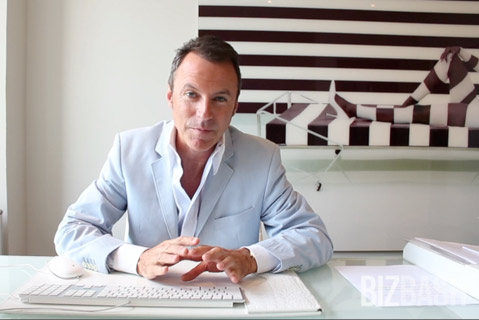
Colin Cowie, hotel designer

There are few better settings for an international spy thriller than the chaotic, neon-lit streets of Kowloon, to the north of Hong Kong’s Victoria Harbour.In the early 1970s, Kowloon’s triad-infested back-alleys played host to Roger Moore’s James Bond who used the area as the backdrop for The Man With the Golden Gun.

The Mira hotel’s rooms were conceived by Colin Cowie, a South African “lifestyle guru” and interior designer, and on its eleventh floor is Cuisine Cuisine, an award-winning restaurant where specialties include braised birds nests, South African abalone and sturgeon caviar.

On Monday, Kowloon was plunged once again into the midst of a global intrigue involving spooks and spies.

For it was here that Edward Snowden, the CIA worker-turned-whistleblower, made his temporary Asian hide-out, holing himself up inside one of Hong Kong’s chicest design hotels as the world absorbed his revelations about the National Security Agency’s mammoth electronic intelligence gathering operations.

On Monday afternoon two employees at Hong Kong’s £42m Mira hotel confirmed to The Daily Telegraph that a man called Edward Snowden had been staying at the 492-room luxury hotel in Kowloon.

“He checked out today,” said one staff member, who declined to be named.

The employees declined to say exactly when Mr Snowden, who reportedly flew to Hong Kong on May 20, had checked in and out, or which floor he had been staying on.

But it was from one of the hotel’s “uniquely designed guestrooms” that the 29-year-old looked on as news of his leaked revelations swept across the globe.

The Mira is one of Hong Kong’s most fashionable and talked about hotels. It describes itself as “a design-led urban retreat for the discerning traveller” and boasts a Michelin Star Chinese restaurant, a 25-metre indoor pool and a 18,000 square metre spa.

The Mira would have made a comfortable, if expensive, place to lie low. A brochure describes the hotel as “a living, breathing sophisticated space” which promises to “pamper the mind, body and spirit of the fast-living urban traveller”. Once a week the hotel hosts “Champagne Tuesday” at which guests quaff HK$100 glasses of champagne to the sound of “cool French jazz”.

Kowloon’s hustle and bustle would also have offered good cover to anyone wanting to fly under the radar. Outside the Mira’s pitch-black entrance at Number 118 Nathan Road, the streets teem with street hawkers and workers. Shoppers pour in and out of glitzy shopping malls and Cartier and Philippe Patek boutiques.

It is unclear how much Mr Snowden was able to take advantage of the hotel’s luxury facilities. Staff members refused to go into details about their former guest on Monday and The Guardian reported that the former contractor had spent three weeks “ensconced” in his bedroom, ordering room service. “I’ve left the room maybe a total of three times during my entire stay,” Mr Snowden said.

As Mr Snowden’s identity and and unexpected presence in Hong Kong was revealed on Monday morning, journalists raced to locate his hideout.

Rumours about his exact whereabouts spread on social media, with one Twitter-user suggesting Mr Snowden had been staying in the Excelsior hotel in Hong Kong’s Causeway Bay area. Staff there said they had “no information” about his presence, however, and refused to confirm or deny if they were hosting a guest named Edward Snowden.

By late afternoon Mr Snowden’s temporary home had been identified by means of an elegant bedside lamp that appeared in footage of an interview he had given and matched those in the Mira.

Members of the media rushed to the Kowloon hotel but by then the elusive Mr Snowden had left, staff said.

Tonight it was not clear if Mr Snowden remained in Hong Kong or had travelled elsewhere.

He told The Guardian he had chosen to come to Hong Kong because of its “commitment to free speech and the right of political dissent” but planned “to seek asylum in a country with shared values”, possibly Iceland.

A security guard outside the palm-flanked US consulate laughed off questions about the former CIA employee. “There are many Americans living in Hong Kong,” he said, grinning. – The Telegraph


Whistleblower disappears from Hong Kong hotel

Russia is willing to consider granting political asylum for NSA whistleblower Edward Snowden, who blew the lid on the US PRISM program, Russian media reported. Snowden dropped out of sight Monday after he was last seen checking out of a Hong Kong hotel.

The Mira Hotel, is a self-described “design hotel” near Kowloon park on the mainland.

The Mira Hotel in Tsim Sha Tsui, a waterfront area popular with tourists, said that an American named Edward Snowden had checked into the hotel on June 1 and stayed for more than a week before checking out Monday afternoon. The hotel is a luxury property that, according to its web site, promises “matchless indulgence for the young-at-heart modern traveler,” where room rates can go for more than $300 a night. […]

A man reached at the Mira Hotel in a room under Mr. Snowden’s name said he wasn’t the person reporters were looking for and then hung up the phone. On dialing the hotel again, the reception said Mr. Snowden’s room was no longer taking phone calls. A few minutes after that, the hotel said Mr. Snowden had checked out.

“If we receive such a request, we will consider it,” Kommersant daily quoted President Vladimir Putin’s press secretary Dmitry Peskov as saying.

Snowden, a 29-year-old former technical assistant for the CIA and current employee of the defense contractor Booz Allen Hamilton, revealed the existence of PRISM, the National Security Agency’s (NSA) massive data-mining surveillance program which gave the agency backdoor access to emails, videos, chats, photos and search queries from nine worldwide tech giants.

The whistleblower disappeared after checking out of a Hong Kong hotel, Reuters quoted witnesses as saying. A day earlier Snowden revealed his identity to The Guardian newspaper.

The revelations of Edward Snowden have been condemned by senior US lawmakers, who threatened the whistleblower with prosecution. Senator Dianne Feinstein (D-CA) on Monday called Snowden’s NSA leaks an “act of treason.”

Chairman of the House homeland security subcommittee Peter King stressed that if Edward Snowden is the leaker, then the US “must prosecute him to the fullest extent of the law and begin extradition proceedings at the earliest date.”

On Monday, Regina Ip, formerly Hong Kong’s top official overseeing security, told reporters it would be in Snowden’s “best interest to leave Hong Kong,” citing an extradition treaty with the United States that was signed in 1996.

Visitors walk into The Mira Hotel, where 29-year-old former CIA employee Edward Snowden was reported to have checked out of on Monday, in Hong Kong June 10, 2013 (Reuters / Bobby Yip)

“He won’t find Hong Kong a safe harbor,” Ip said. “Those agreements have been in force for more than 10 years. If the US submits a request, we would act in accordance with the law.”

Iceland MP and privacy rights campaigner Birgitta Jonsdottir has offered Snowden assistance in getting asylum in the Nordic island state.

Snowden fled to Hong Kong on May 20. Before that he had been working with the NSA earning approximately $200,000 per year and living in Hawaii.

“I’m willing to sacrifice all that because I can’t in good conscience allow the US government to destroy privacy, internet freedom and basic liberties for people all around the world with this massive surveillance machine they’re secretly building,” he told The Guardian. “The greatest fear that I have regarding the outcome for America, of these disclosures, is that nothing will change.”

Snowden copied the last of the documents he planned to release three weeks ago, telling his bosses he needed time off to be treated for epilepsy. He has also said he has a girlfriend who was unaware of his plans to seek refuge in Hong Kong.

WikiLeaks founder Julian Assange says he has been in contact with Edward Snowden, saying the NSA contractor was a prime example of what his organization is attempting to do.

“This organization and people like it and our values are forming a new body politic and people like Edward Snowden are part of that phenomena,” Assange said in a telephone interview with The Australian Broadcasting Corporation’s Emma Alberici on Monday from the Ecuadorian embassy in London.

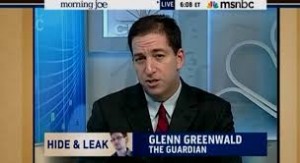
Guardian journalist Glenn Greenwald, who revealed classified US surveillance programs leaked by Snowden, told AP that there will be more ‘significant information’ exposed in the near future. “We are going to have a lot more significant revelations that have not yet been heard over the next several weeks and months,” Greenwald told AP.